Seinfeld is often described as “a show about nothing,” mainly because it broke the old TV rule that characters must learn a lesson or grow. Fans resonated deeply with that premise, and the show became one of pop culture’s landmarks. What may not be immediately obvious to a casual observer is that some of the show’s most iconic bits were based on real-life experiences.
Of course, creators Larry David and Jerry Seinfeld swapped the names, but they kept the humiliation intact. Some of these stories were almost too on-the-nose to believe. A masturbation bet, a blown-up SNL job, a suede jacket ruined trying to impress a literary legend. None of it was made up for laughs. These six episodes are proof of concept.
“The Chinese Restaurant” (Season 2, Episode 11)
This whole episode is just George, Elaine, and Jerry hanging out at a Chinese restaurant, getting “hangry,” and never actually eating. Literally nothing else happens, unless you want to count the bit about them losing their minds over a movie they’re about to miss. Other than that, it’s 22 minutes of real-time proof of how dull life can be. No plot twists needed.
The NBC execs were not shy about showing how much they hated it. They even tried to get David to add some fake drama, but he blatantly refused. And that’s because he and Jerry Seinfeld had lived through that exact nightmare while waiting for a table at Genghis Cohen, a Chinese restaurant in Fairfax, Los Angeles. David’s insistence on keeping things real worked out well in the end because audiences loved it, and the episode ended up proving that sitcoms can survive without a tidy three-act structure of setup, conflict, and resolution.

“The Contest” (Season 4, Episode 11)
George’s mom walks in on him mid-happy-time, and before you know it, the four friends are betting cash on who can keep their hands to themselves the longest. The whole thing sounds like pure TV gold, but David once made that same wager with his pal Frank Piazza back in the day. He’s never revealed exactly what the stakes were (a fact that still spins the wheels in most people’s heads), but he’s confirmed that the whole contest ended in two days, maybe three, before he claimed the pot.
The writing here is brilliant too, in the sense that the show never says “masturbation” out loud. It didn’t have to, because your brain fills in the blanks. And that’s way funnier than if they were blunt about it. This episode is now widely cited as the greatest out of the show’s entire 9-season run.
“The Revenge” (Season 2, Episode 7)
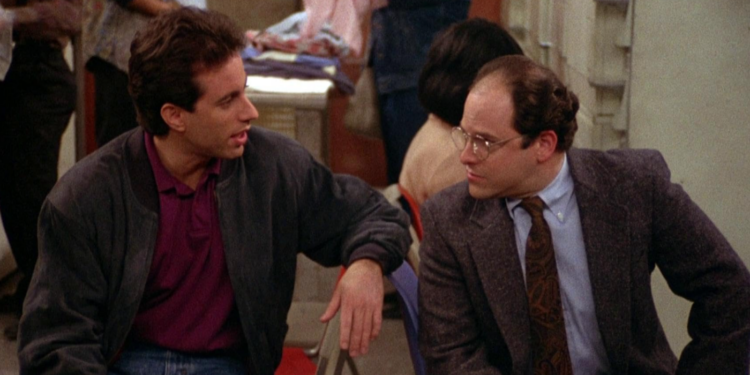
Dick Ebersol had no idea he was about to become a footnote in sitcom history. Back when Larry David was paying his dues as an SNL writer, Ebersol was his boss, and he kept on cutting David’s sketches right before air, and one night David just lost it. He walked up to Ebersol mid-show, gave him a piece of his mind, threw in some very choice words for effect, capped the whole tirade off with “I quit,” and walked out.
The moment he hit the sidewalk, he did some mental math and realized just how adversely that decision would affect his wallet. He vented to his neighbor, who happened to be the real Kenny Kramer, and got some genuine Krameresque advice: just stroll in on Monday like nothing happened. David did just that, kept his job, and years later he handed that shame spiral to George Costanza, who wore it like a bad suit.
“The Jacket” (Season 2, Episode 3)
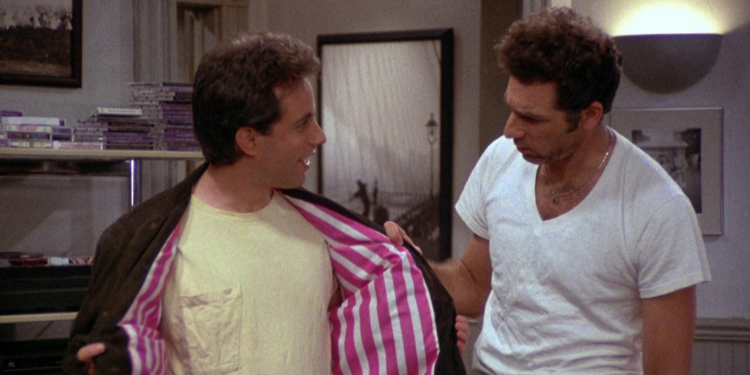
Larry David used to date the daughter of acclaimed novelist Richard Yates. At one point, the couple set an appointment to meet him at the Algonquin Hotel. It was David’s first time, and naturally he wanted to impress the father of his woman. To achieve this, he invested in a brand-new suede jacket with an obnoxiously loud lining. Then it started snowing, leaving David with one of two options: flip the jacket inside out and save the suede, or keep it as-is and risk Yates noticing that ridiculous lining.
David chose his pride and sacrificed the jacket because he refused to look like a dork in front of Yates. That whole debacle was transported into this episode almost beat for beat: George suggests Jerry flip the jacket inside out to save it, but Elaine’s father spots the candy-stripe lining and orders him to turn it right back, calling him a fool for even trying. Same call, same ruined jacket, just with someone else forcing the choice.
“The Pitch” / “The Ticket” (Season 4, Episodes 3 & 4)
Now for the real full circle moment and some mind-bending casting. On screen, NBC asks Jerry to pitch a show, and George talks him into pitching a meta “show about nothing”: their arguments, their weird social rules, their bad days. The real pitch wasn’t nearly that self-aware. When Seinfeld and David pitched the show to NBC back in 1988, they sold the show as how a comedian gets his stand-up material from everyday life. The “show about nothing” line didn’t exist yet; it started years later as a throwaway joke inside the show itself, and both men have since said they’re baffled at how it became the official origin story.
The real-life connection is the pitch and meta-casting. The NBC exec George pitched to, Russell Dalrymple, was played by Bob Balaban, and modeled on real NBC president Warren Littlefield. Balaban later played Littlefield for real in the 1996 TV movie, The Late Shift. Ultimately, a show about a fake pitch to a fake exec based on a real exec, played by the same actor twice, is the kind of stuff that sounds made up, but isn’t.
Read Next: Seinfeld Cast Net Worth: Updated Rankings + Who Still Makes Syndication Money
 Follow Us