The financial situation of young adults nowadays is so insane that many have to live with their parents. What’s more, some can’t even afford to pay for essentials like bills. Last year, a report by Savings.com found that 50% of parents financially support their adult children at least in some capacity.
However, this young family took financial assistance from their parents to a whole new level. The son expected Grandma to house them, pay for their car, phone, and internet bills, and much more. When she asked one of her other children to step in and help her not to go broke, the brother took it personally and called the sibling heartless.
A young family potentially faced financial ruin when a sibling cut them off from Grandma’s finances

Image credits: Vitaly Gariev / Unsplash (not the actual photo)
The sibling pressed that Grandma was going to end up broke if she continued to support them
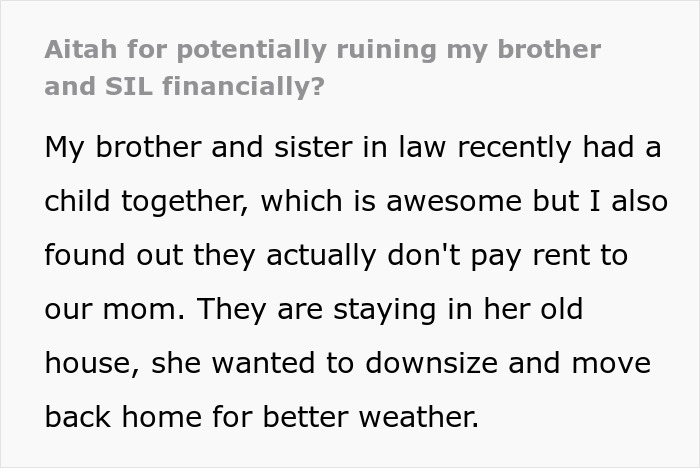
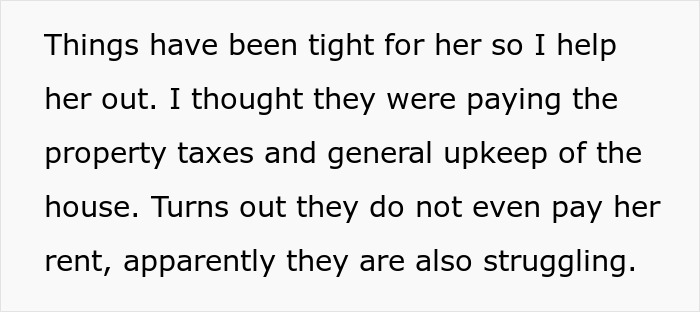

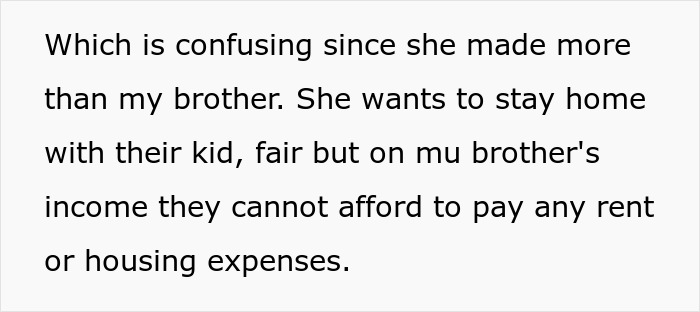
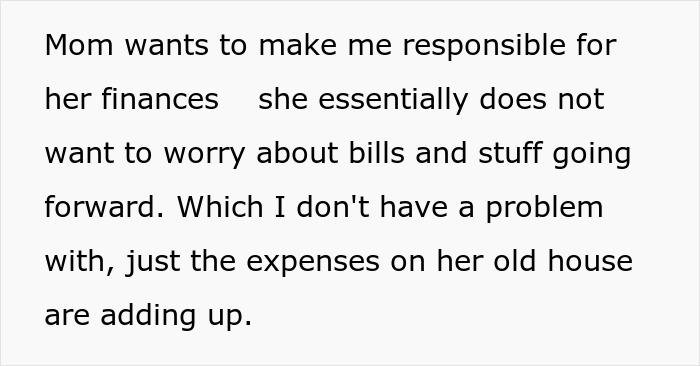






Image credits: ColdOdd2115 / Reddit (not the actual photo)

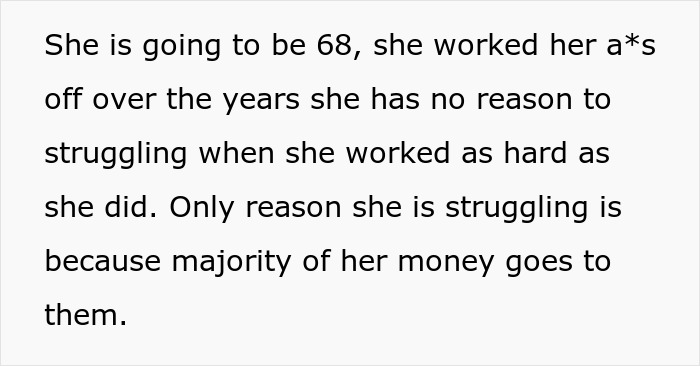



Image credits: Ok-Intention-2832
The majority of young adults in America are receiving financial help from parents
With the current state of the economy, many adults and couples don’t have another choice but to live with their parents. While that’s beneficial for them financially, it can put a strain on their social lives. While most adult children accept financial help from their parents, not every one lives with them.
The number of adults living with their parents has reached pre-pandemic levels. According to a 2023 Pew Research Center study, 18% of American adults aged 25-34 are living in a parent’s home. Also, men (20%) are more likely to live with a parent than women (15%).
The researchers didn’t find a strong link between unemployment and living with one’s parents. Interestingly, the cost of rent and housing didn’t make a big difference either. In regions where housing was more expensive, the share of young adults living with parents was similar to the regions where housing costs were lower.
But in this story, Grandma was helping the young family with utilities, not only giving them her old house. It’s not unusual for parents to help their children financially. In fact, in 2015, 61% of American parents said they provided financial assistance to their adult children.
Many older parents admit they didn’t expect to still cover for their kids beyond the traditional milestones after they turned 18 and even 22. A 2025 AARP survey showed that 75% of parents help their children aged 18 and up financially. What’s more, 53% of those children would be able to cover their basic expenses themselves.
Most parents help because they want to or out of obligation, but they still risk postponing their retirement
It’s a parent’s duty to help your child, many people believe. But does that duty extend well into the child’s adulthood? Many parents choose to give money to their adult children of their own accord. Still, the parents suffer negative consequences, too: many have to postpone retirement.
According to the AARP survey, parents provide their adult children with approximately $7,000 annually. 42% say they do it because they want to help, 36% add that they want to but also feel obliged to help.
Another survey shows that 83% of supportive parents help adult children cover groceries and give them $220 each month. 65% cover an average of $63 in cell phone bills, and 63% pay an average of $653 in their child’s mortgage or rent.
Shelling out such amounts adds up for the parents, with some starting to feel financial strain. 35% of parents told the AARP that they experience emotional stress over having to financially support their children, and 9% even chose to retire early or ask for time off work.
Indeed, many parents are making a lot of sacrifices to make their adult children’s lives better. Some even have to postpone their retirement. A survey by Ameriprise Financial shows that they contribute 2.3 times more to their children than to their retirement accounts.
Financial experts say that there is nothing wrong with helping kids if they can’t afford some things. However, that shouldn’t tamper with retirement savings or the well-being of the parents. “If it begins to have a negative impact on your own finances, it is probably time to set some guardrails,” consumer financial advocate at Credit Karma Courtney Alev said.
The brother was a firm believer in “it takes a village to raise a child,” expecting family’s support
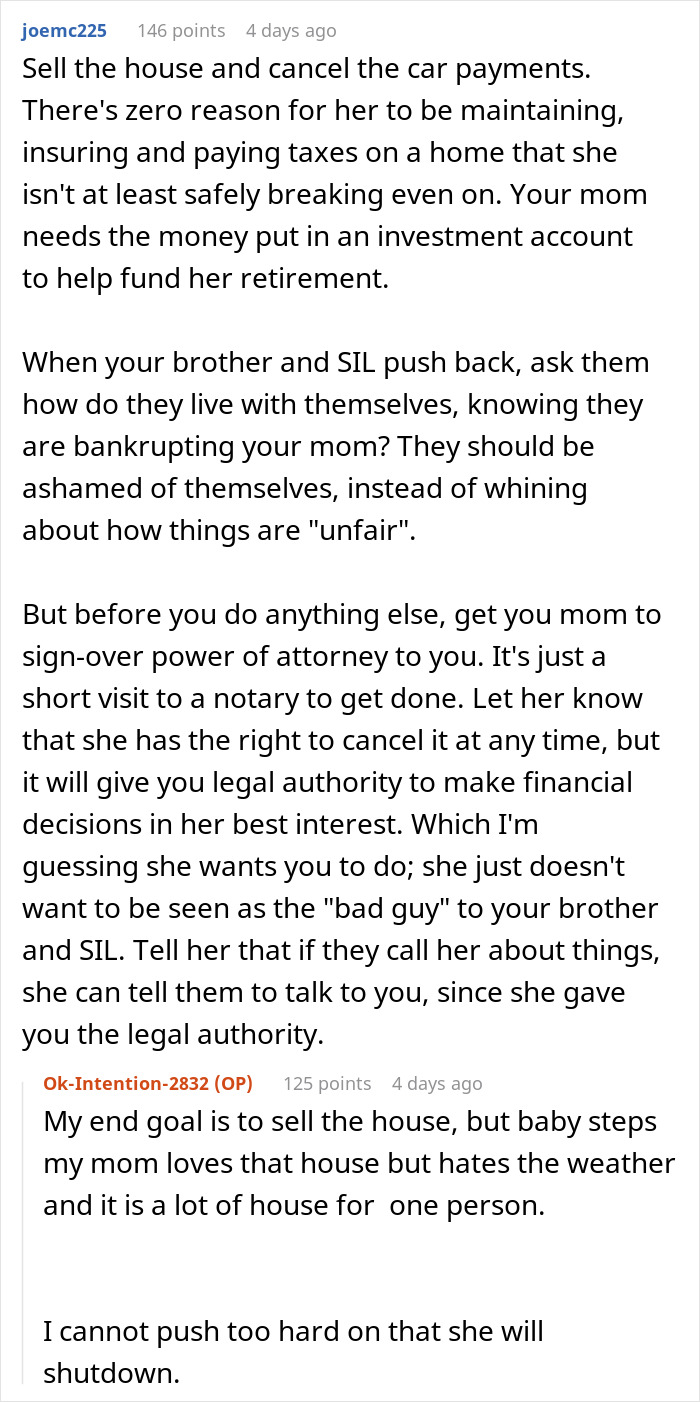


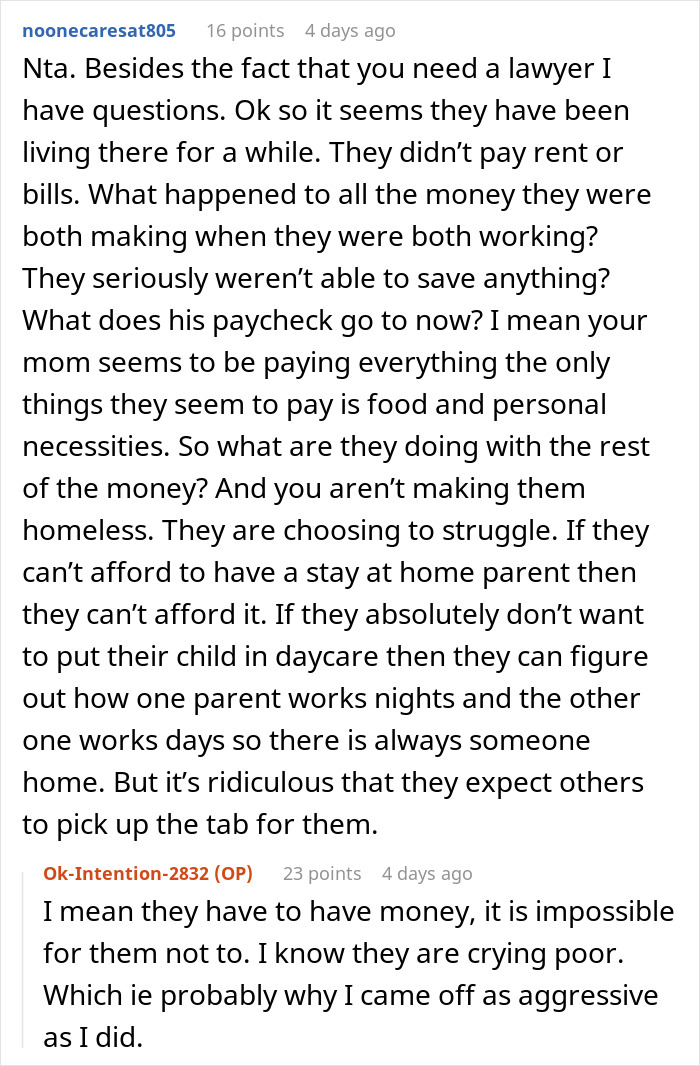
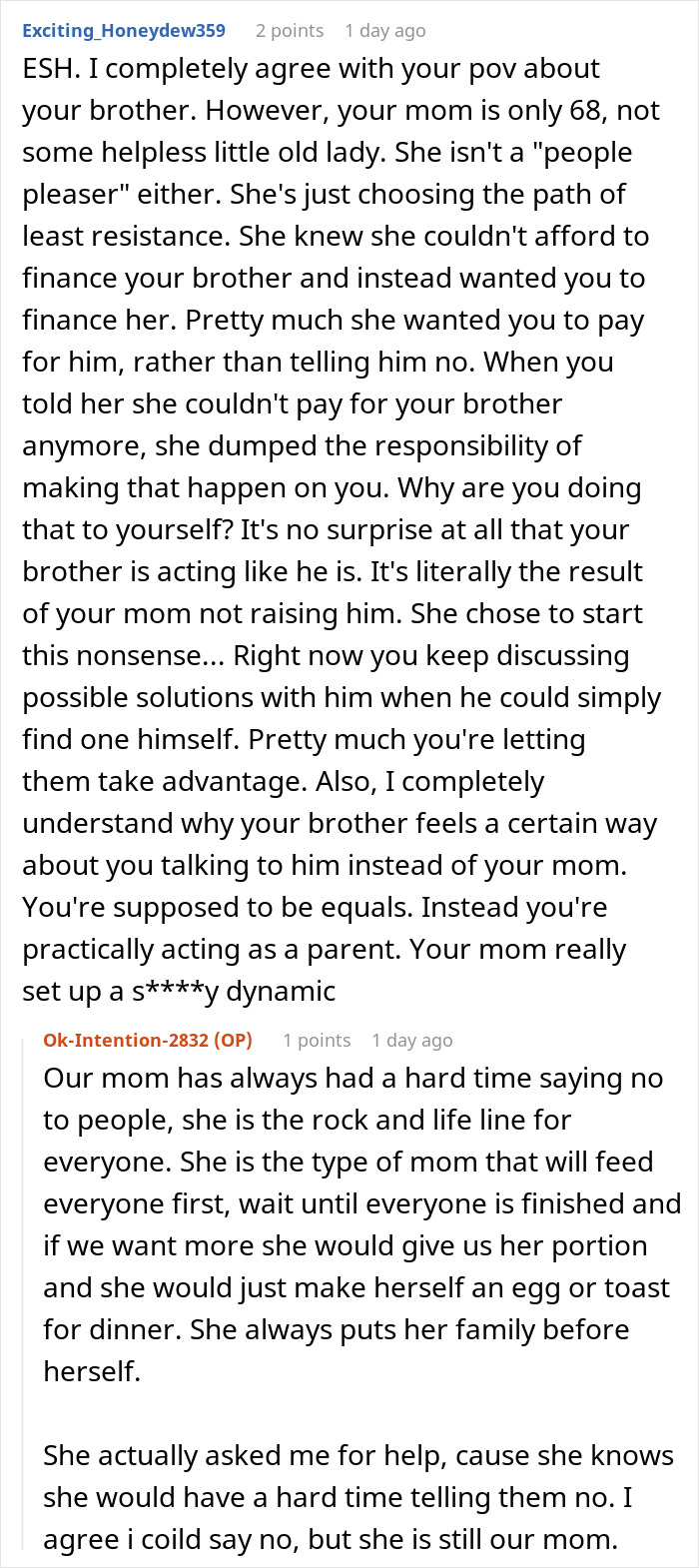
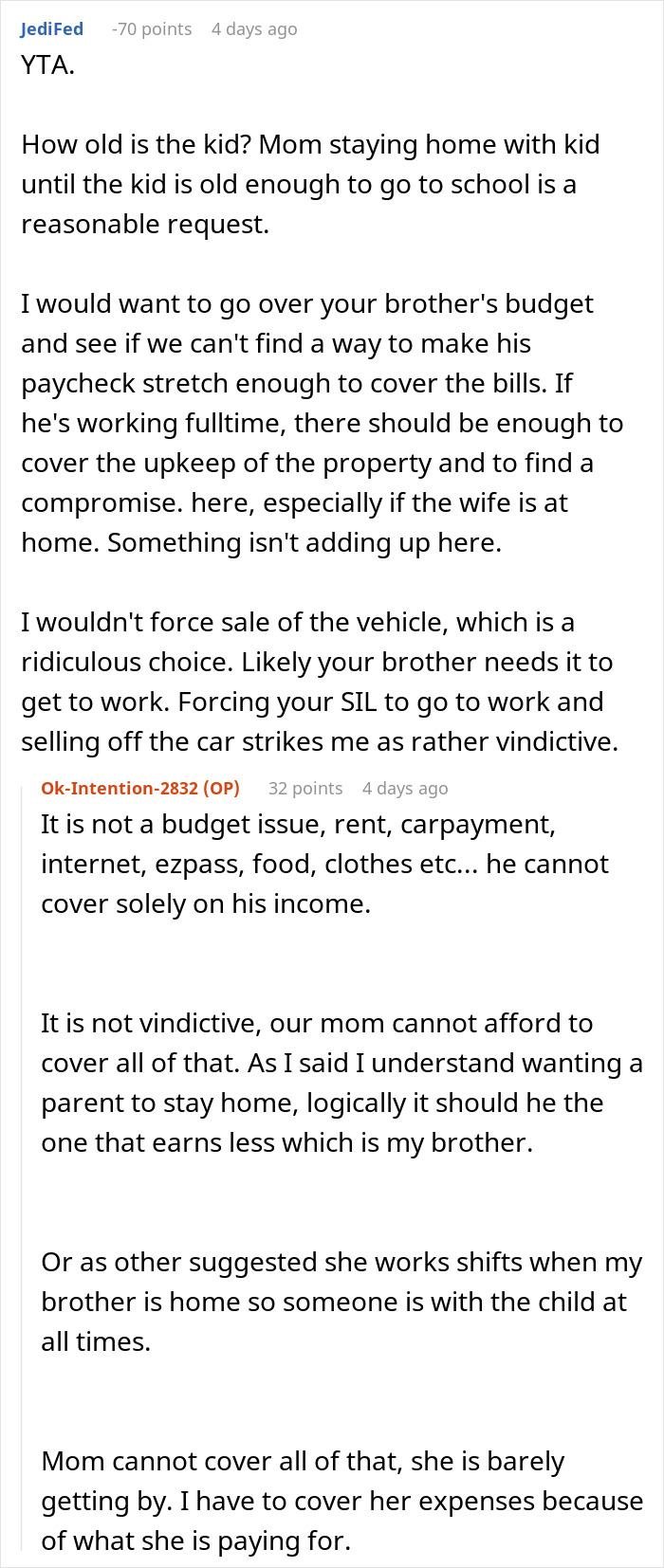
The majority of commenters sided with the sibling: “The entitlement is breathtaking”

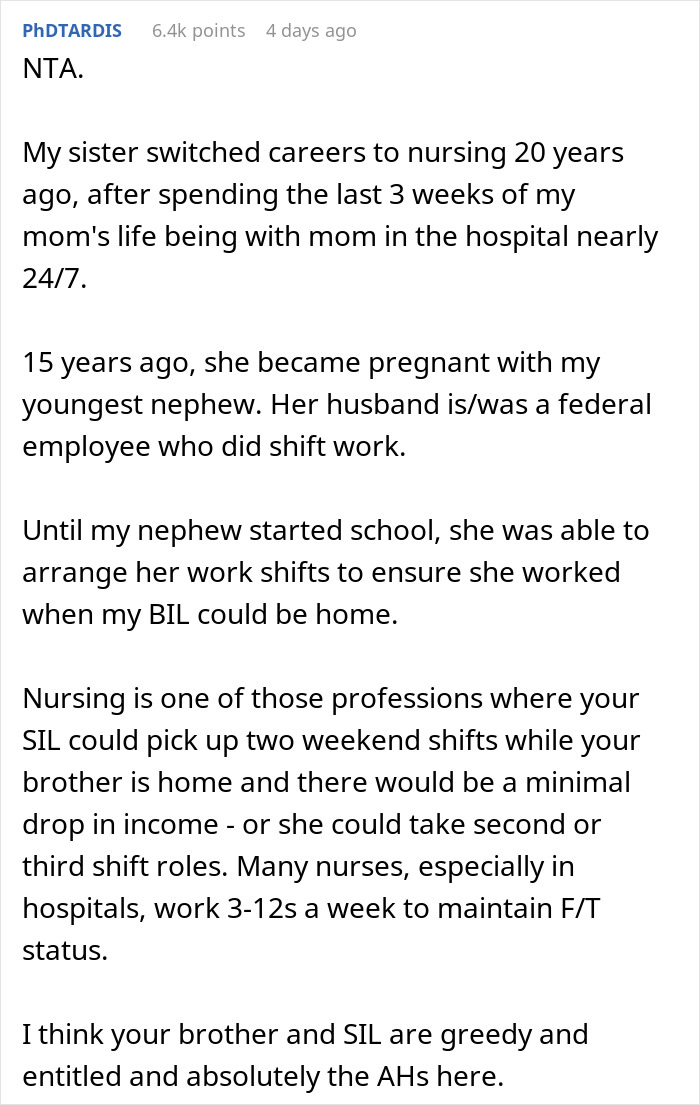

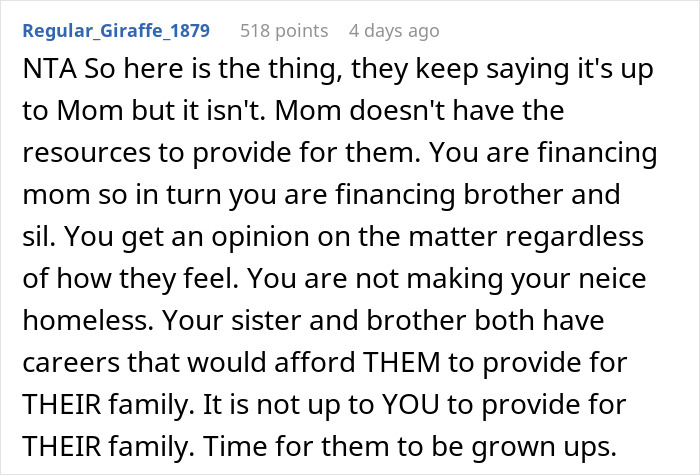
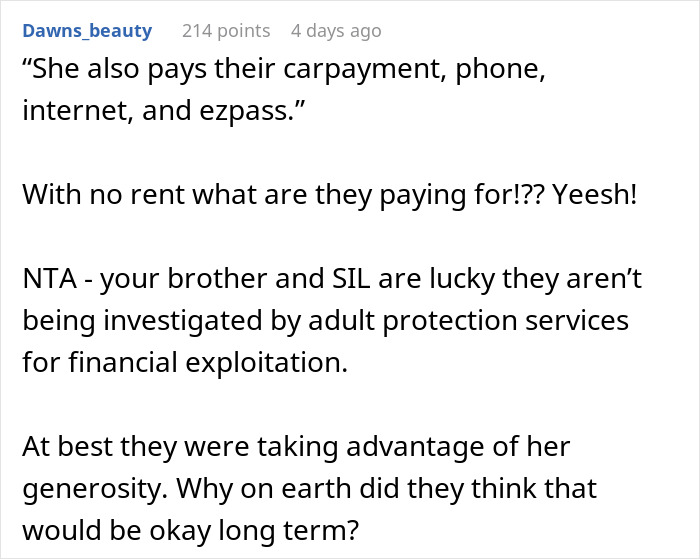
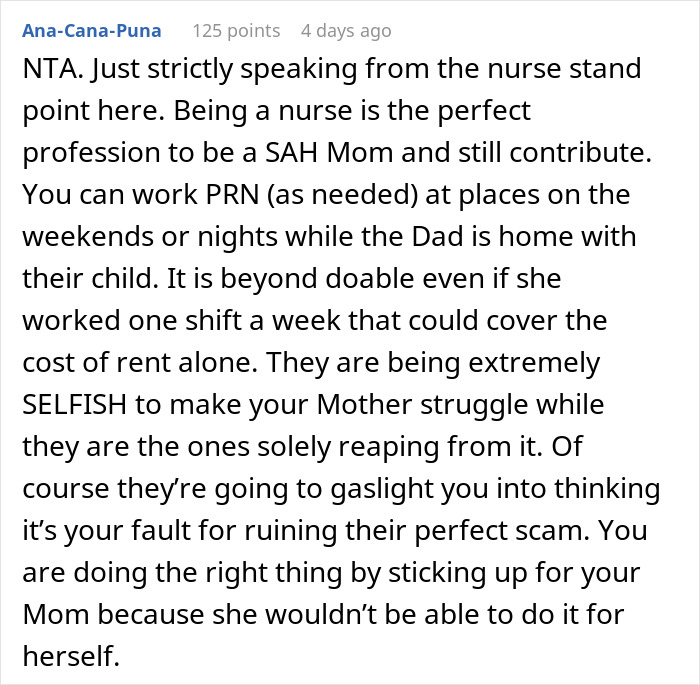
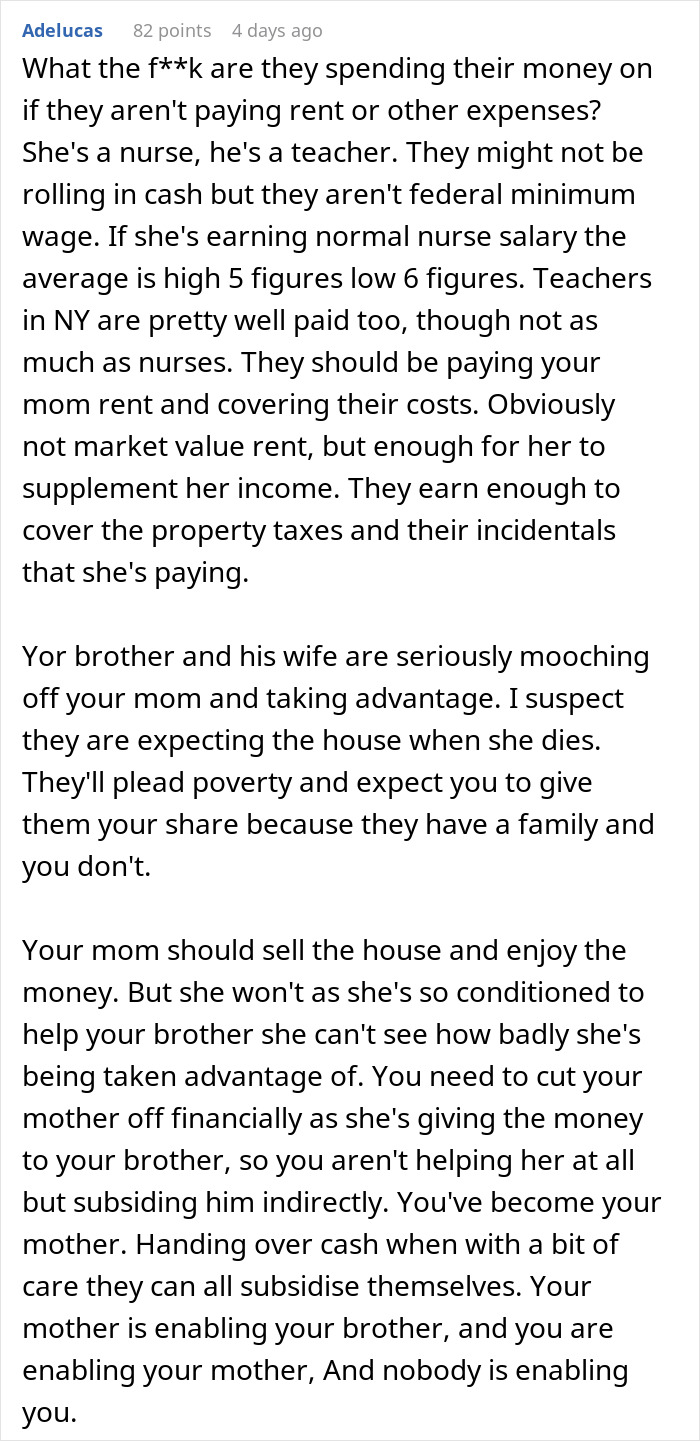


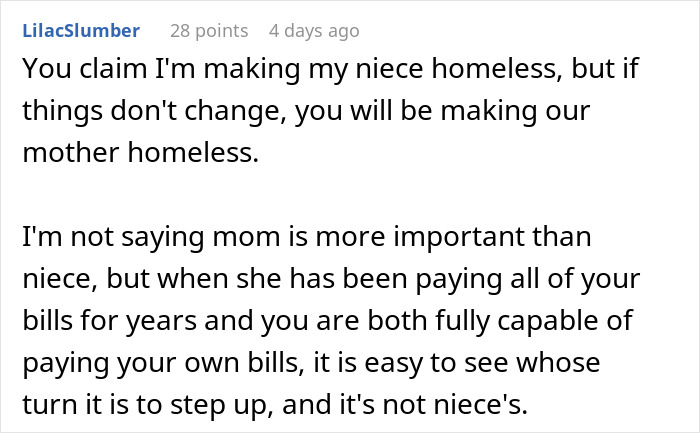





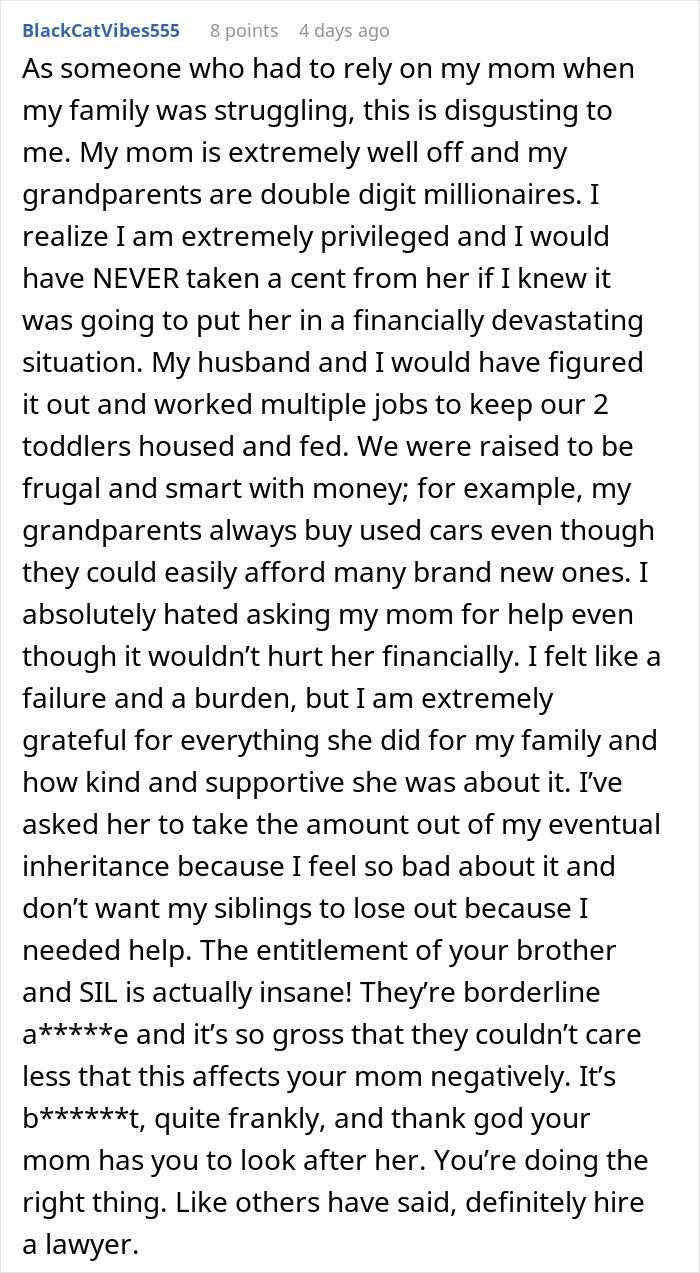
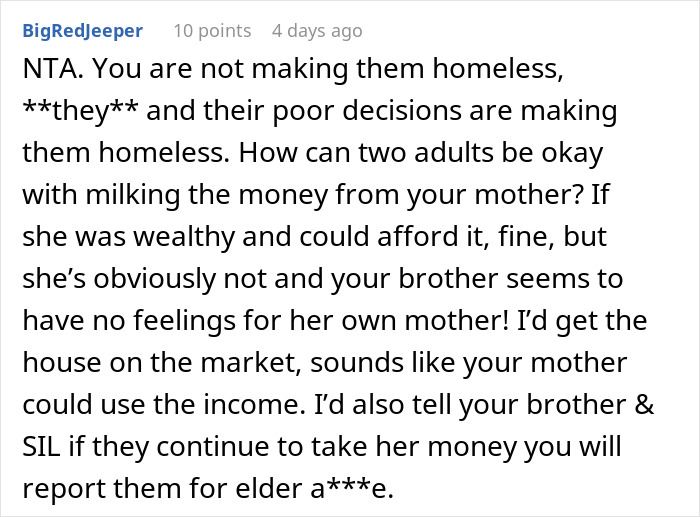
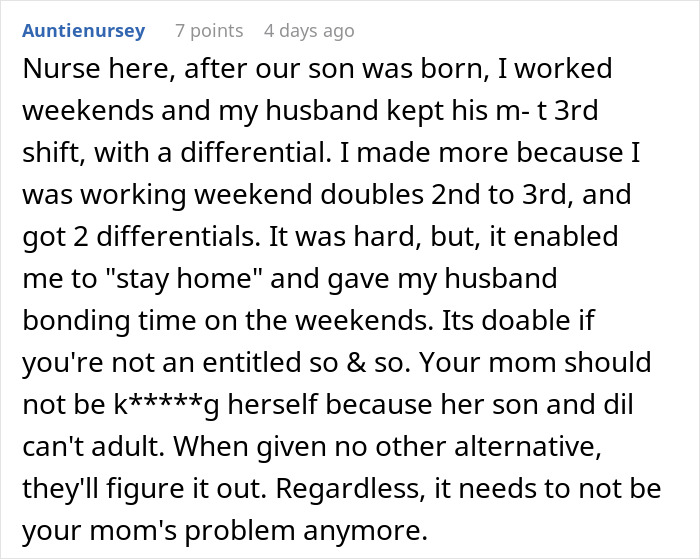







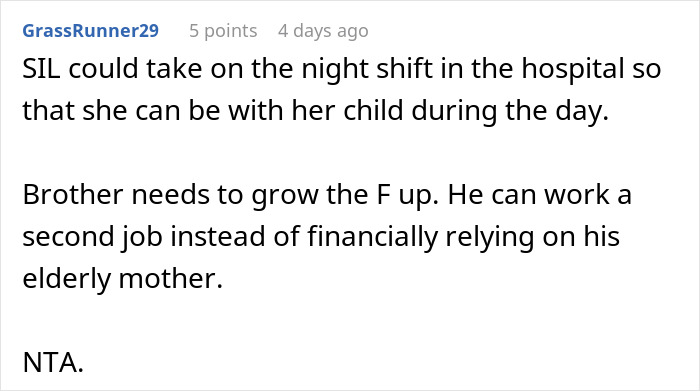
Others called out the mom for being so spineless and for creating this situation


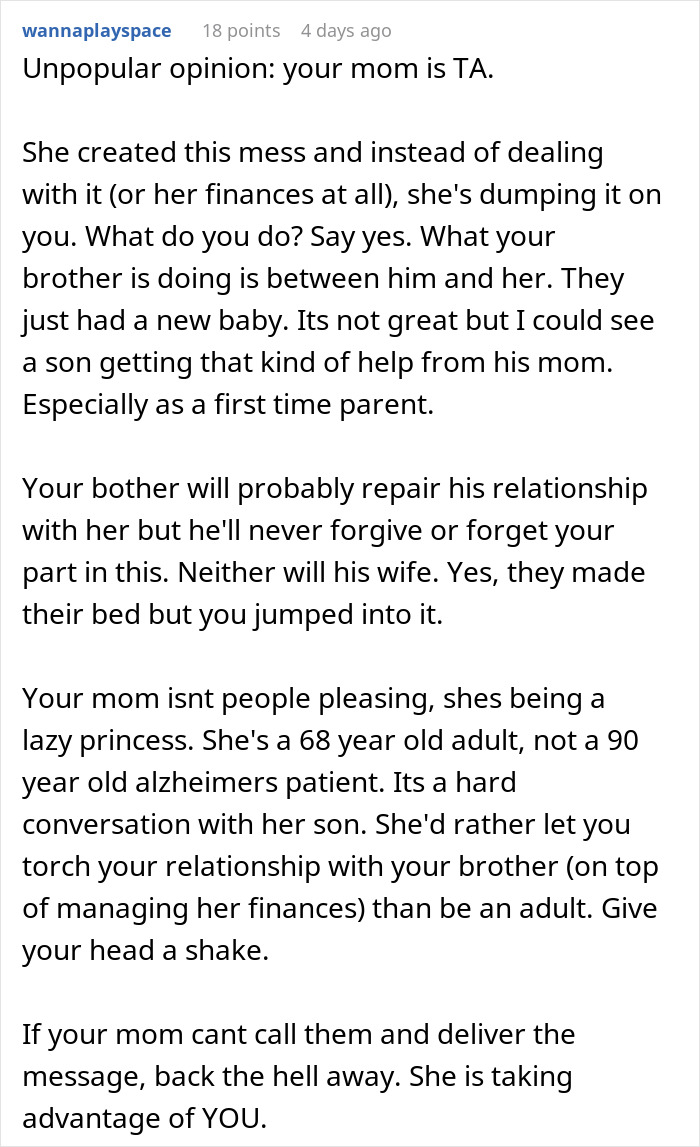






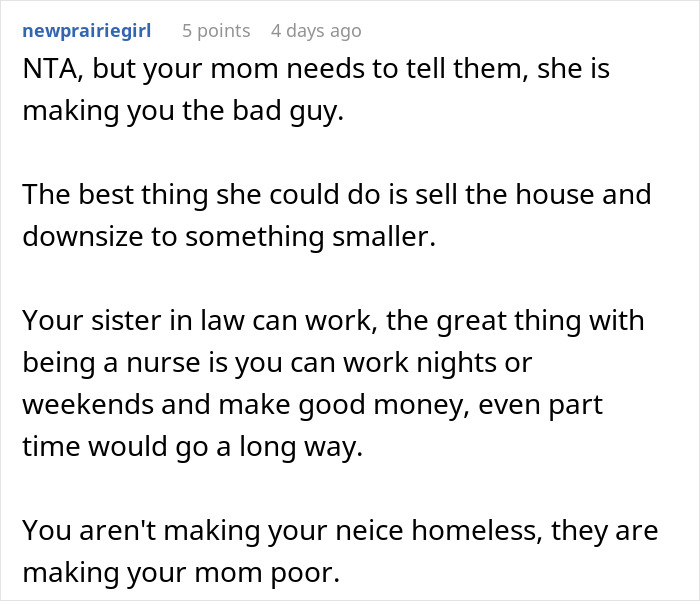
However, others sided with the brother, telling the sibling to stay out of it and mind their business




 Follow Us