If you’ve ever asked a pet parent to choose between you and their pet, there’s a good chance you already know how that story ends. For many people, pets aren’t “just animals”—they’re family. They’re loyal companions, emotional support systems, and the ones who stick by us through some of life’s toughest moments. Whether it’s a dog greeting you at the door after a long day or a cat curling up beside you when you need comfort most, those bonds run incredibly deep.
That’s exactly what happened in today’s story. One woman absolutely adored her two pet cats, both of whom had helped her through some of the most difficult periods of her life. So, when she got engaged, she made it clear from the very beginning that her beloved pets would be moving in with them. But not long after the couple started living together, her fiancé gave her a shocking ultimatum: she had just four days to “get rid of” one of her cats. Keep reading to find out how the situation unfolded.
Many pet owners share incredibly strong emotional bonds with their pets
Image credits: Helena Lopes / Unsplash (not the actual photo)

A woman was left heartbroken after her fiancé demanded she rehome one of her cats before they started married life together


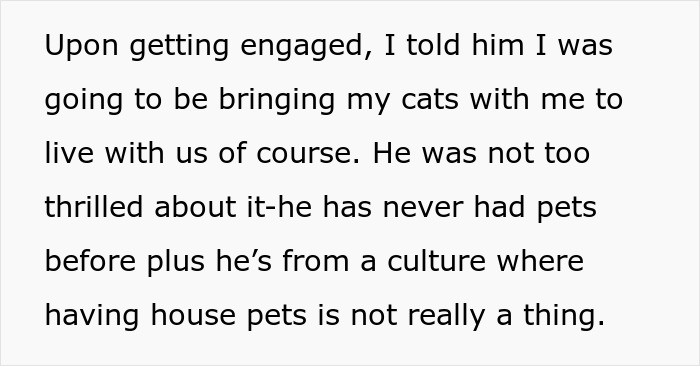
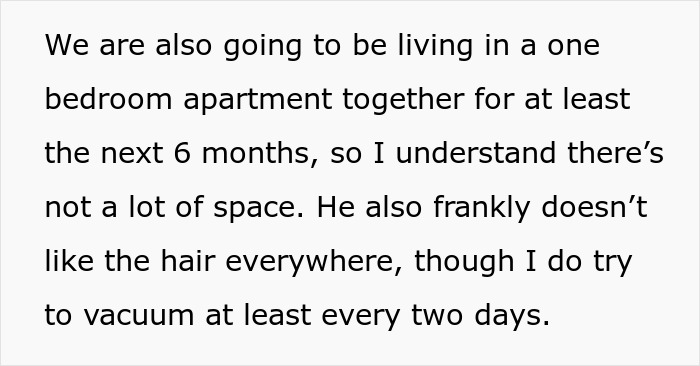

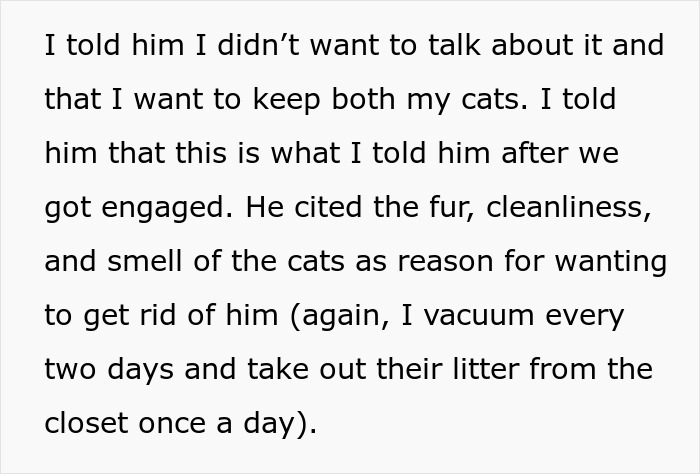
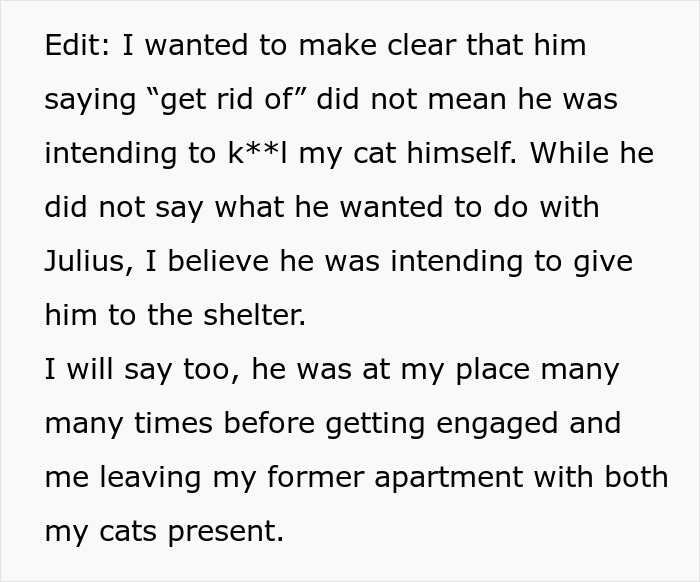

Image credits: Helena Lopes / Unsplash (not the actual photo)
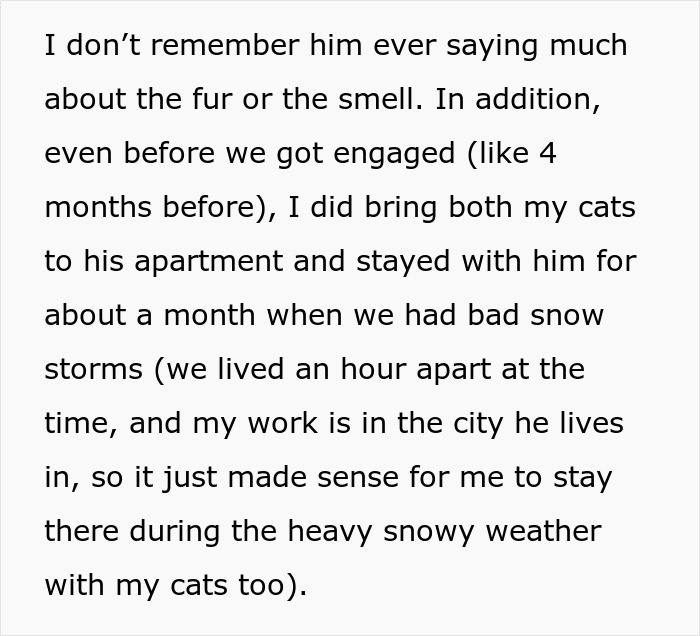


Image credits: ghostsgirlforever
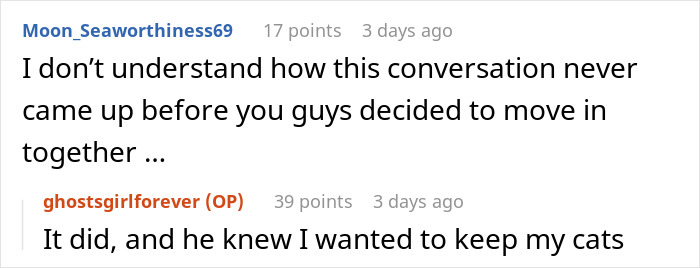
The woman provided additional context about her fiancé and her cats

Research suggests that pet ownership can lower stress levels and improve emotional well-being
Whether someone chooses to have a pet or not is a deeply personal decision. Just like any lifestyle choice, pet ownership comes with its own set of responsibilities, challenges, and rewards. There’s the daily feeding, grooming, vet visits, and, yes, the occasional fur-covered couch. But for millions of people around the world, the positives far outweigh the inconveniences. Research has consistently shown that pets can help reduce stress and anxiety, ease feelings of loneliness, provide unconditional love and emotional support, create a calming presence at home, and even give people a greater sense of purpose. After all, there’s something incredibly comforting about knowing that no matter what kind of day you’ve had, someone is always excited to see you walk through the front door.
Pets don’t just benefit our emotional health; they can also encourage healthier lifestyles. One study found that more than 60% of dog owners meet the recommended weekly amount of physical activity. That means they’re getting at least 150 minutes of moderate exercise or 75 minutes of vigorous exercise every week, simply because their furry companion needs regular walks. Many owners even say their dogs motivate them to leave the house on days when they’d rather stay in bed. Those daily walks often turn into opportunities to explore parks, meet neighbors, enjoy fresh air, and build healthier routines. In many ways, dogs become the most persistent (and perhaps the cutest) personal trainers anyone could ask for.
But here’s something even more interesting. Traditionally, pets were often viewed as companions within families that already had children. They were considered an addition to the household rather than a central part of it. Today, however, researchers are noticing a significant shift. As birth rates decline in many countries and family structures continue to change, pets are increasingly taking on much larger roles in people’s lives. It’s becoming more common to hear people refer to themselves as “dog moms” or “cat dads,” and while those labels may sound playful, they reflect a genuine emotional connection. Increasingly, pets aren’t simply living alongside families; they’re becoming an essential part of what family means.
Several broader demographic changes help explain why this is happening. In many developed countries, marriage rates, fertility rates, and even household sizes have declined over the past few decades. At the same time, more people are living alone or spending longer periods of adulthood without partners or children. As a result, pets are often filling roles that might once have been occupied by spouses, siblings, or children. They become trusted companions, sources of emotional comfort, and loyal members of the household. While they certainly don’t replace human relationships entirely, they often help ease feelings of isolation and provide a level of companionship that’s difficult to put into words.
Research supports just how deeply people value these relationships. According to Psychology Today, 77% of dog and cat owners say their pet is a family member “just like anyone else”. Similarly, Pew Research found that nearly all dog owners in the United States consider their canine companions to be important members of the family. In fact, in some countries, dogs now outnumber children. That statistic alone highlights just how dramatically society’s relationship with pets has evolved. For millions of households, caring for a pet isn’t viewed as a hobby or luxury; it’s simply part of everyday family life.
Shifting family dynamics and growing social isolation have strengthened the emotional role pets play in people’s lives
Animal behavior researcher Enikő Kubinyi has spent years studying this growing bond between humans and their pets at ELTE Eötvös Loránd University in Budapest. In a paper published in Current Directions in Psychological Science, Kubinyi explores why these relationships have become so meaningful. She argues that the parent-child-like bond many people develop with their dogs is driven by both biology and culture. Humans have evolved with a natural instinct to nurture and care for others. At the same time, modern society has changed dramatically, with smaller families, fewer children, and increasing social isolation. Together, these biological instincts and cultural shifts have helped strengthen the emotional role pets now play in our lives.
Kubinyi explains this idea even further, saying, “Many people now live without close family ties or regular interaction with children. For example, in recent years, nearly 90% of adults in Hungary do not spend any time caring for young children, although our species is biologically adapted to cooperative child-rearing. Yet the psychological need to nurture and connect hasn’t disappeared.” In other words, while society has changed, our emotional wiring hasn’t. People still seek meaningful connections, opportunities to care for someone, and relationships built on trust and affection. For many, pets naturally step into that space, offering companionship without judgment and affection without conditions.
At the end of the day, pets mean different things to different people. For some, they’re loyal companions who brighten everyday life. For others, they’re emotional anchors who helped them survive grief, loneliness, anxiety, or some of life’s darkest moments. That’s why asking someone to give up a beloved pet is rarely as simple as giving away an object. It often feels more like losing a close friend or family member. While every household has to find arrangements that work for everyone, it’s also important to recognize the emotional significance pets hold in so many people’s lives. Understanding that bond is often the first step toward finding compassionate solutions.
Coming back to this particular story, it’s easy to understand why the woman felt so heartbroken. She had made it clear from the very beginning of the relationship that her two cats would always be part of the package, and her fiancé had known about them long before they moved in together. That’s why his sudden ultimatum came as such a shock. Relationships naturally involve compromise, but many people felt this demand crossed a line—especially when it involved a pet that had been part of her life for years. Others also questioned why the issue wasn’t raised more seriously before they became engaged. Pandas, what are your thoughts? Was the fiancé being reasonable about living conditions, or was asking her to give up one of her beloved cats simply too much?
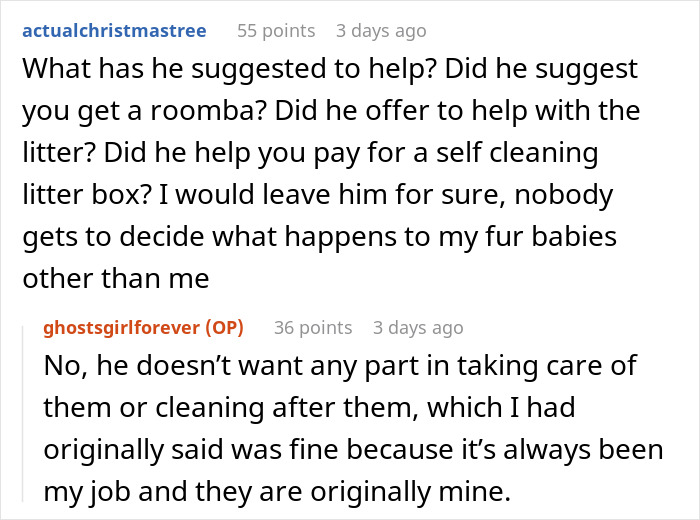
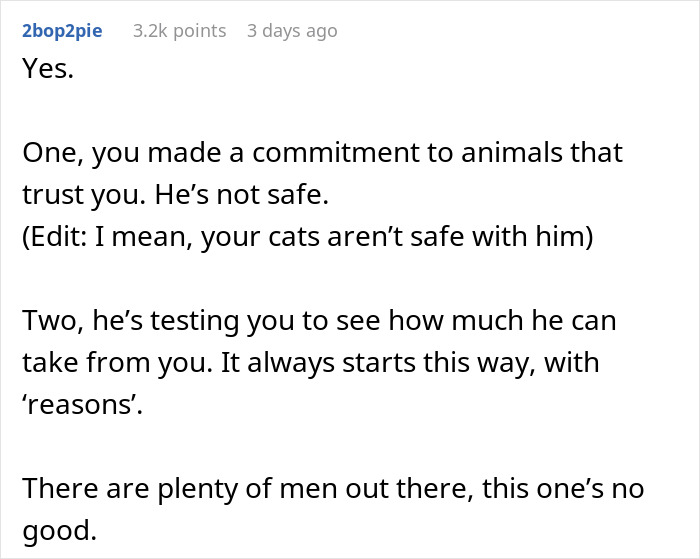
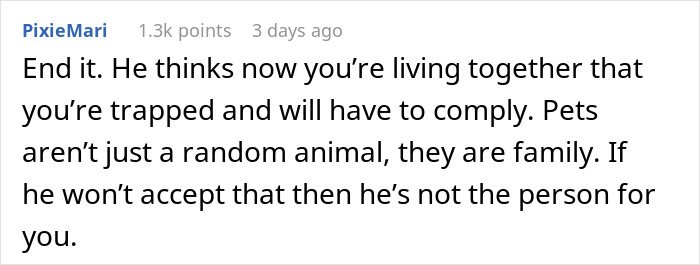
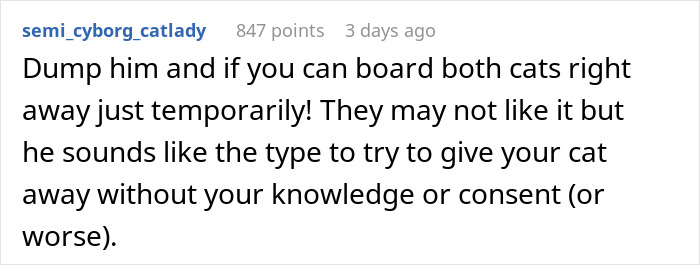
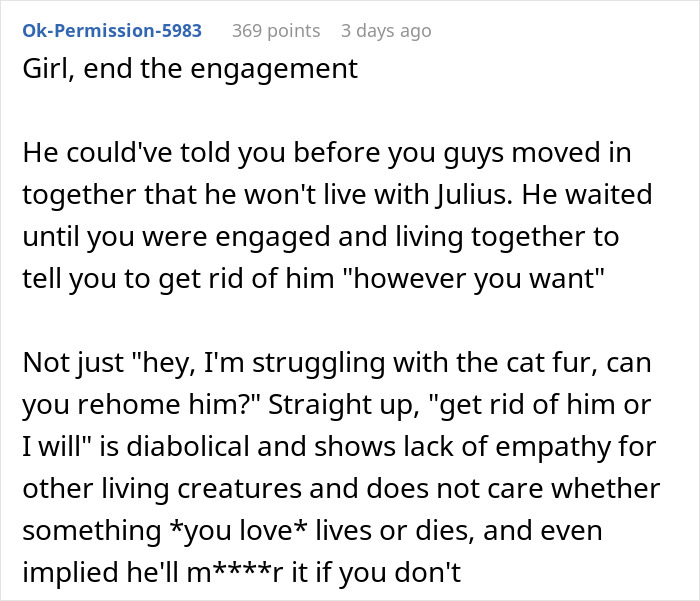
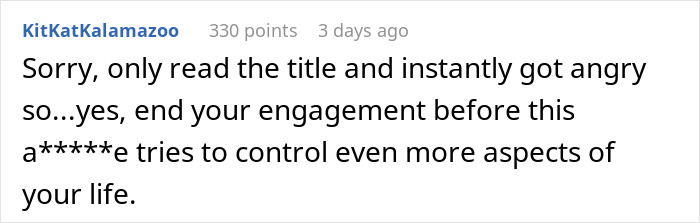
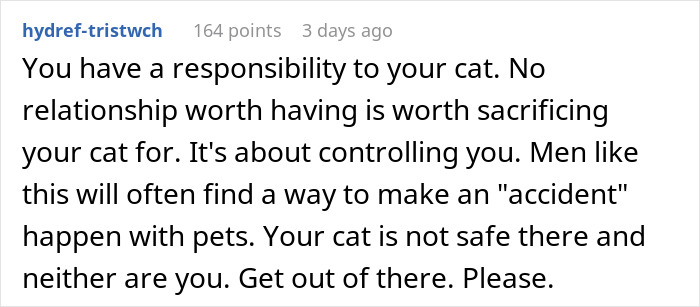
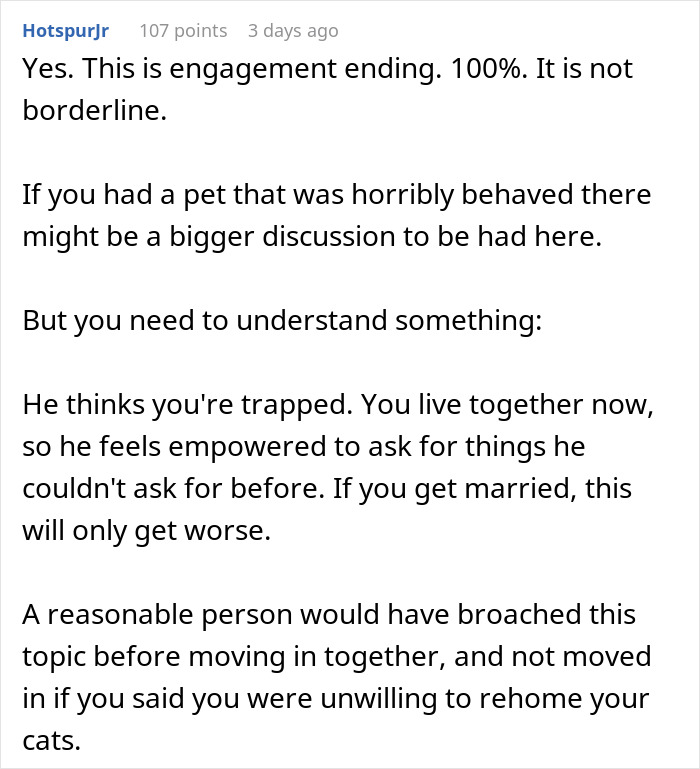
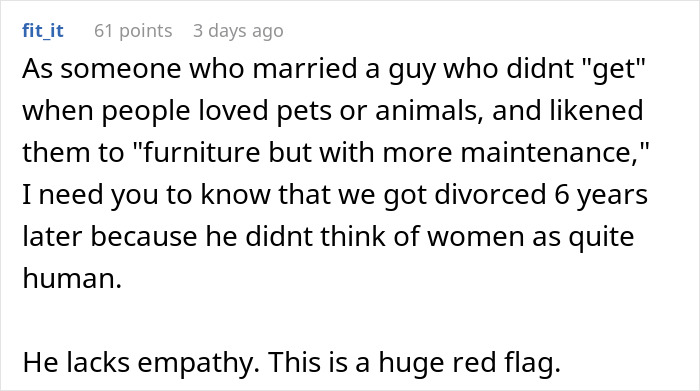
Several commenters encouraged the woman to leave her fiancé








 Follow Us