Donating a kidney is not just a medical procedure… It’s a selfless act that has often been dubbed the “gift of life.” You’re literally offering a part of your body so someone else can celebrate another birthday, or walk their child down the aisle, or just sit around the dinner table with their family again.
But the pressure to sacrifice for someone, especially when that someone is a family member, can be crushing.
A man found himself in a similar predicament when he was asked to be tested as a possible kidney donor for his 77-year-old father.
Sharing his story online, the man said he felt trapped between his duty as a son and the desire to live for himself for a change.
A man was asked to get tested as a possible kidney donor for his 77-year-old dad

Image credits: Getty Images / unsplash (not the actual photo)
He said he’s been taking care of his dad all his life and now wants some respite
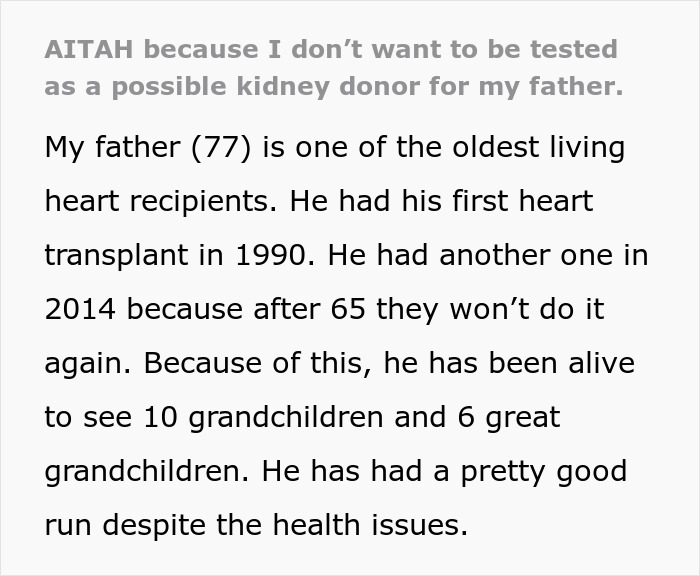

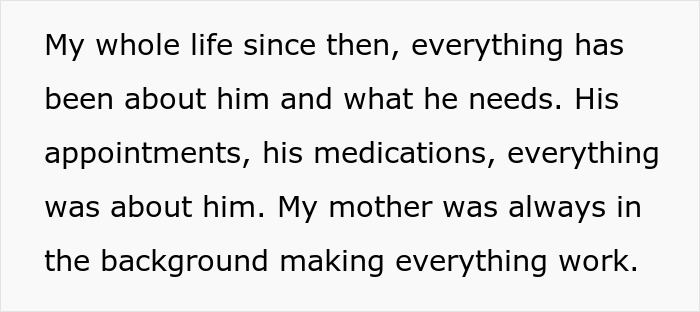

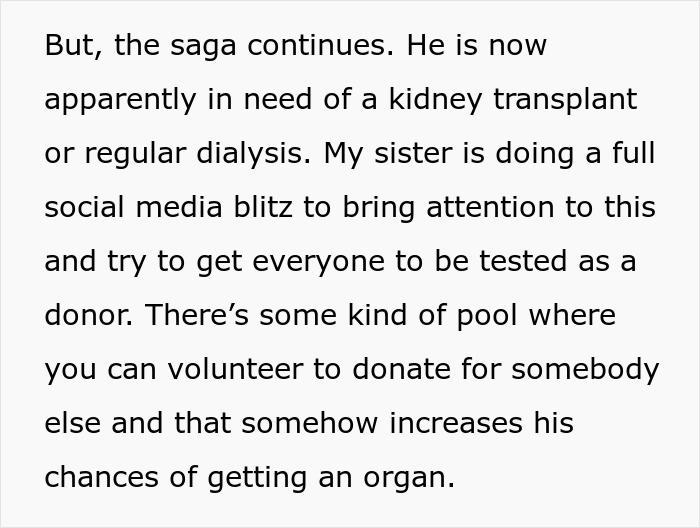
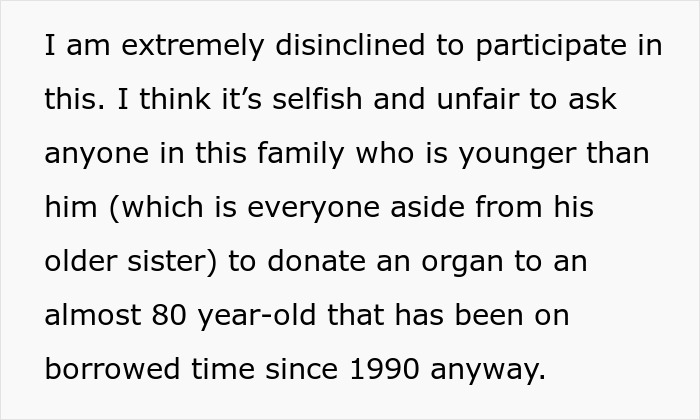
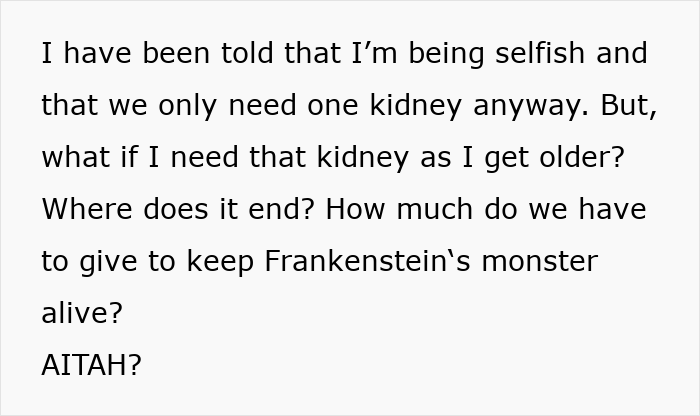

Image credits: freepik (not the actual photo)


Image credits: Grand_Raccoon0923
Age, health, and long-term outcomes shape decisions in kidney transplants
A healthy kidney transplant can remove the need for regular dialysis and significantly improve a patient’s quality of life, experts say.
Studies show that when people over 70 get a transplant, many of them still have good short‑term outcomes and better survival than if they stayed on dialysis.
In reviews of thousands of transplant cases, older adults had similar chances of keeping the transplanted kidney working in the first year or two compared with younger recipients, and many did well for years beyond that.
Yet, long‑term survival and organ function start to dip with age because older bodies simply have more health challenges. In a study, about 75–80% of people over the age of 70 kept their transplanted kidney working at three years, and a very small portion were doing well at five years.
Kidney transplants are the most common organ transplant in the US, and about 300 Americans a year give a kidney to a complete stranger, recent data shows.
At the same time, most people who donate a kidney live long, healthy lives afterward. Studies with thousands of living donors have shown that lifelong mortality and major illness rates are generally not higher than in healthy people who never donated.
But that doesn’t mean the risks are zero. There’s evidence that some donors later develop high blood pressure or reduced kidney function over decades. That’s why doctors take donor screening seriously and stress that donation should always be a fully voluntary and unpressured choice.
“At the heart of organ donation ethics lies the principles of autonomy and informed consent. Autonomy, the right of individuals to make informed decisions about their bodies, is paramount. Any policy affecting organ donation must respect this principle, ensuring that individuals’ decisions are both informed and voluntary,” says Professor and Doctor EF Ehtuish.
Ethical and logical side of donating a kidney to a family member
Because kidneys are very hard to come by, experts sometimes talk about utility — where a donated organ can provide the most possible benefit.
A young kidney often has the potential to work well for decades. If it goes into a younger recipient, that theoretically could add more total life years than if that same kidney goes into someone who is 80 and already beating survival odds.
This doesn’t mean that you shouldn’t try to save an old family member — it just explains why discussions around organ transplant aren’t purely emotional.
None of this data tells you what you should do… and that’s exactly the point. Medicine can outline risks and tell you that an 80‑year‑old getting a kidney can still beat dialysis. It can tell you that most donors live well with one kidney. What medicine can’t tell you is whether the emotional cost, the fear of loss, the family pressure, or the lifelong bond with that parent should tip the scales. That’s deeply personal.
Some people will say the chance to give a loved one extra time outweighs all abstract calculations. Others will look at medical charts and long‑term prospects and decide not to donate an organ. There’s no universally right answer, only what people can live with.
While donating a kidney doesn’t doom you, it does carry some lifelong health considerations.
Researchers have found that while most living kidney donors stay healthy overall, a significant number report physical ailments like fatigue and sometimes chronic pain long after the surgery — up to 12 months and even beyond in some cases.
And how can we forget the mental impact of it all?
Studies show that donors can experience anxiety, depression, vulnerability, or emotional ups and downs as they process what they’ve done — especially if the person they donated to has complications, graft failure, or even passes away later.
Growing up as a caregiver can leave a lasting emotional mark
If you’re taking care of a family member with chronic illness, studies show that it can lead to emotional burnout, anxiety, guilt, and identity stress over time.
Such people also go through an internal conflict about how much of their lives they should sacrifice.
Caregiving is about years of emotional labor and mental wear and tear that can actually shape how someone sees themselves long after the medical procedure is done.
This is exactly the reason why experts say that the person offering their kidney must volunteer freely, without guilt or pressure. And that’s why strong psychological screening before donation, along with medical tests, is actually considered part of good medical practice.
In other words, kidney donation is both a medical gift and a deep personal story. And when someone says it’s their choice, there’s real research that backs up why that personal ownership matters, and why it must be respected.
The man gave some more info in response to the comments
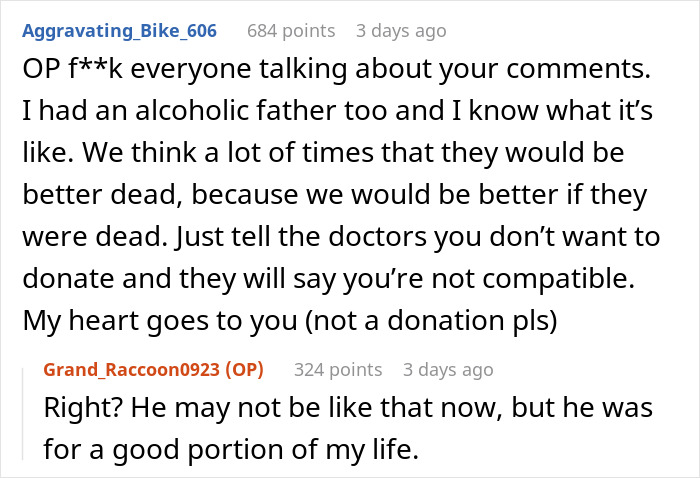
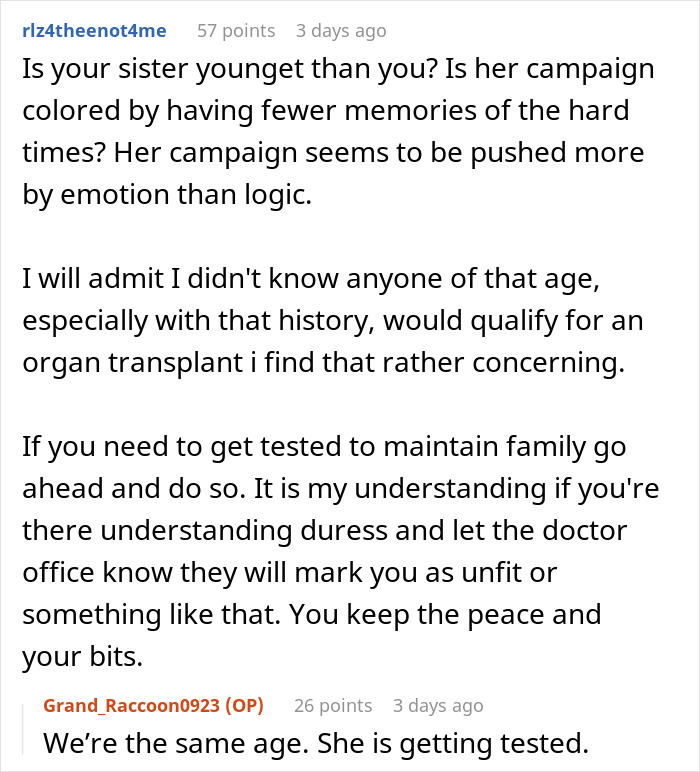
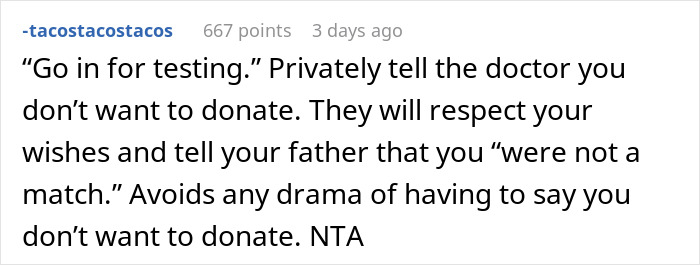
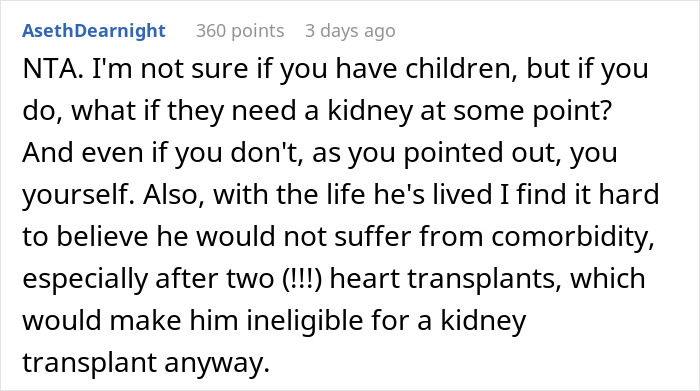
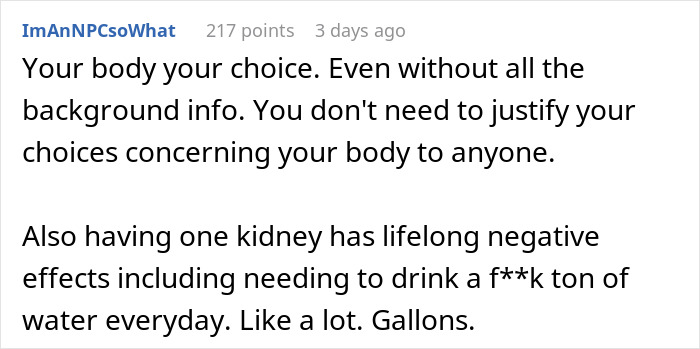
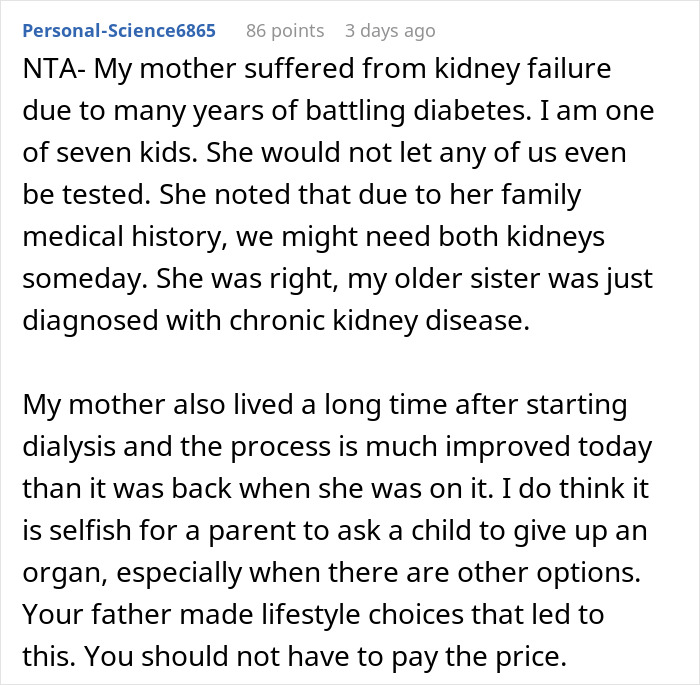
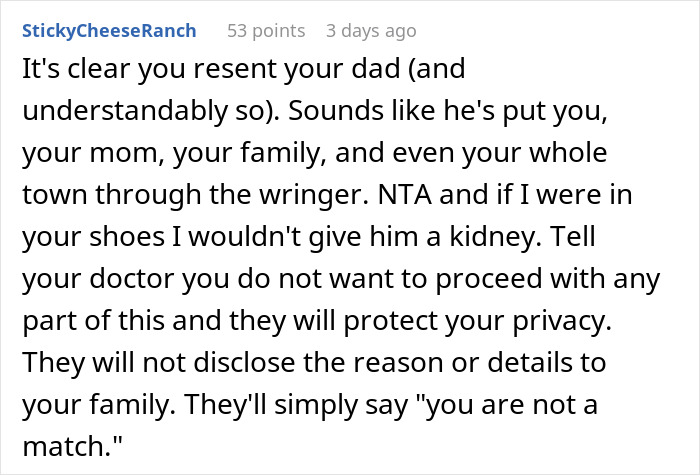
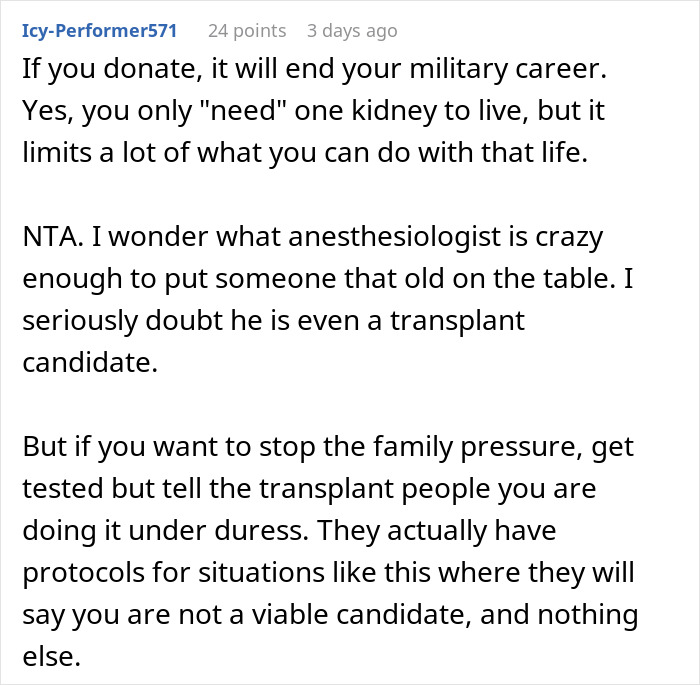
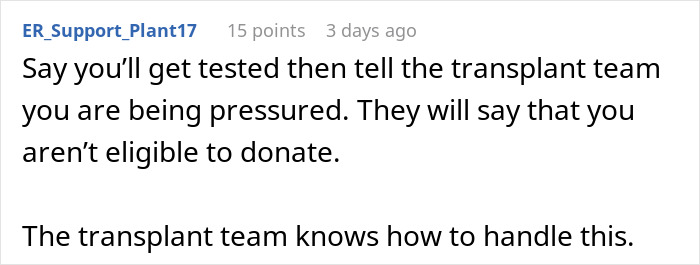
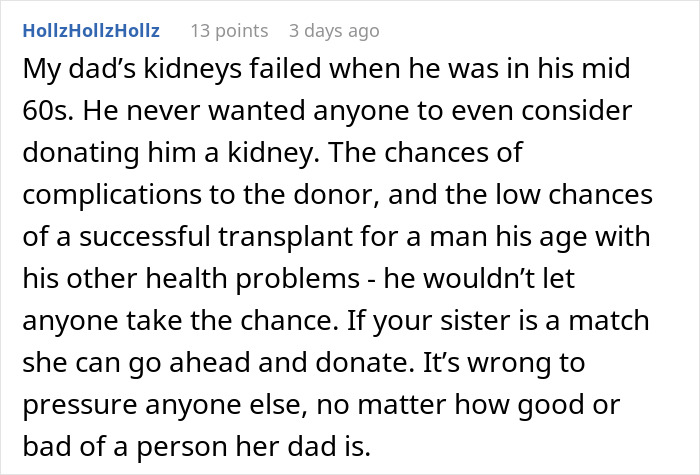
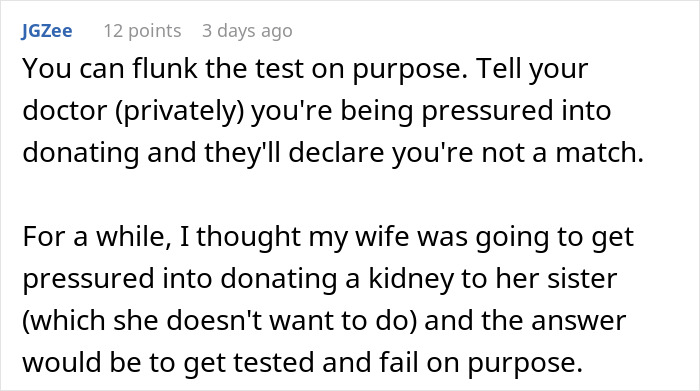
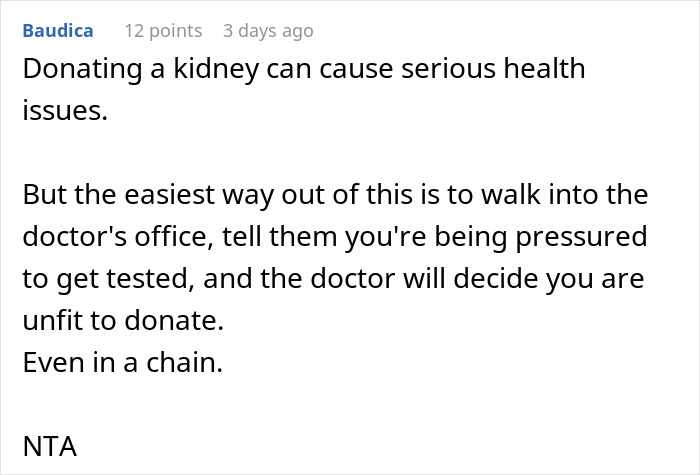
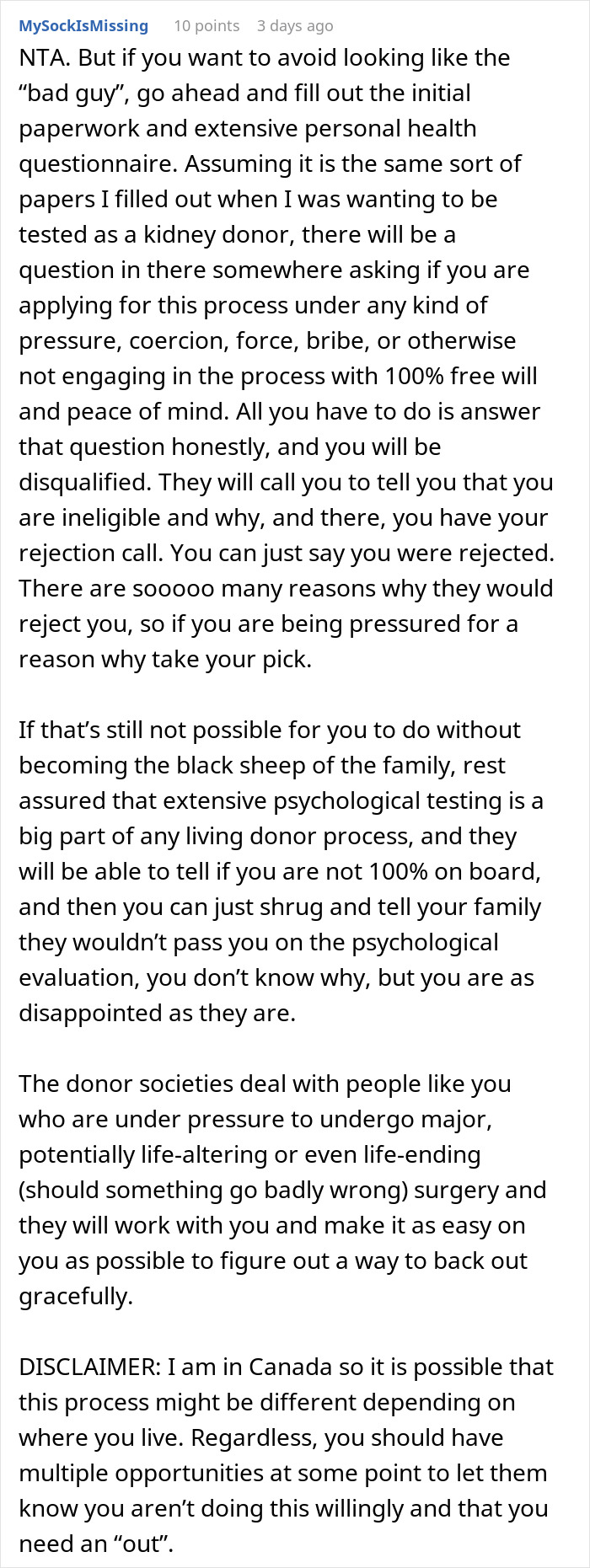
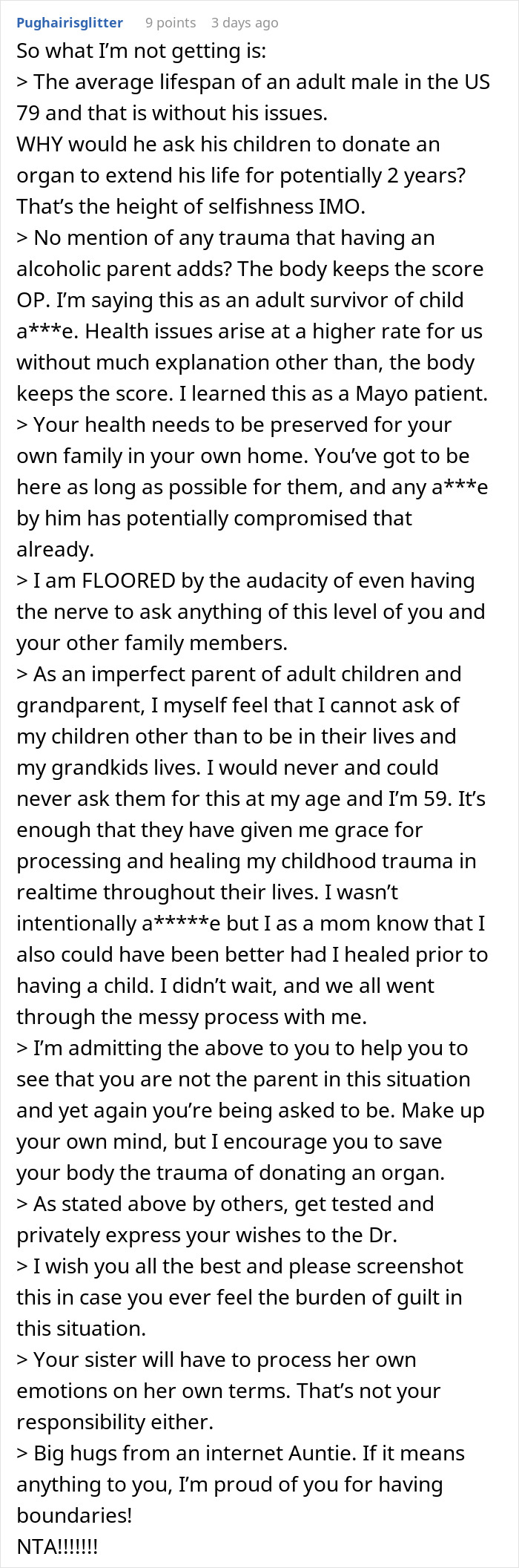
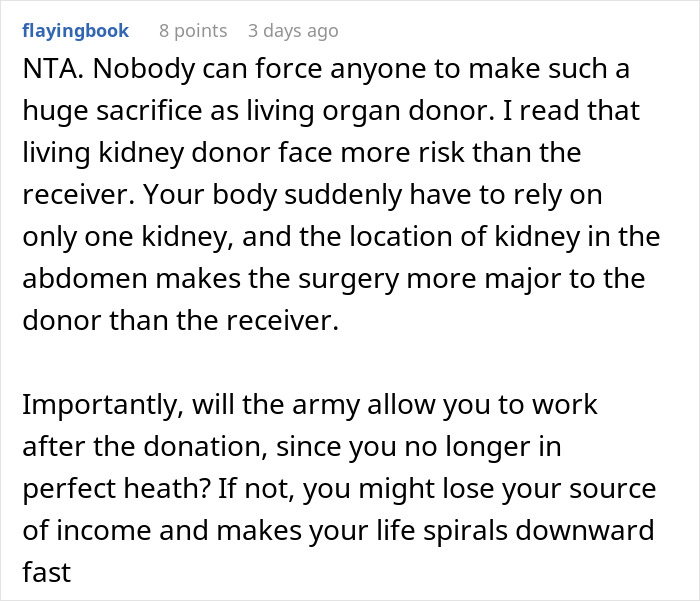
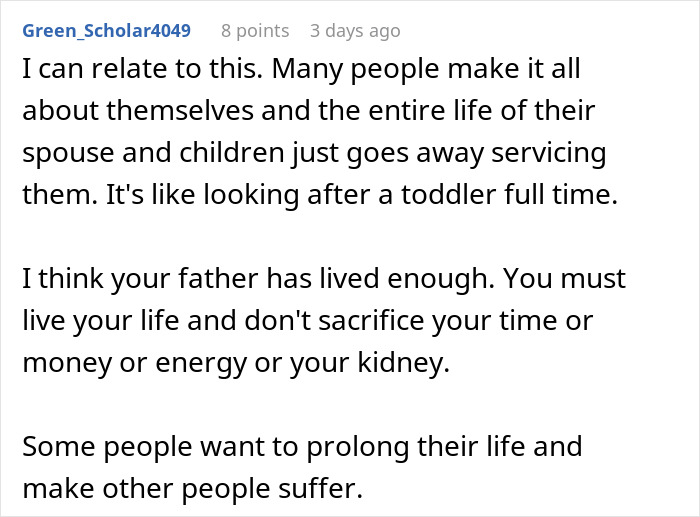
Several people in the comments supported the man’s decision not to donate his kidney
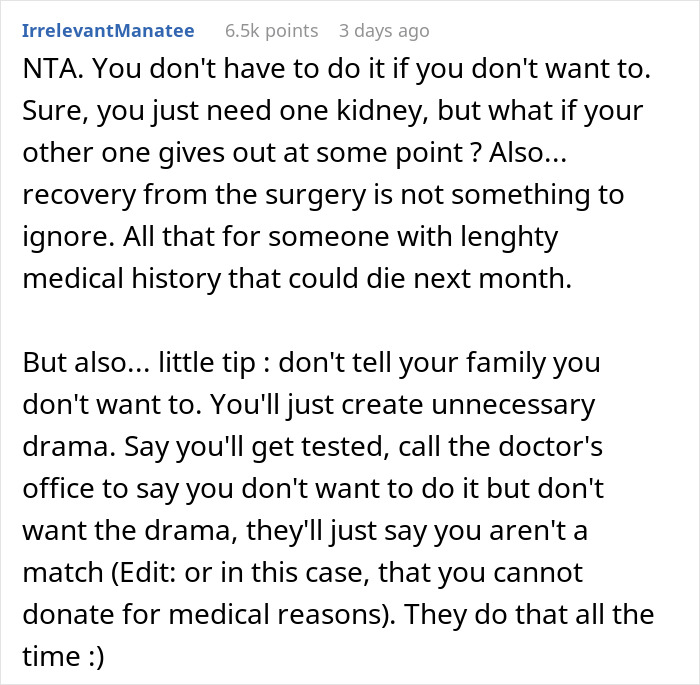





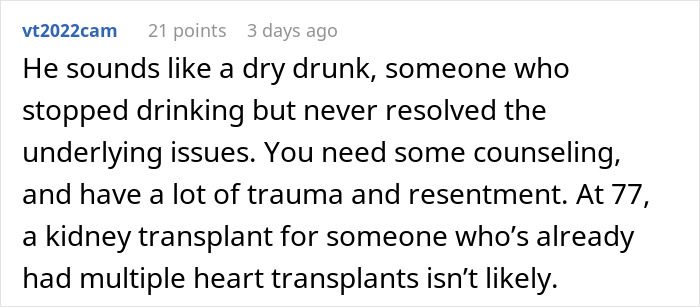
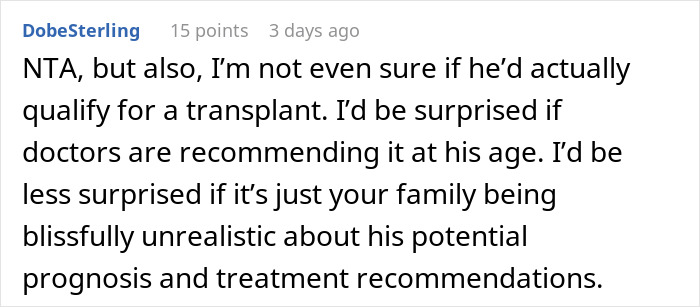






Some people offered a completely different perspective


 Follow Us