Your insatiable curiosity is something you should never be ashamed of. That desire to learn more about the world that surrounds us is hardwired into you. But no matter how educated you are, there will always be something new to learn.
We are featuring the most interesting and thoroughly weird facts and stories from around the globe, as shared on one popular Instagram account. Scroll down if you’re in the mood to learn something new and expand your mind.
#1
A real, albeit tragic, moment captured on an Indian highway in December 2016, depicts two elephants, accustomed together and separated due to human service or tourism, reached for each other in a poignant trunk-to-trunk embrace as a final moment of connection before being taken to different destinations.
Elephants are among the most social and emotionally complex animals on Earth. At the heart of their lives is family, a tightly knit group led by a matriarch, where every member plays a role in caring for and protecting one another.
It’s well known that elephants value their family structure, perhaps more so than many other animals. Calves depend not only on their mothers but also on “allomothers,” relatives who help raise and guide them. Older elephants pass down knowledge of migration routes, water sources, and survival strategies. These bonds are more than practical, they are deeply emotional.
When elephants become separated from their families, they often experience profound distress. Researchers have documented signs of grief, from elephants lingering near the bones of deceased relatives to their mournful trumpets when a calf is taken away. Their sadness and pain reveal the depth of their attachments and highlight just how central family is to their existence.
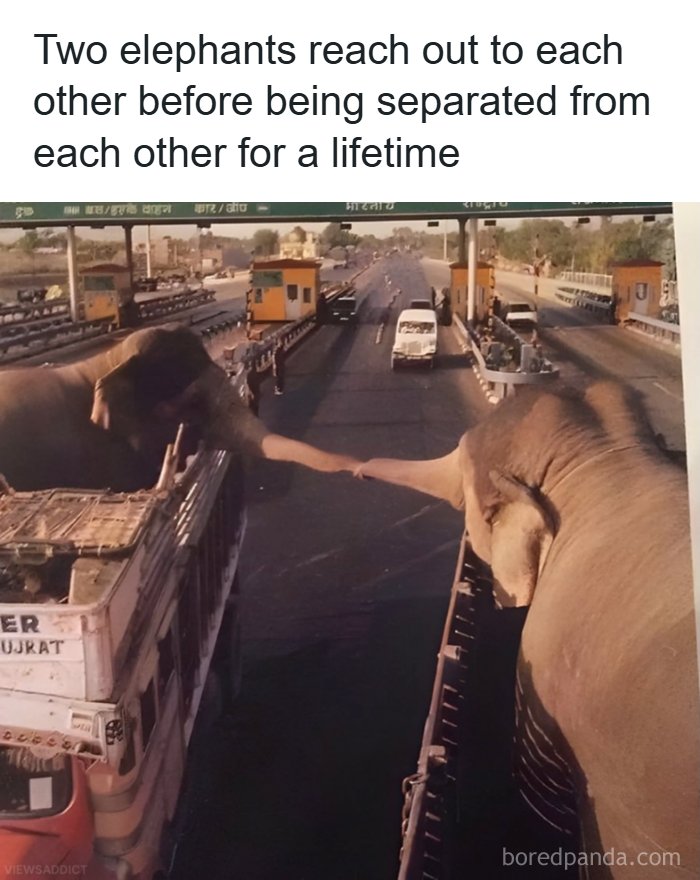
Image source: viewsaddict

#2
In 2002, Jason Padgett was just a regular guy, a furniture salesman who partied, chased girls, and never opened a book.
One night outside a karaoke bar, two men jumped him and beat him unconscious.
He woke up a completely different person. The world around him was no longer normal, everything he saw was made of geometric shapes and mathematical patterns.
Doctors diagnosed him with Acquired Savant Syndrome, a rare condition where brain trauma unlocks extraordinary abilities hidden inside the human brain.
Jason went from cheating on every math test to writing a book, giving TEDx talks and selling his mathematical fractal artwork worldwide.
Fewer than 100 people in the world have this condition. Makes you wonder what’s lying dormant inside your own mind.

Image source: viewsaddict
#3
In 2015, wildlife photographer Christophe Courteau took this close up of a 6ft 6, 400lbs (186kg) silverback gorilla, right before it punched him in the face.
Christophe was punched at the Kwitonda gorilla group in Volcanoes National Park, Rwanda. Akarevuro, the silverback gorilla, was said to be intoxicated (drunk) from fermenting bamboo stems and became angry when he spotted the cameras.
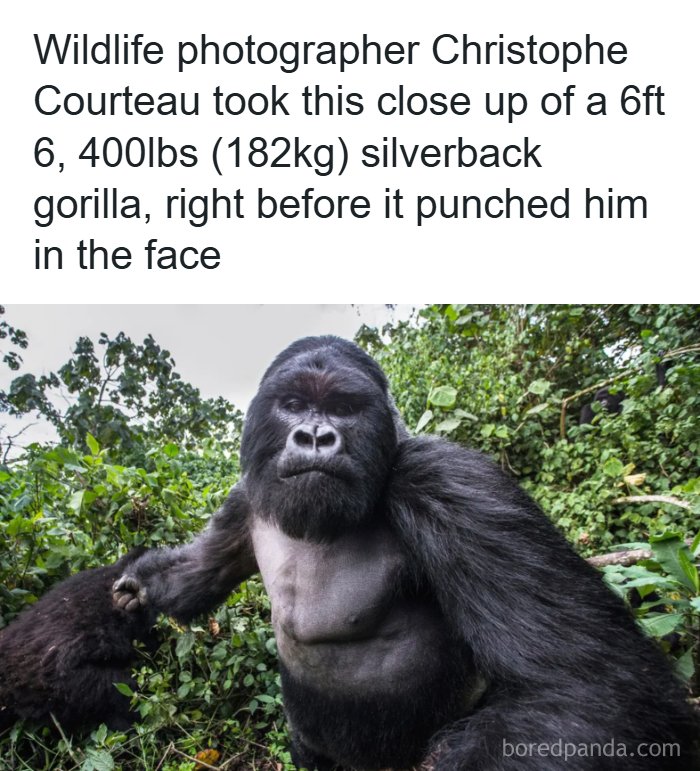
Image source: viewsaddict, CHRISTOPHE COURTEAU
Curiosity about your current environment, the past, and the world is what helps you survive and thrive. And yet, curiosity, as a whole, is a psychological phenomenon that remains poorly understood, despite being such a fascinating subject.
According to researchers Celeste Kidd and Benjamin Y. Hayden, who studied the psychology and neuroscience of curiosity, one reason we struggle to understand curiosity is “too much focus on delineating what is and is not curiosity.”
#4
Throughout his life, Schulz had several dogs. But it was his childhood dog Spike that served as the biggest inspiration for Snoopy. The black-and-white, mixed-breed dog was very smart, according to Schulz. Spike could understand at least 50 words, he said in 1983.
In the first picture is Charles Schulz and his dog Spike in 1935, when Schulz was 13 years old.
You can see Charles Schulz in Minnesota sharing a “pop” with his beloved childhood dog Spike (who had a notoriously strong stomach). Schulz would later pattern Snoopy’s appearance after Spike, and the dog’s behavior became the inspiration for some of Snoopy’s cartoon antics—perhaps even his love of root beer.
“Spike was the most intelligent, the wisest dog | ever knew. He had an amazing vocabulary, of words he understood. I could tell Spike to go down in the basement and bring me a potato, and he’d do it. We had long talks, he was a great listener. He was just plain smart, and the best friend I ever had.” — Charles M. Schulz, 1969.

Image source: viewsaddict, Courtesy the Charles M Schulz Museum and Research Center
#5
Marie Wilcox realized late in life that she was the last fluent speaker of Wukchumni, a Native American language of California’s Yokuts people, and decided to take action to save it from disappearing forever. At the age of 82, she taught herself how to use a computer and spent seven years carefully typing a 6,000-word Wukchumni dictionary, creating the first written record of the language in history. Her work preserved not only vocabulary but also cultural knowledge that had been passed down orally for generations. Through determination and lifelong learning, Wilcox ensured that Wukchumni could be taught to future generations, proving that one person’s dedication can protect an entire culture from extinction.
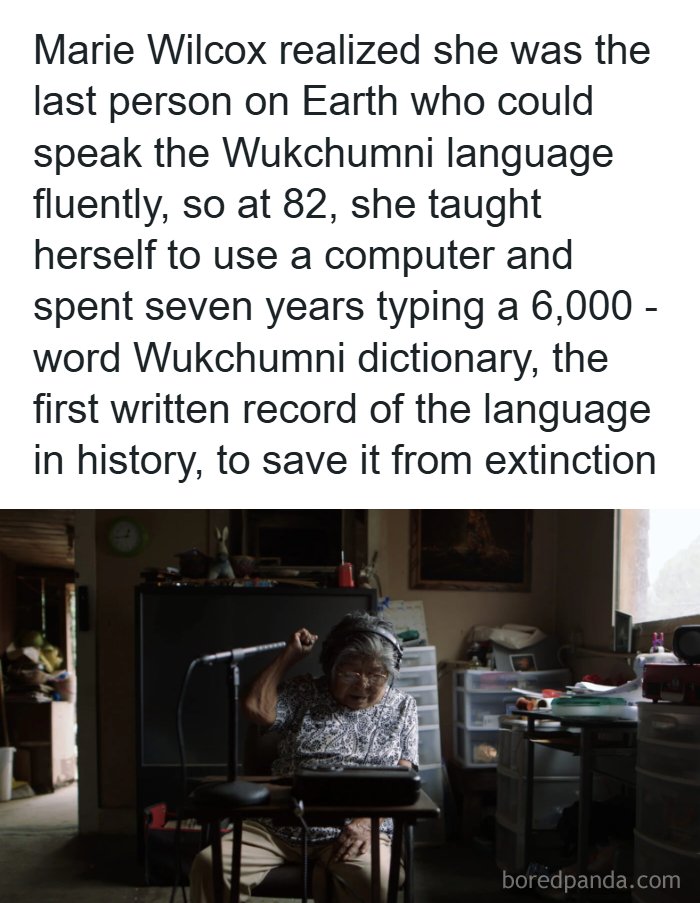
Image source: viewsaddict
#6
In 2005, Swedish businessman Johan Eliasch purchased around 400,000 acres of rainforest in the Brazilian Amazon by acquiring a logging company that owned the land. Instead of continuing operations, he shut down all logging to protect the forest and promote conservation.
Eliasch’s goal was to preserve the area’s biodiversity and raise awareness about the need to protect the Amazon. While the purchase sparked debate in Brazil about foreign ownership of rainforest land, it remains one of the most notable private conservation efforts in the region.
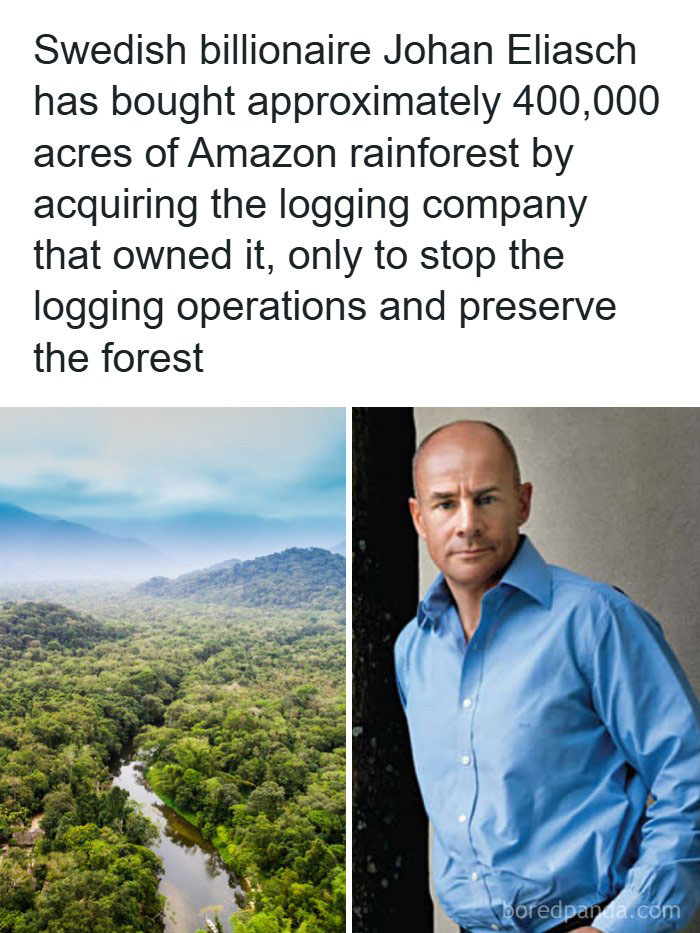
Image source: viewsaddict, stockholmresilience.org
The researchers argue that broadening the scope of inquiry into curiosity allows for the study of information-seeking in non-human subjects, such as monkeys, rats, and groundworms.
“Animal techniques allow for a granular view of mechanism, allows a greater range of manipulations, and allows cross-species comparisons,” Kidd and Hyden write.
Meanwhile, a broader perspective on curiosity allows researchers to study its relationship with reward and learning, rather than trying to study it in isolation.
#7
The X-ray of a beaver’s tail is a striking reminder of how misleading bones alone can be. On the outside, the beaver’s tail is flat and leathery, yet its skeleton shows only a narrow line of vertebrae. The distinctive paddle shape comes not from bone, but from fat, connective tissue and skin, none of which would survive in the fossil record.
This illustrates a major challenge paleontologists face when reconstructing the bodies of extinct animals such as dinosaurs. Fossils usually preserve only bones and, in rare cases, impressions of skin or feathers. The muscles, fat, colors, and unique adaptations that shaped how these creatures looked and lived are often lost to time. Without modern beavers as a reference, one might wrongly assume they had thin, rat-like tails. Similarly, many dinosaur reconstructions have changed over the years as new fossil evidence revealed feathers, soft crests, or body shapes that were invisible from skeletons alone.
Rebuilding extinct animals is therefore a blend of science and imagination. Bones give us the framework, but the living creature, the texture, the weight, the vibrant adaptations, requires careful inference and sometimes a bit of guesswork. The beaver’s tail reminds us that even the strangest features of life often lie hidden beyond the bones.
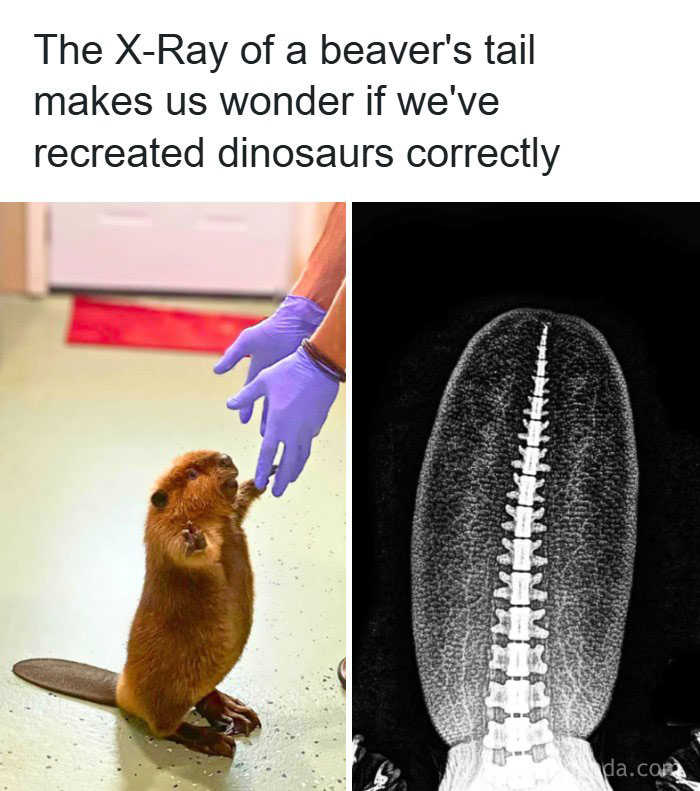
Image source: viewsaddict
#8
In 1973 an area of land near Nichinan City in Japan, was designated as “experimental forestry” and one of the experiments was to try and measure the effect of tree spacing on growth. 50 years later here is the result.
As you can see from today’s images, the forest has taken on this bizarre shape because there are the same number of trees in each ring, but each ring is smaller as you get closer to the center. It is very noticeable that the trees closest to each other are smaller, while those on the outer rings are significantly taller with a larger crown diameter.
Trees, as living beings, grow smaller when they are closer together, this happens due to the lack of space; furthermore, plants sense the presence of other plants near them and therefore grow according to the space they have available.
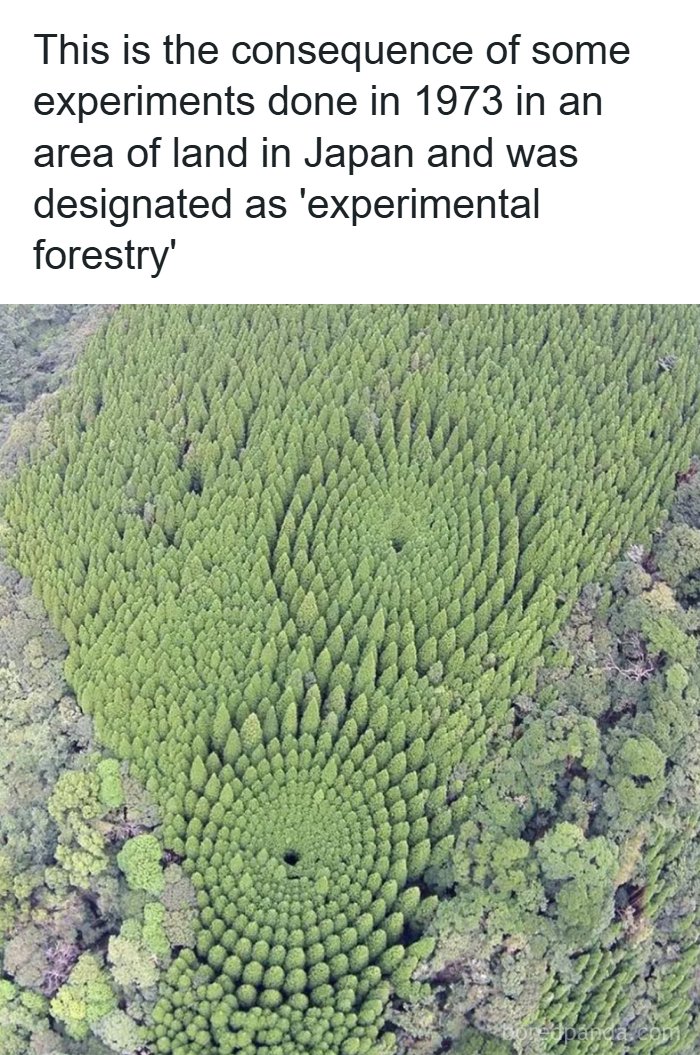
Image source: viewsaddict
#9
The severe European drought of 2022 caused river levels to fall so dramatically that long-submerged “hunger stones”reappeared in rivers such as the Elbe, Rhine, and Danube, drawing renewed attention to these stark historical warnings carved centuries ago into the riverbeds of Central Europe; created during periods of extreme drought, famine, and social distress, the stones marked dangerously low water levels that once halted river trade and ruined harvests, and many bear blunt inscriptions intended for future generations, including the famous Elbe stone dated 1616 that reads “If you see me, cry,” a message that resonates uncomfortably today as modern climate-driven droughts echo the conditions that once led to widespread hunger, revealing these stones not merely as archaeological curiosities but as enduring reminders of how closely human survival has long been tied to the rhythms, and failures of water.
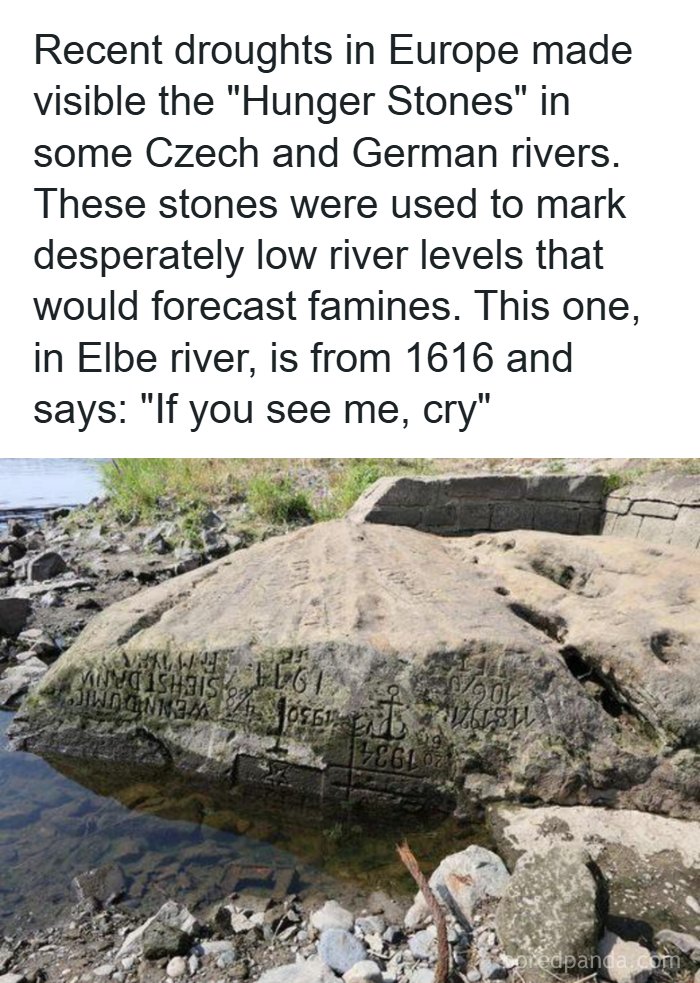
Image source: viewsaddict, Dr. Bernd Gross
Broadly speaking, curiosity allows human beings and other animals to:
- Activate learning systems
- Drive informative options and actions
- Improve performance
- Yield fitness benefits
“Although information is intangible, it has real value to any organism with the capacity to make use of it. The benefits may accrue immediately or in the future; the delayed benefits require a learning system,” the researchers explain.
#10
The mysterious ‘living’ stones: they grow, move and reproduce.
Starting out as pebbles and growing at about 2 inches (5 cm) per millennium, the ‘trovant’ stones are unique mineral structures that mimic plant and mammal life. The bizarre shaped stones almost appear to grow in the same way as plant tissue and they give ‘birth’ to new stones just like an animal.
Located primarily in the small Romanian village of Costesti, but also can be found in Lybia’s Kawakeb Valley, which is part of the Kafra region, the Trovants are not a typical rocks. Ranging from a few millimeters to as large as 10 meters (0,11 inches to 394 inches) these stones, after a heavy rain, appear to grow, expand, and sometimes even sprout new formations.
They are made of a hard stone in the heart, which as it goes outwards takes on the characteristics of a particular alloy similar to cement, or sand, which reacts with rainwater. This characteristic allows them to “multiply” and “move”. The minerals in rainwater form a reaction within that builds pressure inside, which makes the rock grow, move and multiply.
When they were sliced in half, they revealed concentric rings similar to those found in trees, each representing a period of growth.
Although they are not alive in the scientific sense, they are described as “alive” because of the way they appear to change over time, moving and giving rise to small rocks that resemble offspring.
Trovants were dubbed the “alive” and “moving” stones for these reasons.
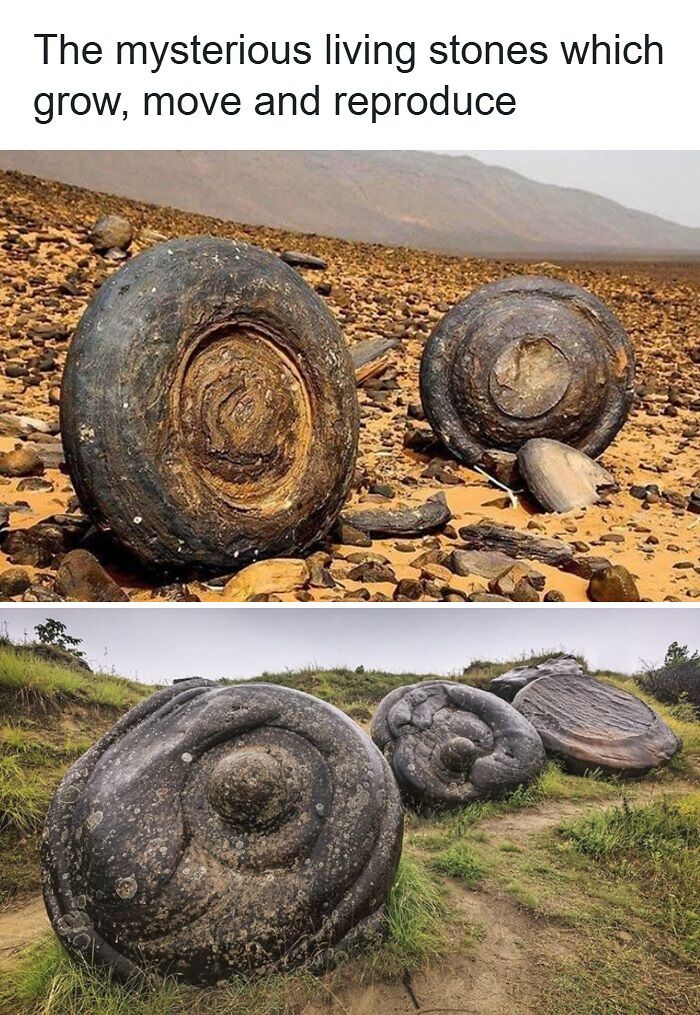
Image source: viewsaddict
#11
Six Polk County jail inmates who were on an outdoor work detail at a cemetery rushed to the aid of a deputy sheriff who collapsed from heat and a preexisting medical condition. One inmate used the deputy’s cell phone to call 911 while others removed the deputy’s vest and gun belt and stayed with him until emergency crews arrived; the deputy recovered and returned to duty. (2017).
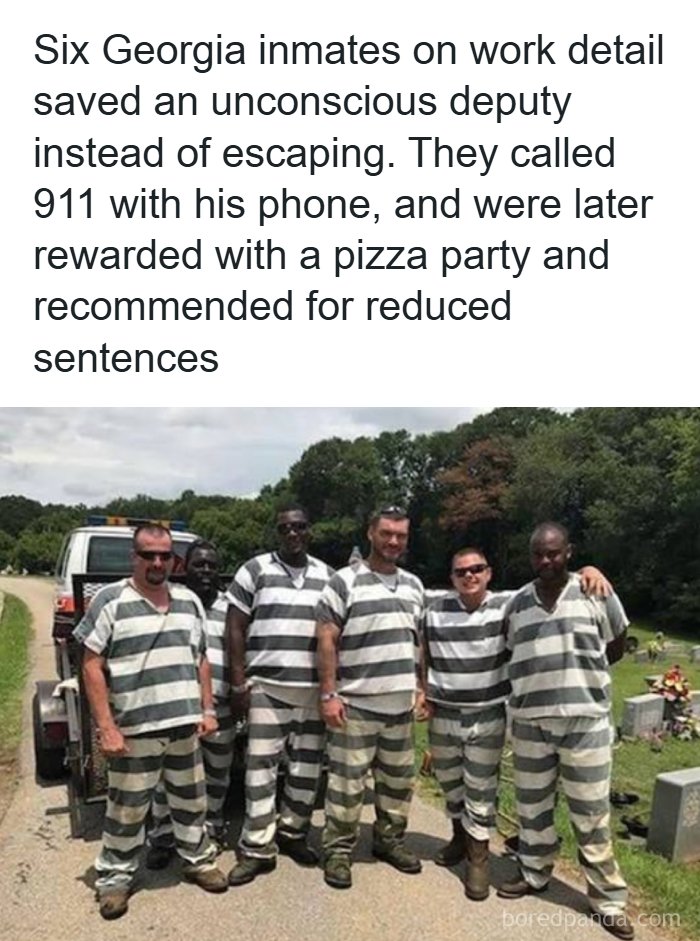
Image source: viewsaddict
#12
Daisugi (台杉) is an ancient Japanese forestry technique, originating in the Kitayama region near Kyoto, that allows for sustainable tree cultivation, producing high-quality timber without cutting down the main tree. Literally translated as “platform cedar,” daisugi involves selectively pruning a tree (usually Japanese cedar) to grow multiple straight, parallel stems from its base.
This method involves growing multiple straight, knot-free cedar trees from a single, existing tree by pruning and shaping the branches to encourage vertical growth. This allows for a sustainable harvest of timber without cutting down the original tree, making it a method of “growing trees on trees”.
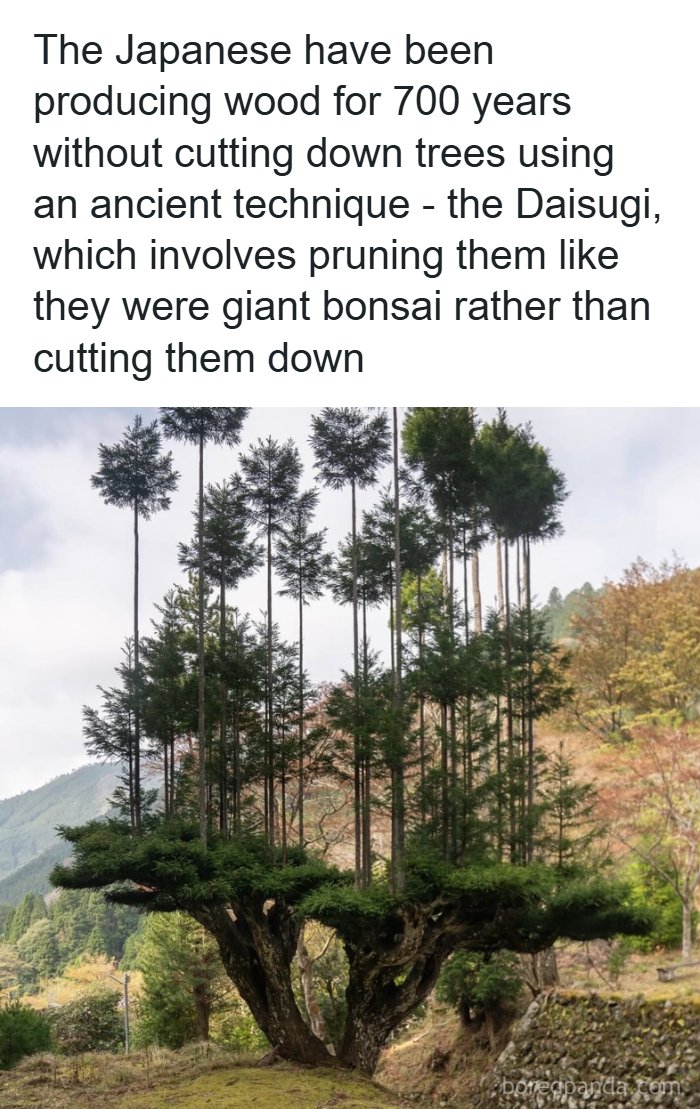
Image source: viewsaddict
What do you think, Pandas? What ideas spark your curiosity the most? What topics are you most excited about?
Generally speaking, how much time do you find every day to apply your curiosity to learning new things about the world?
What’s something new that you learned this week that you’d like to share with everyone else?
Tell us what you think in the comments.
#13
A significant 7,000-year-old megalithic monument known as the Dolmen of Guadalperal has been periodically uncovered in Spain, particularly during droughts, by the receding waters of the Valdecañas reservoir. The structure, which predates both the Great Pyramids of Egypt and Stonehenge, has emerged from the water during droughts the first time in 2019 and then more in 2022. While its precise purpose is still debated, it is believed to have functioned as a ceremonial tomb, a religious site for rituals, or an astronomical observatory, possibly serving also as a trading post. The monument’s arrangement of over 100 standing stones suggests a sophisticated understanding of architecture and a deep connection to the cosmos, offering valuable insights into the spiritual and social lives of ancient Iberian societies.
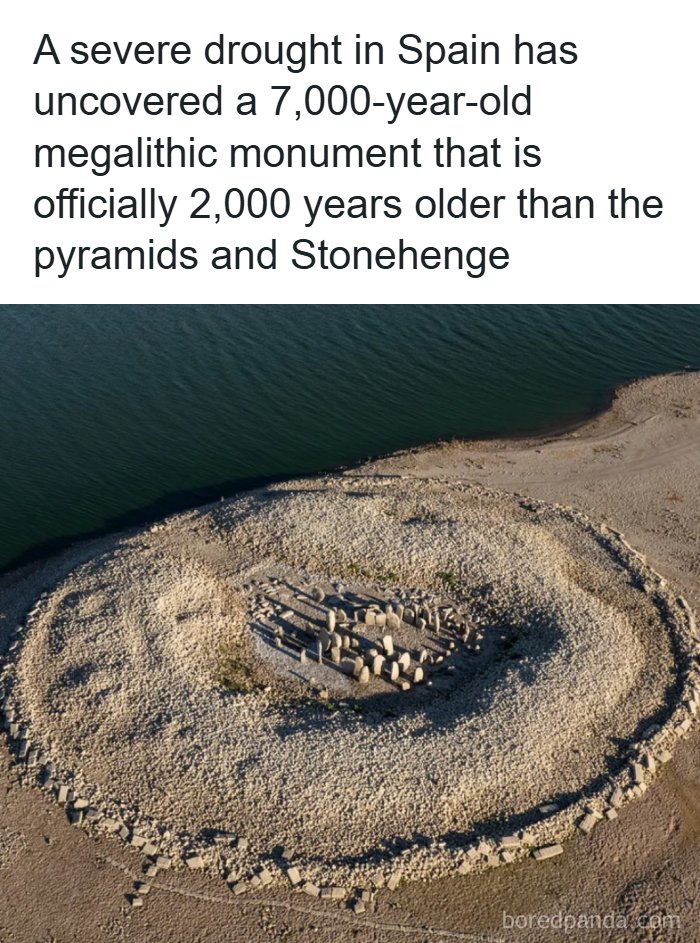
Image source: viewsaddict
#14
In 1980, Mark DeFriest, a brilliant yet misunderstood autistic savant, was sentenced to 4 years in prison, for taking a toolbox his father had left him in a will. The will hadn’t been probated, so his actions were technically illegal. What should’ve been a short sentence spiraled into 34 years, largely because he attempted to escape 13 times, succeeding in 7 of them.
DeFriest possessed extraordinary abilities, a photographic memory, mechanical genius, and an uncanny talent for replicating keys after just a glance, sometimes using only items like toothbrushes or scraps of metal. These gifts helped him repeatedly outwit prison security, which only led to more time and harsher punishment. After his multiple escapes by replicating keys using his memory, he earned the nickname of “Houdini of Prison.”
Most alarming, he was sent to prison despite four out of five doctors deeming him mentally unfit. The system ignored his autism and instead treated him as a dangerous escape artist. He spent much of his sentence in solitary confinement.
His story, brought to light by the 2014 documentary The Mind of Mark DeFriest, has become a powerful example of how the justice system can fail those with mental illness, punishing brilliance rather than understanding it. After more than three decades, DeFriest was finally granted parole in 2019, but only to a psychiatric facility.
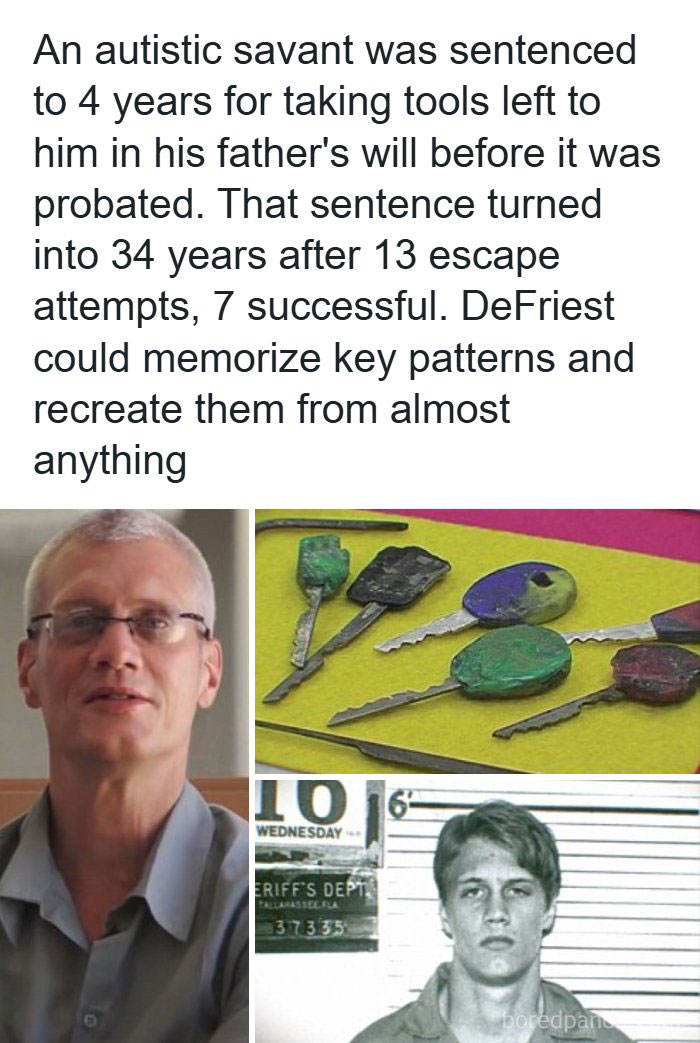
Image source: viewsaddict
#15
A weasel riding on the back of a green woodpecker – Photographer Martin Le-may captured this photo in 2015.
Though this looks like it could be a fantastic animal rendition of Jasmine’s magic carpet ride from Disney’s classic Aladdin, the photo is real and the truth behind it is somewhat more sinister. Martin Le-May, a hobby photographer in East London, took these photos of a woodpecker and a baby weasel fighting for their lives over Hornchurch Country Park.

Image source: viewsaddict
#16
Born without legs, Matthew DeMeritt, was tapped in 1981 to help bring E.T. to life in Steven Spielberg’s iconic film. While most of the alien’s movements were handled by puppets or stunt performers, it was Matthew—who could walk exceptionally well on his hands—who delivered the awkward, lifelike gait seen in the full-body shots.
Matthew only got the role because of a chance physical therapy casting call in California. Spielberg’s team measured him and filmed him walking on his hands, though even Matthew later recalled thinking, “I’d never demonstrated…walking on my hands…how they could think I could fit inside a costume… but it kind of worked out that way.”
On set, he wore a four-foot rubber suit, peeking out through chest slits with the alien head placed atop his own. He performed scenes involving falls—like the beer-drinking moment—and recalls Spielberg regularly checking in on his safety:
“Spielberg came up to me and asked if I was all right… ‘Is there any way you could just walk straight into that cabinet… fall smack on your face?’”
Today, Matthew DeMeritt is likely the only living actor to have donned the E.T. suit. His contribution remained largely uncelebrated until anniversary screenings and fan retrospectives brought him back into the spotlight. His story is a remarkable testament to creativity meeting opportunity — and the often unseen hands (and hearts) behind cinematic magic.
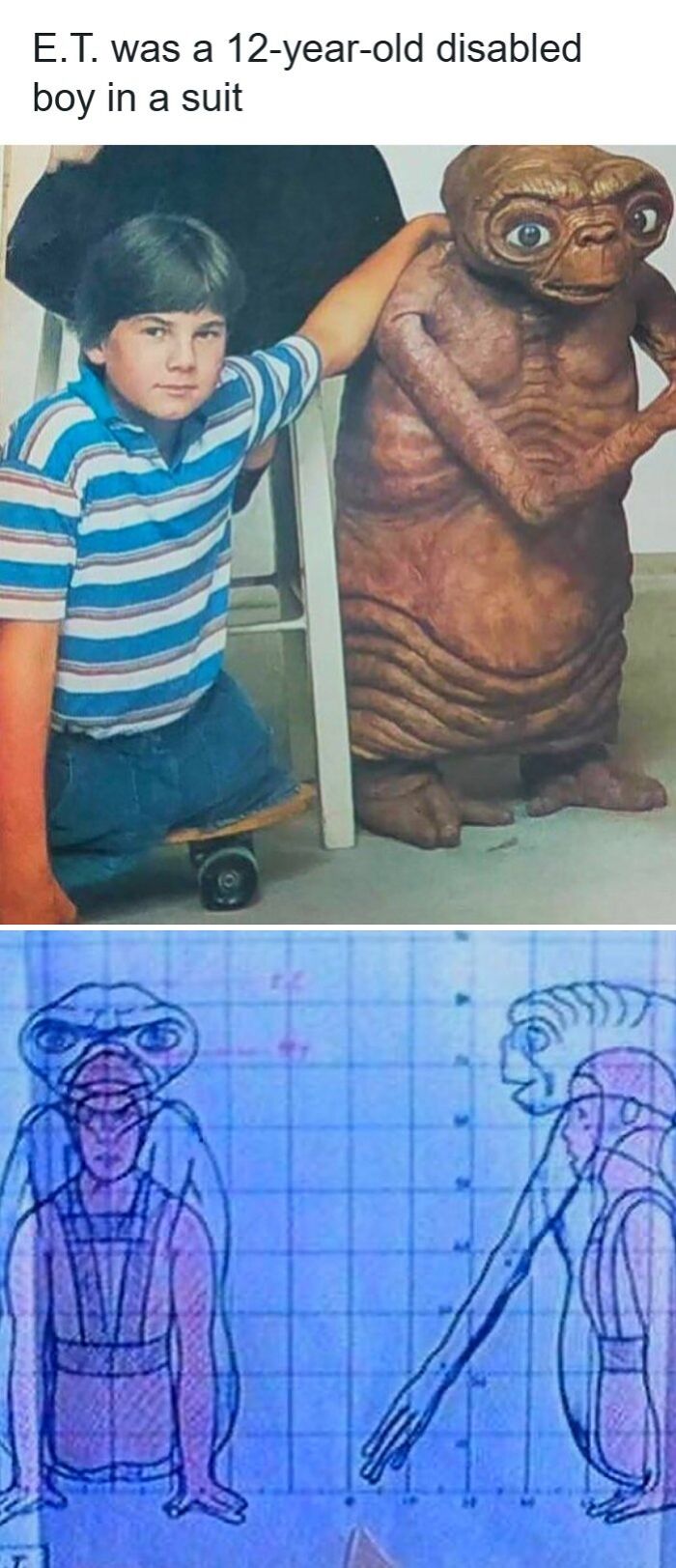
Image source: viewsaddict
#17
Spirit from the movie is a real horse, he’s still alive and he’s 29 years old.
DreamWorks selected the now-named Spirit when he was a colt. Born to a stallion and mare that had been captured by the BLM in Oregon, Spirit was (and still is) a beautiful example of the Kiger mustang breed. His wide-set eyes and thick, wavy, multi-colored tail and mane became the inspiration for the animated horse that is still stealing hearts all these years later.
Like his animated character, the real-life Spirit is part of the fight to help wild horses maintain their natural habitats and freedom. While he lives at the sanctuary and loves interacting with people, Spirit is a prominent ambassador for wild horses. He engages youth around the world to learn more about America’s mustangs and every horse’s need for freedom and protection.
He lives on Return to Freedom’s headquarter facility in Santa Barbara County on 300 acres of pristine California pasture. From a young age he learned to be comfortable around people, but those who know him best say he has a spirit similar to that of his fictional character. He’s grown to be an important part of the wild horse sanctuary, and he’s helping educate the public about his breed and ways humans can protect all of America’s wild horses.
With Spirit’s claim to fame, he attracts crowds of fans to his sanctuary home. During these visits, the real-life Spirit helps the sanctuary spread an important message about what’s currently happening to the country’s wild horses and what the public can do to help.
Now 25 years old, the real-life Spirit is busy enjoying life at the sanctuary. He spends his days interacting with a few of his equine friends and enjoying attention and care from his favorite humans. He was born in captivity, but the spirit of independence and the wild west lives in his veins. And thanks to Spirit: Stallion of the Cimarron, his image will continue to show others that freedom is always worth fighting for.
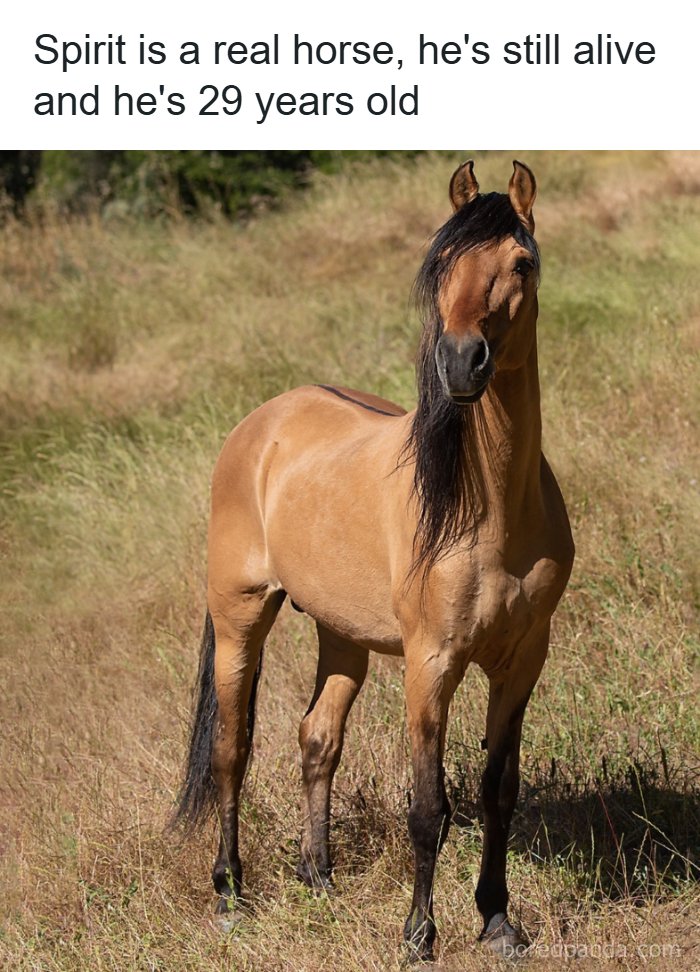
Image source: viewsaddict
#18
In 1864, a group of Japanese samurai from the Ikeda Mission posed for a now-famous photograph in front of the Great Sphinx of Giza during their tour of Europe to study Western technology and institutions. The image captures a significant cross-cultural moment, with Japan’s feudal warriors standing before the ancient Egyptian monument just as Japan was ending centuries of isolation.
This tour was part of the Tokugawa shogunate’s effort to understand the changing world, which culminated in the Meiji Restoration just four years later, an event that would lead to the abolition of the samurai class.
The photo of the samurai posing in front of the Sphinx in 1864 was taken by the Italian-British photographer Antonio Beato.
The samurai were members of the Second Japanese Embassy to Europe (also known as the Ikeda Mission), a diplomatic tour sent by the Tokugawa Shogunate to negotiate with European powers. On their journey to France, they stopped in Egypt, where they visited the Pyramids and the Sphinx and had their pictures taken by Beato, who had a photographic studio in Luxor at the time.

Image source: viewsaddict
#19
In 2019, someone placed laser eyes on the Gandhi statue at Ferry Plaza in San Francisco, turning him into a comic book supervillain.

Image source: viewsaddict
#20
A family of Xolos, one of the most ancient dog breeds in the world.
Ancient legends says Xolos were a gift to humans to guard them in life and guide them in the afterlife. Today, these dogs are routinely called “xolos” (pronounced cholos). They are among the oldest domesticated dog breeds; remains of one dog found at an archaeological site reportedly were dated to about 5,500 years ago.
The Aztecs considered the Xolo sacred, and invested them with mystical healing abilities.
They also believed that the Xolo would guide them to the afterlife when they passed away.
The breed’s full name, Xoloitzcuintli, derives from the name of the Aztec god of fire and lightning, Xolotl, as well as “itzcuintli,” the Aztec word for dog. They are also referred to as “Mexican hairless dogs.”
According to beliefs, an Aztec god named Xolotl specifically created this dog from the same bone of life as their humans, to guide the latter’s souls through the perilous Mictlán. Among the Xolo’s key responsibilities: helping pet parents cross the impossible Apanohuacalhuia River. Here, Xolos would wait at the shore in anticipation of their arrival.
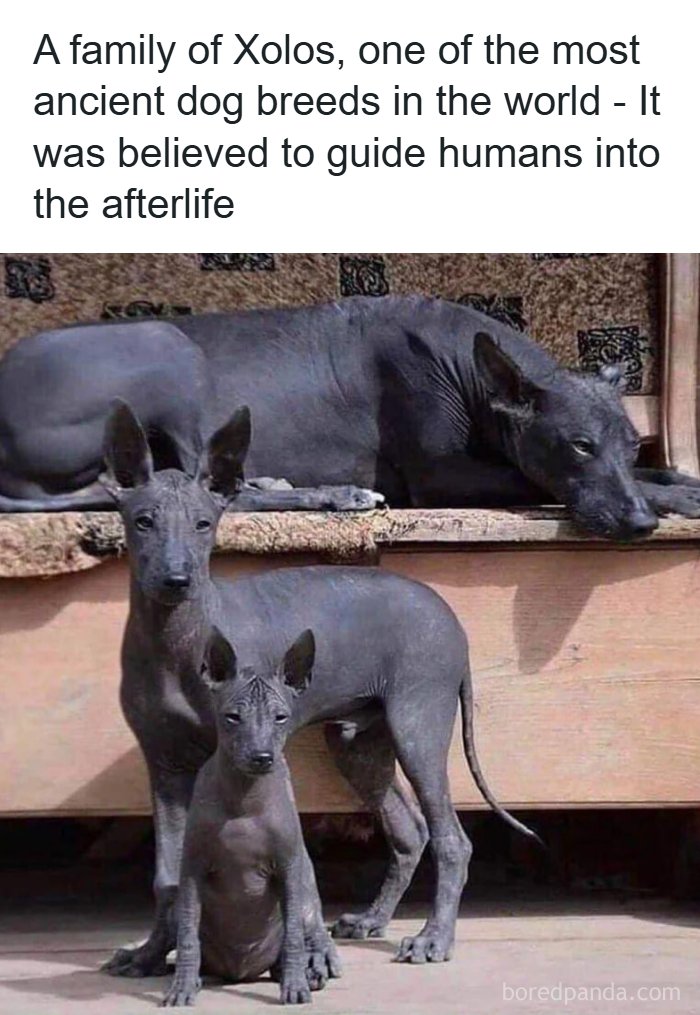
Image source: viewsaddict
#21
This geometrically shaped mountain with a flat top and triple rim is one of the oldest on Earth, dating back two billion years – when the land was lifted high above the ground by tectonic activity. The sides of the mountain are sheer vertical cliffs, with several waterfalls, making it nearly impossible to climb.
Mount Roraima is an anomaly from the typical idea of a mountain peak, as it is more a plateau than a mountain, with a summit that is approximately 31 km^2.
Mount Roraima is the highest of the Pakaraima chain of tepui plateaus in South America. First described by the English explorer Sir Walter Raleigh in 1596, its 31 km^2 summit area is bounded on all sides by cliffs rising 400 meters.
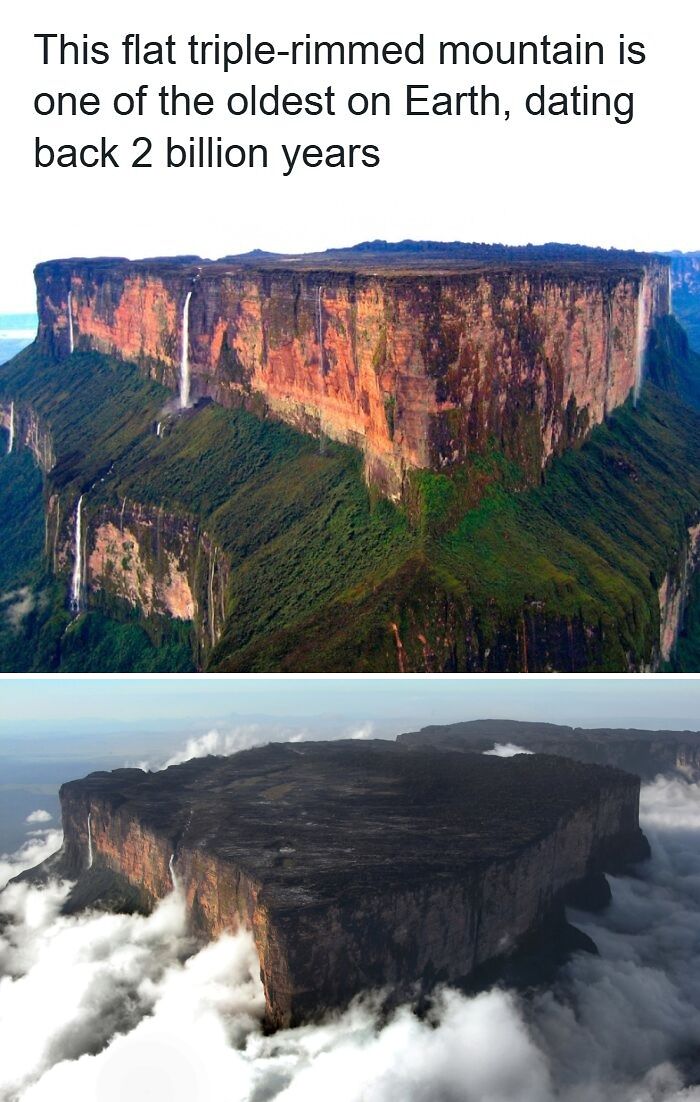
Image source: viewsaddict
#22
The pristine pool never seen before by humans discovered in the depths of cave 700 ft (213 meters) below ground.
The cave pool, which appears to be completely “virgin,” was found in Lechuguilla Cave in New Mexico, one the world’s largest and most famous caves.
That said, the cave had not before been touched by humans at all, as scientists found this natural wonder at a depth of 213 meters (700 ft) below the entrance to the cave, which also happens to be one of the tallest (or deepest) in the world.
Scientists called the site “completely pristine” and noted that they believe the bacteria living in the water had “evolved entirely without human presence.”
The pool discovered in the cave network appears almost unearthly and is surrounded by white frosted rock. While the water may look murky with a creamy tint to it, the coloring is actually the product of an optical illusion.
The uncontaminated site is so important because almost everything is contaminated with human pollution these days.
It’s rare treat for science to be offered a completely clean sample of nature.
Credit: Max Wisshak photo/Carlsbad Caverns National Park.
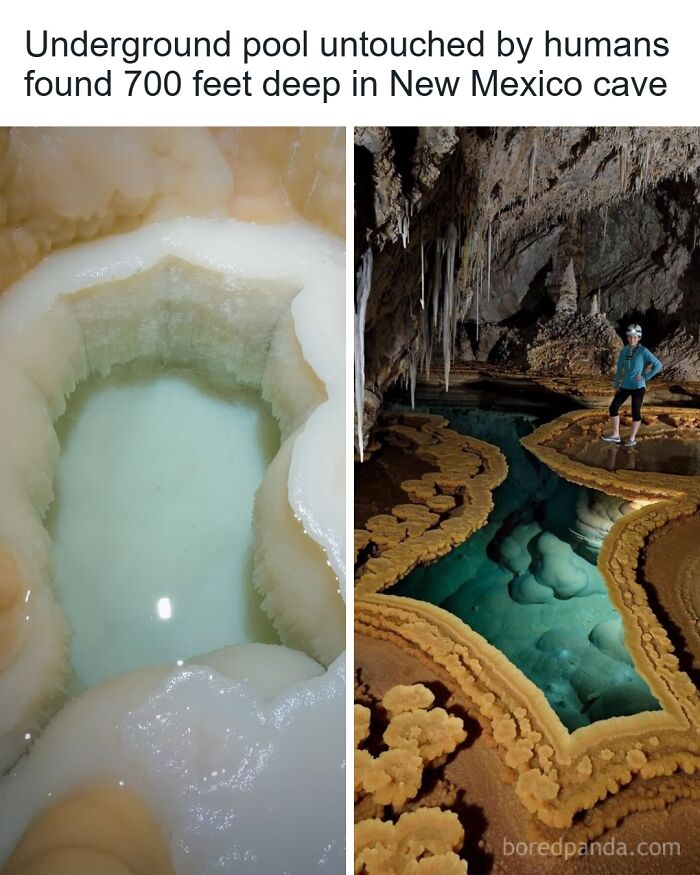
Image source: viewsaddict
#23
In 2012, while international navies were trying to stop Somali piracy, a Japanese sushi chain owner decided to try something completely different.
Kiyoshi Kimura, known in Tokyo as the Tuna King, flew to the region.
He met men who had been involved in piracy and asked them a simple question: why were they doing this?
Their answer was always the same.
They didn’t like being pirates.
They just needed a way to feed their families. The fishing had collapsed.
So Kimura offered another option.
He provided fishing boats.
He taught them how to catch yellowfin tuna.
He helped set up freezers.
And he promised to buy whatever they caught.
“They didn’t even like pirating,” he said.
“I suggested that they catch tuna instead, and make a proud living for their families.”
Piracy later collapsed for many reasons.
But Kimura gave them something the navies never could: a real alternative.
In 2013, the government of Djibouti gave him a medal for helping reduce piracy.
Sometimes the best solution isn’t more force.
It’s a better option.

Image source: viewsaddict
#24
In 1533, a Portuguese trading ship named the Bom Jesus (“Good Jesus”) left Lisbon on a voyage bound for India. Laden with treasures of the Age of Exploration, copper ingots, ivory, and gold coins, it never reached its destination. The vessel vanished without a trace, swallowed by the dangers of the Atlantic, and remained hidden for almost five centuries.
The mystery resurfaced in 2008, when miners working in Namibia’s diamond-rich coast near Oranjemund stumbled upon a strange find: a bar of copper sticking out of the sand. Excavations revealed the remains of a wooden hull along with thousands of artifacts preserved by the desert climate. Archaeologists soon identified it as the long-lost Bom Jesus.
The discovery was remarkable not only for its age but also for the wealth it contained. More than 40 tons of copper ingots, hundreds of elephant tusks, and a cache of Portuguese, Spanish, and Venetian gold coins were unearthed. These treasures painted a vivid picture of the global trade networks of the 16th century, when Portugal dominated maritime routes stretching from Europe to Africa and Asia.
Experts believe the ship was driven off course by storms and wrecked on Namibia’s infamous Skeleton Coast, a region notorious for strong currents and shipwrecks. Over centuries, shifting sands buried the remains, shielding them from erosion and preserving the cargo.
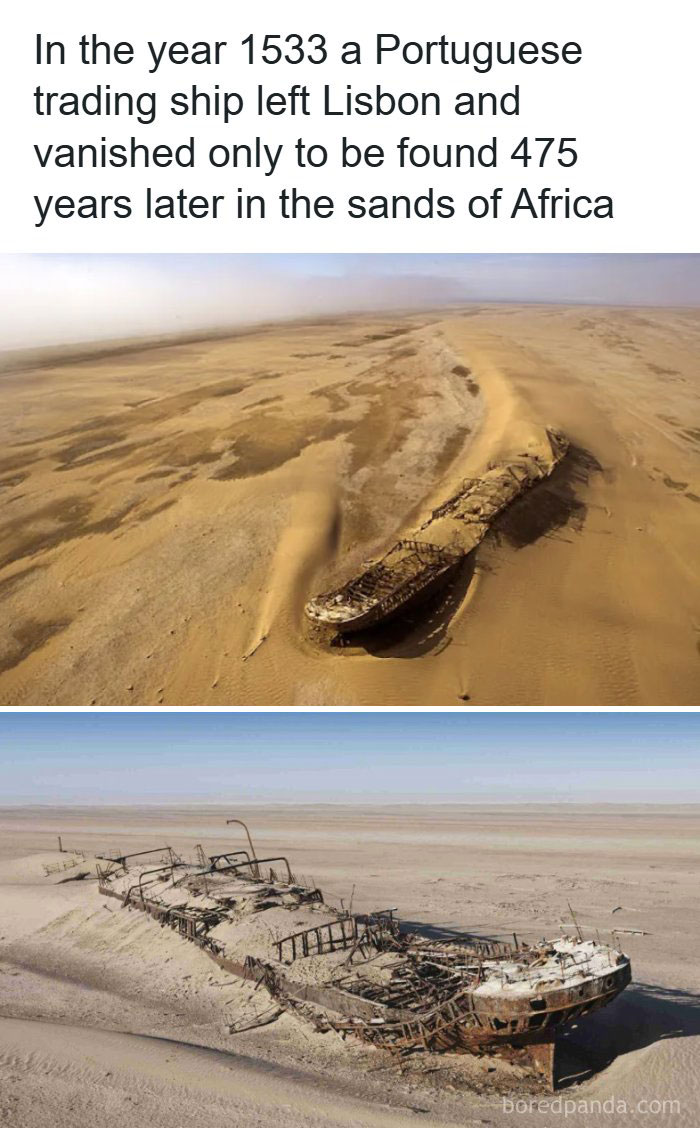
Image source: viewsaddict
#25
South Korea’s top universities rejected 45 applicants because of their past bullying records.
During the 2025 admissions cycle, six of the country’s ten flagship national universities turned away applicants with records of school violence.
Two were rejected by Seoul National University, the country’s most prestigious.
Twenty-two were rejected by Kyungpook National University, which introduced a strict point-based penalty system for disciplinary histories.
Starting in 2026, all universities in South Korea will be required to factor school violence records into admissions.
In a country where grades have long decided everything, character is now part of the score.
Sometimes the smartest students still don’t get in, because who they were matters as much as what they scored.

Image source: viewsaddict
#26
In 1925, a deadly outbreak threatened the children of Nome, Alaska. A relay of sled dogs carried the antitoxin across hundreds of frozen miles. Togo led the longest and most dangerous stretch – 264 miles (421km) through blizzards, cracking ice, and black Arctic night.
The diphtheria outbreak struck in 1925, threatening the lives of the more than 10,000 inhabitants of the area, especially children. The only viable medicine was in Anchorage, 1,000 miles away. Aircraft engines froze and the closest rail line was 674 miles away, so officials turned to sled dogs to move the serum.
Seppala’s team set out, 12-year-old Togo at the helm. They covered the most dangerous leg—a shortcut across Norton Sound-through the dark, in a blizzard. But in just 5½ days, the lifesaving serum was delivered to Nome. Togo and Seppala did an astounding 264 miles (421 km); other teams averaged 31.
Togo was very sick as a puppy and was given away to be a pet, deemed unsuitable to be a sled dog. He disagreed, jumping through a closed window to run back to his sled-dog siblings’ kennel. This greatly impressed venerated musher Leonhard Seppala.
Togo continued to be a troublemaker, though, and while he showed interest in being a sled dog, he still didn’t look the part at only 48 pounds.
But Togo changed Seppala’s mind. Before a big trip, Seppala put Togo in a kennel with instructions to not free him until the team was long gone. Togo broke out and trailed the team through nightfall, surprising Seppala the next day. On the way home, Seppala put him in a harness and Togo instantly settled down. Togo logged 75 miles (120km) on his first official day-unheard of for an inexperienced sled dog.
In 2011, Time named Togo the most heroic animal ever. In 2022, a Togo statue was unveiled in Maine, where he spent his last years. Disney released a film about Togo in 2019 with Willem Dafoe as Seppala and Togo played by Diesel, a direct descendant of Togo.
Seppala summarized the entire story perfectly: “I thought of the ice and the darkness and the terrible wind and the irony that men could build planes and ships. But when Nome needed life in little packages of serum, it took the dogs to bring it through.”
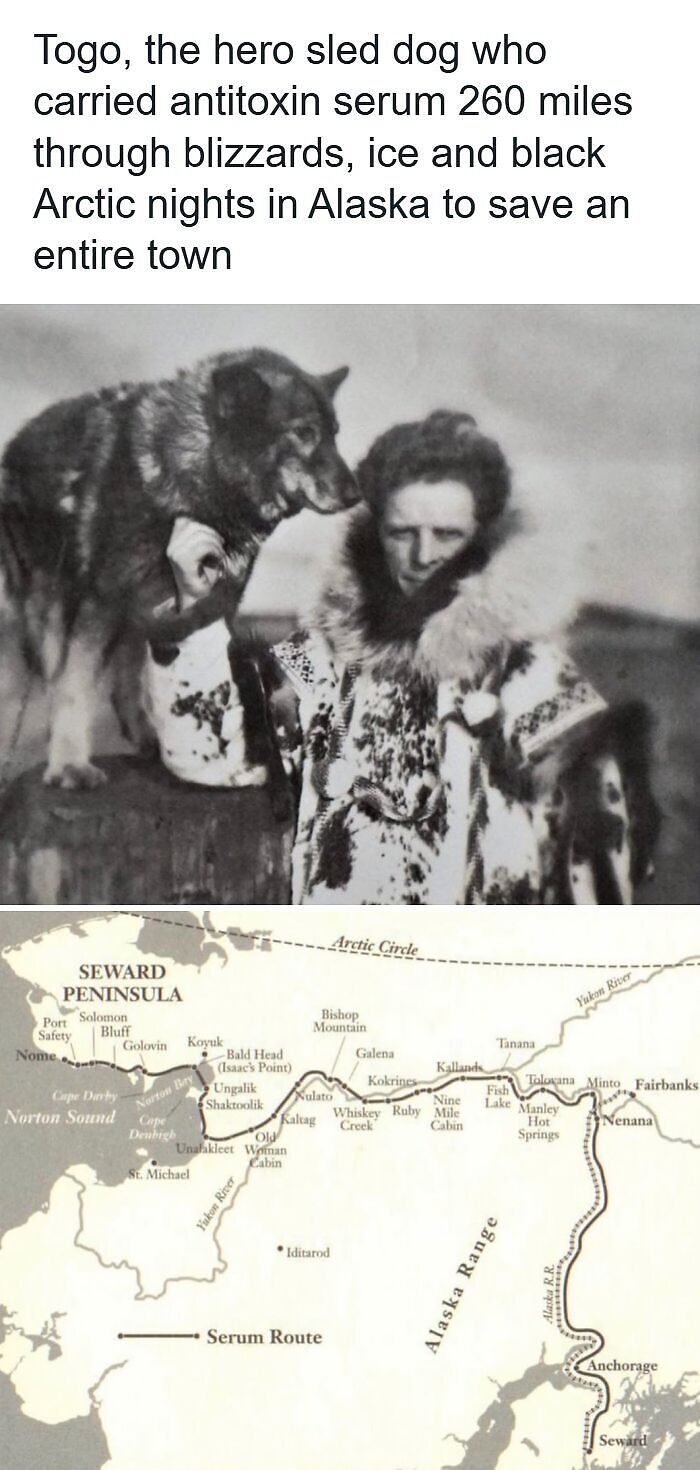
Image source: viewsaddict
#27
During a training race in Moab Utah in 2007, members of Team Rwanda Cycling come across some snow and stop to touch some as it was their first time ever seeing it.
Members of the team put the snow on their heads, made snowballs and even tried putting it in their pockets to save for later, the Daily Mail reported.
All images courtesy of Team Rwanda Cycling
All rights belongs to their respective owners.
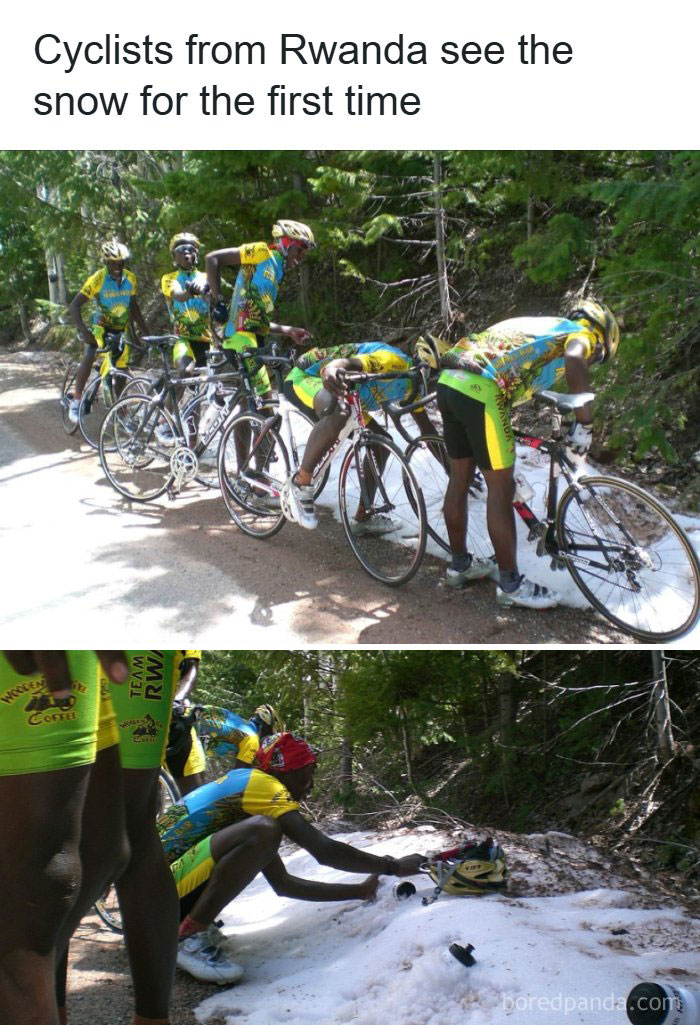
Image source: viewsaddict
#28
In eastern Turkey, Muhammet Halil and Esra Aydın chose to begin their marriage not with a lavish celebration, but with an act of kindness, inviting around 100 orphaned and underprivileged children instead of hosting a traditional wedding reception.
Partnering with the IHH Humanitarian Relief Foundation, the couple, dressed in their wedding attire, shared a meal with the children and gave each of them gift boxes filled with toys, clothes, and treats.
“We didn’t want our happiness to stay within four walls,” the groom said, adding that “the children’s smiles were the greatest gift we could receive.”

Image source: viewsaddict
#29
A scientist who successfully treated her own breast cancer by injecting the tumour with lab-grown viruses has sparked discussion about the ethics of self-experimentation.
Beata Halassy discovered in 2020, aged 49, that she had breast cancer at the site of a previous mastectomy. It was the second recurrence there since her left breast had been removed, and she couldn’t face another bout of chemotherapy.
Halassy, a virologist at the University of Zagreb, studied the literature and decided to take matters into her own hands with an unproven treatment.
A case report published in Vaccines in August1 outlines how Halassy self-administered a treatment called oncolytic virotherapy (OVT) to help treat her own stage 3 cancer. She has now been cancer-free for four years.
In choosing to self-experiment, Halassy joins a long line of scientists who have participated in this under-the-radar, stigmatized and ethically fraught practice. “It took a brave editor to publish the report,” says Halassy.
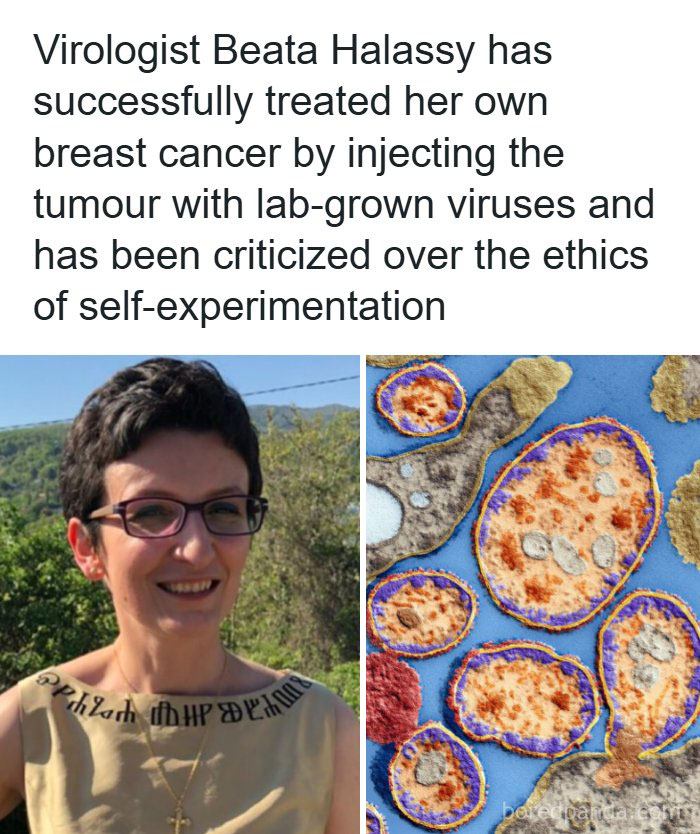
Image source: viewsaddict
#30
Kevan Chandler had always dreamed of seeing the winding streets of Paris, the rolling hills of Ireland, and the timeless charm of London. But being born with spinal muscular atrophy type 2 meant he couldn’t walk, and the thought of navigating Europe in a wheelchair felt impossible.
He almost let the dream slip away, until his friends stepped in.
“Kevan,” one of them said with a grin, “what if we just carried you?”
It sounded like a joke at first, but soon sketches turned into designs, and designs into a backpack sturdy enough to carry a man. Kevan’s friends took turns hoisting him onto their backs, not as a burden, but as a companion.
Together they roamed the cobblestone alleys of France, where Kevan marveled at cathedrals towering above him. In England, he laughed with strangers in cozy pubs, his friends’ footsteps echoing through history. And in Ireland, he felt the wind whip across the cliffs, his heart soaring higher than he thought possible.
For Kevan, it wasn’t just about travel. It was about trust, friendship, and discovering that adventure grows bigger when it’s carried together.

Image source: viewsaddict
#31
In southern China, 86-year-old Lao Huang practices a fading tradition. Cormorant fishing uses trained birds to dive underwater and catch fish for their handler.
Once common on rivers across Asia, the practice is now largely a tourist spectacle.
Lao Huang continues using bamboo rafts, lanterns, and ancient techniques. His birds, fitted with small neck rings, return with live fish to the boat.
Photos of him have become a window into a centuries-old way of life. He stands as one of the last living links to this cultural heritage.
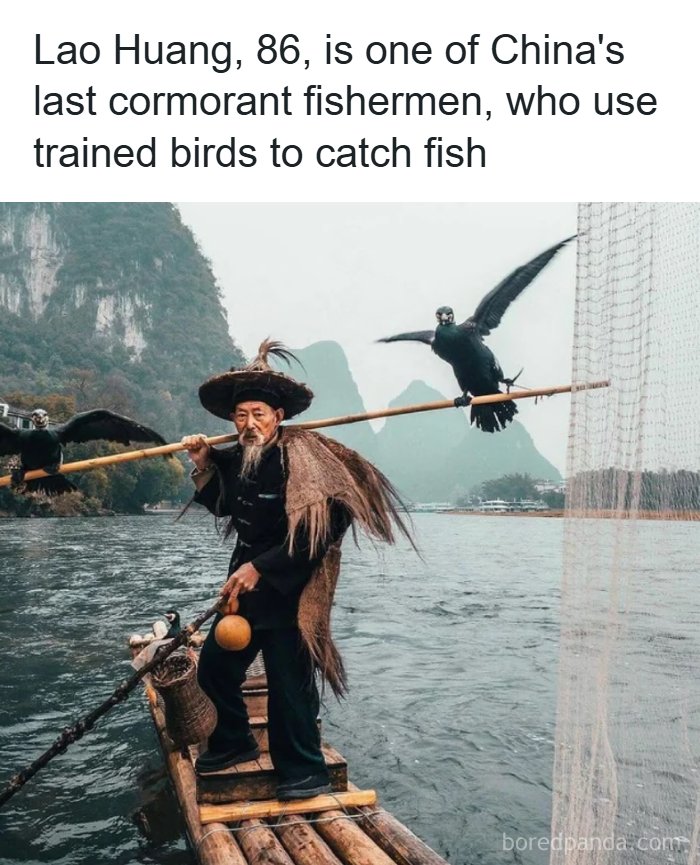
Image source: viewsaddict
#32
Florida Deputy Robert Pounds pulled over a speeding car, but instead of issuing a ticket, he helped deliver a baby girl in the passenger seat, who was born quickly at the roadside. The father was rushing his wife, who was in labor, to the hospital when Pounds made the stop. After the delivery, mother and baby were checked by paramedics and transported to the hospital, with the baby, named Leila Robert Jean Lewis, honoring the deputy.

Image source: viewsaddict
#33
Mexico has officially banned the use of dolphins and other marine mammals for entertainment shows under a new amendment to its Wildlife Law. The law also prohibits captive breeding for tourism or entertainment purposes.
There are currently more than 350 dolphins in captivity across Mexico. The government and animal welfare organizations are now working on plans to relocate these animals.
Dolphins that experts determine are capable of surviving in the wild will go through a rehabilitation process and may be released into their natural habitats. However, most dolphins, especially those born or long held in captivity, cannot survive on their own and will instead be moved to sea sanctuaries or ocean pens, where they can live in more natural conditions under care.
This decision marks a major step for animal welfare in Mexico, ending dolphin shows and beginning a transition toward more ethical treatment of marine mammals.

Image source: viewsaddict
#34
The Arlington Ladies are a group of volunteers, primarily military spouses, who attend the funeral services of service members and veterans at Arlington National Cemetery to ensure that no one is buried alone. They represent the respective branches of the military, offering condolences and support to the families of the deceased. This tradition began in 1948 with the Air Force and has since expanded to include the Army, Navy, and Coast Guard.
The Arlington Ladies initiative started in 1948 when General Hoyt Vandenberg and his wife Gladys, while walking through Arlington Cemetery, noticed that some service members were being buried with only a chaplain and honor guard present.

Image source: viewsaddict
#35
Geoffrey Owens played Elvin on The Cosby Show, one of the most watched sitcoms in American history. Years later, he was working at a Trader Joe’s in New Jersey, bagging groceries between auditions.
A customer secretly photographed him and sent the pictures to news outlets, which suggested the former TV star had fallen on hard times.
But Owens explained something most people don’t realize: most actors, even well-known ones, are gig workers. For every A-lister, there are many others working gig to gig, and steady, well-paying work is hard to find in a field this unpredictable.
That’s why many working entertainers need a regular job between roles.
The reaction was the opposite of what the photos were meant to provoke. Thousands of people defended him, and Tyler Perry offered him a role written specifically for him.
The attempt to shame him ended up reviving his career at 57 years old.
No job is beneath anyone, and you never know what someone is carrying behind the scenes.

Image source: viewsaddict
#36
A Japanese man escaped his car after it plunged into a river on November 8 by recalling a scene from the anime Detective Conan
On November 8, he described a collision near a cemetery that sent his car into the water. “For the first 20 seconds I really thought this was it,” he wrote. “But then this scene flashed through my mind.”
He was remembering a sequence involving FBI agent Andre Camel, who escapes a submerged car in the anime. The scene showed a character breathing from an air pocket near the roof and waiting for water pressure to equalize before opening the door.
The driver says the memory helped him react: he found the door handle, pushed the door open and swam out.
A nearby resident helped him reach the bank. After describing his escape, he had one person he especially wanted to thank: “I can’t thank the creator of Conan enough.”

Image source: viewsaddict
#37
László Polgár, a Hungarian educational psychologist, is renowned for his theory that “geniuses are made, not born,” and for proving it by raising his daughters, Susan, Sofia, and Judit, to be world-class chess players. He believed that with focused training and a supportive environment, any healthy child could achieve exceptional results in a chosen field. To prove his theory he trained his daughters in chess from age 4. His daughters, particularly Judit, became some of the greatest chess players in history, demonstrating the success of his educational approach.
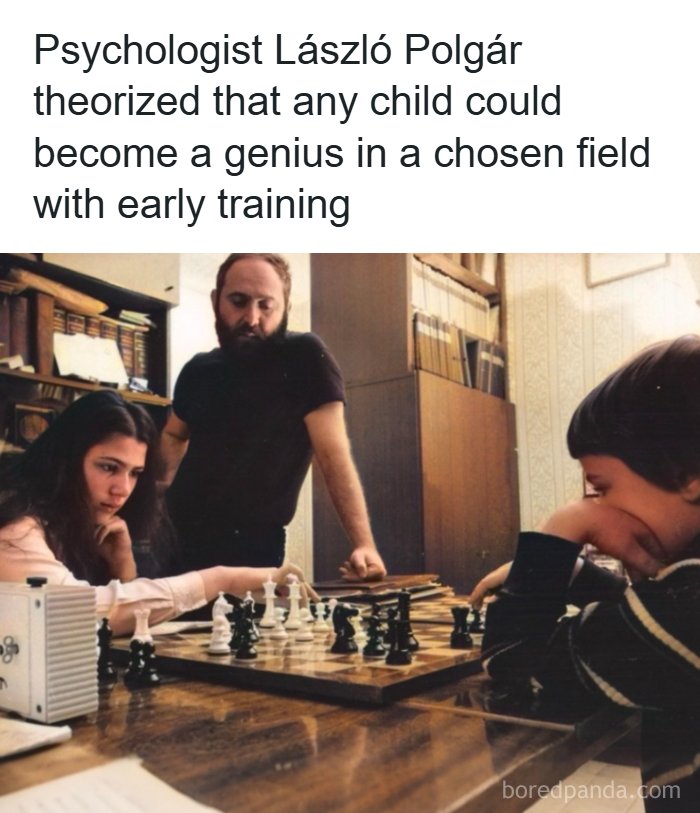
Image source: viewsaddict
#38
Narai-juku, a preserved post town in Japan’s Kiso Valley along the ancient Nakasendo route, is known for its traditional dark wooden architecture and its historical significance as a prosperous station town during the Edo period. The Edo period (1603-1868) was an era of peace and stability under the Tokugawa shogunate, characterized by national isolation, the flourishing of traditional Japanese arts like Kabuki and Ukiyo-e, and the development of major travel routes like the Nakasendo.

Image source: viewsaddict
#39
China and India clash at their border but their soldiers fight with rocks, sticks, and fists.
In 2020, the two armies clashed in the Galwan Valley, 4,000 meters (2,5 miles) up in the Himalayas.
Soldiers fought hand-to-hand for hours.
At least 20 Indian soldiers lost their lives.
A 1996 agreement, reinforced in 2005, bans firearms and explosives within two kilometers of the Line of Actual Control.
It was signed to prevent a small border incident from turning into a war.
That agreement is still valid today.
Patrol troops still carry their rifles, but keep them slung and pointed down.
But yet, the clashes are still fatal.
Soldiers fight with iron rods studded with nails, and many fall into the freezing Galwan river, causing casualties but without a single shot being fired.

Image source: viewsaddict
#40
Kylie Arellano disappeared from Utah at 15 and was found alive 521 days later after a conversation that began on Among Us helped investigators locate her. According to a federal complaint, a man she met online picked her up in May 2025, threw her phone into a river and drove her to his home in Oregon, where he told her she could not leave.
Investigators say he kept her in his basement and eventually gave her another phone without mobile data, although it could still connect to Wi-Fi. In October 2026, she began talking to another young player on Among Us before they moved their conversation to another app. There, she revealed her identity and said she was being held against her will. She also said she believed police were no longer looking for her.
The other player’s mother contacted the FBI, which monitored a video call with Kylie on November 1. That same day, Oregon State Police and federal agents rescued her and took her for medical treatment.

Image source: viewsaddict
#41
In 1996, a 12-year-old boy living in Pensacola, Florida, named Hunter Scott, watched Jaws on home video and became deeply interested in a monologue by Quint about the USS Indianapolis and shark attacks during World War II. He later learned the story was based on a real event.
In one short scene in the film, Quint delivers a brief monologue describing survivors of the sinking being attacked by sharks while stranded at sea, which deeply captured the boy’s attention.
Hunter Scott, began researching the 1945 sinking of the USS Indianapolis, interviewed around 150 survivors and reviewed 800 documents. His research focused on the role of the ship’s captain, Charles B. McVay III, who had been court-martialed after the incident. He concluded that the ship’s Captain Charles Butler McVay III, who had been blamed for the tragedy, was innocent.
Scott presented his findings to the United States Congress at age 14. In 2000, Congress passed a resolution clearing Captain McVay’s name, and the U.S. Navy later formally exonerated him.

Image source: viewsaddict
#42
Kirk Alexander from Salem, Oregon, was the ultimate creature of habit. For over a decade, he ordered food online from the exact same Domino’s store every single day. The staff knew his routine by heart.
Then, his daily orders suddenly vanished.
At first, the evening delivery drivers didn’t panic, assuming Kirk had finally gone out of town or was visiting family. But the days kept stretching on.
The turning point came on a Saturday night, a specific night Kirk had literally never missed in years.
When his order failed to pop up on the screen by midnight, the store manager, Sarah Fuller, knew something was deeply wrong. She opened the store’s database and confirmed the reality: Kirk hadn’t placed an order in exactly 11 days.
Knowing Kirk lived alone and had suffered from health issues in the past, Sarah didn’t hesitate. At 1:00 AM, she sent a veteran delivery driver straight to his house.
When the driver arrived, he saw the lights were on and could hear the television blaring inside, but nobody answered the door. He tried calling Kirk’s phone, and it went straight to voicemail. He immediately dialed 911.
Deputies forced entry into the home and found Kirk collapsed on the floor. He had suffered a severe stroke and had been trapped inside, unable to move or call for help, for days. Doctors later confirmed that he was in critical condition and wouldn’t have survived another 24 hours.
It wasn’t a doctor or a neighbor who saved Kirk, it was the staff of his favorite pizza place who paid attention when his routine broke.

Image source: viewsaddict
#43
The Temple of Horus at Edfu is one of the best-preserved ancient Egyptian temples, dedicated to the falcon god Horus, symbol of kingship and protection. Built in the Ptolemaic period, its walls are covered with detailed carvings meant to act as sacred “stone texts.”
Common symbols include the ankh, representing life and divine power, and the falcon of Horus, representing the god himself watching over Egypt. Many reliefs also depict the mythic struggle between Horus and Seth, symbolizing the eternal balance between order and chaos.
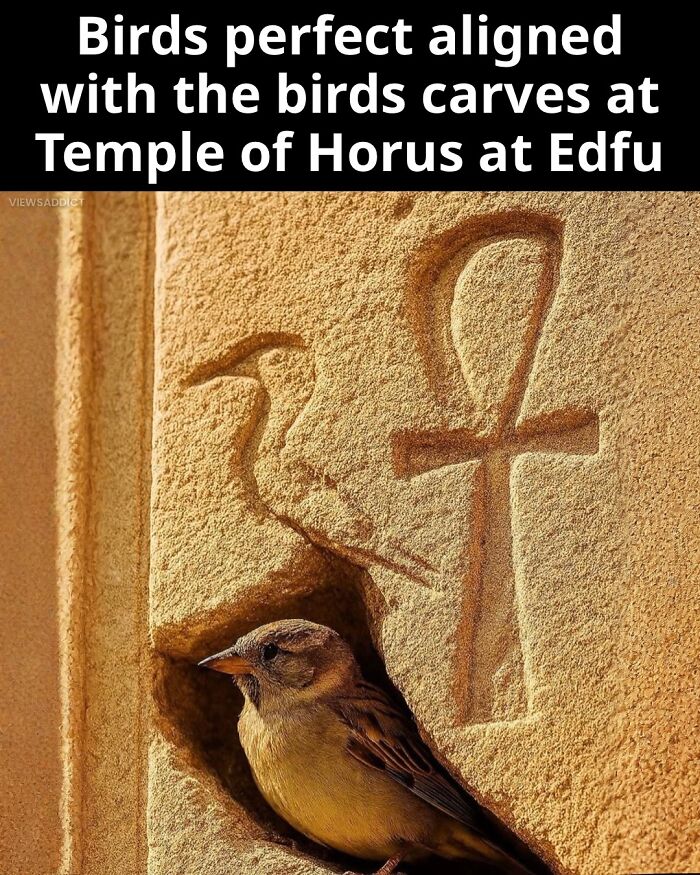
Image source: viewsaddict
#44
In 2015, an unusual friendship captured the hearts of millions around the world. At a safari park in Primorsky, Russia, a goat was placed into a Siberian tiger’s enclosure as part of the tiger’s weekly live prey feeding routine. Keepers fully expected the tiger, named Amur, to hunt the goat immediately.
Instead, something remarkable happened—the tiger spared the goat’s life. The goat, later named Timur, showed no fear and calmly wandered the enclosure, even taking over Amur’s sleeping spot. To the amazement of staff and visitors, the tiger accepted Timur as a companion rather than a meal.
The unlikely pair spent weeks together, sharing the same space, walking side by side, and even playing.
Their friendship became a global sensation, symbolizing resilience, peace, and the unexpected ways life can defy instincts. Though their companionship eventually ended, the story of Amur and Timur remains a powerful reminder that friendship can blossom in the most surprising places.
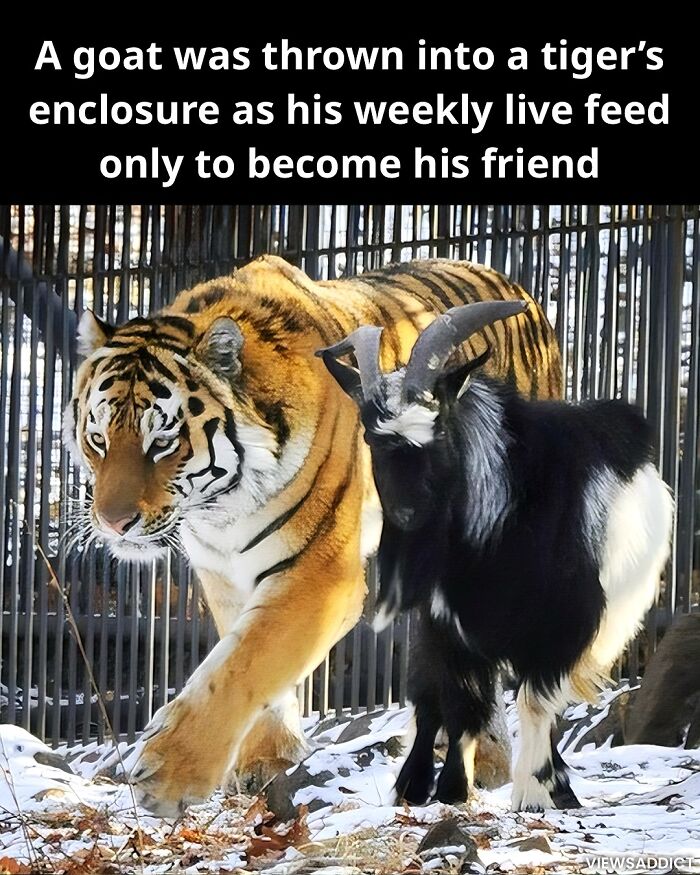
Image source: viewsaddict
#45
Patrick Mohr, an Irishman married for 16 years, lost his wedding ring in a mountain stream in Tuscany while playing with his daughters.
His wife asked three Italian men nearby for help, Filippo, Nicola and Edoardo. They took his number and promised to keep an eye out.
Naturally, they turned it into a quest.
Filippo, Nicola and Edoardo spent days searching, eventually tying themselves to boulders and diving into the rapids.
Against ridiculous odds, they found it.
Nine days after losing it, Patrick got a text from an unknown Italian number: a photo of his ring, with the message: “Hi Sméagol, look what we found.”
But they didn’t just mail it back.
Filippo, Nicola and Edoardo flew more than 1,000 miles to Ireland, showed up at his door dressed as Frodo, Merry and Sam.
Patrick later described the moment they arrived:
“They approached me, all three dressed like hobbits, playing music from the Lord of the Rings to hand me back the ring.”
Patrick invited them inside for a dinner togheter, and they became friends that night.
Sometimes the right people find you in the most unexpected way.
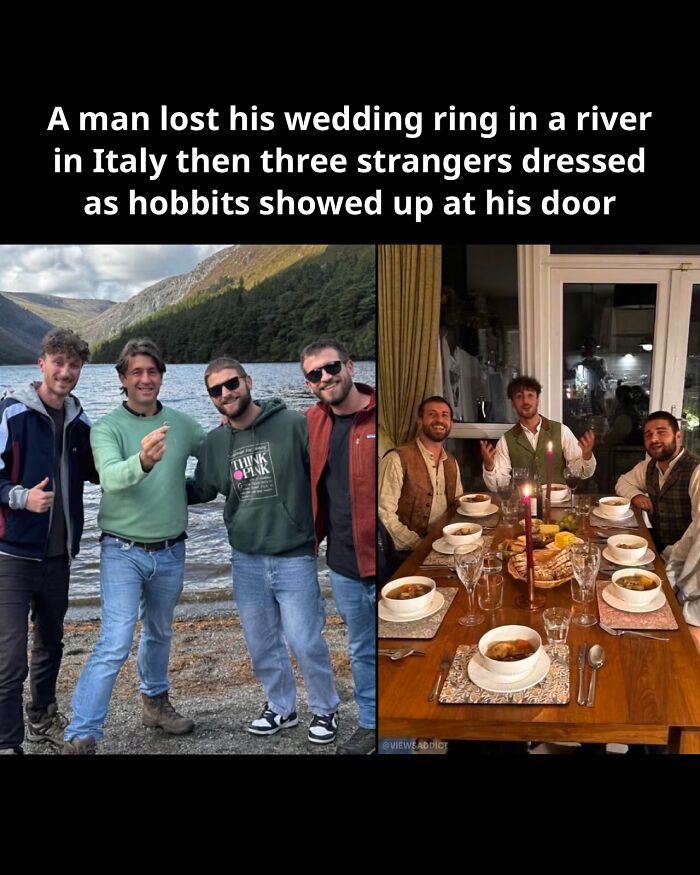
Image source: viewsaddict
#46
Julius Caesar reportedly kept a stockpile of it in the Roman treasury. Emperor Nero is said to have owned the very last stalk of it. And yet today, not a single living specimen exists anywhere on Earth. The plant is called silphium, and its story is one of ancient history’s most captivating mysteries.
Silphium grew wild only along the north coast of modern-day Libya and stubbornly refused to be cultivated by human hands.
The Greeks and Romans prized it above almost everything else, using it as a contraceptive, an abortifacient, a medicine, a food seasoning, a perfume ingredient, and even a livestock improver.
Its resin, extracted from the roots and stems and preserved in flour for long-distance trade, was so valuable that it appeared on coins and was treated as a state-controlled resource.
Ancient medical texts, including a four-volume gynecology treatise by the physician Soranus of Ephesus, describe how silphium mixed with wine could be taken orally to prevent conception. As a food, it was categorized as a warming, clearing herb believed to remove internal obstructions and prevent pregnancy depending on when it was consumed. The heart-shaped seed pods depicted in ancient art may even be the origin of the heart symbol we associate with love today.
Because it could not be farmed, supply was always finite and demand was relentless. Climate change, the desertification of North Africa, deliberate vandalism by local populations resentful of state control, and overgrazing by livestock are all believed to have contributed to its extinction by around the 1st century CE.
A giant fennel species discovered in Turkey in 2021, Ferula drudeana, bears a striking resemblance to ancient depictions of silphium, and may be a surviving relative, but the mystery remains officially unsolved.
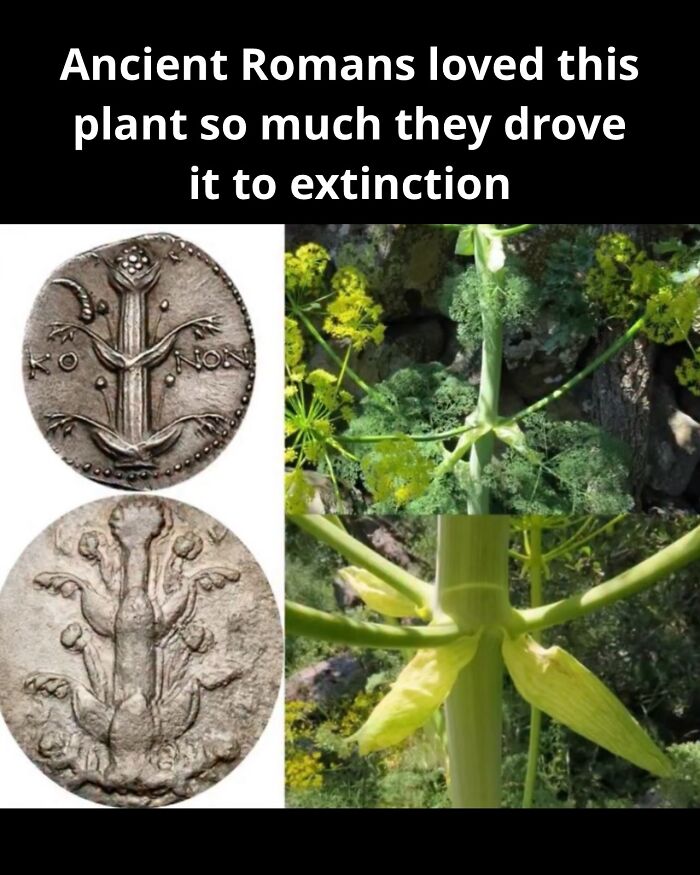
Image source: viewsaddict
#47
It was January 2026, Vipan Kumar was just an ordinary guy; an Indian construction worker who moved to Romania to support his 8-year-old daughter back home.
One morning while walking through a park in Craiova, a nightmare unfolded right in front of him.
A 5-year-old girl ran onto a frozen lake. The ice instantly gave way, plunging her into the sub-zero water. Her father tried to jump in but became trapped in the broken ice.
Without a second thought, Vipan grabbed a sled and rushed onto the ice. But midway through, the ice shattered beneath him too, dragging him into the freezing depths.
Instead of panicking or swimming away to save himself, Vipan grabbed the little girl and held her body above the water for nearly 30 agonizing minutes until rescue teams arrived.
Both survived severe hypothermic shock.
Romania was so moved by his bravery that the city officially awarded him honorary citizenship.
But the story didn’t end there. Deeply touched by his sacrifice, the local community raised funds to send him on an all-expenses-paid trip back to India, allowing him to finally reunite with his 8-year-old daughter.
This is the recent story of Vipan Kumar. From an immigrant construction worker to a certified national hero.

Image source: viewsaddict
#48
For the past 25 years, retired engineer Tom Brown has dedicated his life to preserving a forgotten part of America’s agricultural history: heirloom apples. Traveling through the Appalachian region, Brown has tracked down and saved around 1,200 rare apple varieties that were on the brink of extinction.
Many of these apples, once cultivated by small farms and homesteads, had vanished from markets and orchards as commercial agriculture shifted toward a handful of high-yield varieties. Brown’s work involves locating old trees, collecting cuttings, and grafting them to ensure the apples endure for future generations.
What began as a hobby has become a mission of preservation. His efforts not only safeguard biodiversity but also keep alive the flavors, colors, and stories of apples that were once integral to rural communities.
Thanks to Brown’s dedication, apples thought lost forever are finding new life in orchards and inspiring renewed interest in heritage fruit.
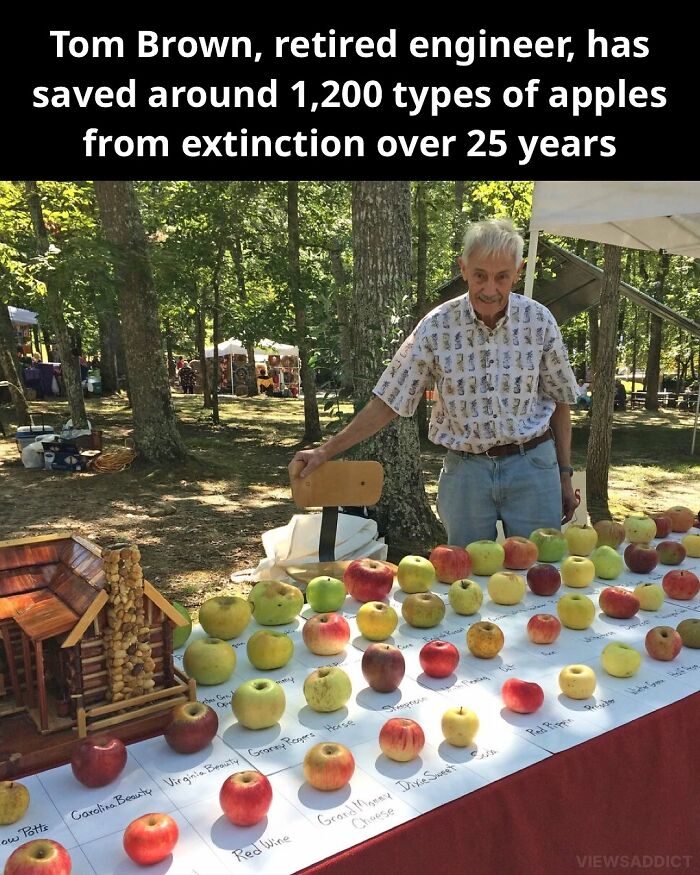
Image source: viewsaddict
#49
There are only two living northern white rhinoceroses left in the world, and both are female: Najin and her daughter Fatu. The last male, Sudan, d**d in 2018 in Kenya.
Because no males remain, the northern white rhino is considered “functionally extinct”, meaning the subspecies can no longer reproduce naturally.
There were around 500 Northern White Rhinos in the 1970s. By the late 1980s, only about 15 remained in the wild, largely because of poaching.
However, it is not necessarily the absolute end yet. Scientists have preserved material from deceased males and have created viable embryos using IVF techniques. The plan is to implant those embryos into surrogate southern white rhinos.
Even though it is hard, scientists are still trying to save it.
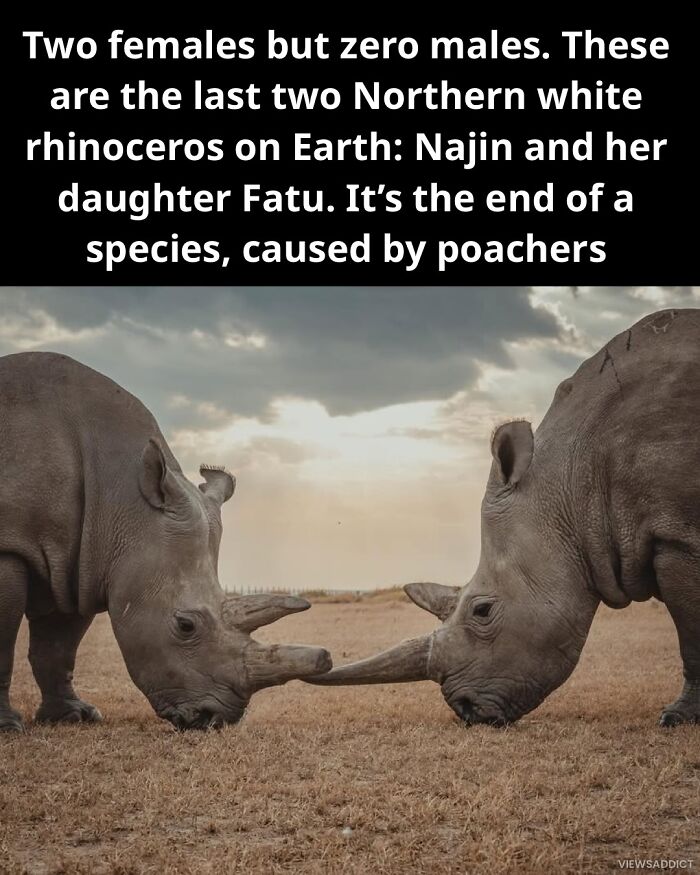
Image source: viewsaddict
#50
A US woman sued a casino that told her the slot machine displaying a $43m (£34m) jackpot was faulty and offered a steak dinner instead.
Katrina Bookman hit the largest slot machine jackpot in US history at Resorts World Casino in Jamaica, Queens, and took a selfie showing the machine saying “printing cash ticket $42,949,672.76”. However, when she returned to find out her winnings, a casino employee informed her she had not won anything but only $2.25.
The New York State Gaming Commission confirmed that Bookman’s machine had malfunctioned, and the casino offered her a complimentary steak dinner instead.
The lawsuit filed at the Queens County Supreme Court said the Sphinx slot machine’s “bells, noises and lights” as well as the message on the screen told Ms Bookman she had won the jackpot. The subsequent disappointment left Ms Bookman anxious and depressed, the report said. She seeked damages from the casino for failing to maintain the slot machine as well as two companies that make and operate games machine.
A Resorts World spokesman said at the time that the machine had suffered an “obvious malfunction”.
The New York State Gaming Commission said Bookman’s machine had malfunctioned, and that she’d actually won just $2.25 (£1.86). The machine had a disclaimer stating ‘malfunctions void all pays and plays’, and as a result the commission said that they were required by law to give Bookman only what she’d actually won.
Unfortunately, there was no happy ending for Katrina Bookman. After delays to the case due to Covid, a judge at Queens County Supreme Court eventually ruled in favor of the defendants.
The reality was, the machine malfunctioned and the machine did display the following warning message to all players: Malfunctions void all pays and plays.

Image source: viewsaddict
#51
Some Ancient Egyptians, like Prince Khaemwaset under Ramesses II, engaged in activities akin to modern archaeology by excavating and restoring older structures from previous dynasties, a practice rooted in a conservative cultural appreciation for the past as a source of wisdom and authority. This ancient practice of studying and preserving their own civilization’s history demonstrates a form of “archaeology” within ancient Egypt itself, preceding the modern field of Egyptology.
Ancient Egypt lasted, as far as we know, for over 3,000 years, with its civilization starting around 3150 BC and ending with the Roman conquest in 30 BC, which marked the end of pharaonic rule and Cleopatra VII’s reign. This longevity made it one of the most enduring civilizations in human history, characterized by a remarkable continuity of culture and the iconic monuments like pyramids and temples left behind.
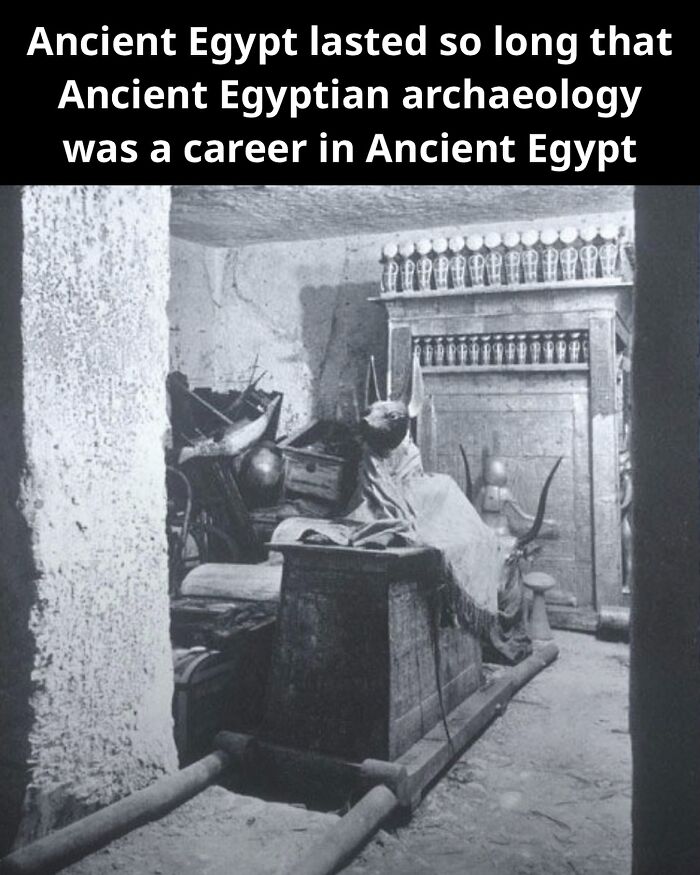
Image source: viewsaddict
#52
A blind Chicago man whose service dog was stolen is walking up to seven miles (11 km) each day, handing out “missing” flyers in hope to find his dog.
Angel Santiago, who became legally blind due to glaucoma and also manages Type 2 diabetes, says his beloved 14-year-old dachshund, Bam Bam, was stolen from the yard at his home in Chicago’s Logan Square neighborhood.
Now, he walks up to seven miles or more each day, giving out flyers to people in hopes that someone has seen his beloved pooch.
“Bam Bam means the world to me, and I feel my body draining away. I can only do so much,” Santiago said.

Image source: viewsaddict
#53
At Kaikyokan Aquarium in Japan, a sunfish stopped eating and showed signs of distress after the facility closed for renovations in December 2024. With no physical health issues found, staff believed the fish was reacting to the sudden absence of visitors it had grown used to seeing each day.
To help, they placed photos of human faces on the tank and hung staff uniforms nearby. The next day, the sunfish began eating again and became more active, showing clear interest in the cutouts. The aquarium’s quick and creative response shows how even solitary animals can be affected by changes in their environment, and how simple actions can support their mental well-being.
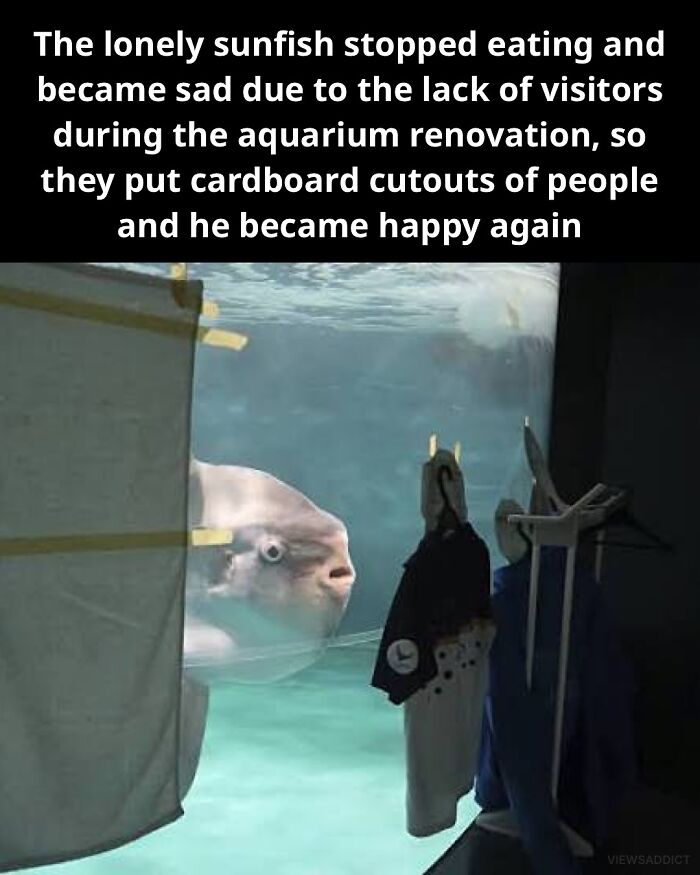
Image source: viewsaddict
#54
Before the EPA’s 1970 creation, America faced severe pollution, with legal dumping of toxic waste, rivers catching fire from industrial discharge, heavy smog, and little federal oversight, as environmental protection was fragmented and state-run, leading to a “race to the bottom” in regulations until the first Earth Day and growing public outcry spurred federal action for comprehensive laws like the Clean Air Act.
Before the EPA, states would actively try to encourage businesses to setup shop in their state by competing on what the companies could get away with like dump harmful chemicals, not properly treat byproducts, etc.
The EPA was created to set nationwide standards. It was created out of rising public pressure to control pollution, but one side effect was that states could no longer allow their lands to be destroyed to the highest bidder.

Image source: viewsaddict
#55
Italian MEP brought her daughter to work when she was just 44 days old – and kept bringing her for three years straight
When Italian MEP Licia Ronzulli stepped into the European Parliament with her daughter Vittoria, just 44 days old, it was more than a mother returning to work. It was the beginning of a quiet revolution. For over three years, session after session, Ronzulli brought Vittoria with her into the heart of European politics, turning the parliamentary floor into a powerful symbol of motherhood, inclusion, and resilience.
By the time she turned three, Vittoria had become a veteran of the Parliament. From just six weeks old to a toddler with a front-row seat to democracy, she sat beside her mother through countless votes and debates—sometimes sleeping, sometimes watching, always present. And she didn’t come alone. Whenever Ronzulli raised her hand to vote, so did Vittoria, and so did her constant companion, Po the Teletubby, who often joined in with an enthusiastic wave.
The pictures are wonderful. Not just because they are charming, but because they show how surreal it can be to be a working mother. When Ronzulli first parcelled her daughter up in a sling and marched into parliament, she did it not to be political but to be maternal, she said. She was still breastfeeding and had to come into work to vote, to do her job and earn a crust. As her daughter has grown, she has become a powerful symbol. “I have been bringing her along because I want to show the difficulties faced by a woman who works and is also a mother,” said Ronzulli.

Image source: viewsaddict
#56
Japan has completed a massive 395km (246 miles) tsunami wall and planted 9 million trees along its coastline to shield communities from tsunamis, storm surges, and rising seas. This project blends engineering with natural defenses, serving as a global model for disaster resilience and eco-friendly protection.

Image source: viewsaddict
#57
For over 70 years, meteorologists theorized that forests weren’t just standing still during thunderstorms, they were electrically alive. This year, a Penn State team finally proved it. The eerie glow comes from corona discharges, which are tiny, high-frequency electrical pulses that ignite at the very tips of leaves. As massive storm clouds roll in, they carry a heavy negative charge that acts like a giant magnet, pulling an intense positive charge up from the Earth and through the veins of every tree.
This was captured by researchers William Brune and Patrick McFarland, who transformed a 2013 Toyota Sienna into a mobile laboratory to track the phenomenon. After weeks of chasing elusive storms through Florida, the team finally caught their target on camera. While parked in a North Carolina lot during a raging storm, they filmed hundreds of these electrical events flickering across the leaves of a sweetgum tree and a nearby loblolly pine.
The most mind-blowing reality is that this isn’t just a light show, it is a massive, planetary chemical factory. These billions of tiny sparks produce hydroxyl radicals (OH), which are known as the “detergent of the atmosphere.” This means that during a thunderstorm, an entire forest transforms into a glowing, purple-hued air purifier, aggressively breaking down greenhouse gases like methane on a global scale. We now know that trees don’t just breathe out oxygen, they use the power of the storm to scrub the very air we breathe.
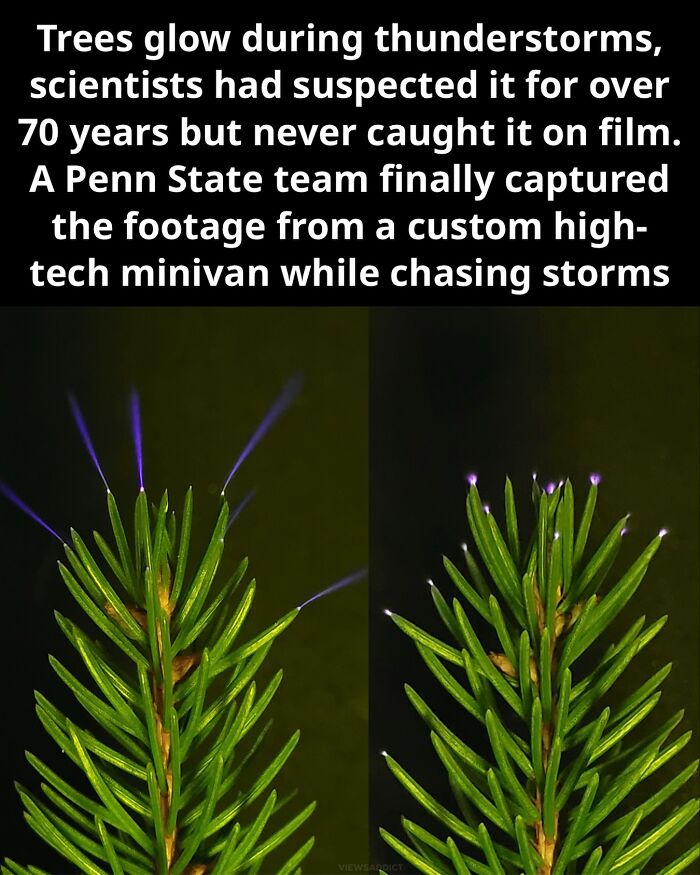
Image source: viewsaddict
#58
A ‘slice’ of the A303 main road in England showing several cross-sections dating from different eras, starting from the natural chalk and ending up to modern asphalt road.
The A303 is a major road in southern England, running between Basingstoke in Hampshire and Honiton in Devon via Stonehenge.
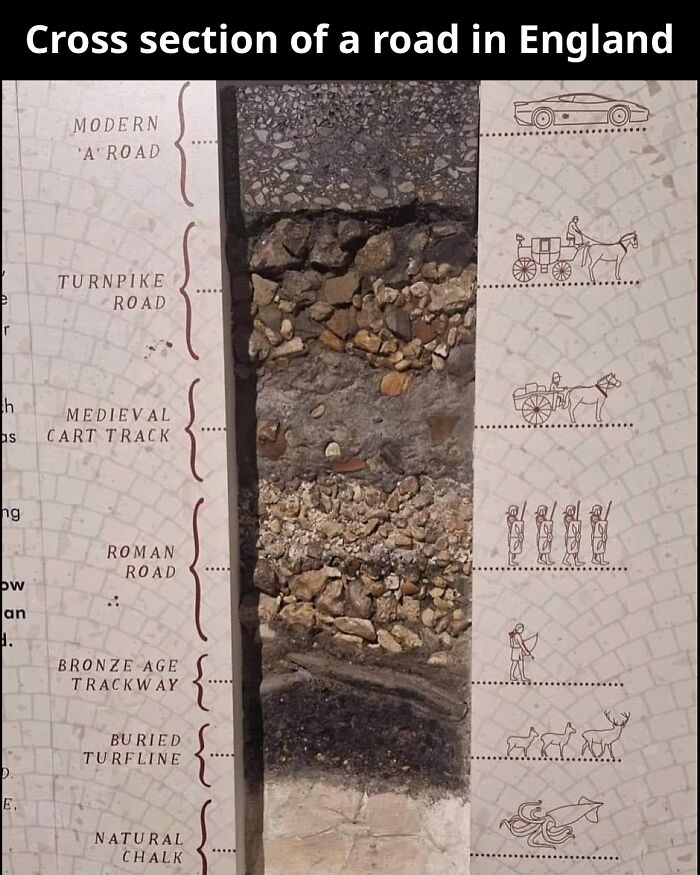
Image source: viewsaddict
#59
In 1565, Cosimo de Medici had a problem. As the ruler of Florence, he needed to travel daily between his residence at Palazzo Pitti and his office at Palazzo Vecchio, but walking through the city streets meant being exposed to the public.
So he ordered a private elevated corridor above the city. 1km long (0.6 mi), passing through buildings, above the Ponte Vecchio, across the Arno river.
Architect Giorgio Vasari built the entire structure in just 5 months.
But one family stood in the way. The Mannellis refused to have their tower demolished to make room for the corridor. Not even Cosimo de Medici could force them out.
So Vasari had no choice but to build around it. The detour is still visible today, a small bump in an otherwise straight corridor, 500 years later.
Some things even the most powerful men in history couldn’t control.
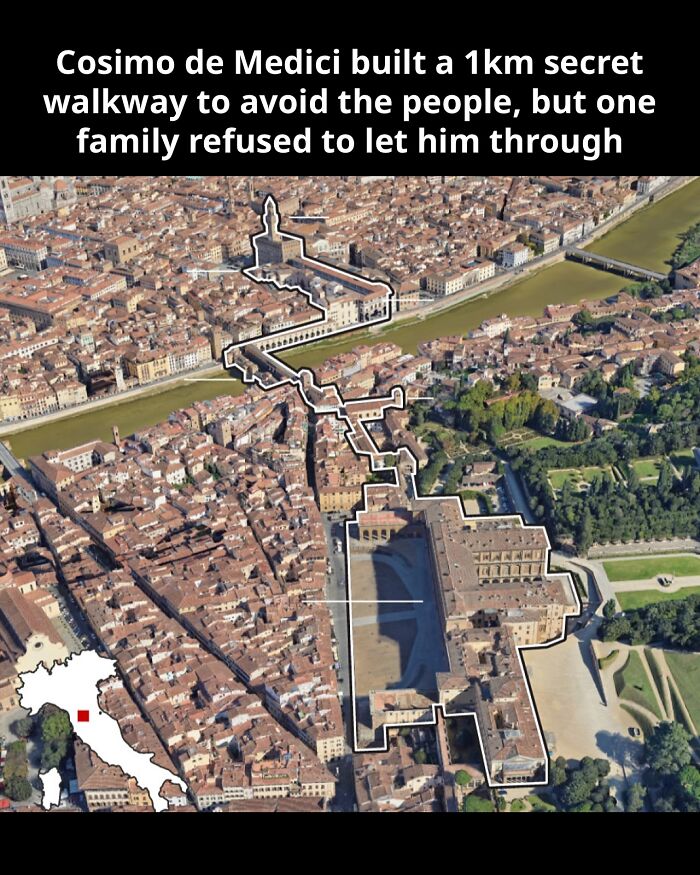
Image source: viewsaddict
#60
The Lost City Of Heracleion, which was once the largest port in Egypt, was discovered underwater after more than 2,000 years. Its legendary beginnings go back to as early as the 12th century BC, and it has many links to Ancient Greece.
Flourishing as long ago as the waning days of the Pharaohs, the city was destroyed over time, as it was weakened by a combination of earthquakes, tsunamis, and rising sea levels, according to archaeologists.
At the end of the 2nd century BC, most likely after a severe flood, the monumental buildings of Heracleion collapsed into the water. Some of its inhabitants stayed in what was left of the city during the Roman era and the beginning of Arab rule, but by the end of the eighth century AD, the rest of Heracleion had sunk beneath the Mediterranean.
The “Stele of Heracleion,” specifically referring to the one discovered in the sunken city of Thonis-Heracleion, is a black granodiorite stele inscribed with a royal decree by Pharaoh Nectanebo I. The stele depicts King Nectanebo I making offerings to the goddess Neith. It was found in 2000 by the IEASM and is dated to 380 BC.
A stele, or occasionally stela, when derived from Latin, is a stone or wooden slab, generally taller than it is wide, erected in the ancient world as a monument. The surface of the stele often has text, ornamentation, or both. These may be inscribed, carved in relief, or painted. Stelae were created for many reasons. Grave stelae were used for funerary or commemorative purposes. Stelae as slabs of stone would also be used as ancient Greek and Roman government notices or as boundary markers to mark borders or property lines. Stelae were occasionally erected as memorials to battles.
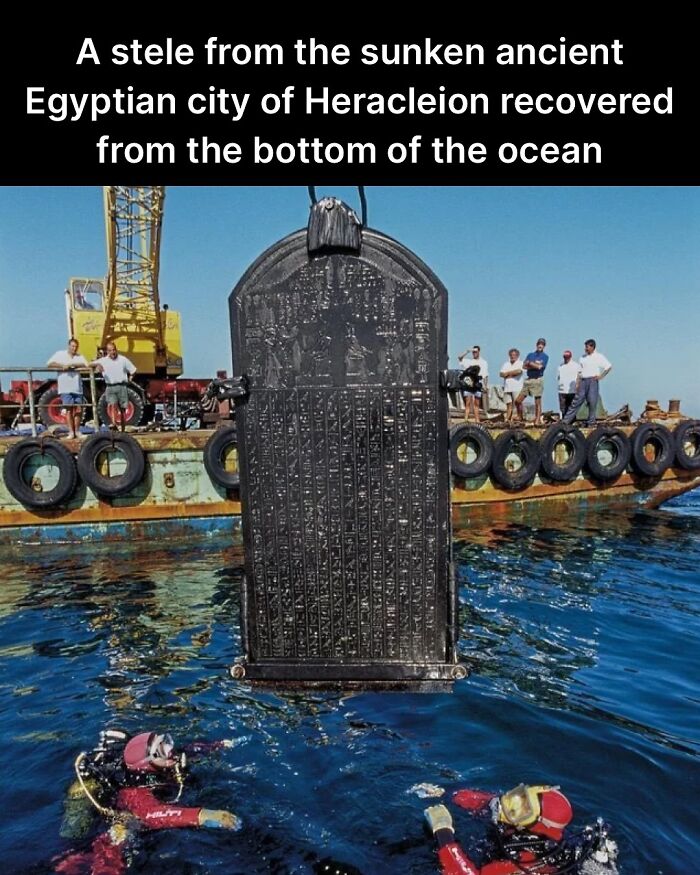
Image source: viewsaddict
#61
Beneath the volcanic rock formations of Cappadocia in central Turkey lies Derinkuyu, the largest underground city ever discovered. Descending about 85 meters (280 feet) into the earth and stretching across 18 levels, it is believed to have housed up to 20,000 people, along with their livestock, food stores, and even schools and chapels. Ventilation shafts, wells, kitchens, stables, wine presses, and massive rolling stone doors reveal a design focused on survival and security.
The official archaeological interpretation is that Derinkuyu was first dug by the Phrygians around the 8th–7th century BCE and later expanded during the Byzantine era. Scholars argue that its purpose was clear: a fortified refuge. Christian communities used it during times of persecution, and the city protected local populations during the Arab–Byzantine conflicts between the 7th and 12th centuries AD. Tool marks linked to iron implements support this dating. To archaeologists, Derinkuyu was a city built to withstand raids and invasions — a practical defense strategy for dangerous times.
But the journalist and scholar Graham Hancock challenges this explanation. He suggests that Derinkuyu was far older — perhaps as early as 9500 BC, during the climatic upheavals of the Younger Dryas. He argues that the city makes more sense as a survival bunker against cataclysmic events, such as sudden climate shifts or cosmic disasters, rather than as a military hideout.
Hancock highlights a key problem with the siege-defense theory: if Derinkuyu’s residents had simply been hiding from human enemies, “they would have been screwed.” An army could have easily blocked the exits, cutting off supplies, and then waited aboveground until those inside were forced to emerge. From this perspective, Hancock argues that the city’s enormous scale and sophisticated ventilation system suggest it was designed for long-term underground survival — not to outlast an enemy at the surface, but to endure a disaster that made the surface itself unlivable.
Derinkuyu remains a marvel of human ingenuity, a vast city hidden beneath the earth, still keeping its ultimate purpose shrouded in mystery.
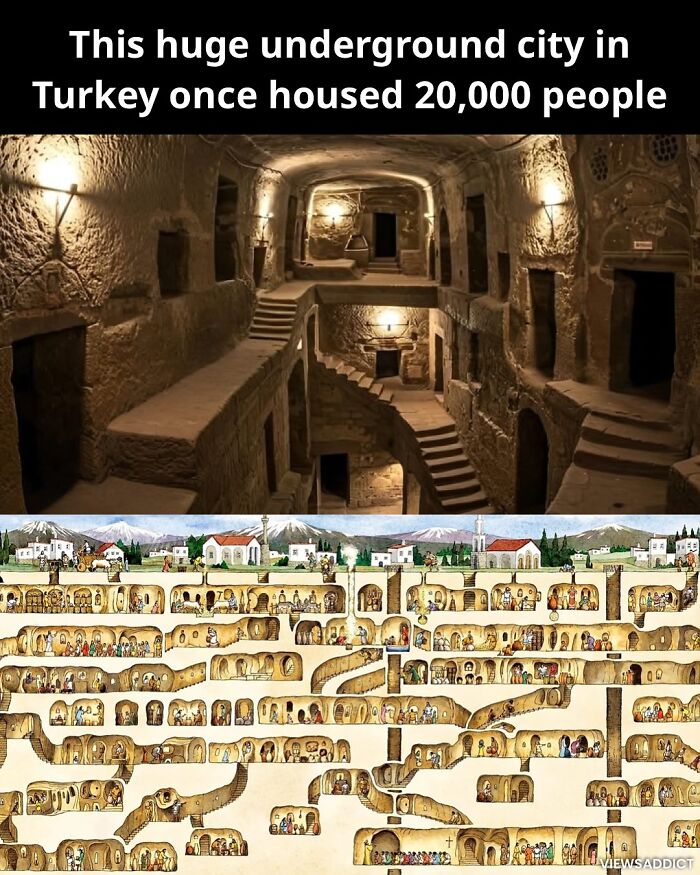
Image source: viewsaddict
#62
In December 2017, Billy Earl Dade Middle School in South Dallas organized its first “Breakfast with Dads”, an event where students could bring their fathers or father figures.
But organizers knew that many of the students might not have a dad to bring.
So pastor Donald Parish Jr. posted a request on Facebook, hoping to find 50 male volunteers to stand in as mentors.
The response was overwhelming: within days, hundreds of men had signed up, so many that the volunteer registration website crashed.
On the day of the breakfast, 600 men showed up to be fathers for a day to kids who didn’t have one.
One volunteer handed out ties and taught the students how to tie them, a moment that moved the event photographer to tears.
For one morning, no child in that room was fatherless.

Image source: viewsaddict
#63
In a quiet corner of northeastern Nebraska lies Monowi, a town with a population of one. That single resident is Elsie Eiler, a resilient woman who holds a unique distinction: she is the town’s mayor, librarian, bartender, and sole inhabitant.
Monowi’s population peaked in the 1930s with around 150 residents, featuring a post office, general stores, a grocery store, and even a few churches. The town began a slow decline as families moved to larger cities in search of better opportunities. By 1980, the population had dwindled to just 18 people.
In 2000, Elsie and her husband, Rudy, were the only two people left. When Rudy passed away in 2004, Elsie became the sole remaining resident.
Today, Elsie manages the town’s operations entirely by herself. The village remains legally incorporated, which requires it to have a governing body. Consequently, Elsie holds town board meetings with herself, where she votes to approve her own liquor license and map out the town’s budget.
Her primary business is the Monowi Tavern, a cozy establishment filled with photos and memories of the town’s past. It is here that she carries out her official mayoral duties: collecting taxes from the bar (her own business), which are necessary to keep the village’s four streetlights operational and to pay state taxes.
Visitors from around the world frequently make the pilgrimage to Monowi to meet Elsie and grab a drink at her tavern, intrigued by the story of America’s smallest incorporated town. Though she keeps the town running out of necessity and a love for her home, Elsie has no intention of leaving. She sees her unique role not as a burden, but as a continuation of her life in the place she loves best.

Image source: viewsaddict
#64
A sweeping ban on social media platforms has plunged Nepal into its most violent political crisis in decades.
On September 8, 2025, the government blocked Facebook, YouTube, X (Twitter), WhatsApp, and Instagram, requiring companies to register under new oversight laws. The move sparked mass protests led by Nepal’s “Gen Z” youth, who denounced it as a violation of free expression.
Security forces clashed with demonstrators nationwide, 19 lost their lives and hundreds were injured. Despite the government lifting the ban later that night, anger only deepened.
By September 9, protesters breached and set fire to the parliament building in Kathmandu, while the homes of Prime Minister K.P. Sharma Oli and other top leaders were torched. Offices of major political parties were also vandalized.
Facing mounting unrest, Prime Minister Oli resigned, following the earlier resignation of Home Minister Ramesh Lekhak. The government has since promised investigations, compensation for victims, and relief measures, but tensions remain high.
What began as outrage over a digital shutdown has morphed into a broader youth-led rebellion against corruption and authoritarianism—signaling a generational shift in Nepal’s politics.

Image source: viewsaddict
#65
A Japanese man, Suenaga Takuya, 43, of Miyagi Prefecture, was indicted on charges of taking a bag containing 22 million yen ($139,000) that he found on a street in Aoba-ku, Sendai, in March, right after being
given a terminal diagnosis for cancer, and now faces a prison sentence.
According to TV Asahi and other Japanese media,
The money had been dropped by two security company employees during transport and was revenue collected from a game arcade.
At the first hearing at the Sendai District Court on Monday, Suenaga acknowledged the charges. He said he took the money because he “thought it was a gift from God.”
According to the indictment, Suenaga had just learned at a hospital that his cancer had returned shortly before he found the cash. He had believed he was cured, but the recurrence led his doctor to tell him he had two to three months to live.
“It was the day I was being discharged after receiving cancer treatment in hospital,” he said. “I had been suffering from carcinomatous meningitis and gastroesophageal junction cancer, and I received a terminal diagnosis after cancer was found to have recurred in my head.”
He was walking in a daze in front of Sendai Station on his way home when he spotted the bag on the ground. He initially passed it by but turned back out of curiosity about what was inside. He then reportedly bought a box cutter and opened the bag in a nearby public restroom, where he found the cash.
He took the money and spent about 18 million yen, roughly 150 million won, over approximately four and a half months on medical treatment and overseas travel.
Prosecutors sought a one-year custodial sentence, arguing that the defendant had used the large sum of cash to satisfy his own desires and compounded the harm to the victim. The defense asked the court for a suspended sentence, citing the defendant’s despair following the cancer recurrence and terminal diagnosis.
The ruling is scheduled to be handed down Nov. 6.

Image source: viewsaddict
#66
A new ocean is forming in Africa along a 35-mile crack that opened up in Ethiopia in 2005. The crack, which has been expanding ever since, is a result of three tectonic plates pulling away from each other.
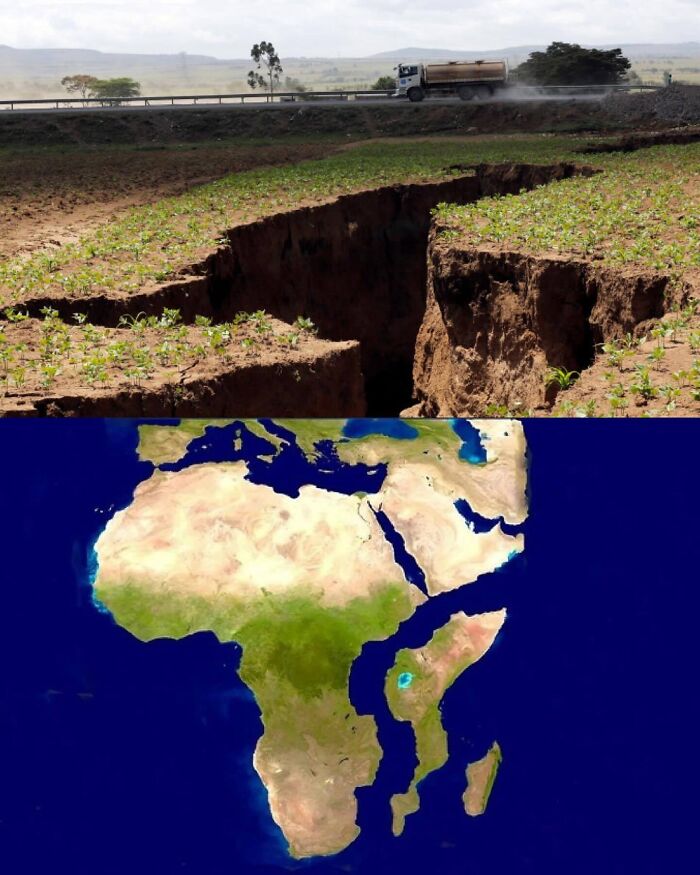
Image source: viewsaddict
#67
On a 10 hour flight from Seoul Korea to San Francisco, a mother handed out more than 200 goodie bags filled with candy and ear plugs, in case her 4 month old child cried during the flight.

Image source: viewsaddict
#68
29-year-old woman successfully posed as a nurse for 7 months, treating more than 4,000 patients. The woman, Autumn Marie Bardisa, reportedly worked at a hospital where she carried out routine checkups, administered care, and interacted with patients without raising suspicion.
She was so good at her job that hospital administrators considered her for a major promotion.
During the verification process, officials discovered she had no medical qualifications or nursing license.
She was arrested for impersonating a registered nurse, treating an estimated 4,486 patients between June 2024 and January 2025, after working at Advent Health Palm Coast Parkway under false pretenses for 7 months.
Sometimes knowing how to act well is all you need. What’s your though on this?

Image source: viewsaddict
#69
In 2007, Gene X. Hwang, a photographer from San Francisco and co-founder of Orange Photography, registered the username @x on Twitter. It was just a short, simple handle, but over the next 16 years it became part of his identity. His account grew to about 53,000 followers, and he reportedly received offers of up to $40,000 for the handle. He always refused to sell.
In 2014, hackers reportedly stole his @x account. Twitter helped him get it back, and Gene kept using it for years.
Then came July 2023. Elon Musk announced that Twitter would become X, and Gene was in Canada playing in a pinball tournament, with no idea what was about to happen. On July 25, Twitter officially became X, and the company wanted his username.
Gene received an email from Twitter support saying that @x was now “affiliated with X Corp.” His username was taken, and he was moved to a new one: @x12345678998765.
He was paid nothing. Instead, X offered him company merchandise, an exclusive tour of its headquarters and a meeting with the management team. Gene even asked if he could keep the old blue Twitter bird sign being removed from the building. They said no.
Two years later, in October 2025, X launched its Handle Marketplace. Rare usernames started costing from $2,500 to more than $1 million, and some handles were tied to a paid subscription.
So the same company that took @x without paying its owner was now charging people for access to rare usernames. Gene spent 16 years building an identity around one letter, rejected $40,000 offers, and in the end all he got was merchandise and an office tour.

Image source: viewsaddict
#70
Jad Issa, a Syrian man with Down syndrome, worked tirelessly in a local wheat mill for over 25 years. He saved his earnings specifically to fund his son Sader’s education and give him the best possible life.
Motivated by his father’s love, sacrifice, and determination, Sader successfully pursued a university degree and became a dentist.
Jad Issa lived in the city of Sweida, Syria, with his wife and son, Sader. He was a respected and beloved figure in his community, known for his kindness, generosity, and strong work ethic.
To provide for his family and ensure his son had the best possible future, Jad worked for 25 years at a local grain mill. His hard-earned wages paid for Sader’s education and helped maintain a stable, loving household during challenging times.
Today, Sader is a successful dentist who openly credits his father as his greatest inspiration and support. Sader often speaks with immense pride about Jad, highlighting how his father’s determination and unwavering love taught him invaluable life lessons.

Image source: viewsaddict
#71
In 1959, Colonel Remy Van Lierde, a highly decorated Belgian fighter ace and WWII hero, was patrolling over the Congo jungle when he spotted something that defied modern biology.
Slithering through the dense canopy was a titanic snake. Van Lierde estimated it to be roughly 50 feet (15 meters) long, with a massive head and a triangle-shaped jaw.
To make sure he wasn’t hallucinating, the Colonel flew lower. Threatened by the rotor blades, the monster suddenly rose up 10 feet (3 meters) straight into the air, snapping its jaws. Van Lierde snapped a single, legendary photograph before pulling away in shock.
The photo was later analyzed by military experts, who confirmed the negative was 100% genuine, zero manipulation or doctoring.
To this day, this photograph remains one of history’s greatest unsolved mysteries, dividing researchers into two main camps:
Many believe that the deep, unexplored depths of the Congo basin are still hiding a surviving relative of the prehistoric Titanoboa, or a completely undiscovered giant species. They argue an experienced, highly trained military pilot wouldn’t be easily fooled by a simple glitch in perspective.
On the other side, skeptics argue that forced perspective trapped the pilot’s eyes. They suggest it was actually an exceptionally large African Rock Python (which can naturally grow up to 20 feet), made to look three times its size due to the angle of the helicopter and a lack of ground references.
What do you think? It was an ancient giant monster or just a big python caught in a perfect optical illusion?
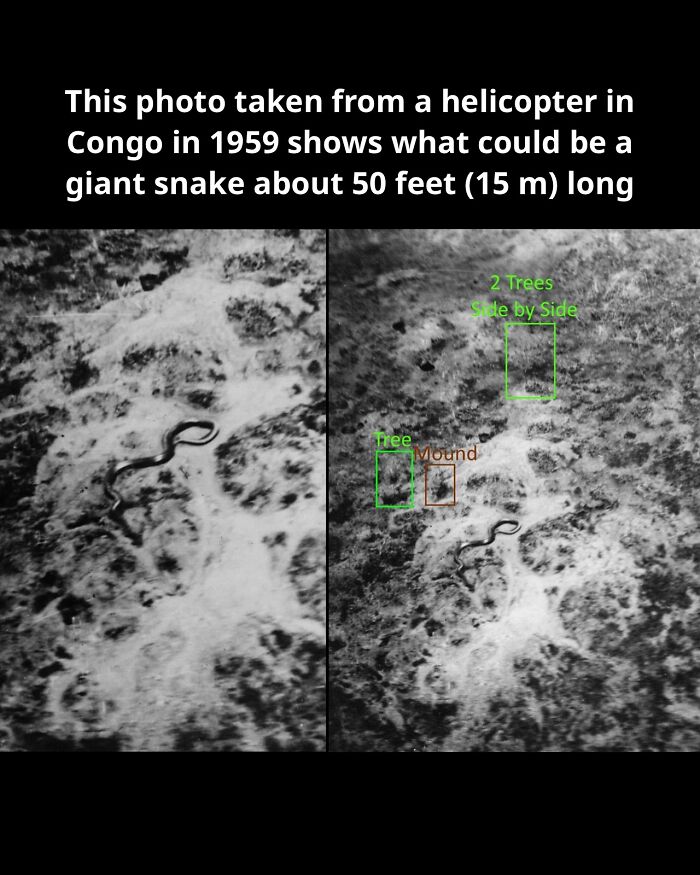
Image source: viewsaddict
#72
A dad lost his white Bose earbud in a patch of white gravel, and ChatGPT found it after he had already spent 10 minutes searching on his own.
He was running after his son near a park parking lot when his earbud case fell out of his hoodie pocket and broke open, sending the left earbud flying into the rocks while the sun was going down.
He sent ChatGPT a photo of the area, and it zoomed in and scanned the gravel section by section but said it couldn’t confidently spot the earbud, so it asked him for closer photos taken with the camera pointed straight down.
He sent three new photos, and ChatGPT found the earbud in the third one, describing its exact position in the frame and marking the spot with a red circle.
The whole process took less than five minutes and that he doesn’t think he would have ever found it without ChatGPT.
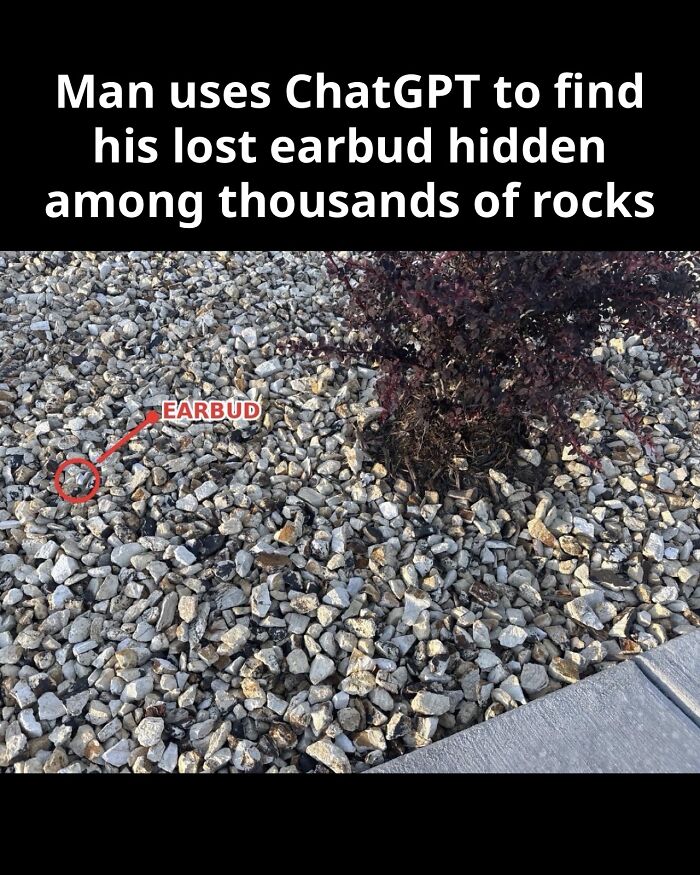
Image source: viewsaddict
 Follow Us