In-law drama is like the fact that we’re all mortal and have to pay taxes, hard to avoid. After all, asking a partner to go no contact with family is really too much in most circumstances, so folks have to get more creative when it comes to dealing with them.
A man shared how he finally got back at his rather rude partner’s mom when she kept insulting him. He planned out a lovely trip for them all, when he learned how she was talking about him in private. Well, no trip for her. We reached out to the man who made the post via private message and will update the article when he gets back to us.
Learning your partner’s mom dislikes you is probably quite upsetting

Image credits: visootu2 / envatoelements (not the actual photo)
But one man decided that, for once, she should suffer some consequences for her behavior



Image credits: SergioPhotone / envatoelements (not the actual photo)



Image credits: guyswhoshoot / envatoelements (not the actual photo)


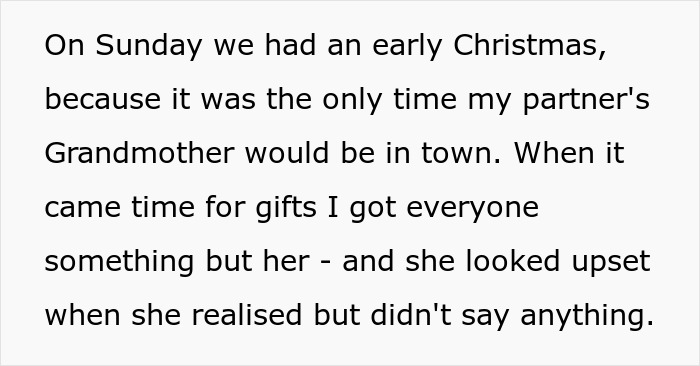
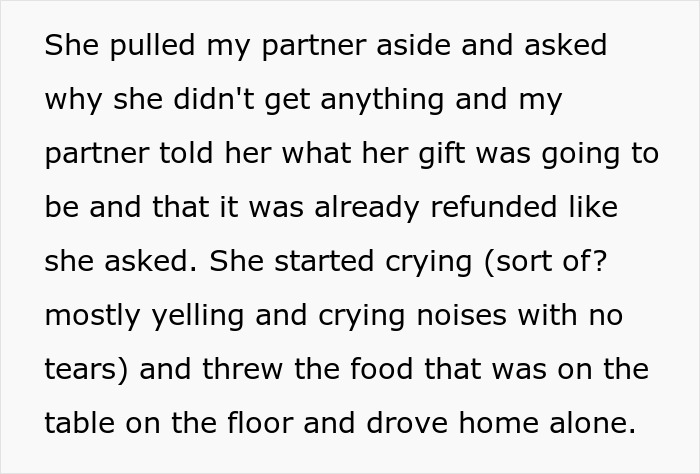

Image credits: mstandret / envatoelements (not the actual photo)
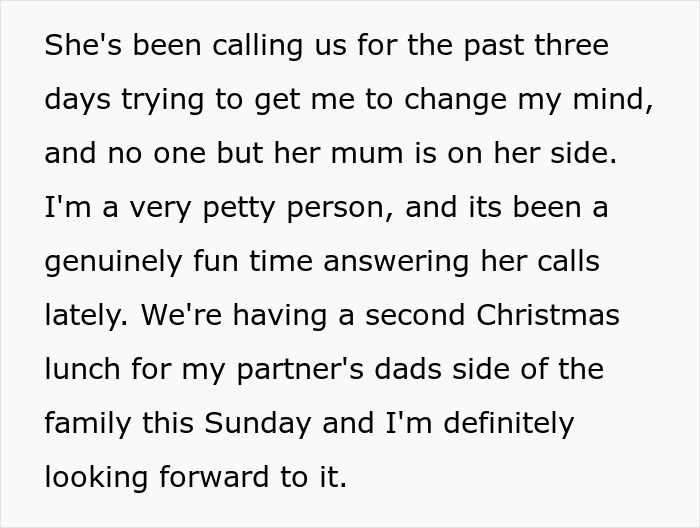
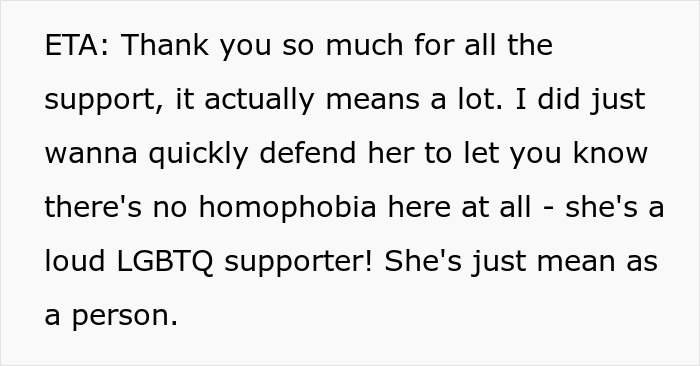
Image credits: PhobiaAccount
Stories of petty revenge tend to be popular for a reason

Image credits: benzoix / freepik (not the actual photo)
The internet has a weakness for revenge stories, and few scratch that particular itch quite like the tale of a man who spent three years and hundreds of dollars trying to win over his boyfriend’s mother, only to finally give up and watch her melt down when she realized she wasn’t getting a Christmas gift. For two years, he bought thoughtful presents that she either threw away or regifted. A $100 necklace in her favorite color? Given to her niece. Custom-scented candles evoking their shared hometown? Handed off to her sister. When he planned a $2000 trip to that hometown as a birthday and Christmas gift, she told him not to bother with “tacky little trinkets from Target.” So he canceled it, bought his boyfriend Lego instead, and showed up to Christmas with gifts for everyone except her. She threw food on the floor and has been calling him nonstop ever since. His response? He’s having “a genuinely fun time answering her calls lately” and looking forward to the next family gathering.
People who would normally counsel communication and taking the high road were instead cheering him on like spectators at a particularly satisfying sporting event. But what makes this collective celebration so interesting isn’t just that we love seeing mean people get their comeuppance, it’s what our enthusiasm for petty revenge reveals about human psychology and our deep-seated need for justice, even the small and ridiculous kind.
Research on schadenfreude shows that humans derive genuine pleasure from witnessing the misfortune of those we perceive as deserving it. This isn’t about being cruel, it’s about our brains’ reward systems lighting up when we see social violations corrected. The boyfriend’s mother violated unspoken rules of reciprocity for years. She accepted gifts while treating the giver with contempt, a behavior that triggers visceral discomfort in observers because it violates fundamental social contracts about fairness and gratitude. When she finally faced consequences, our collective sense of cosmic balance was restored, and that restoration feels good.
People like it when justice is served creatively

Image credits: freepik (not the actual photo)
What makes this particular revenge so satisfying is its perfect proportionality. He didn’t slash her tires or post nasty things about her online. He simply stopped participating in a one-sided exchange. Studies on punishment and fairness show that people find proportional responses far more satisfying than disproportionate ones. The punishment fits the crime so precisely that it becomes almost poetic. She said she didn’t want his gifts, so he stopped giving them. She got exactly what she asked for, which is the most delicious form of revenge because it removes any grounds for complaint.
The story also taps into our love of narrative justice. For three years, this man played the role of the earnest suitor trying to win approval, bending over backward to make thoughtful gestures that were met with disdain. In narrative terms, he was the underdog protagonist, and we were watching him absorb hit after hit. Studies on story structure show that audiences become deeply invested in seeing protagonists vindicated, especially after prolonged suffering. When he finally stopped trying and she immediately fell apart, it was the narrative payoff we’d been waiting for. The revelation that she actually wanted his attention all along, she just enjoyed making him work for it, transforms the entire story into a morality tale about people who mistake cruelty for power.
There’s also something deeply satisfying about watching someone hoist themselves on their own petard. She created this situation entirely through her own behavior. She could have been gracious about gifts she didn’t love. She could have communicated directly about what she wanted. Instead, she played games and now she’s experiencing the natural consequences. An aforementioned study on moral psychology shows that people find self-inflicted misfortune particularly satisfying because it demonstrates cause and effect, a kind of behavioral physics that suggests the universe has order.
At the same time, the mom doesn’t actually suffer very much

Image credits: Guzov Ruslan / freepik (not the actual photo)
But perhaps the most delightful element is his attitude about it. He’s not pretending to take the high road or feeling guilty about his pettiness. He’s openly admitting he’s enjoying himself, that answering her increasingly desperate calls has become entertainment. This honesty is refreshing in a culture that often demands performative grace from people who’ve been mistreated. Studies on emotional authenticity show that people respond positively to those who own their less noble feelings rather than pretending they don’t exist. His cheerful acknowledgment that he’s being petty and having fun with it gives everyone else permission to enjoy the story without guilt.
The truth is that petty revenge stories satisfy something primal in us, the need to see patterns of bad behavior corrected, to watch people learn that actions have consequences, and to witness someone finally stop setting themselves on fire to keep someone else warm. We’re not celebrating cruelty, we’re celebrating boundaries. And if those boundaries come with a side of schadenfreude and some dramatic food-throwing, well, that just makes the story better. The boyfriend’s mother will survive not getting a Christmas present, but she might finally learn that you can’t treat people terribly and still expect their effort.
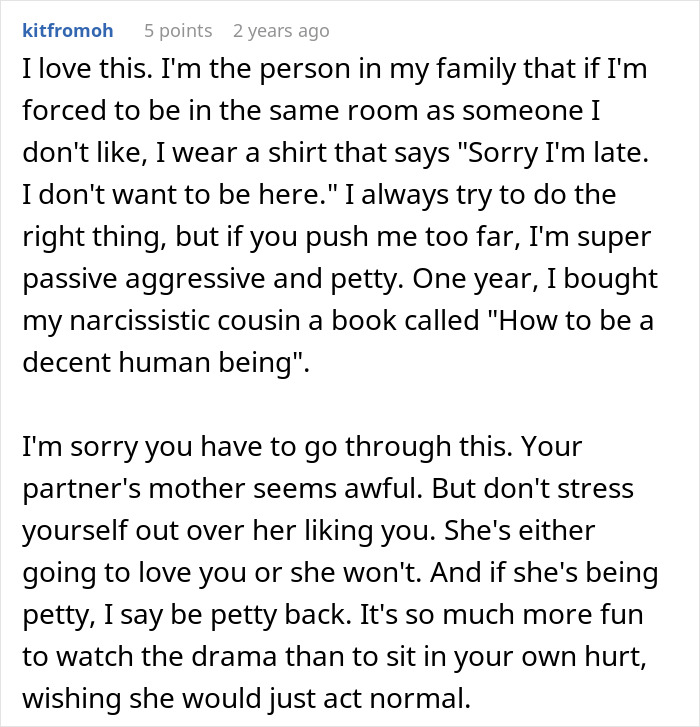
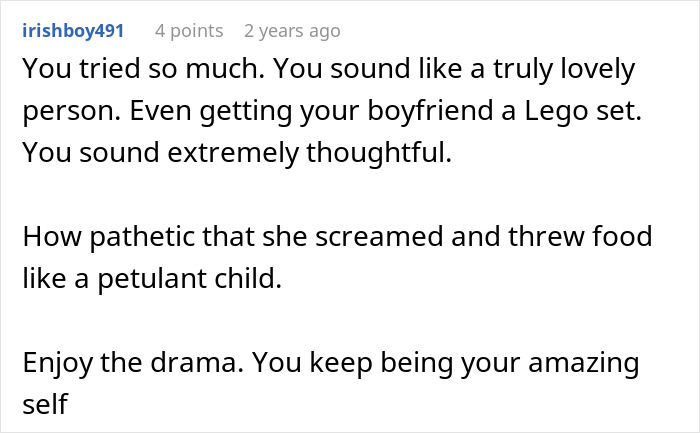
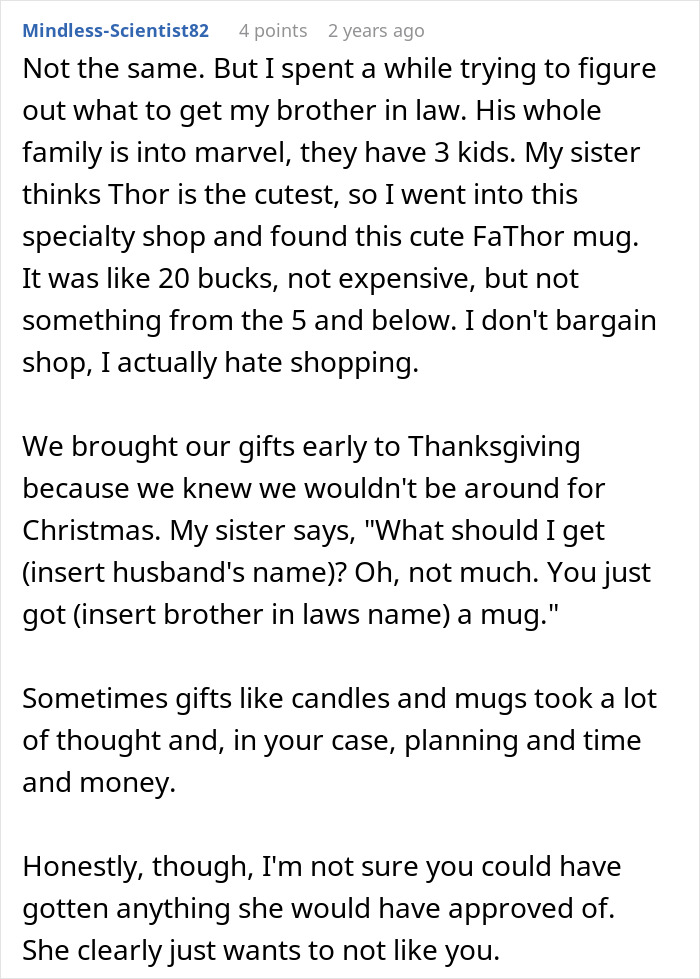
The man also discussed in-laws with some of the commenters






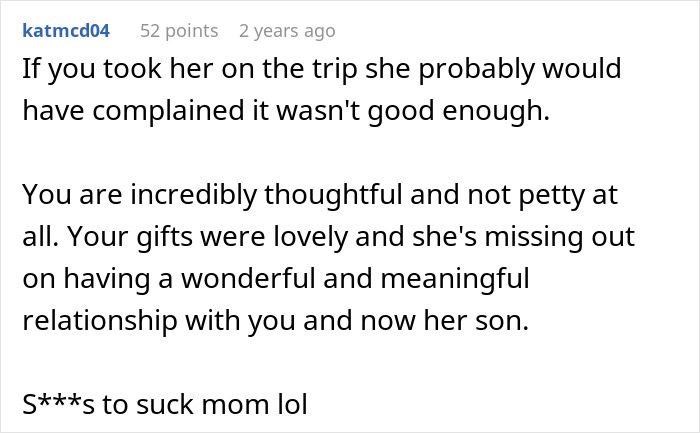
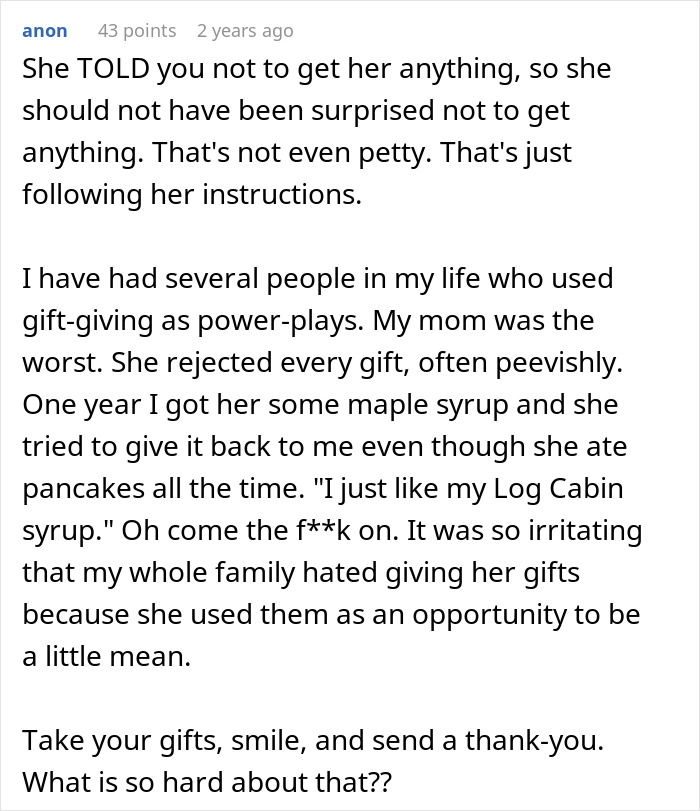
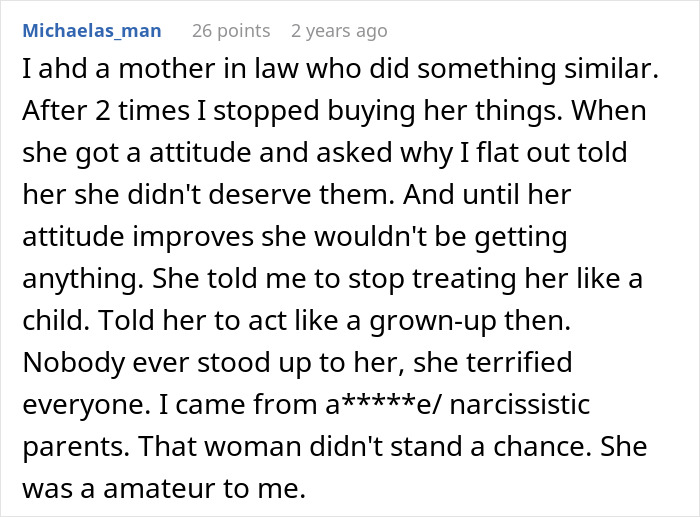
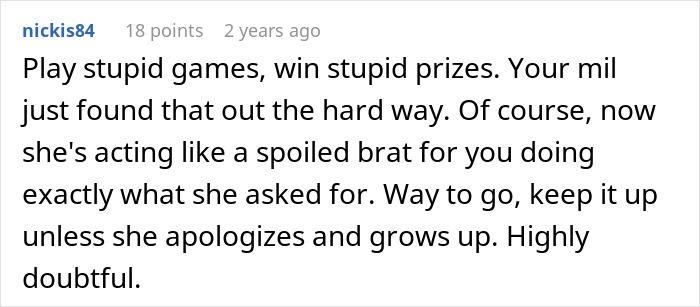
Readers enjoyed her getting her comeuppance




















 Follow Us