Imagine planning a cozy family Sunday dinner, only to find that your grown child suddenly has a new priority family, and you’re not it. That’s the tricky reality for many adoptive parents when their adult children reconnect with biological relatives.
And well, that was the situation today’s Original Poster (OP) found herself in when her adopted daughter reunited with her biological family. Although painful, she still continued to show support until one day the daughter approached her with a bold request.
More info: Reddit
For some adoptees, the excitement and emotional intensity of reconnecting can unintentionally push adoptive parents to the sidelines

Image credits: Freepik / Freepik (not the actual photo)
The author’s daughter, adopted at birth, reconnected with her biological family after having her own child, which the author fully supported



Image credits: Kateryna Hliznitsova / Unsplash (not the actual photo)
However, she began to notice that the daughter was pulling away, leading to a major argument where the daughter claimed her biological family’s love was “more natural”


Image credits: Linoleum Creative Collective / Unsplash (not the actual photo)
Months later, the daughter returned during her husband end-stage heart failure, seeking financial support and asking her to sell land meant for her younger brother

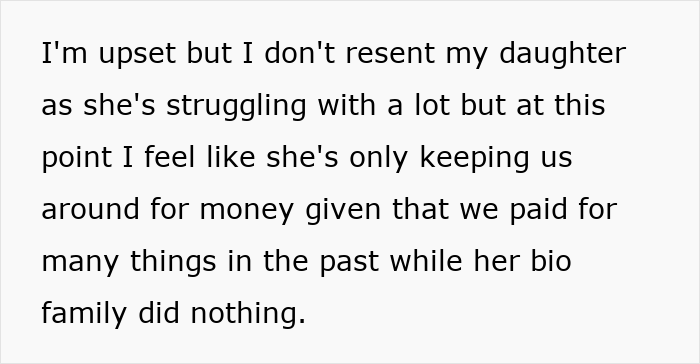
Image credits: throwawy46774
When she refused and asked the daughter to meet her biological parents instead, she accused her pettiness, conditional love, and cut off contact again
After becoming a mother herself, the OP’s adopted daughter decided to reconnect with her biological family. The OP and her husband wholeheartedly supported her decision, especially since it had always been the OP’s desire for her to know her biological mother better. At first, everything seemed fine, but over time the relationship dynamics quietly shifted.
The adopted daughter stopped calling weekly as she would normally, and also stop attending joining them on trips or dinners. The OP understood that she was busy with the demands of parenting until she saw on Facebook that the daughter was rather spending time with her biological family.
When the OP tried to express how sidelined she felt, the daughter would say that her reaction was just her being “jealous”, “too sensitive”, and that she needed her space. Eventually, one explosive argument ended with the adopted daughter claiming that the love from her biological family was more “natural” and greater than anything else.
Now, the daughter’s husband, who had long struggled with heart problems, entered end-stage heart failure. Doctors recommended a Left Ventricular Assist Device (LVAD), but the cost was overwhelming. Suddenly, the daughter reappeared more often, seeking comfort and support.
The OP and her husband offered emotional help, but soon she began to ask that they sell the piece of land they had set aside for their son’s education. When the OP refused to sell the land, she suggested the biological family could help instead. It was then the daughter burst into tears and accused her of being “unsupportive” and offering conditional love.

Image credits: Getty Images / Unsplash (not the actual photo)
Reconnecting with biological family can be a deeply emotional experience for adoptees. According to the Celia Center, these reunions often bring joy and closure, yet they can unintentionally marginalize adoptive families, who may feel excluded or replaced as attention and time shift toward the biological relatives.
This dynamic is often amplified during the so-called “honeymoon phase” of reunion, My Adopted Life highlights. In this stage, adoptees may idealize their biological relatives, becoming absorbed in their shared history, physical similarities, and the excitement of new connection. The intensity of this phase can make adoptive parents feel replaced, even when they continue to offer support.
When emotional dynamics intersect with financial pressures as in the case of the OP, the potential for conflict can increase significantly. Paul Deloughery notes that financial boundaries are a common source of long-term family tension, especially during medical emergencies.
Still, he emphasizes that family members have the right to set limits and decline requests that conflict with their goals or resources, and doing so is not selfish but necessary to prevent resentment and protect the interests of other family members.
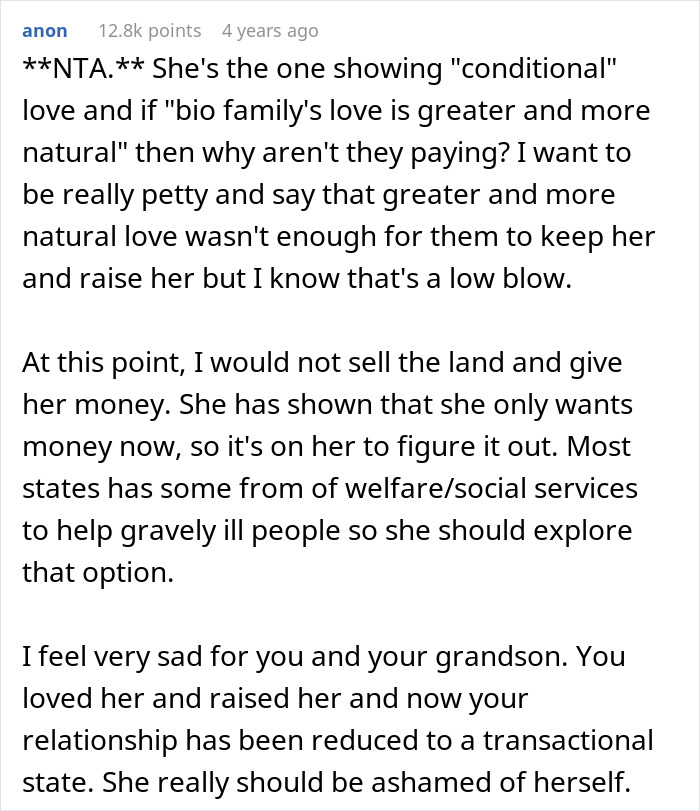
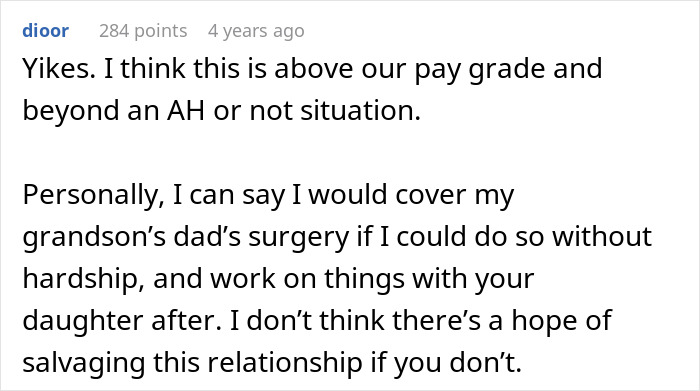
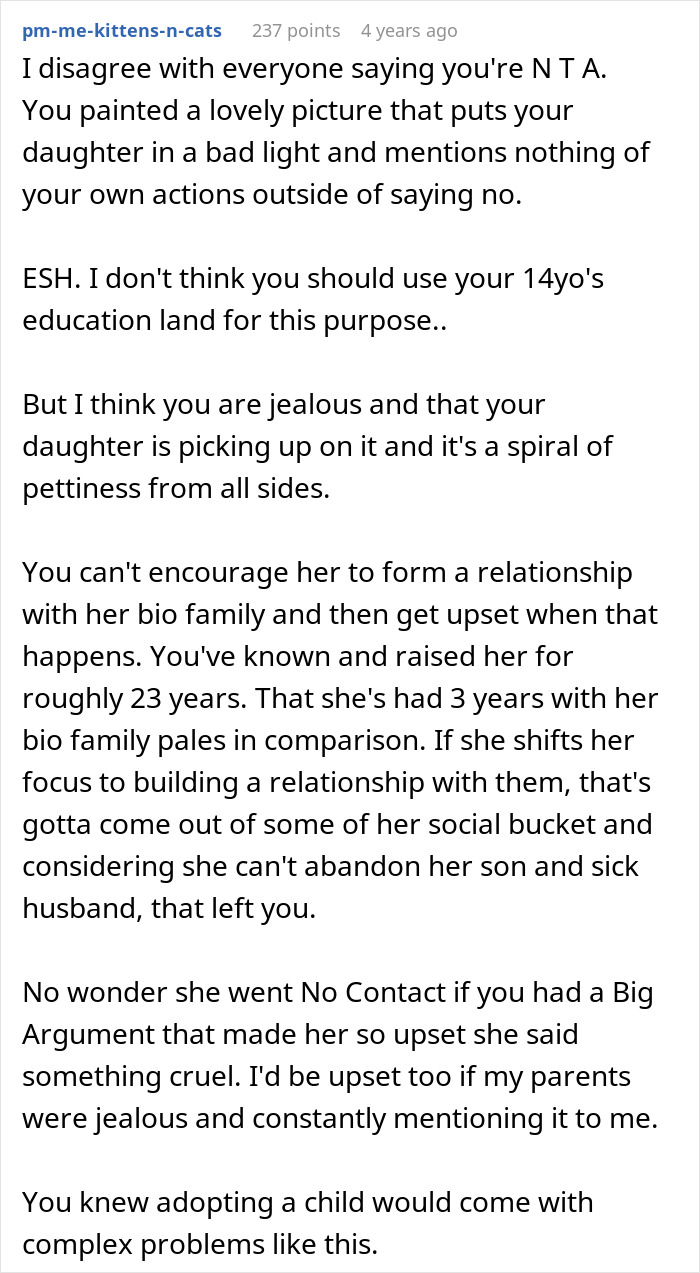
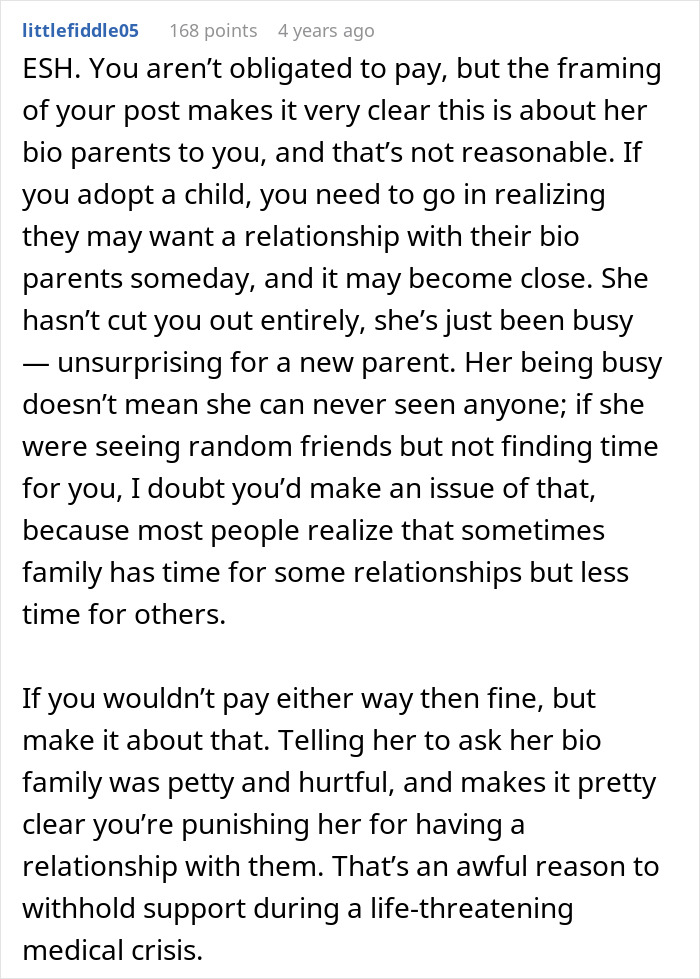
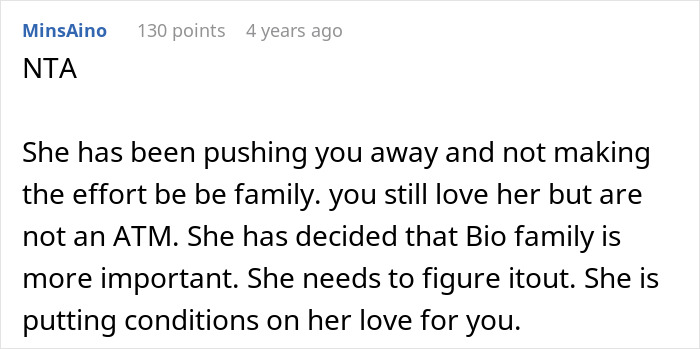
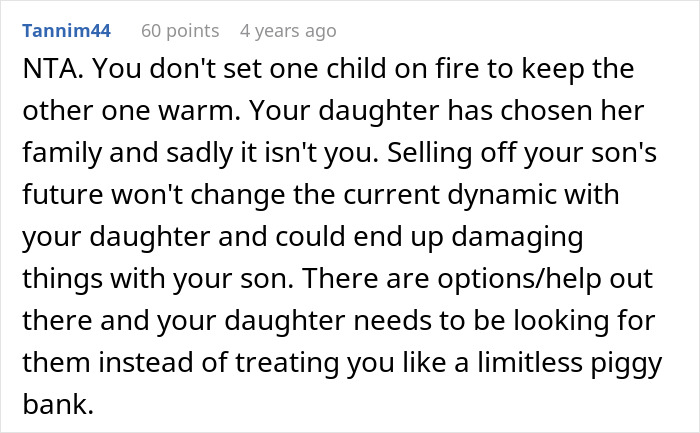
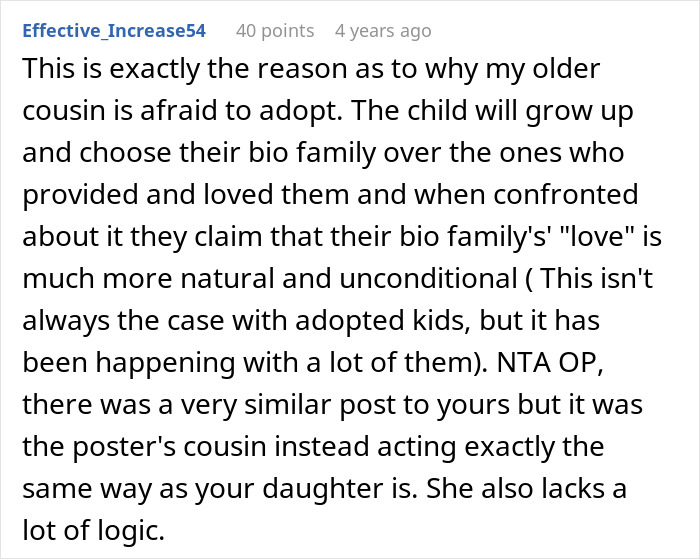
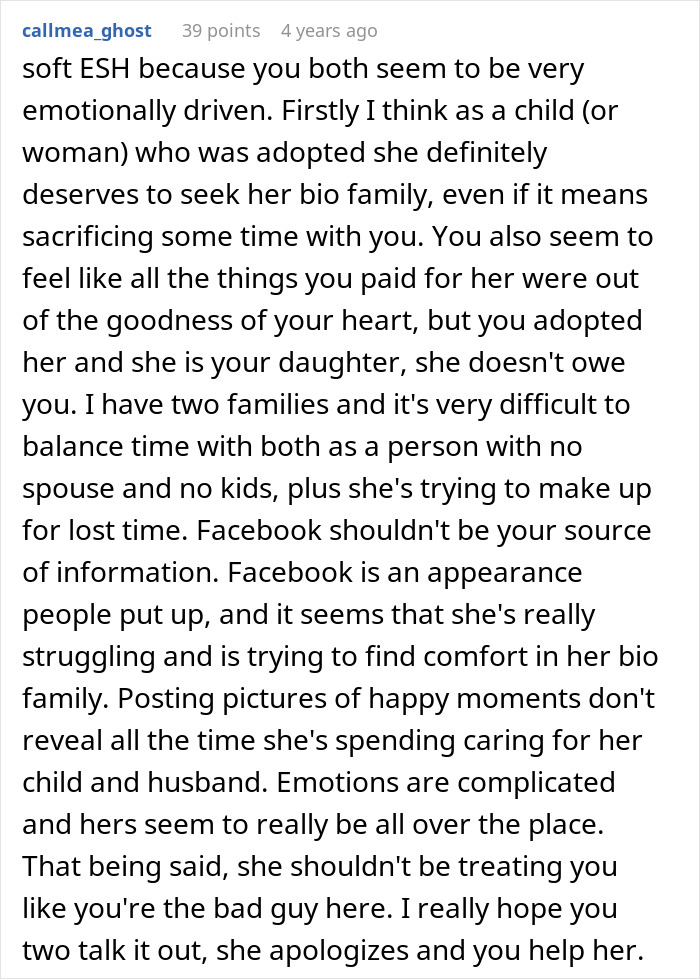
Netizens overwhelmingly sided with the OP, emphasizing that the daughter’s request crossed a boundary and reflected a transactional approach to the relationship. If you were in the OP’s shoes, would you have helped your daughter financially even after she prioritized her biological family? We would love to know your thoughts!
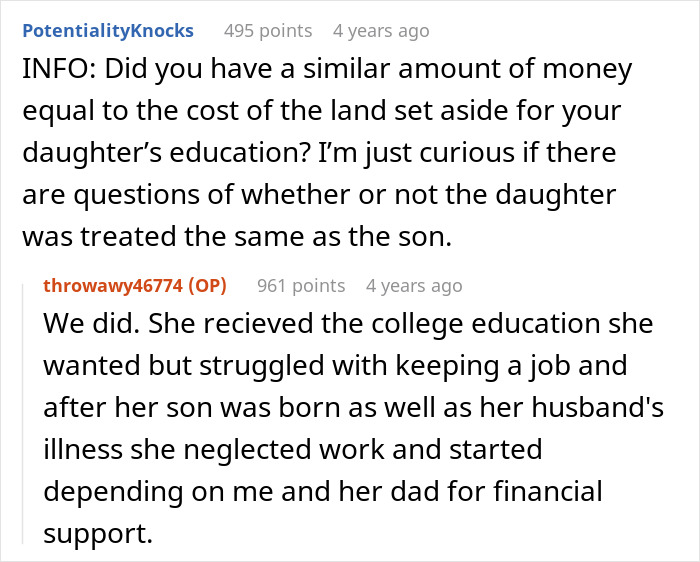
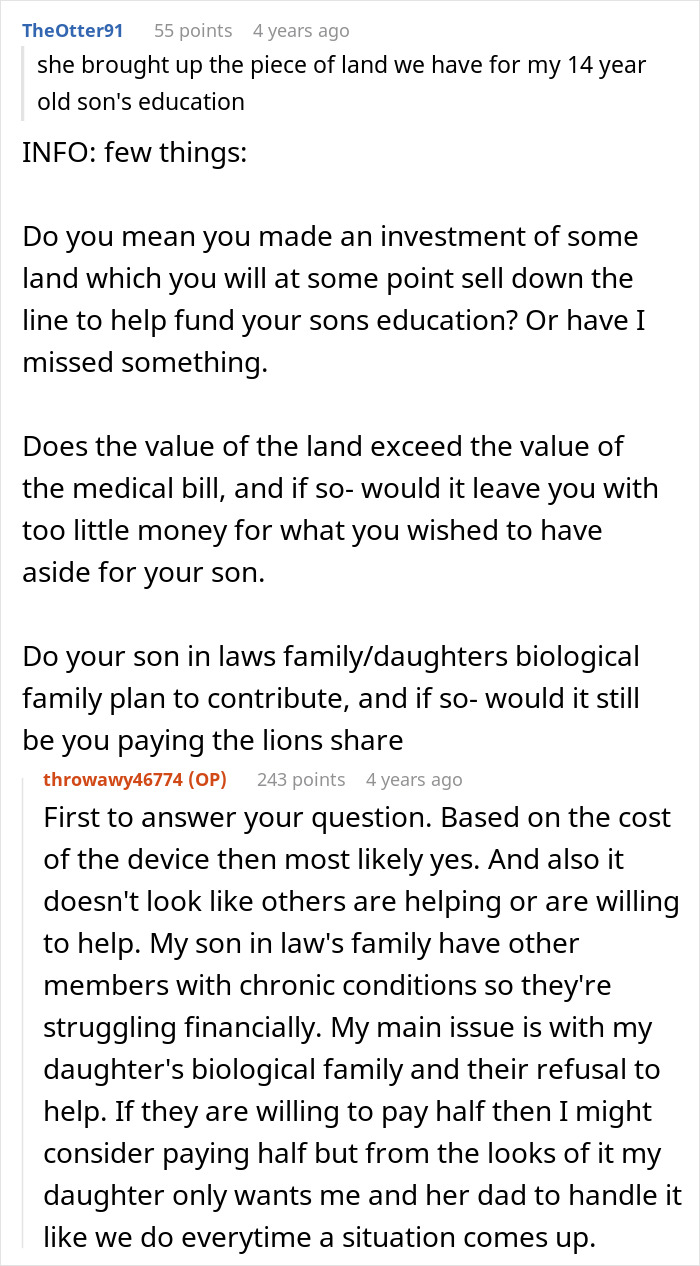
Netizens pointed out that while it’s natural to want to support loved ones, her insistence on financial help after prioritizing her biological family was inappropriate








 Follow Us