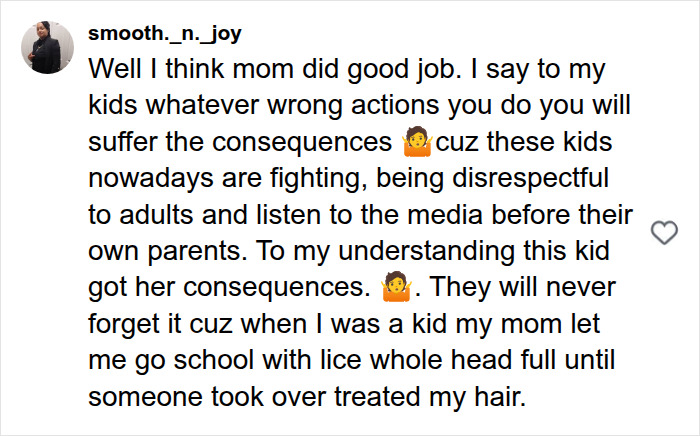
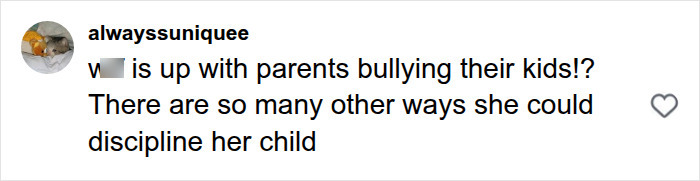
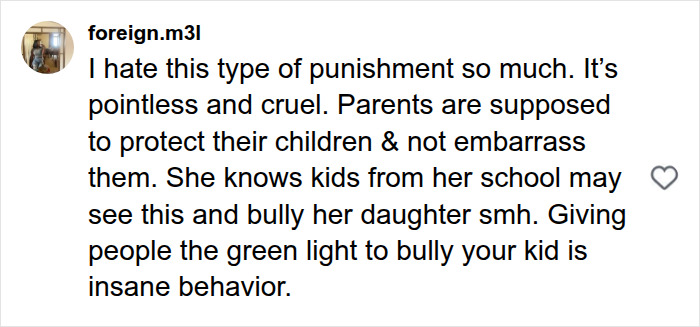
A mother has sparked controversy by revealing that she shaved her daughter’s hair as a punishment after learning that she had bullied a classmate with cancer.
Daiana Birollo, a content creator who describes herself as a storyteller, took to TikTok to recount the case, which she said happened to one of her followers.
In the email sent to Birollo, the mother explained that the goal was to teach her daughter a lesson about empathy and the consequences of hurting others.

Image credits: daianabirollooficiall
Trigger warning: This article contains details that some readers may find distressing.
Psychology and education experts have since weighed in on the punishment, explaining whether it is effective and how parents should respond when their child is bullying someone.
The mother said the news that her daughter was a bully came as a complete surprise, given that her 11-year-old behaved perfectly well at home.
“She has always been a polite, straight-A student. She never caused trouble at home, and I had never received a call from the school regarding her behavior,” Birollo explained, quoting her follower.


Image credits: Tima Miroshnichenko/Pexels (not an actual photo)
The mother said she and her husband had always spoken to their daughter about the importance of respecting others.
“This should help us reflect on the fact that we only know how our children behave at home. We truly don’t know how they act on the streets, with their friends, when they’re far away from us,” the concerned mother stated.
“And I realized that I didn’t know my daughter.”
She explained that her 11-year-old had changed schools earlier this year and befriended a new group of classmates.
Months after the change, the mother and her husband were called to the school for an urgent meeting.
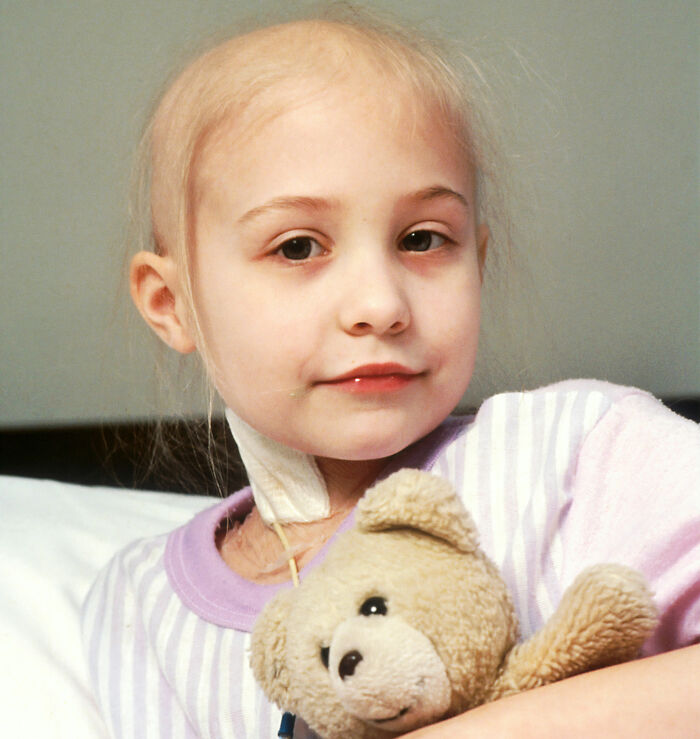
Image credits: National Cancer Institute/Unsplahs (not an actual photo)

“I became worried and asked my daughter if something had happened, and she said, ‘No,’” the mother explained.
During the meeting, the headmaster explained that her daughter and her friends had repeatedly bullied another girl who was undergoing chemotherapy. The girls had been warned by the school three times, but the attacks continued, with them pointing at the victim’s bald head and laughing at her.
As Birollo described, the victim was so affected by the bullying that she attempted to take her own life, prompting her parents to contact school authorities.
This made the mother question where she had gone wrong in raising her daughter. After reflecting on how to handle the situation, she concluded that the best way to teach her daughter a lesson was to shave her head.

Image credits: Mikhail Nilov/Pexels (not an actual photo)
“I didn’t want to take her phone away or ground her. I wanted something that would change her forever,” Birollo recounted, adding that her follower also took her daughter to her classmate’s house to apologize.
The mother said her daughter cried as she cut off her long hair and shaved her head. She revealed that she also became upset, though she doesn’t regret her decision.
Birollo described the victim’s parents as being “shocked” by the decision. She said her follower acknowledged that the punishment was cruel but believed it was a “necessary” lesson to ensure her daughter never mistreated anyone else.

Image credits: Tima Miroshnichenko/Pexels (not an actual photo)

Claire Cameron, a specialist in childhood education and cognitive psychology, told Bored Panda that the punishment in question is “dramatic but not necessarily a bad idea.”
“The goal with any consequence would be to help the child learn to take the perspective of the person they are bullying. Having a shaved head could help the girl realize what her classmate might be going through in a way that’s hard to teach verbally.”
Still, Cameron warned that the punishment could also be “traumatizing” for the child, depending on how the parent frames the act.
Image credits: Jelleke Vanooteghem/Unsplahs (not an actual photo)
Regarding the apology, the education expert said this approach is not effective if it feels forced for the aggressor.
“Required apologies are not optimal because they force behaviors rather than developing more subtle, internal emotional skills like empathy and remorse.
“It could be an effective experience to have to face the victim, but with more of a ‘Let’s check on this person to see if they’re okay after what they went through’ type of way.”
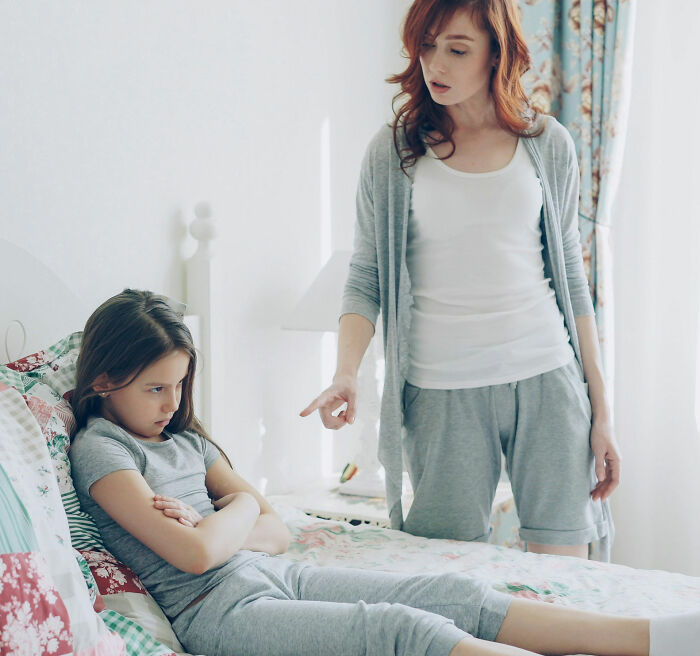
Image credits: Vitaly Gariev/Unsplahs (not an actual photo)

Tracy Vaillancourt, a specialist in youth mental health and violence prevention , disagrees, stating that shaving the bully’s head and similar “an eye for an eye” approaches are not educational.
“I do not recommend this approach because it is too punitive. Ironically, it also represents the same kind of ab*se of power that bullying represents,” she told Bored Panda.
Vaillancourt believes apologizing is the best way to help children take accountability for their mistakes.
“It is important for people to apologize to the people they have harmed. Accountability goes a long way,” she said, adding, “All bullying needs to be taken seriously and addressed promptly.”

Image credits: RDNE Stock project/Pexels (not an actual photo)
Both experts agreed that bullying is often the result of negative family relationships.
As Cameron noted, bullying tends to occur when children are not supported in expressing their uncomfortable emotions and are shamed or punished for expressing anger, sadness, or fear.
“The first thing a parent should do in this case is to examine what their own parenting and home context might be contributing to the situation. Children who bully may be experiencing controlling adults or siblings, or coercive or threatening interactions.
“Siblings or other relatives may bully more vulnerable family members without parents knowing. The key is to have children learn social emotional skills in all contexts, including home and school.“
Image credits: BOOM /Pexels (not an actual photo)
One warning sign that a child is bullying someone is if they frequently gossip about or mock their peers.
Insecure children may also bully others to impress or gain the approval of their close peer group.
The experts recommended that parents who discover that their child is bullying someone schedule a family therapy appointment or take them to a child therapist. They also advise working with the school, which likely has bullying prevention programs in place or experience handling similar cases.







 Follow Us