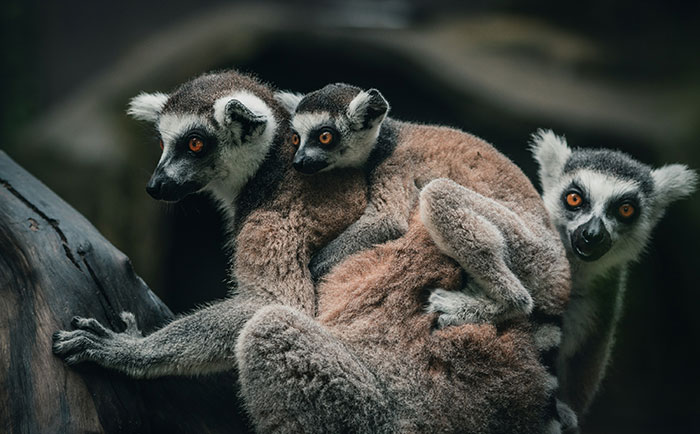
A yoga class ended the lives of four lemurs, and the mechanism was human herpes. Researchers at the University of Florida confirmed the first molecularly verified cases of HSV-1, the virus responsible for cold sores, crossing into lemurs at a wildlife facility where the animals had been used in public engagement sessions involving close human contact. Every infected animal received treatment, yet every one of them died.
For humans, HSV-1 is essentially background noise. Around two-thirds of people under fifty carry it, most without symptoms, many without ever knowing, and those who do get outbreaks manage them with a small tube of pharmacy cream and mild social embarrassment. Our immune systems have spent so long negotiating with this virus that the relationship has become almost cordial.
Lemurs never had that negotiation. Their immune systems had no framework for HSV-1 because HSV-1 belongs to us, and when it crossed over, it did not arrive as a manageable inconvenience. It arrived as something their biology had never encountered and had no answer for, transmitted almost certainly by people who did not know they were carrying anything at all.
This story is being reported as a curiosity, a strange footnote in wildlife medicine. It should be reported as a symptom of a much larger and almost entirely ignored problem, because humans have been giving animals our diseases for centuries and we have spent almost none of that time paying attention to it.
The transmission we never talk about
The global conversation about zoonotic disease, meaning illness that jumps between animals and humans, runs almost exclusively in one direction. Bats. Wet markets. Primates. The animal kingdom is culturally positioned as a biological hazard leaking into human populations, and every few years something emerges to confirm our worst suspicions and dominate the news cycle for months.
We have entire international frameworks dedicated to monitoring what animals might give us next. We have essentially no equivalent infrastructure for monitoring what we are giving them. It might just be an oversight, but it is mostly a spectacular act of species-level narcissism. We do, however, have a word for it. Anthropozoonosis, aka, your boogers gave a chimp a cold.
The lemur case is not an isolated incident. It is not even particularly unusual by the standards of what researchers find when they actually look. We just rarely look.

The other direction: a brief and uncomfortable history
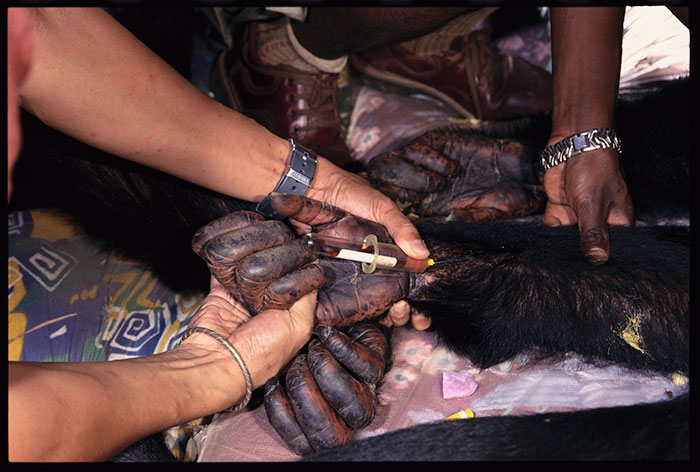
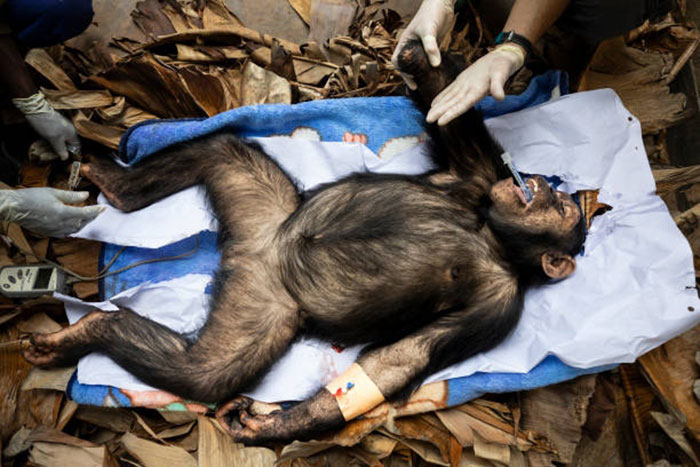
In 2009, wild chimpanzees in Cameroon were found to have died from a respiratory illness caused by human rhinovirus C, the virus responsible for the common cold. An illness so mundane that we don’t even take off work for it anymore. For the chimpanzees, it caused fatal pneumonia, and researchers subsequently found evidence of multiple human respiratory viruses circulating in great ape populations across Africa, almost certainly introduced by tourists, researchers, and conservation workers who arrived with the best intentions and inadequate biosecurity protocols.
Mountain gorillas, of which there are approximately 1,000 left on earth, are so closely related to humans that they can catch essentially every respiratory illness we carry. Researchers working with gorilla populations in Rwanda and Uganda are required to wear masks, maintain distance, and stay away entirely if symptomatic, because a human head cold reaching a gorilla troop is not a minor event.
A 2011 outbreak of human metapneumovirus killed several members of a habituated gorilla group in Rwanda. And it seems the poor gorillas just can’t escape the dread of our disease. In the 80s we gave them measles! The same red spotty mess that your mom would have to treat with cream when you were a kid spread through a troop and caused several deaths.
Dolphins have been found carrying human influenza strains (do we even want to know how this happened?). Seals in the North Atlantic have tested positive for human H3N8 influenza. House sparrows, elephants, and captive big cats have all been documented with pathogens of human origin.
In 2021, during the early months of the pandemic, multiple tigers and lions at the Bronx Zoo tested positive for SARS-CoV-2 after exposure to an asymptomatic keeper, which briefly made international news before everyone moved on. And in the most disturbing game of tag, we quickly passed COVID on to wild and farmed mink. So governments had to cull tens of millions of your pre-production fur coats to try and stop the spread.
A keeper with no symptoms, doing their job carefully, infected four big cats with a virus that had only existed in the human population for months. The cats recovered, which put them ahead of the lemurs statistically, but the point stands. The pattern here is not subtle. Wherever humans go in large numbers, in sufficient proximity to wildlife, our microbiome follows us, and animals that have never developed immunity to our particular catalogue of illnesses have no defence when it arrives.
The yoga class problem, specifically
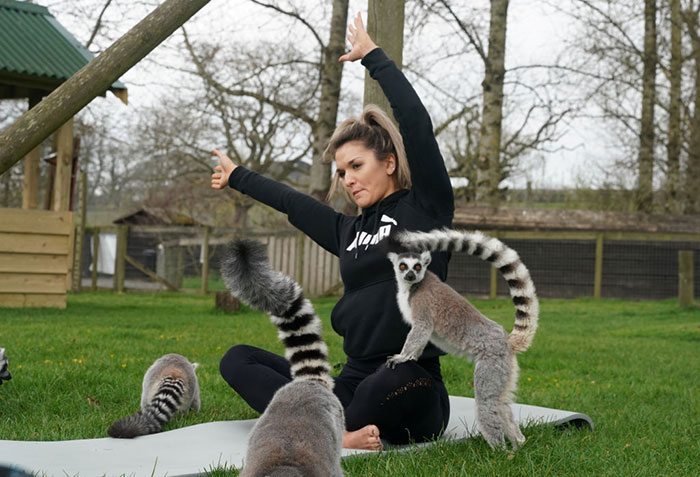
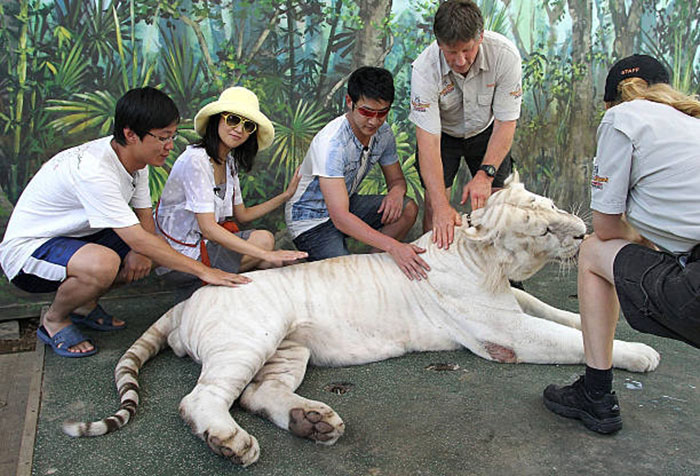
The lemur case has a specific and avoidable quality that makes it particularly hard to brush past. Wildlife facilities offering close human contact experiences, where paying visitors hold, pet, feed, or practice yoga alongside animals, are a documented biosecurity risk that the industry has been aware of for years and has addressed with varying levels of seriousness.
The financial incentive to offer these experiences is obvious. A lemur yoga class is considerably more marketable than a lemur observed from behind a fence, and the people attending it are not doing anything that feels remotely dangerous. They are doing downward dog next to a small primate. They probably had a lovely time.
The problem is that lemurs are Madagascar’s most distinctive and most endangered export, with around a third of species currently classified as critically endangered, and their immune systems evolved in an island environment that did not include humans for most of their evolutionary history. Madagascar was one of the last large landmasses to be settled by people, only around 1,500 years ago, which in evolutionary terms is practically last week.
The lemur immune system is not remotely prepared for the full range of human pathogens, and putting them in sustained close contact with the general public, who arrive from everywhere, carrying everything, is a gamble being taken with animals that cannot afford to lose. The yoga class did not set out to kill anyone. It just had not thought particularly carefully about what it was doing, which is a recurring theme in human interactions with wildlife and one we have not yet managed to outgrow.
What we owe the animals we claim to love
There is a particular irony in the fact that the facilities most likely to expose animals to human pathogens are often the ones most visibly committed to animal welfare. The people booking lemur yoga are not indifferent to lemurs. They love lemurs. They paid money to be near lemurs. They probably have a lemur tote bag.
The conservation workers who introduced respiratory viruses to chimpanzee populations were there because they cared about chimpanzee survival. The tourists who visit gorilla sanctuaries are funding the protection of one of the most endangered primates on earth. The desire to be close to wildlife is not malicious. It is, in its way, a form of love, and it is killing things.
The uncomfortable conclusion is that loving wildlife and being good for wildlife are not the same thing, and sometimes they are actively opposed to each other. The mountain gorilla mask requirement exists because researchers had to accept that their presence was a biological hazard to the animals they were trying to protect.
That is a difficult thing to absorb about yourself, and most people, understandably, would prefer not to. It is much easier to think of disease transmission as something that flows from the natural world into ours than to sit with the fact that we are, microbiologically speaking, at least as dangerous to them as they are to us.
The lemurs did not accidentally stumble into that yoga class. They had no immune defence against what the humans brought in, no ability to opt out of the interaction, and no chance once the virus arrived. The least we can do, in their memory and in the memory of every chimpanzee that died from a human cold, every gorilla felled by a researcher’s runny nose, and every mink culled because we gave them our pandemic, is to start treating disease transmission as the two-way catastrophe it has always been.
The yoga class, for what it is worth, should probably just be yoga.
 Follow Us