According to a Lithuanian saying, the deeper you go into the forest, the more trees you find. It means that the closer you examine something, the more questions and complexity you’ll uncover.
History works the same way. What first appears straightforward on the surface branches into much greater detail, contradictions, and unexpected connections once you spend time with it.
Just take a look at the posts by the Instagram account ‘Historica Leaks.’ Whether it’s the intricacy of ancient Greek sculpture or local life in a quiet corner of Norway, it captures both the grand and the ordinary in equal measure.
More info: Instagram
#1
148 years ago people were taking silly pictures of their pets. 1875
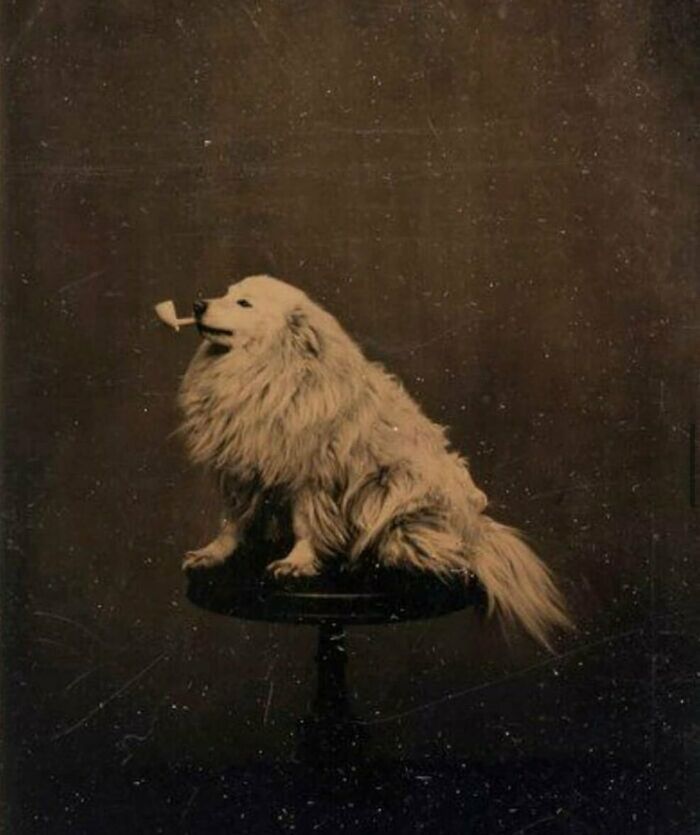
Image source: historicaleaks

#2
Moses by Michelangelo is a marble sculpture created in 1513-1515. One of the numerous intricate aspects of this work of art is a little muscle in the forearms that only contracts when the pinky is lifted; otherwise, it is undetectable. Moses is raising his pinky, so the teeny muscle there is contracted. The attention to detail is impeccable.
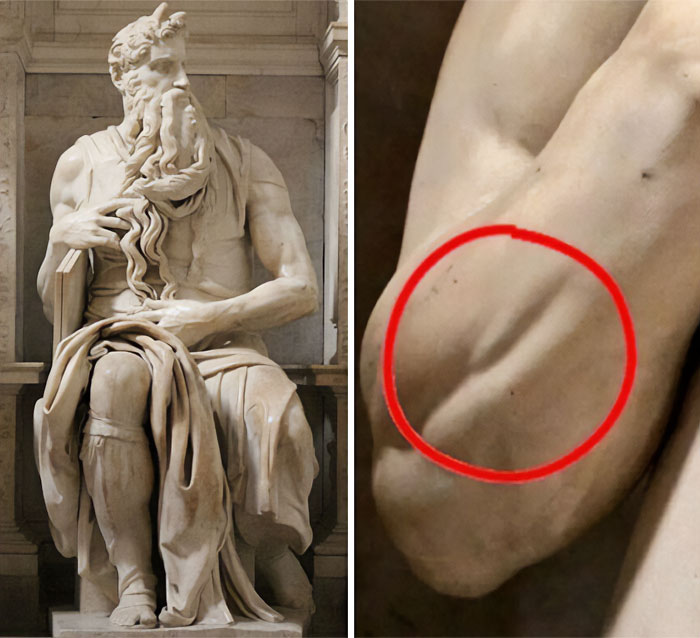
Image source: historicaleaks
#3
A man and his cat. Photo taken in Skibotn, Norway by Ismo Höltto, 1967
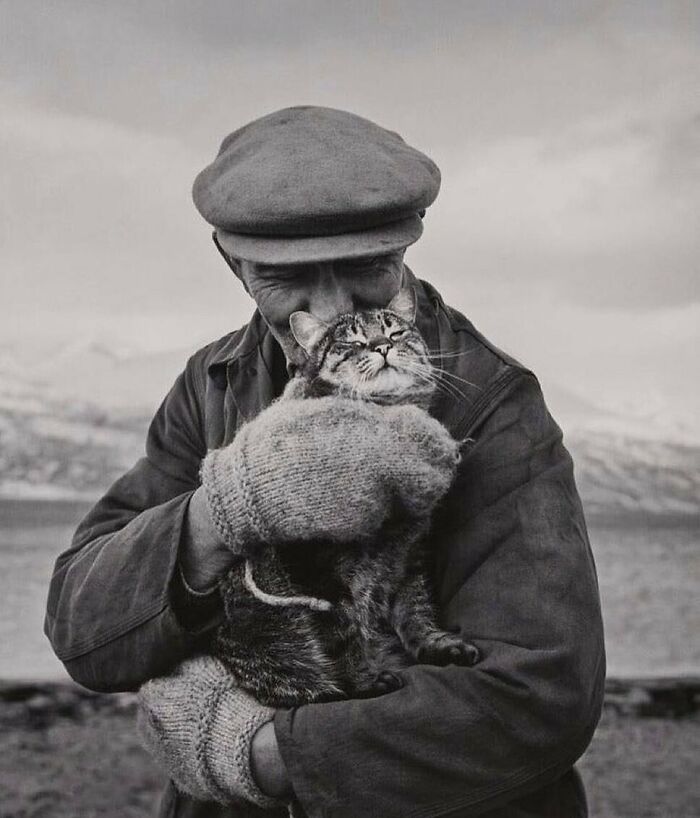
Image source: historicaleaks
#4
An upset little patient after a visit to the dentist, 1920s
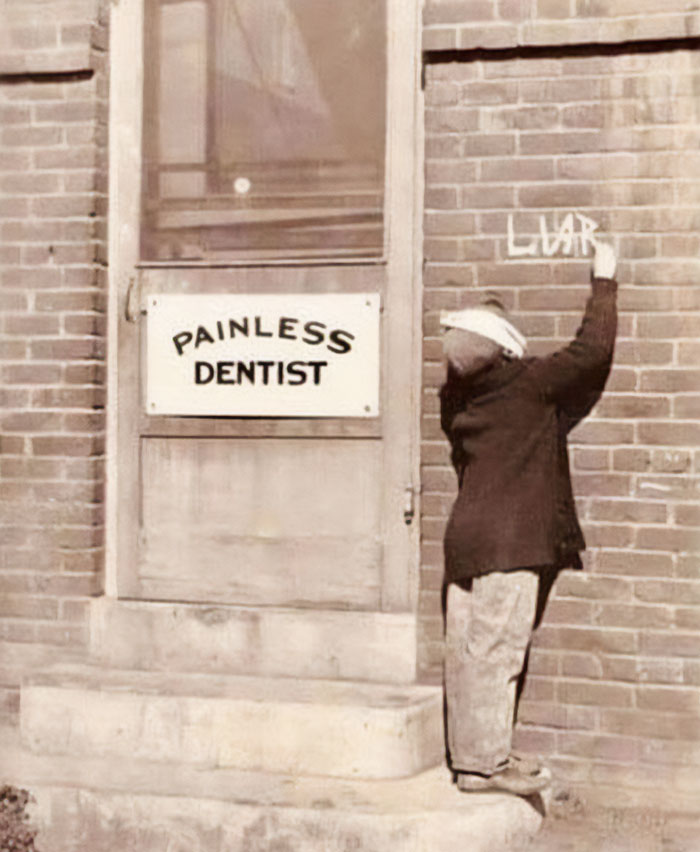
Image source: historicaleaks
#5
The photographs taken in the kindergarten, in which the children were asked on Father’s Day to draw from the memory portraits of their dads, and then compared them to the original, Life Magazine, USA, 1949
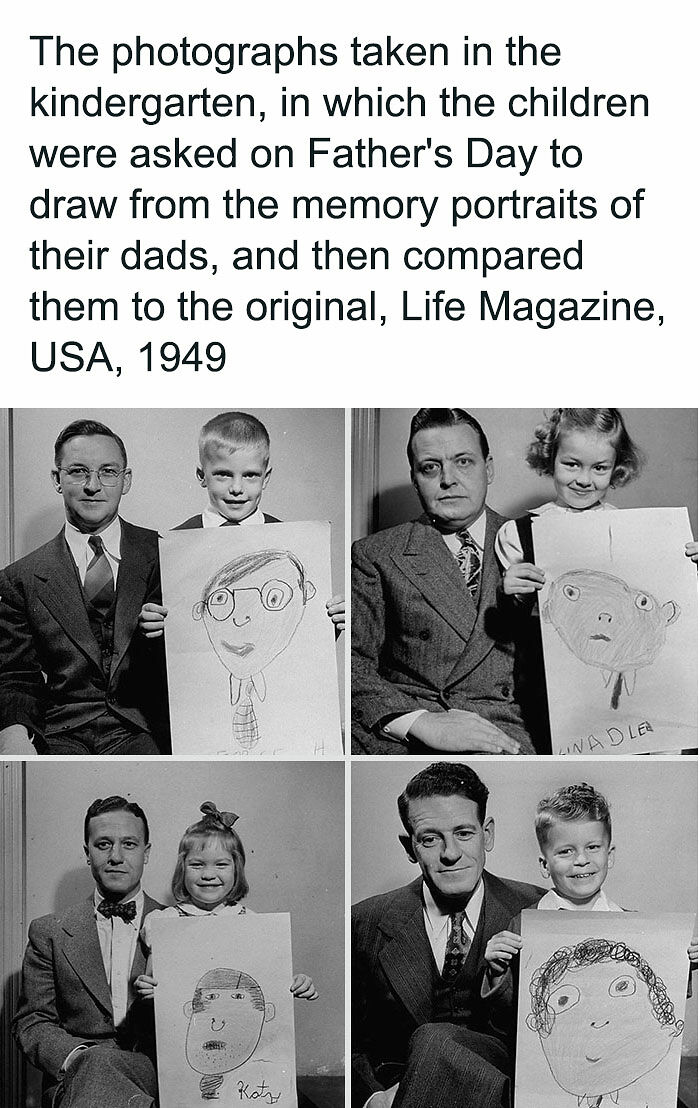
Image source: historicaleaks
#6
Undine Rising from the Waters (1880) by Chauncey Bradley Ives “According to medieval lore, undines were Mediterranean sea spirits who lived as soulless mortals. In the nineteenth century, this story gained prominence through Baron Heinrich Karl de la Motte Fouqué’s popular novel Undine, in which a water spirit gains a human form and soul by marrying the mortal knight she loves. When her husband proves unfaithful, the laws of the water spirits force her to kill him. Chauncey Bradley Ives depicts the moment when the mournful Undine, cloaked in a white veil, rises like a fountain to claim her husband’s life. Exquisitely rendered, the diaphanous wet drapery is a masterful example of illusionistic carving.” – Yale University Art Gallery
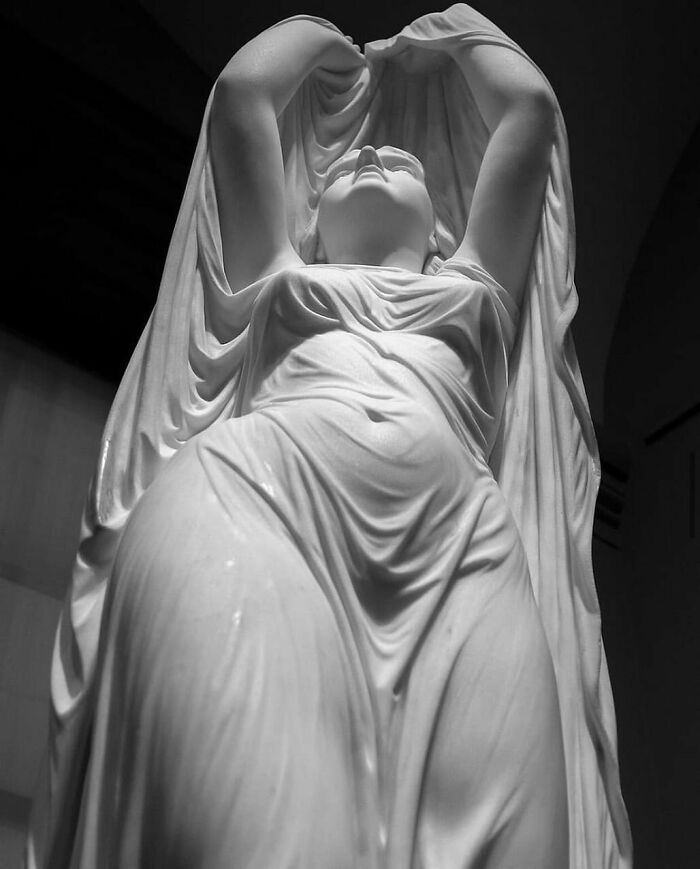
Image source: historicaleaks
#7
Pictured above is Tsar Nicholas II. Looks like a selfie stick but he was probably just checking the camera when it went off.
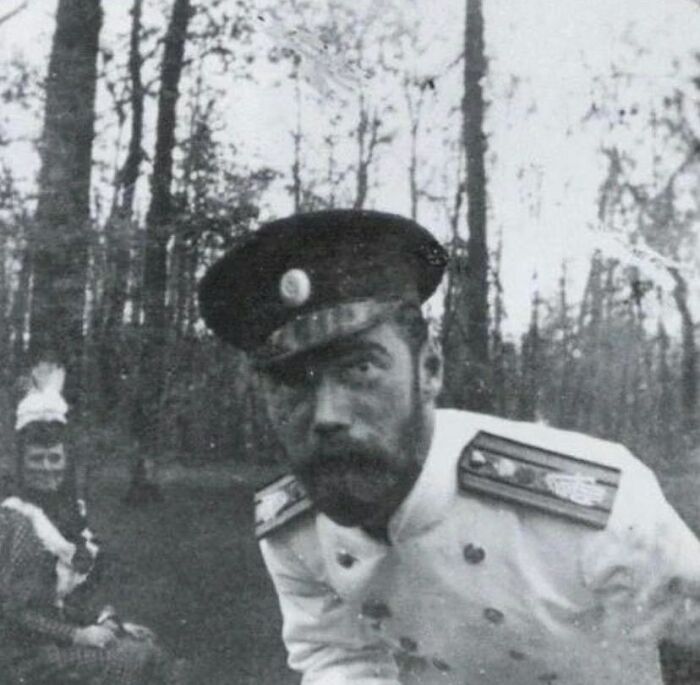
Image source: historicaleaks
#8
Abraham Lincoln in 1858 vs 1865 shows a 7 year difference during wartime. Lincoln once said, “| am a tired man. Sometimes, I think I am the tiredest man on the planet”.
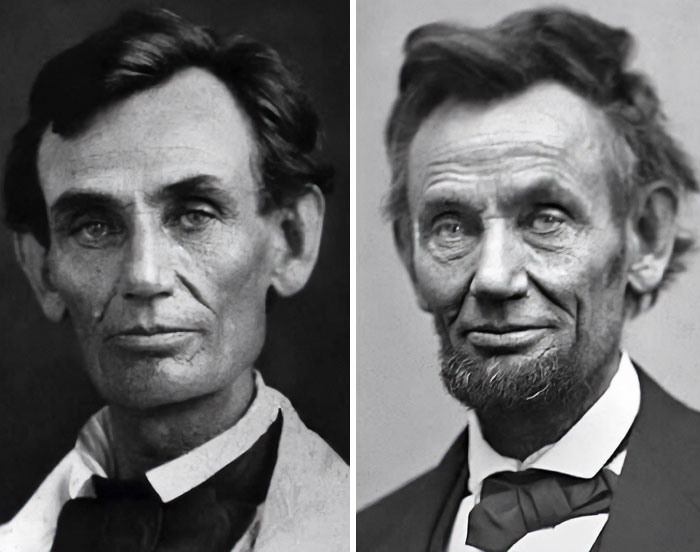
Image source: historicaleaks
#9
Pictured above is Dr. Eugene Lazowski, a Polish doctor who saved 8,000 Jewish people by creating a fake typhus epidemic in Stalowa Wola, a city in Poland that was occupied by the Nazis during World War 2. Here is an excerpt from the Chicago Sun-Times in 2006: “When the Nazis overran Poland in World War II, Lazowski yearned to find a way to fight back, to protect human life, and he seized upon a paradoxical instrument of salvation- the German army’s profound fear of disease. While German industrialist Oskar Schindler, whose heroic story was told in the movie ‘Schindler’s List,’ employed bribes and influence to protect as many as 1,000 Jews who worked in his factory, Lazowski slyly used medical science to save the lives of thousands of Jews and other Poles in 12 Polish villages. He and a fellow physician, Stanislaw Matulewicz, faked a typhus epidemic that forced the German army to quarantine the villages.” Matulewicz discovered a bacteria strain that when injected into a person would cause them to test positive for typhus without suffering from the ill effects of the disease. Lazowski began to inject this bacteria strain into non-Jews because he knew that the Nazis would immediately kill Jewish people infected with typhus. He then sent the blood samples to German labs. Once typhus was detected, the Nazis proceeded to quarantine the outbreak area. Lazowski kept track of how many “typhus” cases he was sending to the labs to make sure they actually correlated with how the disease typically progresses. The quarantine spared the lives of approximately 8,000 men, women and children from being deported to concentration camps. Lazowski kept his activities a secret, not even telling his wife. After the war, he moved to Chicago where he had to undergo more training to receive his medical license in the US. In 1981, he began working as a professor at the University of Illinois, eventually obtaining emeritus status. He passed away in 2006 at the age of 93.
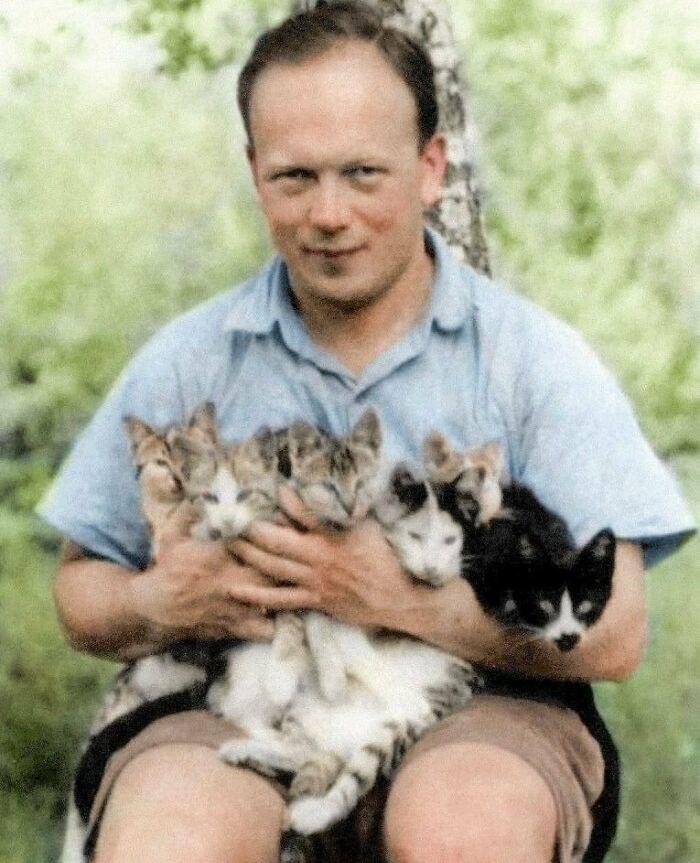
Image source: historicaleaks
#10
Major League Baseball’s All-Star game in San Diego, 1992

Image source: historicaleaks
#11
Polish Resistance veterans of the Warsaw Uprising (1944), pictures then and now. The Warsaw Uprising (Polish: powstanie warszawskie; German: Warschauer Aufstand) was a major World War II operation, in the summer of 1944, by the Polish underground resistance, led by the Polish resistance Home Army (Polish: Armia Krajowa), to liberate Warsaw from German occupation. The uprising was timed to coincide with the retreat of the German forces from Poland ahead of the Soviet advance. The operation failed. In the end, German troops destroyed the majority of Warsaw during and immediately after the uprising. Among the demolished buildings was the Royal Castle. The Warsaw Uprising failed because of lack of support from the Soviets and British and American unwillingness to demand that Stalin extend assistance to their Polish ally. The Soviet advance in Poland stopped on the Vistula River, within sight of fighting Warsaw. Stalin had broken off diplomatic relations with the Polish government in exile when, in the spring of 1943, it asked the International Red Cross to investigate the killing of thousands of Polish officers at Katyn. The Polish officers were prisoners of the Soviets following its 1939 invasion of Poland in collaboration with Hitler. The Soviets tried to pin the blame on the Germans and did not admit the April 1940 summary executions of at least 21,000 Polish prisoners until some 50 years after the fact.
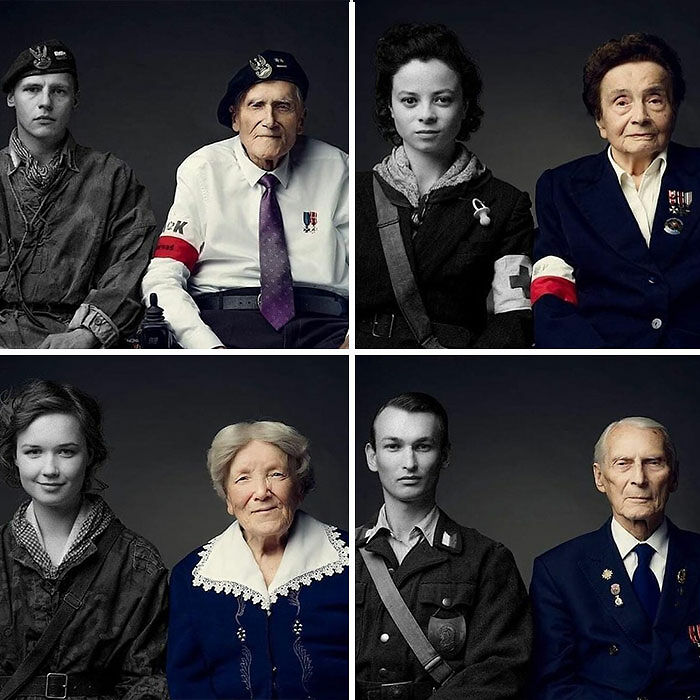
Image source: historicaleaks
#12
The eruption of Mount St. Helens, 1980. Here’s some background info by a friend of the man who took this photo: “He pulled over and attempted to turn around seeing as the ash cloud was heading his way and fast. In his hurry he bent the forks on his motorcycle. He jumped out of the car and ran up the hillside to get some pics, thinking he might just die for it, and hoping someone would find the camera at least as it was a phenomomenal sight that filled the sky. The first picture he took was the one with the Pinto cocked in the road and the bent motorcycle still in the back with that HUGE cloud going up in the sky in the background. He made his way back down the mountain after being quickly overtaken by the ash cloud. He was completely blinded, and had to drive on the opposite side of the road steering by staying right on the opposite side of the road heading into oncoming traffic, but encountered nobody going up. The car choked out after a while and he rode his bent motorcycle out of the mountains back to the room he had rented. The next day as soon as he could, he rode his motorcycle back up into the now really hot zone with his camera to get what pics he could. He was well into the red no go zone, when a helicopter saw him, and came right down and landed in his path. He was surprised to be arrested on the spot and flown out in the chopper and to jail. They left his motorcycle lay on the mountain. They also kept him in jail for a few days without letting him call anyone or even plead his case. When he finally got out, he again went back up there, (Not sure how) and was able to get his motorcycle back and I think later his car as well.”

Image source: historicaleaks
#13
Roman mosaic uncovered in the streets of Stari Grad, on the island of Hvar in Croatia. Feb. 2022

Image source: historicaleaks
#14
Lady and her horse on a snowy day in 1899. Photograph by Félix Thiollier
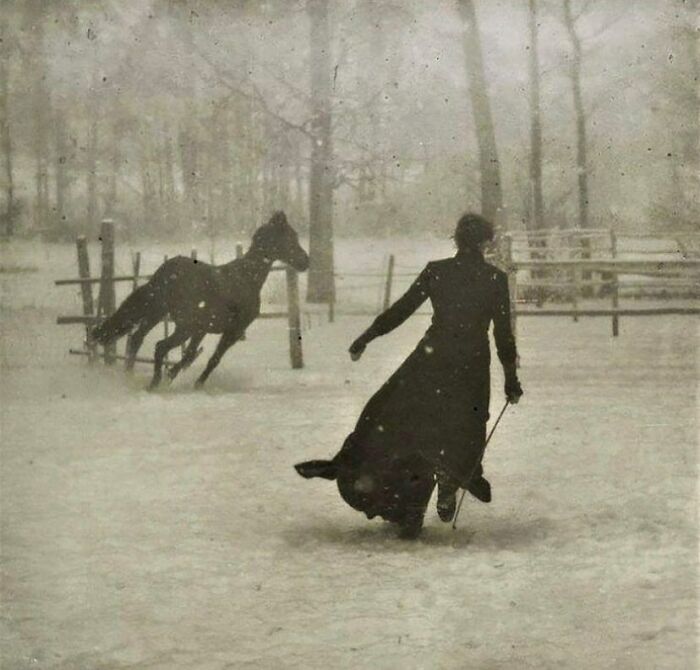
Image source: historicaleaks
#15
Pictured above is David Latimer, a 80 year old man that decided grown a garden sealed inside a giant glass bottle that he has only opened once since he started it in 1960. “Latimer planted the terrarium garden on Easter Sunday in 1960. He placed some compost and a quarter pint of water into a 10-gallon glass carboy and inserted a spiderwort sprout, which is not typically an indoor plant, using wires. In 1972, he opened the plant terrarium again to add a bit of water. With that one exception, the garden has remained sealed – all it needs is plenty of sunlight. The garden is a perfectly self-sufficient ecosystem. The bacteria in the compost eats the dead plants and break down the oxygen given off by the plants, turning it into the carbon dioxide for photosynthesis that the plants need to survive. The bottle is an excellent micro version of the earth as a whole and a great representation of existent types of ecosystems.”

Image source: historicaleaks
#16
Freddy Mercury performing at Wembley, 1986

Image source: historicaleaks
#17
An Indian student studying at the University of Madras in Tamil Nadu, India, 1905. While studying late at night, students used to tie their hairs to a nail in the wall to prevent themselves from falling asleep.
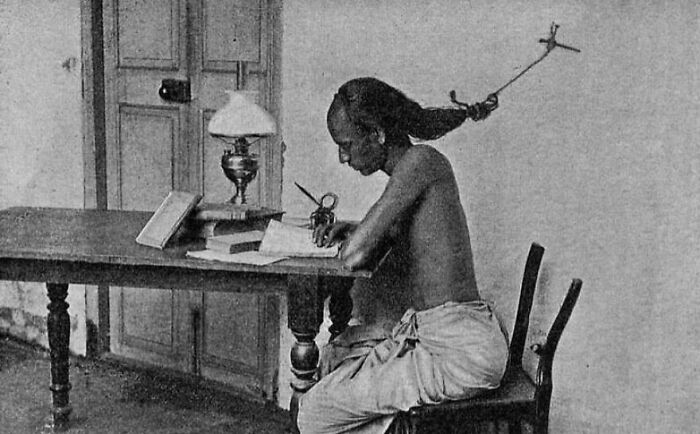
Image source: historicaleaks
#18
Soviet nurses tending to babies left to sleep outside for ‘cold therapy’ to build their immune system, 1958.
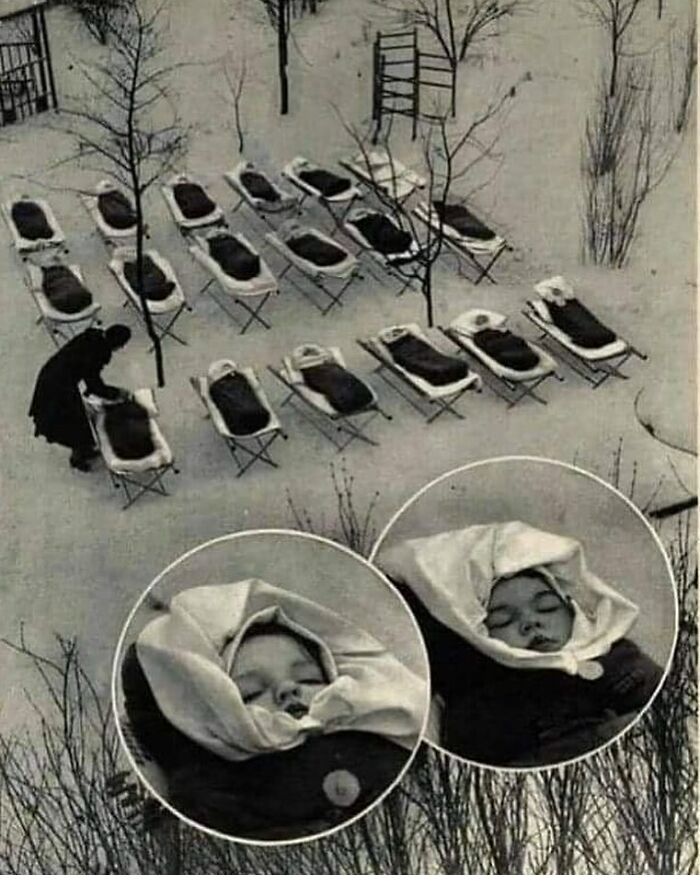
Image source: historicaleaks
#19
Elsie Allcock has lived in the same house for 104 years. She was born in June 1918 in this house in Huthwaite, Nottinghamshire. It was the tail end of the First World War. King George V was still the king. She has seen two world wars and two royal coronations all from the comfort of the two-bedroom terrace home in Huthwaite. Elsie left school at the age of 14 and stayed at home to help look after the family following the death of her mom, Eliza, who died from pneumonia in 1932. When she married Bill Allcock in 1941 they both decided to continue living in the house with her father. In 1960, Elsie bought her childhood home for £250. Her father, Mark Hall, who worked as a coal miner, had started renting the house for seven shillings and sixpence in 1902.
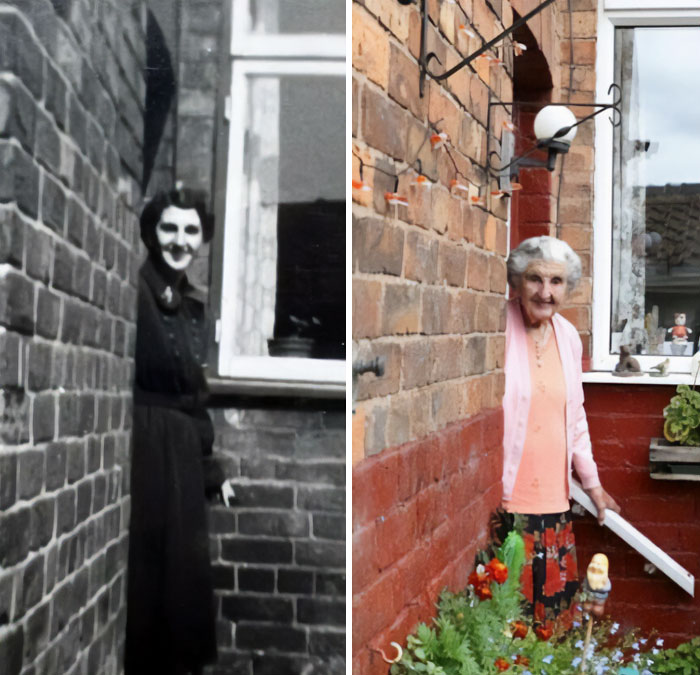
Image source: historicaleaks
#20
A cat lady from 1870
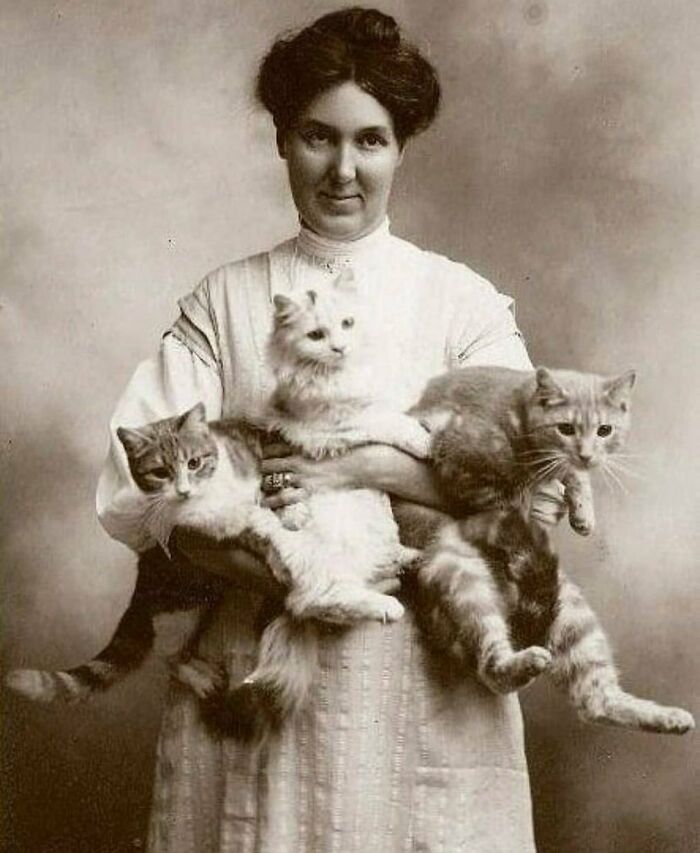
Image source: historicaleaks
#21
People found their doppelgangers in museums.
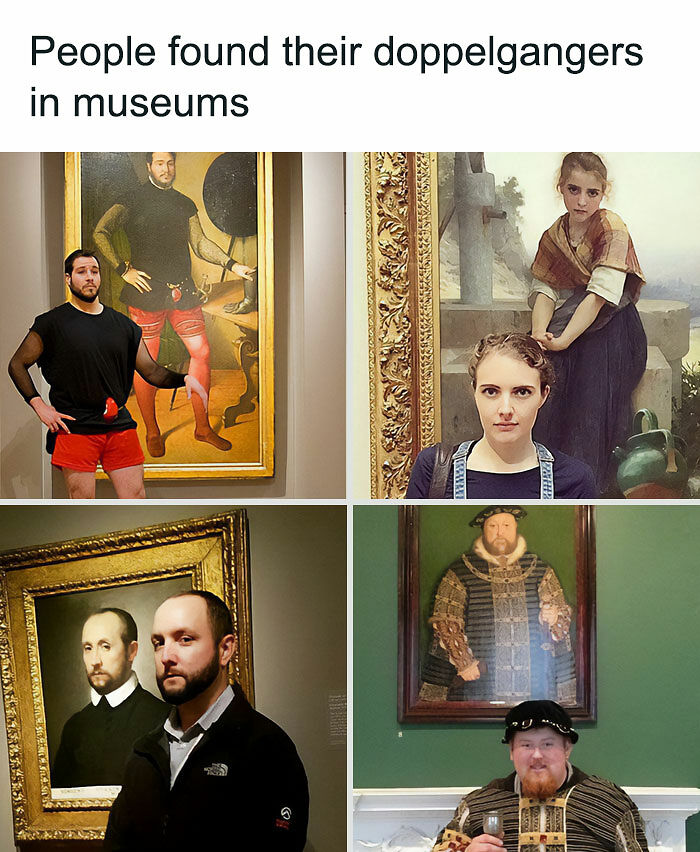
Image source: historicaleaks
#22
A Victorian couple try not to laugh while getting their portraits done, 1890
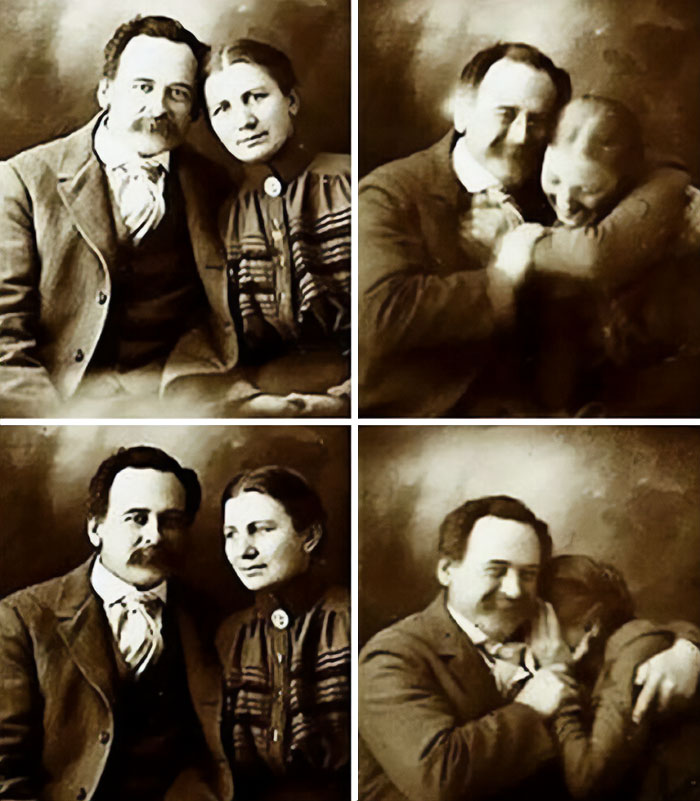
Image source: historicaleaks
#23
Mother holding her daughter at a Budapest market in 1987. 30 years later, they recreated the photo. The photographer is Atilla Manek. The subjects are his wife and daughter.

Image source: historicaleaks
#24
Brian May standing where his band ‘Queen’ once stood.
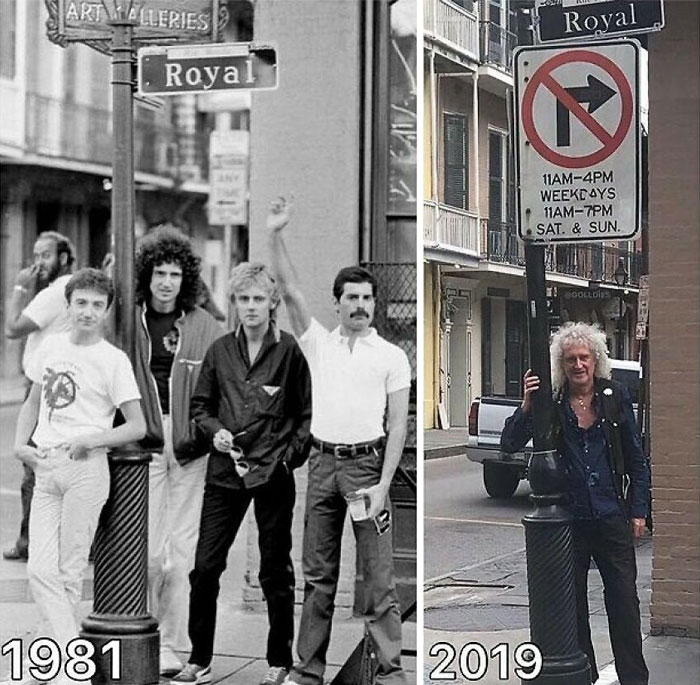
Image source: historicaleaks
#25
Leonardo DiCaprio with his parents in the 1970s and 1990s

Image source: historicaleaks
#26
A California teacher teaches the physics of surfing, 1970
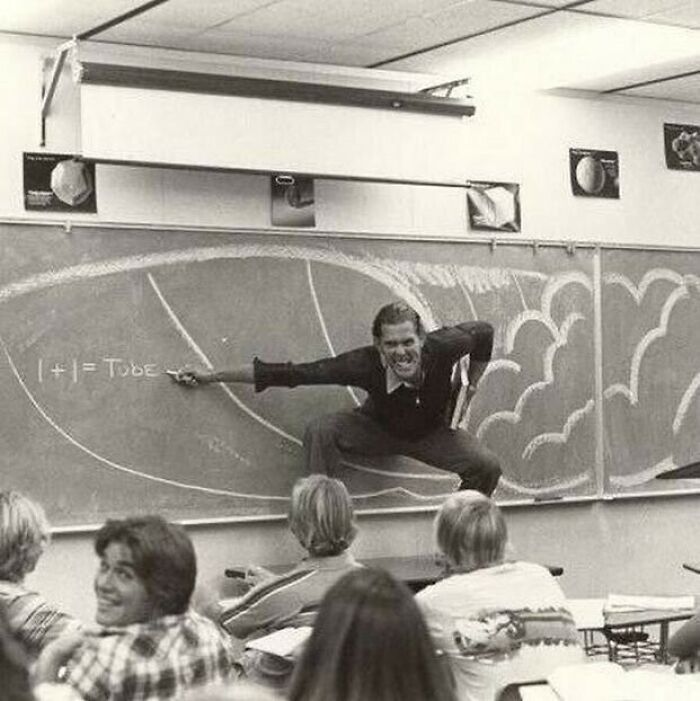
Image source: historicaleaks
#27
Women in Afghanistan during the 1970s.
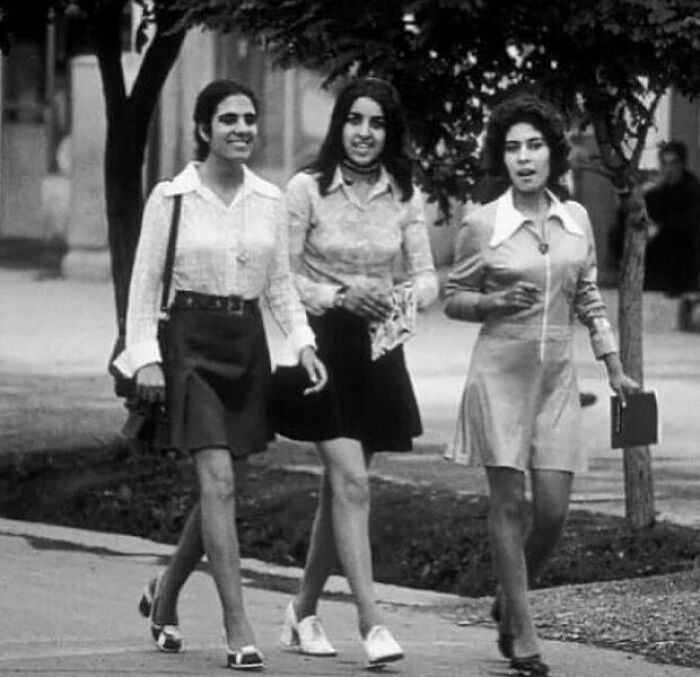
Image source: historicaleaks
#28
Pictured above is Maurice Tillet (1903-1954), most commonly known by his professional wrestling name The French Angel and his wife Olga. For years many have believed that William Steig, the creator of Shrek, drew his character from the professional wrestler Maurice Tillet. Dreamworks has neither confirmed nor denied this, but the similarities are uncanny. During his wrestling career, Tillet was a leading box office draw in the early 1940s and was twice World Heavyweight Champion in the American Wrestling Association run by Paul Bowser in Boston.
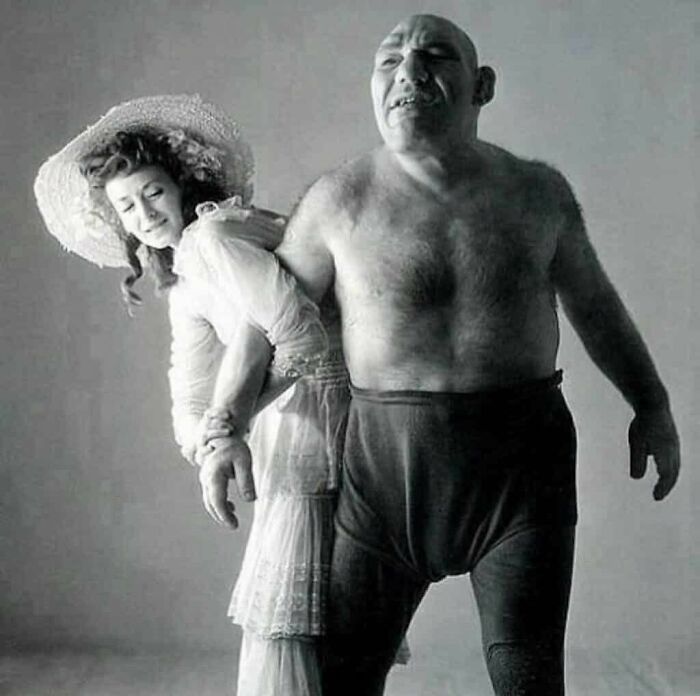
Image source: historicaleaks
#29
A young man giving Princess Diana flowers with a little help from his friends, 1989.

Image source: historicaleaks
#30
In 1839, a man by the name of Robert Cornelius sat for 15 minutes in front of a hand built camera made of opera glass and sheets of copper. His picture became the first “selfie” ever taken.
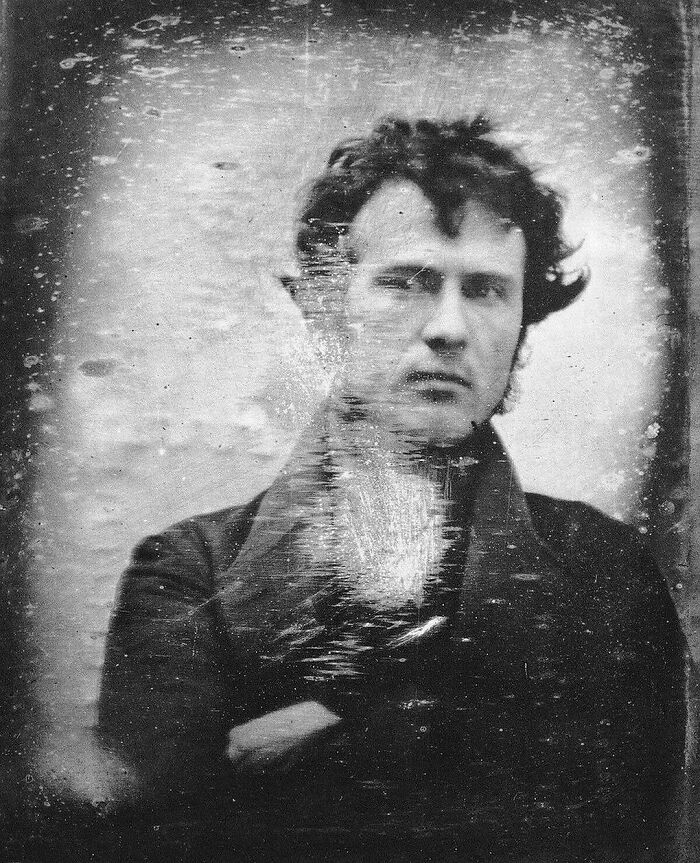
Image source: historicaleaks
#31
Jesse Owens (USA) winning gold medal for the long jump in summer Olympics in Nazi Germany, 1936. The man saluting behind Owens is Lutz Long, a German Olympic long jumper, notable for winning the silver medal in the event at the 1936 Summer Olympics in Berlin and for giving technical advice to his competitor, Jesse Owens, who went on to win the gold medal for the long jump. After the Olympics, the two kept in touch via mail. Long was killed during the Battle of St Pietro in 1943. Here’s the transcript of the last letter to Owens by Long: I am here, Jesse, where it seems there is only the dry sand and the wet blood. I do not fear so much for myself, my friend Jesse, I fear for my woman who is home, and my young son Karl, who has never really known his father. My heart tells me, if I be honest with you, that this is the last letter I shall ever write. If it is so, I ask you something. It is something so very important to me. It is you go to Germany when this war is done, someday find my Karl, and tell him about his father. Tell him, Jesse, what times were like when we were not separated by war. I am saying – tell him how things can be between men on this earth. If you do this something for me, this thing that I need the most to know will be done, I do something for you, now. I tell you something I know you want to hear. And it is true. That hour in Berlin when I first spoke to you, when you had your knee upon the ground, I knew that you were in prayer. Then I not know how I know. Now I do. I know it is never by chance that we come together. I come to you that hour in 1936 for purpose more than der Berliner Olympiade. And you, I believe, will read this letter, while it should not be possible to reach you ever, for purpose more even than our friendship. I believe this shall come about because I think now that God will make it come about. This is what I have to tell you, Jesse. I think I might believe in God. And I pray to him that, even while it should not be possible for this to reach you ever, these words I write will still be read by you. Your brother, Luz”
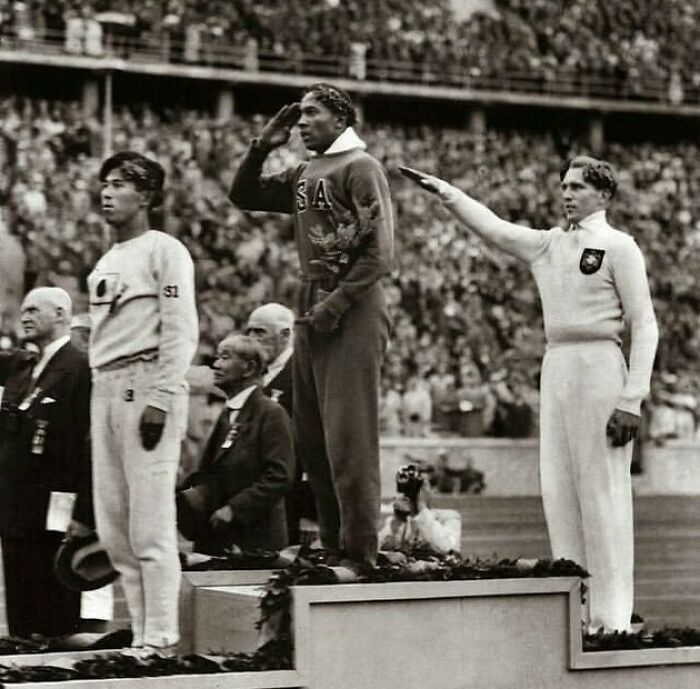
Image source: historicaleaks
#32
An American soldier holds up a Scolopendra subspinipes (a species of giant centipedes found throughout Asia) during the Vietnam War, 1967. The centipede preys primarily on other insects like spiders and scorpions but has the abilitv to overpower small mammals such as mice or small reptiles. It tends to eat all living creatures that it encounters that are smaller than itself. It employs its venomous jaws while using its other legs to coil and pin its prey until it dies from the fast acting venom. The centipede’s body is usually reddish brown and can grow to a maximum length of 12 inches (30 cm). In the photo above, the centipede is being held up by a fishing line and is a lot closer to the camera than where the soldier is standing. He actually isn’t even touching the centipede.

Image source: historicaleaks
#33
Dewey family cat, who died in 1910, and meant enough to his owner to be honored with a gravestone that stands today over 113 years later. It reads: “He was only a cat but he was human enough to be a great comfort in hours of loneliness and pain”
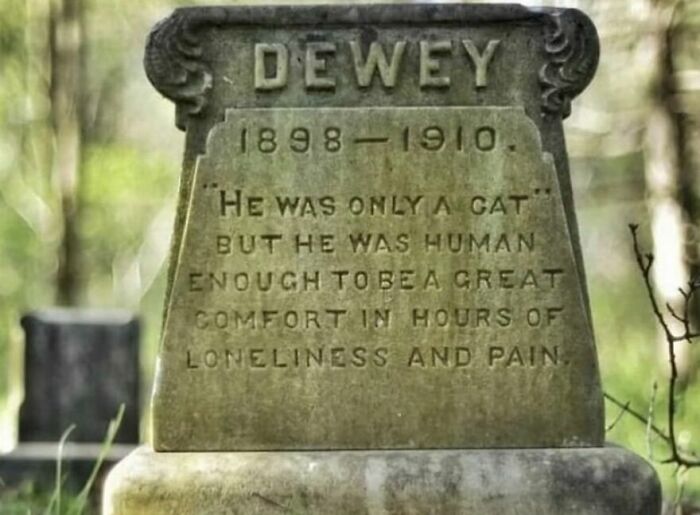
Image source: historicaleaks
#34
In 1996, a newborn baby girl was left in a garbage can near the city of Kolkata, India. Three friendly street dogs discovered and protected her for nearly two days, even attempting to feed the child before authorities were contacted and the young one was saved.
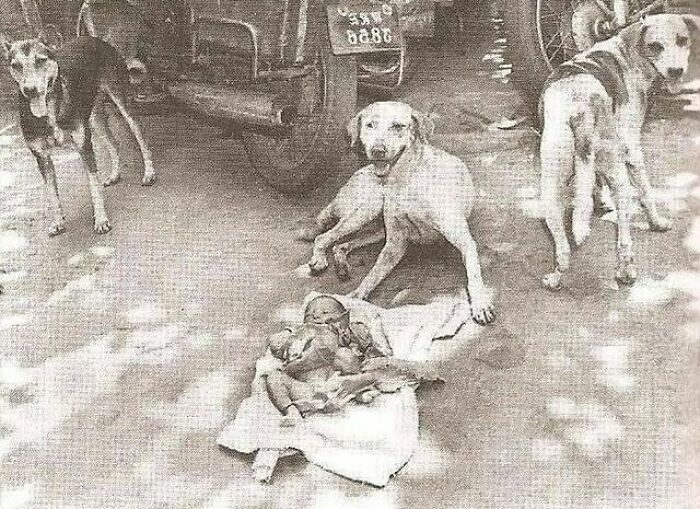
Image source: historicaleaks
#35
Jewish prisoners after being liberated from a train that was taking them to a concentration camp, 1945
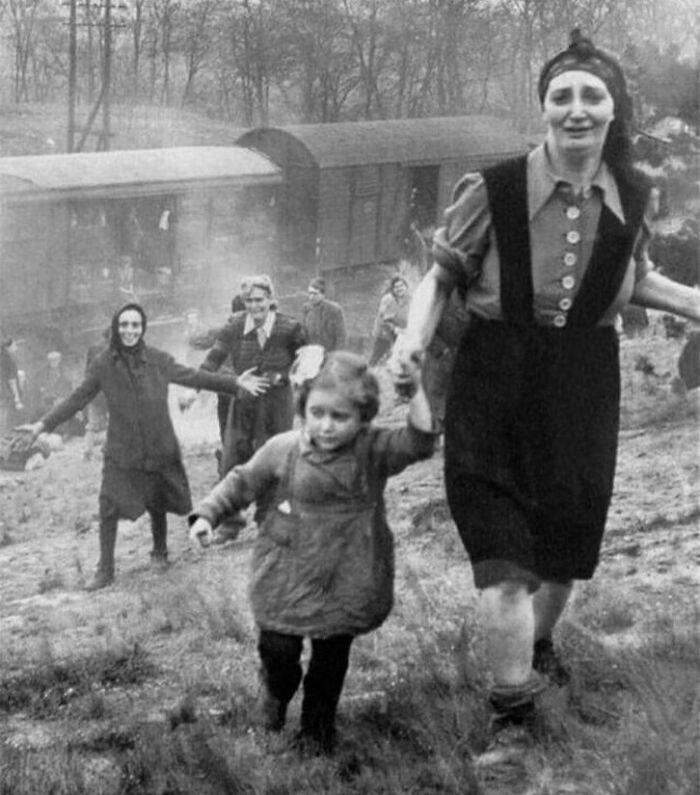
Image source: historicaleaks
#36
The date was August 8, 1982. The Red Sox were playing an afternoon game at Boston’s Fenway Park. Suddenly a screaming foul ball whizzed past the first base dugout and Red Sox left fielder Jim Rice heard the unmistakable sound of ball striking flesh. Looking around the corner of the dugout into the stands Rice saw 4 year old Jonathan Keane bleeding profusely from his head. Realizing in a split second that it would take several minutes for park EMT’s to get to the scene, the future Hall of Famer sprang into action. Rice leaped over the railing into the stands, cradled the young fan into his arms and carried the boy into the dugout where he received immediate attention from the team’s medical staff. Within just a few minutes Jonathan was rushed to the hospital where doctors credited Rice with saving the boys life. Jim Rice played the rest of the game in a blood stained uniform, a true badge of courage.
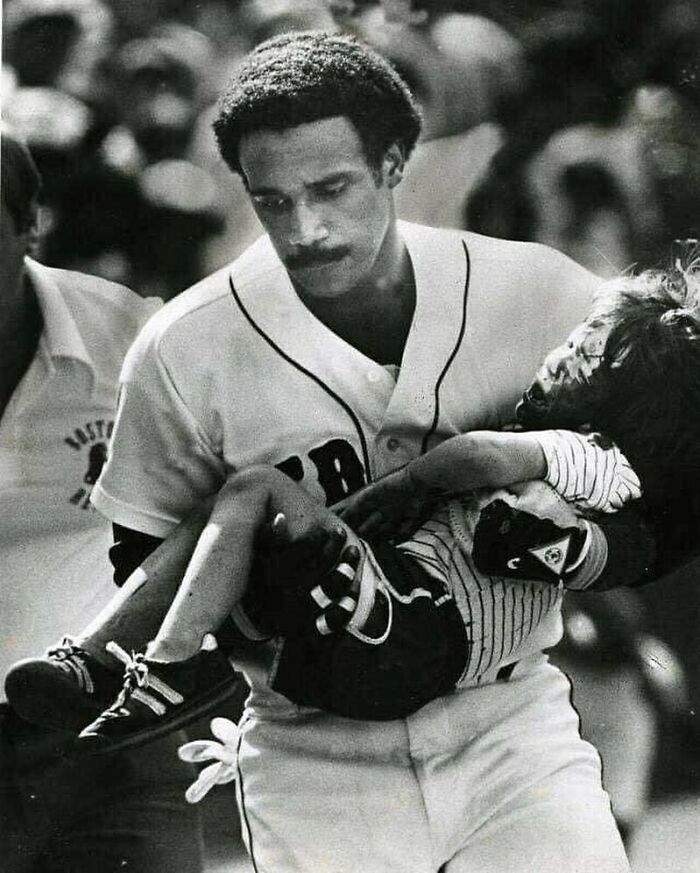
Image source: historicaleaks
#37
The man behind the photo
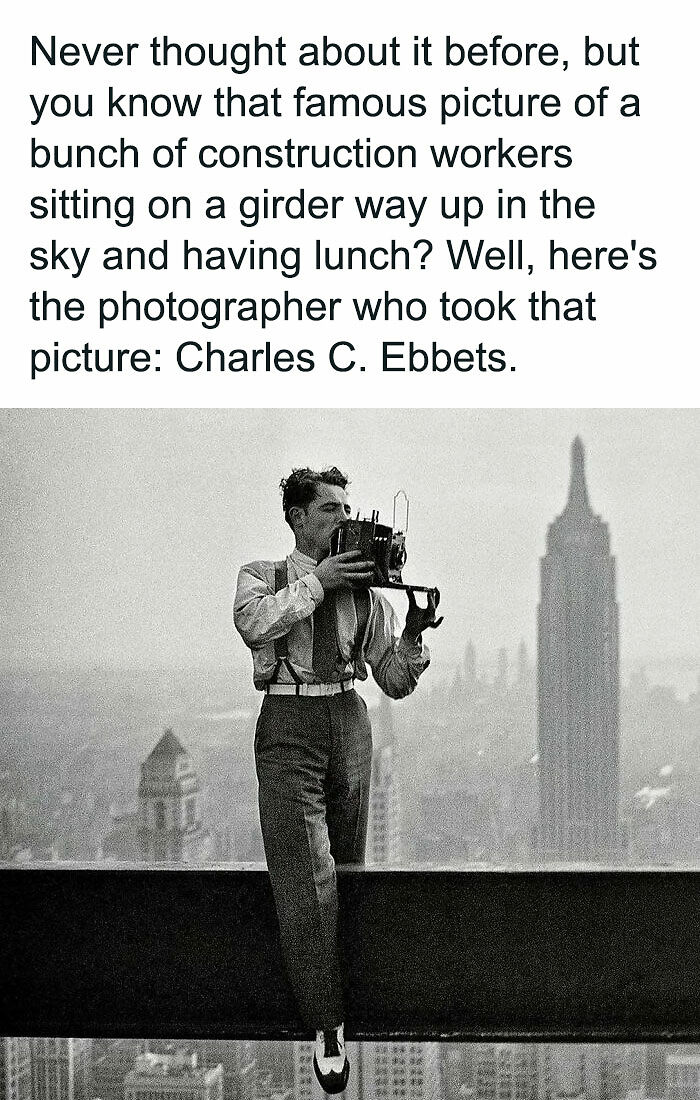
Image source: historicaleaks
#38
“Mom found a note my dad wrote, before Alzheimer’s took his ability to communicate.” Source: Reddit
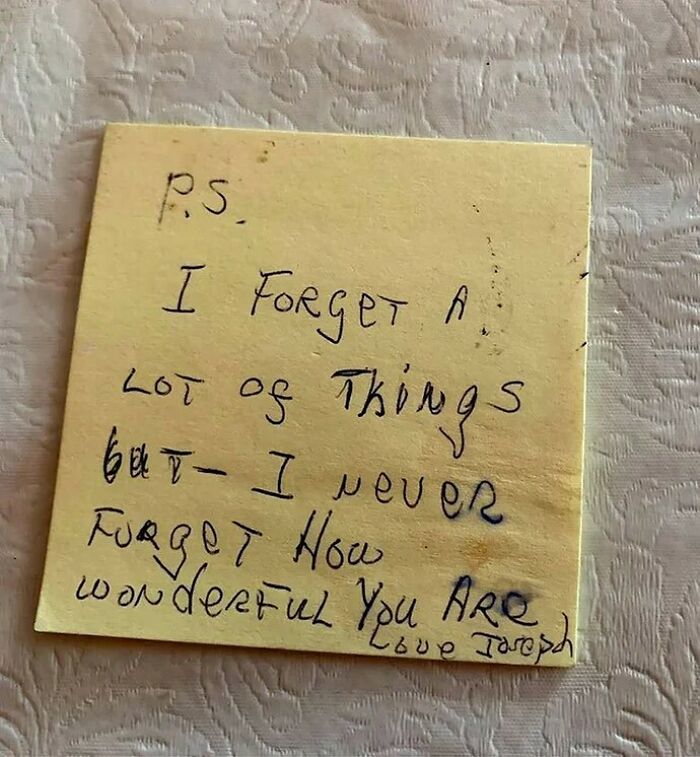
Image source: historicaleaks
#39
During WWII, Jews in Budapest were brought to the edge of the Danube, ordered to remove their shoes, and shot, falling into the water below. 60 pairs of iron shoes now line the river’s bank, a ghostly memorial to the victims.
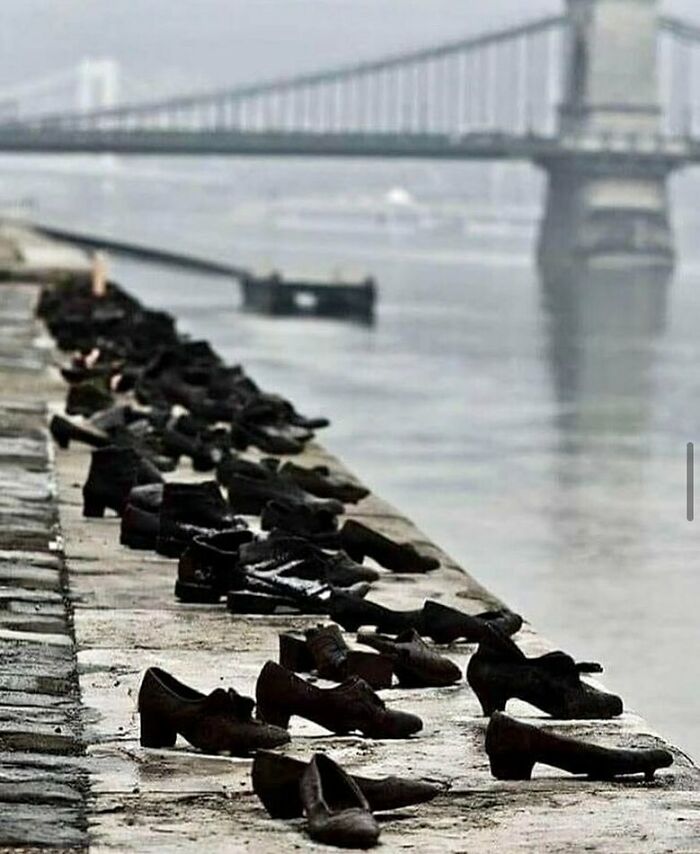
Image source: historicaleaks
#40
Coca-Cola Bottle evolution since 1899.

Image source: historicaleaks
#41
On Sept. 11, 2001, Andrea Haberman started her day with a playful ritual she and her fiancé shared whenever they were apart: whoever called the other first thing in the morning won the competition. That day Andrea won. She took advantage of the time difference and was calling from a desk in the Carr Future offices high in the North Tower. She decided to get there early for her 9:00 a.m. meeting. About 40 minutes after she hung up the phone with him, a hijacked commercial airliner crashed through the building a floor above her. Escape was not possible. Months later, recovery workers discovered some of Andrea’s personal items in the debris pile at ground zero. Among them was the cell phone that she used to call her fiancé for that last time. This and some of her other belongings are now a part of the 9/11 Memorial Museum’s collection.
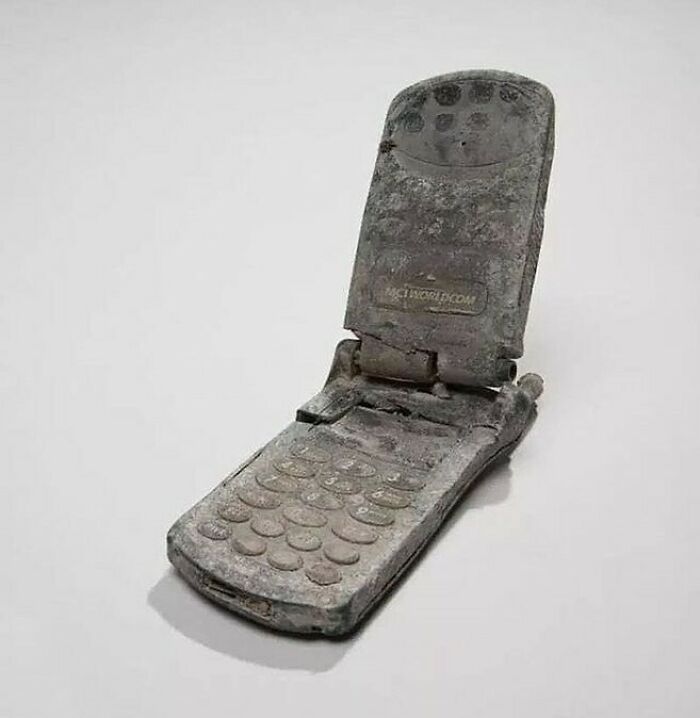
Image source: historicaleaks
#42
A young 19-year-old Teddy Roosevelt at Harvard, 1877.
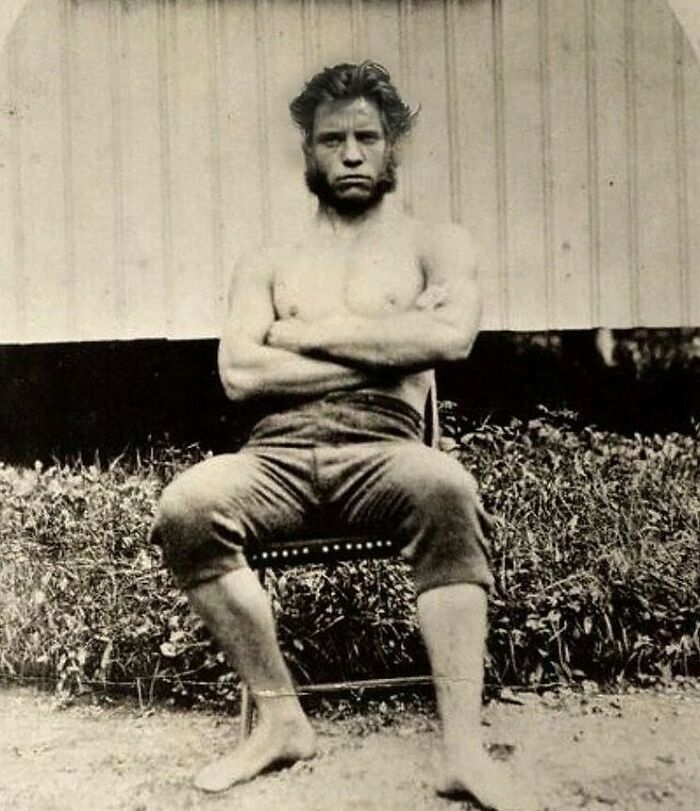
Image source: historicaleaks
#43
Pictured above are Michelin Men in the 1920s. Michelin was founded in 1888 by the Michelin brothers, André (1853–1931) and Édouard (1859–1940), the company manufactured tires for bicycles and horse-drawn carriages before introducing pneumatic tires for automobiles in the 1890s. In 1926, Michelin began reviewing restaurants so that more people would travel further distances in their cars to eat at these restaurants. This in turn would wear down their tires faster, and force them to buy more. The star system that Michelin uses goes up to three and is broken down by whether or not it’s worth driving to the restaurant. One star: “A very good restaurant in its category” (Une très bonne table dans sa catégorie). Two star: “Excellent cooking, worth a detour” (Table excellente, mérite un détour). Three star: “Exceptional cuisine, worth a special journey” (Une des meilleures tables, vaut le voyage).
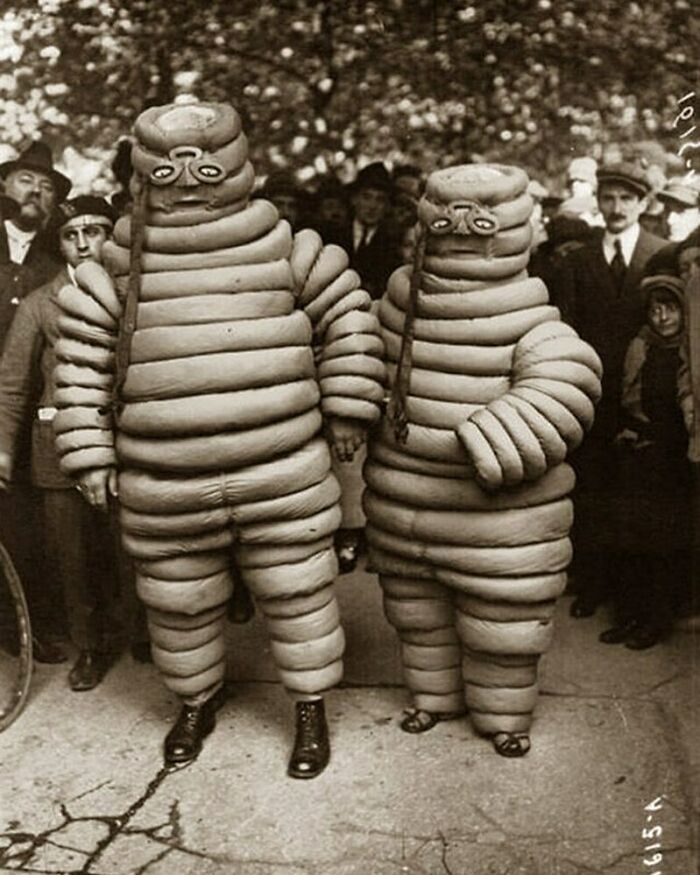
Image source: historicaleaks
#44
A child with bread and milk, Istanbul, Turkey, 1989
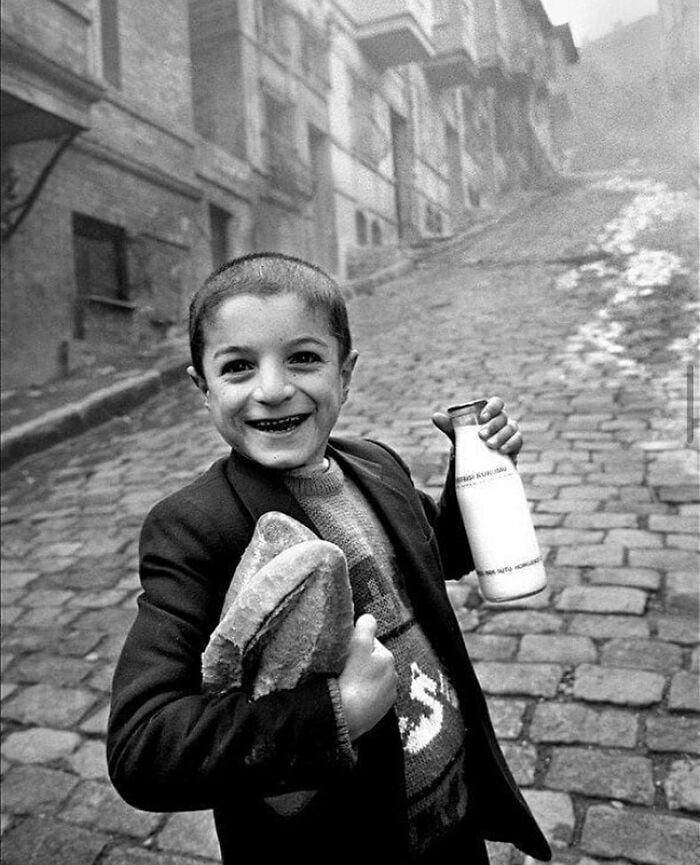
Image source: historicaleaks
#45
Two young men hold a pre-printed sign proclaiming their bond and willingness to be legally wed to one another, circa 1900.
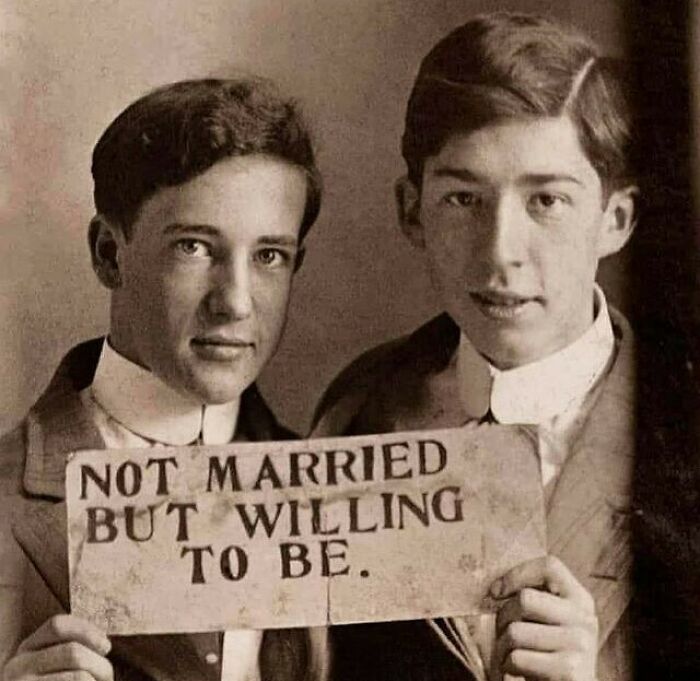
Image source: historicaleaks
#46
High school yearbook photo, 1996. The original caption from a Reddit user: “When I was in band camp at App State in 94, I saw this skater kid who played french horn. He had a similar hairdo (and pulled it off way better than I did). He had straight hair, and I’m blessed with a curly madness. I tried to emulate it, to no avail. But what you see before you is what I had. Dad wasn’t stoked, mom let me be me, and I was Grandmother’s favorite.”

Image source: historicaleaks
#47
Pictured above is the grave of Leonard Phillip Matlovich (1943-1988). Technical Sergeant Leonard Matlovich was an American Vietnam War veteran, race relations instructor, and recipient of the Purple Heart and the Bronze Star. He was the first gay service member to purposely out himself to the military to fight their ban on gays, and perhaps the best-known openly gay man in the United States of America in the 1970s next to Harvey Milk. His fight to stay in the United States Air Force after coming out of the closet became a famous cause around which the gay community rallied. In the 1970s, he appeared in the cover of Time Magazine and in several tv channels, making him a symbol of the LGBT community.
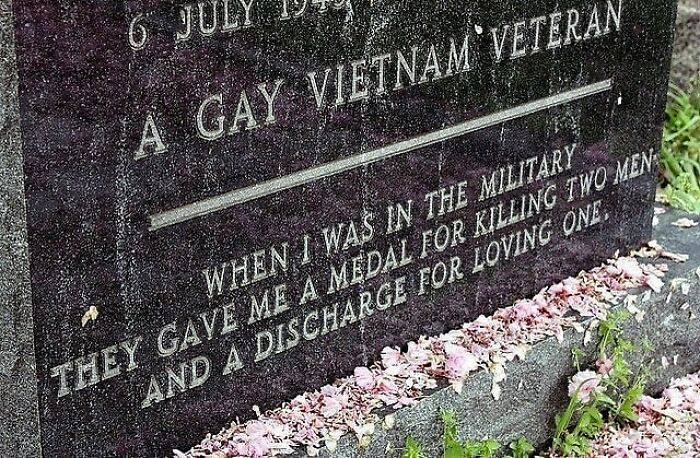
Image source: historicaleaks
#48
A 2000 year old glass mosaic, found in the city of Zeugma, Turkey
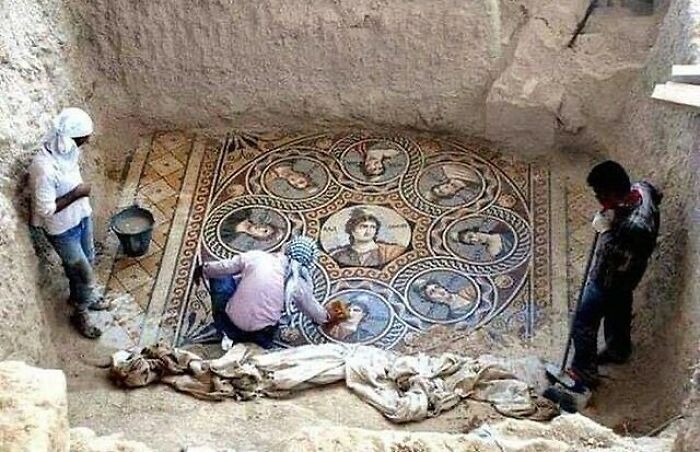
Image source: historicaleaks
#49
Pictured above is Ella Harper (1870-1921), also known as The Camel Girl. Ella Harper was born with a very rare condition that caused her knees to bend backwards, called congenital genu recurvatum. Her preference to walk on all fours resulted in her nickname Camel Girl. In 1886 she featured as the star in W. H. Harris’s Nick Patel circus, appearing in newspapers wherever the circus visited. Ella Harper received a 200$ salary per week during her career in the circus.
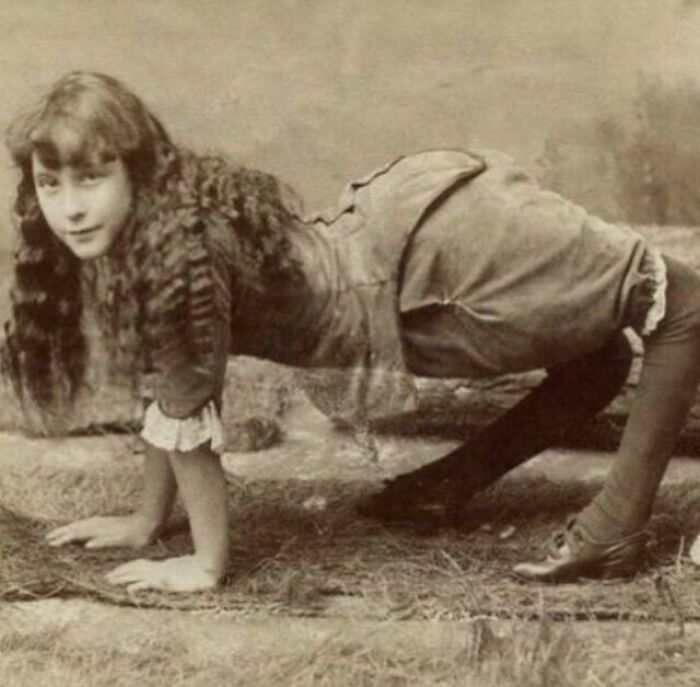
Image source: historicaleaks
#50
Princeton university students after a snowball fight, 1893. In the photo are, from left, Darwin R. James, John P. Poe, and Arthur L. Wheeler. Before the turn of the 20th century, it was tradition for Princeton students to have snowball fights between the freshman and sophomore classes.
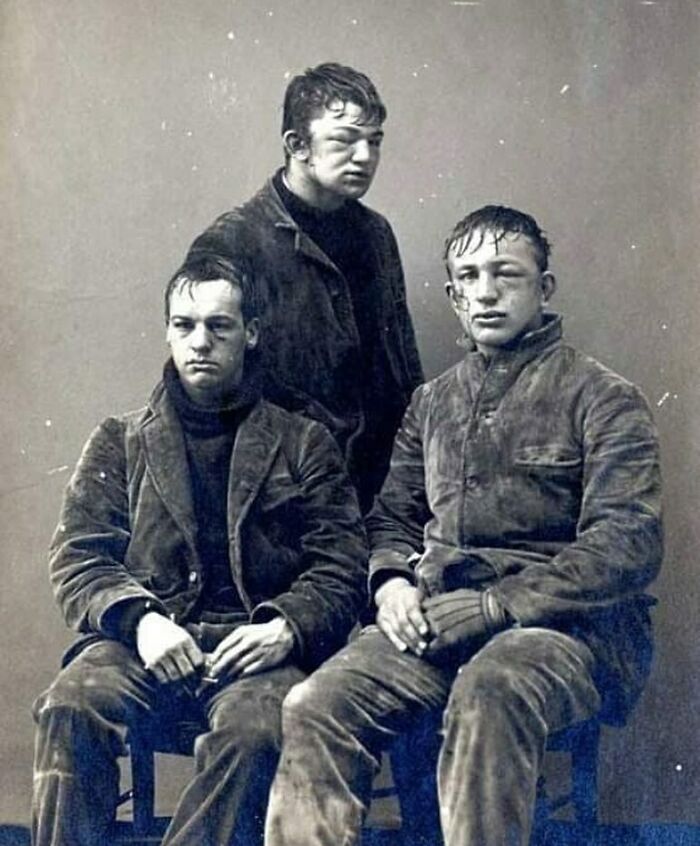
Image source: historicaleaks
#51
Portrait of Istvan Reiner, taken shortly before he was killed in Auschwitz. He was four years old. One particularly haunting photograph shows Istvan Reiner, four, smiling at the camera in the now infamous striped uniform given to inmates. It was taken just weeks before he was murdered at the concentration camp alongside tens of thousands of other innocent people. The photo was donated to the United States Holocaust Memorial Museum by Istvan’s half-brother Janos Kovacs.
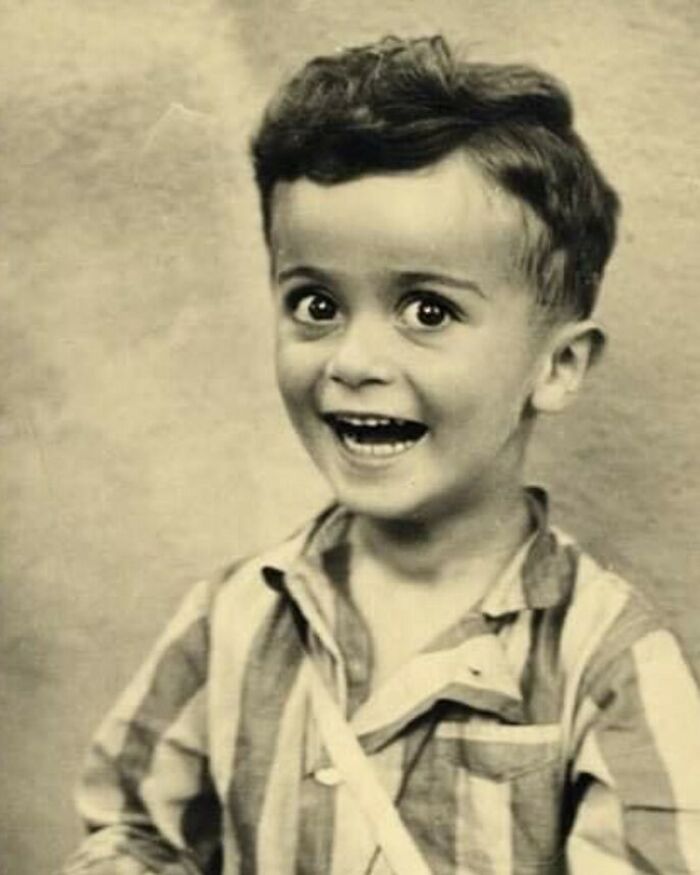
Image source: historicaleaks
#52
An Inuit man warms up his wife’s feet in Greenland, 1890s. Inuit are a group of culturally similar indigenous peoples inhabiting the Arctic regions of Greenland, Canada and Alaska. The Inuits have been living in Greenland and near the Arctic Circle for generations longer than anyone else who’s spent time in these frosty areas – so if they’re cold then you know you’d be freezing. The Inuit people stretch across the north, from Greenland to Canada, and during the 19th century they were somewhat nomadic. In the 1850s the Inuit were hired by whalers from Britain and New England to help with the large-scale operations that were staring up in the 19th century. This pic was likely captured on a break from a hard day’s work. The female Inuk has put her kamiit (thigh high boots) next to her. Female Inuit wear high kamiit (thigh high boots) which are made of sealskin and with polar bear skins at the edge. The trousers are short which are made of sealskin and go to the upper part of the thigh. These materials are still the best protection against the cold, which at times can be below minus 40 degrees Celsius.
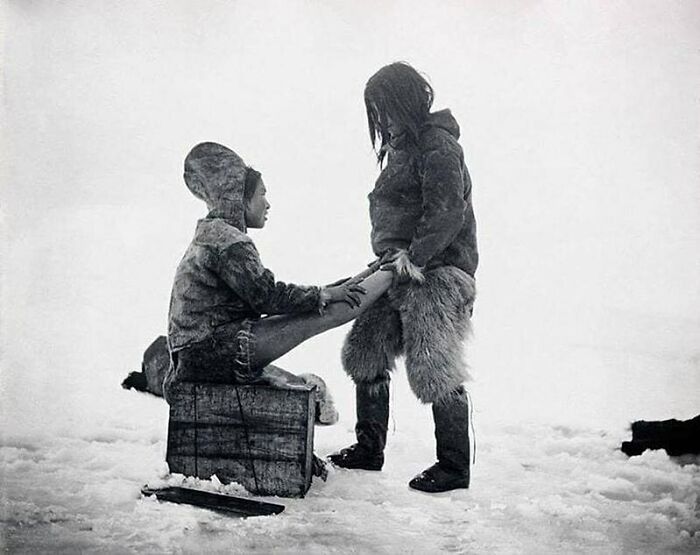
Image source: historicaleaks
#53
In 1969, when black Americans were still prevented from swimming alongside whites, Mr.Rogers decided to invite Officer Clemmons to join him and cool his feet in a pool, breaking a well-known color barrier. François Clemmons said: “On April 4, after Dr. King was assassinated in 1968. That was a tremendous blow to me personally and politically and emotionally. My world was absolutely shattered. And I was living in what they call Schenley Heights in Pittsburgh, a black bougie neighborhood…When April 4 came and Dr. King was assassinated, they were burning down the Hill District [a historically black neighborhood in Pittsburgh], which was six, seven blocks from me. I had only been there eight or nine months, and I was terrified of what was going to happen. I remember Fred Rogers called me and said, ‘Franc, what are you doing? How are you doing?’ He knew where I lived. And at one point he said, ‘We’re concerned about your safety. We don’t like that you’re over there. I’m coming to get you’…I never had someone express that kind of deep sense of protection for me…and that experience drew Fred and me really, really close. I thought, Well, this is the real thing right here.”
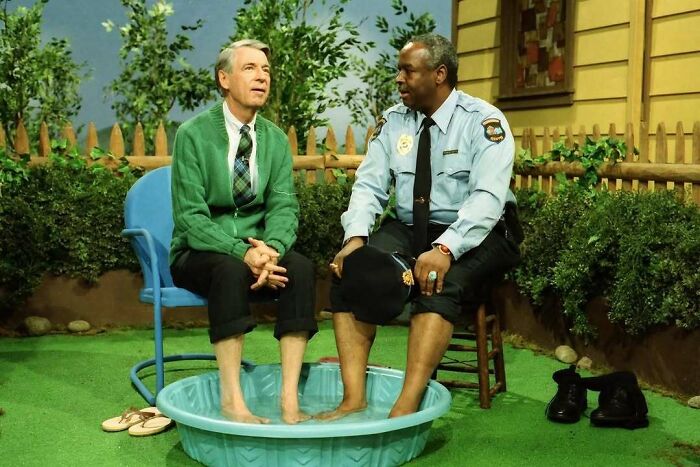
Image source: historicaleaks
#54
A woman dressed up as batgirl in 1904, 35 years before the creation of Batman (1939) and 57 years before the creation of Batgirl (1961).
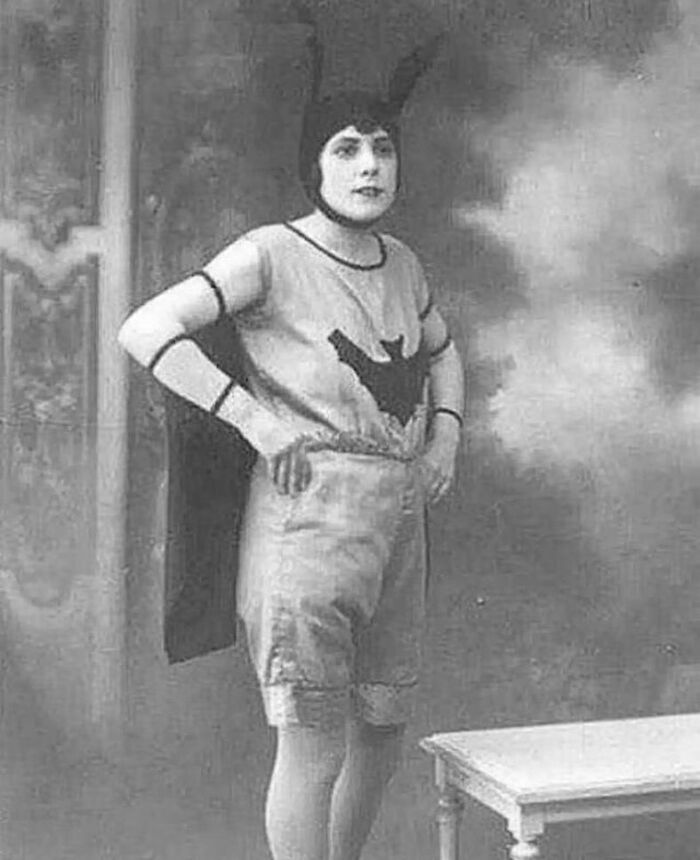
Image source: historicaleaks
#55
A Highland New Guinean’s reaction to seeing a white person for the first time in his life, 1930. Before this, they thought they were the only living people in the world.
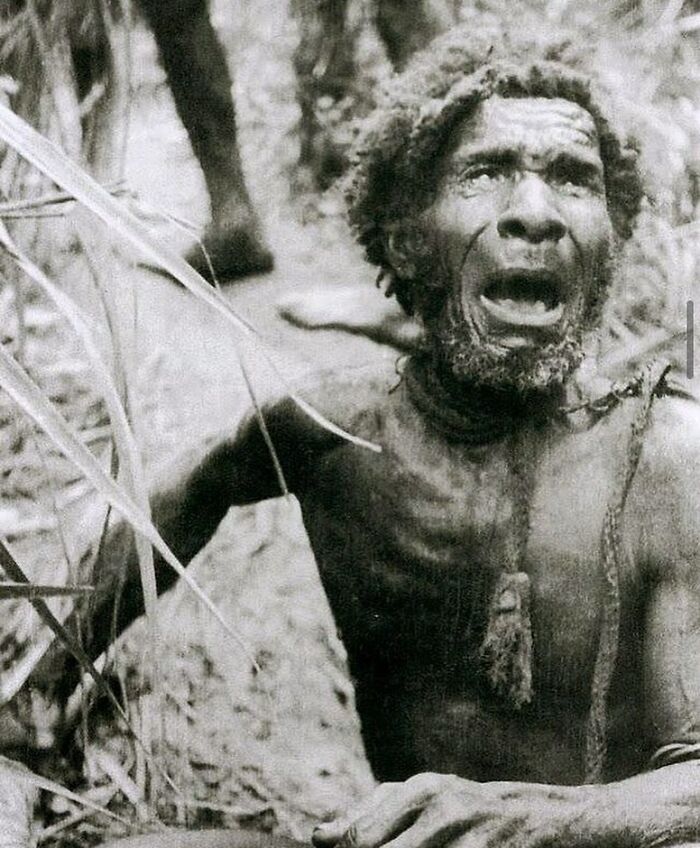
Image source: historicaleaks
#56
The Kiss Of Life – A utility worker giving mouth-to-mouth to co-worker after he contacted a high voltage wire, 1967. Taken in 1967 by Rocco Morabito, this photo called “The Kiss of Life” shows a utility worker named J.D. Thompson giving mouth-to-mouth to co-worker Randall G. Champion after he went unconscious following contact with a low voltage line. They had been performing routine maintenance when Champion brushed one of the low voltage lines at the very top of the utility pole. His safety harness prevented a fall, and Thompson, who had been ascending below him, quickly reached him and performed mouth-to-mouth resuscitation. He was unable to perform CPR given the circumstances, but continued breathing into Champion´s lungs until he felt a slight pulse, then unbluckled his harness and descended with him on his shoulder. Thompson and another worker administered CPR on the ground, and Champion was moderately revived by the time paramedics arrived, eventually making a full recovery. What´s even more incredible is Champion not only survived this thanks to Thompson, but he lived an extra 35 years. He died in 2002 at 64 years old. Thompson is still alive today.
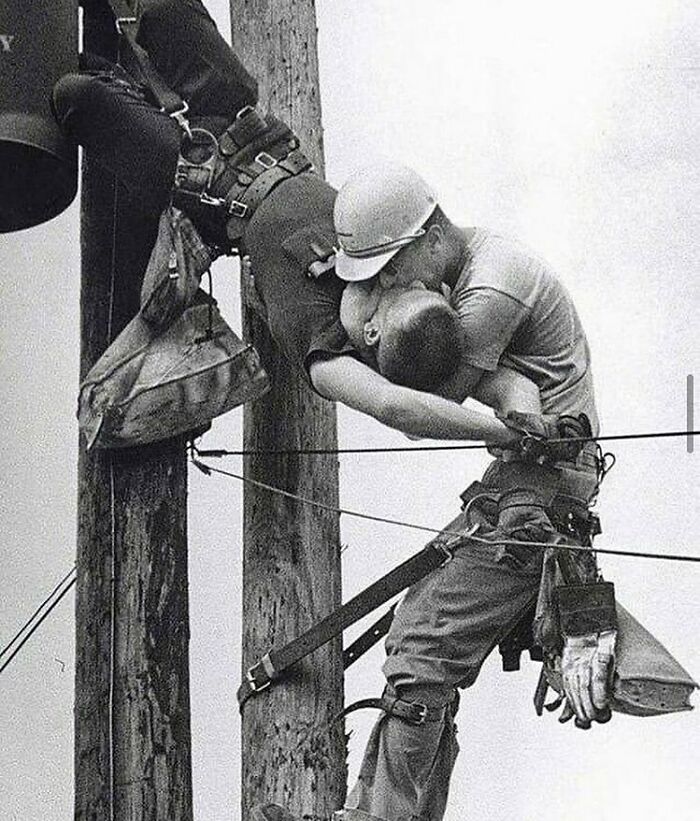
Image source: historicaleaks
#57
Queen Elizabeth and Prince Philip, 1947 and 2007
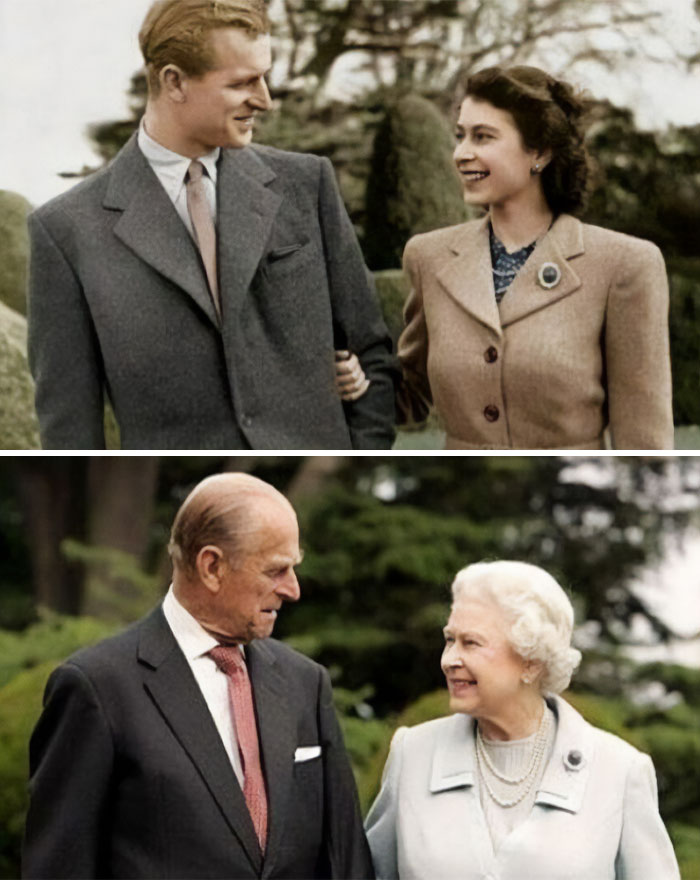
Image source: historicaleaks
#58
The Pinocchio incident, 1940.

Image source: historicaleaks
#59
This is George Moore aka the living skeleton and Fred Howe aka the fatman who were sideshow perfomers from the late 19th century. Caption from Strand Magazine, 1897: “…Fred Howe’s father was a carpenter at Alleghany City, Penn., and Fred started to learn the same trade, but soon became too fat. At the age of eighteen he joined the Forepaugh Circus as a “fat boy,” and there met his present sparring partner. George Moore was born in Helena, Montana, where his father had a little dry goods shop. Until he was twenty-one years of age George worked in his father’s shop. But his greatest desire was to see the world. When the first big circus came to Helena, the manager offered him an engagement to exhibit himself as the “living skeleton,” and he closed with the offer at once. Fred Howe, they soon became great friends. The doctors advised both to take as much exercise as possible—the one to gain flesh, and the other to get rid of it. These smart Yankee lads then resolved to combine duty with pleasure, so they went in for boxing. For a long time they practised privately. One day, however, the manager was told of the fun by some of his “freaks,” who had been allowed to see a “set-to” between the two gladiators. The manager then arranged a round or two, and the moment he saw Howe and Moore face each other, he offered them a long engagement at an increased salary, if only they would do their boxing before the public. To-day these funny fellows are not only expert boxers, but also perfect comedians in their “art.” Their boxing is uproariously funny. Moore is 6ft. 3in. in height, and weighs but 97lb., whilst Howe is only 4ft. 2in. high, and weighs exactly 422lb.”
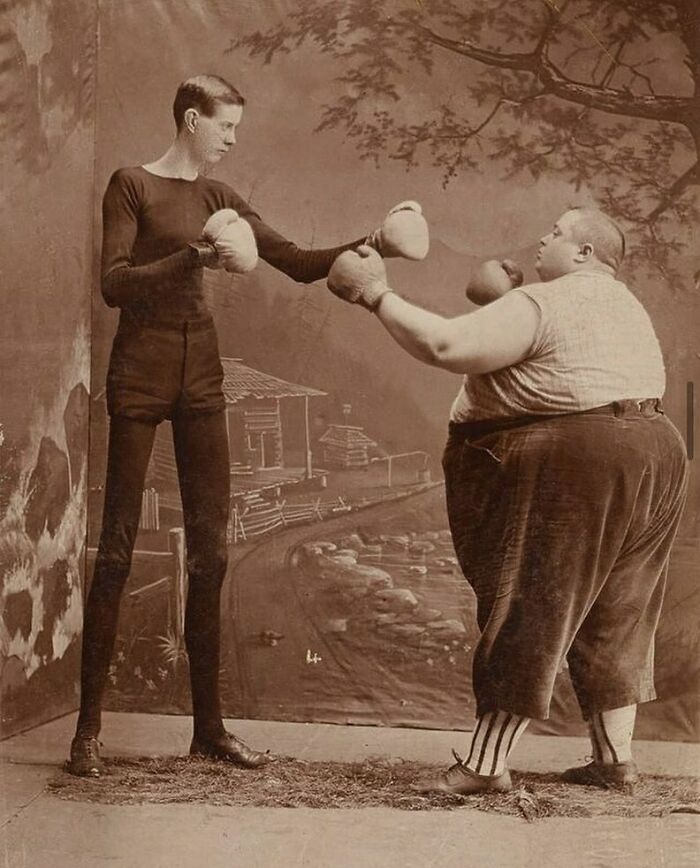
Image source: historicaleaks
#60
The Arctic 105 years ago vs today. The Arctic region is a unique area among Earth’s ecosystems. The cultures in the region and the Arctic indigenous peoples have adapted to its cold and extreme conditions. Life in the Arctic includes zooplankton and phytoplankton, fish and marine mammals, birds, land animals, plants and human societies. Christian Åslund, a Swedish photojournalist who works with Greenpeace, gathered some early photos of glaciers ice in Svalbard, Norway from the Norwegian Polar Institute, and juxtaposed them next to his own photos of the same locations from 2002. The differences in these before and after photos were unbelievable. He’s using the photo series to promote #MyClimateAction, a National Geographic campaign encouraging discussion about climate change and as a protest against Norwegian oil companies drilling in the melting ice in the Arctic region. Predictions using statistical models applied to the first thirty years of climate projections (2006–2035) suggested that the Arctic could be ice-free in the decade 2030–2040, with the year 2034 as the most likely.
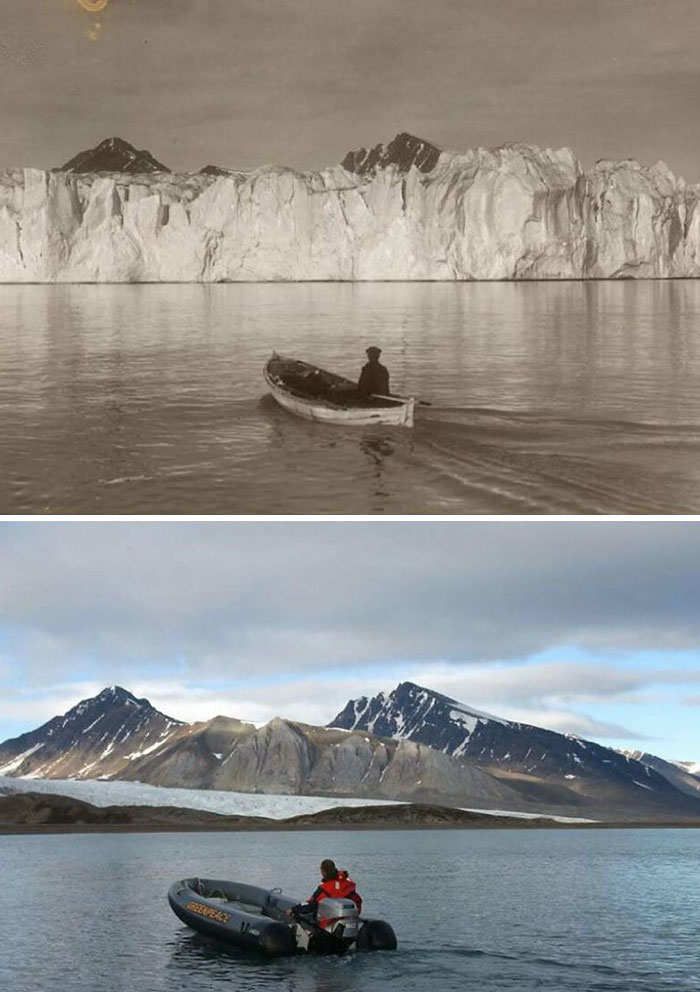
Image source: historicaleaks
#61
Bobbi Gibb, first woman to run the Boston marathon in 1966, she ran without a number because women were not allowed into the race.
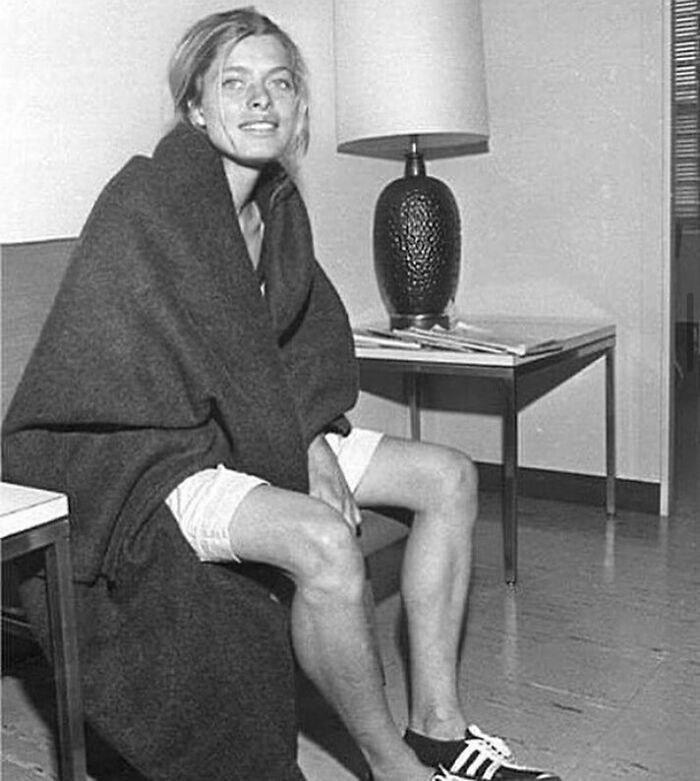
Image source: historicaleaks
#62
A French woman with her baguette and six bottles of wine, Paris, France, 1945.
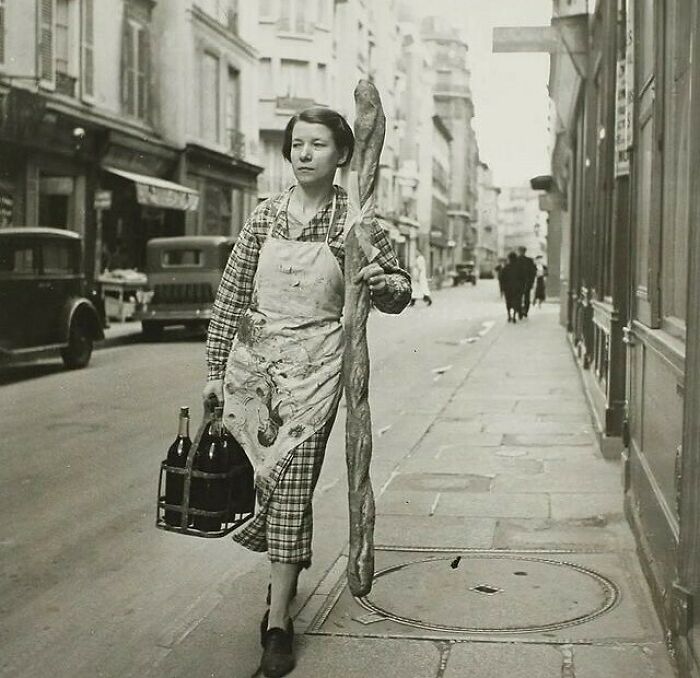
Image source: historicaleaks
#63
The moment Goebbels (Minister of Nazi propaganda) found out his photographer Eisenstaedt was Jewish, 1933. This photo is known as “Eyes of Hate”. In September 1933, LIFE magazine photographer Alfred Eisenstaedt traveled to Geneva to document a meeting of the League of Nations. Eisenstaedt was a German-born Jew. Not knowing this at first, Goebbels was initially friendly toward Eisenstaedt, who was able to capture a number of photos showing the Nazi politician in a good and cheerful mood. However, Goebbels soon learned of the Jewish blood flowing through Eisenstaedt’s veins. Subsequently, when Eisenstaedt approached Goebbels for a candid portrait, the politician’s expression was very, very different. Here’s what Eisenstaedt later shared regarding experience: “I found him sitting alone at a folding table on the lawn of the hotel. I photographed him from a distance without him being aware of it. As documentary reportage, the picture may have some value: it suggests his aloofness. Later found him at the same table surrounded by aides and bodyguards. Goebbels seemed so small, while his bodyguards were huge. I walked up close and photographed Goebbels. It was horrible. He looked up at me with an expression full of hate. The result, however, was a much stronger photograph. There is no substitute for close personal contact and involvement with a subject, no matter how unpleasant it may be. He looked at me with hateful eyes and waited for me to wither. But I didn’t wither. If I have a camera in my hand, I don’t know fear.” On August 14, 1945, Eisenstaedt photographed a sailor celebrating Japan’s surrender by kissing a random nurse in New York City. The photo came to be known as “V-J Day in Times Square.”
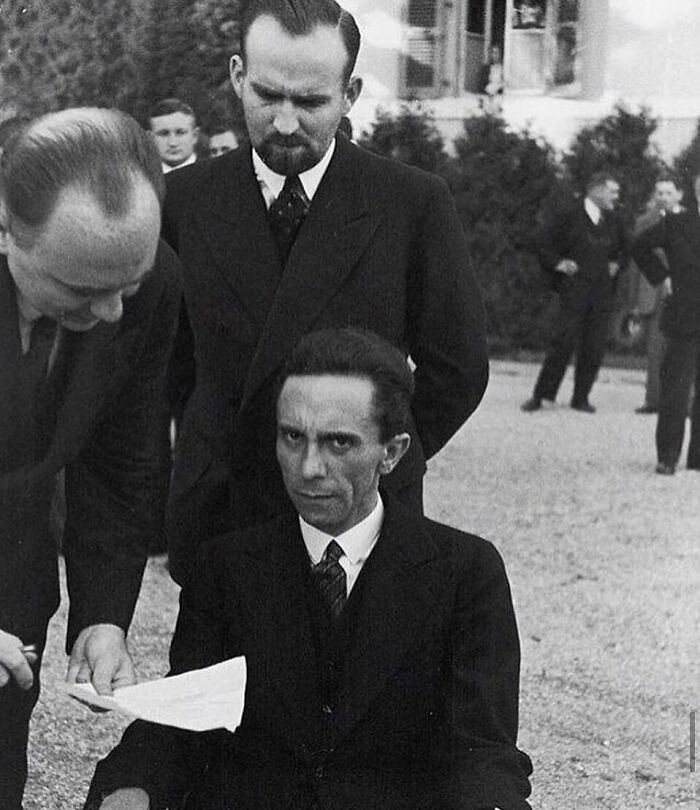
Image source: historicaleaks
#64
From 1785 to 1922, White Wolf, as known as Chief John Smith said to have lived 137 years. White Wolf Chief John Smith was a Native American of the Ojibwe (also known as Ojibwa, Chippewa, or Saulteux) people that lived in the Cass Lake, Minnesota area of the United States during the 1800s and early 1900s. He is best known for his extremely wrinkled appearance, and that people claimed that he is the oldest Native American to ever live. It is often claimed that he was 138 years old at the time of his death on February 6th, 1922. Chief John Smith was not only known as “White Wolf” but he also had many other nicknames, often related to the way his skin looked, or the fact he was old. He was known as Gaa-binagwiiyaas (translates to “which the flesh peels off”), Kahbe nagwi wens, Ga-Be-Nah-Gewn-Wonce (which roughly means “wrinkled meat”), Grandpa John, and The Old Indian. John Smith had all of these nicknames because he was a relatively well-known face not only in Minnesota but also across the entire country. He was often used as the face of the Chippewa people in the area, being photographed by photographers that would sell the photos as postcards and similar things like that. Chief John Smith himself would carry around photos to sell to “fans”. As well as this, in 1920, White Wolf Chief John Smith featured in a movie that featured old Native Americans called “Recollections of Ga-be-nah-gewn-wonce”. It toured the country so it made him well-known across all of the United States.
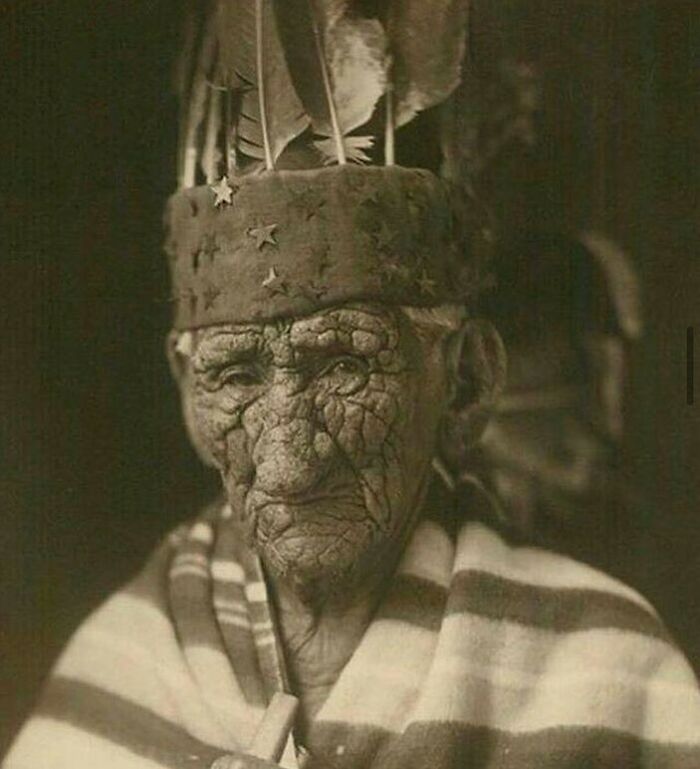
Image source: historicaleaks
#65
Dutch men in traditional trousers, 1900. Weather conditions determine appropriate clothing in the Netherlands. Otherwise, clothes appear similar to those worn elsewhere. Netherlands culture has unique traditional clothes, although people in the Netherlands only wear traditional clothes during special occasions. The traditional male costume includes woolen pants with silver buttons on the front square flap, as well as wooden clogs, a shirt, a jacket and a hat. The shape and design of the hat varies according to region.
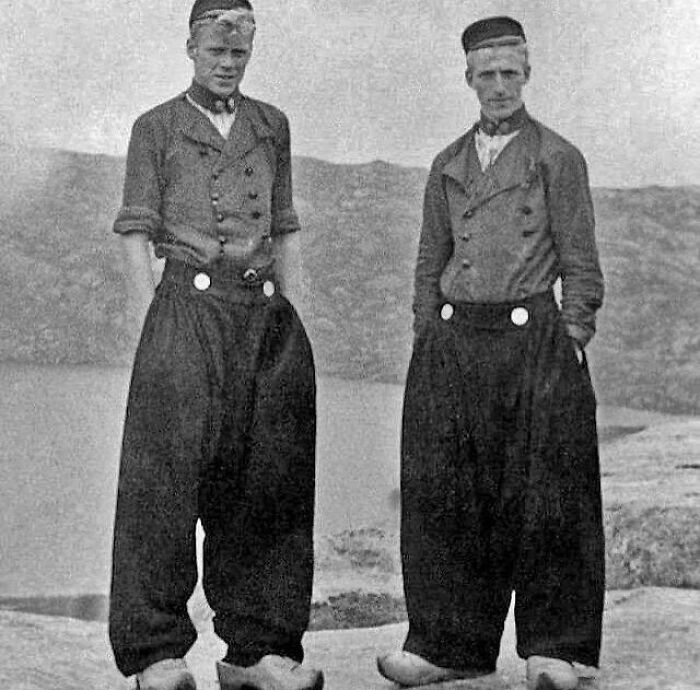
Image source: historicaleaks
#66
Old photos showcasing the unique and intricate styling of Victorian women’s hairstyles, 1870s-1900s
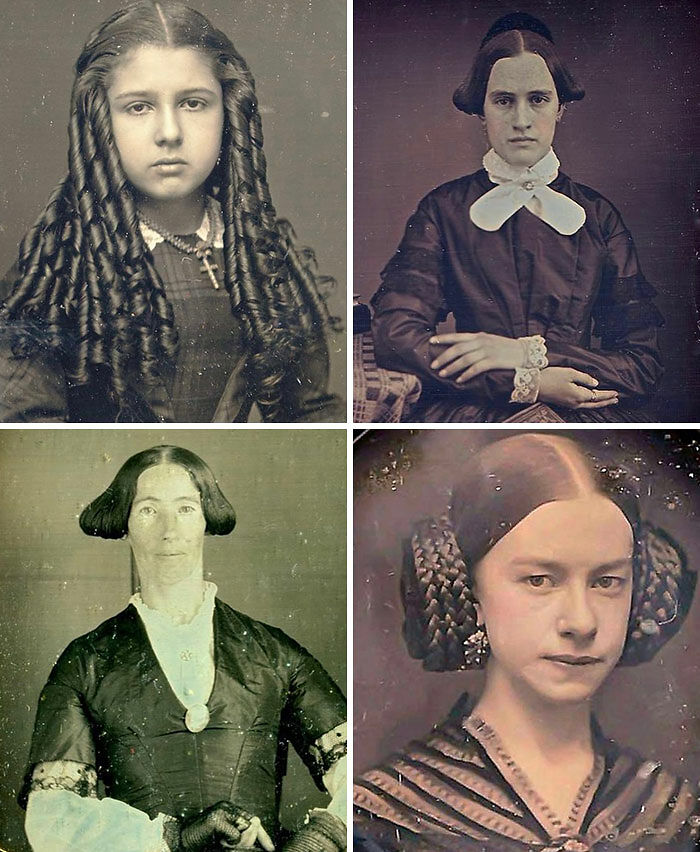
Image source: historicaleaks
#67
Pictured above is a young boy in the Gardens of Bomarzo, 1952. The Sacro Bosco (“Sacred Grove”), also called Park of the Monsters (Parco dei Mostri in Italian), also named Garden of Bomarzo, is a Mannerist monumental complex located in Bomarzo, in the province of Viterbo, in northern Lazio, Italy. The park was created in the 16th century. The monster in the photograph is the Orcus Mouth. It is the God of the underworld, and “punisher of broken oaths” in Italic and Roman mythology.

Image source: historicaleaks
#68
An American man carries his Filipina wife and their children in a family portrait, 1920s
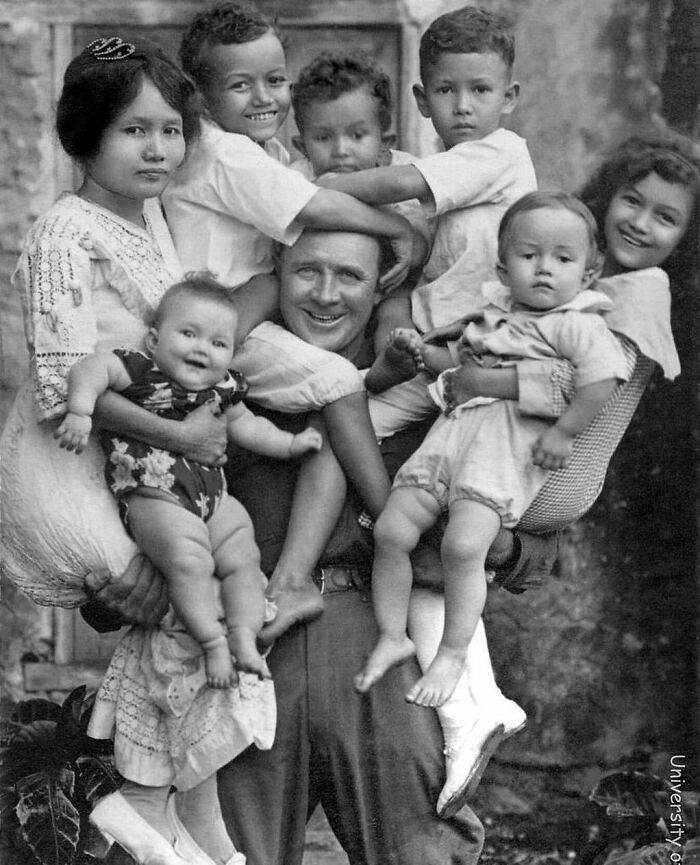
Image source: historicaleaks
#69
UPS worker delivers packages during the 9/11 attacks in New York. I did some digging about this photo and I found a text in Bloomberg Business from October 2001, the text tells the story of Joe Liana, a UPS worker at that time that went to Manhattan as soon as he heard about the attacks to help his work colleagues. “This is a true story from September 11, 2001. In New York City, it seemed like there were UPS trucks on every corner, at all hours of the day. That’s why Joe Liana, the UPS district manager for Manhattan, ran into the city on his day off as soon as he heard that the World Trade Center had been attacked. He had 27 UPSers working in those buildings. Even with the closure of city transportation, he caught one of the last trains into Manhattan and eventually reached the UPS complex on 43rd Street. There, electronic messages were sent to the digital clipboards of every driver. After three hours, he finally received news that there were four trucks crushed in the building’s collapse but miraculously, no UPSers had been hurt. With the knowledge that everyone was accounted for, Joe called his 4,000 UPSers from around the city to 43rd Street to sort through tens of thousands of packages looking for medical supplies, which they found. 200 deliveries were then made by quick working UPS drivers to hospitals, pharmacies and doctors, right when they needed it most.” Photo taken by Melanie Einzig.

Image source: historicaleaks
#70
86-year-old man sends a heartfelt letter to eBay seller after buying VHS player.

Image source: historicaleaks
#71
Theodore Roosevelt’s diary entry on Valentine’s Day, after his wife and mother died within hours of each other on the same day, 1884. He wrote:’X.. the light has gone out of my life.’
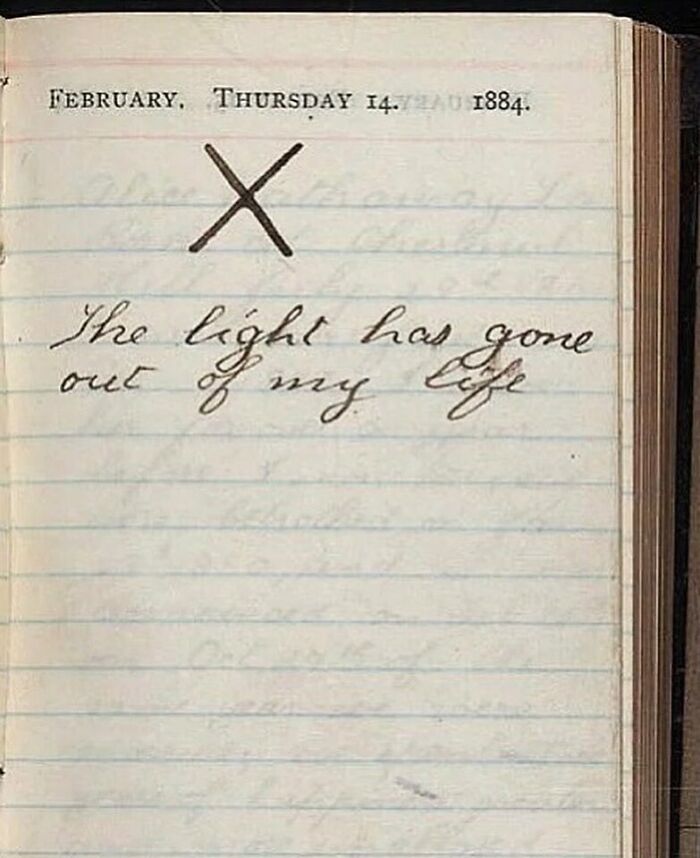
Image source: historicaleaks
#72
A couple at Woodstock (48 hours after they met) and the same couple 50 years later. They had two sons and five grandchildren. Judy and Jerry Griffin met at Woodstock, after Judy’s car broke down on New York’s Tappan Zee Bridge, around 90 miles from the concert site. She and the two friends she was travelling with decided to hitchhike, which was when Jerry came along to save the day in a VW Beetle. Speaking to People in 2019, Judy, who was 71 at the time of the interview, recalled: “I was just thinking, ‘Damn, now we can’t go’, and we were dying to. “Then Jerry and his friends pulled up. I stuck my head in and I saw that there was a woman in the car. “I’d never hitchhiked before, but I figured, ‘Well, since there was a woman, it was fairly safe, and I probably should just get in the car’.”
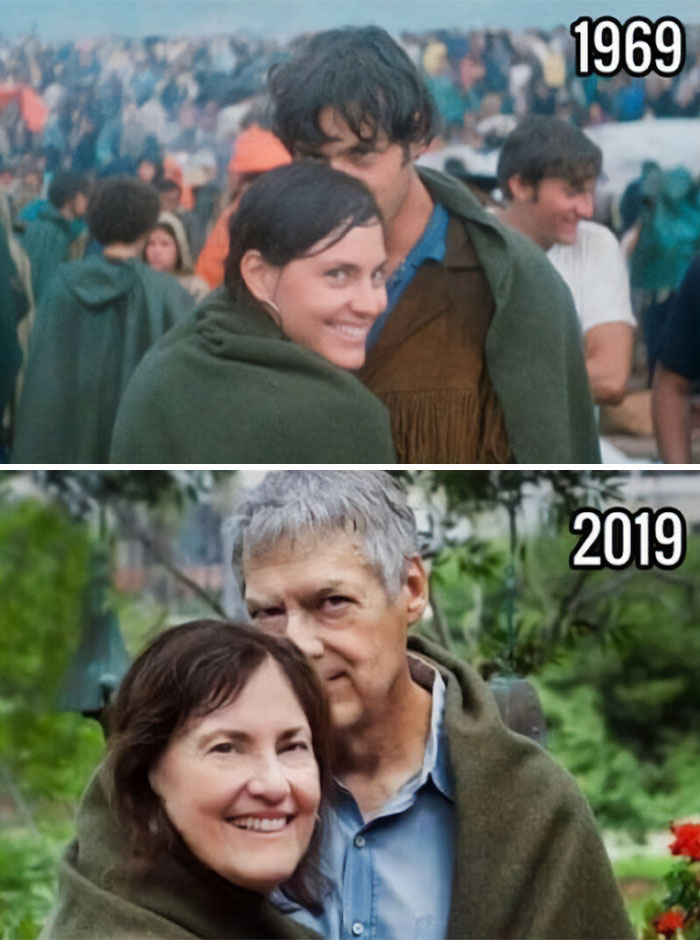
Image source: historicaleaks
#73
Pictured above is Queen Genepil (1905-1938), the last queen of Mongolia. Queen Genepil was the last wife of the last Mongol Khan, is a woman shrouded in mystery yet one whose story has endured. She was executed in May, 1938, shot as part of the systematic Stalinist destruction of Mongolian culture, in which a vast amount of the population were killed (between 20000 and 35000 people), including almost all the shamans and Buddhist lamas. Her daughter, Tserenkhand, who managed to survive said: “They took her away at night. She did not wake us, only left a piece of sugar on our pillows. I still remember the joy of a sudden discovery of that rare delicacy in the morning.”
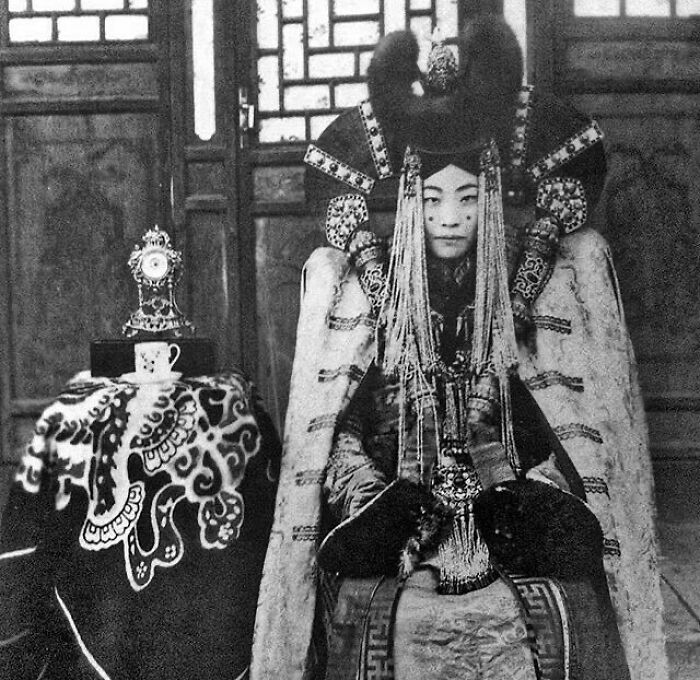
Image source: historicaleaks
#74
Drunk Ernest Hemingway playing soccer with a can of beer, 1959
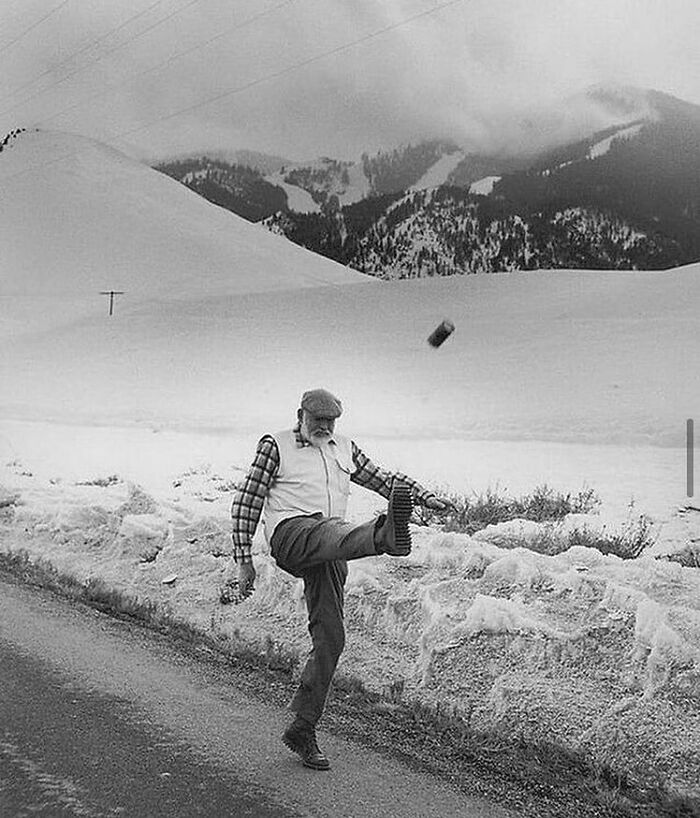
Image source: historicaleaks
#75
The headquarters of Mussolini’s Italian Fascist Party, 1934
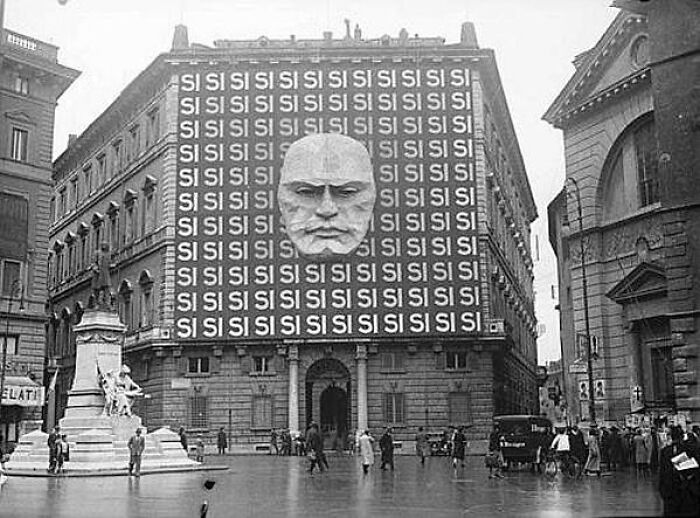
Image source: historicaleaks
#76
Bride leaving her recently bombed home to get married, London, 1940
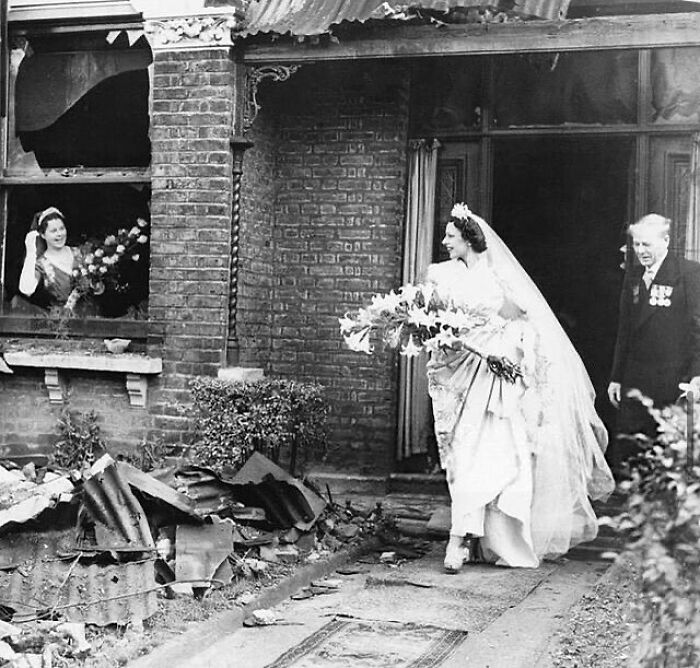
Image source: historicaleaks
#77
The last known photo of the Titanic, April 11, 1912
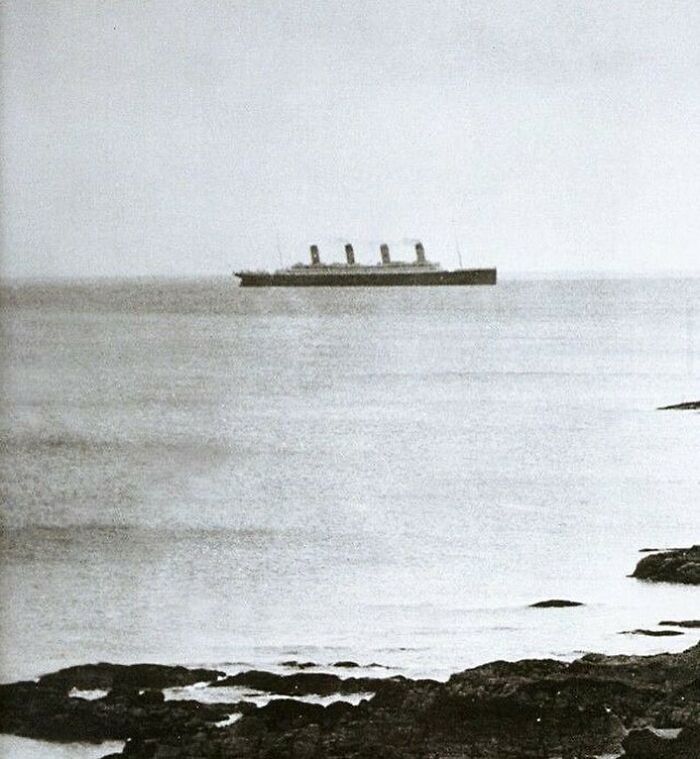
Image source: historicaleaks
#78
A woman smiling and goofing around while taking photos, late 1800s
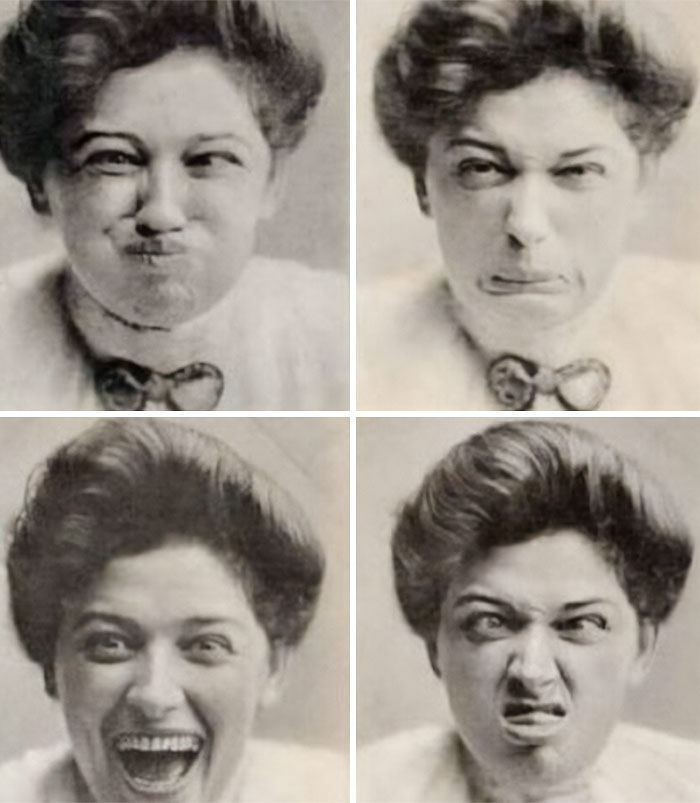
Image source: historicaleaks
#79
1st photo: Group taking a selfie, 1920. 2nd photo: Old selfie, circa 1920s. The first time a photographic self-portrait was taken using the same process as today, with the photographer holding the camera at arm’s length, was in December 1920. The five men who took the photo were the main photographers of the Byron Company; a photography studio founded in Manhattan in 1892 and still in business today. Another man took a photograph of the men documenting the momentous occasion. The image shows the five men standing on the roof of the Marceau Studio holding an antediluvian analog camera that was so heavy it required two of the men to hold it up. In photography, self-portraits were taking place long before the invention of Facebook and smartphones. One example is American photographer Robert Cornelius, who took a self-portrait daguerreotype (the first practical process of photography) of himself in 1839. The image is also considered one of the earliest photographs of a person. In 1914, 13-year-old Russian Grand Duchess Anastasia Nikolaevna took a self-portrait using a Kodak Brownie box camera (invented in 1900) and sent the photograph to a friend with the following note “I took this picture of myself looking at the mirror. It was very hard as my hands were trembling.” Nikolaevna appears to have been the first teenager to take a selfie. The word “selfie” was chosen as the “Word of the Year” in 2013 by the Oxford English Dictionary, which has the following entry for the word: “A photograph that one has taken of oneself, typically with a smartphone or webcam and uploaded to a social media website.”
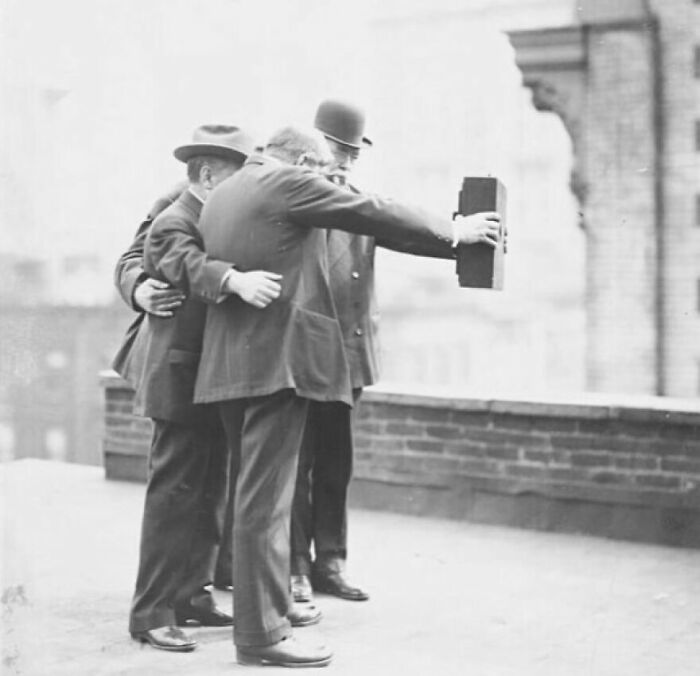
Image source: historicaleaks
#80
Northumbrian miner at his evening meal, 1937. People have worked as coal miners for centuries, but they became increasingly important during the Industrial revolution when coal was burnt on a large scale to fuel stationary and locomotive engines and heat buildings. Towards the end of the 20th century, the Royal Commission on the Historical Monuments of England (RCHME) undertook a survey of the structures, people and settlements associated with the nation’s coal industry. At its peak in 1913 there were around 2,600 working pits in Great Britain, employing a workforce of around 1,100,000 people. It produced 287,000,000 tons of coal for domestic and foreign consumption. From that point the industry declined and by 1992 the number of pits had reduced to 50, employing 43,800 people. “In 1937, Brandt traveled to Northern England to photograph the coal-mining regions and industrial towns. He was not commissioned to take these, and instead sought after the subject matter for its visual appeal. In this photograph, a man and woman sit inside their home at a dinner table. The man is covered in coal, eating from the plate in front of him. The woman sits to the right, looking solemn. The room is covered in patterned wallpaper, crowded with hanging clothing, a purse, and a decorative painting on the wall behind the seated couple.”
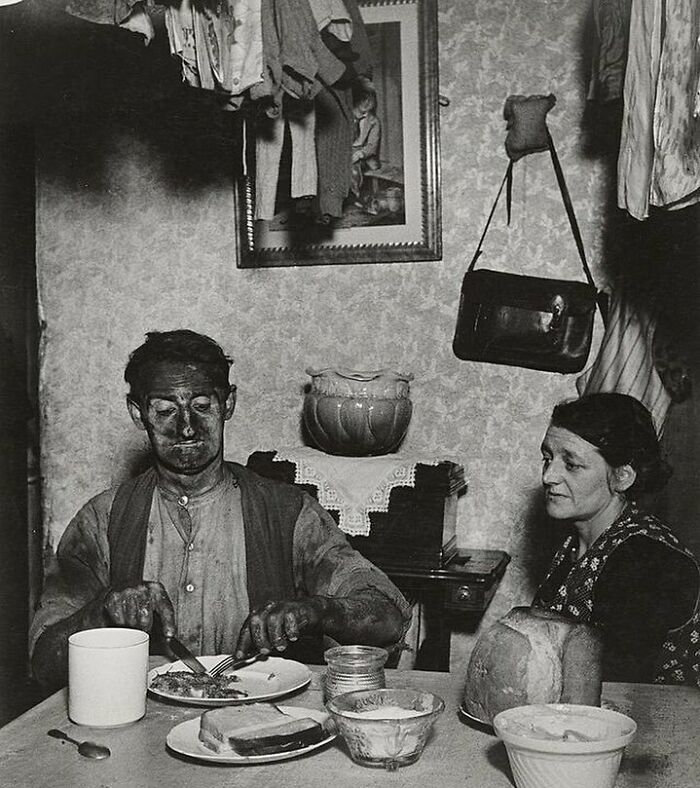
Image source: historicaleaks
#81
Pictured above is Astronaut Leland D. Melvin’s official NASA portrait. When NASA astronaut Leland Melvin was assigned to a space shuttle mission in 2008, he was told he could bring his family for the official photo shoot wearing the famous orange “pumpkin suit.” They didn’t say two-legged or four-legged, and although dogs are not allowed on base at NASA, family is family. So, Melvin brought his rescue dogs Jake and Scout along with a neighbor to hold them and keep them quiet in the back of his van. “I got to the guard shack, flashed my badge, and I gunned the van and drove to the photo lab,” Melvin said. He then went up the back stairs where the photographer was waiting, went into the photo lab with 100 MilkBones to keep the dogs busy while he changed into the suit and came out. “They (the dogs) ran toward me, and I told the photographer to hold his finger on the shutter and that’s how the photo was born.” After the photo shoot, Melvin had to change and the MilkBones were gone. “The dogs started barking and a security guard came in and asked if there were dogs in there,” Melvin said. “We said, ‘No, that’s the doggy screensaver.’ ” After he changed he was able to quiet the dogs and get out of there.

Image source: historicaleaks
#82
The inside of a comercial airplane in 1930. Under the ripping panel it says: “In case of emergency, pull ring sharply.” Original caption: “The ripping panel tore away from around the window, allowing the window to be removed or folded down, allowing the passengers to exit in an emergency. If you zoom in on the windows, you’ll notice a loop of material above each window. The aircraft is an Imperial Airlines biplane called a Handley Page W10 (swipe left to see its exterior). The first prototype was built in 1919 and it started commercial flights in the early 1920s until it was retired in 1934. The aircraft had an enclosed cabin that fit 12 passengers and two crew members in an open cockpit. It was also the first airliner to have a bathroom on onboard.”
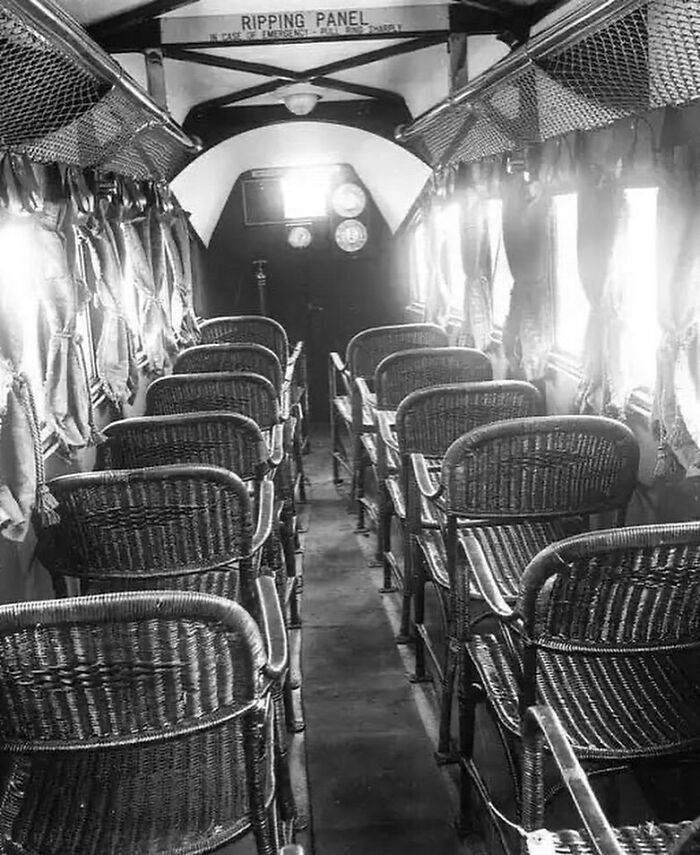
Image source: historicaleaks
#83
A young miner boy in Utah or Colorado, USA, in the early 1900s.
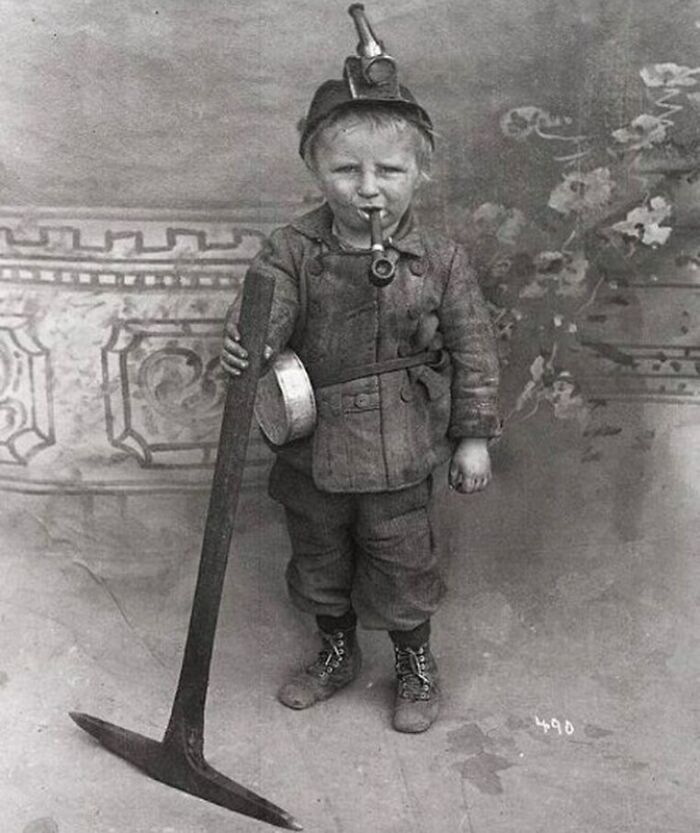
Image source: historicaleaks
#84
A soldier’s face before and after the war: 1941 vs 1945. The man in the photo is Evgeny Stepanovich Kobytev. In 1941 he was a young man ready to start his creative life as an artist when Germany attacked the Soviet Union and he had to join the Army. However, all his dreams were cut short on June 22, 1941 when Nazi Germany attacked Soviet Union. The new artist voluntarily became a soldier and enlisted in one of the artillery regiments of the Red Army. The regiment was engaged in a fierce battle to protect the small town of Pripyat, which lies between Kiev and Kharkiv. In September 1941, Kobytev was wounded in the leg and became a prisoner of war. He ended up in a German notorious concentration camp operated out of Khorol, which was called “Khorol pit” (Dulag #160). Approximately 90 thousand prisoners of war and civilians died in this camp. In 1943, Kobytev managed to escape from captivity and again rejoined the Red Army. He participated in various military operations throughout Ukraine, Moldova, Poland, Germany. After the Second World War ended, he was awarded the Hero of the Soviet Union medal for his excellent military service during the battles for liberation of Smila and Korsun in Ukraine. However, the High Command refused to award him the Victory over Germany medal since his military career was “spoiled” for being a prisoner of war.
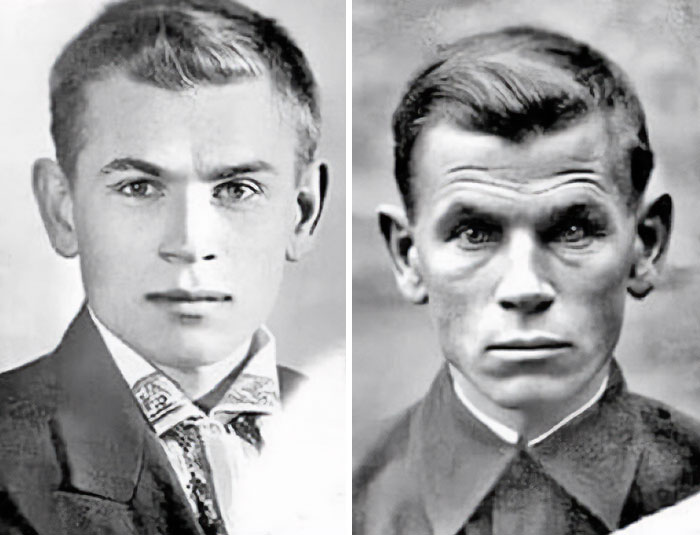
Image source: historicaleaks
#85
Did you know about this?
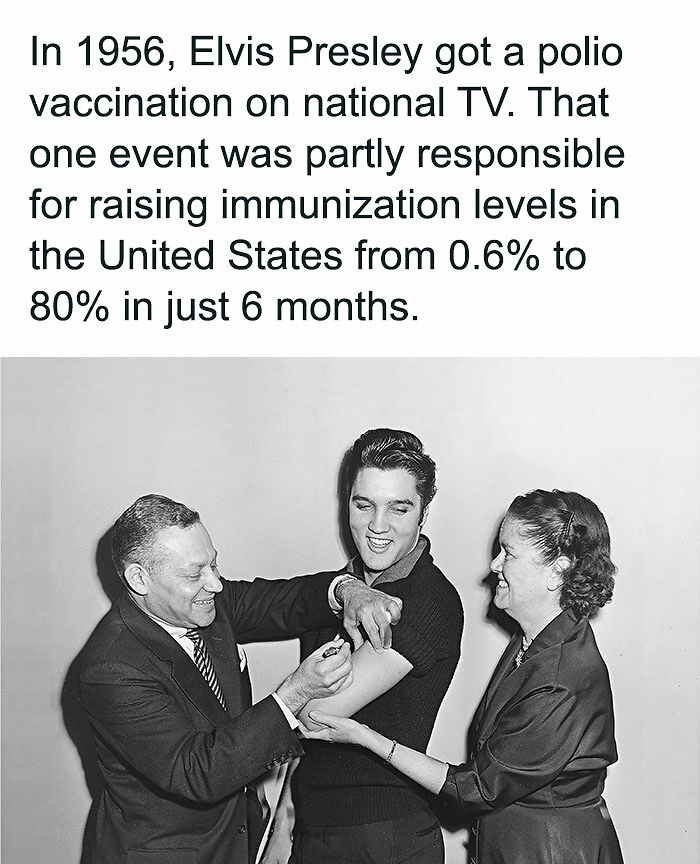
Image source: historicaleaks
#86
The wartime selfie, 1940s
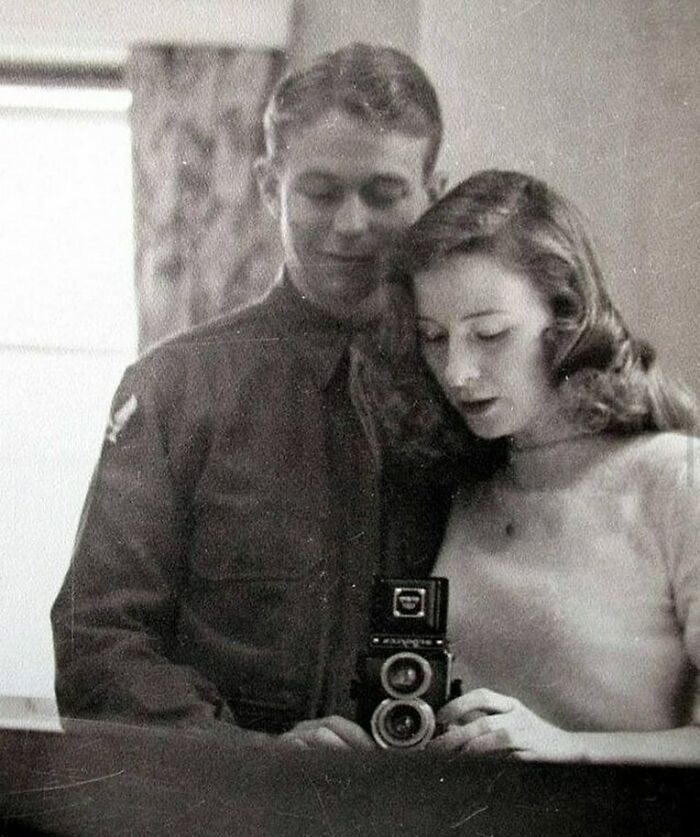
Image source: historicaleaks
#87
Padaung women asking a London policeman for directions, 1935. The Kayan are a sub-group of Red Karen (Karenni people), Tibeto-Burman ethnic minority of Myanmar. Girls first start to wear rings when they are around 5 years old. Over the years, the coil is replaced by a longer one and more turns are added. The weight of the brass pushes the collar bone down and compresses the rib cage. The neck itself is not lengthened; the appearance of a stretched neck is created by the deformation of the clavicle. Many Padaung girls have their necks fitted with the first spiral at the age of 5; after 2 years, a second coil is added. Coils are then added until a limit of 21 – 25 is reached. The origin of this custom is shrouded in mystery. Many believe that it is a way to make women less attractive to slave traders. Some think that it’s the tribe’s way to protect their throat from tigers. The most commonly accepted theory, however, is that the purpose of the coils to establish cultural identity, one associated with beauty – a long neck is considered a mark of great beauty. In 1935 a group of Padaung women visited London. In the 1930s, circuses and shows were popular in the United Kingdom and the Padaung women, advertised as “giraffe women,” were star attractions, drawing huge crowds.
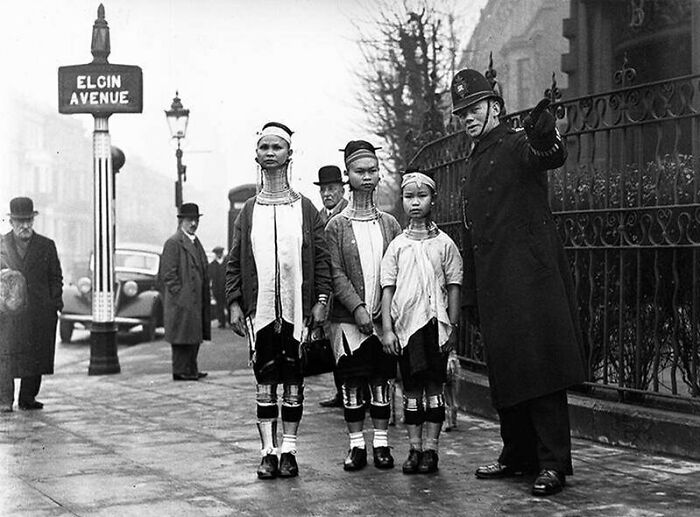
Image source: historicaleaks
#88
French knife grinders were called ventres jaunes (“yellow bellies” in English) because of the yellow dust that would be released from the grinding wheel. This photo from 1902 shows the workers on their stomachs in order to save their backs from being hunched all day. They were also encouraged to bring their dogs to work to keep them company and also act as mini heaters by having them rest on their owners’ legs.
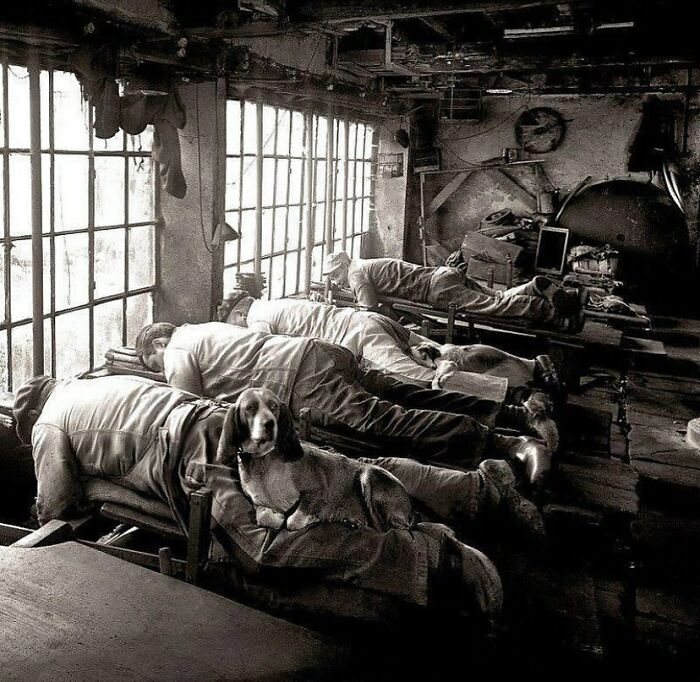
Image source: historicaleaks
#89
Soldier and cat, 1917
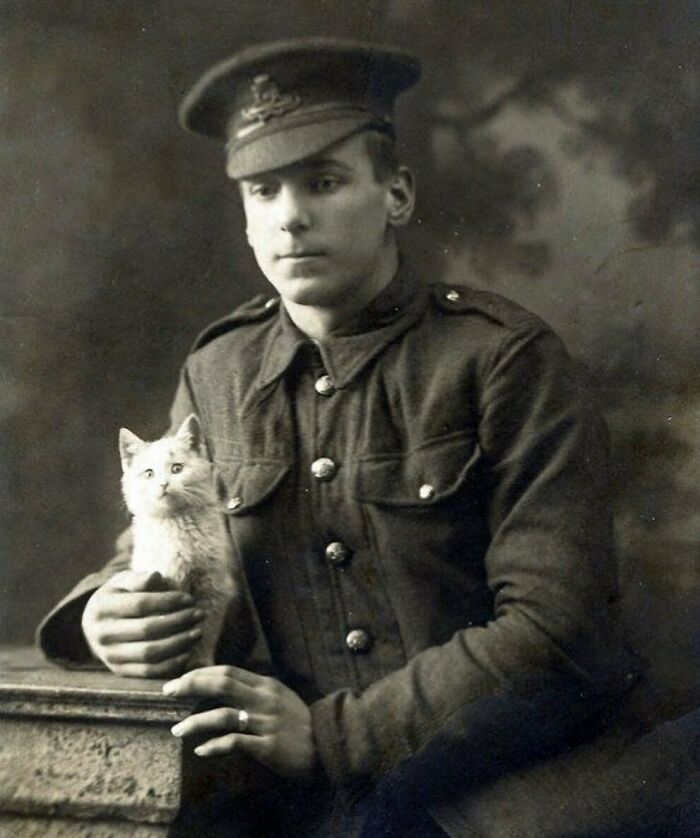
Image source: historicaleaks
#90
1940s style
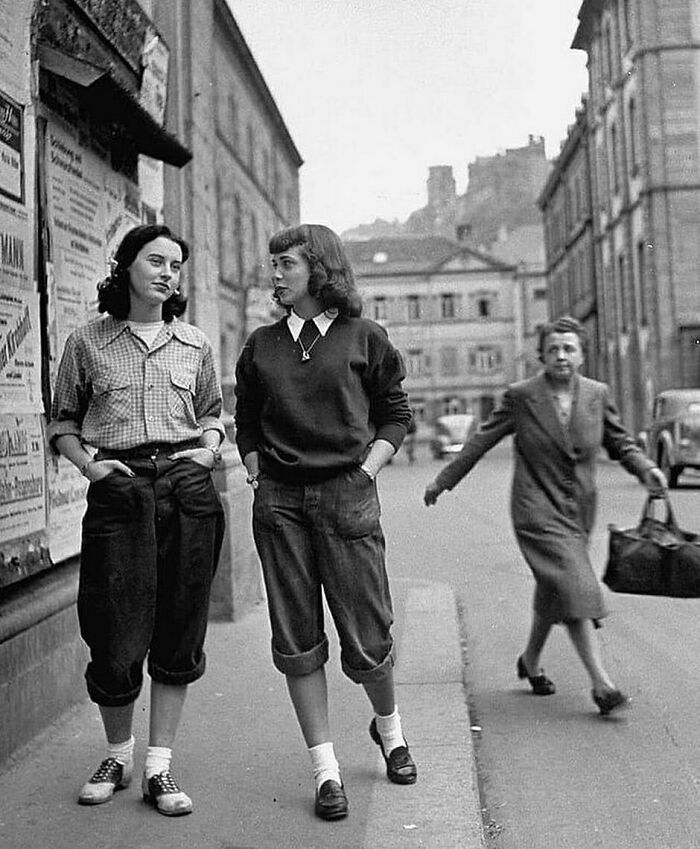
Image source: historicaleaks
#91
Parisian woman with her cat in her cannabis garden, 1910s. Original caption: “This lovely young Parisian woman is enjoying a serene moment in her lush garden in the 1910s in France. Her companions are her fluffy faithful feline and her caged bird. Keeping songbirds as pets is a hobby as old as the ancient Sumerians, but small home aviaries became a status symbol in the 1800s and early 1900s. Likely, this young lady enjoyed the company of her birds as a way to connect with nature. Interestingly, her garden contains several cannabis plants. It could be that the unique leaves and vibrant foliage was sought after as a garden plant. Or it could be that the young woman or her family were utilizing the medicinal properties of the cannabis plant to treat any one of a number of ailments.”
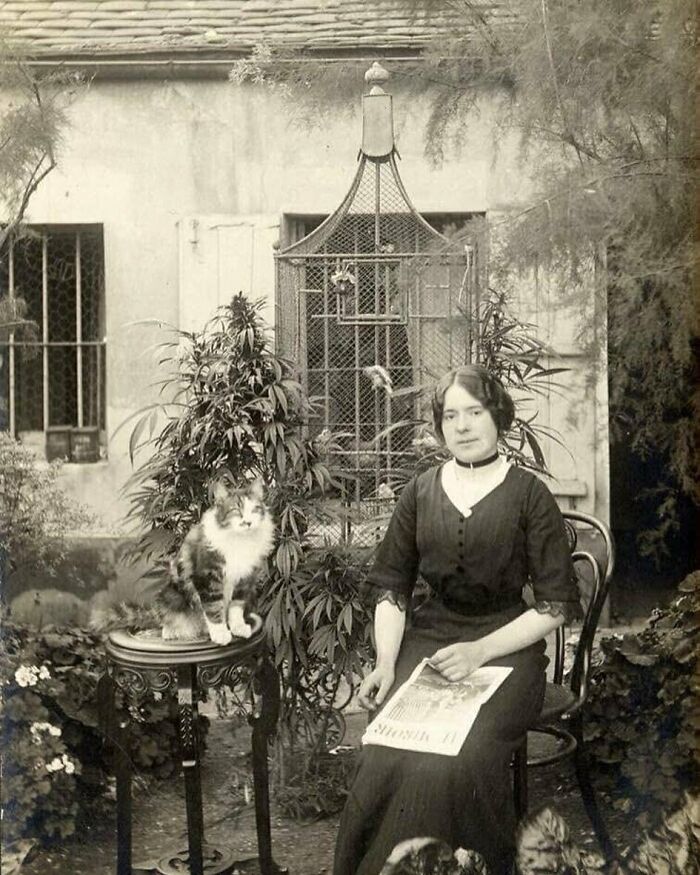
Image source: historicaleaks
#92
A member of the Harlem Hellfighters (369th Infantry Regiment) poses for the camera while holding a puppy he saved during World War I, 1918. The 369th Infantry Regiment, formerly known as the 15th New York National Guard Regiment and commonly referred to as the Harlem Hellfighters, was an infantry regiment of the New York Army National Guard during World War I and World War II. The Harlem Hellfighters were an African-American infantry unit in WWI who spent more time in combat than any other American unit. The regiment was nicknamed the Black Rattlers. The nickname Men of Bronze (French: Hommes de Bronze) was given to the regiment by the French and Hell-fighters (German: Höllenkämpfer) was given to them by the Germans. During WWI, the 369th spent 191 days in frontline trenches. They also suffered the most losses of any American regiment, with 1,500 casualties.
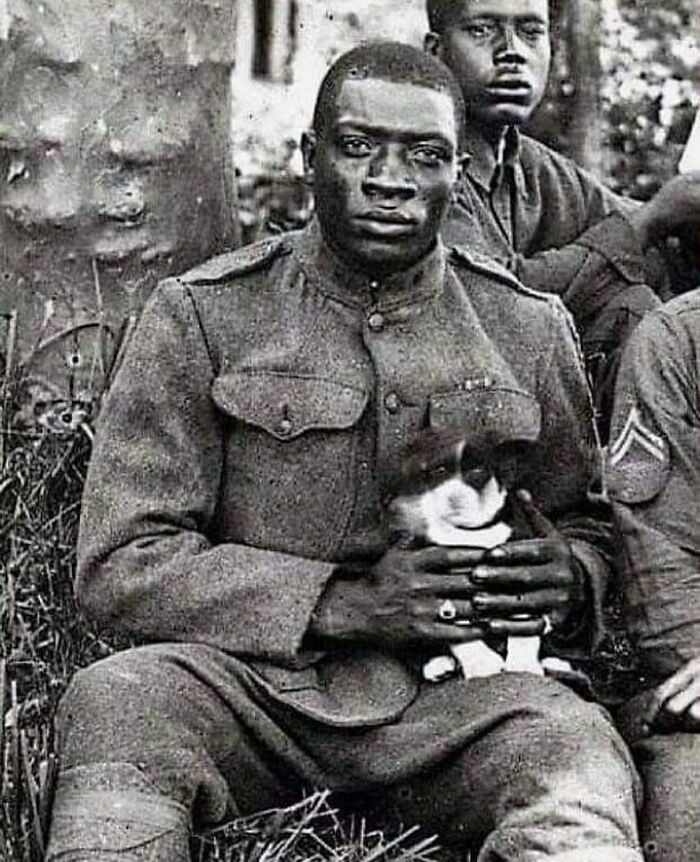
Image source: historicaleaks
#93
17 year-old Juliane Koepcke was sucked out of an airplane in 1971 after it was struck by a bolt of lightning. She fell 2 miles to the ground, strapped to her seat and survived after she endured 10 days in the Amazon Jungle. After ten days, she found a boat moored near a shelter, and found the boat’s fuel tank still partly full. Koepcke poured the gasoline on her wounds, an action which succeeded in removing the maggots from her arm. Out of 93 passengers and crew, Juliane was the only survivor of the LANSA flight 508 crash that took place December 24th, 1971.

Image source: historicaleaks
#94
Elvis Presley signing autographs on top of a boys head, 1959
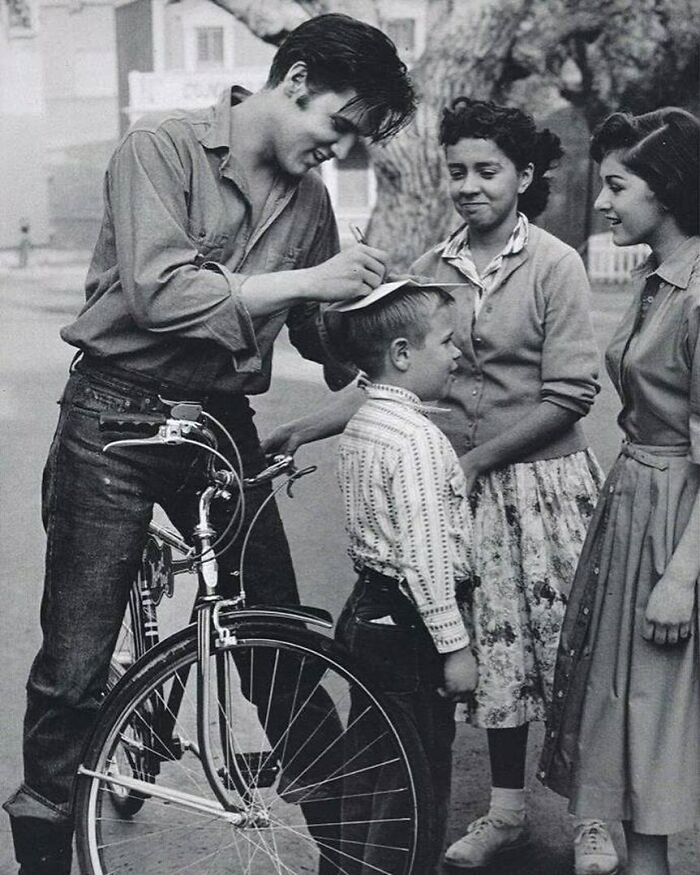
Image source: historicaleaks
#95
Best friends since WW2.
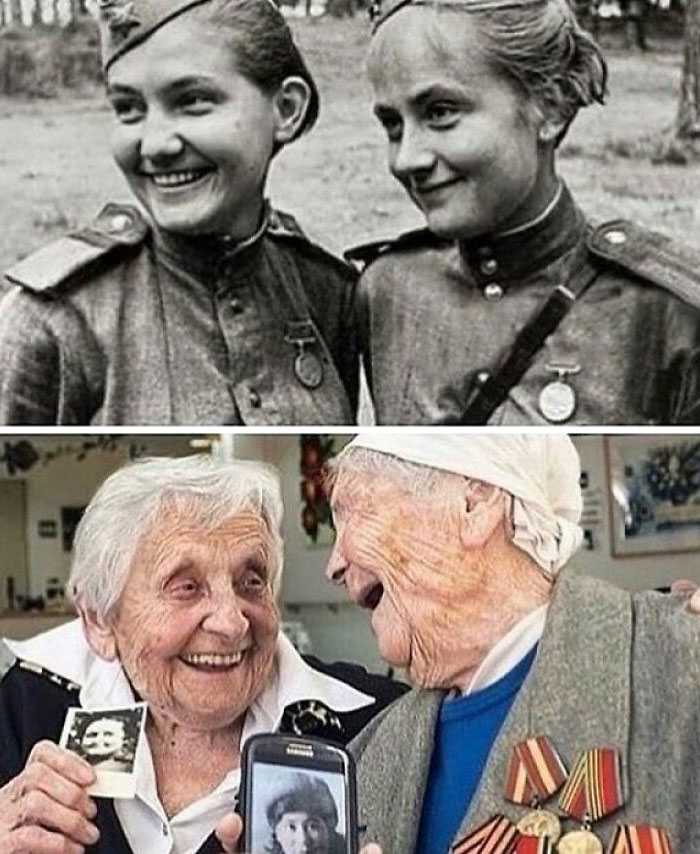
Image source: historicaleaks
#96
A young man demonstrating against low pay for teachers, c. 1930s
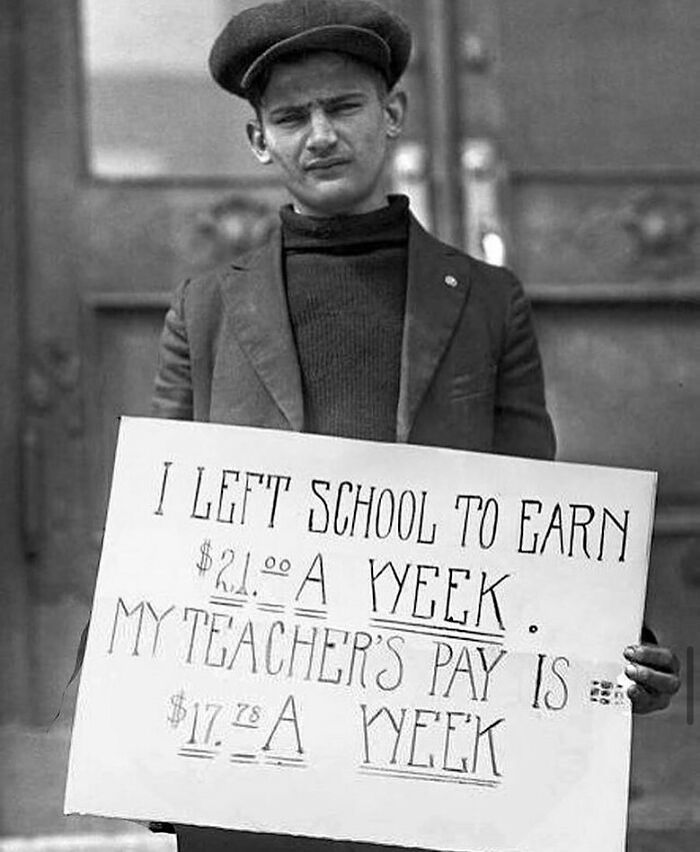
Image source: historicaleaks
#97
In 1912, Jim Thorpe, a Native American, had his running shoes stolen on the morning of his Olympic track and field event. He founded this mismatched pair of shoes in the garbage and ran in them to win two Olympic gold medals that day. Thorpe was the first Native American to win a gold medal for the United States in the Olympics. Considered one of the most versatile athletes of modern sports, he won two Olympic gold medals in the 1912 Summer Olympics (one in classic pentathlon and the other in decathlon). He also played American football (collegiate and professional), professional baseball, and basketball.
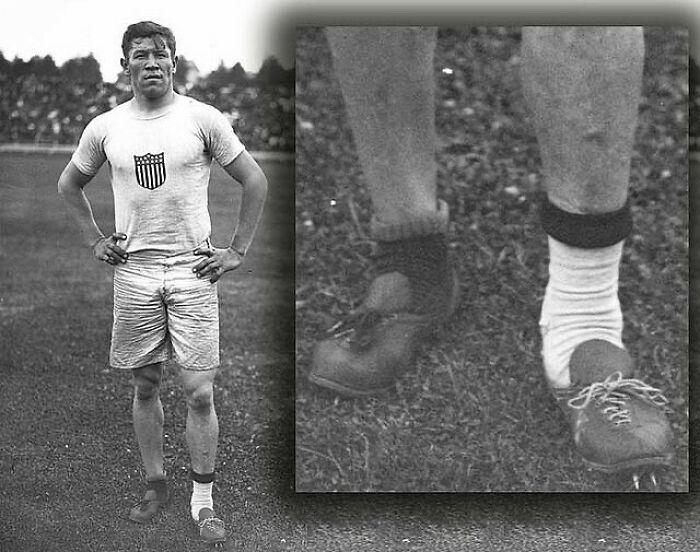
Image source: historicaleaks
#98
Three children in a wagon, US, 1930s. The 1930s in the United States began with an historic low: more than 15 million Americans–fully one-quarter of all wage-earning workers–were unemployed. Between 1930 and 1933, more than 9,000 banks closed in the U.S., taking with them more than $2.5 billion in deposits. The decade was defined by a global economic and political crisis that culminated in the Second World War. During the Depression, most people did not have much money to spare. However, most people did have radios–and listening to the radio was free. The most popular broadcasts were those that distracted listeners from their everyday struggles: comedy programs like Amos ‘n’ Andy, soap operas and sporting events. Swing music encouraged people to cast aside their troubles and dance. Bandleaders like Benny Goodman and Fletcher Henderson drew crowds of young people to ballrooms and dance halls around the country. And even though money was tight, people kept on going to the movies. Musicals, “screwball” comedies and hard-boiled gangster pictures likewise offered audiences an escape from the grim realities of life in the 1930s.
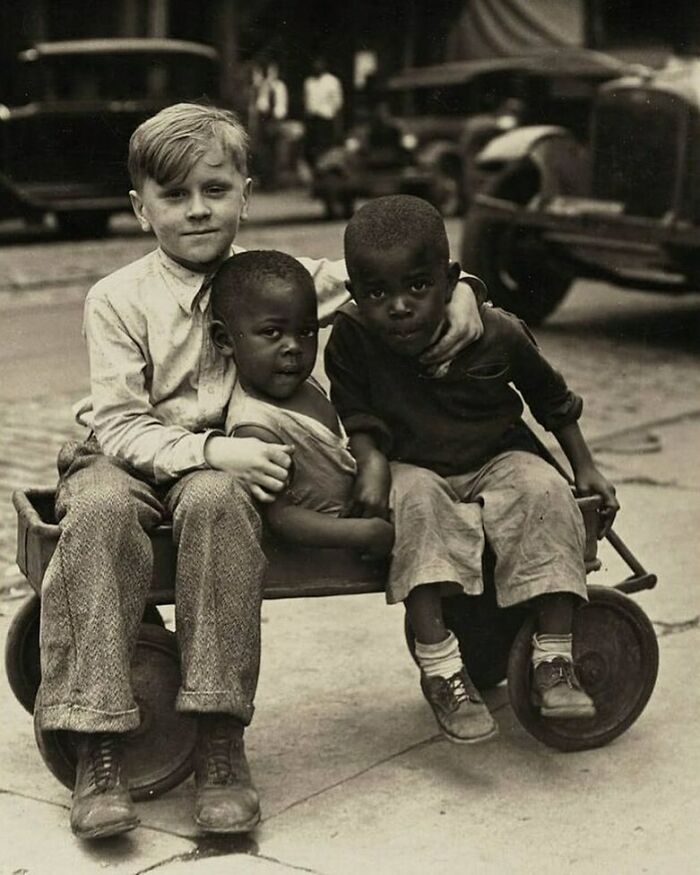
Image source: historicaleaks
#99
Studio photos of two women, 1900s
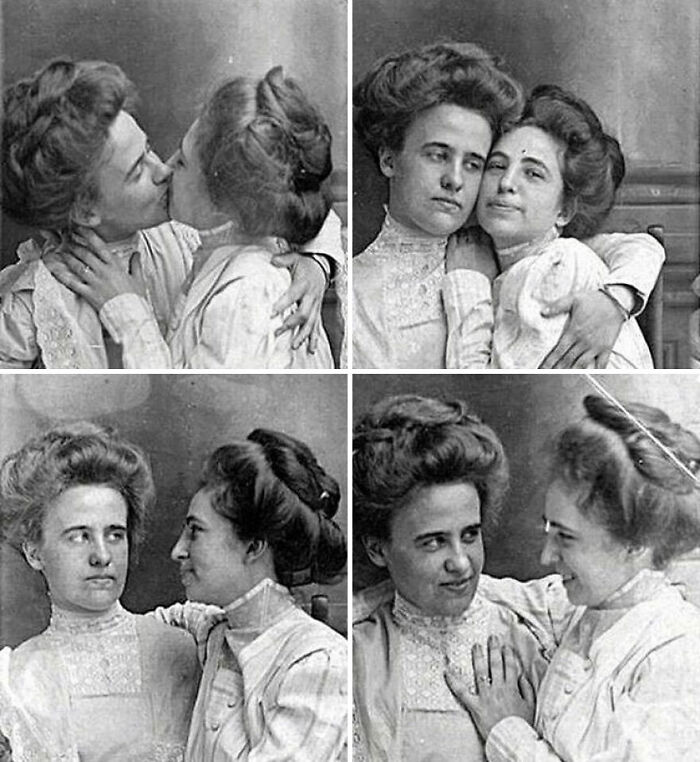
Image source: historicaleaks
#100
A Great Depression Christmas dinner in home of Earl Pauley, near Smithfield, Iowa, 1936. The dinner consisted of potatoes, cabbage and pie, 1936. Many years later, Helen Pauley Hopkins, one of the children in the photo was interviewed when she was in her 70s. “I remember one Christmas where Dad made us a whistle out of a corn cob. He put three feathers on the top of the cob. He’d throw it in the air and it would make a whistle on its way down. I was two when this picture was taken. We lived one day at a time. We always waited for father to get home from work, so we could sit at the table and eat with him. I worked as a janitor at Maple Valley school. But I kind of put my life aside to care for family members. I was with both of my parents and my siblings when they died. I think my mother had to put up with hell to live like this. She was such a wonderful person. Truth be known, she went without to see we had what we needed. There wasn’t a night when my parents didn’t tell us all how much they loved us. That meant the world to me.” For most families during the Great Depression, Christmas was not a time for extravagance. Money and jobs were difficult to come by, and it was all some families could do to keep food on the table. The Great Depression was a severe worldwide economic depression in the decade preceding WWII. Farming and rural areas suffered as crop prices fell. The Great Depression began in the United States as an ordinary recession in the summer of 1929. The downturn became markedly worse, however, in late 1929 and continued until early 1933. Real output and prices fell precipitously. Between the peak and the trough of the downturn, industrial production in the United States declined 47 percent and real gross domestic product (GDP) fell 30 percent.
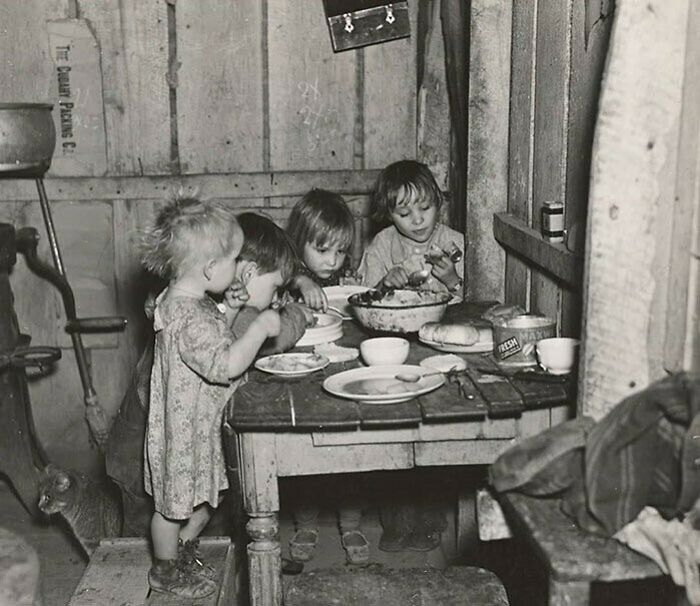
Image source: historicaleaks
#101
Terry Fox, a 21 year old Canadian athlete who lost a leg to cancer, began a cross-Canada run to raise money for cancer research on December 4, 1980. He ran the equivalent of a full marathon a day. Although the spread of his cancer eventually forced him to end his quest after 143 days and 5,373 kilometres (3,339 mi), and ultimately cost him his life, his efforts resulted in a lasting, worldwide legacy. The annual Terry Fox Run, first held in 1981, has grown to involve millions of participants in over 60 countries and is now the world’s largest one-day fundraiser for cancer research; over C$750 million has been raised in his name, as of January 2018. Fox was a distance runner and basketball player, and he also played wheelchair basketball in Vancouver, winning three national championships. His right leg was amputated in 1977 after he was diagnosed with osteosarcoma. He died June 1981 and he was considered a national hero, he has had many buildings, statues, roads, and parks named in his honour across the country.
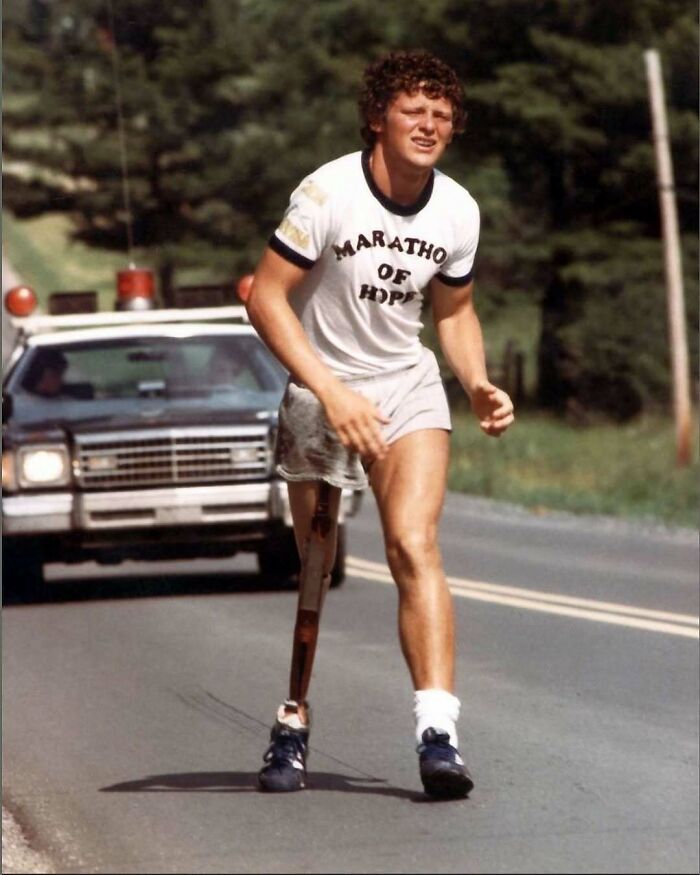
Image source: historicaleaks
#102
Pictured above is Lao Huang, a 87 year old cormorant fisherman living in Yangshuo. Cormorant fishing is traditional fishing method in which fishermen use trained cormorants to fish in rivers, but sadly the 1300-year-old fishing method now only survives as a tourist attraction in modern days. Ukai is a traditional fishing method which uses trained cormorants to catch river fish such as sweetfish (ayu). This type of fishing has been around for over 1300 years, most prominently along the Nagaragawa River in Gifu City, where the master fishermen have official patronage from the emperor. Historically, cormorant fishing has taken place in Japan and China, as well as Greece, North Macedonia, and, briefly, England and France. It is first attested as a method used by the ancient Japanese in the Book of Sui, the official history of the Sui Dynasty of China, completed in 636 CE. Ukai is practiced by master fisherman working from long wooden boats. Each fisherman leads about a dozen cormorants on leashes who swim alongside the boat and dive under the water to catch fish by swallowing them whole. The fish are kept in a special pouch in the cormorant’s throat to be retrieved later and are prevented from being swallowed by a snare around the bird’s neck. Each boat carries a large fire to provide light for the boatmen to steer and the birds to fish by. These days, ukai is held mainly as a tourist attraction. Special sightseeing cruises are offered that shadow the ukai boats and allow tourists to get an up-close look at the action. Details depend on each site, but the boats typically operate daily during the season except when the rivers have high water levels.

Image source: historicaleaks
#103
Princess Diana dancing with John Travolta, Clint Eastwood and President Ronald Reagan at a White House dinner, 1985
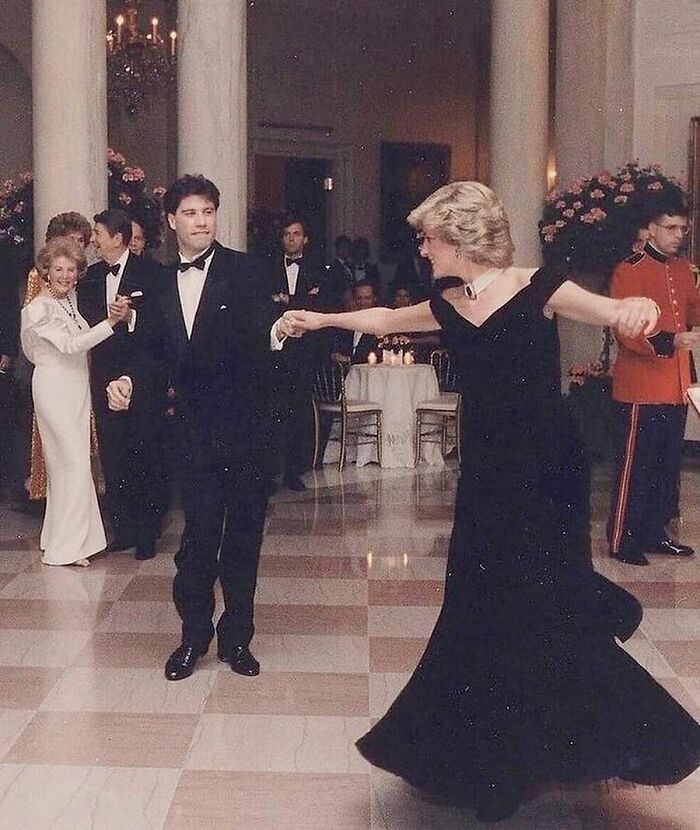
Image source: historicaleaks
#104
French boys holding their mother’s pocketbooks, 1962
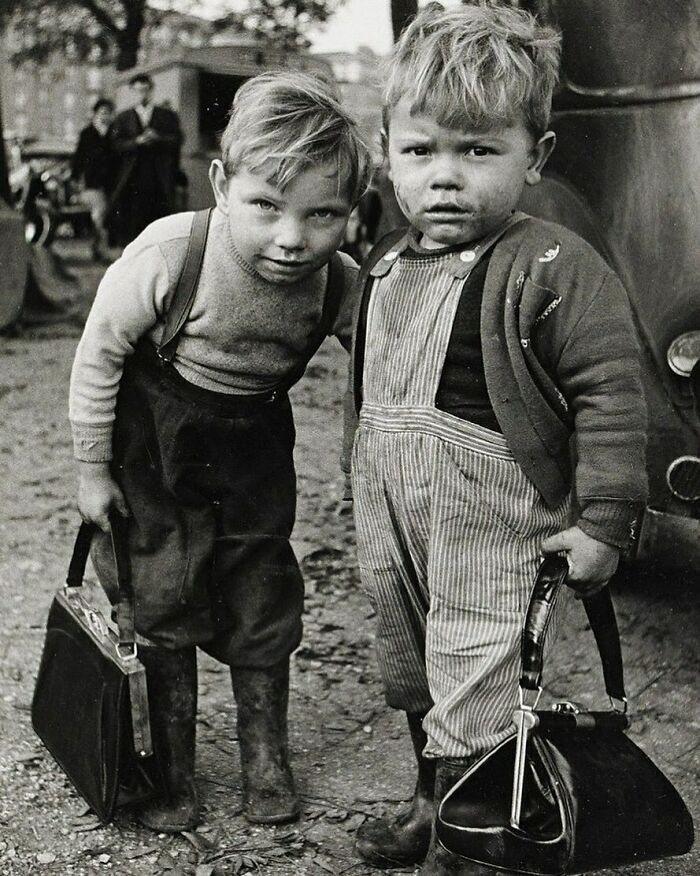
Image source: historicaleaks
#105
When Princess Diana broke the royal rules for her son William by taking part in the Sports Day running race at her son’s school.
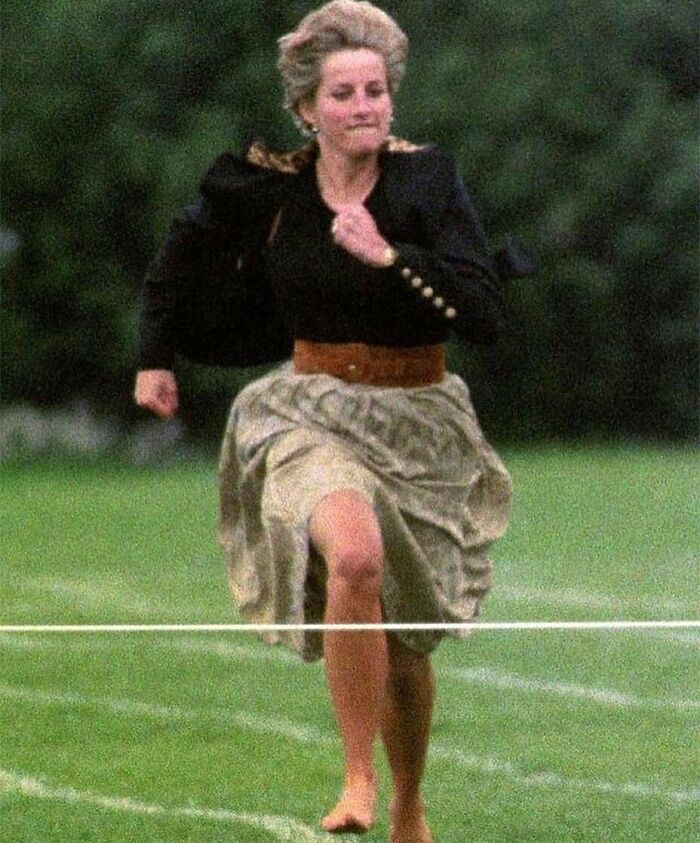
Image source: historicaleaks
#106
Pictured above is a Japanese Samurai in 1866. Samurai, member of the Japanese warrior caste. The term samurai was originally used to denote the aristocratic warriors (bushi), but it came to apply to all the members of the warrior class that rose to power in the 12th century and dominated the Japanese government until the Meiji Restoration in 1868. At the core of the samurai beliefs was their honor code known as bushido, but the bushido code was just the natural result of the three most important religions and philosophies the samurai followed – Shintoism, Confucianism, and Zen Buddhism. The word “bushido” comes from the Japanese roots bushi meaning warrior, and do meaning path or way. It translates literally to way of the warrior. Bushido was followed by Japan’s samurai warriors and their precursors in feudal Japan, as well as much of central and east Asia. The principles of bushido emphasized honor, courage, skill in the martial arts, and loyalty to a warrior’s master (daimyo) above all else. In the 1870s, samurai comprised five percent of the population, or 400,000 families with about 1.9 million members. In the 1880s, 23 percent of prominent Japanese businessmen were from the samurai class; by the 1920s the number had grown to 35 percent.
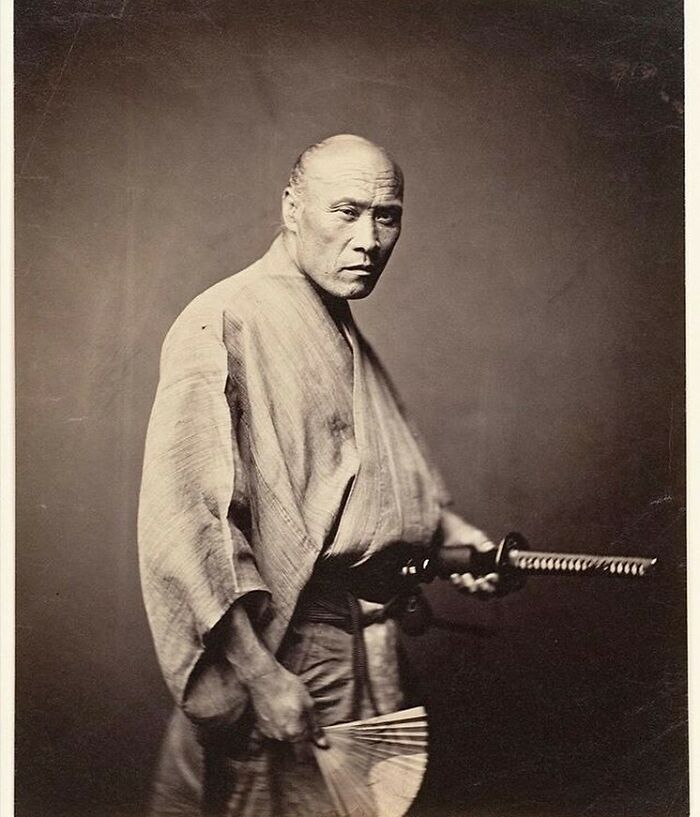
Image source: historicaleaks
#107
Shell-shocked Iraqi soldier after the explosion of an improvised device, 2008
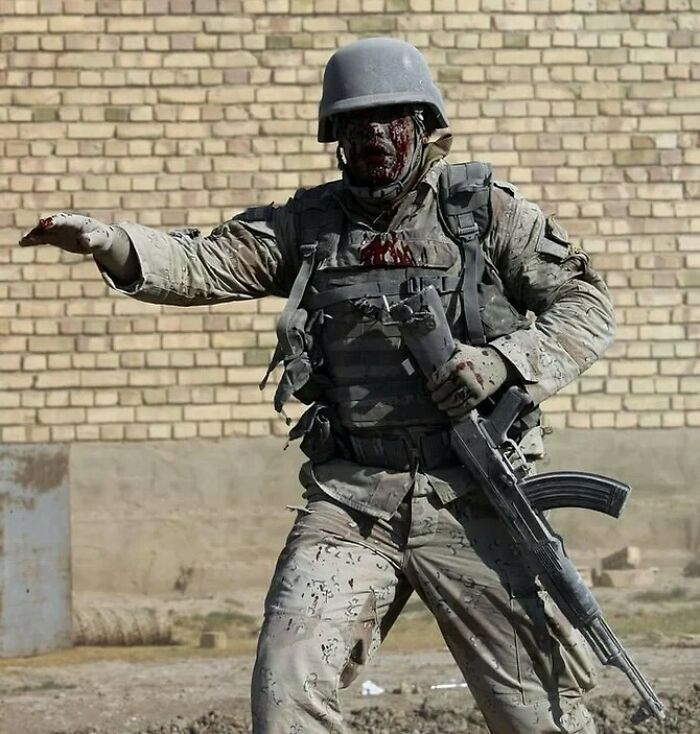
Image source: historicaleaks
#108
Pictured above is La Doncella or “The Maiden”, a 15-year-old mummy who lived in the Inca Empire, being examined by researchers after her discovery. In a startling discovery made in 1999, Dr. Johan Reinhard and his team of archaeologists stumbled upon ancient, well-preserved mummified bodies of three children, which dated back to more than five centuries ago. At the peak of Mount Llullaillaco, a dormant volcano bordering Chile and Argentina, inside a tomb-like structure, the mummies of Children of Llullaillaco, as they have been named, were found, thus bringing a spine-chilling Inca ritual to the fore. As per the disturbing religious custom, commonly known as capacocha, young individuals from Cuzco, the capital city of the Incan Empire, were chosen as gifts for the Sun God Inti. Little girls and boys, probably the best among the lot, in terms of looks, statuses and health were handpicked, well-fed and taken good care of, weeks or even years before it was time for them to ascend the volcano hundreds of kilometers away, where superior priests made the supreme sacrifice. As the chosen day drew closer, the children, as young as six years of age and a maximum of 16, were dressed in their best attires, adorned in fine jewellery and along with a hundred other offerings like gold, silver and various miscellaneous items, left near the summit of the titular volcano to be sacrificed. This ritual was undertaken during ceremonies like the passing away of the emperor or with a purpose to curb natural calamities or even please the gods. As per Incan beliefs, it was an act of great honour to be chosen for the sacrifice, where after the children died; they would join their ancestors in the afterlife and look over the village as angels, keeping their kin from harm. Surprisingly, the sacrifices were ordered by the Emperor himself. Before the children began their journey towards their extreme end, they were presented before the monarch, who held a feast in their honour, as the chosen ones would be given up to the gods.
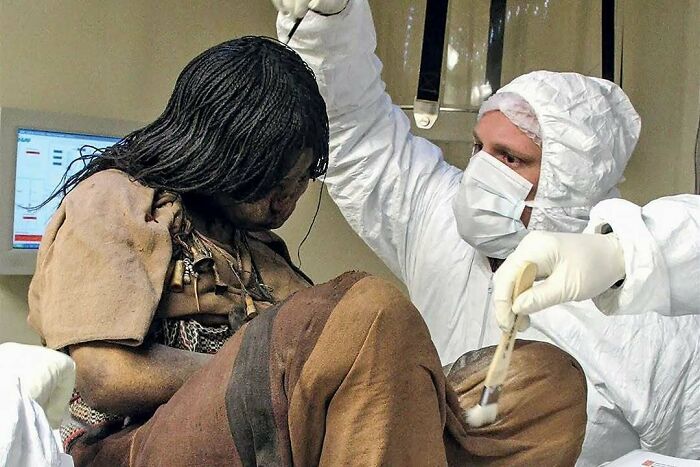
Image source: historicaleaks
#109
The Empire State Building from New Jersey after it was first completed in the 1930s
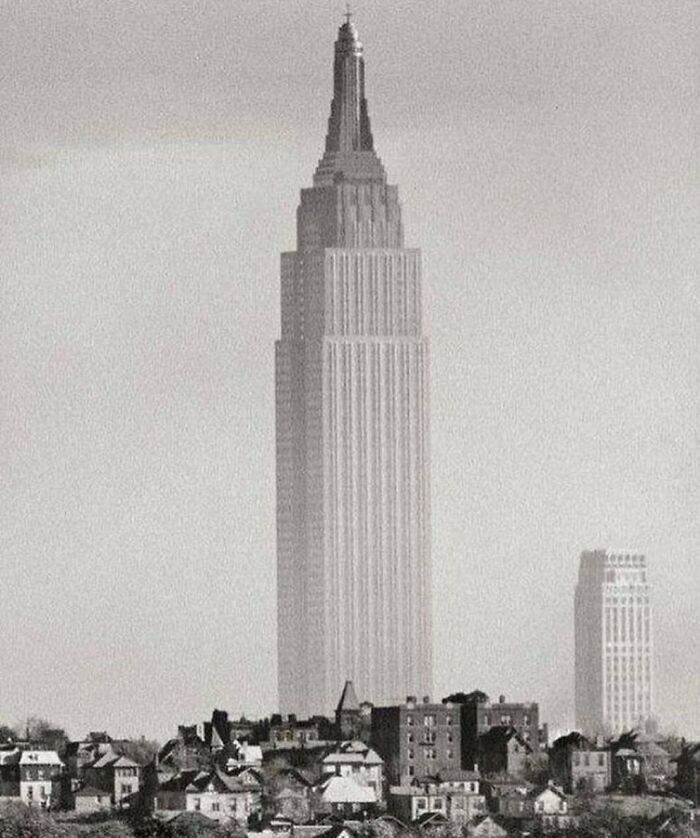
Image source: historicaleaks
#110
Pictured above is Albina Mali-Hočevar, a resistance fighter who fought for the liberation of Yugoslavia during World War II. Albina Mali-Hočevar wanted to fight during World War II. When the young Slovenian teenager heard that her fellow partisans had assigned her to be a nurse during the conflict, tears of frustration filled her eyes. But by the war’s end, Mali-Hočevar would see plenty of action. Famous today for the scars across her face, which fragmented her gaze, Mali-Hočevar spent the conflict fighting for the liberation of Yugoslavia. After Germany invaded Yugoslavia in 1941, Mali-Hočevar joined up with the People’s Liberation Movement of Yugoslavia at the age of 16. And as the war unfolded, Mali-Hočevar grew ever closer to the action. Though initially designated as a nurse, Mali-Hočevar soon went on to fight in multiple battles. She was badly wounded twice at 17, and once at 18. Mali-Hočevar ended up losing an eye, and scars crisscrossed her face. Through it all, however, Mali-Hočevar took her duties as a nurse seriously. “The nurse Albina always paid more attention to the wounded than to herself,” said one account of Mali-Hočevar’s brave service. “She knew neither fear nor exhaustion while… there were wounded [partisans] to be taken care of.” She was later recognized for her bravery when Yugoslavia awarded her the Yugoslavian Order of the Partisan Star, 3rd class. Albina passed away on January 24, 2001.
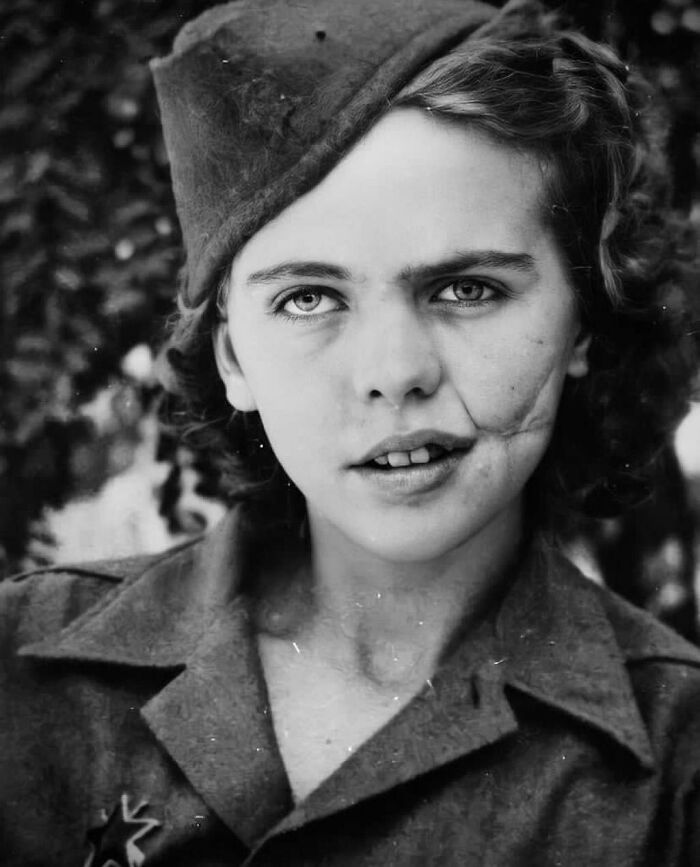
Image source: historicaleaks
#111
Soldiers paying tribute to 8 million horses, donkeys and mules that died during World War I, 1915
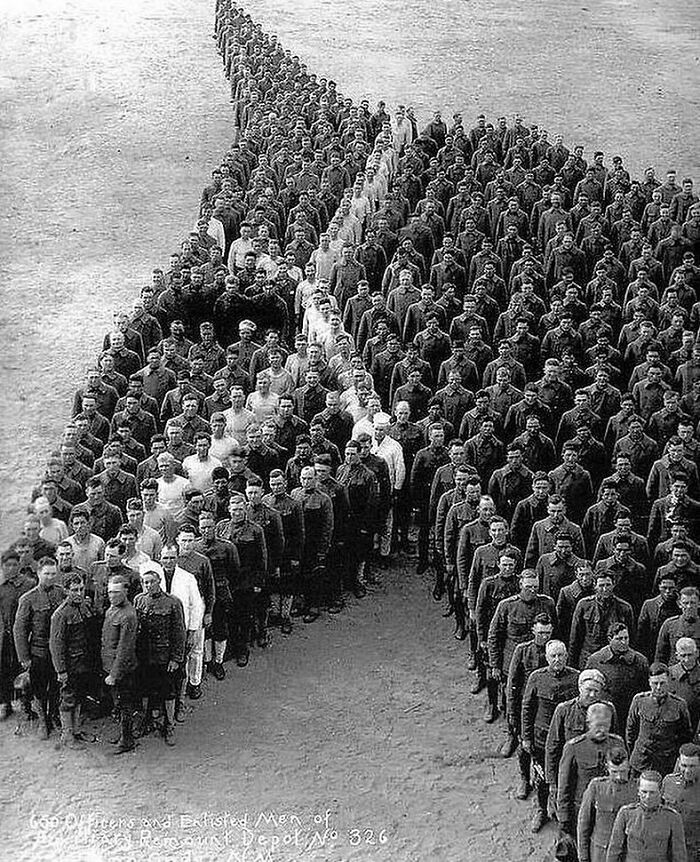
Image source: historicaleaks
#112
Freddy Mercury and his mother, 1947
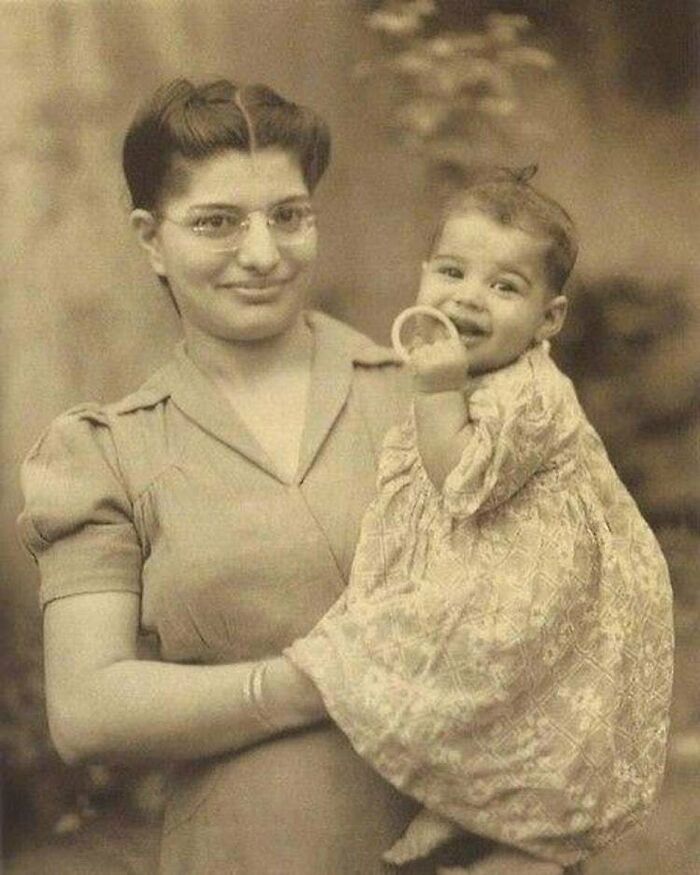
Image source: historicaleaks
#113
Mustafa Xaja, a Kosovar-Albanian, shows pictures of his children he fears have been killed during the war in Kosovo. He had just been released as a prisoner of the Serbs and forced to cross the border, becoming a refugee in Albania. Only after the the war did he discover that his family was alive and safe. 1999 Photo by Peter Turnley
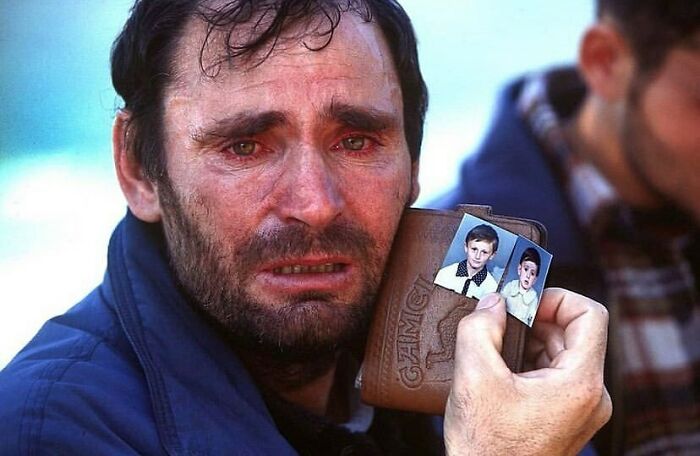
Image source: historicaleaks
#114
Warsaw, Poland 76 years ago vs today. Before World War II, the city was a major center of Jewish life and culture in Poland. Warsaw’s prewar Jewish population of more than 350,000 constituted about 30 percent of the city’s total population. Following the German invasion of Poland on September 1, 1939, Warsaw suffered heavy air attacks and artillery bombardment. German troops entered Warsaw on September 29, shortly after its surrender. The Warsaw Uprising was a major World War II operation, in the summer of 1944, by the Polish underground resistance, led by the Polish resistance Home Army, to liberate Warsaw from German occupation. The Uprising was fought for 63 days with little outside support. It was the single largest military effort taken by any European resistance movement during World War II. During the Warsaw Uprising in August 1944, more than 85% of Warsaw’s historic centre was destroyed by Nazi troops. After the war, a five-year reconstruction campaign by its citizens resulted in today’s meticulous restoration of the Old Town, with its churches, palaces and market-place.
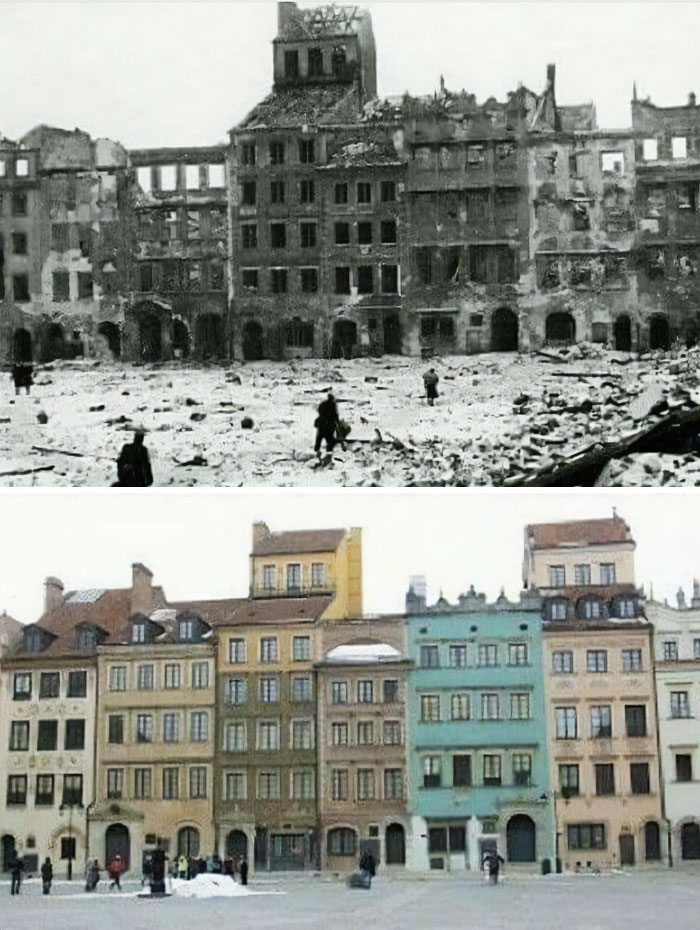
Image source: historicaleaks
#115
Pictured above is 28 year old Marcy Borders (July 19, 1973 – August 24, 2015), an American legal assistant who worked for Bank of America at its branch located in the World Trade Center. She survived its collapse following the al-Qaeda attacks on September 11, 2001. As captured by photographer Stan Honda, who was roaming the streets that day, she became known as the “Dust Lady”. Honda once said: “Over the years it has been odd for me to think of me having a photo with a legacy,” he says. “I studied many photographers who have very well-known images and never thought I could have an image like that. I think since the photo of Marcy Borders is of a single person trying to cope with the chaos of that day, people can relate to that.” In 2011, Ms Borders described how the terror of the day gave way to 10 years of depression and addiction. “It was like my soul was knocked down with those towers,” she said. Borders was diagnosed with stomach cancer in August 2014. Borders’s cancer had resulted in a $190,000 debt—even though she had not yet received surgery and she still needed additional chemotherapy. Borders said she could not even afford to get her prescriptions filled. She alleged that her cancer was triggered by the toxic dust she was exposed to when the World Trade Center collapsed, having once stated, “I definitely believe it because I haven’t had any illnesses. I don’t have high blood pressure, high cholesterol, diabetes.” Borders died from cancer on August 24, 2015.
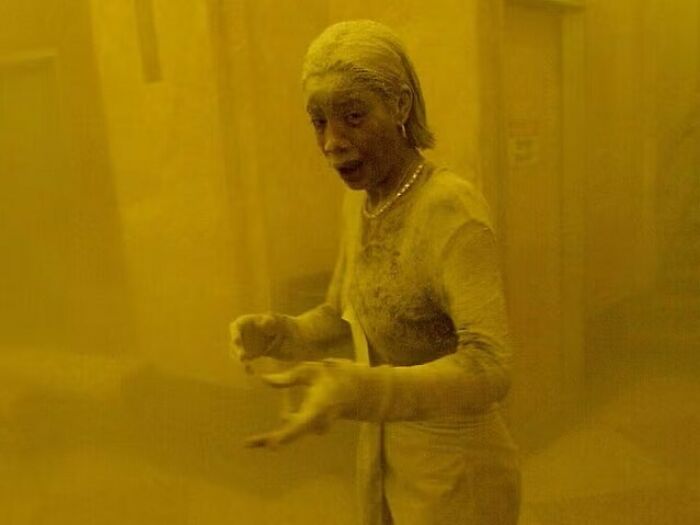
Image source: historicaleaks
 Follow Us