Some of history’s most remarkable heroes had four legs, no idea they were famous, and a talent for doing exactly what nobody expected.
The Instagram page Animal Heroes World collects their stories: animals who found their way home across impossible distances, pets who stayed loyal long after the people they loved were gone, and companions who stepped in when someone was in danger. Each story is told in a short, simple post, and the page says every one is checked against published sources, with unsupported details corrected or removed.
Some of these stories made headlines around the world, while others are lesser-known moments that are just as moving. We’ve gathered some of the page’s most memorable posts below.
More info: Instagram
#1
In 1923, a collie mix named Bobbie became separated from his family while they were traveling through Indiana. Despite weeks of searching, they couldn’t find him and eventually feared they had lost him forever.
Six months later, Bobbie suddenly appeared at his family’s home in Silverton, Oregon. He was thin, injured, and exhausted, but he had made it back. Somehow, he had traveled more than 2,500 miles (4,000 kilometers) across deserts, mountains, and multiple states to return to the people he loved. Veterinarians confirmed that the injuries on his paws were consistent with extensive travel.
Newspapers across the United States reported on Bobbie’s extraordinary journey, earning him the nickname “Bobbie the Wonder Dog.” His remarkable return home remains one of the most widely documented stories of canine navigation and loyalty.
Sources: Oregon Historical Society, Smithsonian Magazine, and Associated Press archives. The accompanying image is representative of the story.
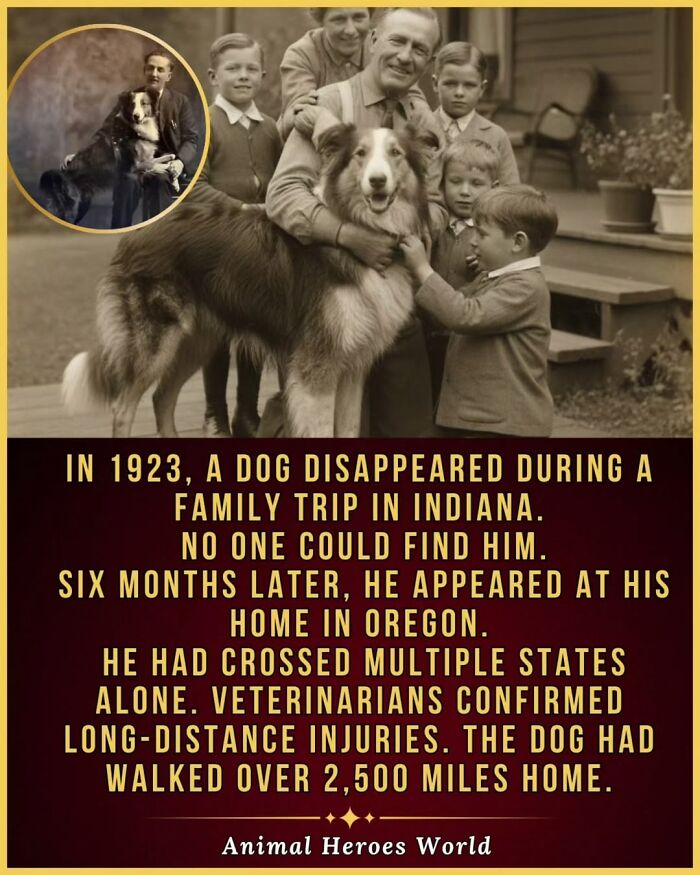
Image source: animalheroesworld

#2
Maria Lochi had rescued Tommy and regularly brought him with her to the Church of Santa Maria Assunta in San Donaci, southern Italy.
After Maria passed away in 2012, Tommy accompanied her funeral procession to that same church. But afterward, something remarkable continued.
Whenever the church bells rang, Tommy kept returning on his own. The priest allowed him inside, where he quietly settled near the altar during services.
The village eventually helped care for him. No one could know precisely what Tommy understood, but the routine he had shared with Maria continued even when he had to make the walk without her.
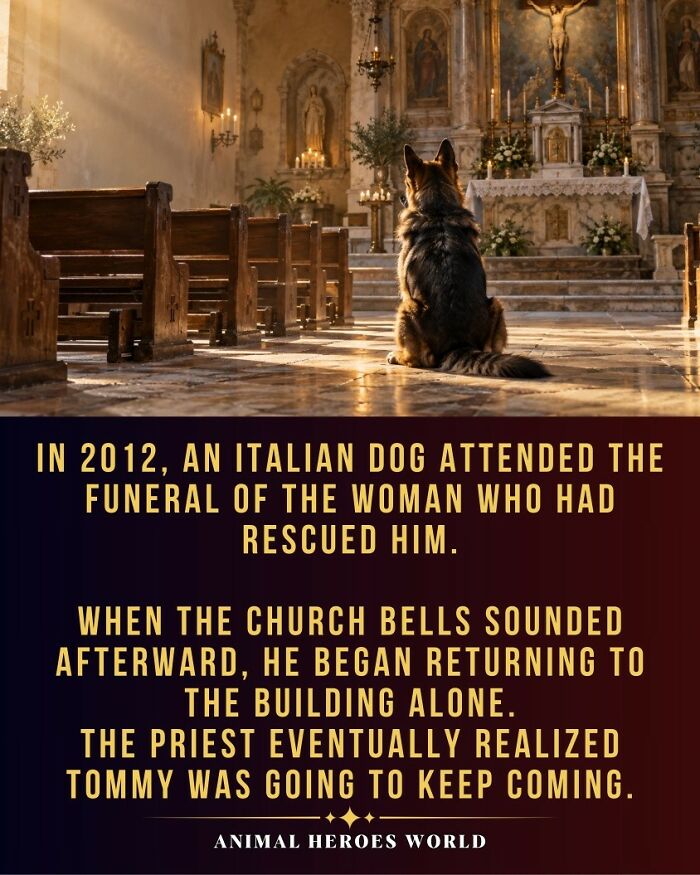
Image source: animalheroesworld
#3
Sophie Tucker disappeared from her family’s boat during rough seas off the coast of Queensland in November 2008. Her family searched for her but eventually feared she hadn’t survived.
What they couldn’t have known was that Sophie had apparently swum more than five nautical miles to St. Bees Island. There, the cattle dog somehow adapted to life on her own for months. In April 2009, people working on the island captured a dog they recognized as belonging to the Griffith family.
After five months alone in the wild, Sophie was reunited with her family. She had gone from being a house dog to surviving an ocean crossing and months on an island, only to find her way back home.
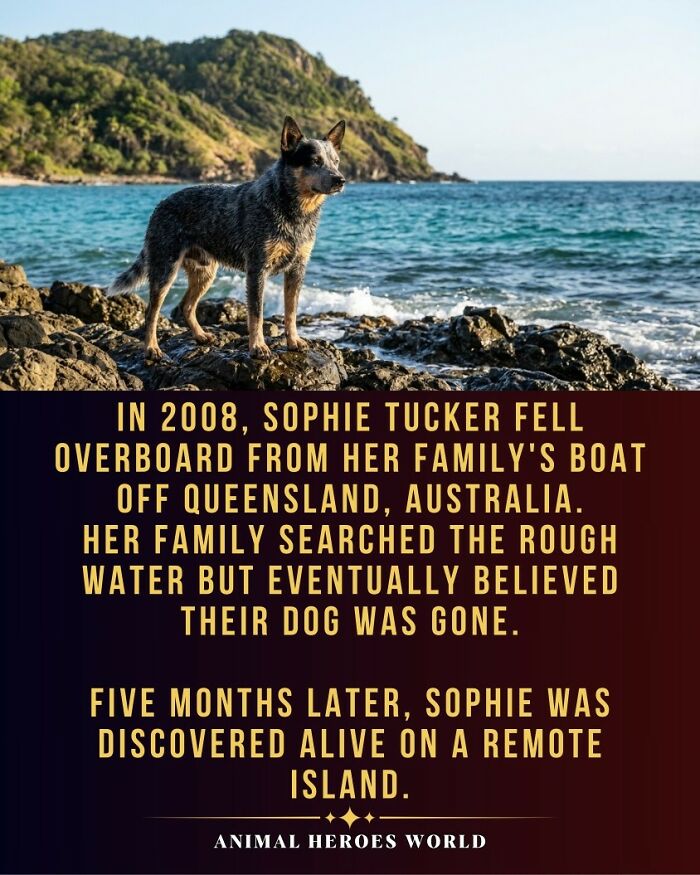
Image source: animalheroesworld
#4
Mikael Lindnord and his Swedish team were competing in the Adventure Racing World Championship in Ecuador when they shared some food with a stray dog they would later name Arthur.
Arthur began following them and refused to give up, keeping pace through mud, jungle, and grueling race stages. During a 70-kilometer kayak section, he even plunged into the water to follow the team, prompting them to bring him aboard. After the race, Mikael worked through the necessary veterinary checks and paperwork to bring Arthur home to Sweden.
The team had traveled to Ecuador hoping for a strong finish. They returned with something far more meaningful: a new member of the family.
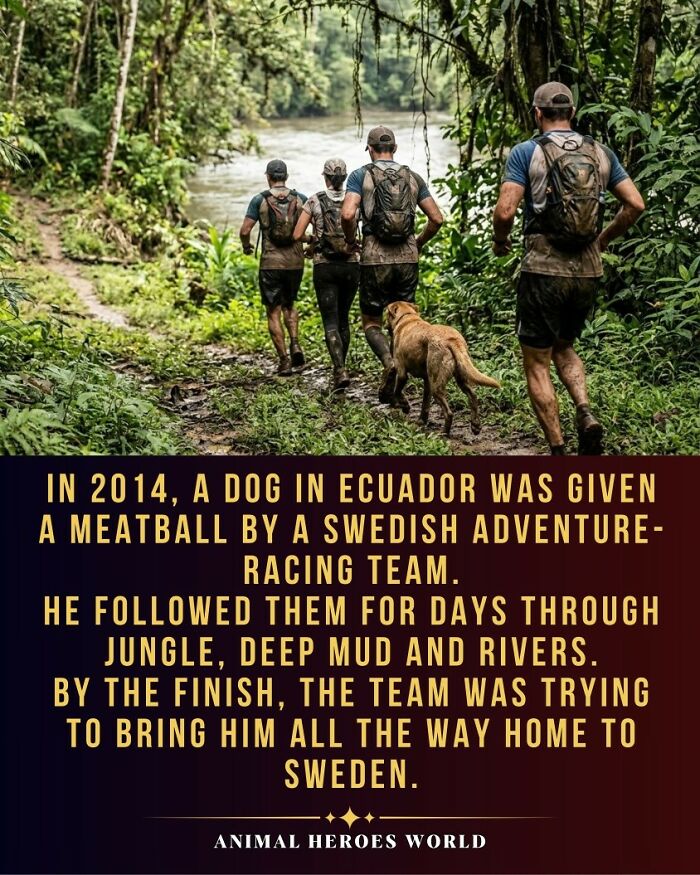
Image source: animalheroesworld
#5
Endal was the assistance dog of Allen Parton. On May 24, 2001, Allen was thrown from his wheelchair in a hotel parking lot and lost consciousness.
According to the PDSA, Endal immediately sprang into action. He maneuvered Allen into the recovery position, retrieved a blanket from his wheelchair, and covered him with it. He then fetched Allen’s mobile phone and pushed it toward his face. When Allen regained consciousness, Endal went to find help.
In recognition of his extraordinary actions, the PDSA later awarded Endal its Gold Medal for devotion to duty.
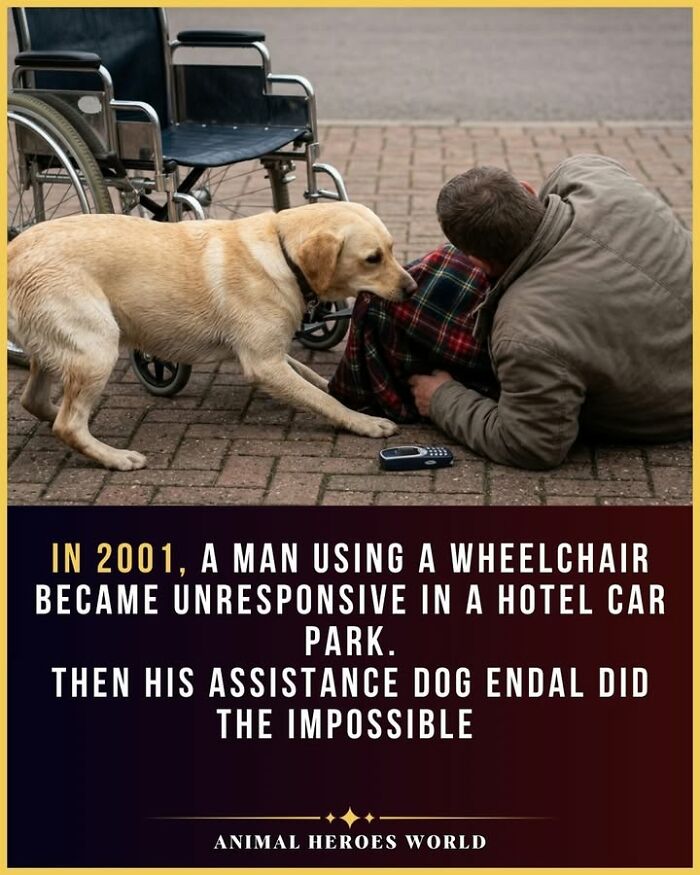
Image source: animalheroesworld
#6
Dion Leonard was competing in a six-stage ultramarathon through China when a tiny stray dog began following the runners. The next morning, she was waiting beside him at the starting line. Then she ran with him, and kept going.
Eventually named Gobi, the dog covered roughly 77–80 miles alongside Dion over four stages. During the hottest sections of the race, organizers transported her rather than allowing her to continue running in the heat.
By then, Dion had decided he wanted to adopt her. But while arrangements were being made, Gobi disappeared in the city of Urumqi. Determined to find her, Dion flew back to China and joined a large search effort.
Days later, Gobi was found. When Dion entered the room, she recognized him immediately and raced toward him.
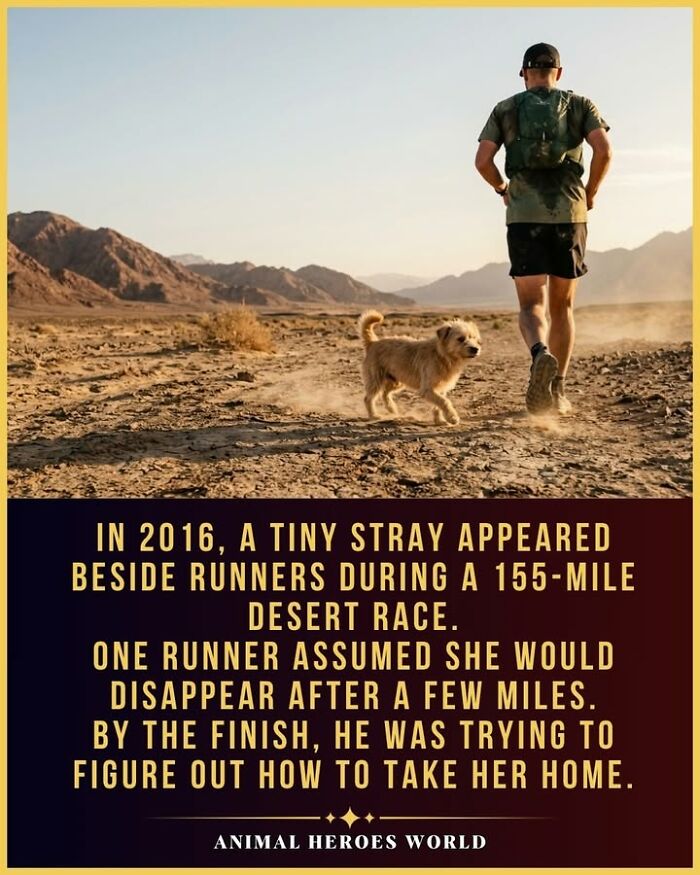
Image source: animalheroesworld
#7
Three-year-old Aurora had wandered away from her family’s property in Queensland, Australia. As rain fell and temperatures dropped, searchers spent the evening combing through the steep bushland, hoping to find her before conditions worsened.
But Aurora wasn’t alone. By her side was Max, the family’s 17-year-old blue heeler, who was deaf and partially blind. Despite his age and limited senses, Max stayed with the little girl for more than 15 hours, keeping her company through the long, cold night.
The following morning, Aurora’s grandmother heard her calling in the distance. As she searched for her granddaughter, she came across Max, who led her directly to Aurora. The little girl was found safe, with the elderly dog having stayed by her side until help arrived.
Queensland Police later made Max an honorary police dog in recognition of his devotion.
He could barely hear. He could barely see. But through a long, cold night, he never left the little girl behind.
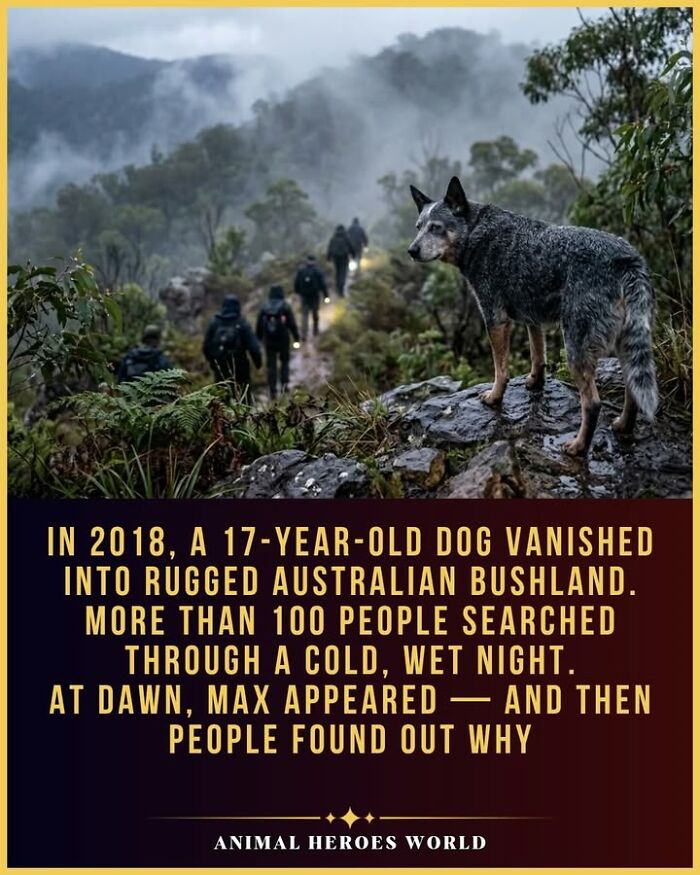
Image source: animalheroesworld
#8
Every morning, Hachiko, an Akita dog, accompanied Professor Hidesaburo Ueno on his walk to Shibuya Station. Every afternoon, he returned to the station to welcome his owner home.
Then, in 1925, Ueno unexpectedly died while at work. Hachiko was eventually taken in by others, but the routine he had shared with his owner never faded. He continued returning to Shibuya Station, waiting near the spot where Ueno had always come back to meet him.
Days turned into months, and months into years. For nearly a decade, Hachiko kept returning to the station, holding on to a routine that had once brought him back to the person he loved.
His devotion became so widely known that a statue was erected at Shibuya Station while Hachiko was still alive. Today, millions of people pass the spot associated with his story, and his statue remains one of Tokyo’s most recognizable landmarks.
Almost a century later, Tokyo still remembers the dog who never stopped waiting.
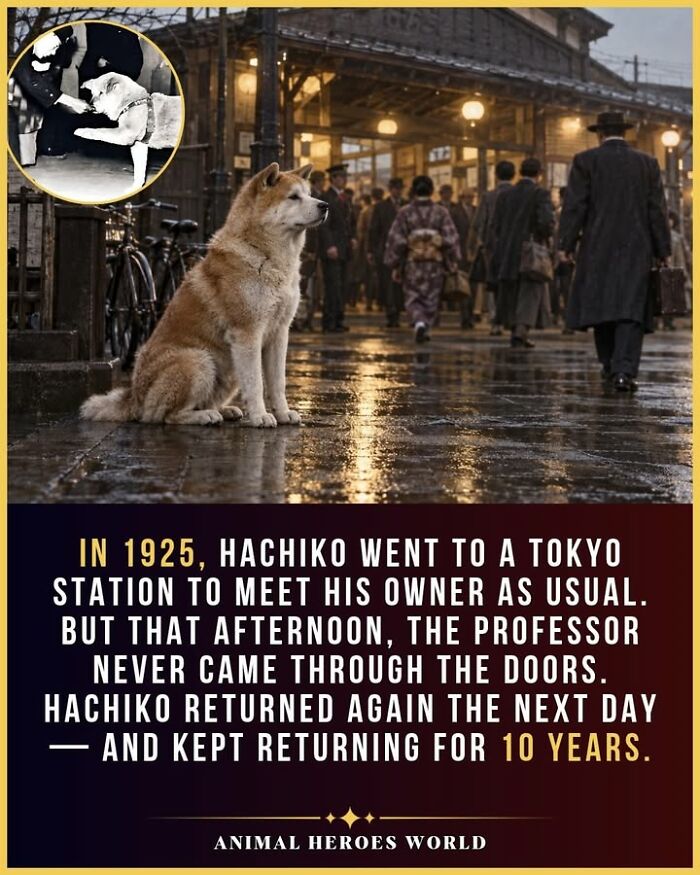
Image source: animalheroesworld
#9
Cecil Williams was standing on a New York City subway platform with his guide dog, Orlando, when he suddenly lost consciousness and fell onto the tracks. Witnesses said Orlando had already tried to warn him and pull him away from the platform’s edge.
Then the black Labrador did something remarkable: he jumped down onto the tracks beside Cecil. As a train approached, people on the platform desperately tried to alert the driver, while Cecil and Orlando remained low between the rails as the train passed over them.
Both survived. When Cecil later spoke from the hospital, Orlando was still by his side. Reflecting on their bond, Cecil called the dog his “best buddy.”
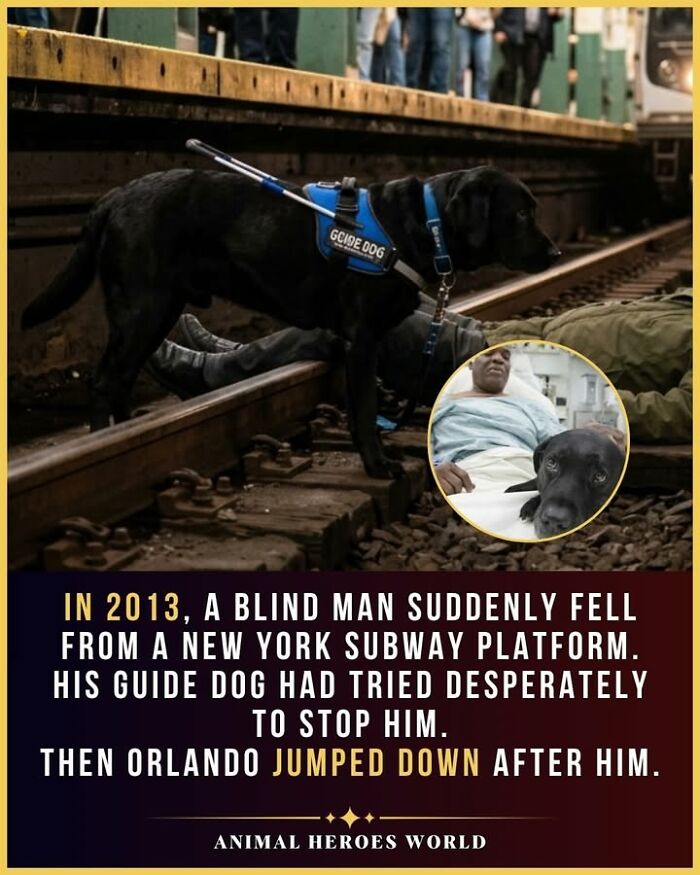
Image source: animalheroesworld
#10
Her name was Tama, a calico cat who lived around Kishi Station, the last stop on Japan’s Kishigawa Line. The small railway was losing money, and in April 2006 the station lost its last human employee.
Then, on January 5, 2007, Tama received a very unusual promotion: she was officially appointed stationmaster. Her uniform was a tiny railway cap, and instead of a salary, she received a year’s supply of cat food and a gold name tag for her collar. Visitors adored her. Passenger numbers at Kishi rose 17% in her first month, and one estimate credited her with about 55,000 extra trips and 1.1 billion yen for the local economy in 2007 alone.
Merchandise followed, the station was rebuilt to look like a cat’s face, and Tama kept climbing the ranks, from “Super Stationmaster” in 2008 to operating officer, and eventually vice president of the railway. The company needed something that could make people excited about visiting a tiny rural station again. Nobody expected the answer would have four paws and whiskers.
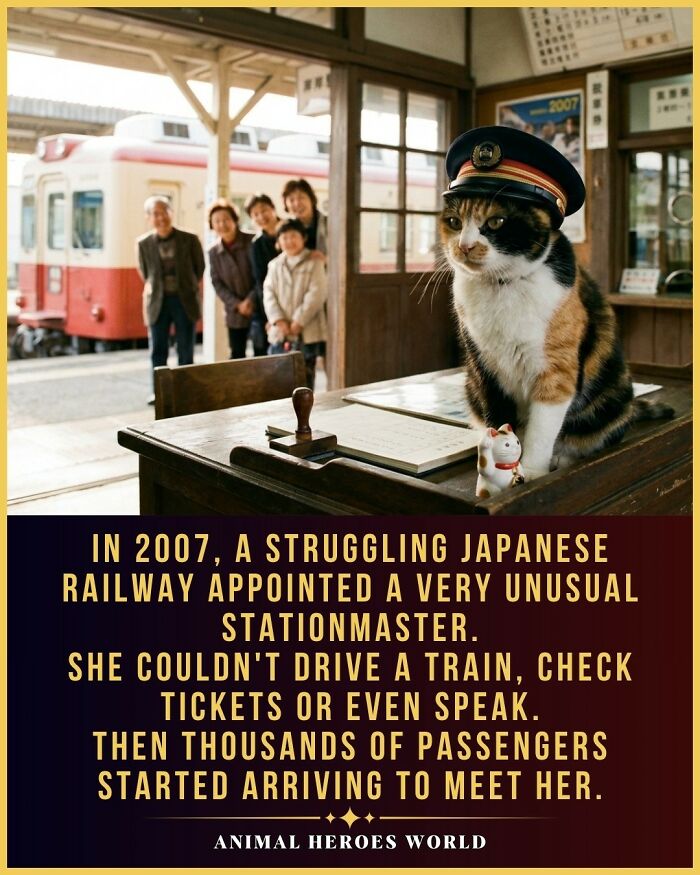
Image source: animalheroesworld
#11
Ben Heinrichs was at his family’s remote property in Alaska when an accident in his workshop left him urgently needing help. He released his German shepherd, Buddy, and told him, “We need to get help.
Buddy took off running. Around the same time, Alaska State Trooper Terrence Shanigan was trying to locate the property when he spotted a German shepherd standing near the road. Buddy turned and began running, and the trooper followed.
The patrol car’s camera captured Buddy racing ahead, occasionally looking back as if checking that the vehicle was still behind him. He eventually led Shanigan straight to the property, where Ben was waiting for help.
Alaska State Troopers later honored Buddy for his actions.
His owner had asked for help. Somehow, Buddy found the person who could bring it.
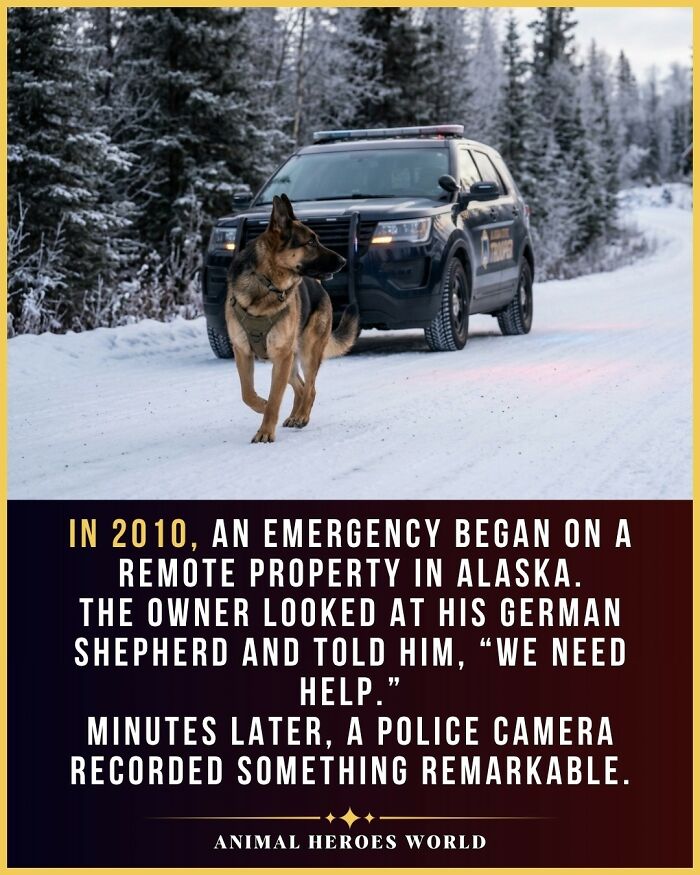
Image source: animalheroesworld
#12
At around 1 a.m., Winnie began pawing at Cathy Keesling and meowing loudly while she slept. The unusual behavior woke Cathy, but Winnie wouldn’t stop trying to get her attention.
When Cathy finally got out of bed, she began feeling dizzy and nauseous. Something was terribly wrong. Her husband couldn’t be awakened, and their son was unconscious.
A gasoline-powered pump in the basement had filled the house with carbon monoxide, an invisible, odorless gas. Despite feeling unwell herself, Cathy managed to call emergency services.
All three family members survived. Without Winnie’s persistent warning, they might never have awakened in time to escape the danger. In recognition of her actions, the ASPCA later named Winnie its Cat of the Year.
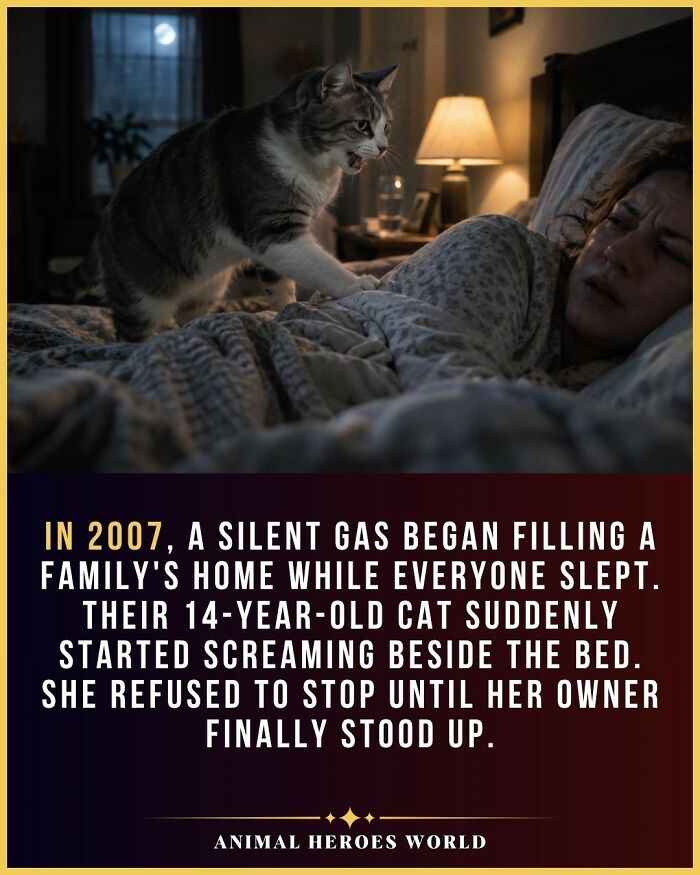
Image source: animalheroesworld
#13
Kabang was a mixed-breed dog living with a family in Zamboanga City in the Philippines when an extraordinary event changed her life.
One day, two girls were crossing a road when a motorcycle approached. Kabang reportedly leaped into its path, taking the impact and helping the girls escape serious injury. She survived the collision but suffered devastating injuries to the front of her face.
Her story soon spread around the world, prompting an outpouring of support. Donations eventually made it possible for Kabang to travel to the University of California, Davis, where specialists treated her injuries. During her examination, doctors also discovered cancer and heartworm disease, which they treated as well.
After months of medical care, Kabang finally returned home to the Philippines. She had once put herself between danger and the children she protected. In return, strangers from around the world came together to help save her.
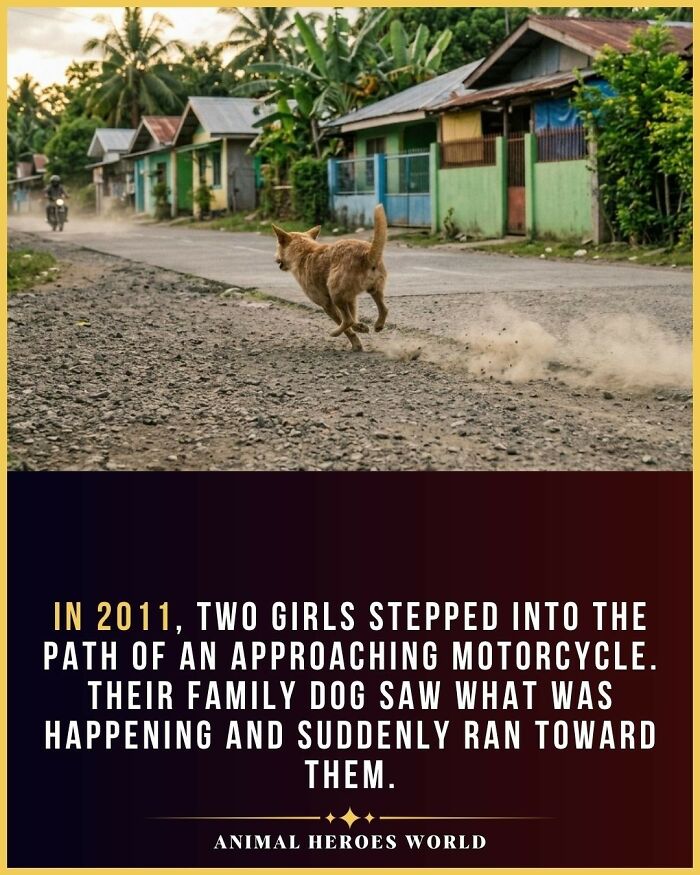
Image source: animalheroesworld
#14
For 14 years, a Skye terrier kept returning to the same spot in an Edinburgh churchyard. The little dog became so beloved by the city that the Lord Provost personally paid his dog license, ensuring that no one could ever take him away.
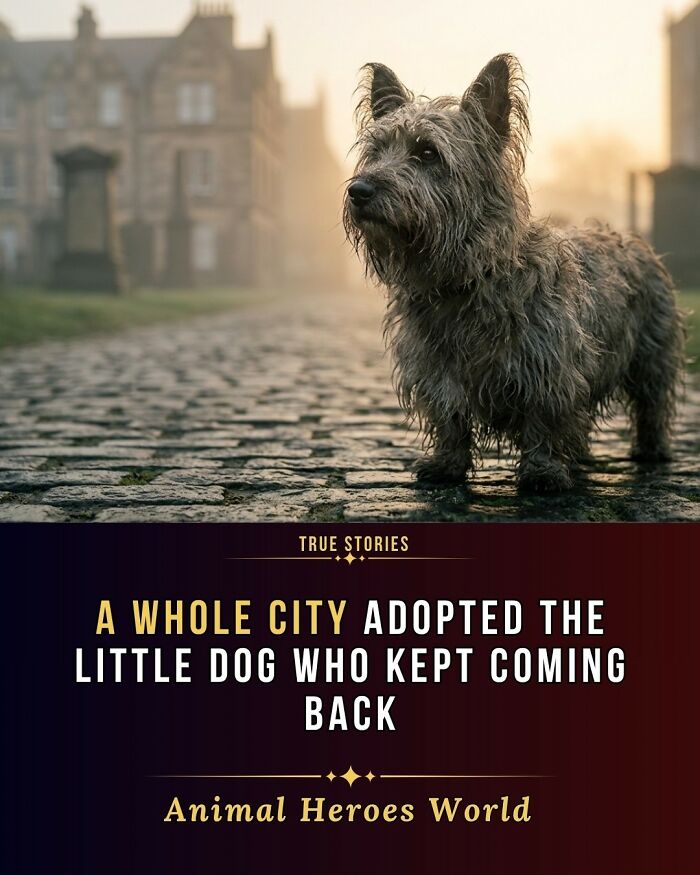
Image source: animalheroesworld
#15
In 1941, a brick kiln worker named Carlo Soriani found an injured stray dog in a ditch in Tuscany. He carried him home and nursed him back to health, naming him Fido, from the Latin word for “I trust.”
From then on, Fido walked to the bus stop in Borgo San Lorenzo every evening to greet Carlo as he returned from work. But in 1943, Carlo stopped coming home. Even so, Fido continued making the journey to the bus stop every evening, waiting for someone who would never return. He kept doing so for 14 years.
The entire town watched his quiet ritual unfold. Residents looked out for Fido, fed him, and made room for him in their lives, touched by his unwavering devotion.
In November 1957, the mayor of Borgo San Lorenzo held a public ceremony in the main square and awarded Fido a gold medal for canine loyalty. A monument honoring his devotion was erected beside the bus stop, and Fido was still making his daily journey when it was unveiled.
The statue remains in the square today, preserving the memory of a dog who never stopped waiting.
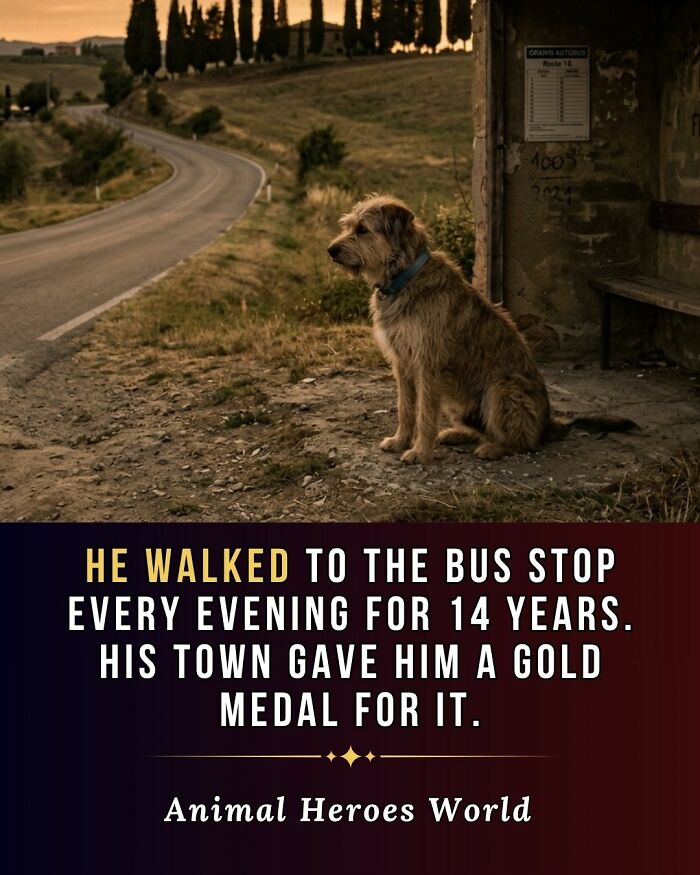
Image source: animalheroesworld
#16
In the winter of 1925, a diphtheria outbreak threatened the isolated town of Nome, Alaska. The antitoxin residents desperately needed was hundreds of miles away, and aircraft couldn’t safely deliver it through the harsh winter conditions. With lives at stake, teams of mushers and sled dogs joined forces in a relay across Alaska to transport the medicine.
Balto became famous for leading the team that completed the final stretch of the journey. But another dog had covered far more ground. Togo, the 12-year-old lead dog of musher Leonhard Seppala, guided his team for roughly 261 miles, navigating some of the relay’s most dangerous terrain.
Togo’s journey was all the more remarkable because he hadn’t always been seen as a promising sled dog. As a puppy, he was considered uncontrollable, and Seppala eventually gave him away. But Togo escaped from his new home and found his way back to Seppala. That same determination would later help turn the stubborn little puppy into one of the most celebrated sled dogs in history.
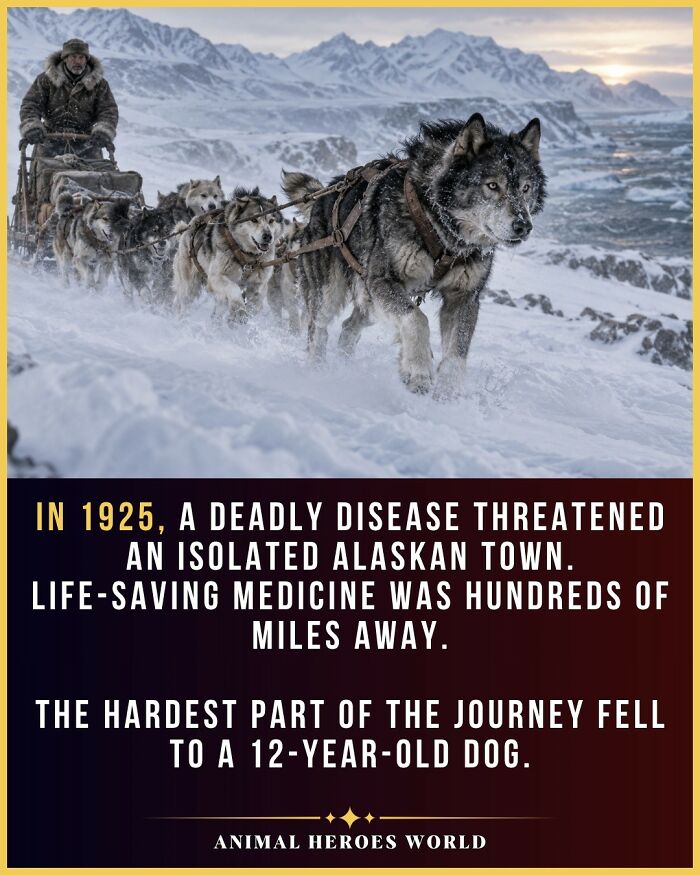
Image source: animalheroesworld
#17
In 2018, a stray dog began appearing outside Santa Casa Hospital in São Paulo, Brazil. Hospital staff noticed that he arrived every morning and spent the entire day sleeping by the entrance. He refused food offered by passersby and wouldn’t leave, even after nightfall.
After several days, hospital workers discovered the heartbreaking reason for his behavior. The dog’s owner had been admitted to the hospital weeks earlier and had died there. The dog had followed him to the hospital and stayed outside, waiting for him to come back. Security footage reportedly confirmed that he had been there since the day his owner was admitted.
When staff learned what had happened, they brought the dog inside so he could say goodbye. Shortly afterward, a nurse adopted him, giving him a new home and someone to care for him. From then on, he never returned to the hospital entrance.
Source: G1 Globo (Brazil). The accompanying image is representative of the story.
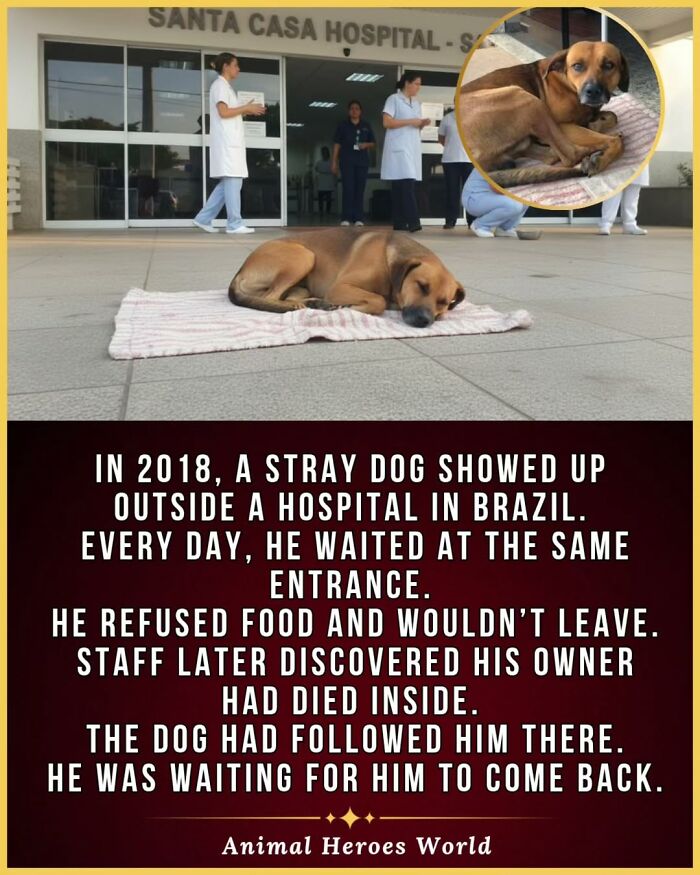
Image source: animalheroesworld
#18
A stray mother cat and her five kittens were sheltering inside an abandoned garage in Brooklyn when a fire broke out. As the New York City Fire Department worked to extinguish the flames, one firefighter noticed something extraordinary: the mother cat kept emerging from the burned area carrying a kitten before turning back inside again.
Unable to carry them all at once, she made five separate trips, bringing each kitten to safety. By the time she finished, she had suffered severe burns. Her eyes were reportedly swollen and blistered shut, and her ears and paws were badly burned. After gathering her kittens together, witnesses said she gently touched each one with her nose, as though checking that they were all there. Then she collapsed.
The firefighter rushed Scarlett and her kittens to North Shore Animal League for emergency care. Tragically, one kitten didn’t survive, but the others recovered. Scarlett’s story soon spread around the world, prompting thousands of people to express interest in adopting her and her kittens.
After they recovered, the kittens found homes, and Scarlett was adopted as well. The cat who had risked everything to save her babies was finally given a safe place to call her own.
Source: Wikipedia, “Scarlett the Cat.” The larger image is representative of the story; the circular image shows Scarlett and her kittens.
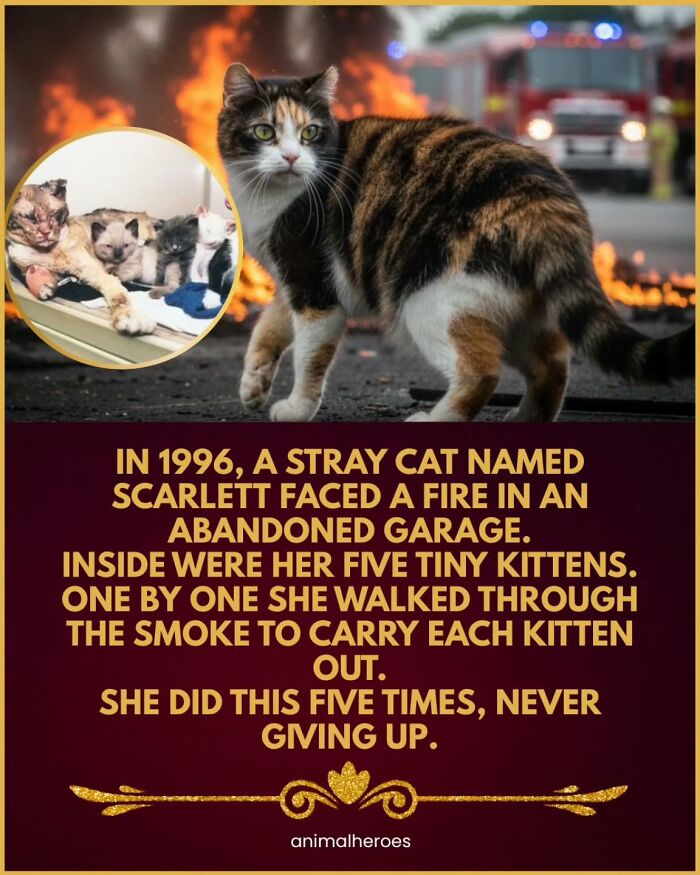
Image source: animalheroesworld
#19
In Edinburgh, a small dog named Bobby stayed beside his owner’s grave after the funeral, refusing to leave or return home. His quiet devotion soon touched the hearts of local residents, who watched over him, brought him food, and helped protect him through the years.
Bobby remained by the grave for 14 years, becoming a beloved figure in the city. When his own journey came to an end in 1872, he left behind a legacy of loyalty that would become part of Edinburgh’s history. For years, he had stayed beside the resting place of the man he loved, never truly leaving him behind.
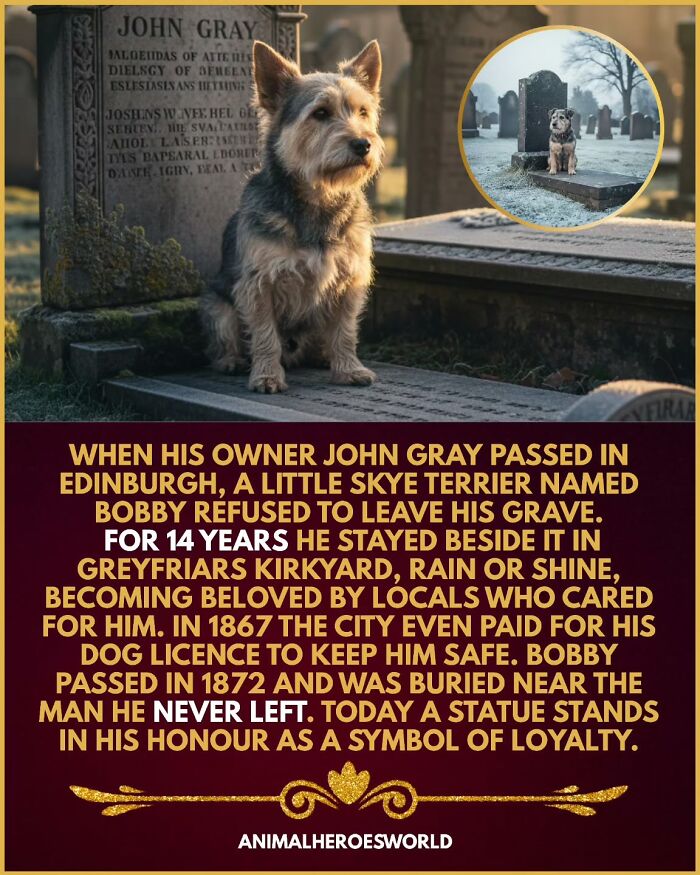
Image source: animalheroesworld
#20
In 1923, a family from Silverton, Oregon, set out on a road trip to visit relatives in Wolcott, Indiana, traveling more than 2,500 miles. During a stop along the way, their beloved Scotch Collie, Bobbie, was startled by a pack of local dogs and chased away. After days of searching and putting up flyers, the heartbroken family eventually had to return home to Oregon, fearing they might never see Bobbie again.
Exactly six months later, a thin, exhausted dog appeared on a sidewalk in Silverton. It was Bobbie. Somehow, he had made the incredible journey across the United States in the middle of winter, crossing the Continental Divide, swimming rivers, and trekking across freezing plains to find his family. His paws were severely worn, but he had traveled roughly 2,500 miles to return to the only home he had ever known.
Bobbie’s extraordinary journey became a national sensation, earning him the nickname “The Wonder Dog.” His story remains a remarkable testament to a dog’s determination, loyalty, and seemingly extraordinary ability to find his way home.
Sources: The Oregon Encyclopedia and Protect All Wildlife. The accompanying image is representative of the story.
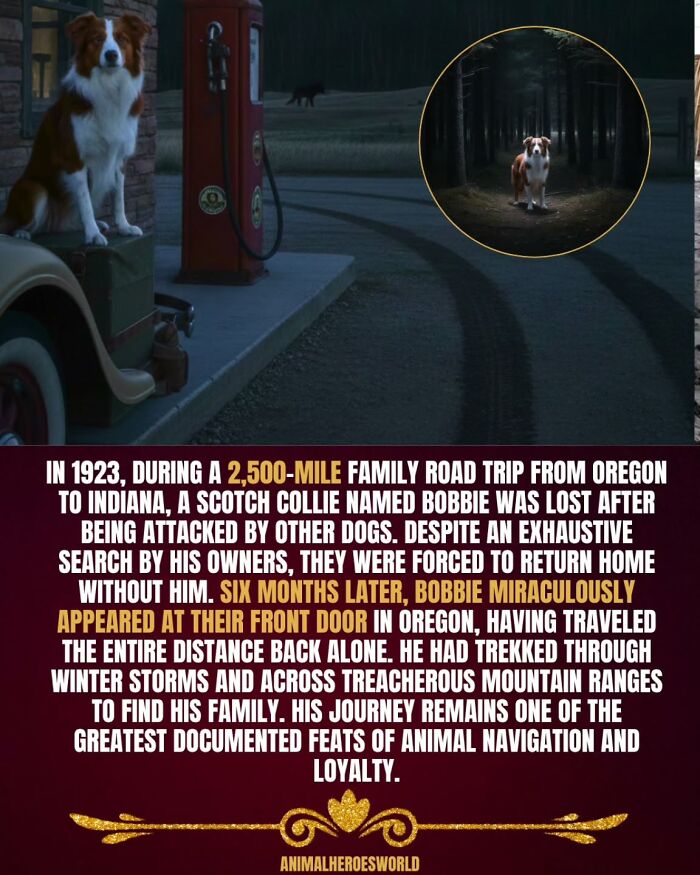
Image source: animalheroesworld
#21
New Zealand took an important step by formally recognizing animals as sentient beings, acknowledging what many people have long understood: animals aren’t simply “things.” They are living beings capable of experiencing feelings, comfort, and distress.
That recognition also helped pave the way for a ban on using animals for cosmetic testing. No animal should have to endure suffering for the sake of a new lipstick shade or beauty product.
New Zealand’s decision marked a significant moment for animal welfare and raised an important question for the rest of the world: Should more countries follow its example?

Image source: animalheroesworld
#22
For animals, fireworks can turn what should be a celebration into one of the most frightening nights of the year. Pets panic, wildlife flees, and farm animals can injure themselves trying to escape sounds they can’t understand. Every year, emergency services also face recurring incidents involving injuries, fires, and property damage.
Now, the Netherlands is moving toward a different kind of celebration.
A nationwide ban on consumer fireworks has been approved, meaning ordinary citizens will no longer be able to buy and set off fireworks as they have in the past. The goal extends beyond animal welfare to include improving public safety and reducing annual injuries and damage. Still, protecting animals from extreme stress is an important part of the wider debate.
The change won’t make the noise disappear overnight, but it could reshape what people consider normal when celebrating. And that matters.
Because when millions of animals experience a celebration as fear, it’s worth asking whether there’s a better way to mark the occasion. If the Netherlands’ approach becomes a model for other countries, it could demonstrate how preventing harm can take priority over tradition.
Would you support a similar ban in your country?
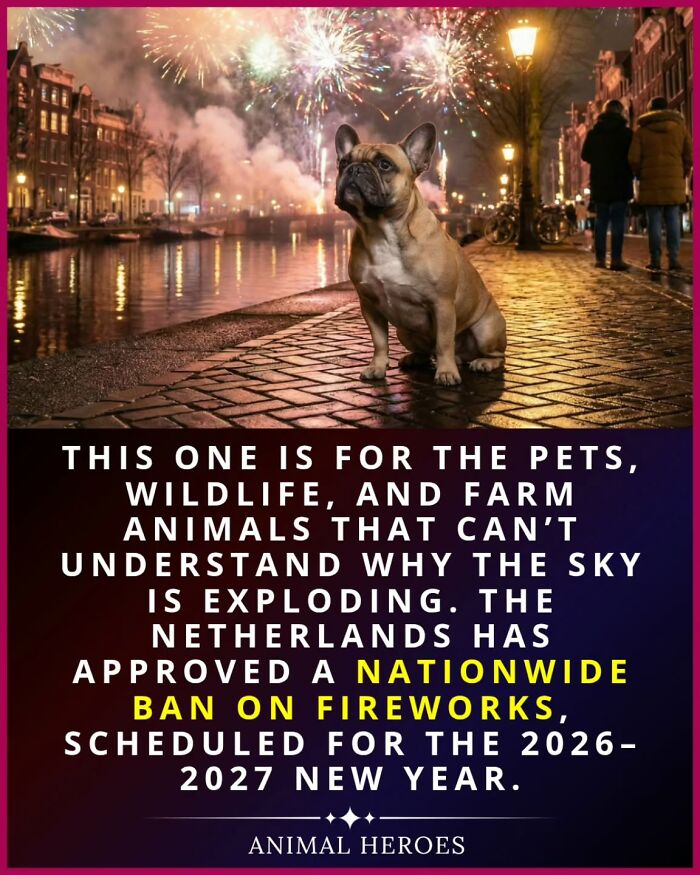
Image source: animalheroesworld
#23
In the middle of the night in 2014, a quiet street in Shropshire came dangerously close to disaster, and the first warning didn’t come from a smoke alarm. It came from a cat named Tink.
The feline suddenly leapt onto her owner’s bed and began jumping around, refusing to stop until she woke the sleeping woman. This was no ordinary request for food or attention. Something was wrong, and Tink seemed determined to make sure her owner understood.
When the woman finally sat up, she noticed the smell of smoke. Looking outside, she saw flames and thick smoke pouring from the neighboring house.
Emergency services were called immediately, and firefighters arrived in time to help the neighbors escape before the fire could claim their lives. Without Tink’s warning, they might have slept through the blaze, unaware of the danger unfolding just next door.
But Tink’s bravery came at a cost. Overcome by smoke, she collapsed and had to be given oxygen by firefighters. Thankfully, she survived, shaken and exhausted but alive.
A cat sensed danger, refused to stay silent, and took action when it mattered most. Sometimes, the smallest heroes make the biggest difference.
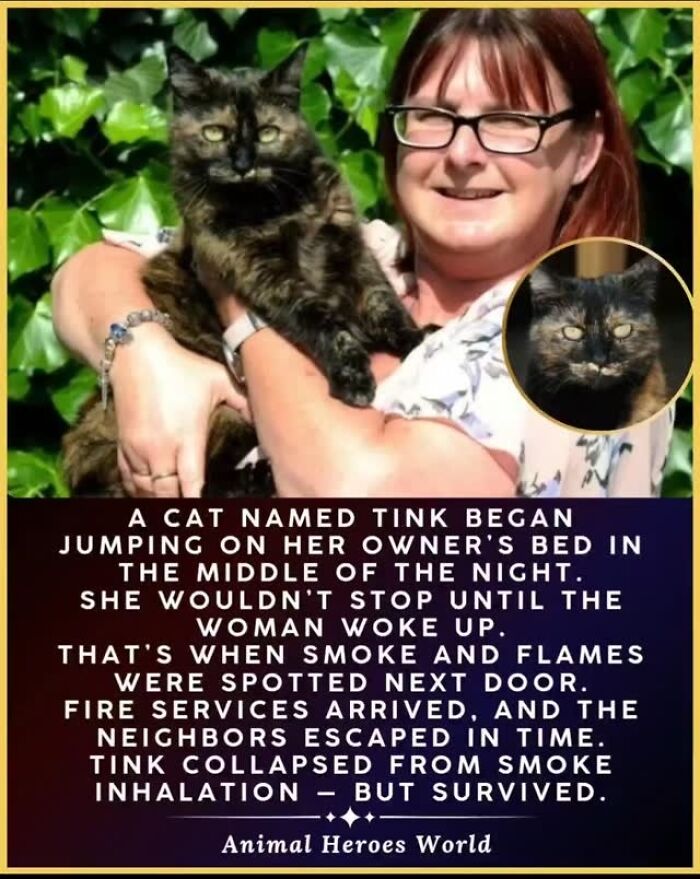
Image source: animalheroesworld
#24
On August 28, 2019, Ken Jessop was sitting in about six inches of water at Lake Erie while his Labrador mix, Kacey, played on the beach. Suddenly, a powerful wave and an undercurrent swept him more than 100 feet offshore.
Struggling in the rough water, Ken reached out for anything he could grab. His hand found the handle on Kacey’s life jacket. She had left the safety of the beach and swum through the waves to reach him.
Ken clung to the vest as Kacey helped guide him back toward shore. He later said he wouldn’t be alive without her. For her actions that day, Kacey was eventually inducted into the Purina Animal Hall of Fame.
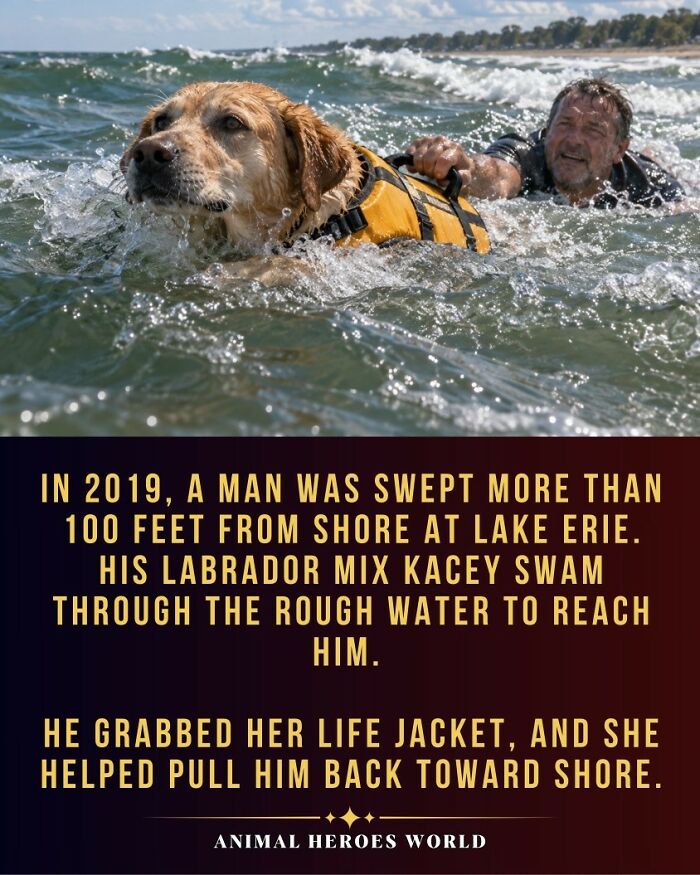
Image source: animalheroesworld
#25
In 2007, an ordinary moment inside a quiet American home suddenly became life-threatening, and the one who reacted fast enough to help was a dog. Debbie Parkhurst was eating an apple when a piece became lodged in her throat, leaving her choking and unable to breathe. Alone in the house, she tried to help herself but soon realized she was losing strength.
Her golden retriever, Toby, noticed something was wrong and sprang into action. Rather than panicking or running away, he jumped up, knocked Debbie to the floor, and began pressing his paws against her chest repeatedly. The pressure eventually dislodged the piece of apple, allowing Debbie to breathe again.
Medical professionals later noted that Toby’s actions resembled the Heimlich maneuver, even though he had never been formally trained to perform it. Debbie survived thanks to her dog’s remarkable response and persistence during the emergency.
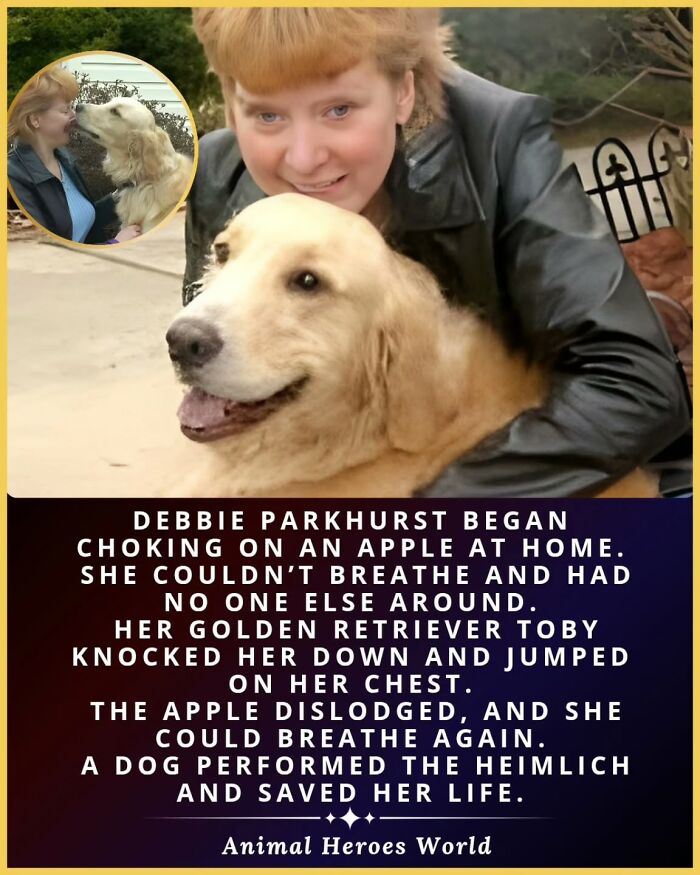
Image source: animalheroesworld
#26
Wouldn’t it be wonderful if more countries adopted ideas like this?
During freezing nights in Hungary, warm, tunnel-style shelters have appeared in public spaces, offering stray dogs a safe place to rest. Protected from snow and icy winds, the dogs can curl up, share warmth, and get through the coldest hours together.
Whether organized by local communities, volunteers, or animal lovers who refused to look away, the idea is simple: no animal should be left out in the cold.
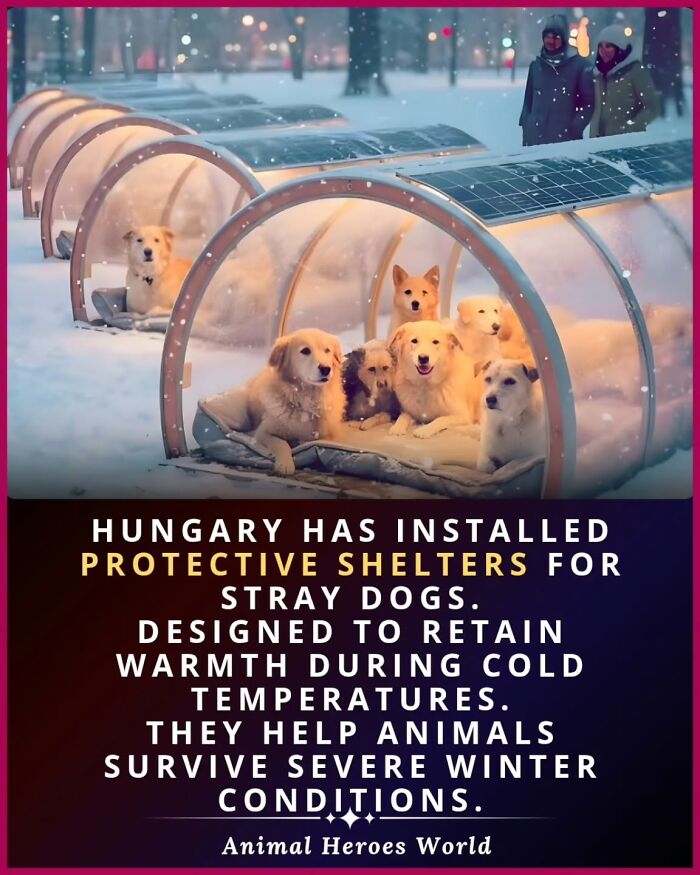
Image source: animalheroesworld
#27
On New Year’s Eve in northern Michigan, a man stepped outside his home to grab one last log for the fireplace. According to reports, he was wearing pajamas and slippers when he slipped on the ice and fell hard onto the ground.
The fall severely injured his neck, leaving him unable to get back up. He tried calling for help, but his nearest neighbor lived too far away to hear him, and the temperature continued to drop. As the night wore on, it fell to around 24°F (−4°C), leaving him at serious risk of hypothermia.
But his golden retriever, Kelsey, came to his side and refused to leave him alone. She pressed her body against him to provide warmth, then sprawled across him to help retain his body heat. When he began to fade, she licked his face and hands to help keep him awake. And when he could no longer call out, Kelsey kept barking, again and again, trying to alert someone to what had happened.
For nearly 20 hours, she stayed beside him.
The following day, a neighbor finally heard Kelsey and discovered the man lying in the snow. He was rushed to the hospital, where doctors treated him for exposure to the cold and performed surgery to repair his neck injury. A neurosurgeon involved in his care later said that without Kelsey’s presence, he likely wouldn’t have survived.
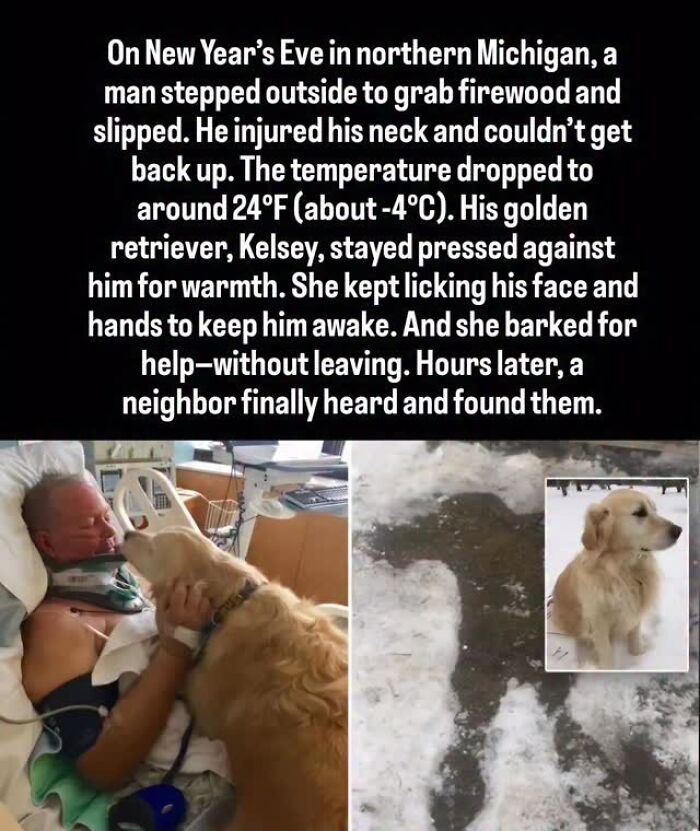
Image source: animalheroesworld
 Follow Us