Until a man has walked a mile in these Louboutins, survived a single PMS hormonal surge, endured a PCOS flare-up, or experienced even one birthing cramp, his medical opinion on a woman’s body is worth approximately nothing. Less than nothing, actually, because the confidence with which it is delivered tends to make it actively dangerous.
Women have been navigating their own bodies their entire lives and are somehow still expected to defer to someone who has never once experienced what they are describing. One woman has a story that makes this point better than any statistic could. It is not a comfortable read, but it is a necessary one.
A man’s stubbornness can be lethal, and he would probably try and argue that from beyond the grave too

Wavebreak Media / Magnific (not the actual photo)

One woman was facing off against her hard-headed grandfather who insisted he knew what her body was going though after childbirth


The Yuri Arcurs Collection / Magnific (not the actual photo)
It turns out he absolutely did not know, and she could have lost her life if she had not taken herself to the hospital


He later suffered the consequences of his stubbornness and took his wife down along with him
Between 15% and 22% of women experience short-term complications after a C-section, which means post-birth infections are not rare or dramatic. It is certainly not something a woman should have to argue her way into being taken seriously about while her fever climbs past 102 and her uterus fills with pus.
The fact that she had to fight to get to the emergency room while someone who had never given birth in his life told her she was overreacting is a disgusting pattern with a tragically high body count. In her personal case, it was two.
Stevens Johnson Syndrome, which sent her grandmother to her grave, is a rare but life-threatening skin and mucous membrane disorder that requires immediate medical attention. Early intervention is critical because the condition can escalate rapidly and cause severe, irreversible damage. It is the kind of diagnosis where hours matter, where someone advocating loudly and persistently for the patient can genuinely be the difference between survival and medical neglect.
fotoarhiv0001 / Magnific (not the actual photo)
She had spent years being exactly that person for her family. Her grandmother did not live more than a year after her own near-life-ending experience, and she has sat with the weight of knowing she would have been in that room, arguing, pushing, refusing to accept reassurances that something serious was being dismissed as nothing.
Dr Aliabadi notes that gender bias in medicine contributes directly to higher rates of misdiagnosis and complications for women, meaning the dismissal of female symptoms is not just a family dynamic; it is a systemic medical problem. Men, meanwhile, are statistically far less likely to seek medical care at all.
NHS England data shows that 45.8% of women had attempted to contact a GP in the previous four weeks compared to just 33.5% of men, a gap driven by deeply ingrained cultural expectations around self-reliance and invincibility. The grandfather who told her she was fine after giving birth and who dismissed her instincts about his own health until it was too late was merely a product of social conditioning. Not that that is an excuse, boys.
Have you ever known someone to pay such a price because of their stubbornness? Tell us about it in the commenst!
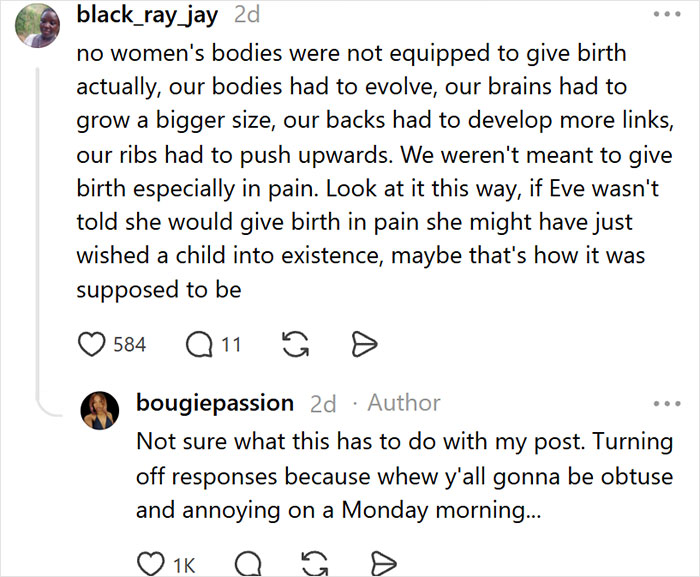
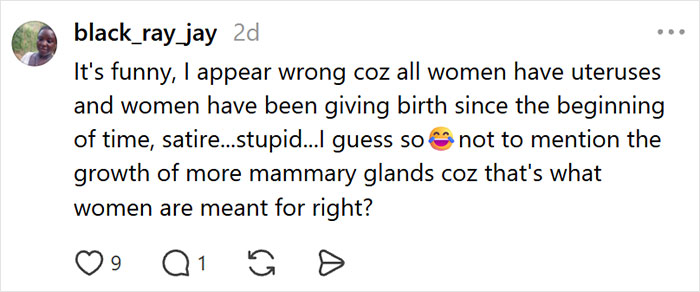
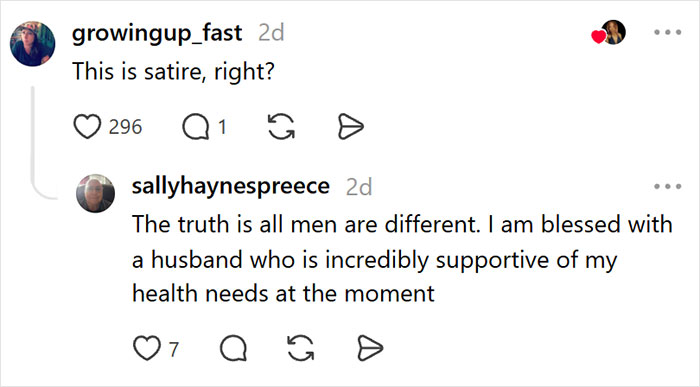
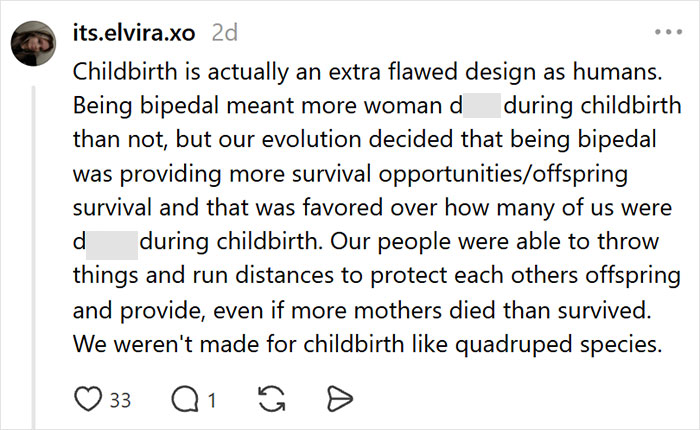
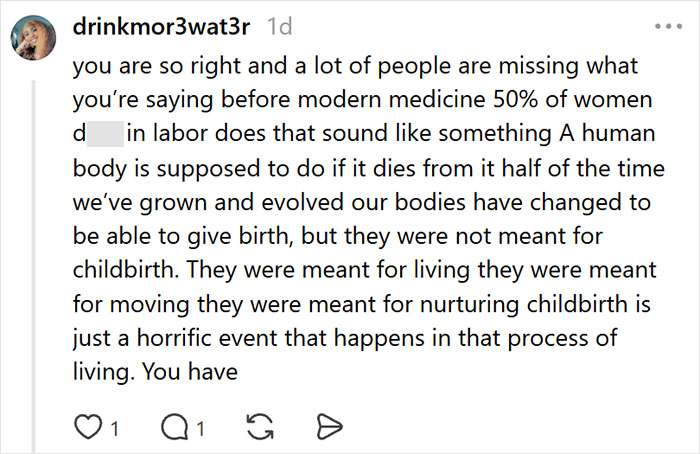
People in the comments were quick to jump on the bandwagon with advice about women’s bodies, missing the point of the conversation entirely



 Follow Us