What began with a Microsoft service failure on Thursday, November 12, soon spiraled into a much wider technological crisis, extending beyond everyday workplace platforms.
In the days that followed, US air travel and banking networks experienced disruptions, while a classified government communications system was also reportedly compromised.
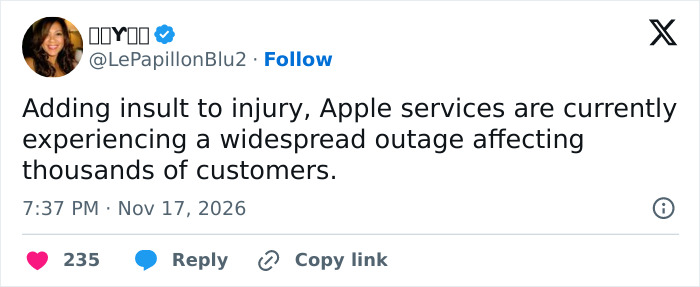
Apple became the latest major name to experience a service outage on November 17.
Around the same time, Google warned that the “era of autonomous attacks” had arrived, highlighting how artificial intelligence could be used to identify and exploit security vulnerabilities.
The string of incidents has fuelled mounting international anxiety, drawing reactions from several US officials, including President Donald Trump.
A wave of technological failures raised worldwide alarm as Google warned of a new AI-driven threat landscape
Laurenz Heymann/Unsplash (not the actual photo)
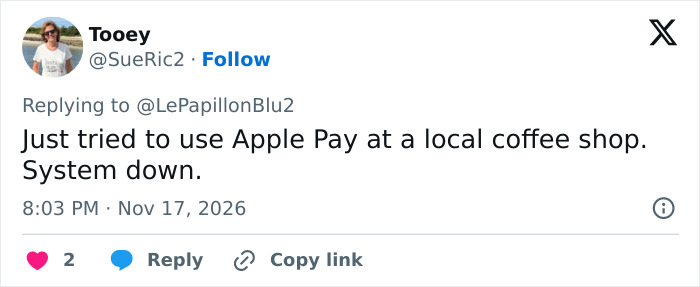
Apple’s disruption affected several of its services, including Apple Pay, iCloud, Apple Support, and AppleCare.
The company attributed the interruptions to an “internal update” rather than a cyberattack in an interview with TIME.
The unusual activity involving major technology companies over the past few weeks has caused several governments to strengthen their emergency preparedness measures.


Blake Wisz/Unsplash (not the actual photo)
In the UK, for example, households have been encouraged to maintain at least 72 hours’ worth of essential supplies, including food and water, while Japanese authorities have urged residents to keep enough provisions to last up to a week.
In Europe, the Netherlands and Finland are preparing for potential electronic payment failures, while Sweden has asked banks and retailers to be ready for at least seven days of paper receipts and manual account-keeping.
Dutch supermarket chains are also drawing up contingency plans to protect food distribution networks in the event of prolonged disruptions.
Ed Hardie/Unsplash (not the actual photo)
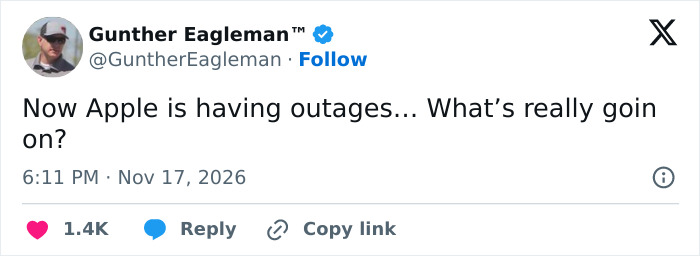
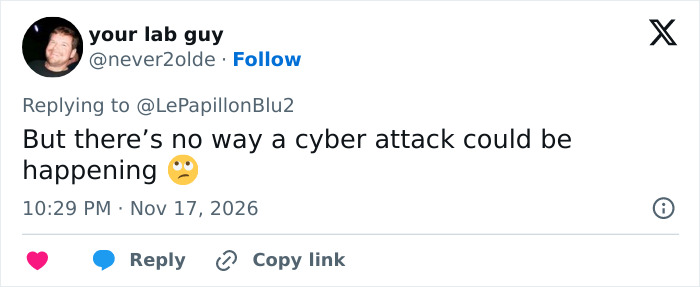
In the same vein, a netizen expressed skepticism about Apple’s statement.
“All this and they want us to believe it is only an internal error?” the X user wrote.
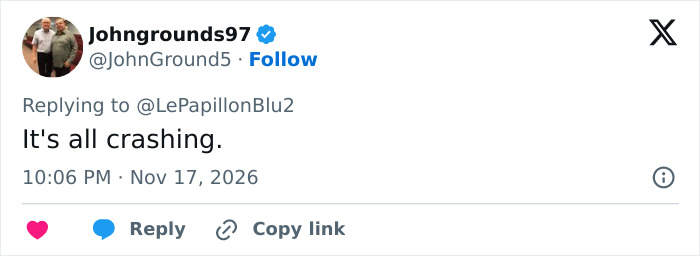
“Doomsday incoming,” another added.
Google, meanwhile, has not only shed light on the emerging threat but also proposed a way to counter the increasingly sophisticated attacks.
Google proposed fighting AI-driven threats with artificial intelligence of its own

As the disruptions attracted attention, Google revealed in its latest AI Threat Tracker report that criminal organizations and other malicious actors were using AI to identify security vulnerabilities and exploit them with limited human involvement.
“The era of autonomous attacks has arrived,” the organization declared in a statement accompanying its findings.
Google researchers reportedly discovered an exposed server hosting an AI-powered hacking system called exploit_agent.
The software was designed to examine updates released by developers, identify the security weaknesses those patches had addressed, and develop attacks targeting computers that had yet to install the necessary fixes.
The system could also attempt to exploit those loopholes without requiring a hacker to direct every step of the process.
Researchers found stolen information belonging to victims on the server, alongside tools designed to search compromised networks, access accounts, and install malicious software.
Google also identified another framework, CAIRN, during intrusion activity involving organizations in the US aerospace sector.
A separate tool based on PentAGI was reportedly used to scan organizations across Asia for weaknesses in their computer systems.
John Hultquist, chief analyst at Google’s Threat Intelligence Group, addressed the findings in a statement included in the report.
He said: “For the most part, attackers aren’t using groundbreaking methods to break into systems — they’re still going after known, unfixed issues just with much greater speed and scale.”
His proposed solution involved using artificial intelligence to counter these attacks.
“Instead of relying on manual effort to keep up, we will have to embrace agentic defense,” Hultquist said.
“Or we risk falling behind.”
The technological failures have also drawn responses from US government officials.
Despite the growing concerns, members of the Trump administration have sought to reassure Americans that the recent incidents do not indicate an impending national security crisis.
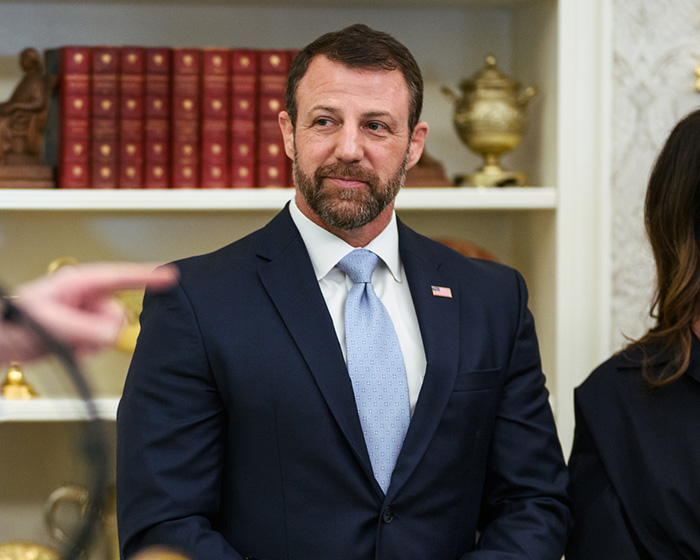
Donald Trump, JD Vance, and Markwayne Mullin have all reacted to the disruptions

Freedomz/Adobe Stock (not the actual photo)
JD Vance was among the first to emphasize that America was not anticipating an imminent crisis despite the incidents over the past few days.
Speaking to Fox News host Laura Ingraham on The Ingraham Angle on Monday, Vance said people in his inner circle had asked him whether they should be building “a bunker” or “stock up on food and water.”
His answer had been “no.”
The vice president acknowledged, however, that “you have to be prepared for everything,” a remark that appeared to add a caveat to his earlier reassurance.
“What we want to do is make sure that we prevent the worst outcomes, but we’re also prepared for the worst outcomes,” he explained.
President Trump, for his part, appeared largely dismissive of concerns surrounding the growing number of outages.
Speaking with reporters after arriving in the Philippines for an Association of Southeast Asian Nations summit on November 17, he said American technology companies were being targeted because the nation was “big and powerful” and had “all the money.”
“It’s life. It’s fine,” he added.
Homeland Security Secretary Markwayne Mullin also pushed back against suggestions that the incidents were part of a coordinated cyberattack.
Speaking to US media, he insisted that the country remained “secure” and that officials had not identified evidence of a wider digital threat.
Former White House press secretary Karoline Leavitt, however, was less convinced by the reassurances and called for greater transparency about the unfolding situation.
Karoline Leavitt demanded answers as concerns about tech failures grew
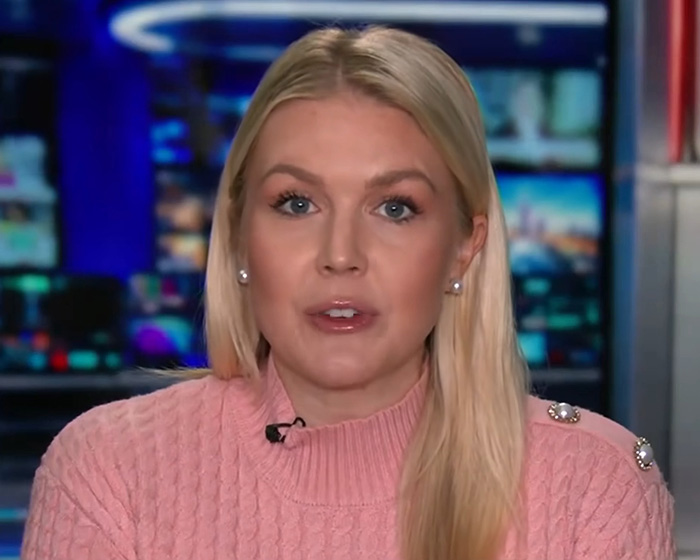
Leavitt, who took on the role of a Fox News contributor after stepping down as the White House press secretary in late August, questioned why Americans had not received a clearer explanation of the repeated interruptions and what officials believed was behind them.
“What’s happening?” she asked on the network’s morning show, Fox & Friends.
Leavitt admitted that the situation had made her personally uneasy, particularly given the financial systems affected by the recent incidents.
She argued that the White House needed to address the public directly rather than leave people attempting to piece together information from individual reports and official comments.
“There should be a message directly to the American people, whether it’s from him [the president] or somebody else at the White House saying what they know and what they believe to be true.”
This would “calm the temperature,” she added.
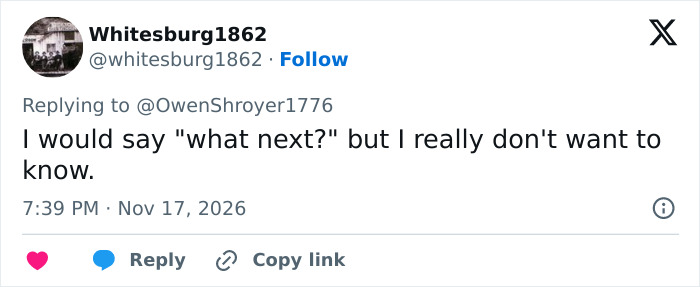
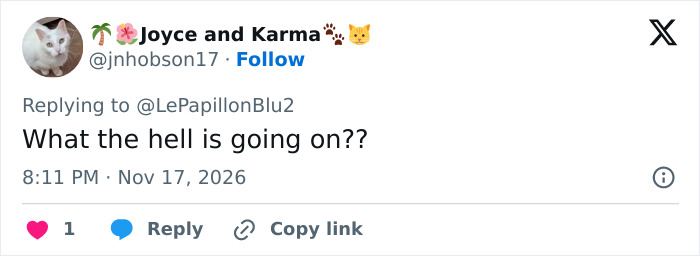
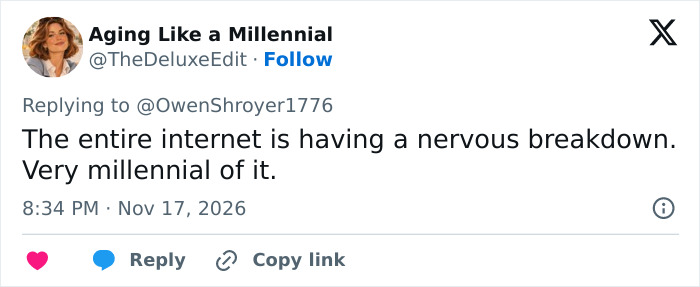
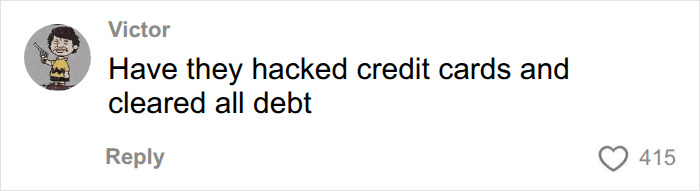
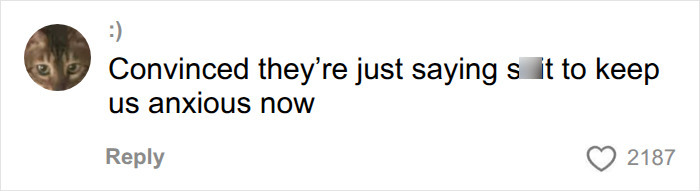
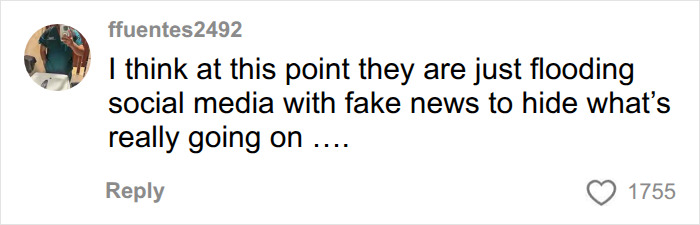
“About to get real wild soon,” a netizen said referencing the outages










 Follow Us