Friendships are supposed to be one of the few relationships in life that exist entirely outside of politics, religion, and external opinions. You build them over years of shared experiences, inside jokes, and being there for each other. They are supposed to be unconditional in a way that most other relationships simply are not.
One woman spent a decade building exactly that kind of friendship, only to discover that it came with a condition she never knew was there. The invitation to the bridal shower arrived, but the invitation to the wedding did not, and the reason given was one she never saw coming.
More info: Reddit
Friendships are supposed to exist outside of politics, religion, and whoever someone happens to be dating, but it’s not always that simple
Image credits: freepik / Freepik (not the actual photo)

One woman got her best friend a job, flew home with her for religious holidays, and was listed as her emergency contact, but was not invited to her wedding
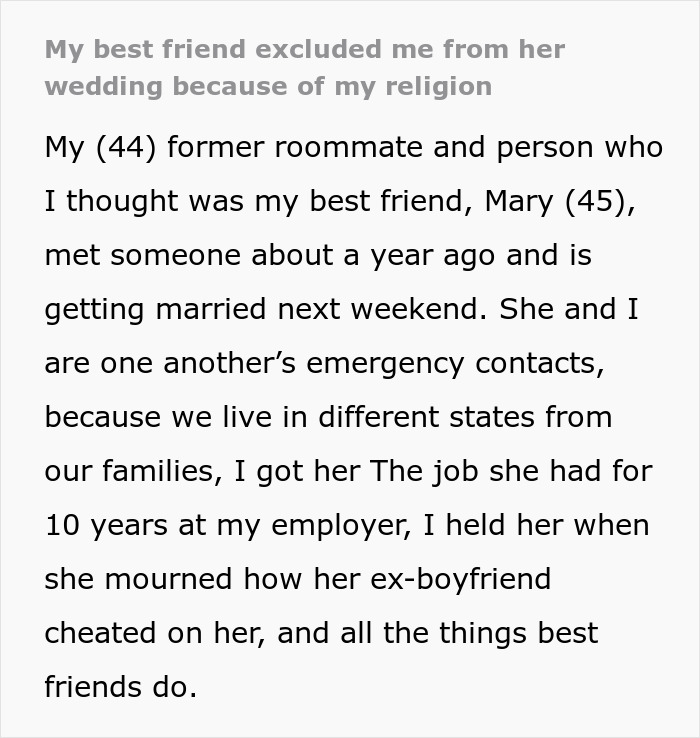
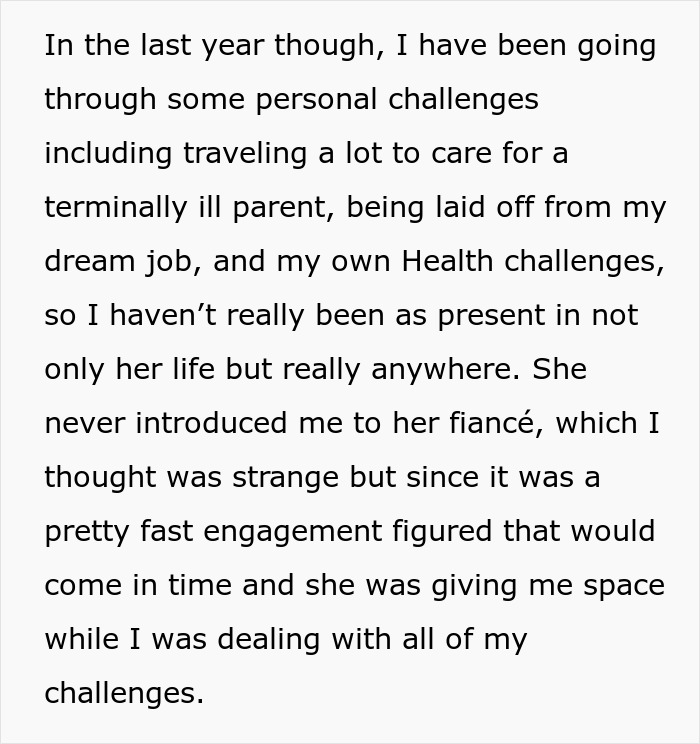
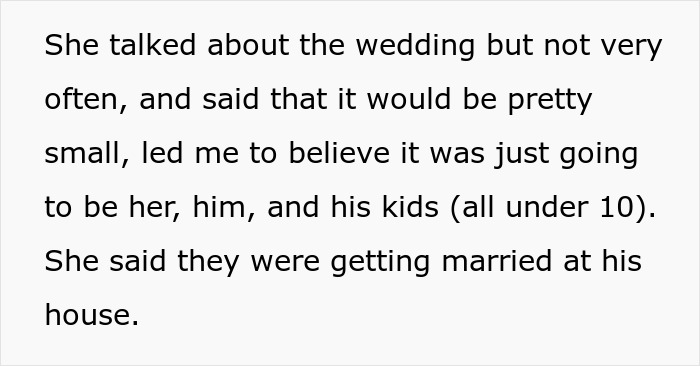
Image credits: Wavebreak Media / Freepik (not the actual photo)
The bride said only close friends and family would be at the wedding, and when pressed, explained that she and her best friend were simply in different places in terms of faith
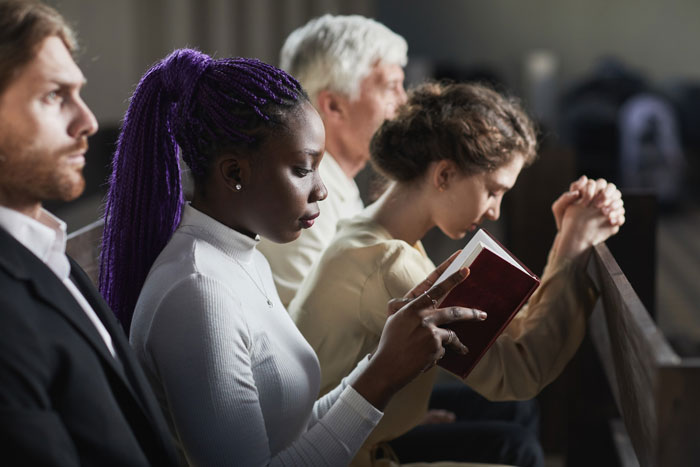
Image credits: seventyfour / Freepik (not the actual photo)
The woman standing up with her was someone she had met at church, and the best friend who had been there for a decade found out her Muslim identity was not acceptable
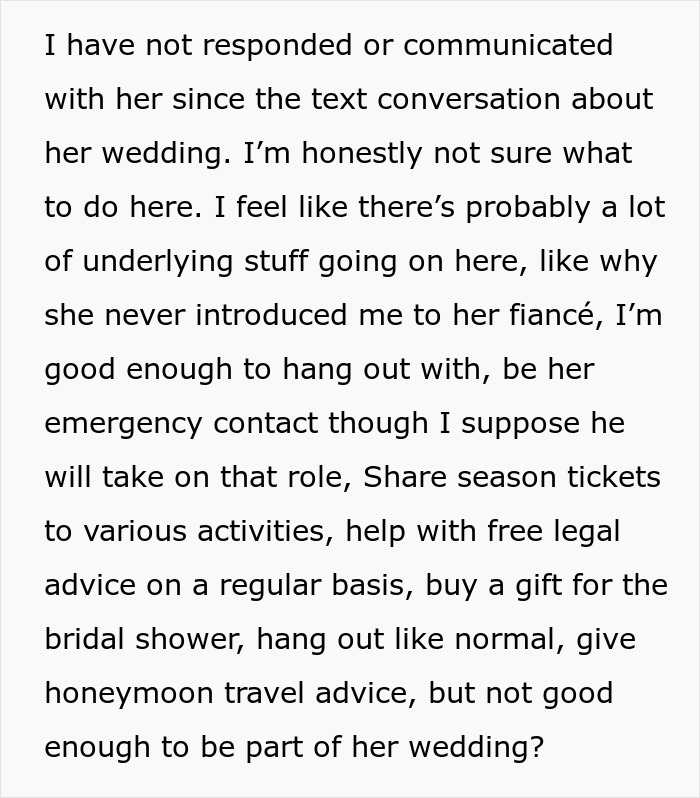
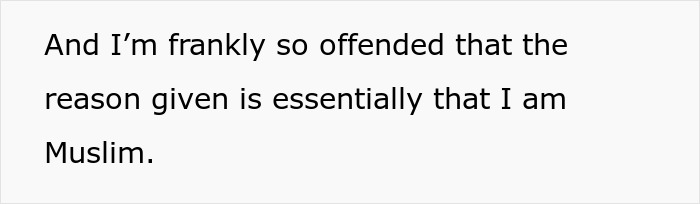
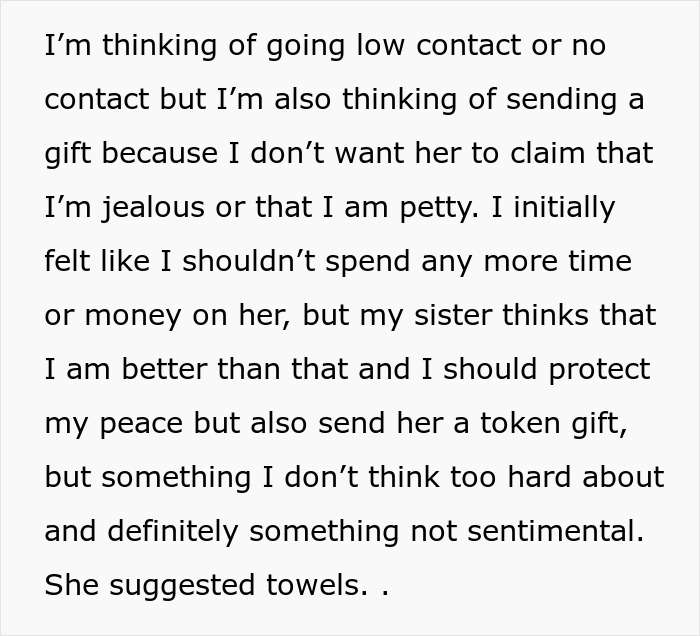
Image credits: chicaltimore
Days after delivering that news, the bride texted her Muslim friend to make dinner plans and asked for honeymoon travel tips, apparently unaware that anything had gone wrong between them
Two women had been best friends for over a decade. They had been roommates, emergency contacts, and the kind of friends who flew home together for religious holidays. When Mary got her dream job, it was because her friend had gotten it for her. When Mary’s ex cheated on her, it was her friend who held her while she cried. They had even been daydreaming about their weddings.
Recently, the OP had been traveling constantly to care for a terminally ill parent, lost her dream job, and was dealing with her own health challenges. She had not been as present as usual. When Mary got engaged quickly to someone she had never introduced her to, she gave her the benefit of the doubt and assumed the introduction would come in time. Mary only mentioned the wedding occasionally.
Then a bridal shower invitation arrived, along with a gift registry. When the OP asked directly whether she was invited to the wedding, Mary told her that only close friends and family would be there, and that she had not asked her to stand up with her because they were in different places in terms of faith. The woman standing up with her was someone Mary had met at church.
Mary is Christian, and her best friend is Muslim, a fact that had never once been an issue across ten years of friendship, shared holidays, and Mary calling her mother “Mom.” Days later, Mary texted asking to get together for dinner and requested honeymoon travel tips, as if nothing had happened. She is still deciding whether to send a gift, whether to go low-contact, and whether the friendship is worth saving.
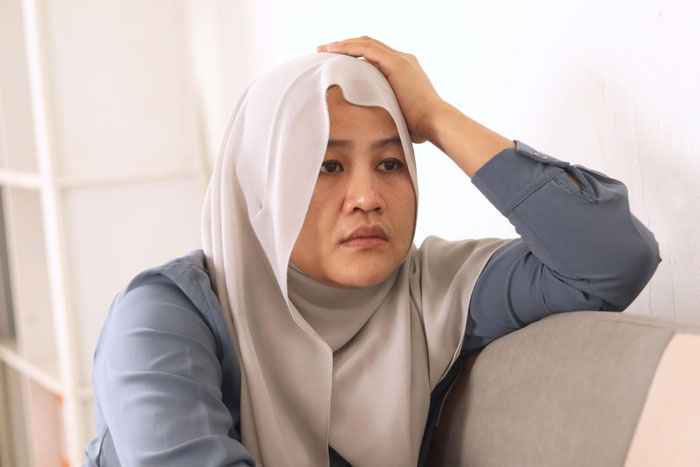
Image credits: airdone / Freepik (not the actual photo)
Life coach Christine Walter makes an important point about what happens to existing friendships when someone enters a serious relationship. A committed relationship reshapes your entire sense of self, and you become part of a “we.” Suddenly, priorities realign, social circles narrow, and the friends who do not fit the new picture often get quietly moved to the edges.
The research backs this up. A study of young adults’ social networks found that people in romantic relationships had, on average, two fewer close social ties than those who were single. Someone always gets cut when a new partner enters the picture, and in this case, the person who got cut had a decade of history, a job referral, free legal advice, and a standing invitation to religious holidays on her side of the ledger.
The reason for the exclusion is nothing less than everyday Islamophobia. This is the subtle, low-level discrimination that Muslim people experience in personal and social settings rather than in obvious institutional contexts. It is the kind of bias that is easy to dismiss as a personal choice or a religious preference rather than what it actually is. The bride tries to frame her exclusion to sound almost reasonable. It is not.
The reason it feels trivial to outsiders is precisely because it is wrapped in the language of personal belief rather than overt prejudice. But the impact on the person being excluded is identical regardless of how gently the reason is delivered. A decade of friendship, of shared holidays, of being called family, turned out to have a condition attached that only became visible the moment it became inconvenient to ignore it.
How do you think this uninvited friend should respond? Share your thoughts in the comments!
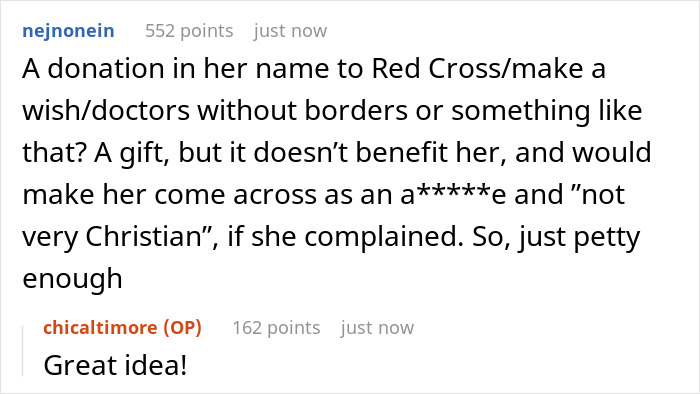
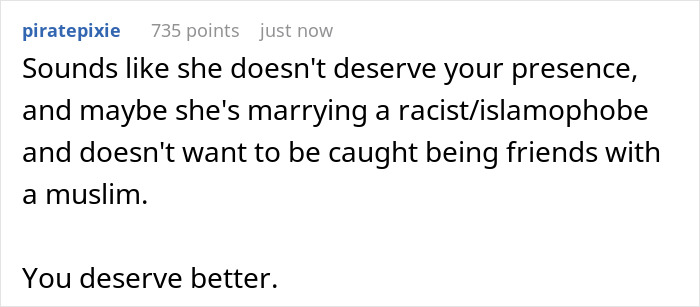
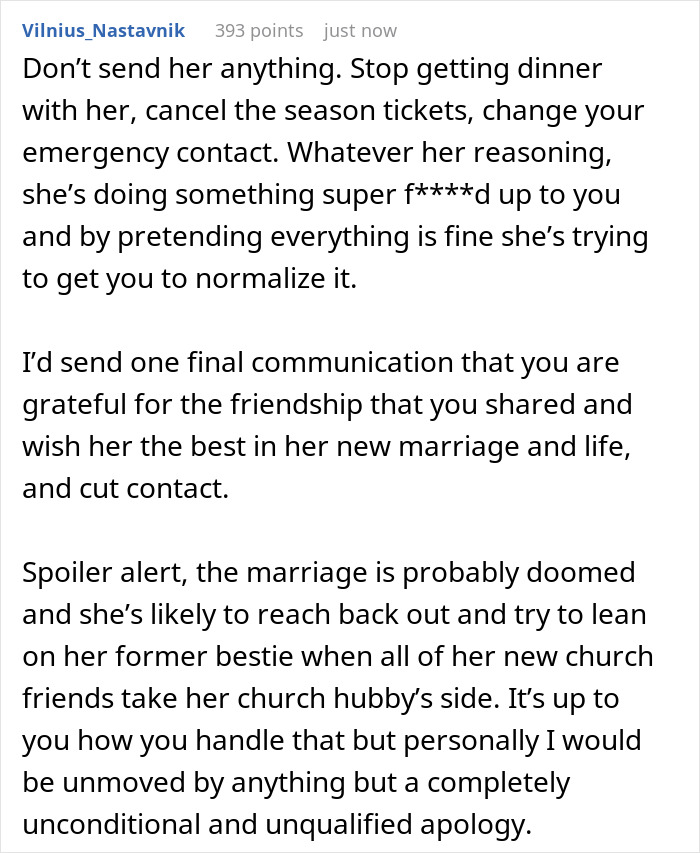
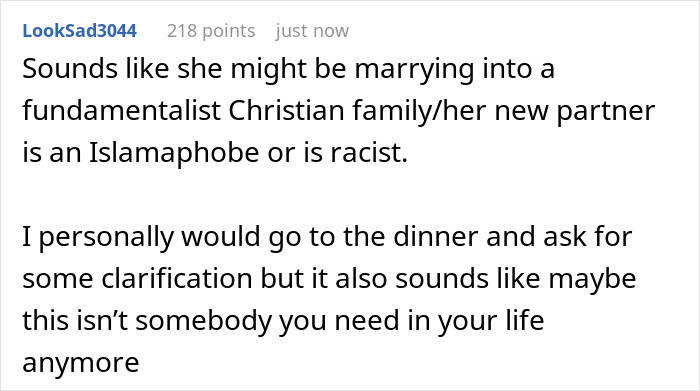
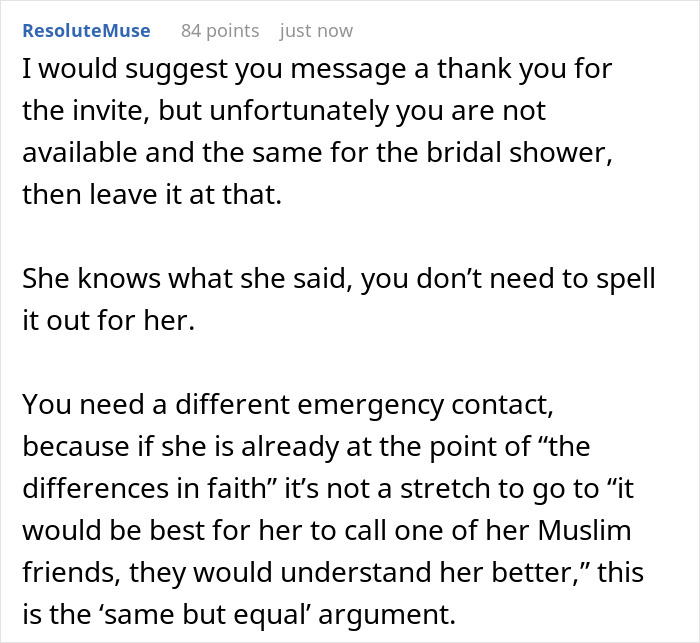
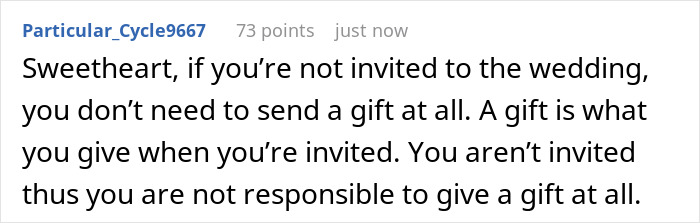
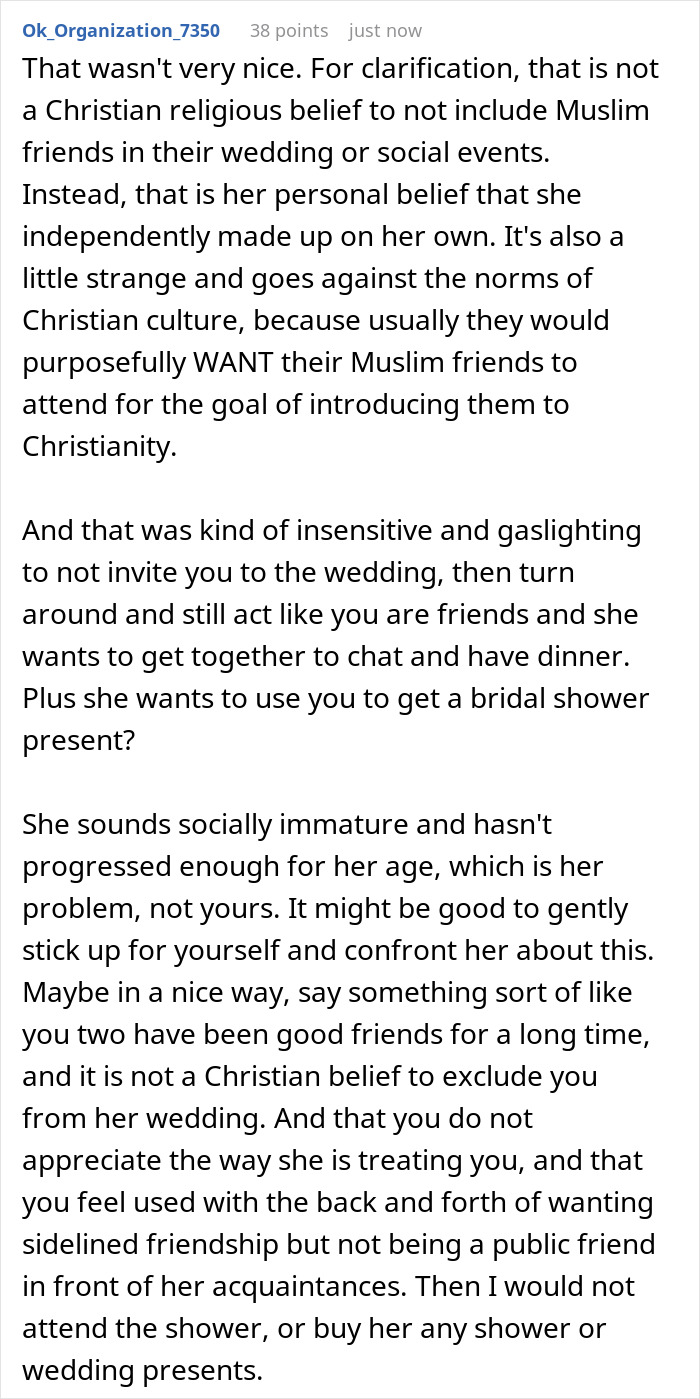
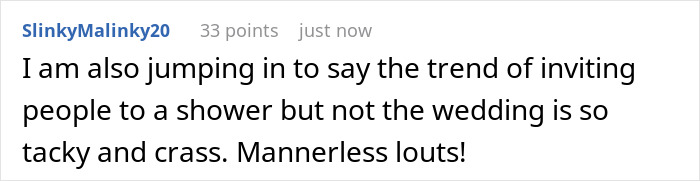
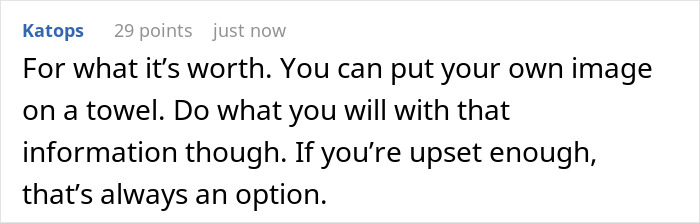
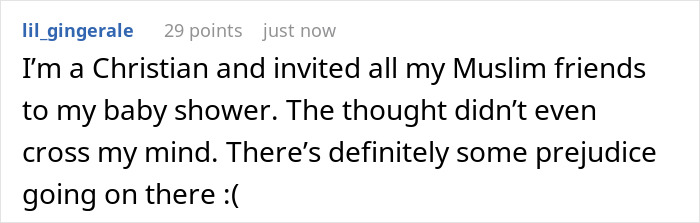
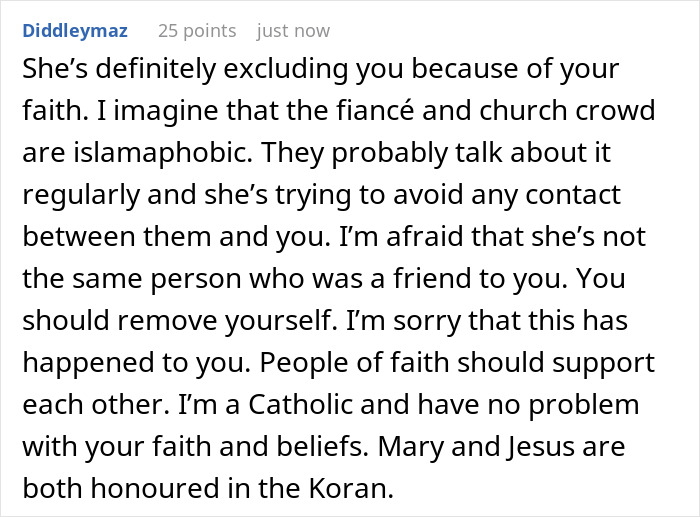
The internet is furious on the friend’s behalf, and the question of whether to send a gift, go low-contact, or walk away entirely has divided the comments section completely




 Follow Us