It’s one thing for parents to have high expectations for their children. Some may want them to pursue prestigious careers, achieve financial success, and be content with their lives, which isn’t inherently wrong.
It becomes a problem when these expectations turn into constant criticism, as this man experienced. Beyond blatant favoritism toward his sister, his mother and father repeatedly belittled his achievements and constantly compared him to others.
He finally had enough and cut them off, then went on to live a fairly successful and stable life. But after a decade of no contact, his folks reached out to reconnect, leaving him uneasy.
Some parents think there is nothing wrong with having unreasonably high expectations for their children

wombatzaa / magnific (not the actual photo)

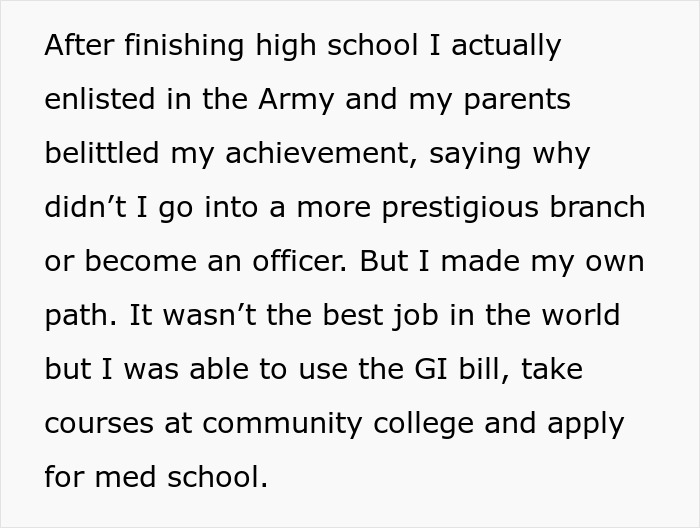
This man described his experience with his mother and father, who played favorites and looked down on his accomplishments



pch.vector / magnific (not the actual photo)
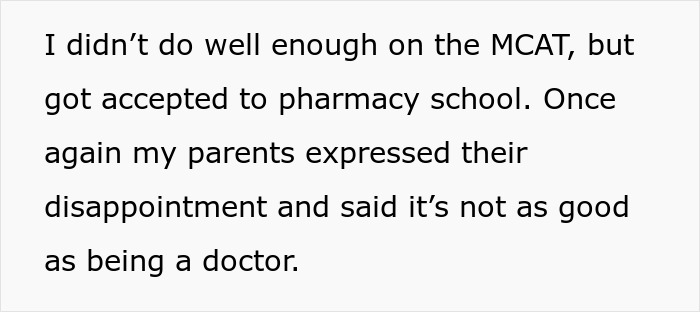
The constant put-downs pushed him to go no contact



jcomp / magnific (not the actual photo)
The distance worked out well for him, until his parents suddenly wanted to reconnect after a decade



Asian parents may push their children toward conservative professions to avoid discrimination
Asian parents, especially of children living in the United States, have developed a reputation for having stern beliefs about proper education and hard work.
Experts have even coined this approach “tiger parenting,” which, according to UCLA professor Min Zhou, is driven by necessity. Or at least, that’s what Asian parents believe.
“They fear that their nonwhite children may experience discrimination in ‘soft’ fields like writing, acting, or art. So they steer their children toward more conservative professions such as medicine, law, and engineering,” Zhou said, adding that many parents believe that their children would not experience bias from employers and colleagues because they have “hard” records of merit.
The author painted a picture of an unloving mother and father with unreasonable expectations, which is another known trait of Asian parents. According to University of Chicago professor Yoonsun Choi, this’s because they express love in pragmatic ways.
“It may be through providing instrumental support. They may tend to sacrifice more for their children, working two or three jobs. That’s their way of expressing warmth,” Choi explained.

user18526052 / magnific (not the actual photo)
Family estrangements are reparable, but it comes with a caveat
Not all family estrangements are hopeless cases. Some can make amends and move forward with healing, but everyone involved must meet certain conditions.
First, family therapist Jacqueline McDiarmid says attempts to repair must happen as soon as possible.
“The longer the estrangement, the harder it is to repair that relationship,” she said, noting that involving a professional trained in this specific area may be necessary.
Meanwhile, author and clinical psychologist Tamara Cavenett says changing the dynamic can work, whether by setting boundaries or treating each other more as equals rather than as parent and child.
Ultimately, the author decides whether to reconnect. No one can fault him if he decides to remain no contact, especially if the distance has helped protect his peace.
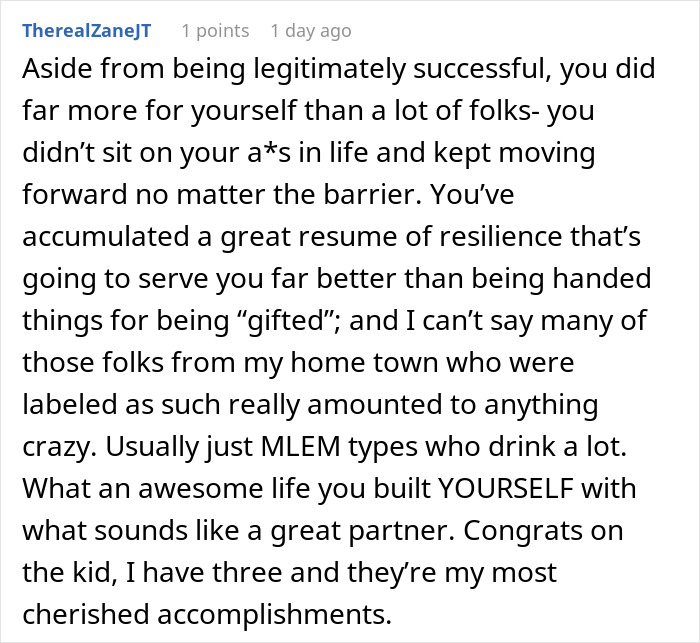
People in the comments had strong opinions, which they didn’t hold back





























 Follow Us