Workplace harassment doesn’t usually show up all guns blazing. It creeps in through weird “compliments,” inappropriate jokes, and tiny tests of your boundaries — until you’re sitting at your desk wondering if you’re not just overreacting.
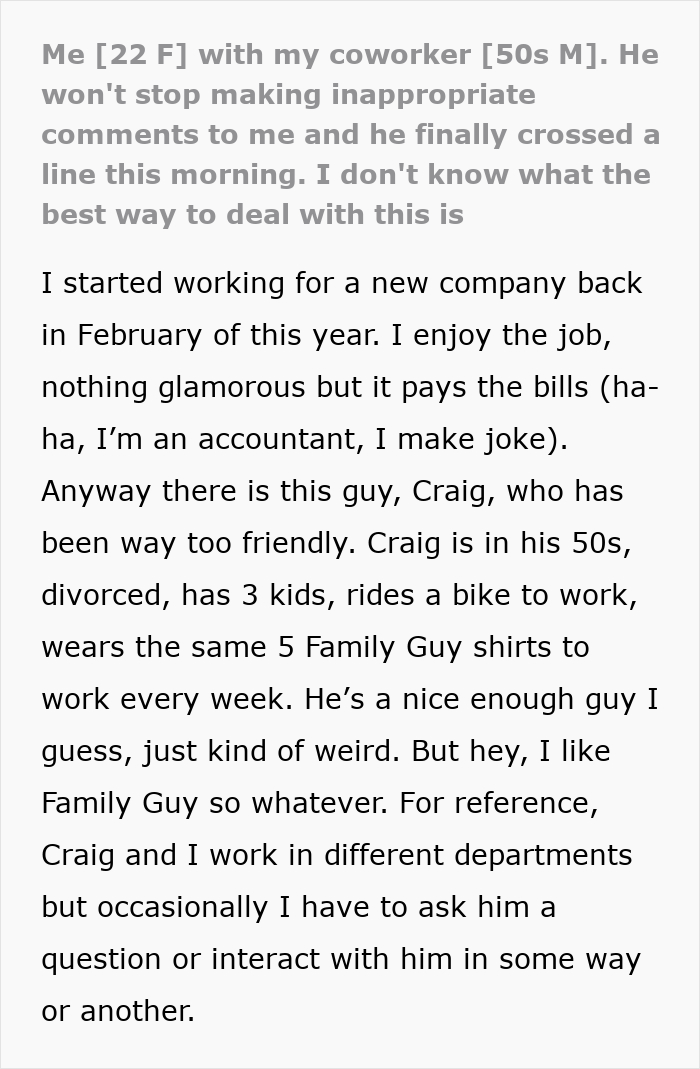
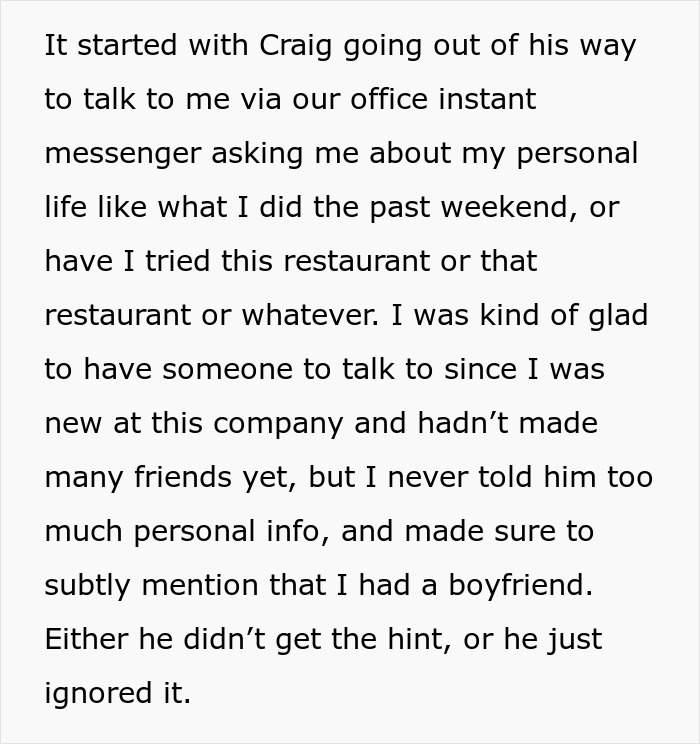
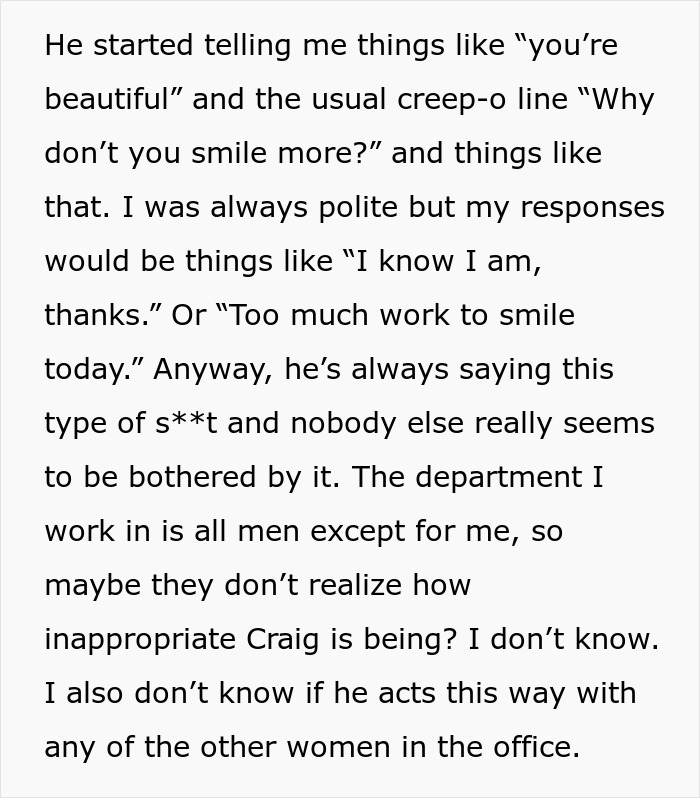
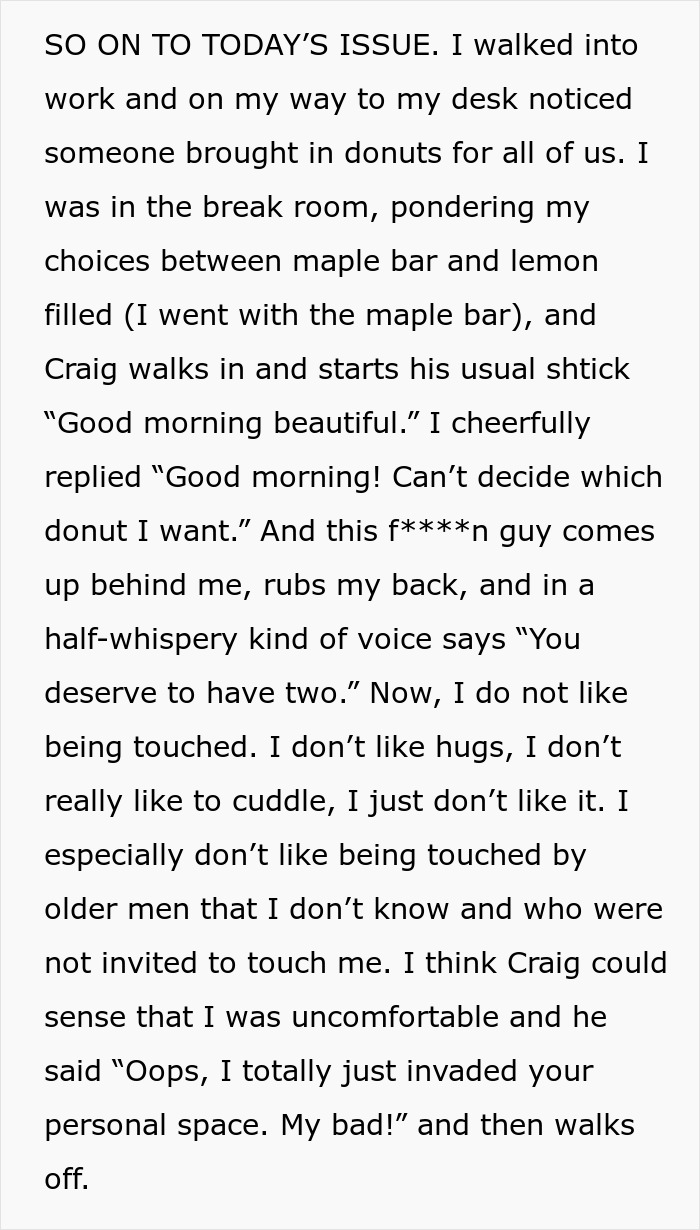
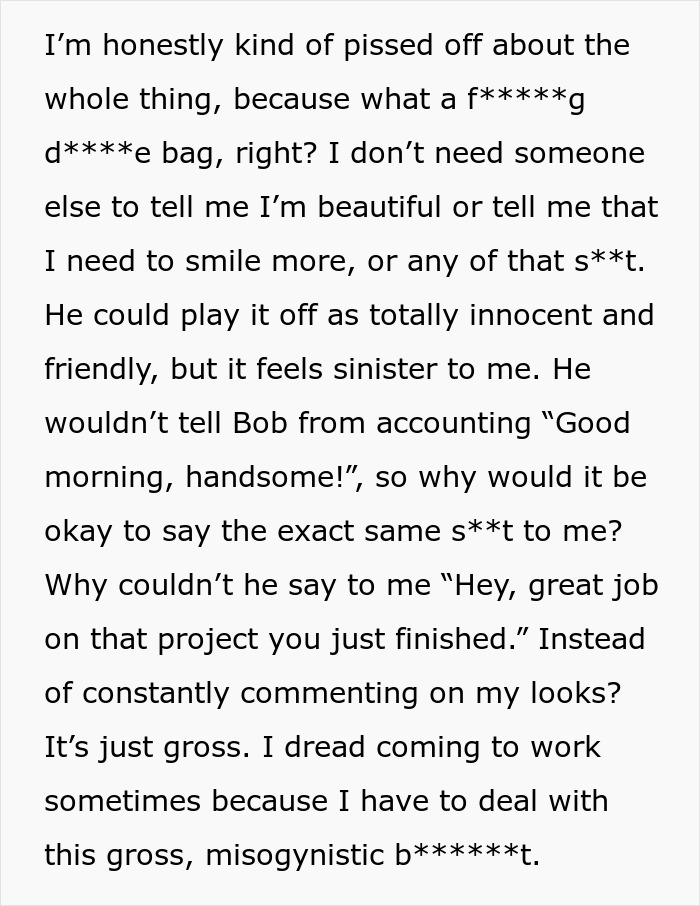
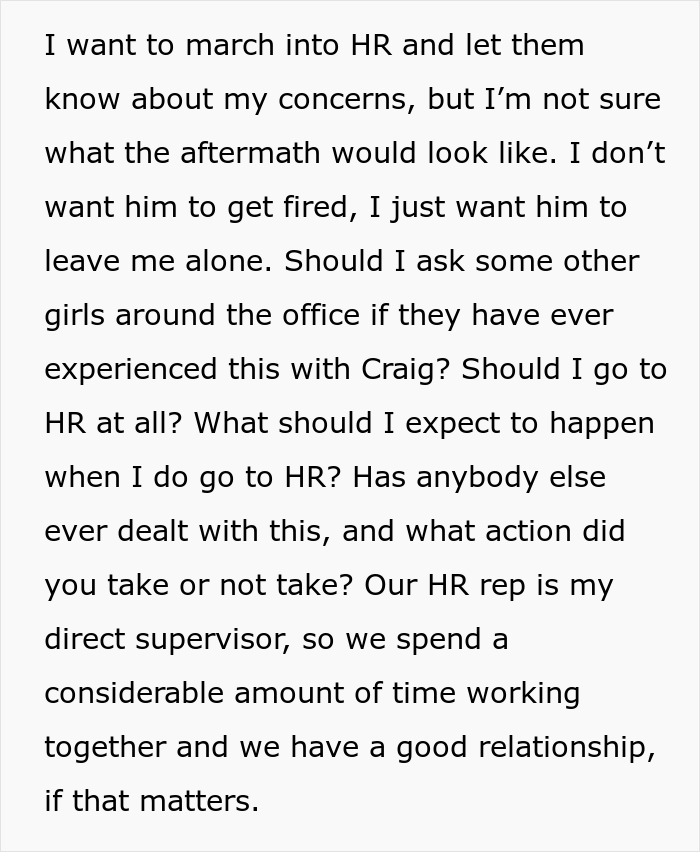
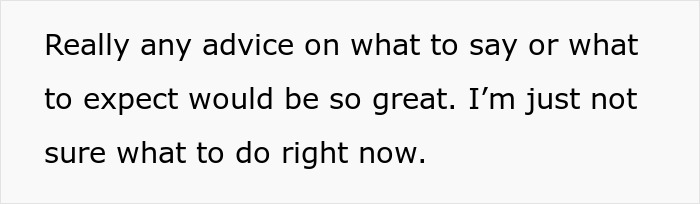
That’s where a 22-year-old accountant ended up when a coworker — a guy twice her age — started flirting with her and hitting her with the classic “you should smile more.” At first, she just nervously laughed it off to keep the peace. Then came a morning in the break room where he walked up behind her and touched her without her consent.
Read on to see how the internet helped her handle the situation like a total pro.
A man started sending messages and “flirting” with a coworker half his age

Edmond Dantès / Pexels (not the actual photo)

The woman said one day he crossed a major boundary and touched her without consent


africaimages / Envato (not the actual photo)

Ketut Subiyanto / Pexels (not the actual photo)
The role of gender hierarchy, power and men at the workplace
Most companies have thick employee handbooks and hour-long videos full of harassment policies and anti-retaliation rules. Yet harassment, bullying, and other harmful behavior continues inside several workplaces — the #MeToo movement itself exposed as much.
According to a ComRes poll for the BBC, 40% of women and 18% of men have experienced some form of inappropriate behavior in the workplace. It ranges from unwelcome explicit jokes or comments to serious physical assault.
Harassment at work often happens behind closed doors, during business trips or in break rooms. And now, it is increasingly happening online, through direct communication. In a survey, 7% of women who experienced harassment at work reported that it involved the use of online tools.
Social scientists say workplace harassment is about power, not desire. It is driven by gender hierarchy — the idea that men hold higher status than women. Men use harassment to protect their dominance at work and keep women from threatening their position.
“Harassment is a way for dominant men to label women (and perceived ‘lesser’ men) as inferior and shore up an idealized masculine work status and identity,” says Vicki Schultz, the Ford Foundation Professor of Law and Social Sciences at Yale Law School.
So, what actually counts as workplace harassment, and when should you speak up?
Back when the #MeToo movement was peaking, a lot of men seemed genuinely confused, constantly wondering where the line is.
Now, for most people, common sense and basic decency are enough to guide their behavior. But still, to help clear up that confusion, the EU gender-based violence survey asked women to point out the exact behaviors that made them feel offended, humiliated, or intimidated at work. Here is what they highlighted:
Workplace harassment and a deep-seated power imbalance
For generations, men — especially those in senior leadership — have held the vast majority of workplace authority. That setup leaves many women dependent on them for job security, promotions, and basic professional survival. Because of this dynamic, speaking up carries a terrifying cost. Many women stay silent because they genuinely fear losing their livelihoods. Those who do summon the courage to report are often brushed off or told that putting up with bad behavior is simply part of the job.
Gender inequality enables harassment, and it even makes women vulnerable long before any boundary is ever crossed. It explains why coming forward is so terrifying, why complaints are routinely ignored, and why so many women feel forced to stay polite and smile through uncomfortable interactions.
Figures from Deloitte’s annual Women at Work 2023 report show that only 59% of women who said they were harassed reported the incidents to their employer, down from 66% in the prior year’s survey.
Experts warn that even fewer people are reporting harassment these days. With the economy looking shaky and jobs feeling far less secure, many working women simply can’t afford to risk their livelihoods by speaking up.
Research shows that women’s wages grow more slowly than men’s, and women are far less likely to get promoted. When things go wrong, women also face harsher punishments. A Harvard Business Review study found that women were 20% more likely to be fired than men who committed the same infraction. Women were also 30% less likely to ever find a new job in their field afterward.
The burden of preventing or stopping harassment should never fall on the victim alone. There should be an environment where employees can actually speak up without fearing for their paychecks. And some men simply need to do better and treat their colleagues with respect.
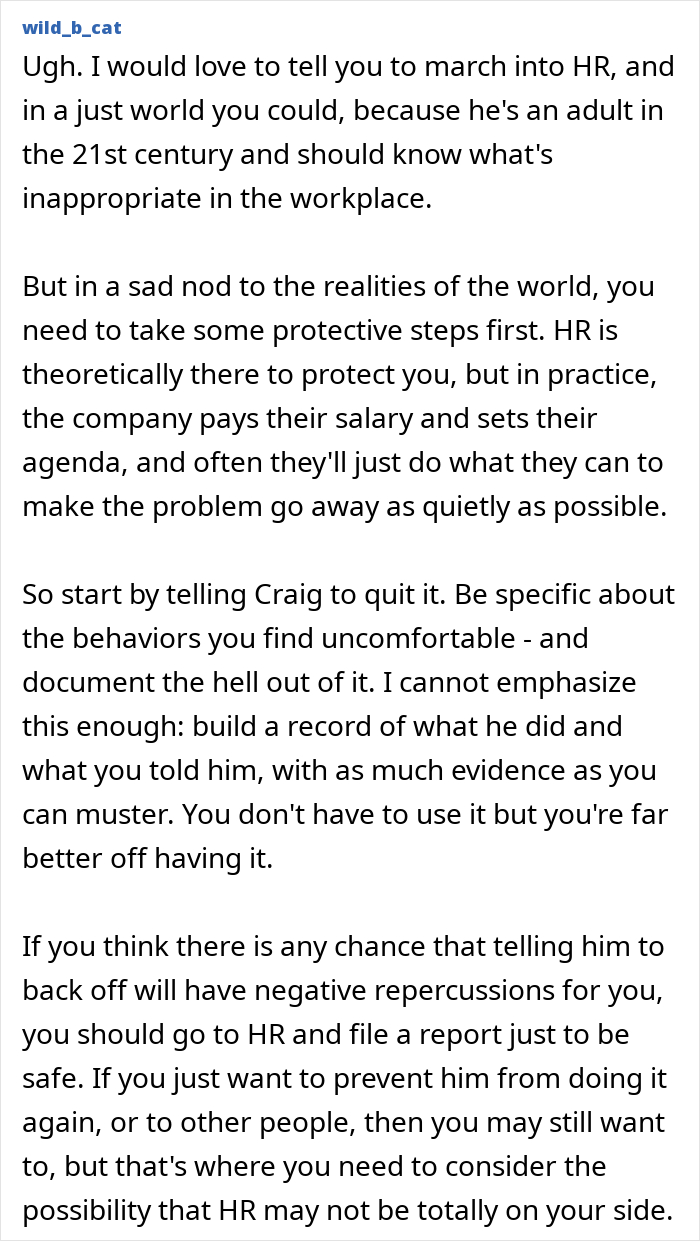
While the reality remains far from ideal, you don’t have to navigate a toxic situation without any shields. Experts suggest identifying the behavior, documenting every incident, and keeping human resources and managers in the loop.
Ultimately, change can only happen when all of us do better, speak up, and hold each other accountable.
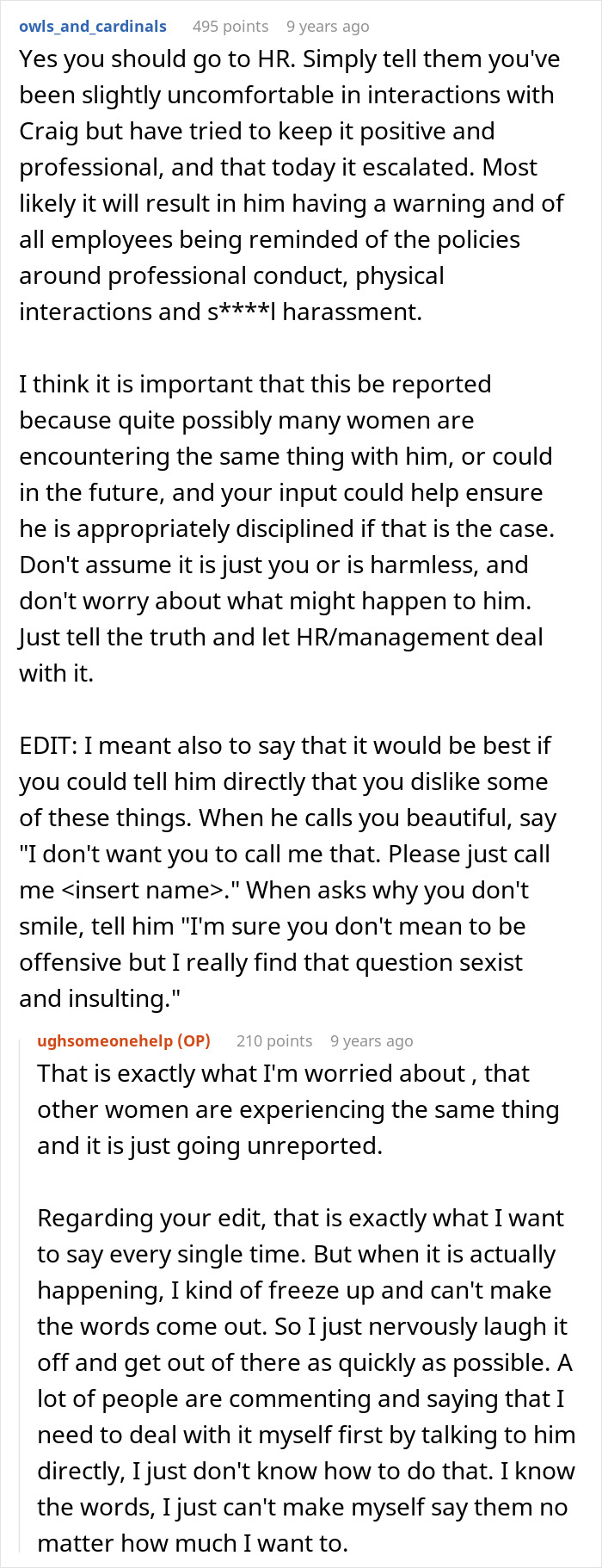
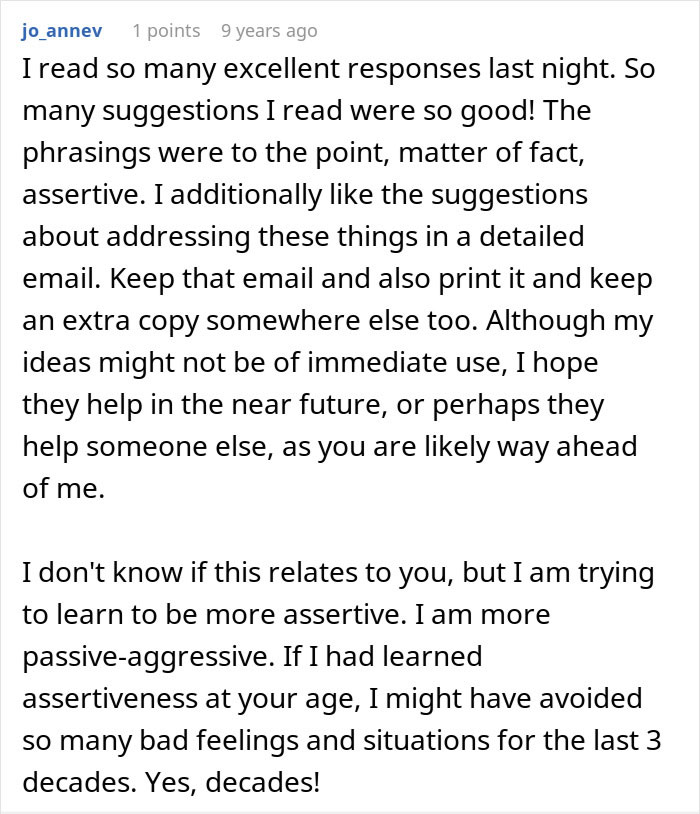
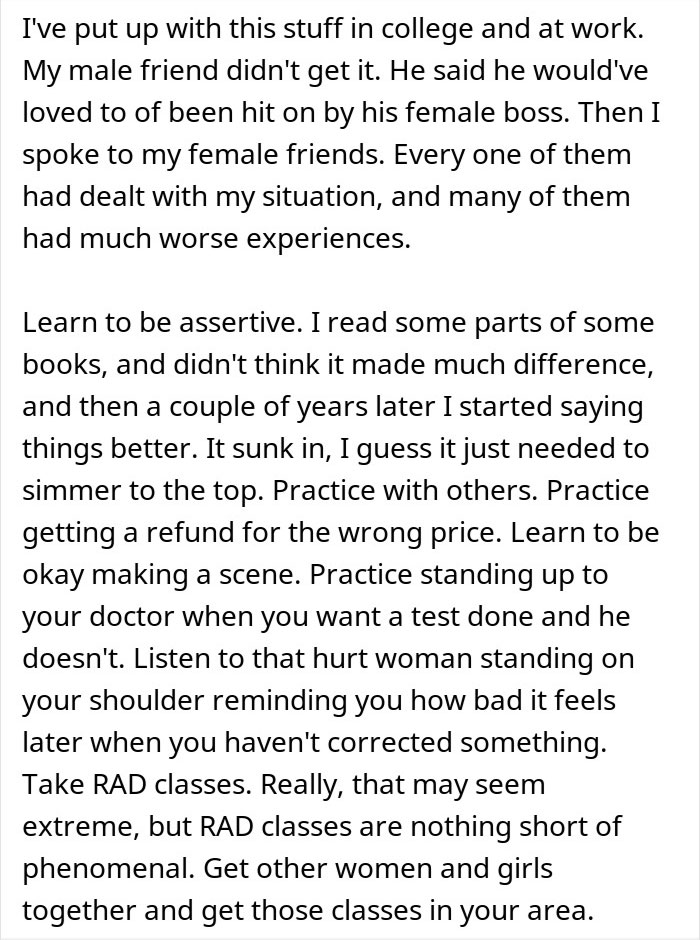
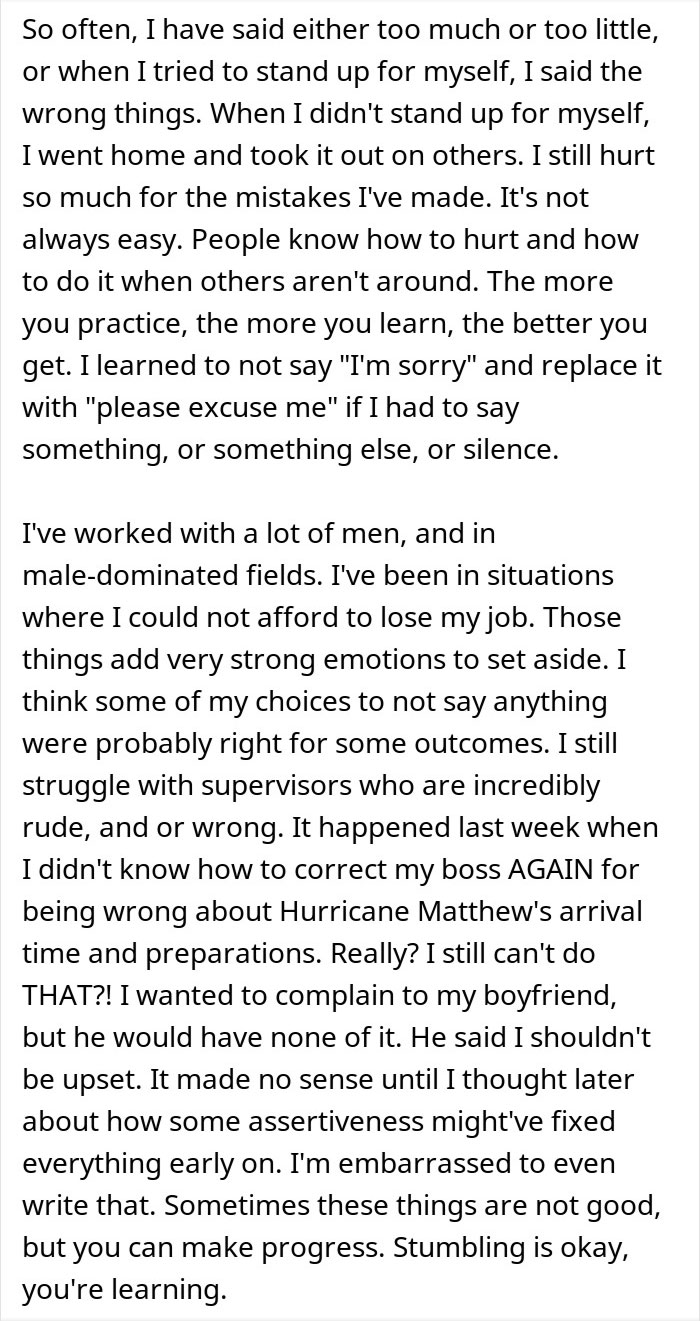
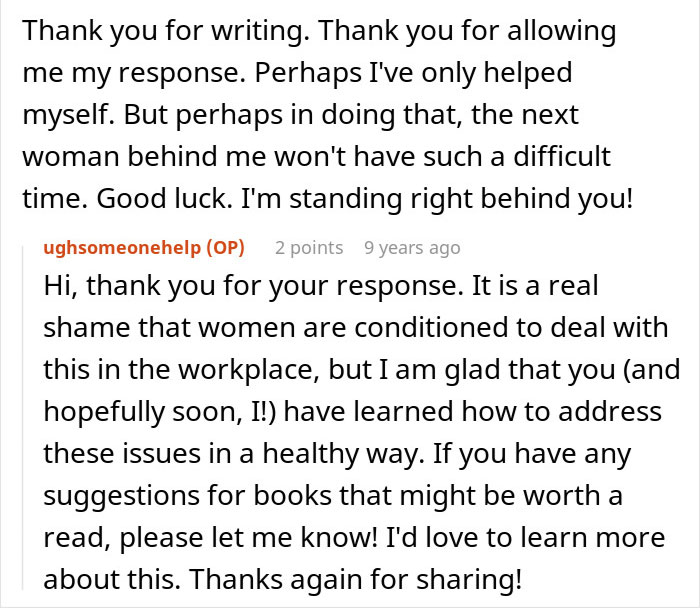
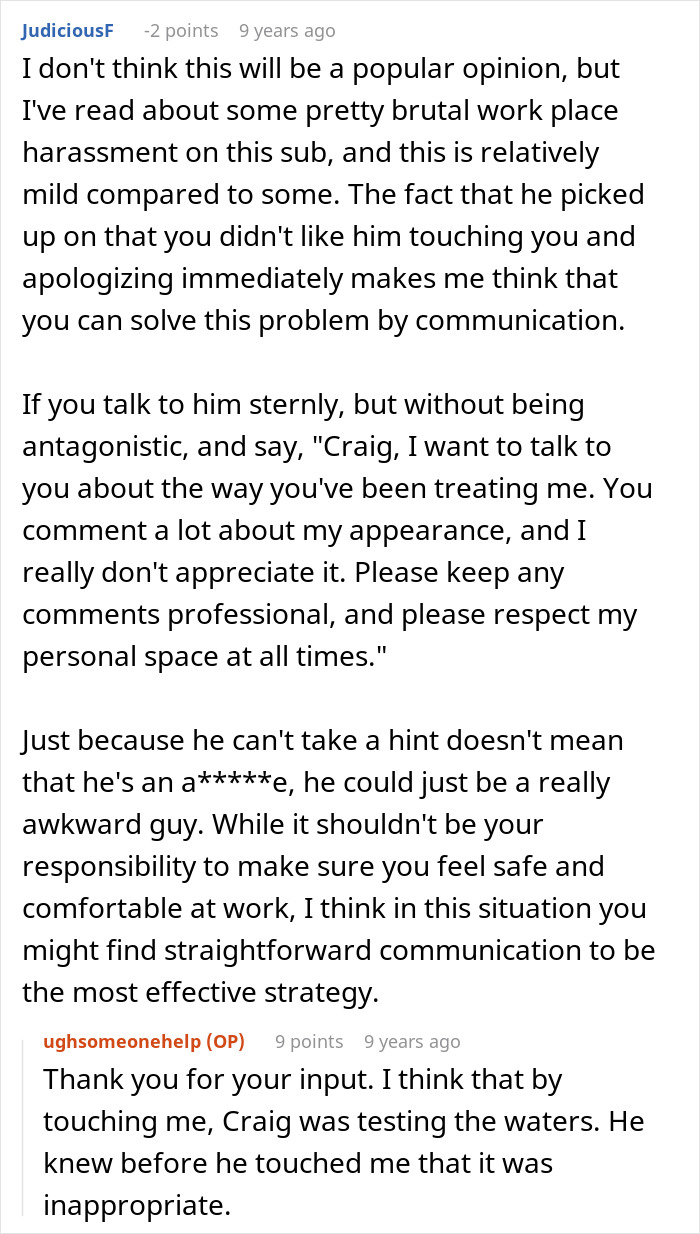
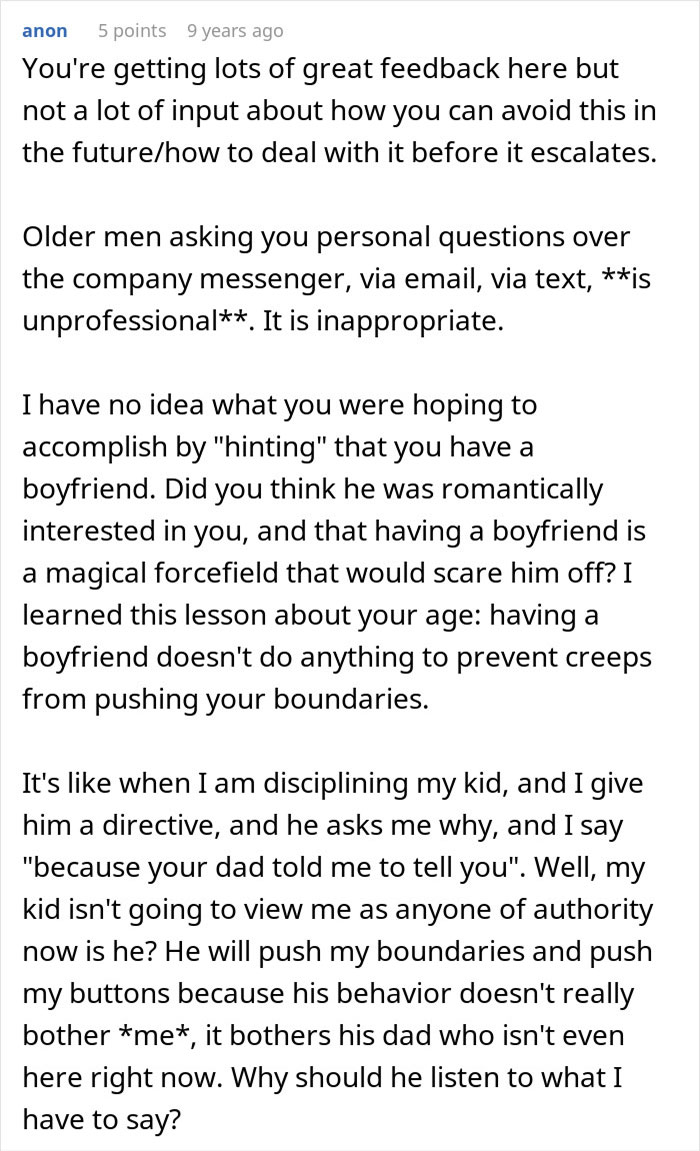
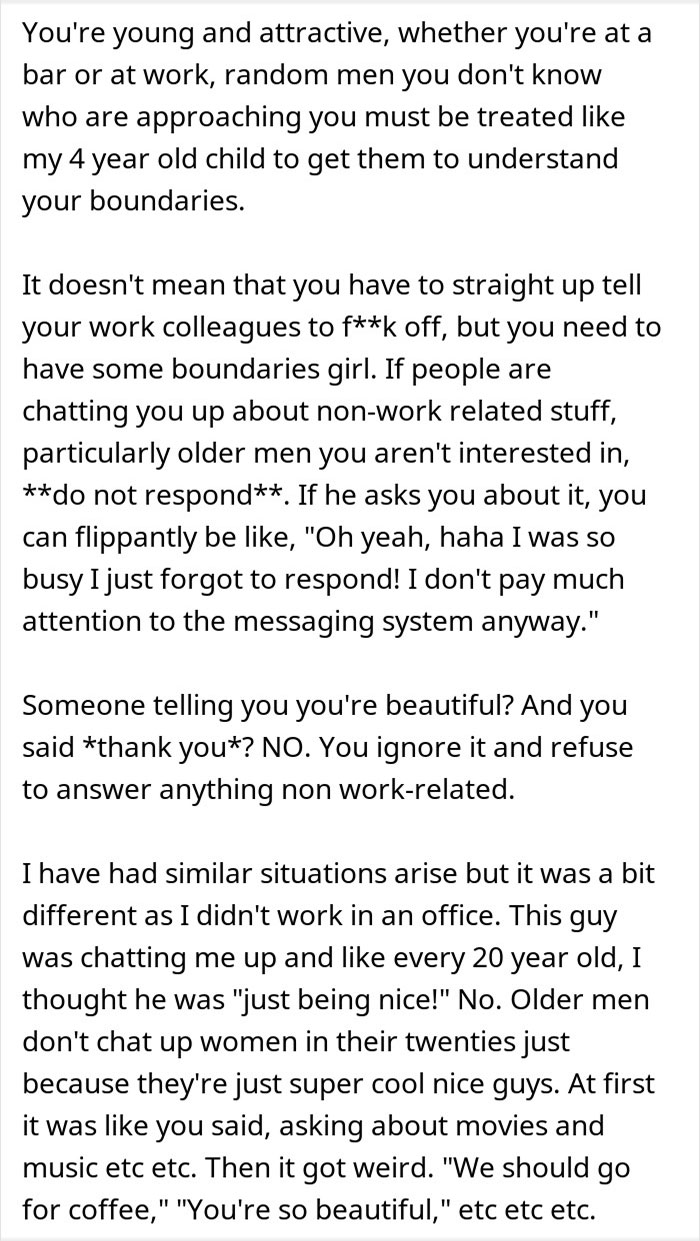
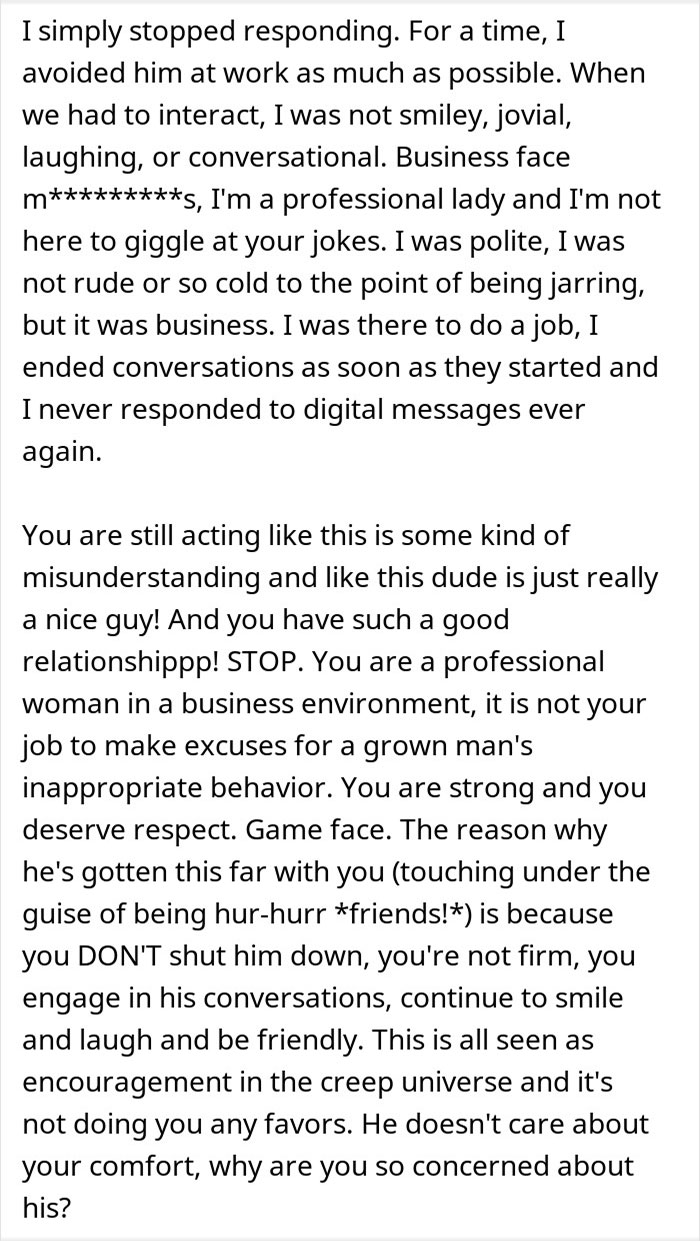
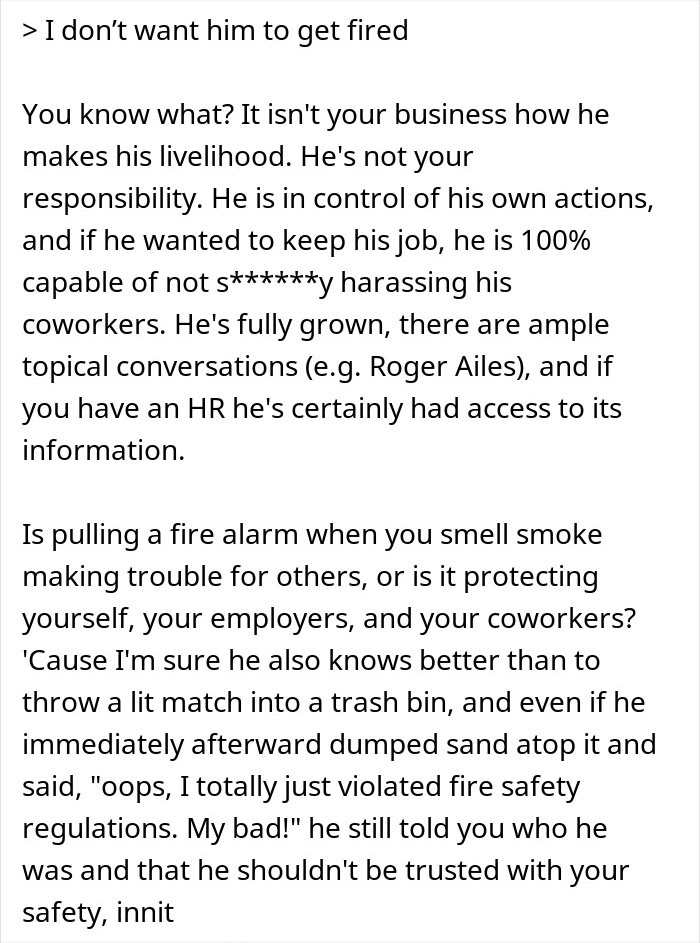
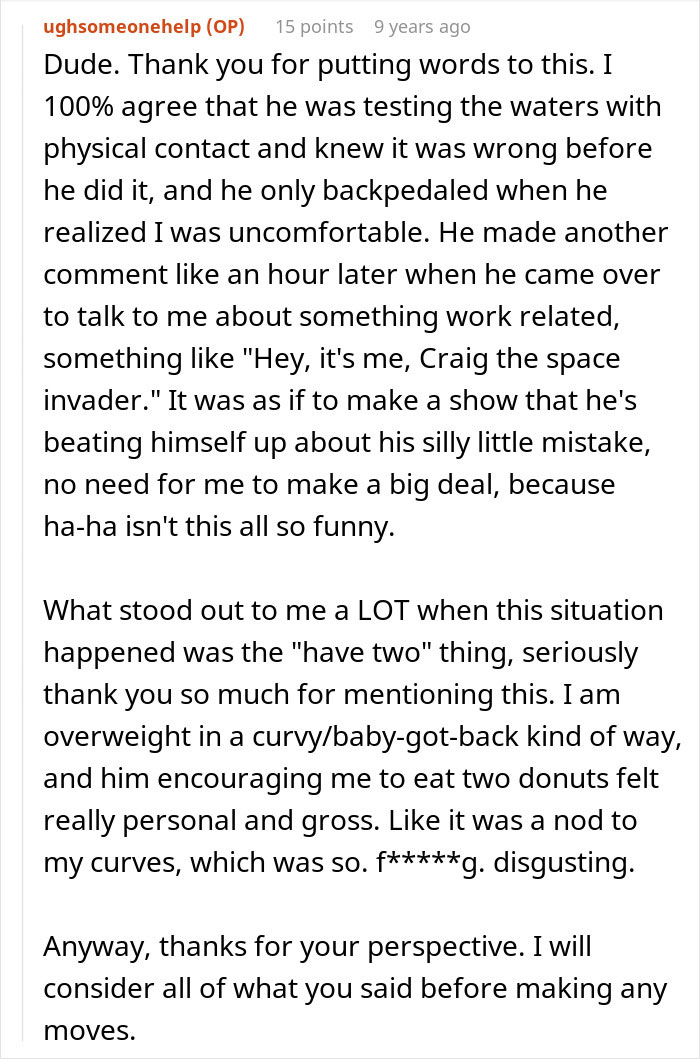
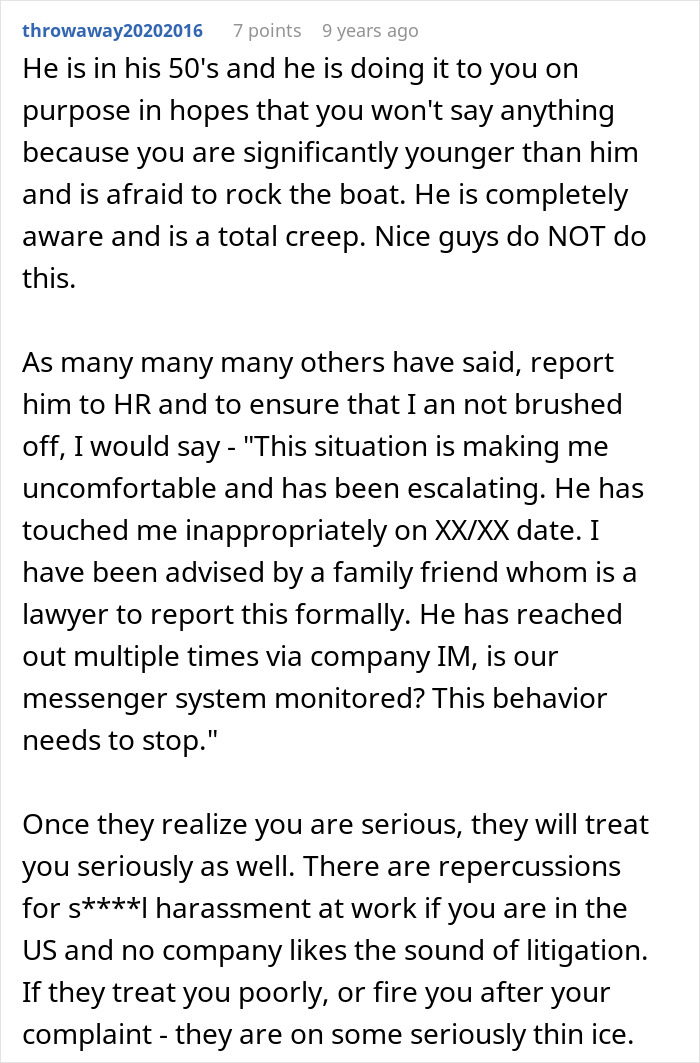
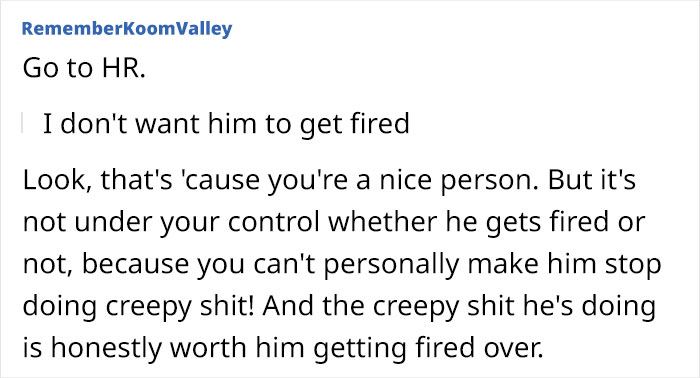
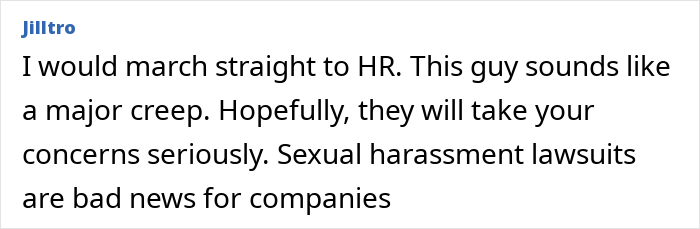
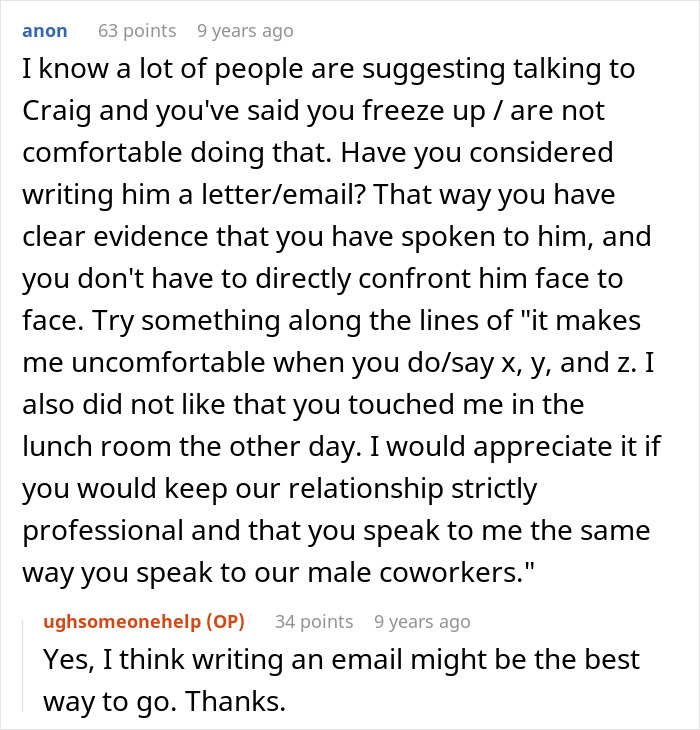
People in the comments came up with different types of solutions to handle the situation
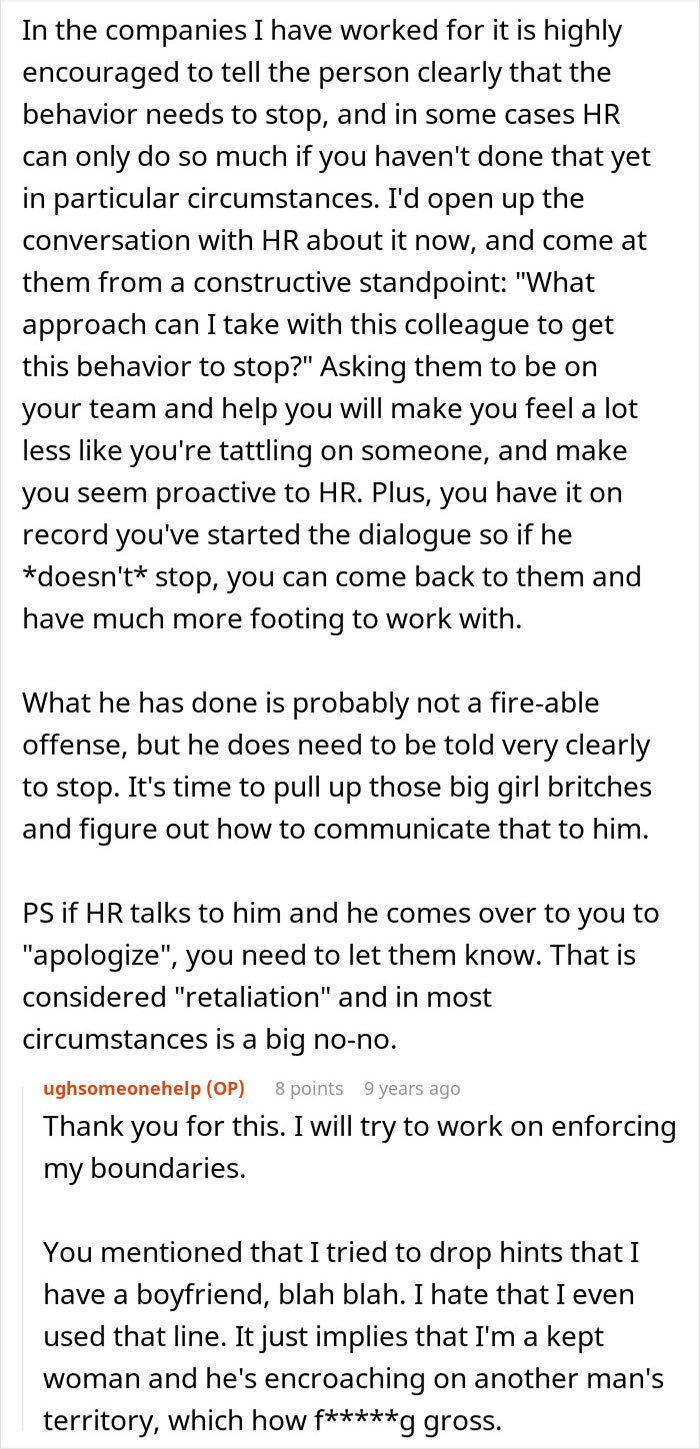
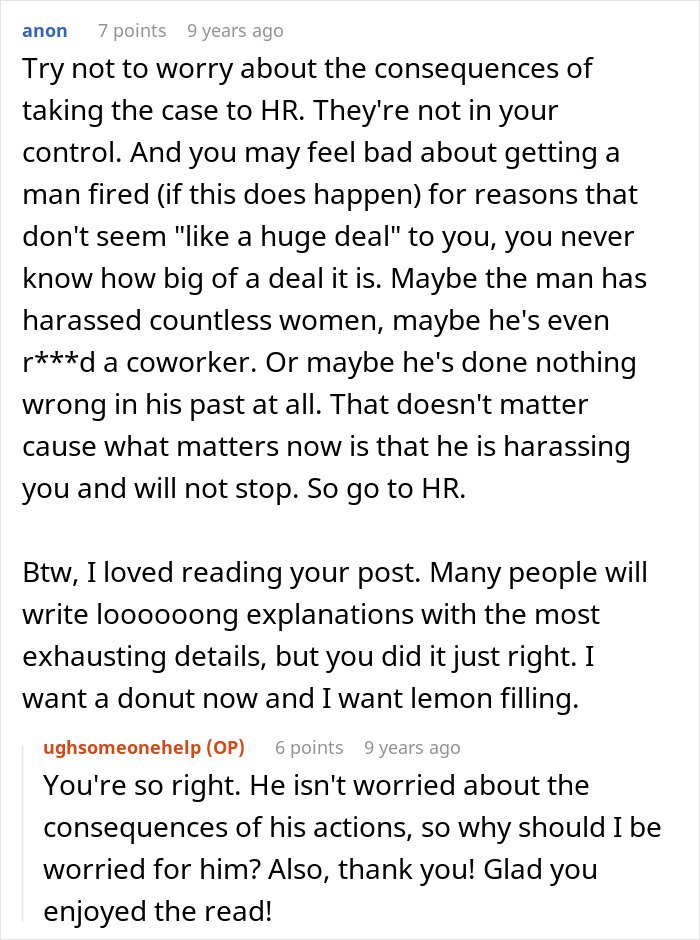
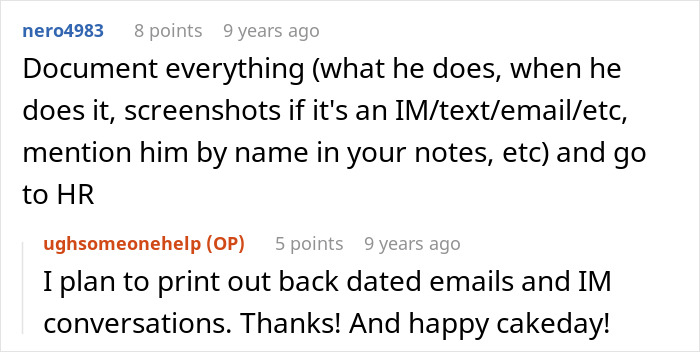
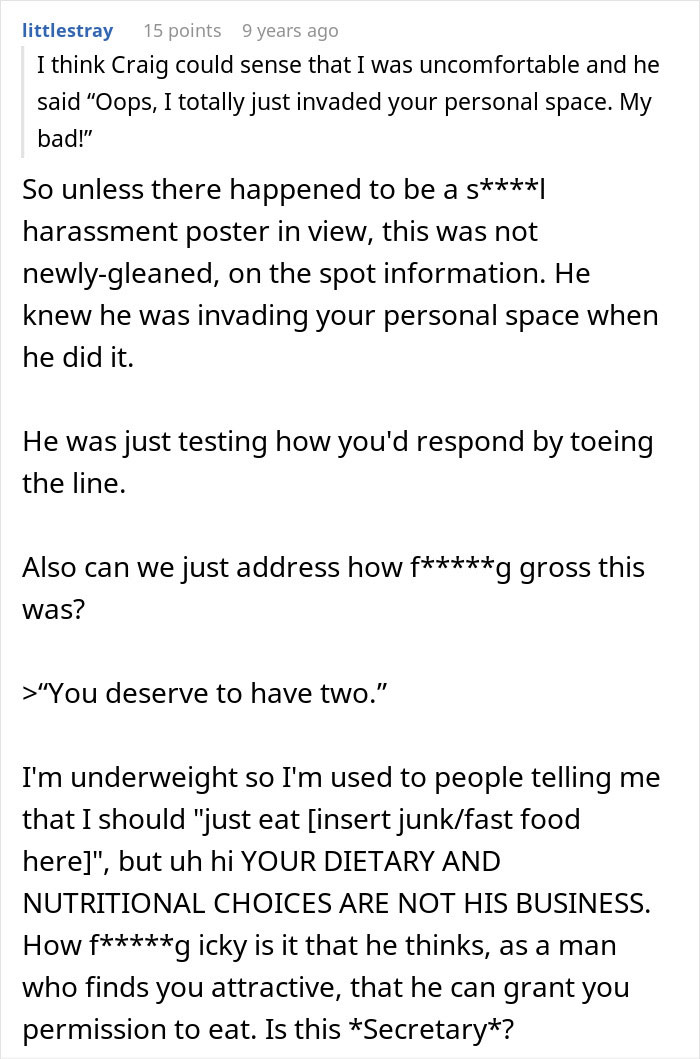

Andrea Piacquadio / Pexels (not the actual photo)
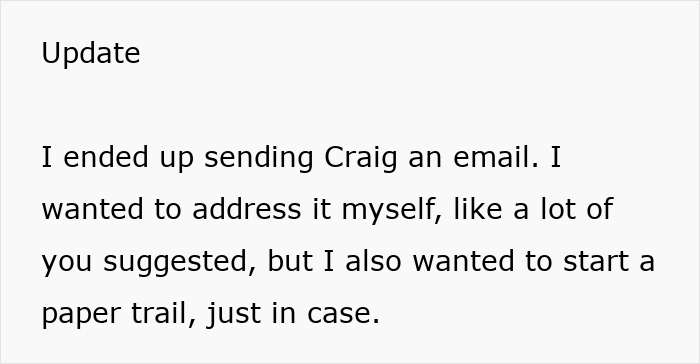
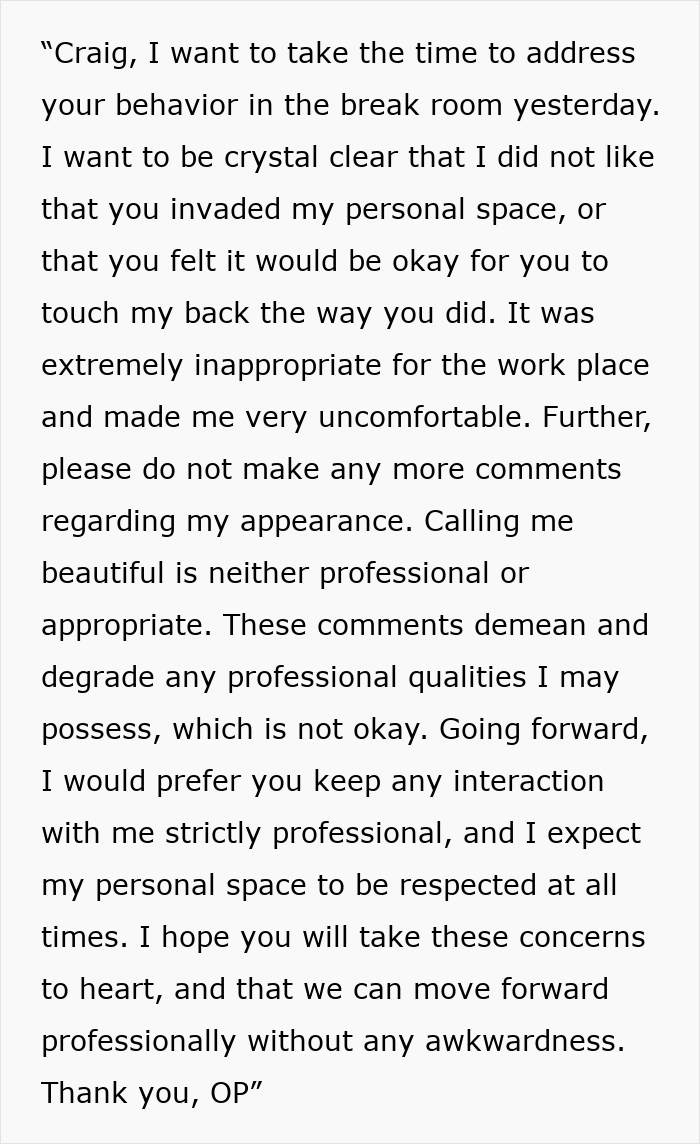
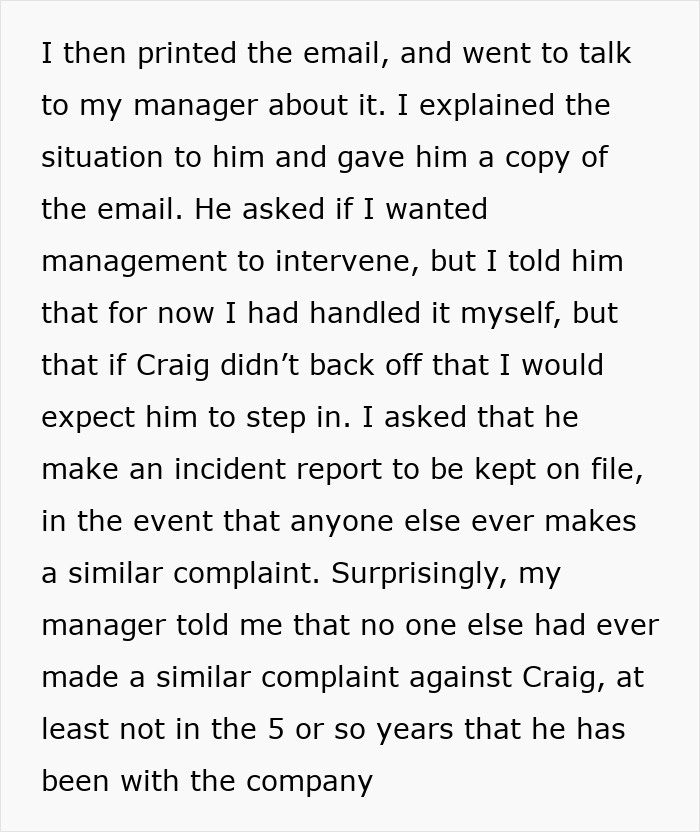
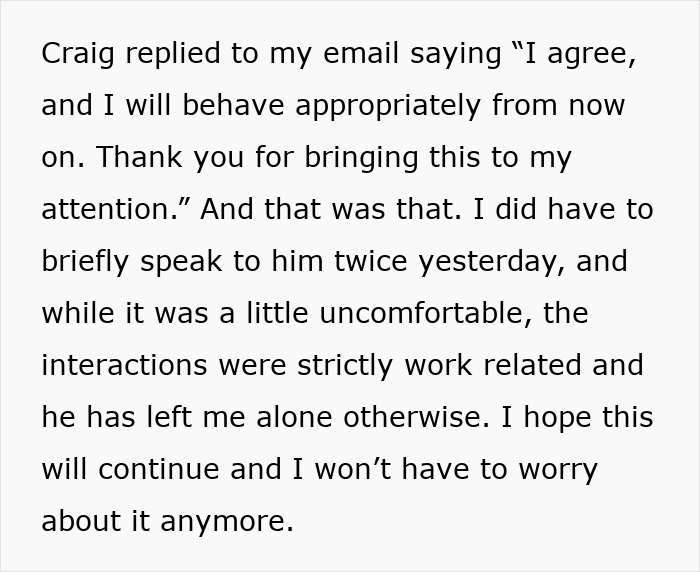
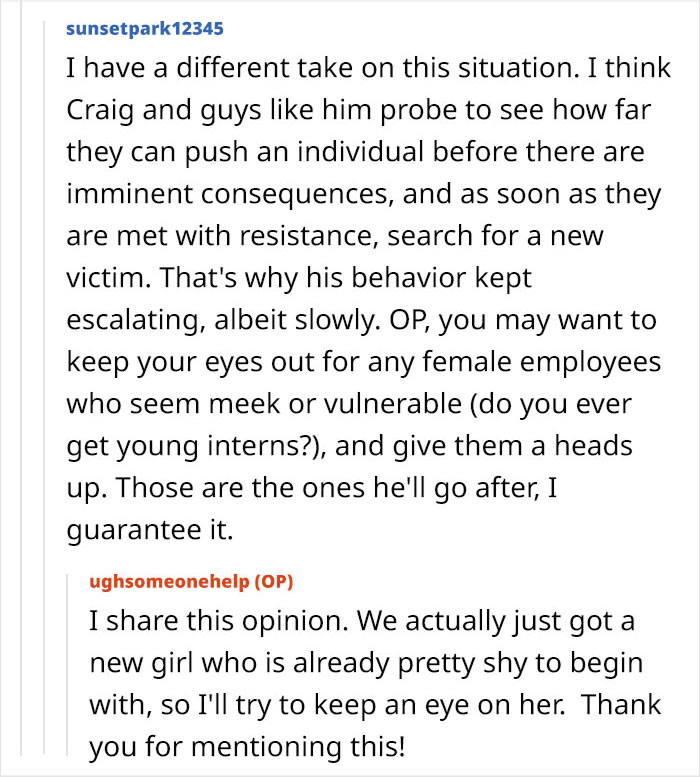
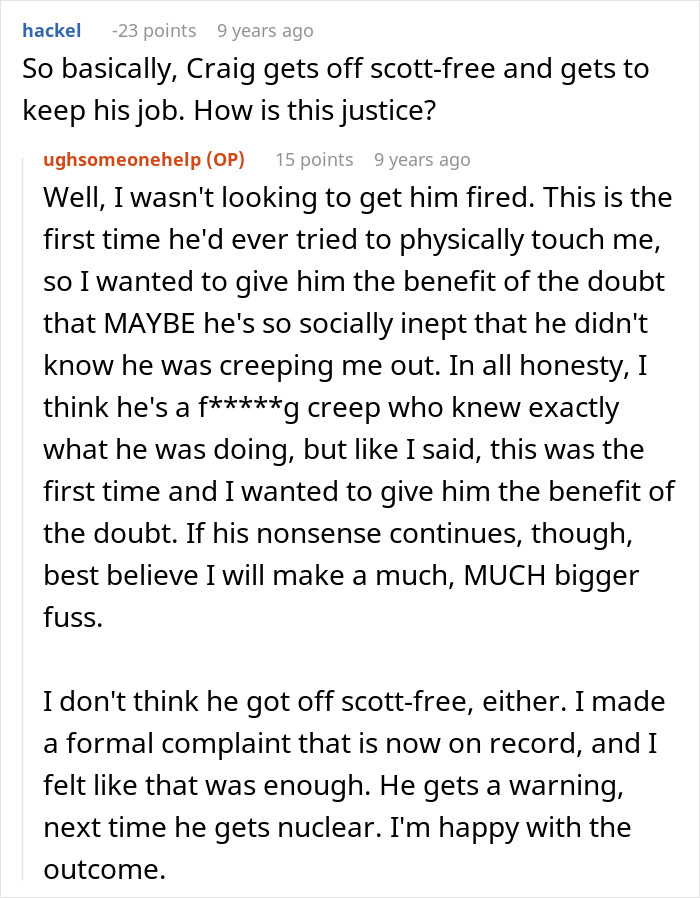
The woman took the internet’s advice and came back with an update

Gustavo Fring / Pexels (not the actual photo)

ANTONI SHKRABA production / Pexels (not the actual photo)
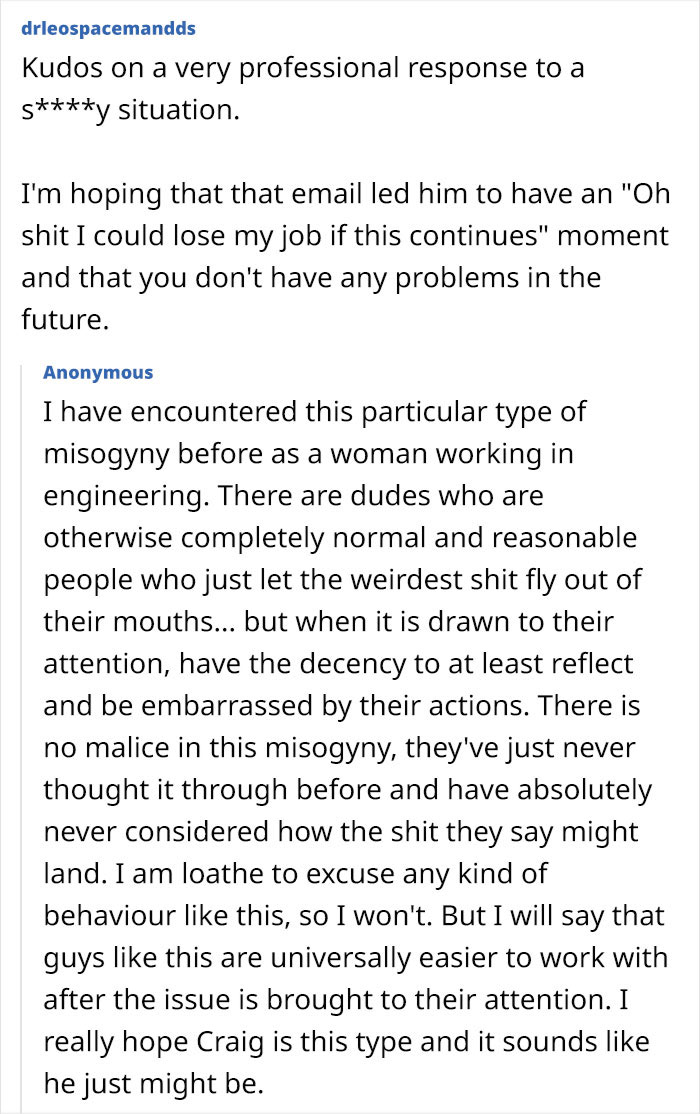
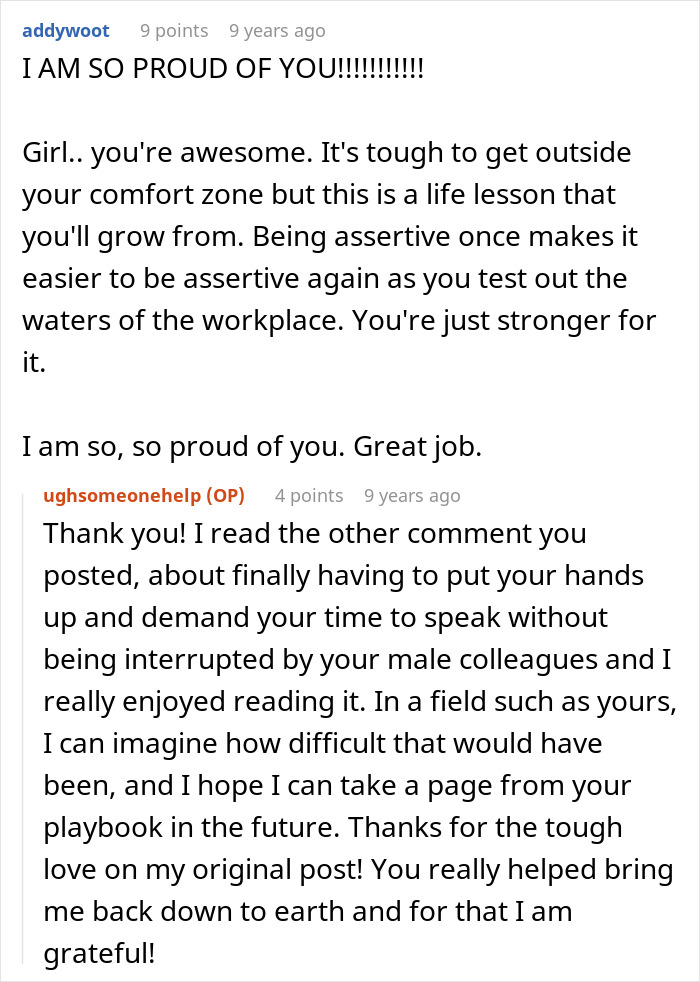
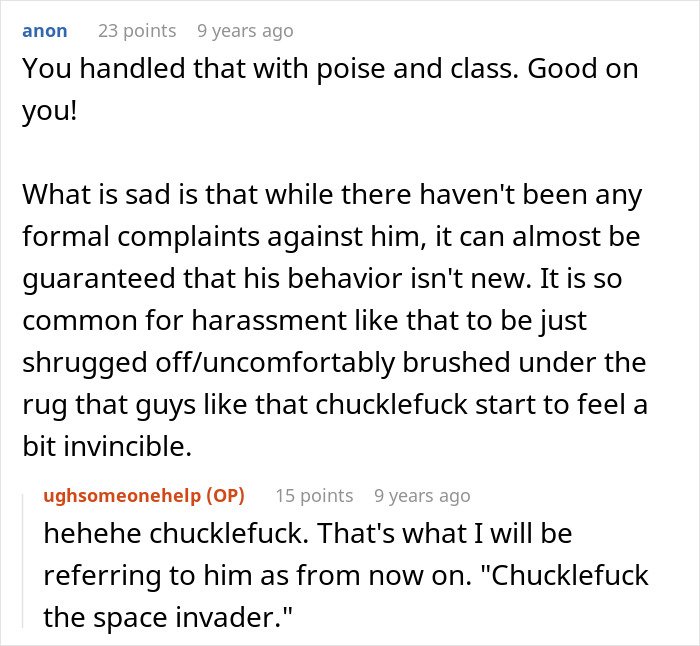
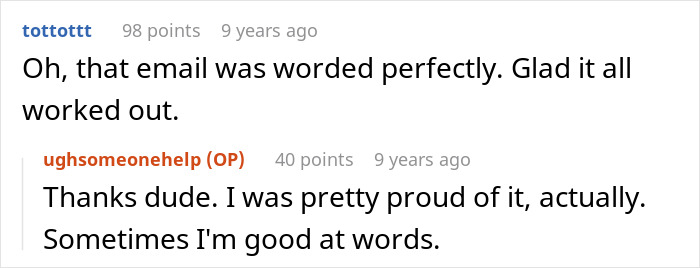
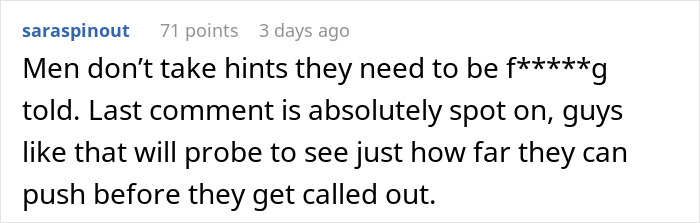
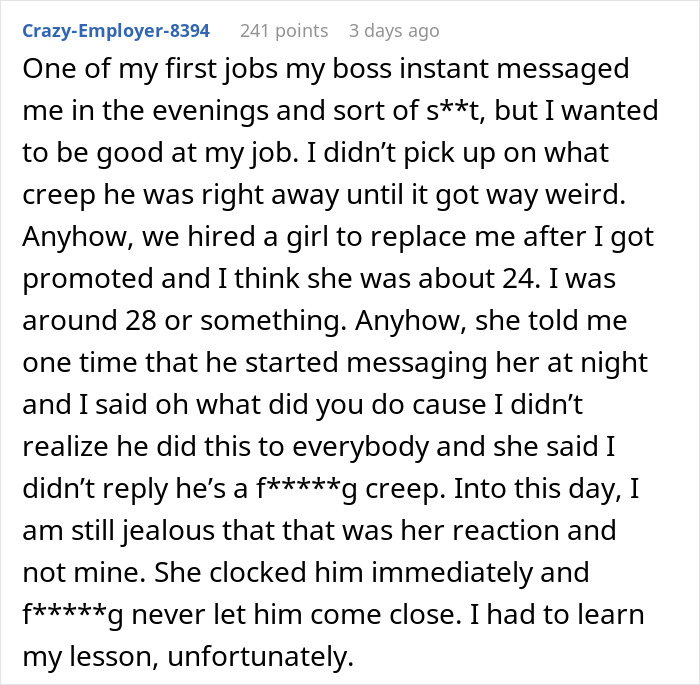
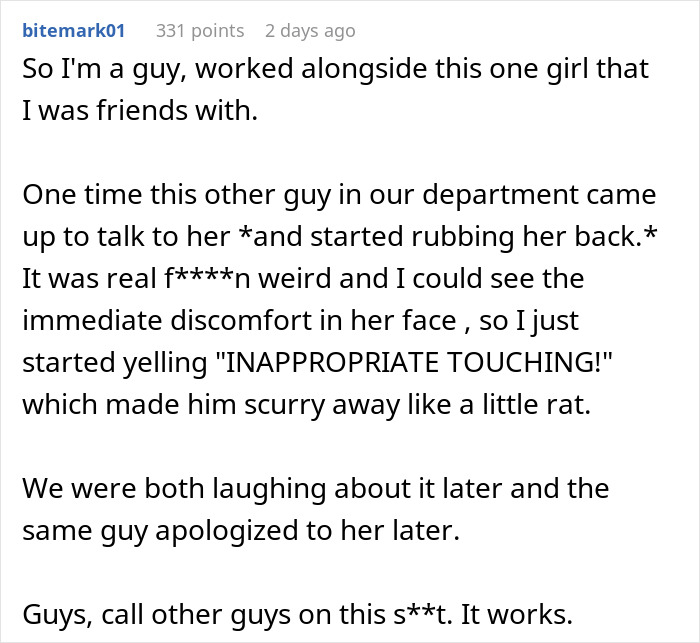
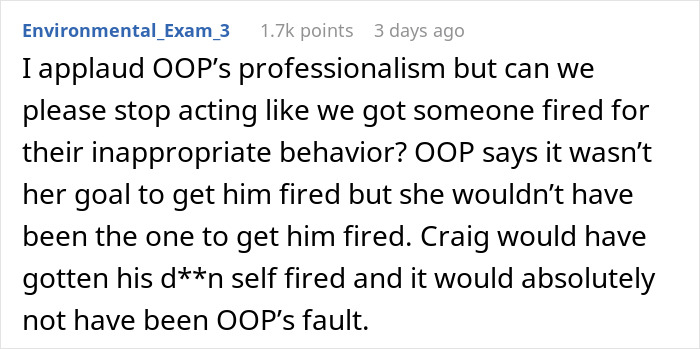
Here’s how the internet reacted to the whole situation





 Follow Us