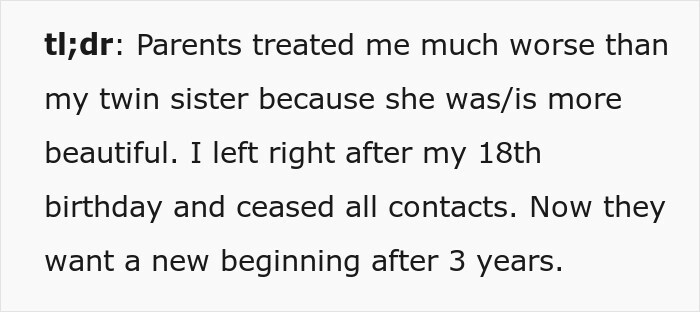
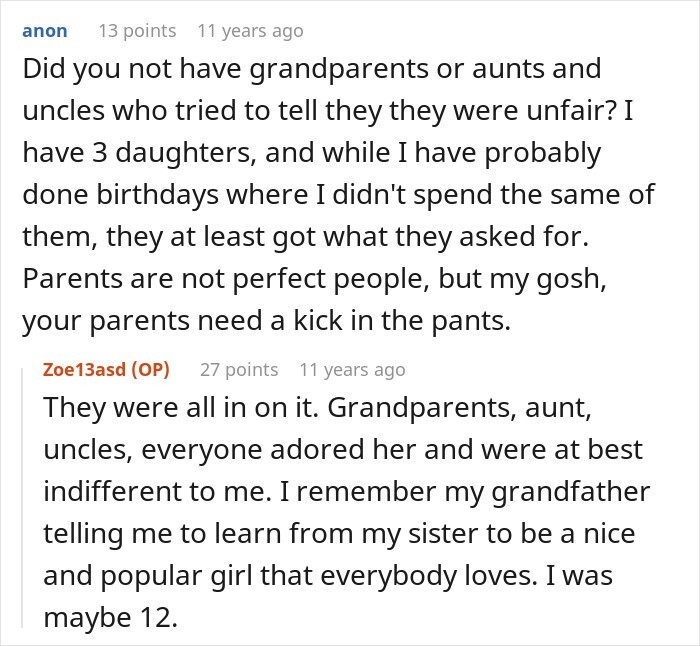
She was constantly told that her sister was worth it, purely because of her looks. Her parents made it clear that her twin was more deserving of clothes, money, expensive gifts and even their time.
Now 21, this woman says she hated her childhood and counted the days until she could leave home and cut contact. She did exactly that as soon as she turned 18. Years later, she’s finally found out the real reason she was treated differently and wishes they’d given her up for adoption.
She was treated as the awkward, ugly duckling while her parents praised her twin’s beauty

gpointstudio / Envato (not the actual photo)

She’s finally found out the real reason for their horrible behavior, and wishes she was adopted

fromkazanwithlove / Magnific (not the actual photo)

vh-studio / Magnific (not the actual photo)

vh-studio / Magnific (not the actual photo)
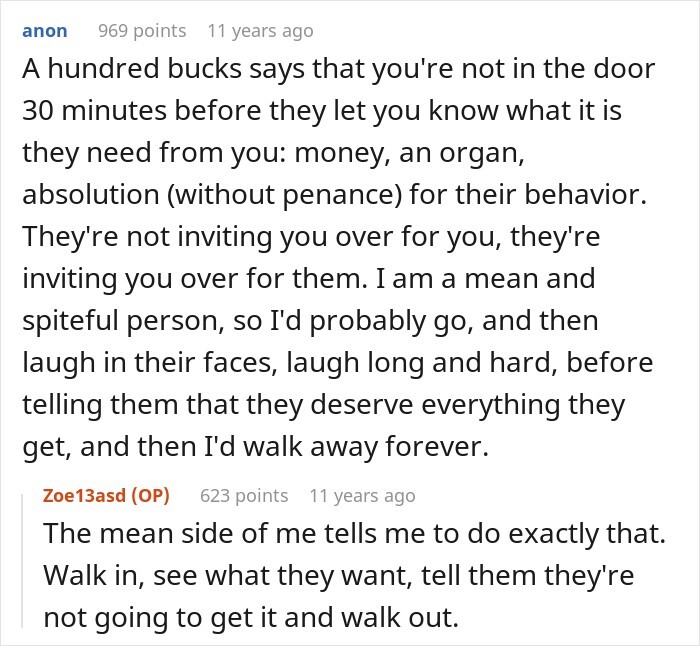
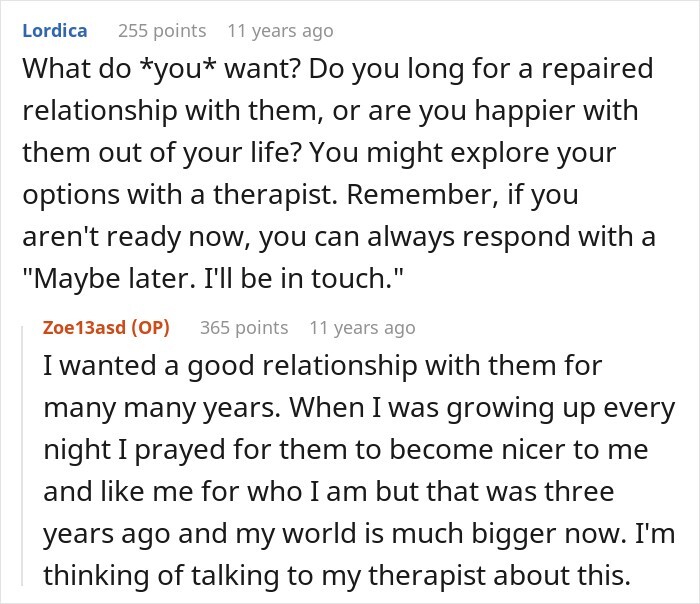
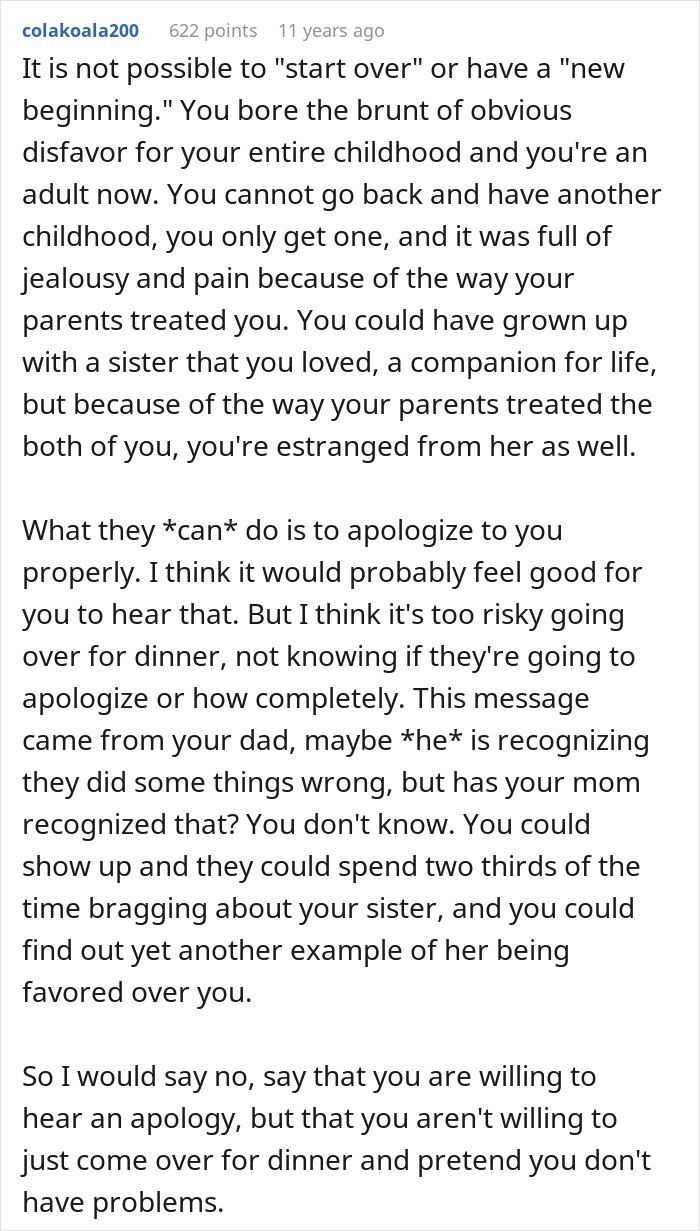
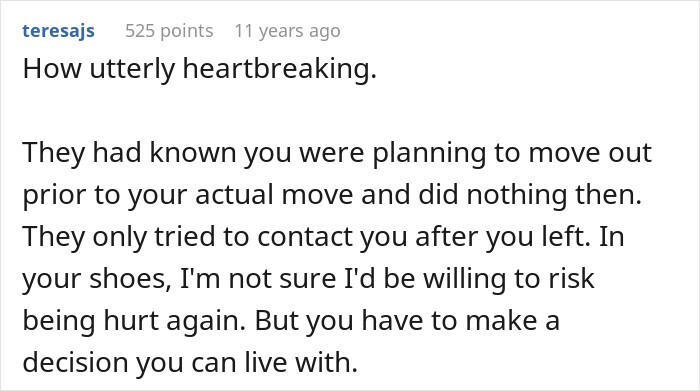
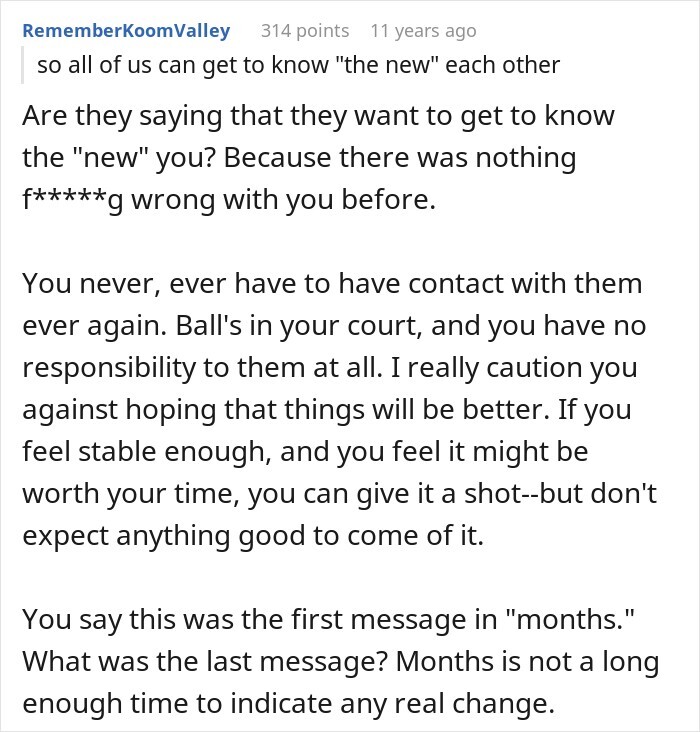
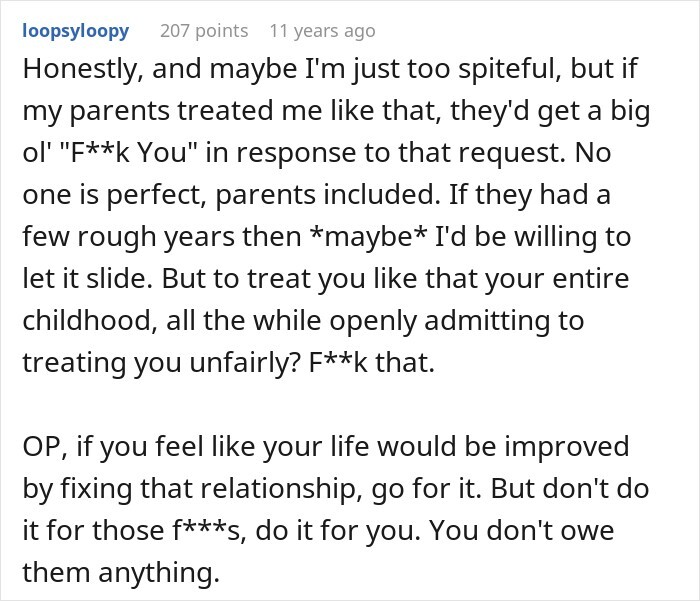
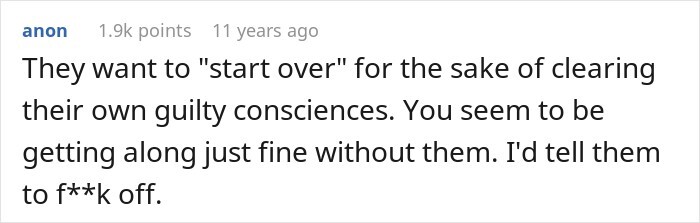
People advised her to do what felt right but many agreed it’s impossible to “start over”



prostock-studio / Magnific (not the actual photo)
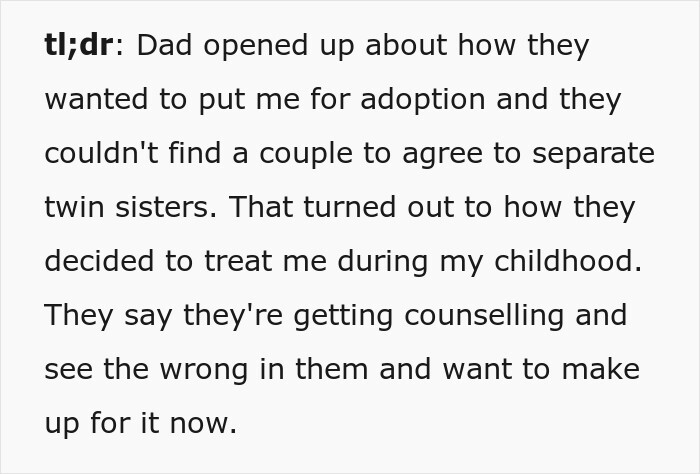
She decided to respond to her father, and later heard the shocking reason she was treated so badly

SkelDry / Magnific (not the actual photo)

user21155762 / Magnific (not the actual photo)

prostock-studio / Magnific (not the actual photo)

stefamerpik / Magnific (not the actual photo)
“Favoritism when raising twins is natural, but doesn’t have to be a problem”: a father’s advice
It’s easy to believe that twin siblings are exactly the same, or very similar to each other. They once shared a womb, and will share the same birthday for the rest of their lives. Some even look identical. But at the end of the day, they’re each unique individuals with their own likes, dislikes, quirks and habits. You might even find that they’re polar opposites.
But experts say all too often, parents go about it the wrong way when differentiating between the two. For example, one might be the “outgoing,” “good,” “clever,” or “beautiful” twin while the other is seen as the opposite.
This is very harmful, says Barbara Klein, an author who has done extensive research on the development of twin identity. Klein, who is a twin herself, warns that labeling twins as opposites harms their self-esteem and identity development.
She further notes that comparing twins intensifies rivalry and may fuel conflict or academic struggles. “Encouraging individuality helps each twin build a healthy, distinct identity,” Klein advises.
Joe Rawlinson, a father of twin girls, admits that it’s easy to have a favorite twin. The founder of the Dad’s Guide to Twins blog and podcast says favoritism when raising twins is natural, but doesn’t have to be a problem.
“Favoritism may be due to your twins’ behavior or physical needs. If one baby self-soothes or sleeps well while her sister needs constant care, you will find yourself spending more time with one over the other,” he explains.
Rawlinson adds that spending time with each twin can also lead to favoritism of one over the other. “This may be because you spend disproportionate time with one or that you prefer the ‘easier’ child over her sibling,” he says.
The father advises that you avoid comparisons, especially if one twin is doing better at something than the other. He suggests focusing on each twin’s strengths and what you love about them. Likewise, he warns against dwelling on the negative of each twin.
“Each twin is unique and will develop at his or her own pace – be that physically or mentally,” Rawlinson says. “Even in the midst of chaos, there are still things that are going well and can be counted as blessings and positive characteristics of your twins.”
The dad suggests that you spend one-onone time with each child to help build a relationship with them. This, he adds, can help avoid favoritism.
If you’re on the receiving end of twin favoritism or rivalry, Klein notes that things often get easier as you age.
“While twin issues with competition and comparison may continue to haunt you, it is easier to deal with them with honesty and perspective,” she explains. “Your sister goes to Europe for a summer holiday and you go hiking in the mountains near where you live. Both of you accept that comparing your experiences is not important.”
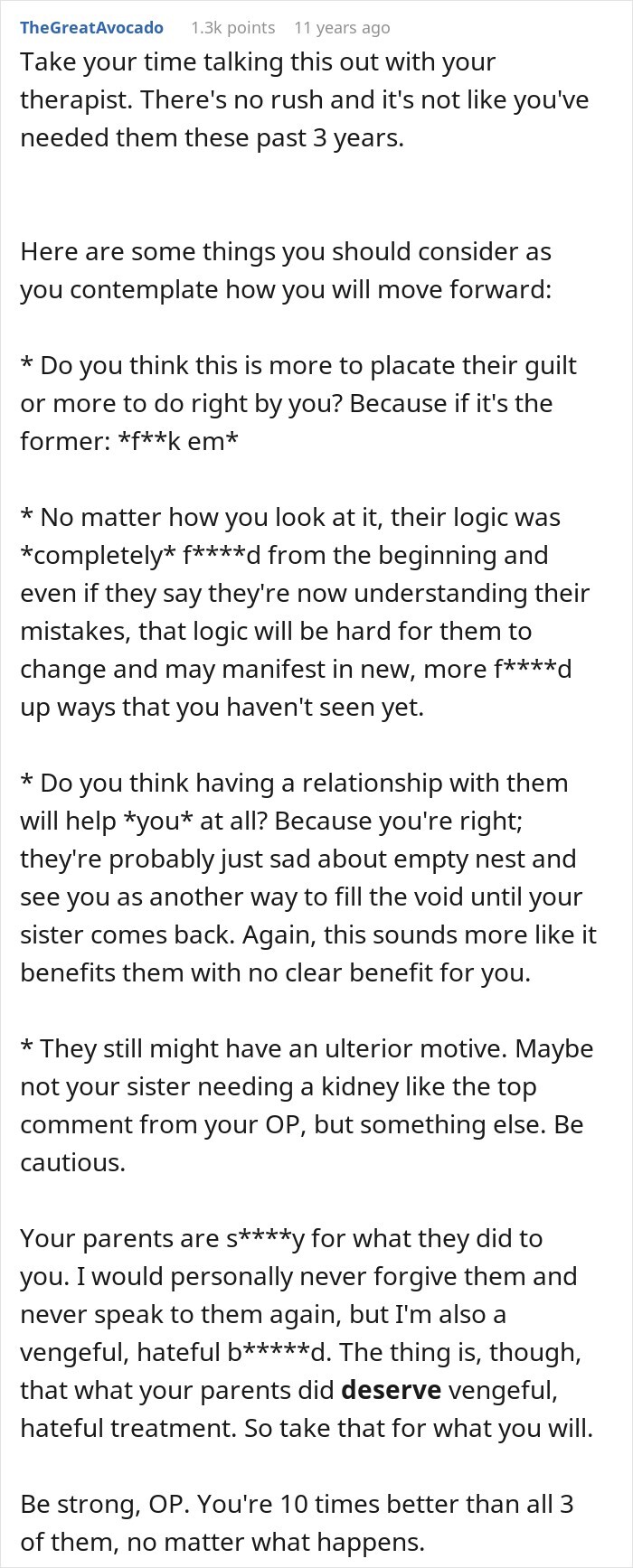
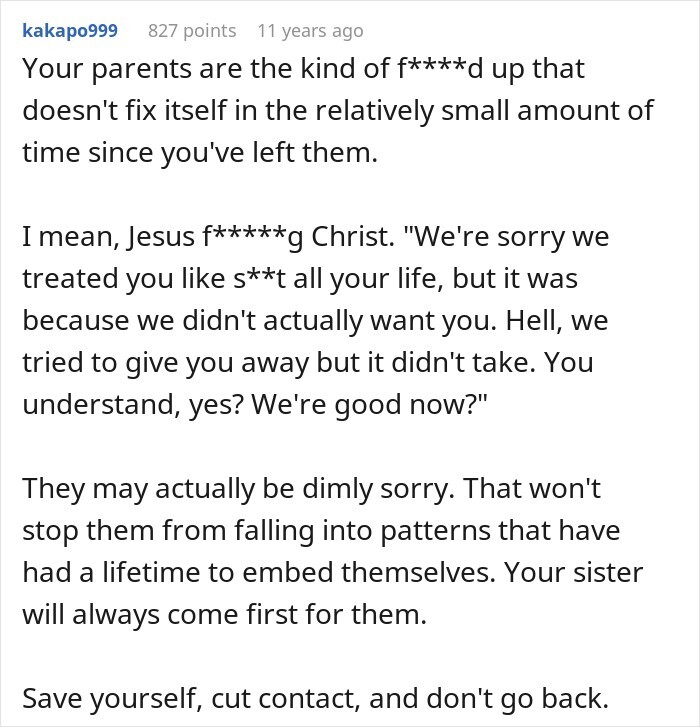
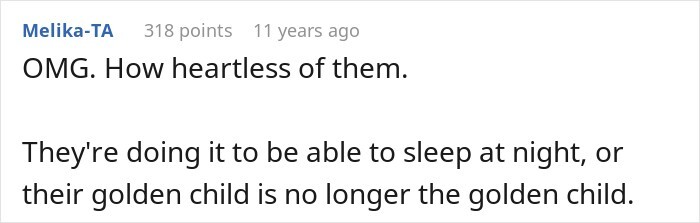
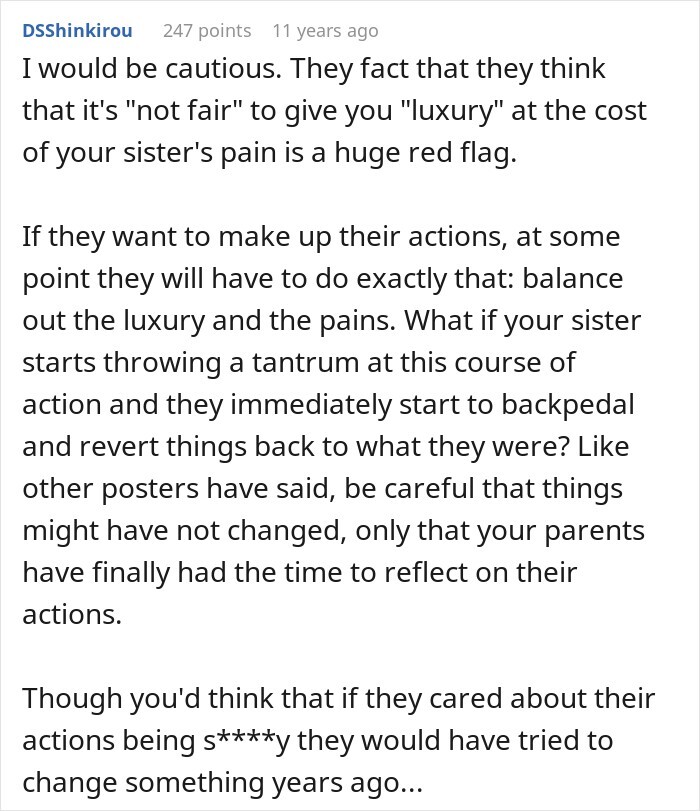
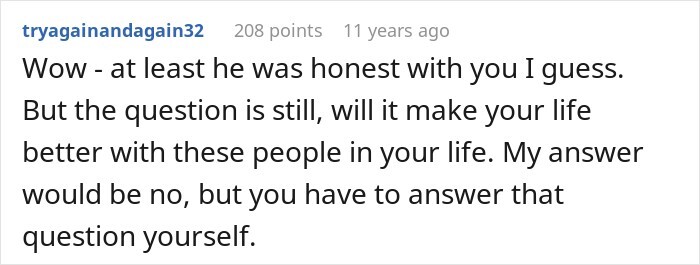
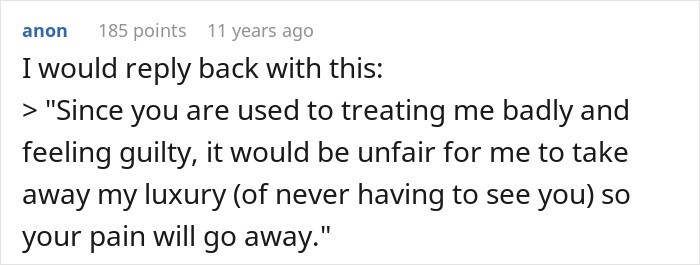
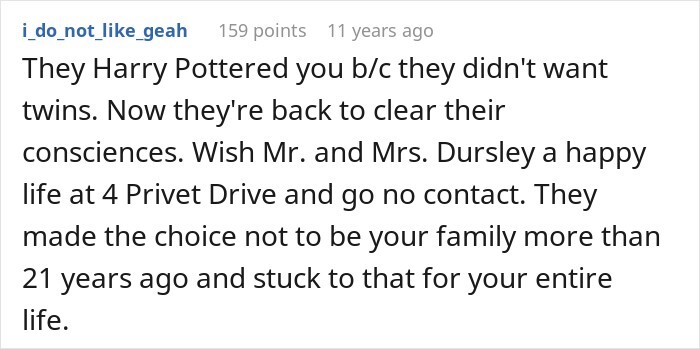
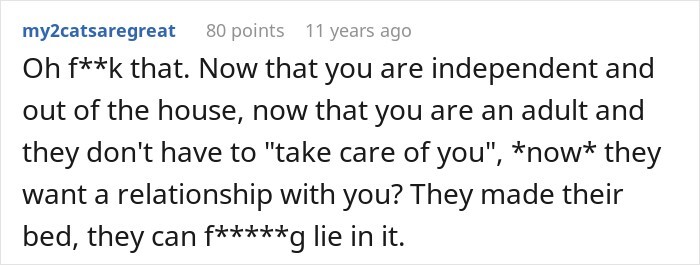
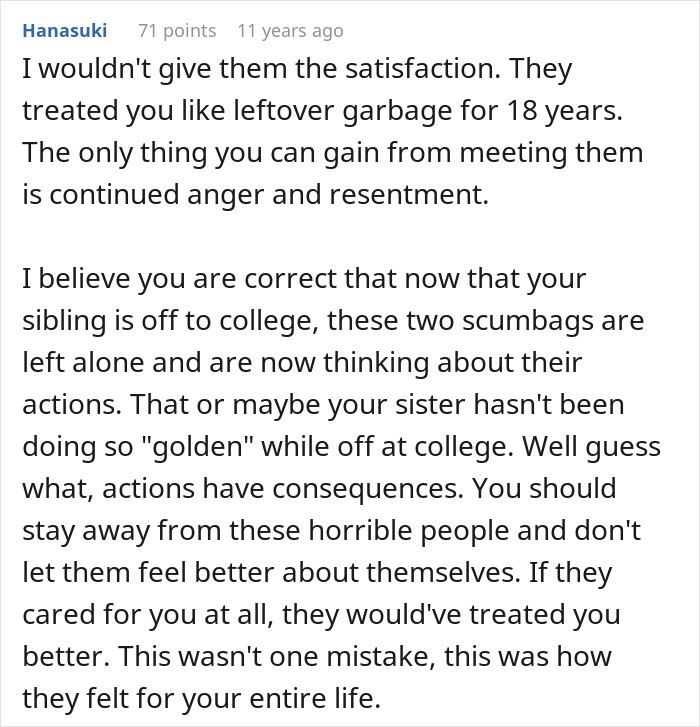
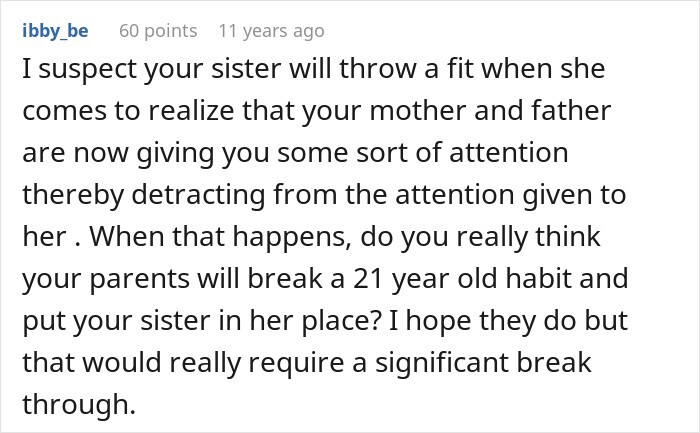
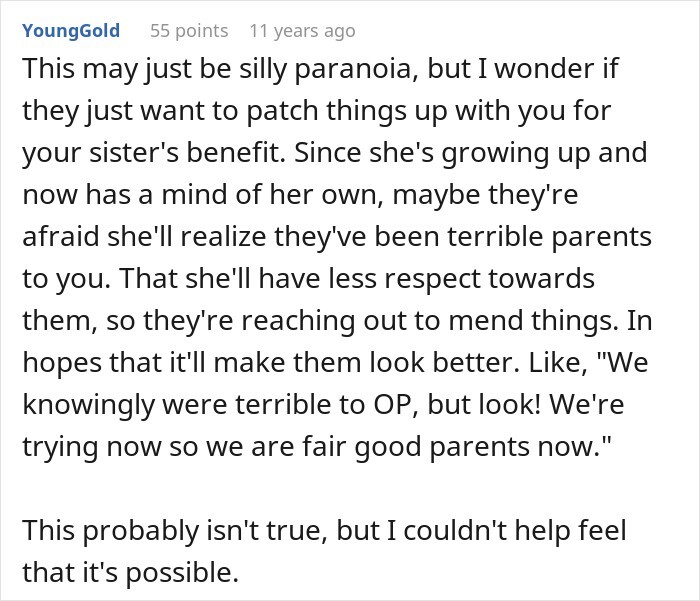
People warned her not to fall for it, with some believing the parents had a hidden agenda
 Follow Us