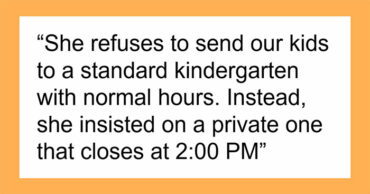
Alexander Pope famously said: “To Err is human.” He is probably also saying from his grave that “to err on social media with confidence is really, really embarrassing.” Or maybe we are looking at it all wrong. Maybe this kind of blind confidence should be admired. Even studied. Because the comment sections of the internet are full of them, and it is an epidemic that doesn’t seem to be ending soon.
What Pope did actually end up saying was that to “forgive is divine.” We aren’t sure what it makes us if we point, repost, and laugh. But it is surely very far from divine. But Bored Panda did the dirty work for you and compiled the most confident among the confident. The knights of not-knowing. The folks who saw an opportunity to argue and completely disregarded the consequences of their undeniable wrongness.
#1

Image source: anonymous

#2

Image source: anonymous
#3

Image source: anonymous
Before assuming that confidently wrong people are simply undereducated, check yourself. Lord Kelvin, aka William Thomson, was one of the most brilliant physicists of the 19th century and the man who essentially revolutionized thermodynamics. There is even a unit of measurement named after him, so it is safe to say the man had something going on upstairs.
That same man declared confidently that “radio has no future,” insisted that “X-rays will prove to be a hoax,” and stated with full conviction that “flying machines larger than air are impossible.” All three of those things now exist, and we can’t even imagine a reality without them. Genius comes with no immunity to being spectacularly, historically wrong, and the sooner we realise that, the better.
#4

Image source: anonymous
#5

Image source: anonymous
#6

Image source: anonymous
You might want to argue that Lord Kelvin was simply a product of his times, so what excuse did Steve Ballmer, CEO of Microsoft, have? He watched Apple announce the original iPhone in 2007 and laughed on camera. In a USA Today interview that has since been viewed millions of times, probably on the very device he was mocking.
“There’s no chance that the iPhone is going to get any significant market share. He doubled down on Microsoft’s existing mobile strategy, missed the smartphone revolution entirely, and the whole episode is widely credited as one of the most expensive wrong opinions in corporate history. The iPhone currently holds around 60% of the US smartphone market. No chance, indeed.
#7

Image source: anonymous
#8
Image source: anonymous
#9

Image source: anonymous
The reason people dig in rather than fold is not stupidity; it is neuroscience. Psychologist Mike Brooks Ph.D. explains that the brain processes being wrong as a direct threat to identity and survival, triggering the same defensive response as a physical threat.
“When our personal or social identity is at stake,” he notes, “we are more likely to distort reality and deny that we are wrong to defend such identities.” So the person in the comments getting increasingly unhinged might seem stubborn, but their brain has classified the correction as an onslaught and is just doing what nature intended it to.
#10

Image source: anonymous
#11

Image source: anonymous
#12

Image source: anonymous
The frustrating irony is that being wrong is actually one of the most useful things a person can do, if they let it be. ASCD, formerly the Association for Supervision and Curriculum Development, identifies mistakes as a critical tool for deeper learning, noting that a positive mistake culture can reinforce metacognition, build resilience, and open up learning that correct answers simply cannot.
They also say we should strive towards creating a “positive mistake culture,” where we don’t get dismissed for being wrong. The problem is that this only works if the person experiencing the mistake is willing to sit with the discomfort of it rather than immediately launching a counteroffensive in a comment thread.
#13

Image source: anonymous
#14

Image source: anonymous
#15

Image source: anonymous
But one burning question remains unanswered. Are men or women more likely to have all the audacity in the comment section? Behavioral studies examining the effects of testosterone found that higher levels are associated with decreased cognitive reflection and an increased intuitive feeling of being correct.
This does not mean that men are wrong more often, but it does suggest they may be quicker to form a snap judgment and slower to question it afterward. The double-checking step, the one where you pause and think “wait, am I sure about this,” is the exact step that gets skipped.
#16

Image source: anonymous
#17

Image source: anonymous
#18

Image source: anonymous
What happens after the mistake is also telling. Sociological and psychological research notes that men tend to frame past errors briefly and philosophically, filing them under “learning experience” and moving on. Women are more likely to give detailed, emotionally expressive accounts of where things went wrong.
Neither approach is objectively better, but one of them does produce significantly more self-awareness about the mechanics of the mistake, which is probably useful information the next time the urge to post with absolute certainty arrives.
#19

Image source: anonymous
#20

Image source: anonymous
#21

Image source: anonymous
The good news is that there is a way out, and it is simpler than most people make it. Deborah Grayson Riegel, writing for Harvard Business Review, says, “Swallow your pride, say ‘I was wrong.'” Offer a brief explanation without turning it into a defense, and actually listen to the response without interrupting or getting defensive.
If your mistake affected other people, acknowledge that specifically. Address both the practical fallout and the relational one, because sometimes the real damage is not the wrong answer but the way you argued for it. Then tell people what you have learned and what you plan to do differently. That is the whole process. It is not complicated; it is just uncomfortable.
#22

Image source: brutalproduct
#23

Image source: AmunPharaoh
#24

Image source: anonymous
What the comment sections collected here have in common is not malice. Most of these people are not bad, they are just deeply, visibly committed to a version of events that is not accurate, and the internet has the receipts. There is something almost poetic about a medium that never forgets being the permanent home of every confident wrong opinion ever typed into it.
Lord Kelvin at least had the dignity of being wrong before the screenshot existed. The rest of these people were not so lucky.
Have you ever had to argue against someone who stood their ground despite being embarrassingly wrong? Let’s have a laugh about it together in the comments.
#25

Image source: anonymous
#26

Image source: anonymous
#27

Image source: anonymous
#28

Image source: anonymous
#29

Image source: anonymous
#30
Image source: anonymous
#31

Image source: anonymous
#32

Image source: anonymous
#33

Image source: anonymous
#34

Image source: anonymous
#35

Image source: anonymous
#36

Image source: anonymous
#37

Image source: HelloIAmKelly
#38

Image source: anonymous
#39

Image source: mafti7
#40

Image source: anonymous
#41

Image source: jaytix1
#42

Image source: IntlMan902102020
#43

Image source: anonymous
#44

Image source: jaytix1
#45

Image source: mi_re
#46

Image source: jaytix1
#47

Image source: anonymous
#48

Image source: anonymous
#49
Image source: anonymous
#50

Image source: anonymous
#51

Image source: anonymous
#52

Image source: anonymous
#53

Image source: anonymous
#54

Image source: anonymous
#55

Image source: anonymous
#56

Image source: anonymous
#57

Image source: anonymous
#58

Image source: anonymous
#59

Image source: anonymous
#60

Image source: anonymous
#61

Image source: anonymous
#62

Image source: anonymous
#63

Image source: anonymous
#64

Image source: anonymous
#65

Image source: pommybear
#66

Image source: egdelwonk4216
#67
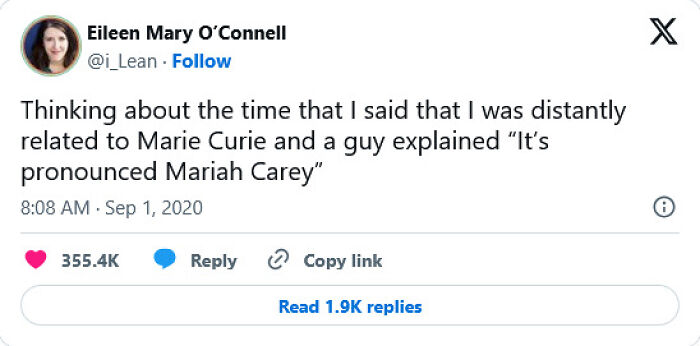
Image source: anonymous
#68

Image source: Ehansaja
#69

Image source: anonymous
#70

Image source: Anon-Zer0-Quazar
#71

Image source: anonymous
#72

Image source: Thryloz
#73

Image source: nimble_infringement
 Follow Us