A healthy, immunocompetent 11-year-old Canadian boy passed away in 2024 due to a rare condition that takes fewer than 10 lives in the USA each year, according to the Centers for Disease Control and Prevention (CDC).
The tragedy occurred a little over a month after a bat seemingly bit the child during a vacation.
His passing was recently discussed in a Canadian Medical Association Journal case study by doctors from the Department of Pediatrics and Child Health at the University of Manitoba, Canada, published on June 29, 2026.
The article highlighted that the boy’s demise could have been prevented had he been accurately diagnosed and subjected to the appropriate treatment sooner.
An 11-year-old boy was repeatedly misdiagnosed after falling ill from contact with a bat

Image credits: Bishoy Kaldas/Unsplash (not an actual photo)
In 2024, during a visit to a cottage in Ontario with his family, the boy, who wasn’t named in the report, woke to find a bat sitting on his face, right over his nose and mouth.
He swatted at it, and his father then caught the winged mammal in a cooking pot and released it outside.

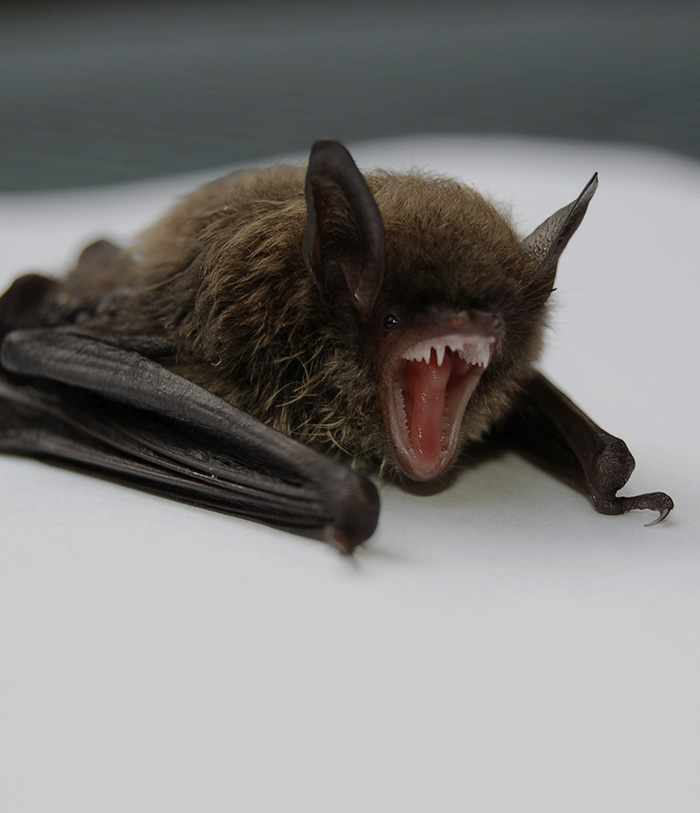
Image credits: Todd Cravens/Unsplash (not an actual photo)
As the child had no visible bite marks on his face or body and felt fine afterward, the parents did not seek immediate medical attention.
However, 19 days later, the child began to experience progressive tingling and numbness on the right side of his face, followed by swelling and loss of appetite.

Four days later, the parents took the boy to a local urgent care clinic, where a doctor presumed he had Bell’s palsy caused by the herpes virus and prescribed medications accordingly.
Three days later, he had to be taken to the emergency room of a city hospital with vomiting and painful swallowing. Doctors found ulcers in his gums and a mild impairment in a nerve on the right side of his face.

Image credits: Richard Stachmann/Unsplash (not an actual photo)
This time, the parents reported the bat incident to the hospital, and the local public health authority was notified. Still, the boy was discharged after being treated for a suspected case of herpes gingivostomatitis, where the patient develops sores in and around the lips.
It did not help.
The child was diagnosed with rabies, a fatal disease, too late
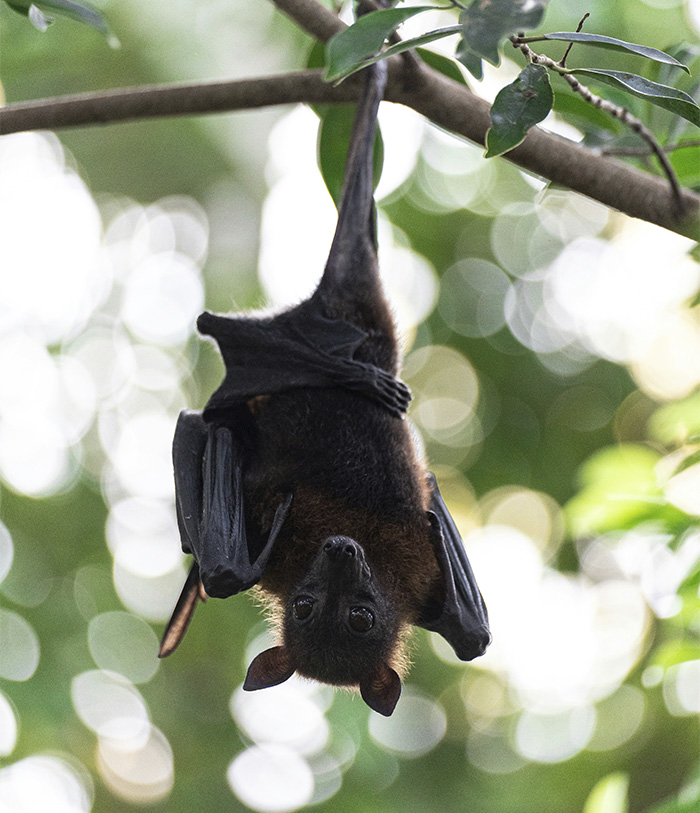
Image credits: Frida Lannerström/Unsplash (not an actual photo)
By the next morning, the boy had to return to the ER with reduced sensation in his face and slurred speech, and later developed hallucinations while waiting at the hospital.
By evening, his condition had rapidly worsened, with the onset of multiple nervous issues.
The boy was placed on a ventilator and admitted to the pediatric intensive care unit (PICU).
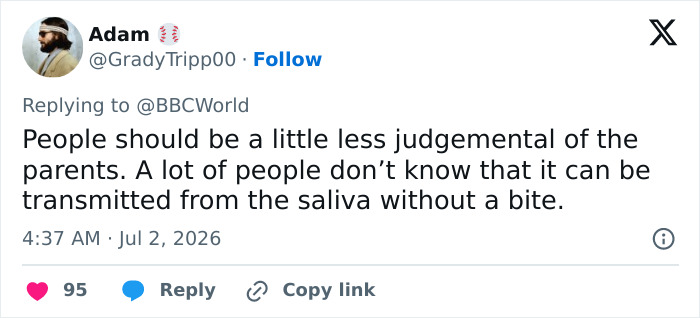
Image credits: GradyTripp00
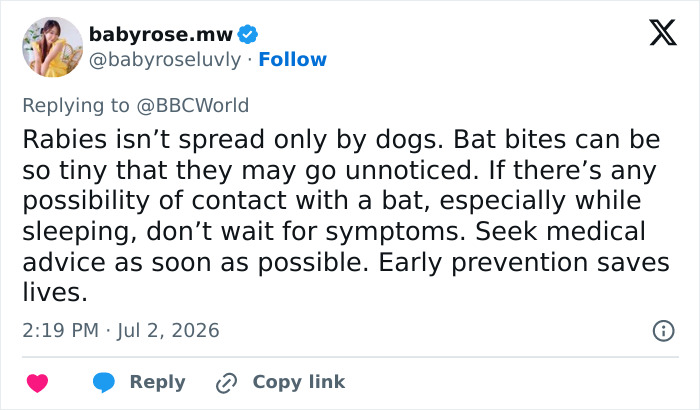
Image credits: babyroseluvly
At this point, the doctors suspected that the child might have contracted rabies from the bat that sat on his face.
A PCR test confirmed a rabies diagnosis on the fourth day of his admission, and the Canadian Food Inspection Agency also identified a bat rabies variant in his blood.
But it was too late.

Image credits: Cottonbro Studio/Pexels (not an actual photo)
“The patient’s hospital course was complicated by autonomic dysfunction, ventilator-associated pneumonia, and progressive neurologic decline,” the study said. “By day 5 of admission, his brainstem reflexes were absent.”
Despite the best efforts of the medical professionals, the boy succumbed to the disease on his 17th day in the hospital.
Rabies causes fewer than 10 fatalities each year in the US
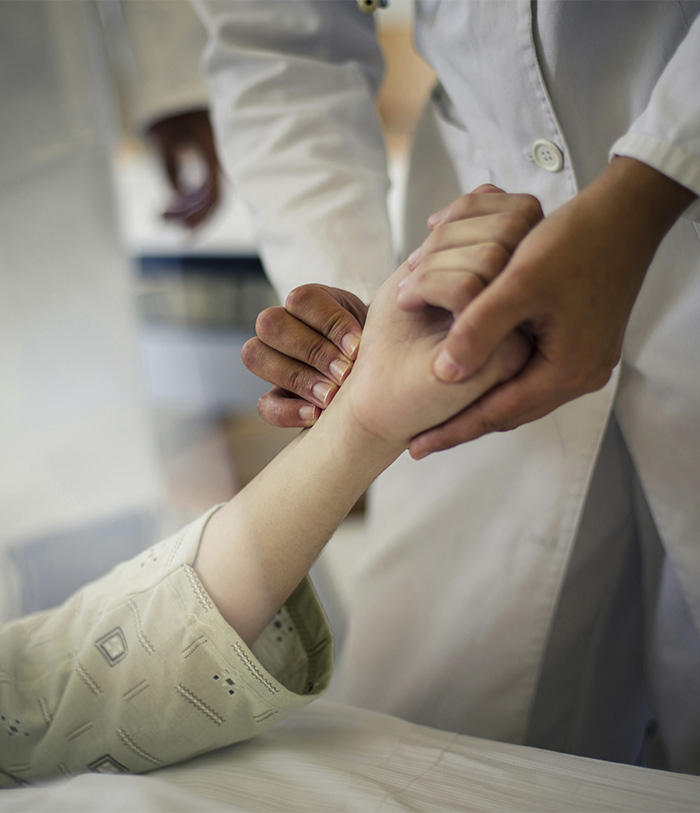
Image credits: Getty Images/Unsplash (not an actual photo)
Rabies, a virus generally contracted from an animal’s bite, scratch, or fluid contact, attacks the central nervous system of humans and is nearly 100% fatal once symptoms appear, with no effective cure.
However, it is also nearly 100% preventable if Post-Exposure Prophylaxis (PEP), an emergency 28-day course of antiretroviral medication, is administered.
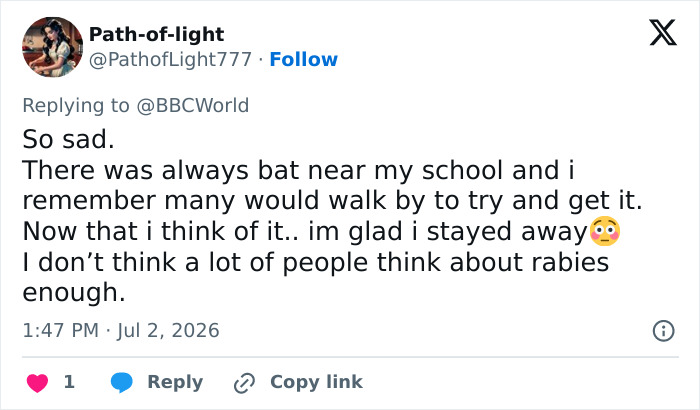
Image credits: PathofLight777
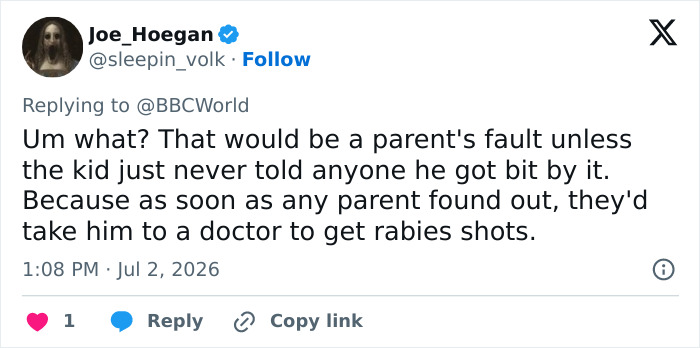
Image credits: sleepin_volk
Generally, animals carrying the rabies strain are unpredictable and act erratically, but the markers are not so clearly visible in bats.
“Sometimes, people still d*e from rabies, usually because they didn’t get medical help soon enough after being scratched or bitten,” the CDC says. “It’s important to be aware of the risk, especially with bat bites, which can be easy to ignore because they don’t always leave obvious marks.”
Image credits: Osarugue Igbinoba/Unsplash (not an actual photo)
Annually, 1.4 million Americans receive medical attention for possible rabies exposure, 100,000 receive PEP treatment, and fewer than 10 cases end in fatality, according to the CDC. Around 70,000 people lose their lives to it every year, worldwide.
Around 6 million animal bite cases and 4,000 animal rabies cases are reported each year in the USA, with more than 90% occurring in wildlife like bats, raccoons, skunks, and foxes.
Image credits: Gustavo Fring/Pexels (not an actual photo)
While wild animal bites may not always be preventable, humans can reduce the risk of rabies exposure by vaccinating their pets and seeking immediate medical care if they come into contact with a non-domestic animal.
Rabies symptoms in humans typically appear within 20-60 days and include flu-like symptoms, followed by muscle spasms, seizures, confusion, erratic behavior, and a fear of water, among other signs.
“Awareness and time action save lives.” The internet mourned the demise of an 11-year-old boy due to rabies
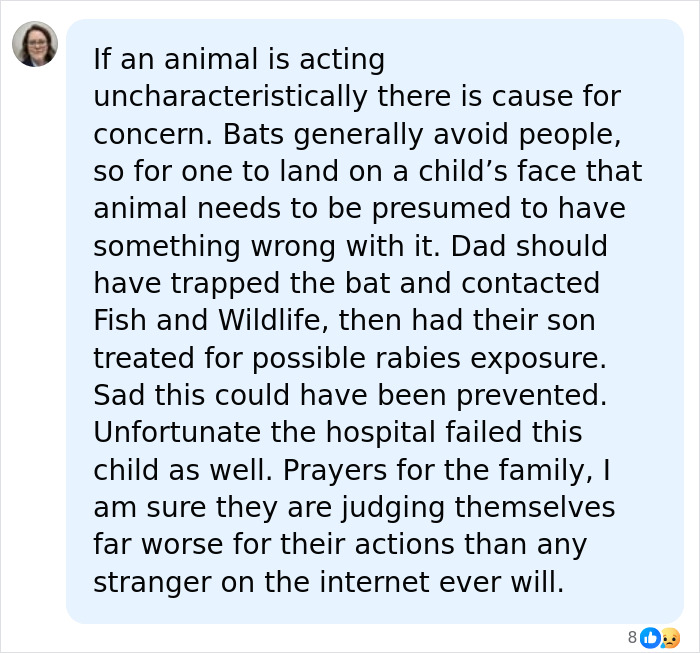





 Follow Us