A sudden inheritance can sound like the ultimate cheat code for adulthood. You know, mortgage paid off, debts gone, maybe a reliable car and enough left over to breathe a little easier. But money has a funny habit of exposing differences that were already there. Give two people the same financial head start and you can end up with two completely different stories.
That is essentially what happened in this case. One sibling treated the inheritance as a chance to build financial stability, while the other apparently took on a mortgage, lost the property and eventually found himself asking family for help with rent. The story raises a broader question about what happens when grief, inheritance, financial responsibility and family expectations all get dumped into the same pot.
Sometimes the hardest part isn’t saying no to a stranger, it’s saying no to someone who thinks being family means you can never say no

wirestock (not the actual photo)

The woman and her brother inherited a substantial sum from their late parents, and she used her share to buy a home and clear debts





katemangostar (not the actual photo)
Her brother bought a home with a mortgage but soon fell behind on payments and chose to give up the property despite the bank offering a way to catch up











After selling the house and moving into an apartment, the brother later ran short on rent and asked the woman for financial help









The woman refused to pay, while the brother’s wife accused her of owing them money and blamed her for their financial struggles
Receiving an inheritance can fundamentally change someone’s financial position, but financial experts generally recommend resisting the urge to immediately make major decisions. Synchrony’s guide to managing a financial windfall recommends taking a cooling-off period, understanding your overall financial situation and treating newly acquired money as a long-term asset rather than simply extra spending cash.
That is particularly relevant to the story because the siblings appear to have approached the same inheritance very differently. They also recommend dealing with financial essentials such as high-interest debt and establishing an emergency fund before concentrating on longer-term investing. In other words, having a pile of money today does not necessarily mean you are financially secure tomorrow.
One of the biggest differences in the story is that the woman used her inheritance to buy a modest home outright, while her brother used only part of his money as a down payment and financed the rest. There isn’t anything inherently wrong with taking out a mortgage, as millions of homeowners do exactly that, but a mortgage turns a home purchase into a long-term financial commitment rather than a one-time expense.
Consumer Finance explains that choosing a mortgage involves considering not only the property itself but also the loan and the ability to manage payments over time. The important distinction here isn’t simply “mortgage bad, cash good”, it is that a large inheritance doesn’t make future payments magically affordable.

pixaflow (not the actual photo)
It is also interesting to see how money has a particular ability to turn old family dynamics into fresh arguments. Research examining inheritance interactions found that families can approach inheritance through competing motivations, including equality, reciprocity, family solidarity and self-interest. That makes disputes over who received what, or who paid for what, particularly emotionally loaded.
They describe these inheritance disputes as a form of “relational mismatch”, where disagreements over wealth intersect with people’s expectations about family relationships and fairness. In the story, the disagreement may have become tied to competing ideas about what each sibling deserved, who had contributed to the estate process, and whether one relative was responsible for helping another financially afterward.
At the end of the day, helping family financially can become complicated when the help has no clear boundaries. When does helping a struggling relative become an expectation rather than a favor? The woman had already contributed time and money toward dealing with their parents’ affairs, yet later found herself being asked to help cover her brother’s living expenses.
Financial assistance between relatives can be especially complicated because saying “no” can feel less like rejecting a financial request and more like rejecting the person. But Mayfair Therapy insists that having more money, or having handled an inheritance differently, doesn’t automatically create an obligation to finance another adult’s expenses.
What would you do if you were in this situation? If a family member squandered a large inheritance and later faced eviction, would you feel obligated to step in? We would love to know your thoughts!
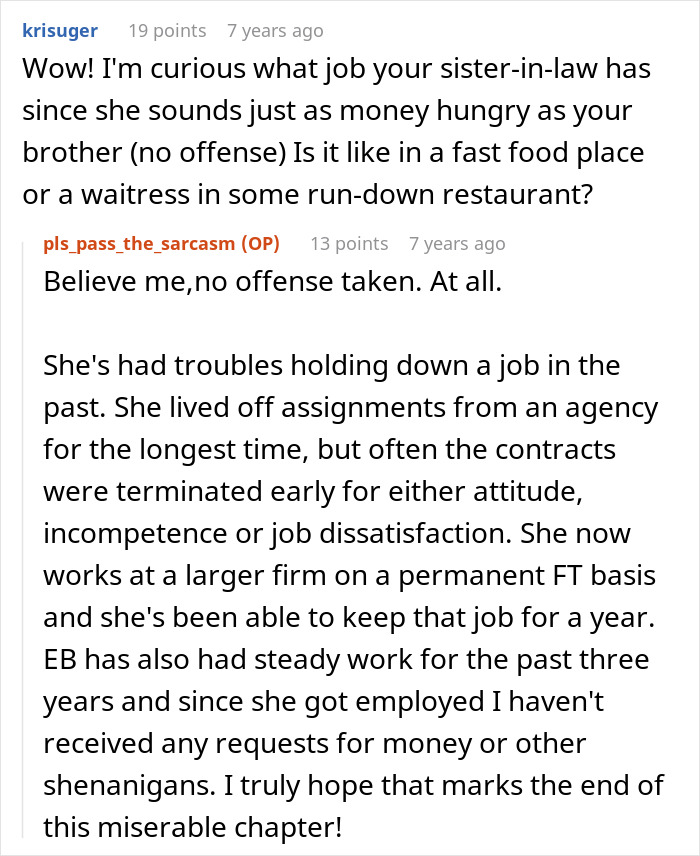
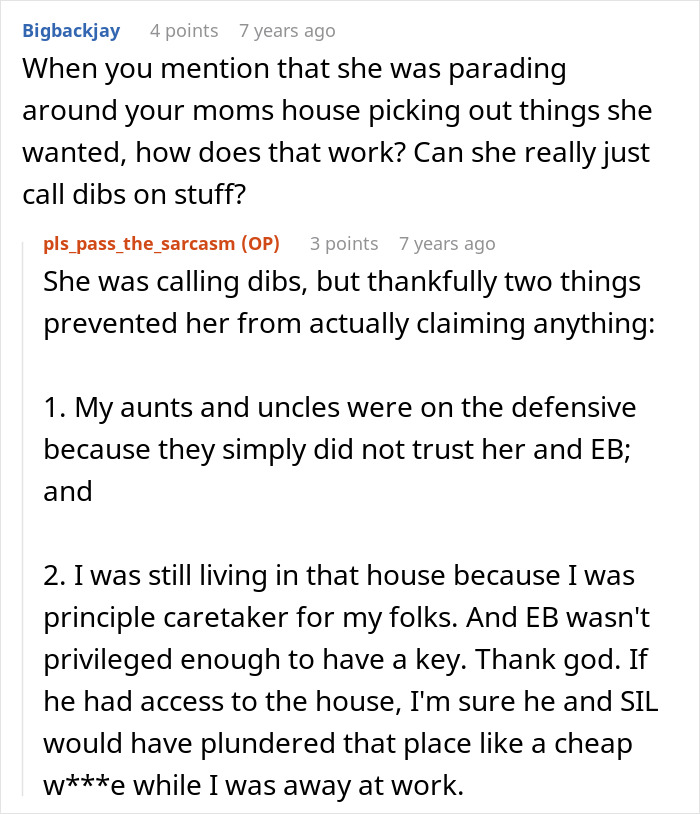
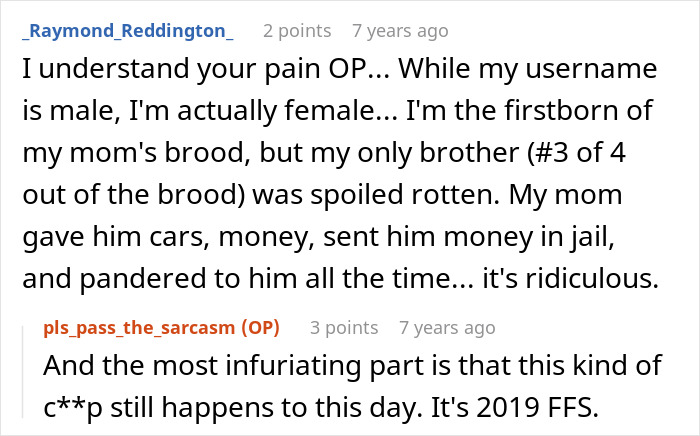
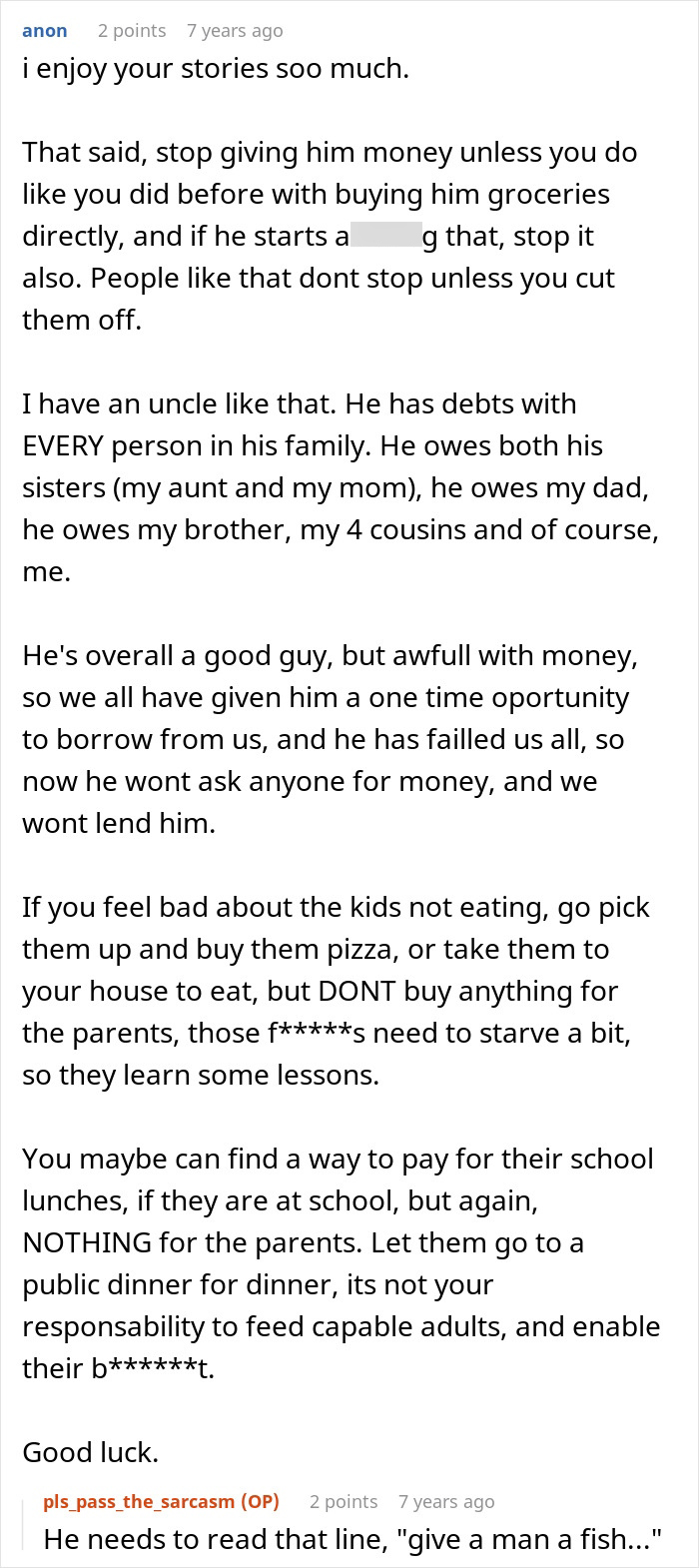
For netizens, the biggest mystery wasn’t how the brother managed to burn through his inheritance, but why the woman was still in contact with him and his wife


















 Follow Us