Nobody expects you to be best friends with your colleagues. As long as you can be cordial with one another and complete all of your responsibilities, there won’t be any issues.
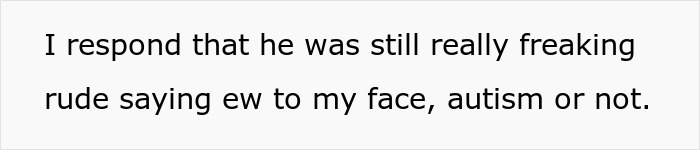
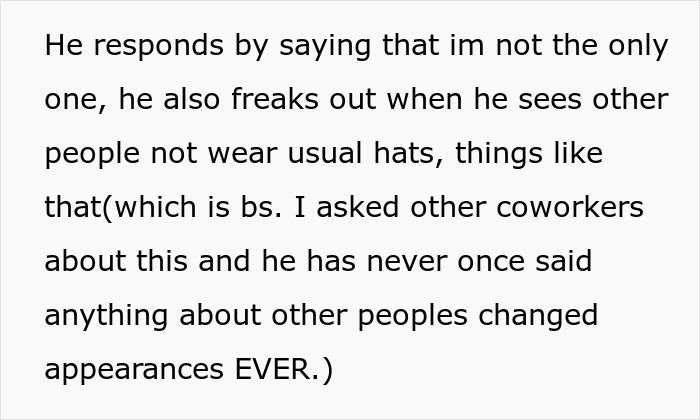
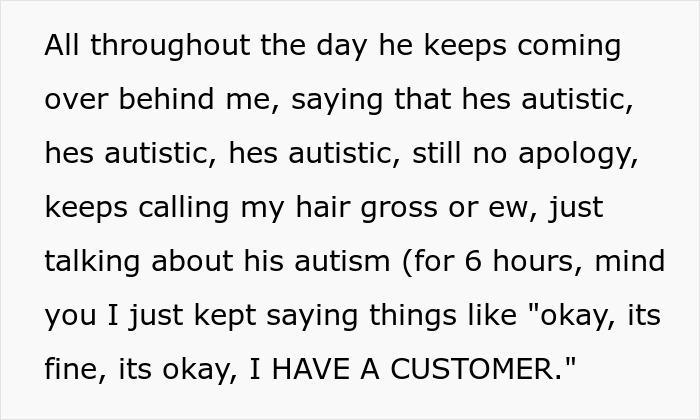
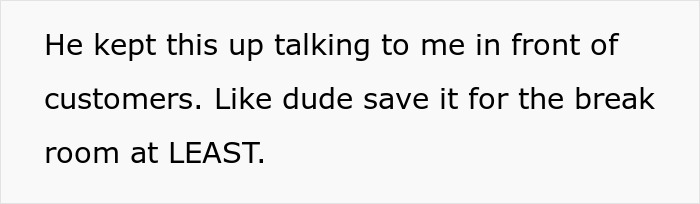
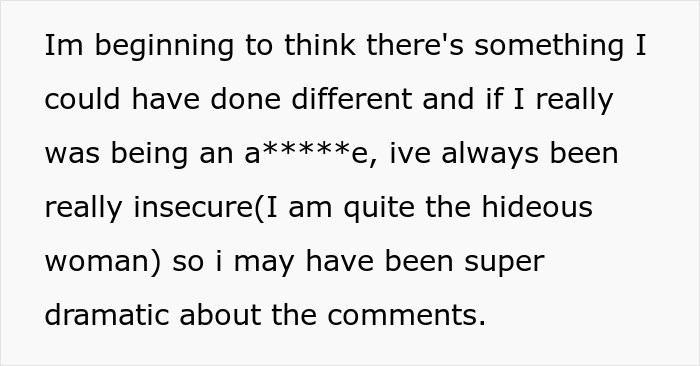
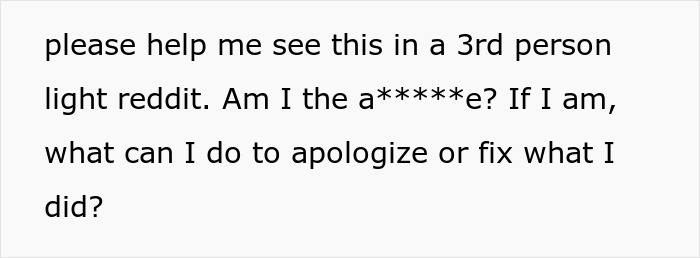
But when one woman spent the entire day being harassed by a coworker who seemed to be using his diagnosis as an excuse, she couldn’t bite her tongue any longer. Below, you’ll find all of the details about this workplace drama that the woman shared on Reddit, as well as some of the replies invested readers left her.
There will be coworkers that you’re not a fan of in any workplace

magnific / Magnific (not the actual photo)

After biting her tongue for hours, this woman finally snapped at a coworker who refused to stop harassing her
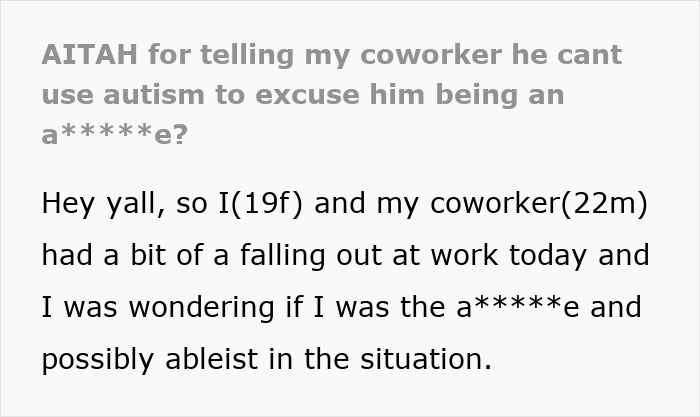
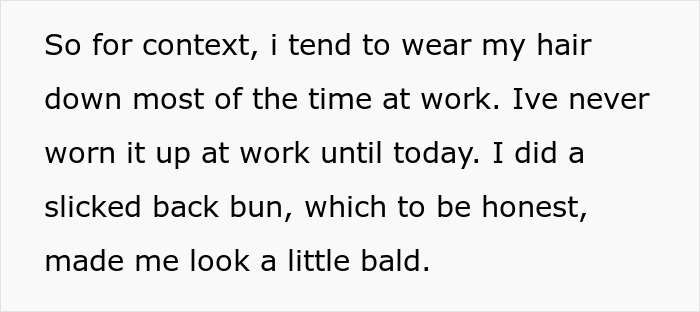
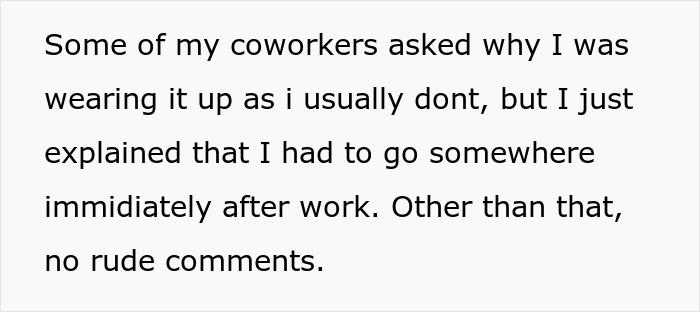

kues1 / Magnific (not the actual photo)
Autism spectrum disorder can make it very difficult to read social cues
People on the autism spectrum can live extremely fulfilling, independent lives. In many cases, the people they interact with wouldn’t even be able to tell that they’re autistic. But being on the spectrum does undoubtedly come along with challenges, often relating to social situations.
The National Autistic Society explains that many autistic individuals communicate a bit differently than their neurotypical peers. They may find it more challenging to read body language or facial expressions, choose a tone of voice or volume of speech, judge pauses or turn-taking, and understand metaphors, idioms, jokes, irony and sarcasm.
It’s common for people on the autism spectrum to use more direct language, which can be interpreted as being blunt. They may also speak more formally or precisely than their peers.
Unfortunately, these speech and communication differences are often misinterpreted by others, especially others who may not be aware that the person is autistic. This can lead to judgment or rejection from peers, difficulty making friends, tiredness and fatigue after social interactions, and anxiety about social situations.
It’s important for autistic individuals to have support from others and self-managed strategies to ensure that they can have successful social interactions. Meanwhile, it’s best if others show them patience and allow for additional processing time when they need it.
There is a difference, however, between showing grace to individuals on the spectrum and allowing them to communicate in ways that are considered rude without bringing it to their attention.
Whether we like it or not, there are some ways to speak to other humans that are considered kind and others that aren’t. So even though it may be more challenging for those who struggle with social cues to understand what is perceived as rude, that doesn’t mean that they’re entirely exempt from all social rules.
But a diagnosis does not justify being rude to other people
Simply Psychology explains that autism is often a valid explanation for why someone may behave a certain way, but it’s not a valid excuse for being downright mean. Once behavior has been flagged as rude, the person can make a choice to work on changing their behavior.
Using a diagnosis to shut down feedback from others isn’t a healthy way to communicate. We all make mistakes unintentionally and accidentally hurt other people’s feelings at times; that’s part of being human. But anyone, including a person on the autism spectrum, is capable of taking accountability.
Plus, many autistic adults believe that giving people on the spectrum a free pass to behave poorly infantilizes them. They may need to be taught or told that certain behaviors are not appropriate, but once they learn, they are in control of their own choices.
Infantilizing people on the spectrum is harmful because it implies that they aren’t fully-formed adults who can make their own decisions and who are responsible for their actions. Meanwhile, if a person gets used to being treated this way, it may sow self-doubt and extreme anxiety about making decisions.
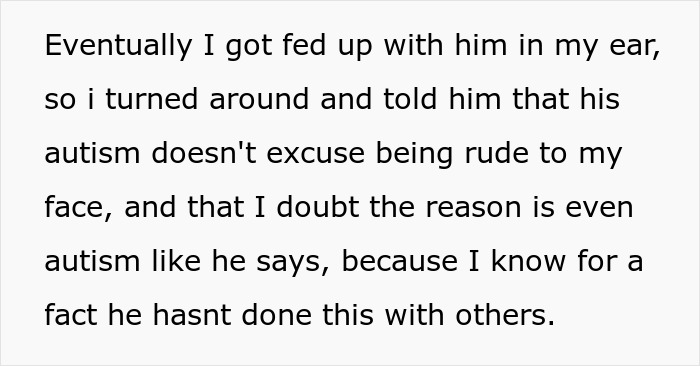
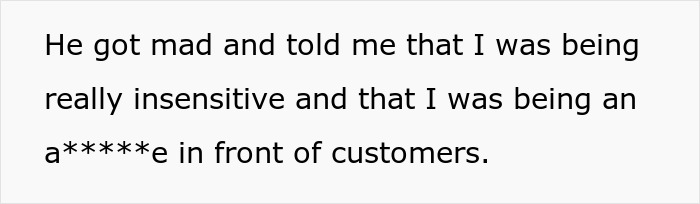
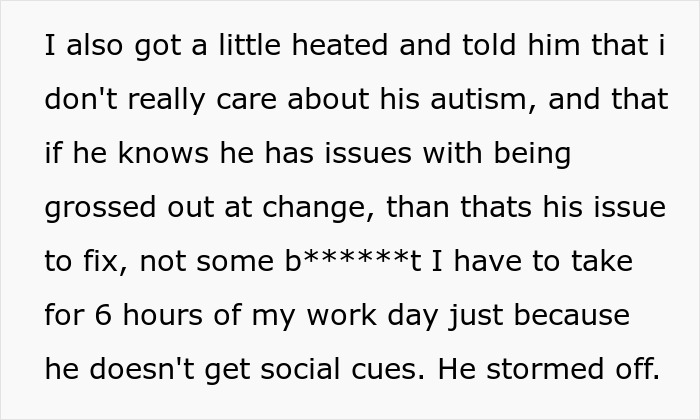
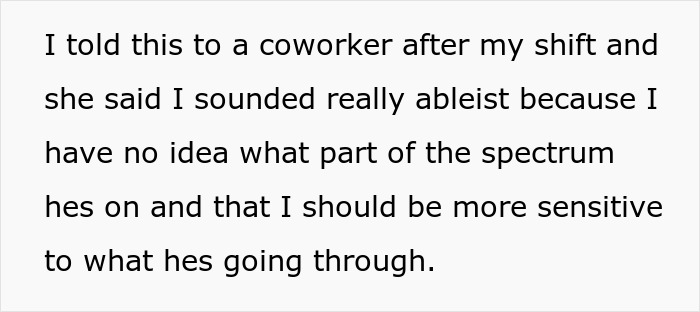
In this particular story, it’s very possible that the man didn’t initially realize that he shouldn’t comment negatively on his coworker’s hairstyle. But that doesn’t give him a pass to harass her the entire day.
It’s important to approach every situation with empathy and give others grace. And if this man believes that he’s incapable of being polite, he’s probably just not giving himself enough credit.
We would love to hear your thoughts on this situation in the comments below, pandas. How would you have responded if you were in the author’s shoes? Then, if you’re interested in checking out another article from Bored Panda discussing similar workplace drama, look no further than right here.
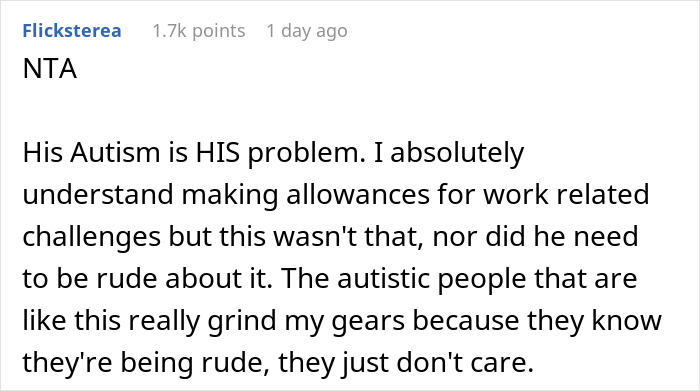
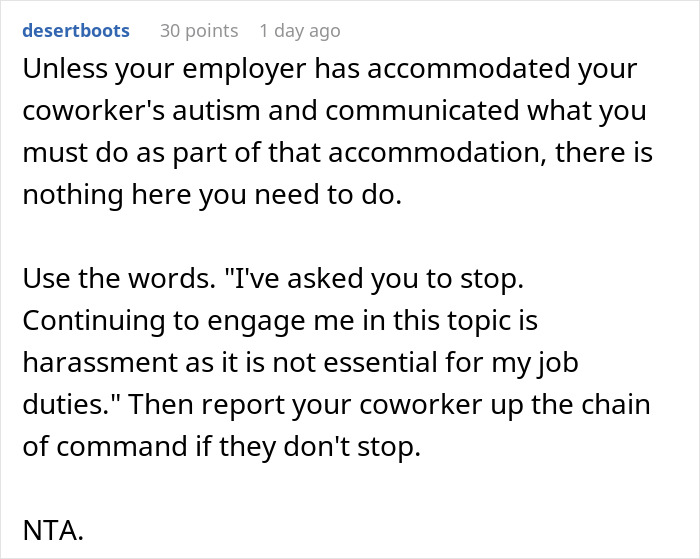
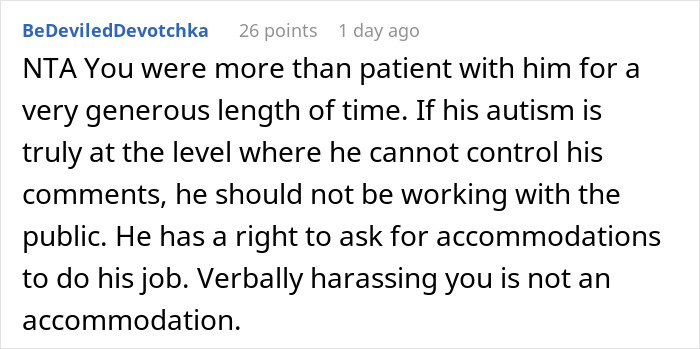
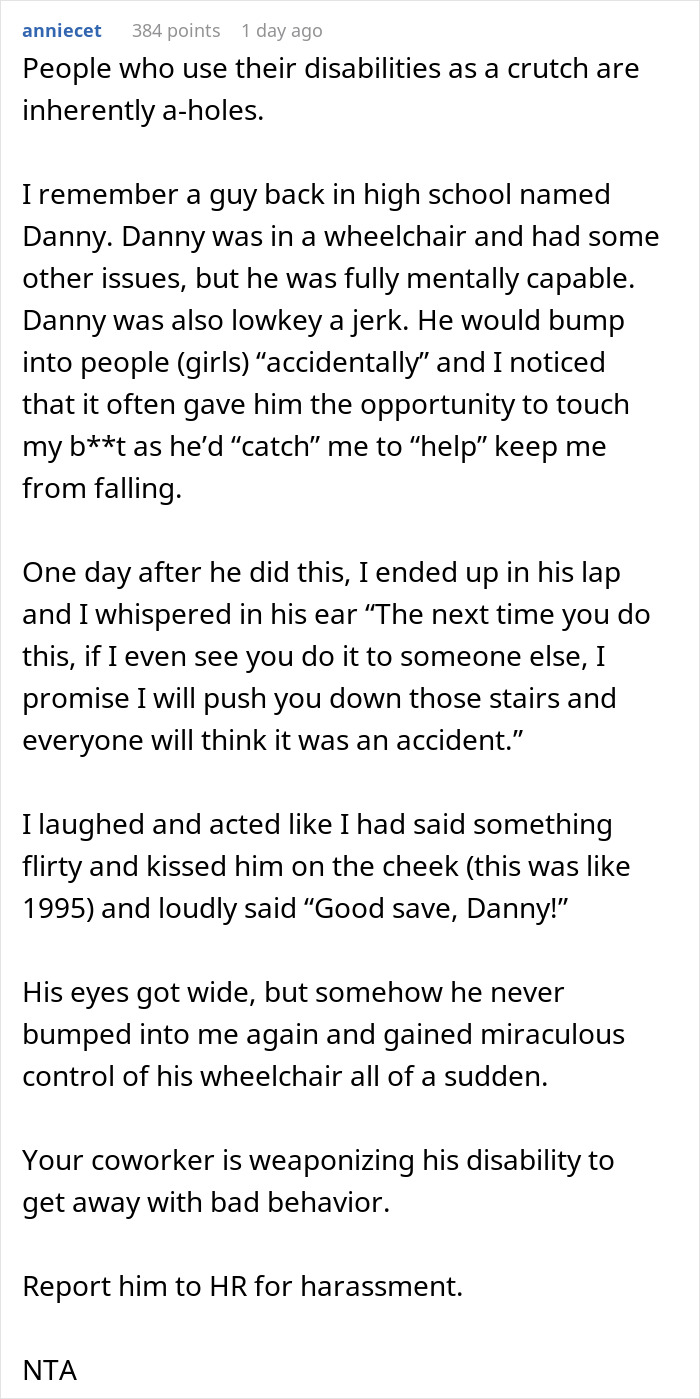
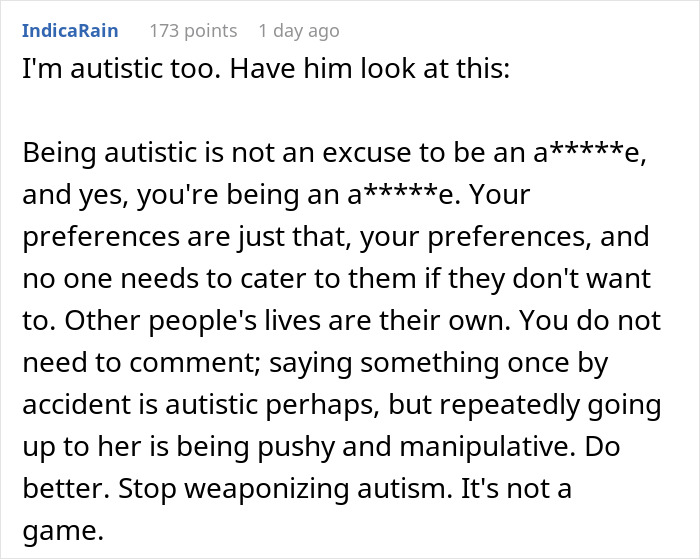
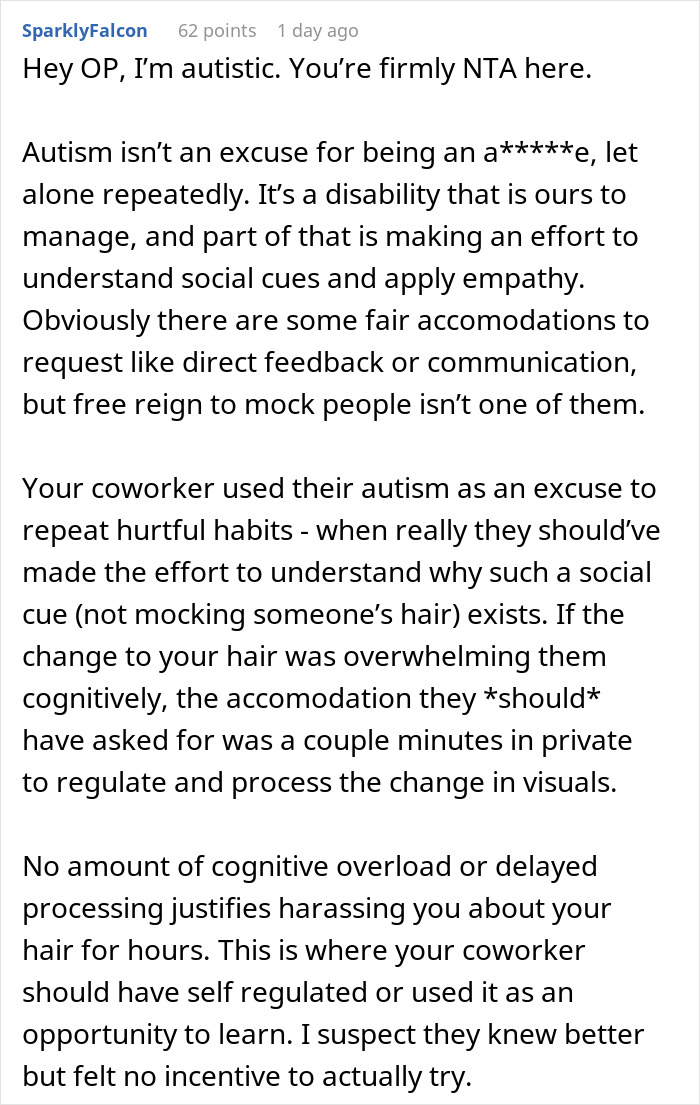
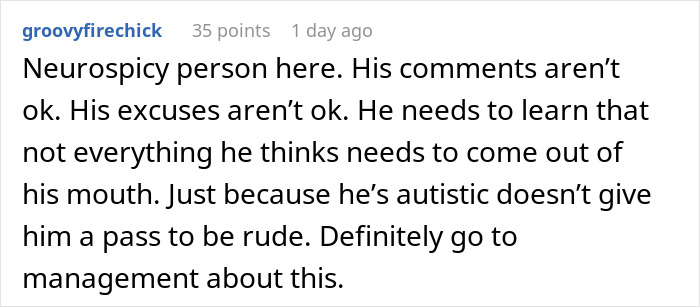
Many readers assured the author that she had every right to set boundaries with her coworker

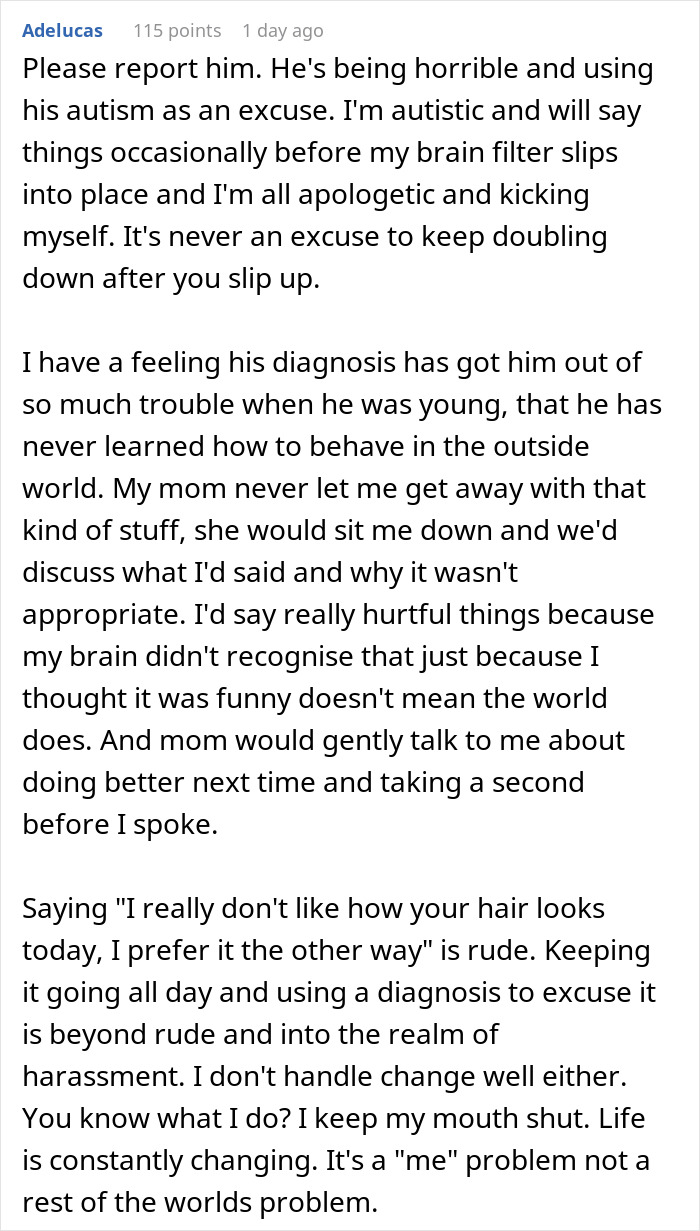
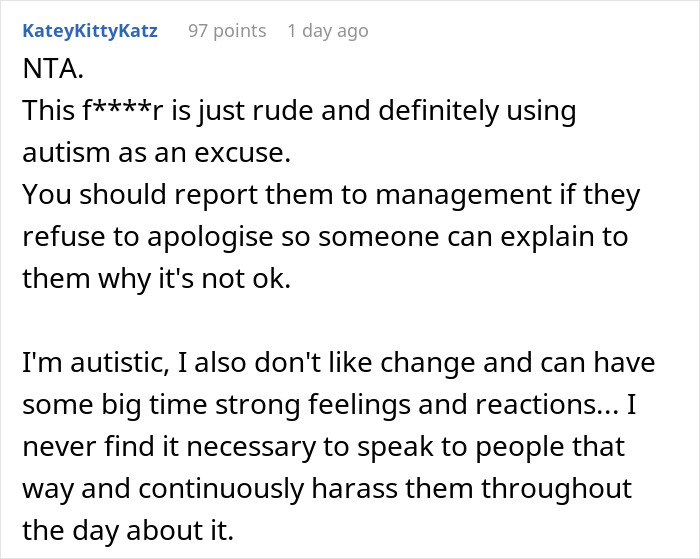
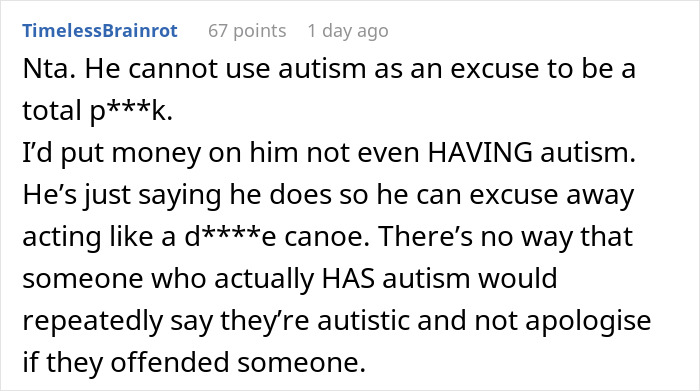
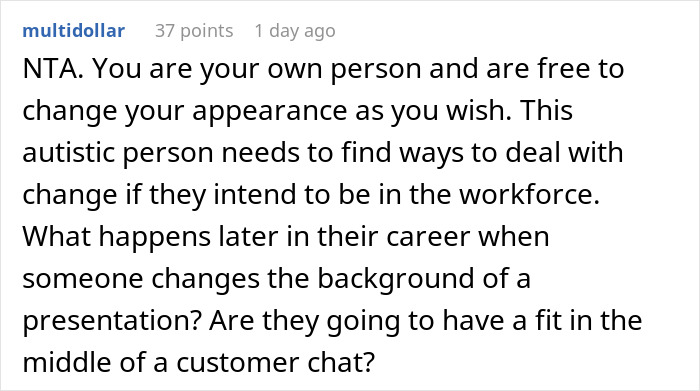
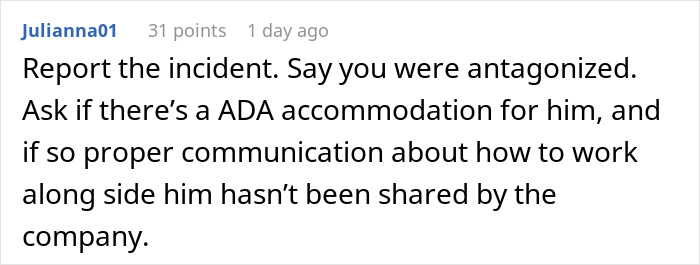
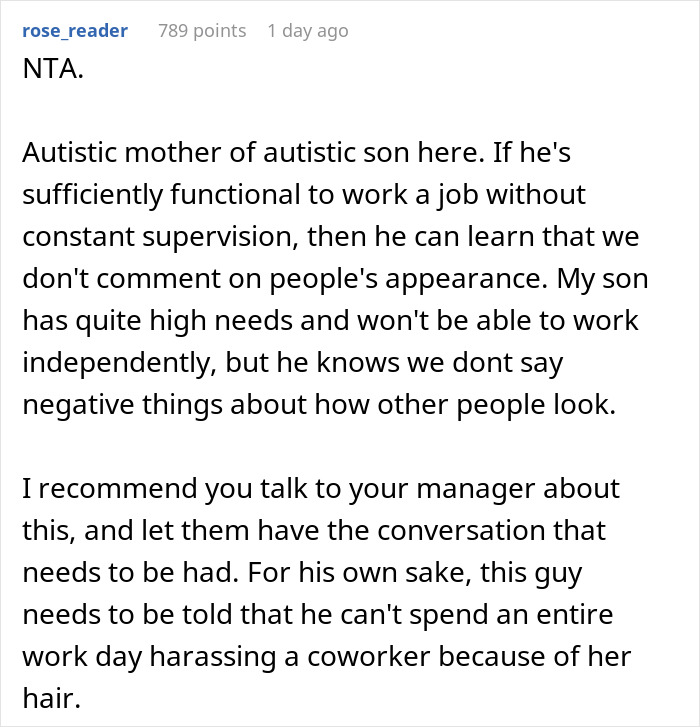
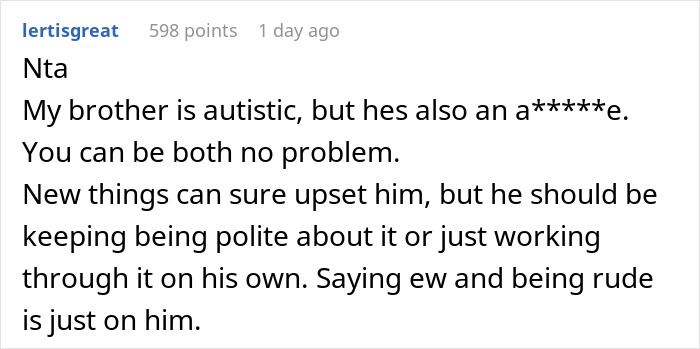
Some even shared similar experiences of their own
 Follow Us