Anna Paquin is speaking out about the darker side of growing up famous after the recent passing of former child star Hayden Panettiere.
The Oscar winner, who became famous at just 11, said the systems that were meant to protect young female actors did not always do so.
Her comments came after Panettiere, Michelle Trachtenberg, and Daveigh Chase all passed away before turning 40.
Paquin called former child stars a “strange, small club” and urged others to support one another.
Anna Paquin said former child stars were not protected enough in the industry
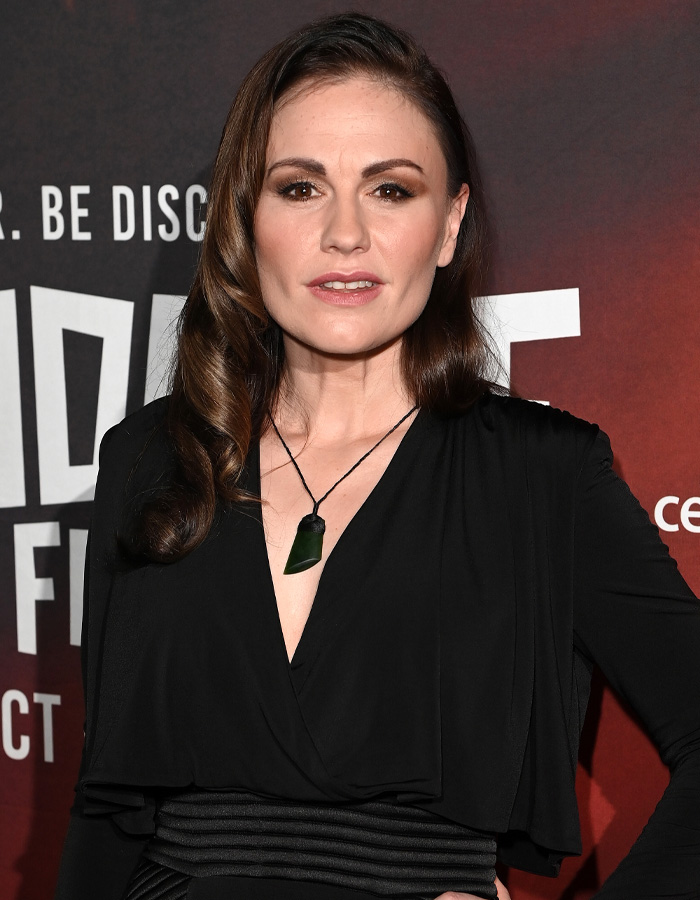
Eamonn M. McCormack/Getty Images
The 44-year-old knows the pressures of child stardom firsthand. She won the Best Supporting Actress Oscar for The Piano in 1994 when she was only 11.
On August 21, she used Instagram to remember Panettiere, Trachtenberg, and Chase while speaking about the problems former child stars can face as they grow older.
“It’s not a coincidence that so many former, specifically pre-s*xualized female, child ‘stars’ have profoundly sad lives and untimely ends,” Paquin wrote.
She then questioned how well the entertainment industry actually protects young performers.
“We were not as protected by the ‘systems’ that look great on paper as we are supposed to be,” she said.
She continued, “You are worthy of support, no matter how our industry made us feel,” she wrote. “I believe you, and I will stand by your side.”
She ended her message with a direct appeal to former young performers.
“You aren’t alone. Let’s have each other’s backs. It might make public disclosure less terrifying.”
Several former child stars, including Alyssa Milano, Mara Wilson, and Shiri Appleby, supported Paquin’s message in the comments.

Besides Paquin, Melissa Gilbert also opened up about how she wants better protection for child actors
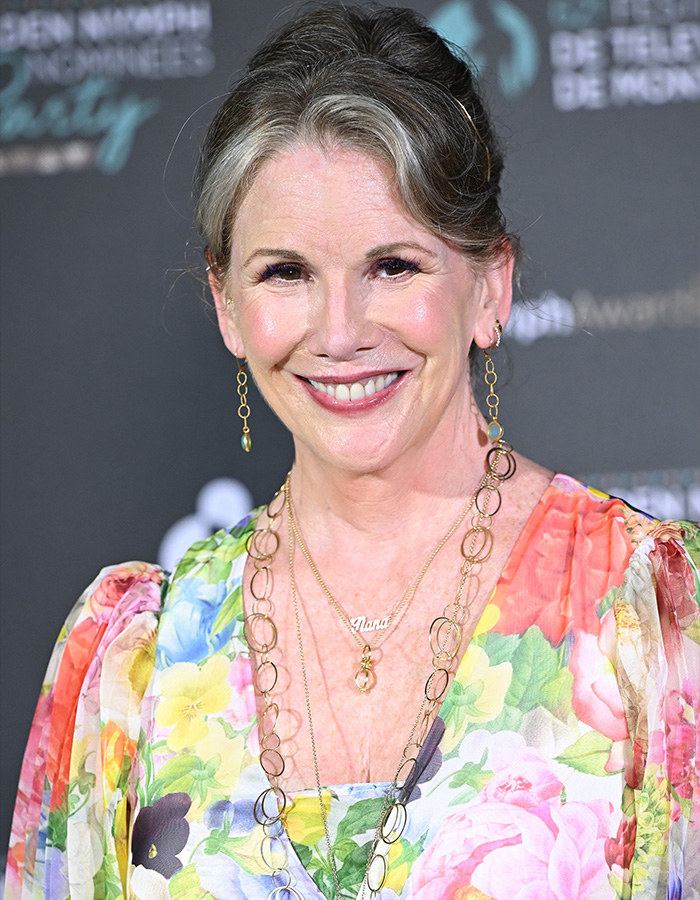
Stephane Cardinale/Getty Images
Melissa Gilbert, who began acting on Little House on the Prairie at age 10, shared Paquin’s message and said she planned to discuss the issue further.
“Thank you, Anna. Someone has to say something,” Gilbert wrote. “Someone has to change this. Someone has to help.”
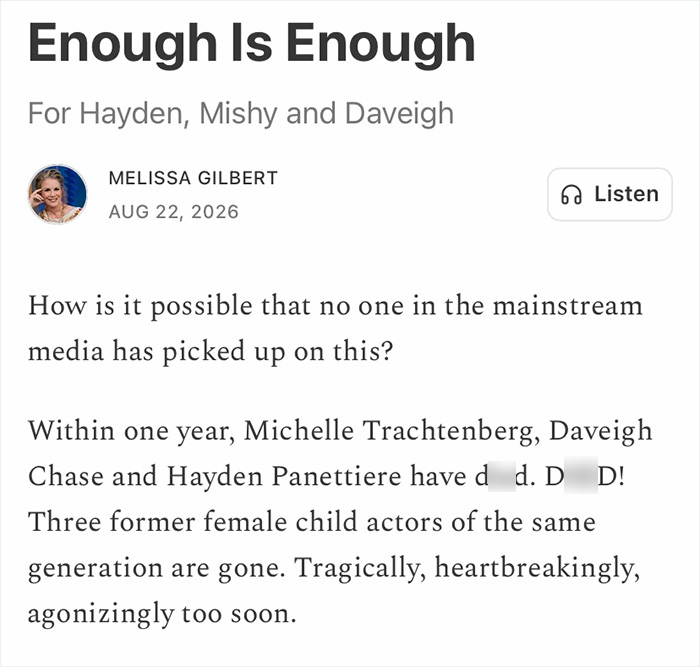
On August 22, Gilbert published a longer essay about her own experiences as a child performer.
“I did not know Hayden personally and only worked briefly with Mishy and Daveigh. It feels personal because I was them,” she wrote.
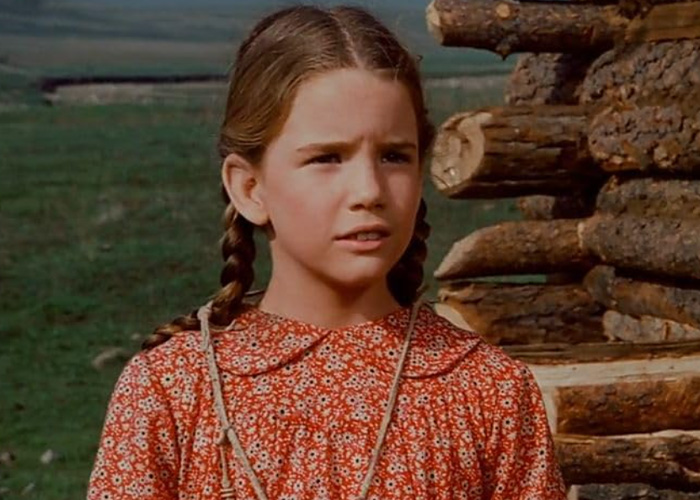
Gilbert said former female child performers form their own group because they understand an experience that most people never had.
“We are all members of the same tribe; Female Former Child Performers, and when one of us dies, it runs through all of us like an electrical current,” she wrote.
She added, “When three of us d*e so close together, something is very, very wrong.”
Gilbert also described what she called “Doctor Show Syndrome,” where young actors learn to keep working even when they are physically or emotionally unwell.
She recalled returning to work just months after her father passed away when she was 11.
“I can’t tell you how many times I worked while horribly sick, injured or worse,” Gilbert wrote. “And not one single adult on that set discussed it with me or offered condolences.”
She believes children working in entertainment should be allowed to act like children instead of carrying adult responsibilities.
“These young professionals are children, and we should make sure they are allowed to be children,” she wrote. “They should be allowed to say ‘no.’”
Gilbert also called for free mental health support for child performers and stronger ways to protect them from constant media attention.
Hilary Duff, Alexa PenaVega, and Christy Carlson Romano also spoke out on child stars

Duff remembered Panettiere and said the two understood each other because they had grown up in the same unusual world.
“I remember staying up late, chatting and gossiping, and connecting because we were part of such a small sliver of people who actually understood the strange lot in life we were navigating,” Duff wrote.
PenaVega remembered Panettiere, Trachtenberg, and Chase.
“These aren’t just names from my childhood. They’re girls I grew up alongside, sharing a world that was exciting and also incredibly hard,” she wrote.
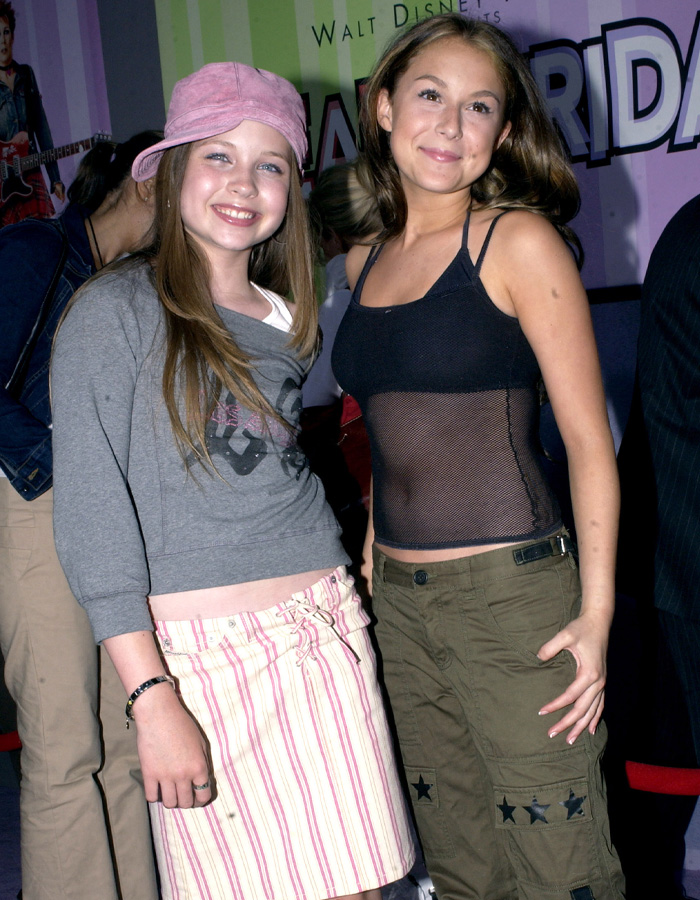
“We were kids navigating something so big, and not everyone had the foundation or the support they deserved.”
Meanwhile, Romano wrote about the lasting effects of growing up under intense attention.
She described an industry that “gives us the wound and then acts surprised when we reach for something to treat it.”
Romano later explained her decision to speak about the problems she saw in the industry, writing, “Calling out incongruence in the only community I was raised to know is not bitterness. It is grief with a mission.”
Hayden Panettiere, Michelle Trachtenberg, and Daveigh Chase passed away before they turned 40
Panettiere was found unresponsive in South Carolina on August 16, 2026. Emergency responders attempted to revive her, but she was pronounced lifeless.
Dispatch audio reportedly mentioned a possible o*erdose, although her official cause of d*ath had not been released in the information provided.
Her passing came after years in the public eye. Panettiere had spoken openly about a*diction, postpartum depression, and the pressure she experienced after becoming famous as a child.
Trachtenberg passed away at 39 on February 26, 2025. She was found “unconscious and unresponsive” at her New York apartment. The medical examiner later said complications from diabetes mellitus caused her passing and ruled it natural.
Daveigh Chase, known for roles including The Ring, passed away at 35 on June 16. The Los Angeles County Medical Examiner listed AIDS as her primary cause of passing, with chronic polysubstance use also listed as a significant condition.
Other young performers have also passed away before reaching middle age, including Lee Thompson Young, who passed away at 29, and Aaron Carter, who passed away at 34.
Experts revealed why early fame can create risks that are easy for outsiders or young stars to miss
Lucas Trautman, the medical director of Oxford Treatment Center, an ad*iction treatment center in Mississippi, who has treated child stars, explained that young performers can be exposed to adult experiences while their brains are still developing.
“It’s important to remember that they were also exposed during a developmental time to many adult aspects of life that the rest of us weren’t,” he told the BBC. He added that traumatic experiences can create “unique risk factors for a*diction.”
Young stars can also have unusual access to dr*gs and al*ohol while lacking the adult protection needed to deal with them.
“We aren’t equipped at a young age to be able to say no to it, to manage it, to correctly stay away from it altogether,” Trautman said.
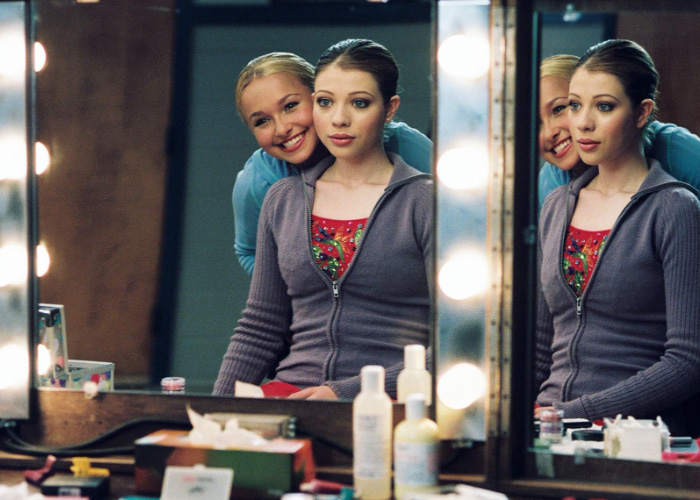
Panettiere herself described being introduced to dru*s at 16. She wrote in her memoir that someone from her team gave her a pill before a Heroes red-carpet event to boost her energy.
She later called it “the gateway dr*g that ushered me toward the good of pharmaceuticals and the downfall of ad*iction.”
William Moyers of Hazelden Betty Ford also pointed to the pressure of living under constant public attention.
“Her entire life from the beginning was centered in the intense public spotlight, and this didn’t give Hayden much in the way of a respite,” he said.
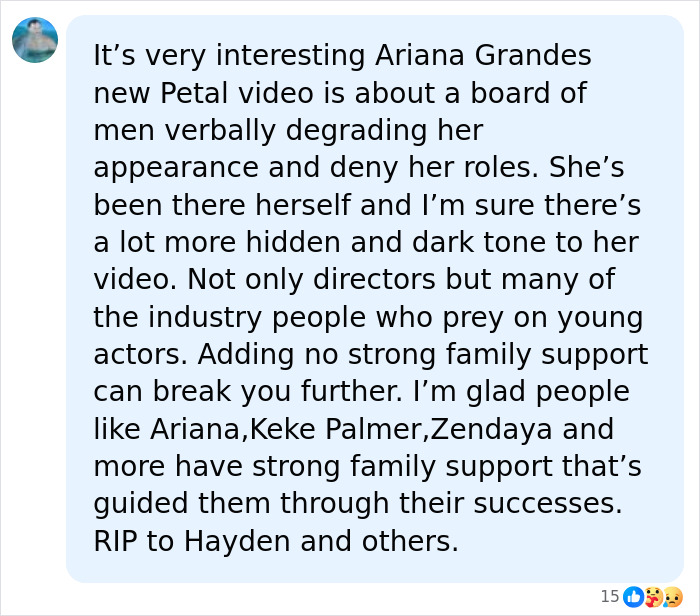
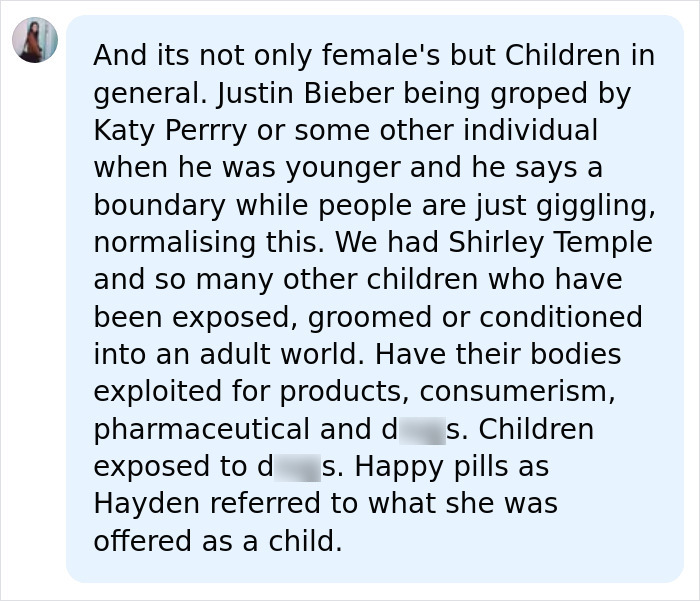
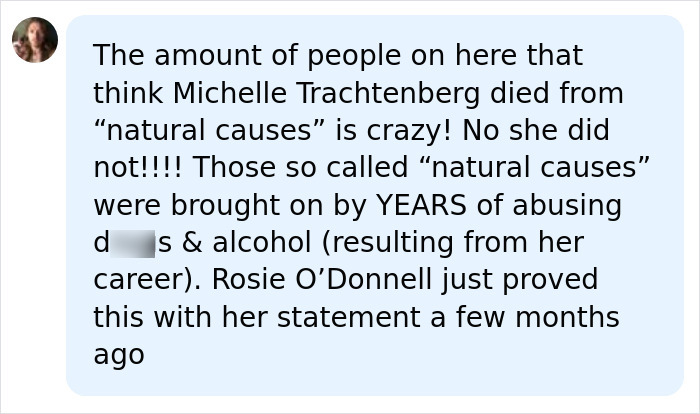
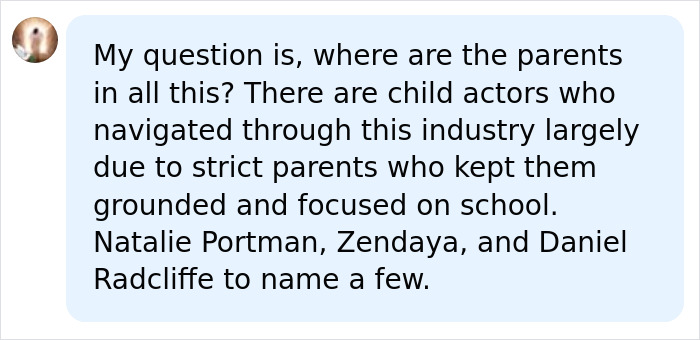
Netizens shared their opinion on young stars passing early






 Follow Us