Tantrums and kids go hand in hand. Whether it’s a child wailing on a grocery store floor or refusing to put on shoes, the screaming and crying can be enough to make any adult want to throw a fit, too. That’s exactly how one mother felt when her son ruined her morning. For a little petty revenge, she refused to let him press the elevator button and quietly watched him have an immediate meltdown.
Her viral video proved she isn’t alone — thousands of parents happily use petty discipline every once in a while. Read the full story, watch the clip, and check out the funniest stories of parents turning the tables on their kids.
A mom from Louisville recently posted a video of her son’s meltdown inside an elevator


She said she ruined her kids’ day because they had ruined hers
The clip, posted by Bright in August, quickly took off across social media, racking up thousands of shares and sparking debates in the comments.
In the short video, her young son can be heard asking if he can press the elevator button as they step inside. But instead of following their usual routine, Bright steps in front of him and firmly presses the first-floor button herself. As her son realizes what just happened, he instantly breaks down into tears. Bright doesn’t yell or try to soothe him — she simply stays completely silent, letting the meltdown run its course.
Overlaying the clip, a single sentence of text sets the tone: “Ruining my kids’ whole day because they ruined my morning.” In her caption, she adds: “Highly recommend petty parenting.”
While Bright never specified what exactly happened earlier that morning to trigger her response, the message was clear enough to prompt responses from thousands of parents.


Other parents talked about their own “petty parenting” strategies
The comment section quickly transformed into a confession booth for parents eager to share their own passive-aggressive discipline tactics. For many, Bright’s elevator video was a green light to reveal how they handle their kids — often through small, highly targeted acts of retaliation.
Some strategies relied on immediate, direct consequences designed to make a point. One mother admitted that when her child throws a public tantrum over a store item, she buys the requested toy anyway — only to make him hand it directly to a random child in the parking lot. Another parent confessed to a simpler, sweeter form of payback: when her children act up, she sits down and eats a cookie directly in front of them without sharing.
Several teachers joined the thread to thank parents for enforcing firm boundaries and calling out bad behavior. Meanwhile, non-parents chimed in with humor, admitting that their own petty streak is precisely why they choose to stay child-free and avoid the daily drama of childhood whining altogether.
Some parents also defended these moves as a clever form of gentle parenting. They argued that letting kids face tiny, safe disappointments is “helpful in the long run” and “prepares them for the real world.”
Not every viewer was impressed, though. Some found it strange that adults would take revenge or be petty with their own kids.

magnific / Magnific (not the actual photo)
Your child is not giving you a hard time, they are having a hard time
It is easy to view a screaming child as manipulative or “bad,” but neuroscience paints a completely different picture. A temper tantrum is rarely a calculated power play — most of the time it is simply a mechanical breakdown in a rapidly growing brain.
During early childhood, the prefrontal cortex — the region responsible for logic, impulse control, and emotional regulation — remains vastly underdeveloped. Meanwhile, the brain’s emotional engine, known as the limbic system, operates at full speed from an early age.
When a young child hits a wall of frustration, hunger, or exhaustion, their emotional center takes complete control. The brain surges into a fight-or-flight state. During a full-blown meltdown, a child physically loses access to the logic, reason, and language skills adults expect them to use.

magnific / Magnific (not the actual photo)
When a tantrum strikes, science offers a clear strategy for diffusing it
According to the United Nations Children’s Fund (UNICEF), temper tantrums are a completely normal phase of growing up for children between 1.5 and 5 years old. On average, a meltdown happens about once a day and lasts 5 to 10 minutes.
A study published in the journal Emotion analyzed sound recordings of children’s breakdowns and discovered that tantrums follow a specific, predictable acoustic pattern. While deep sadness hums quietly in the background throughout the entire episode, it is constantly interrupted by sharp spikes of intense anger — the loud screaming, kicking, and shrieking that test every parent’s patience.
Researchers found that the fastest way to end a meltdown is counterintuitive: do absolutely nothing. Parents are advised to simply ignore the outward anger spikes and wait patiently for the storm to pass. As the fury naturally burns itself out, the underlying sadness takes over. That shift into sadness is the green light for parents to step in, as a sad child actively seeks comfort and connection.
Trying to reason with a child during peak rage usually backfires. As James A. Green, one of the study’s lead authors, explained: “You know, when children are at the peak of anger, and they’re screaming, and they’re kicking, probably asking questions might prolong that period of anger. It’s difficult for them to process information. And to respond to a question that the parent is asking them may be just adding more information into the system than they can really cope with.”
Child development experts recommend several proactive steps to help guide a child through a meltdown.
One effective technique is redirection — shifting a child’s focus to an entirely different sensory input, activity, or object before the anger fully takes hold. Experts also stress the importance of naming big emotions. It means putting simple words to what a child is feeling helps validate their frustration and builds their emotional vocabulary.
Timing is also critical when applying discipline
The Centers for Disease Control and Prevention (CDC) notes that because young children have short attention spans, any logical consequence must happen immediately following the misbehavior so they can link the action to the result. Once that consequence is over, parents should instantly pivot back to positive reinforcement.
Crucially, as the American Academy of Pediatrics warns, a consequence should never involve withholding basic needs, such as meals or affection.
If outbursts become far more frequent, and disrupt daily life, specialists strongly recommend consulting a professional to address the behavior.
The next time you are walking through a grocery store or sitting on a train and witness a child wailing on the floor while a parent stands silently by, hold back your judgment. That parent isn’t being cruel — they are simply following what neuroscience and child psychologists recommend: letting the storm run its course.
And if you are the parent standing in the middle of that public meltdown, try not to feel embarrassed. Raising a self-aware, emotionally resilient human will always be far more important than escaping a stranger’s temporary side-eye.
Here’s the full video shared by the mom:
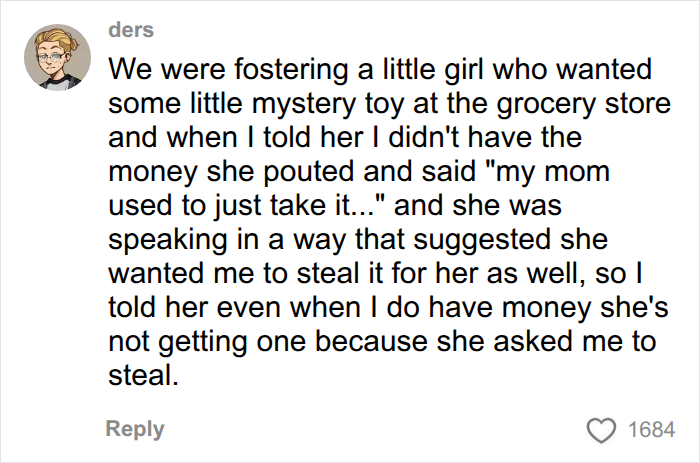
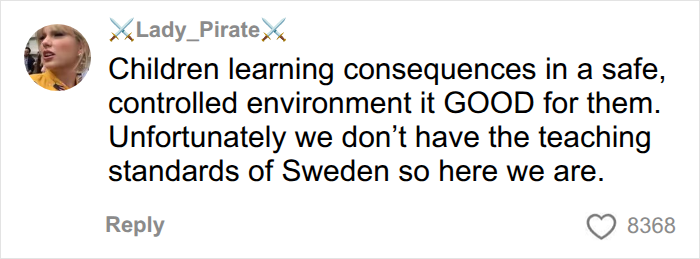
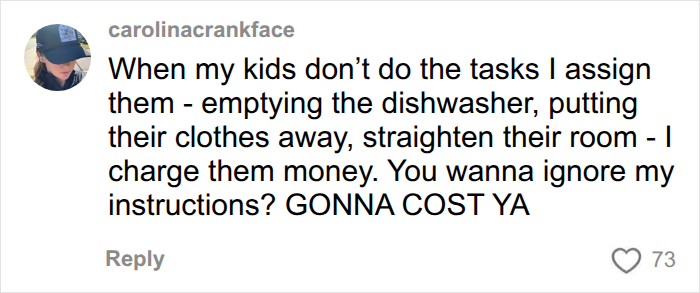
Here’s what other parents had to say in the comments:





























 Follow Us