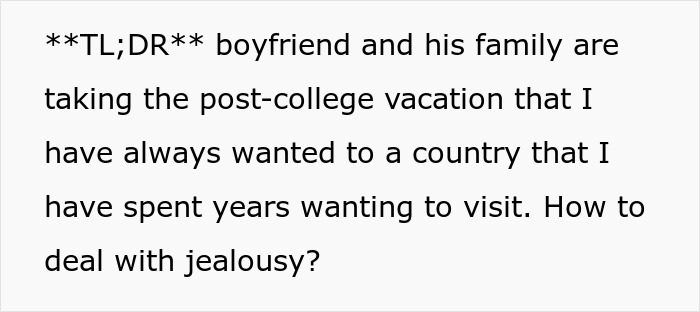
We’ve all got our idea of a dream vacation. For some, it’s the warm waters and full-moon parties of Thailand; for others, it’s the castles and dramatic highlands of Scotland. For this woman, it was Japan. A certifiable Japanophile, she’d spent years immersing herself in the culture, learning the language, cooking the food, and reading books in Japanese.
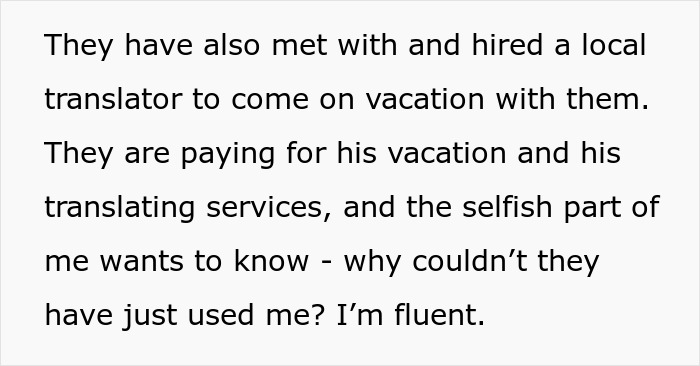
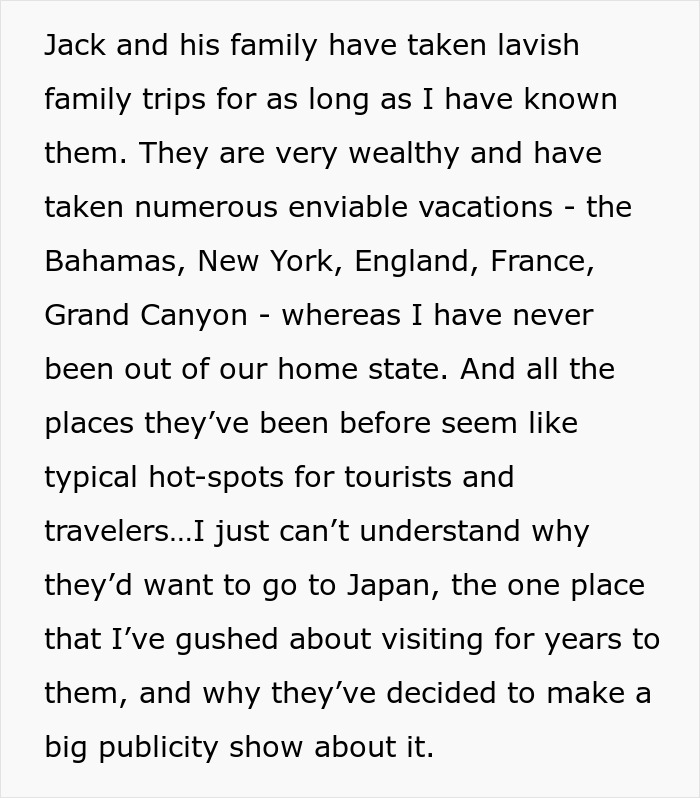
So you can imagine how she felt when her boyfriend’s wealthy family told her about the latest in their long line of grand vacation plans. They’d done the Bahamas, New York, England, France, and the Grand Canyon—and next on their list? You guessed it. Japan. But if you thought she was invited, think again. Keep reading to find out why the poster found herself conflicted about her feelings—and what happened when she finally decided to speak up.
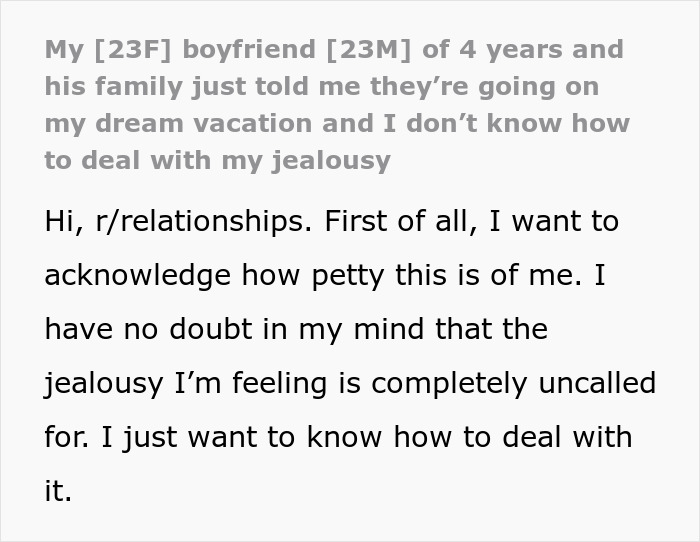
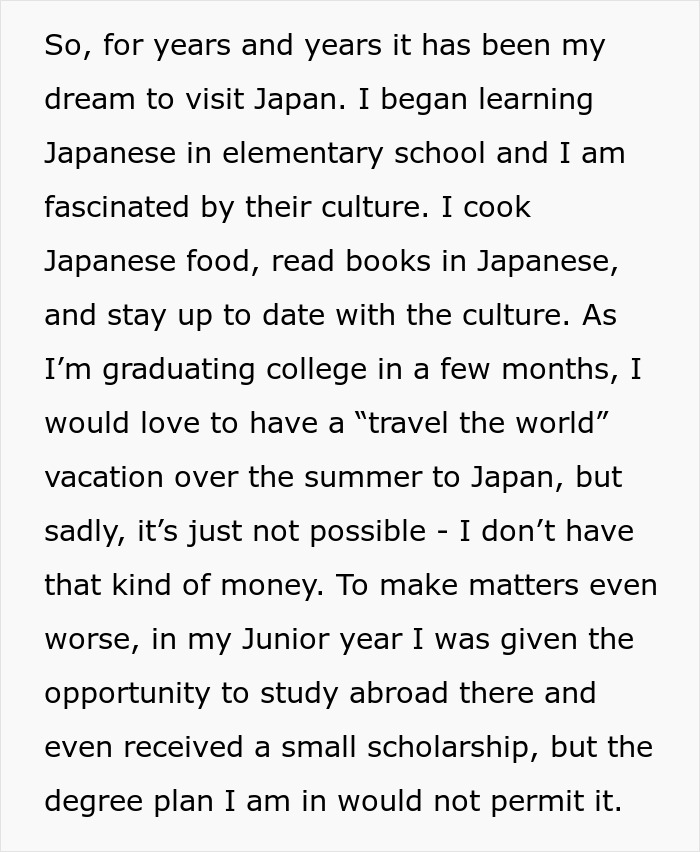
This woman had always dreamed of visiting Japan, and just about everyone knew about it

magnific (not the actual photo)

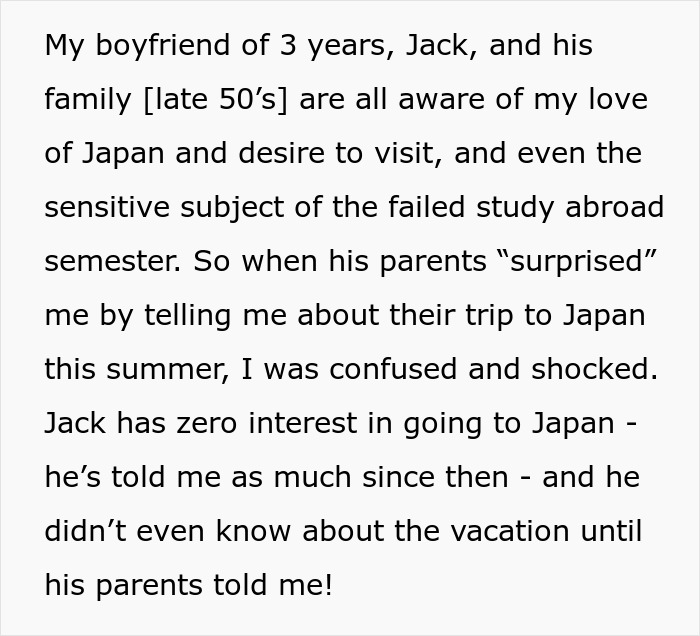
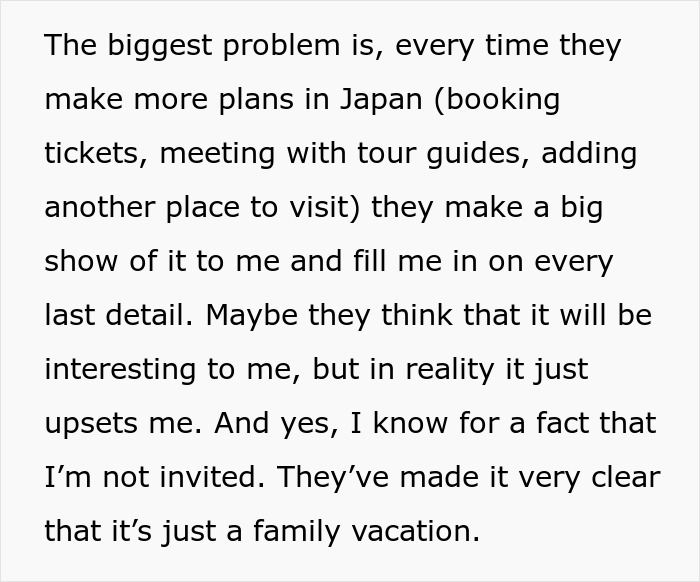
So she couldn’t help but feel envious when she heard her boyfriend’s family was planning a trip there

wirestock (not the actual photo)

magnific (not the actual photo)
Some readers shared their thoughts, and the poster provided more details
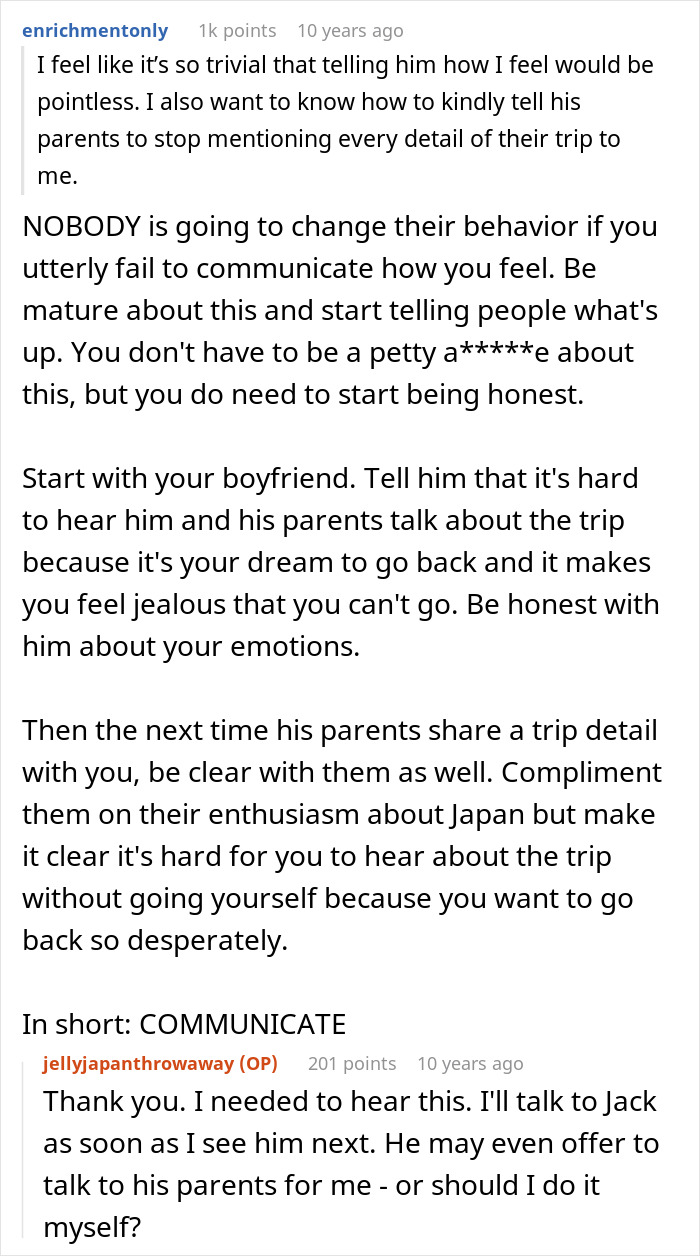
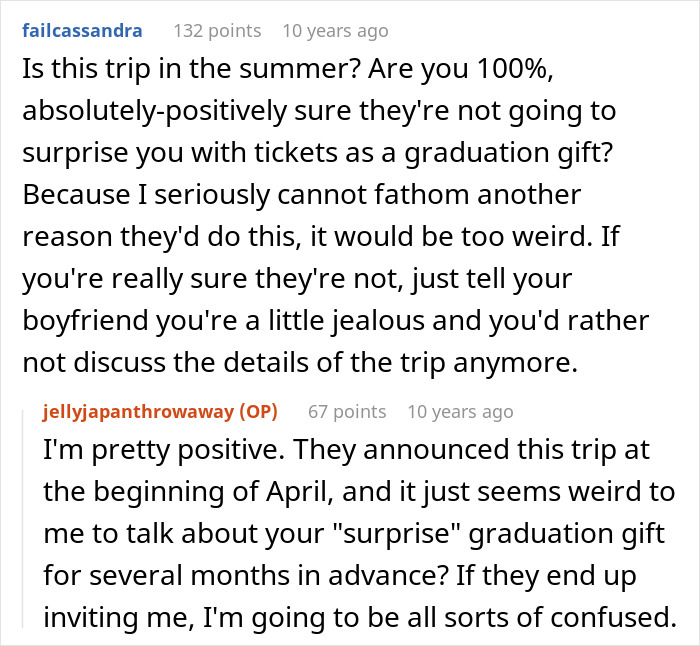
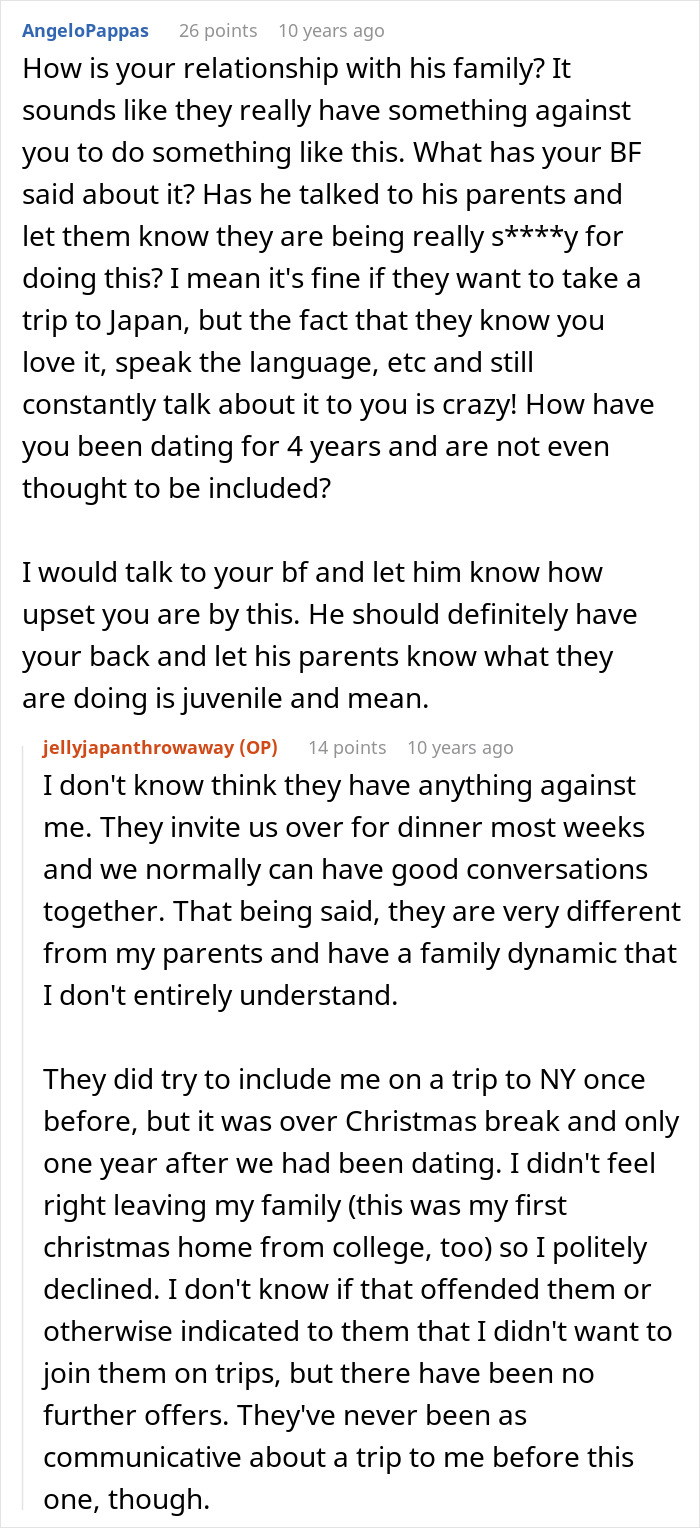
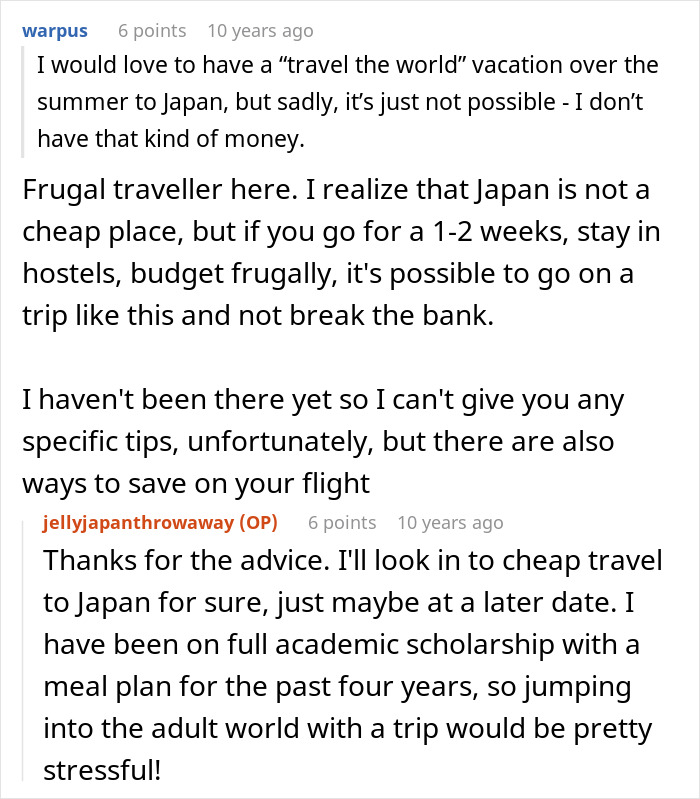
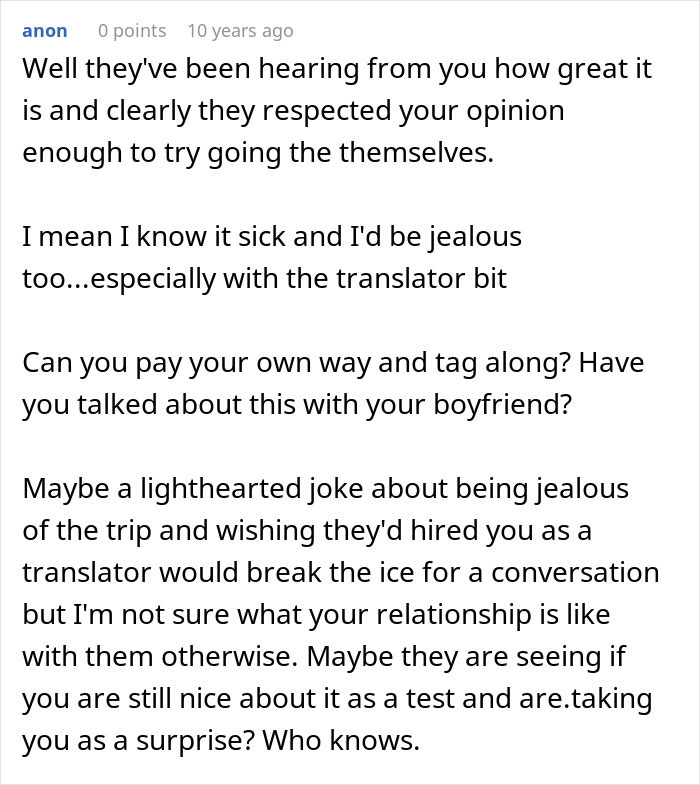
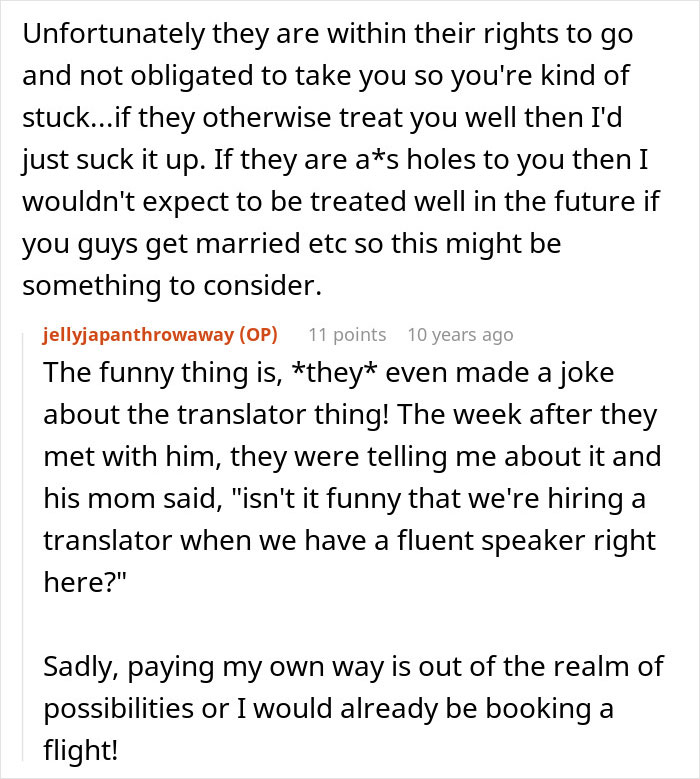
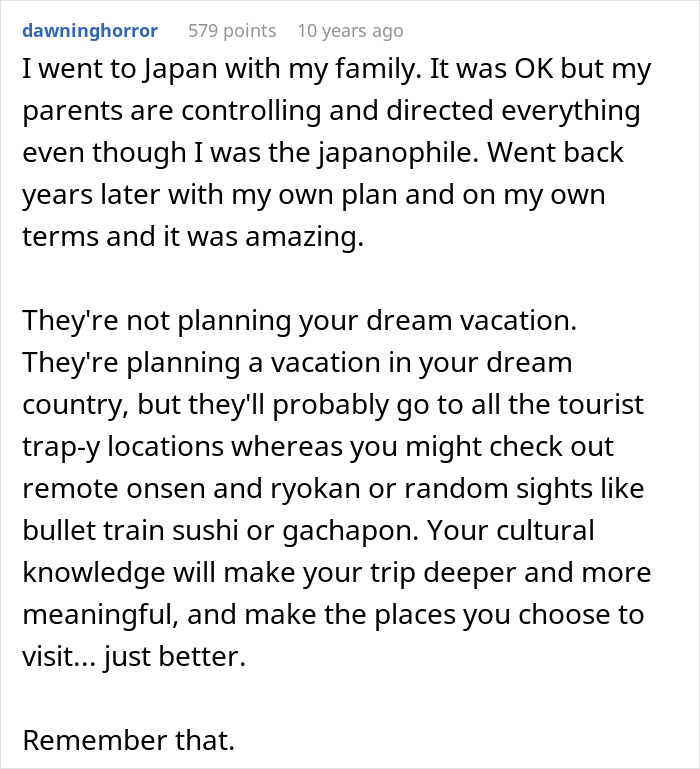
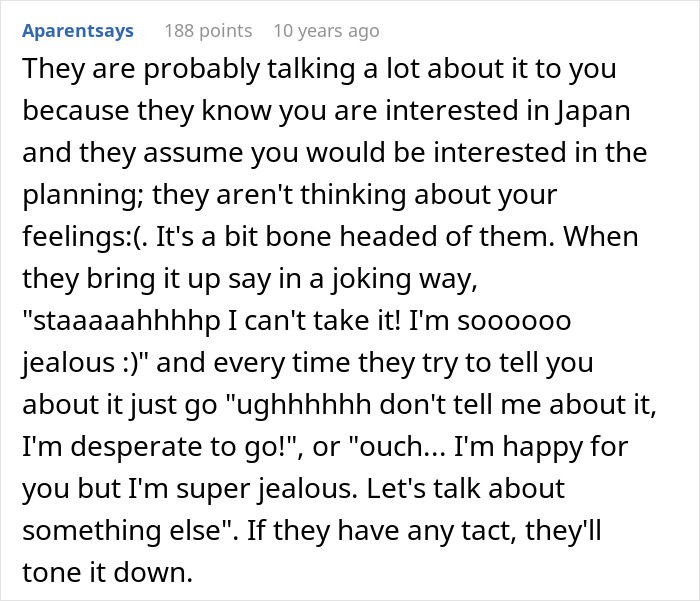
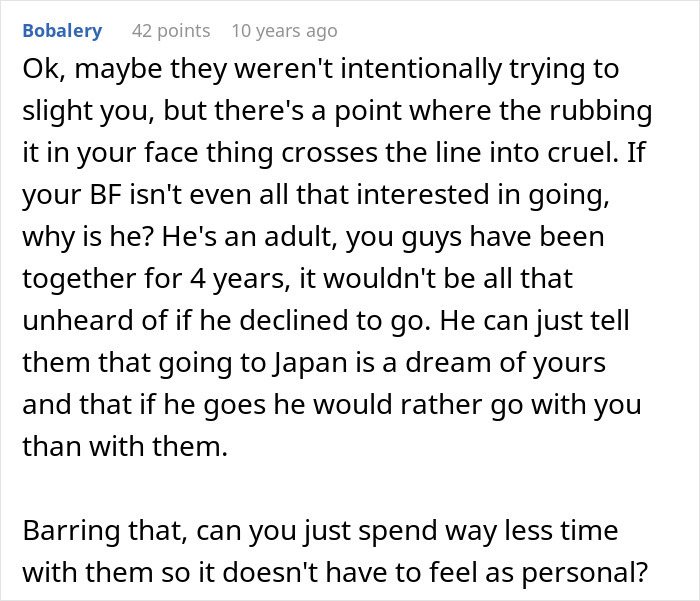
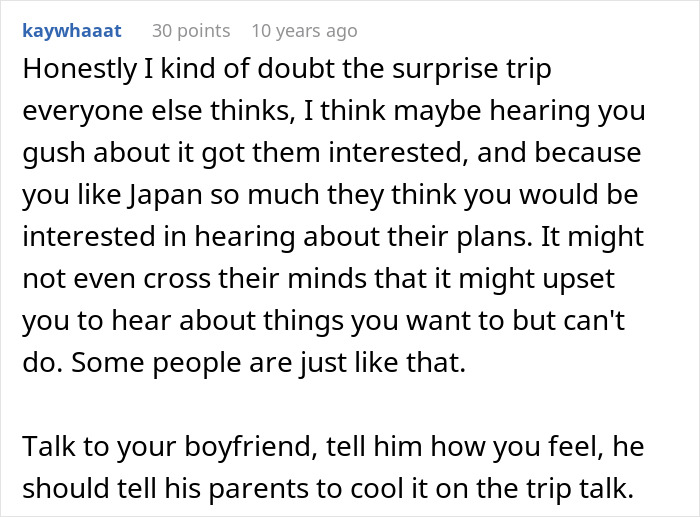
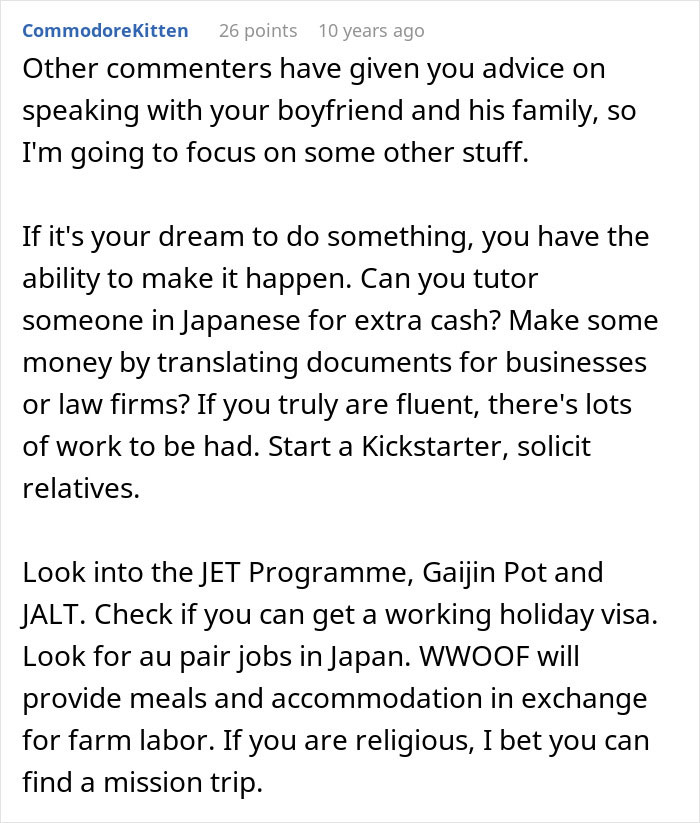
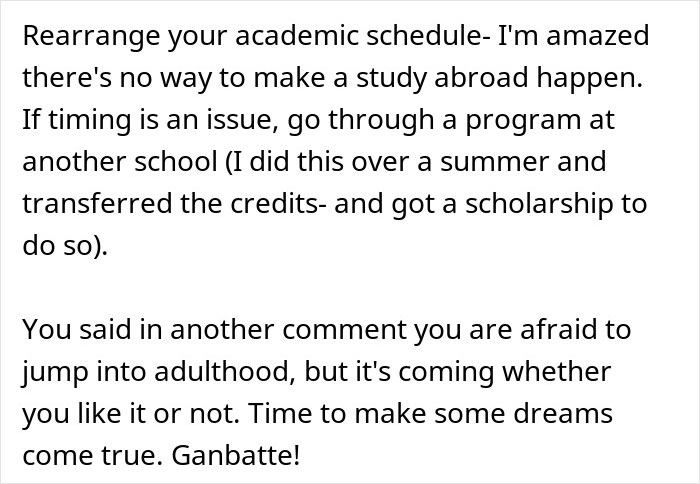
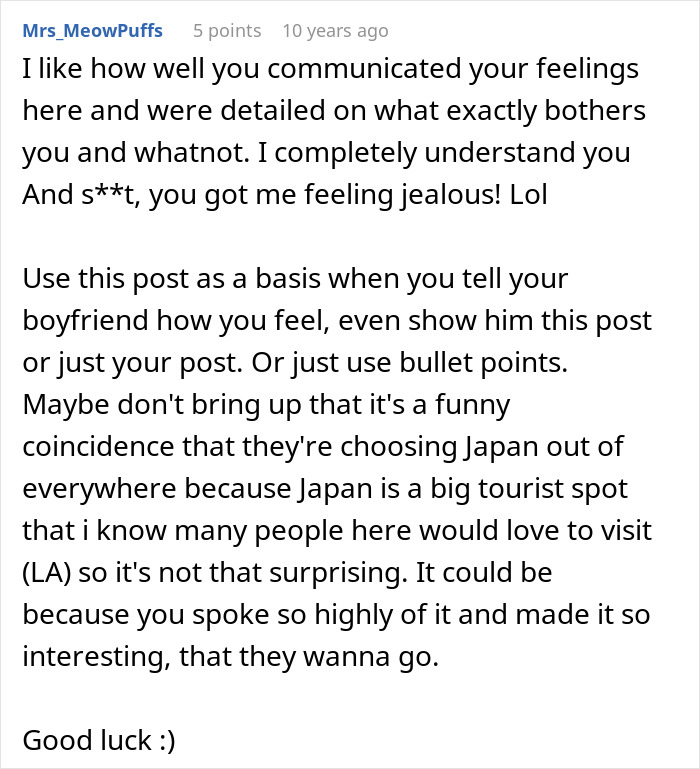
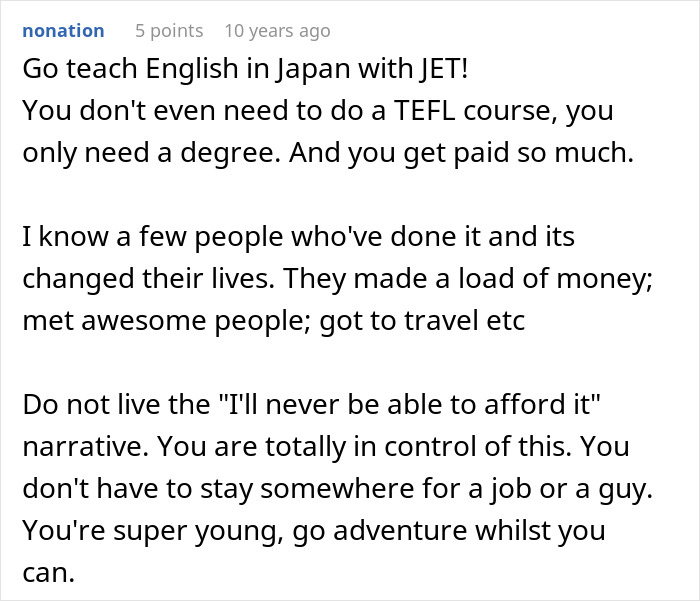
Commenters sympathized with the poster and weighed in with advice
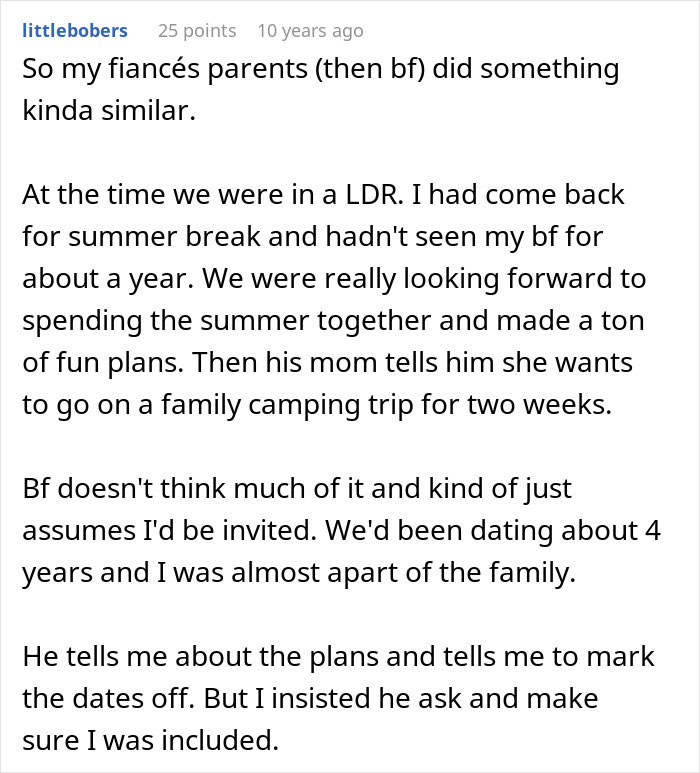
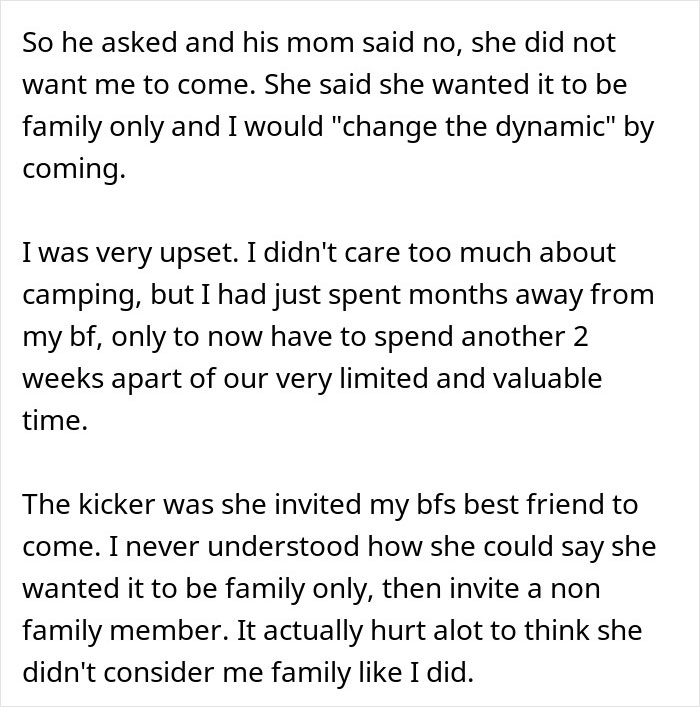
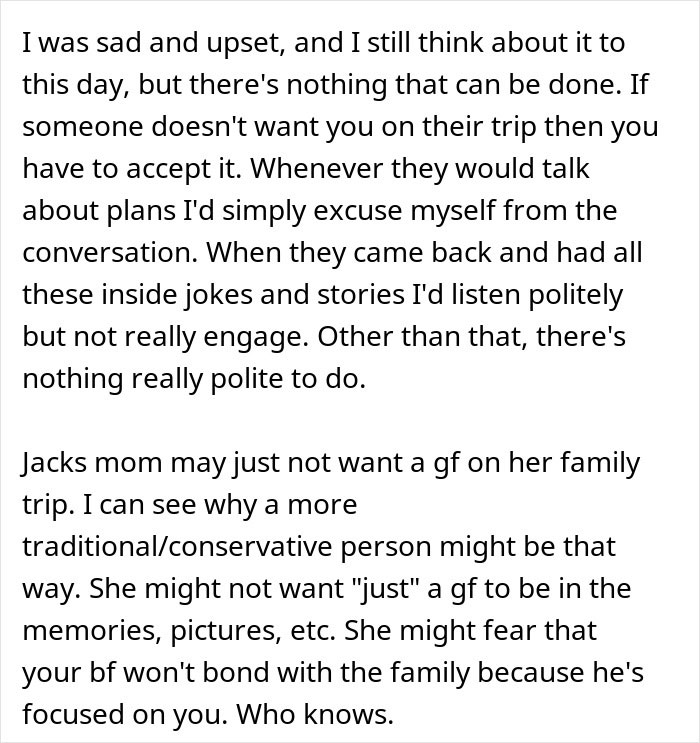
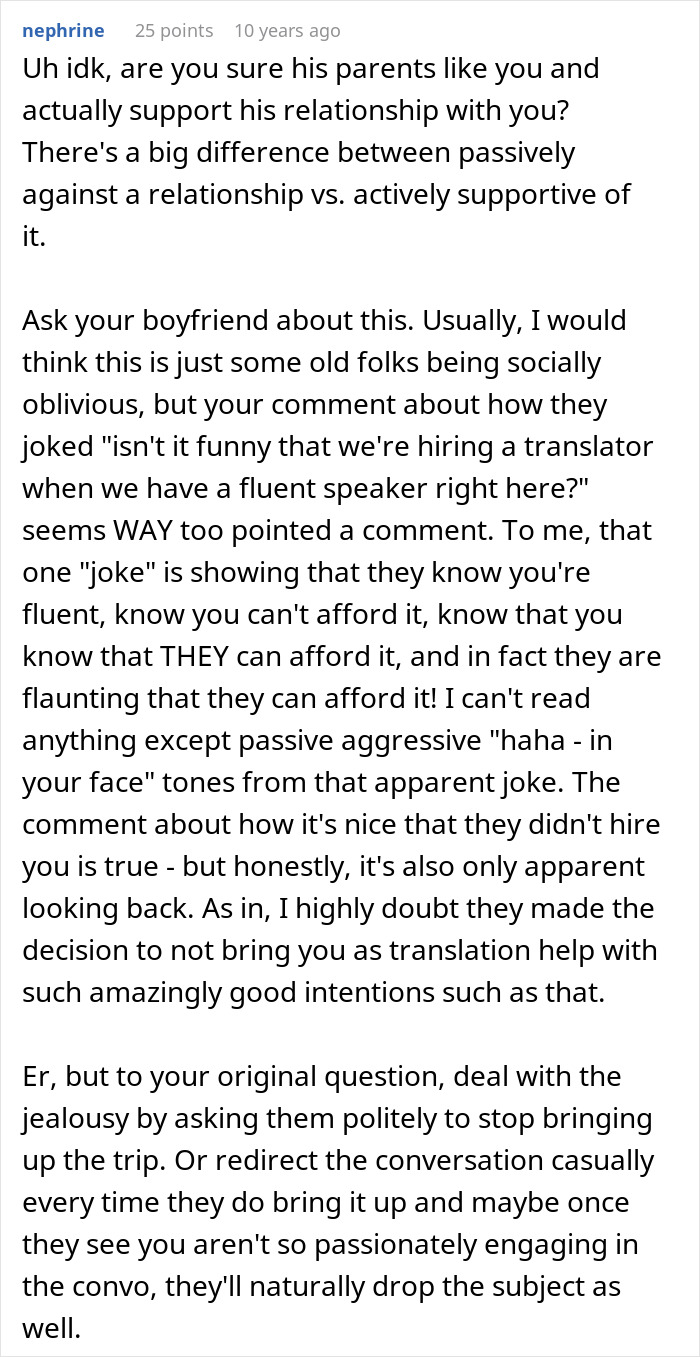
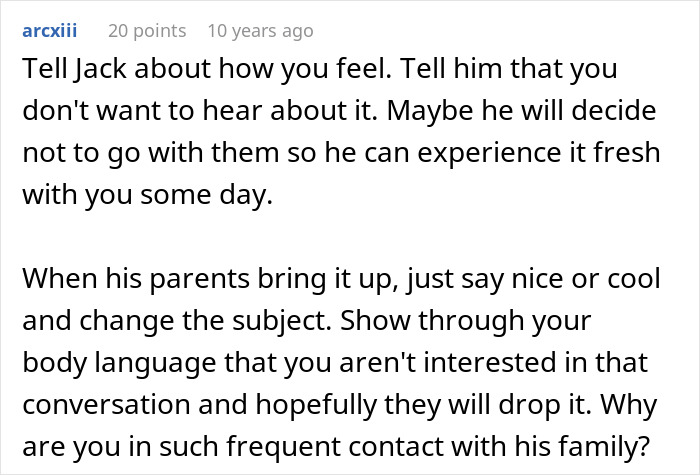
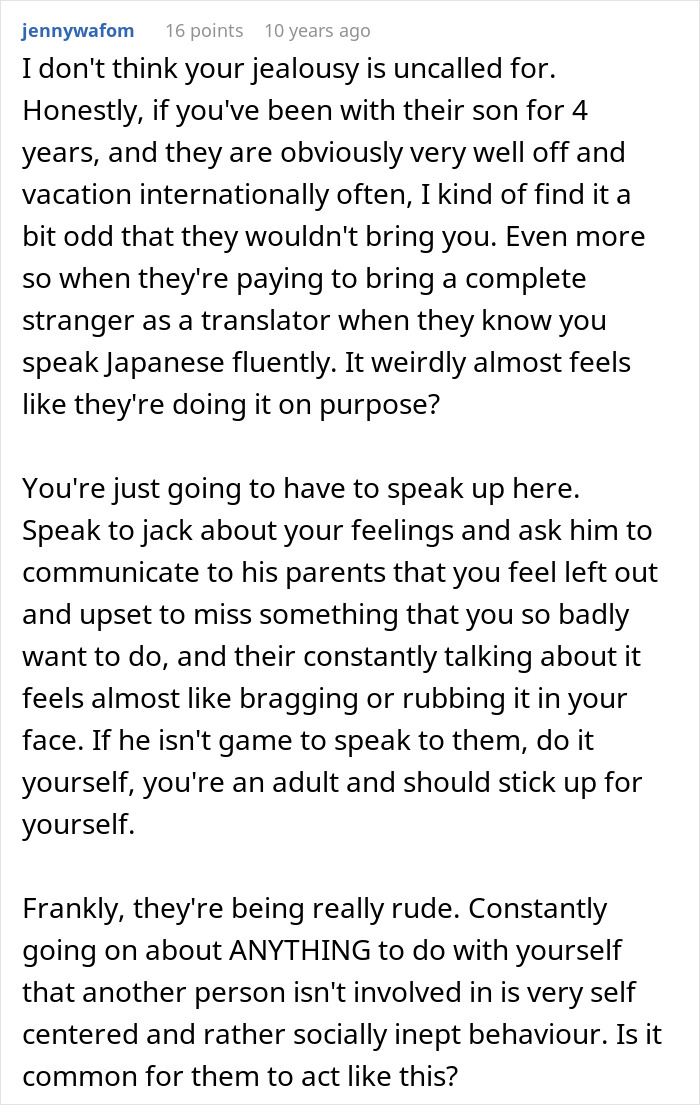
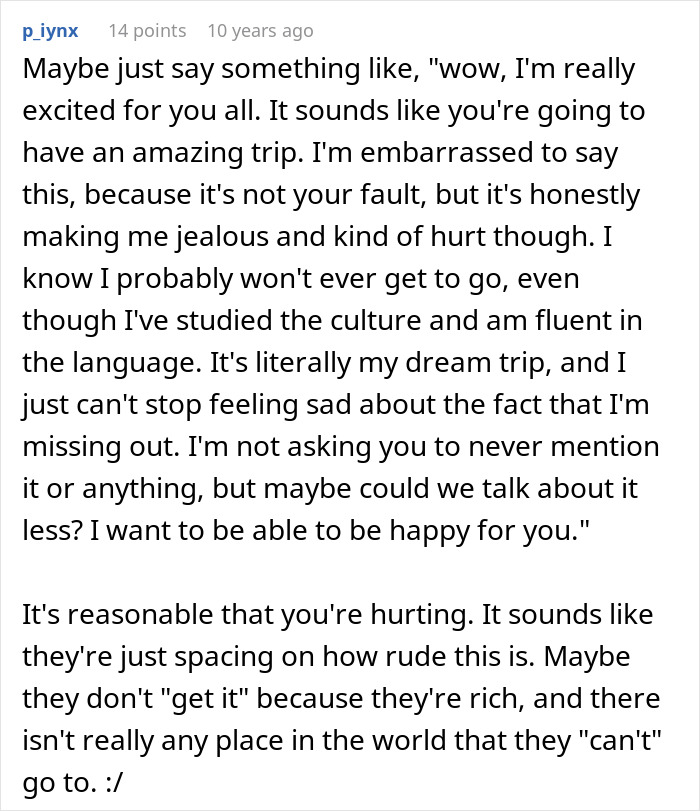
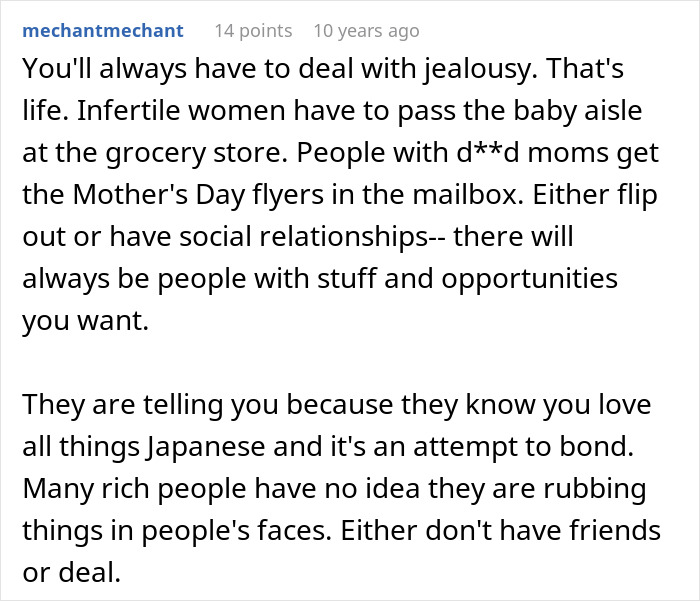
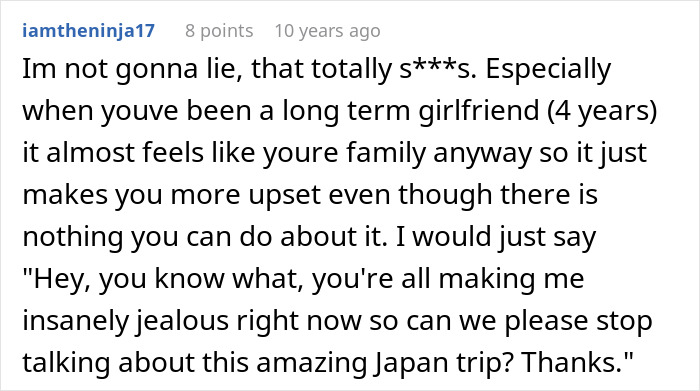
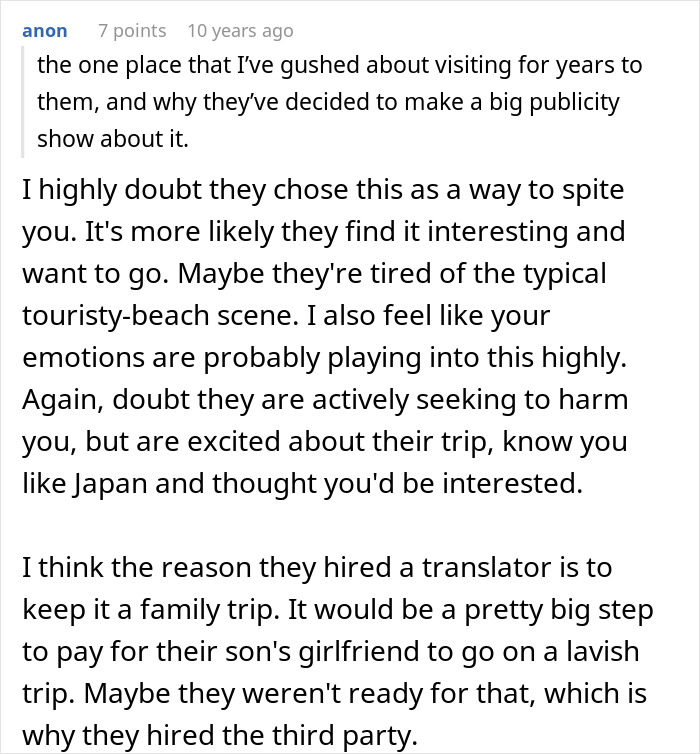
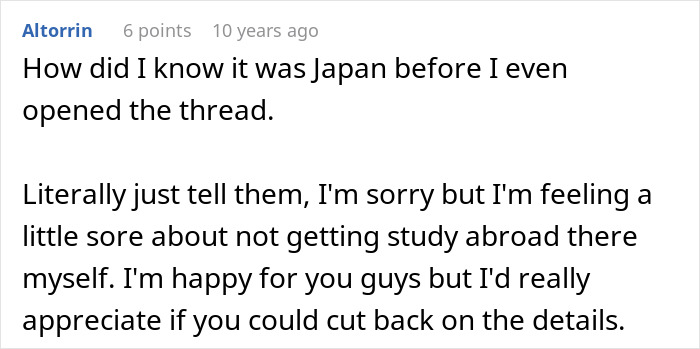
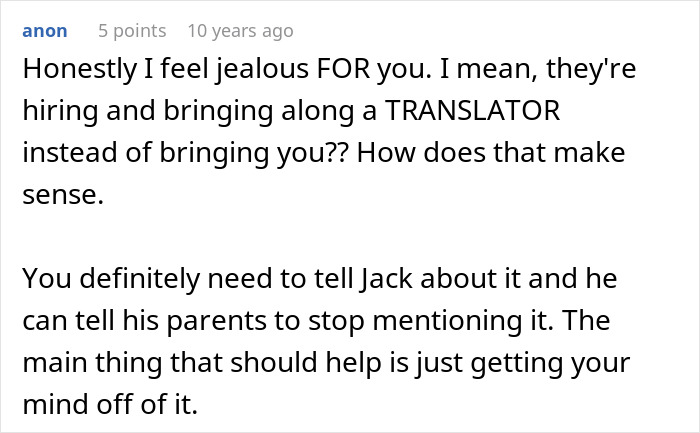
Vacation envy can get complicated
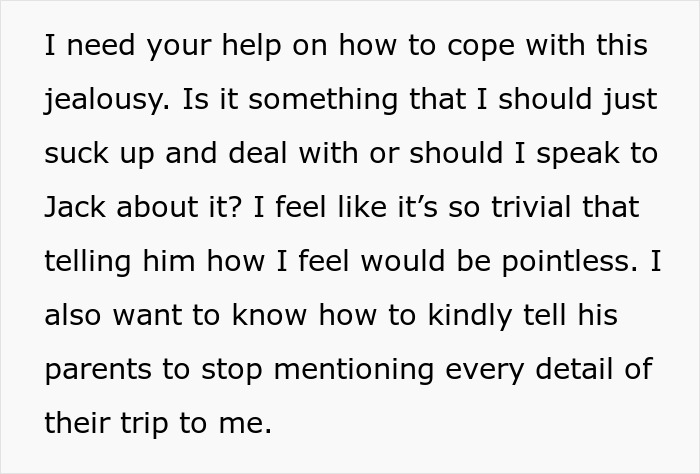
The poster thought she was being petty, but if we’re honest, most of us can probably relate to her feelings on some level. We’ve all seen friends, colleagues, and loved ones share wanderlust-inspiring photos or updates from their travels, after all. And when it’s somewhere we’ve dreamed of visiting ourselves, those posts can sting a little. Considering the poster’s unique situation, was she simply being petty, and were her feelings really “uncalled for”?
Not necessarily. As it turns out, there are even names for this particular feeling: some call it “travel envy,” while others call it “vacation envy.” Writing for Psychology Today, psychologist Susan Krauss Whitbourne, PhD, author of Psychological Disorders: Clinical Perspectives, has explored why other people’s vacations can get under our skin, particularly when we’re unable to travel ourselves. She even gives it a playful name: “FOMOOV,” or “fear of missing out on vacation.”
Most of us have probably experienced it when we see others online living their best lives while vacationing in exotic faraway lands. But Whitbourne specifically notes that it can be even more pronounced when those taking the envy-inducing trip are family or friends. One particular example she gives has a remarkable parallel to the poster’s story. She sets the scene as follows: “Your in-laws return from a tour of a country you’ve always longed to visit, and they don’t hold back on the photos and stories.”
Unlike when it’s Ned from Accounts or that girl you did track with, here it’s more complicated, Whitbourne suggests, because “the worst part is that you don’t really like yourself for feeling envious. These are people who are close to you, so you should be happy that they had fun.” In other words, it isn’t necessarily that the person doesn’t want their relatives to have enjoyed themselves. Rather, every photo and anecdote can serve as another reminder of something they desperately want but can’t currently have.
The important distinction is that feeling envious isn’t the problem; what we do with that feeling is another matter. So, how can we deal with vacation envy when it rears its head?
Coping with vacation envy
When it comes to coping with vacation envy, Whitbourne says that the first step is recognizing that it exists and that those feelings of discomfort and anxiety that accompany it don’t come from “some remote territory in your brain.” Once you recognize that something outside of yourself is triggering that stress, she suggests, you can start thinking about how to manage it. Recognizing those feelings doesn’t have to mean slipping into self-pity, either. This, psychologist Leslie Connor explains, is disempowering. Instead, she suggests, “Envy can be a signal to make us reevaluate our home front.”
In this case, it’s plain to see why the situation stung. The poster wasn’t simply learning that her boyfriend and his parents were going to Japan. They’d known for years that it was her dream destination, were aware of the failed study-abroad opportunity, and knew she couldn’t afford to go herself. She was also being excluded from the trip, despite their knowing how much the country meant to her and that she was fluent in the language they’d hired a translator to speak.
As she reflected on the situation, then, her envy may have been about more than simply wanting to visit Japan. It may also have reflected the frustration of watching a longstanding dream remain out of reach while feeling overlooked by those close to her.
But this is where her situation got rather more complicated. Because as it turned out, her boyfriend’s family weren’t simply unaware of the effect they were having—in fact, they might have been counting on it.
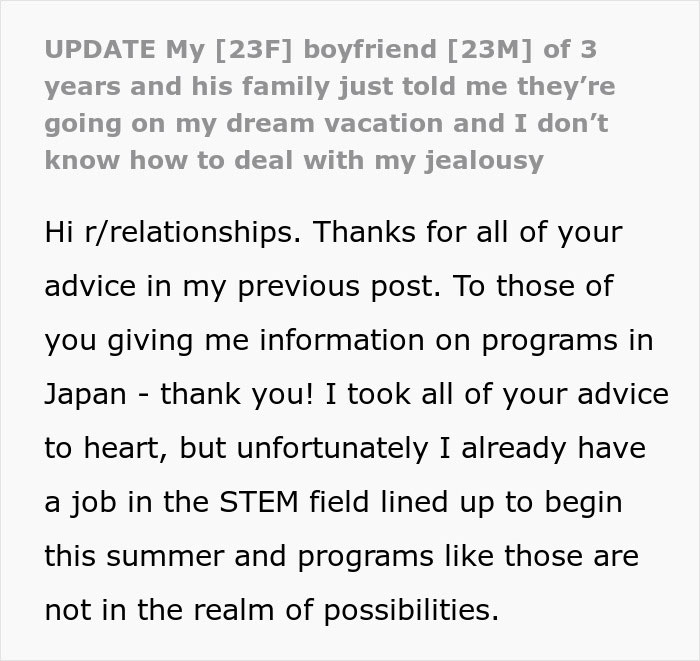
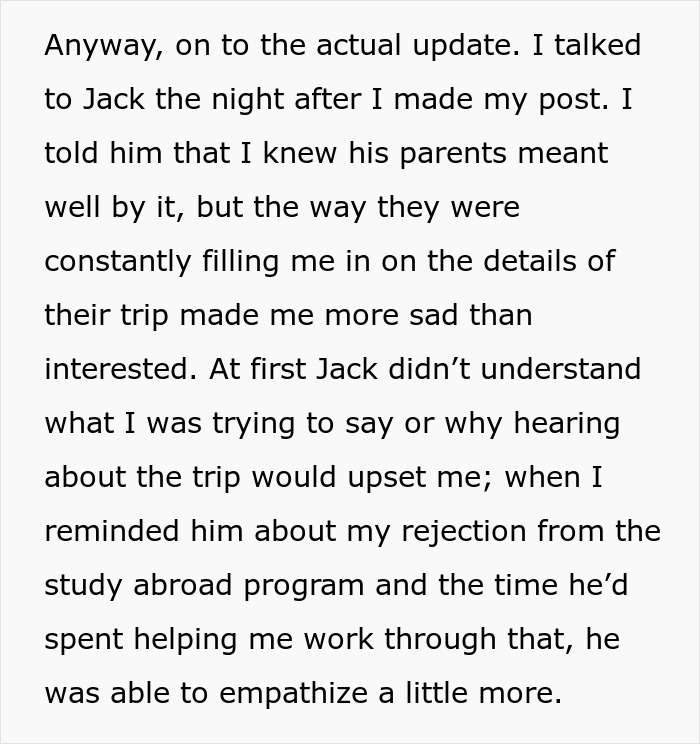
The poster shared an update that changed the whole story

magnific (not the actual photo)
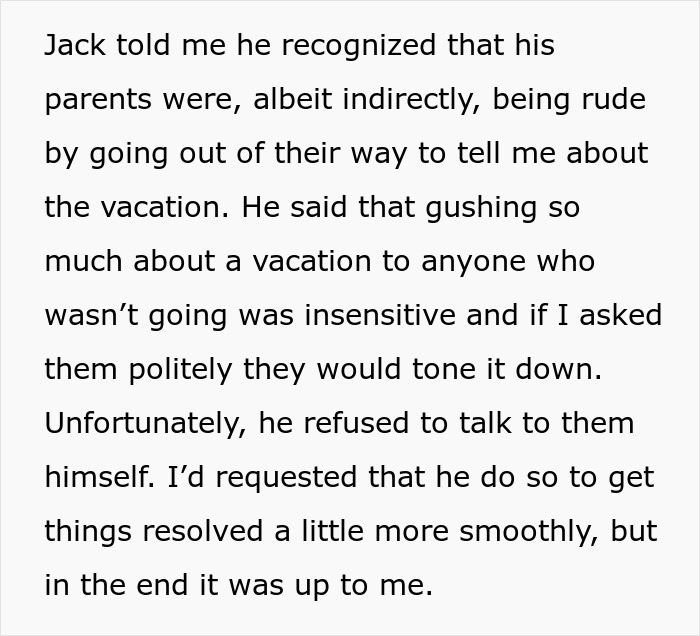
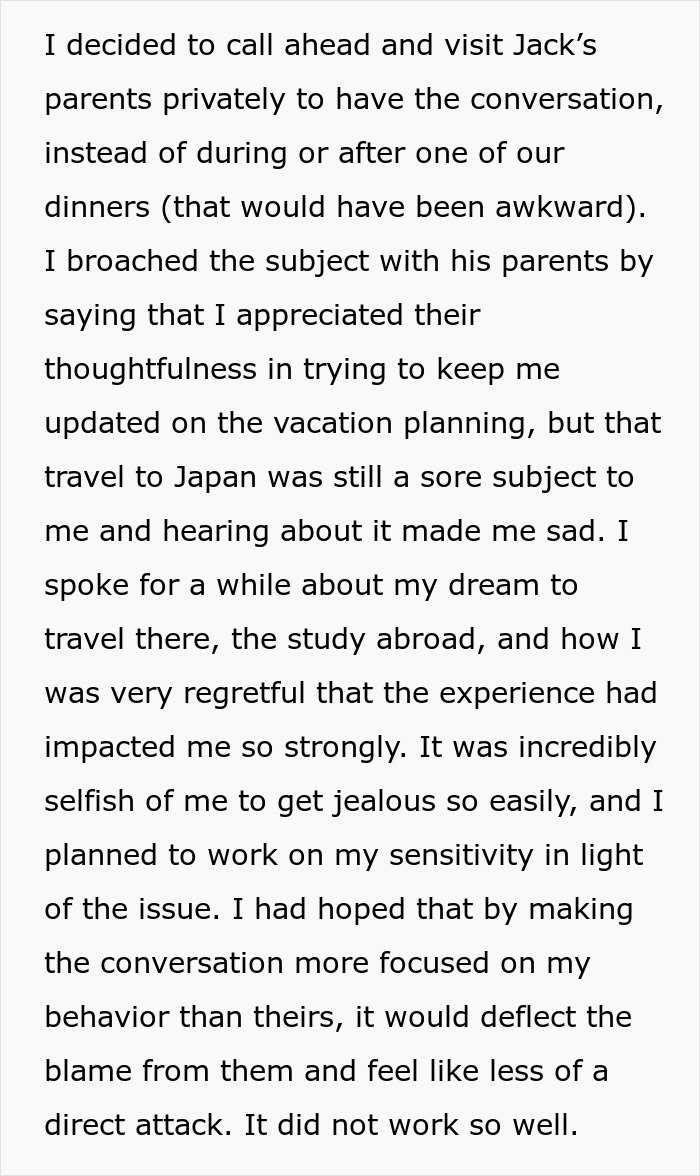
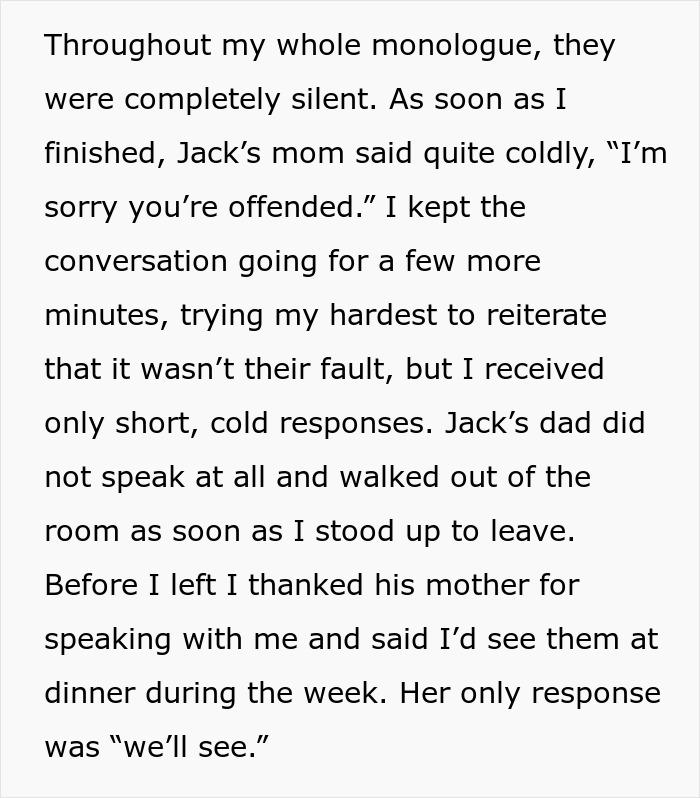

tonodiaz (not the actual photo)
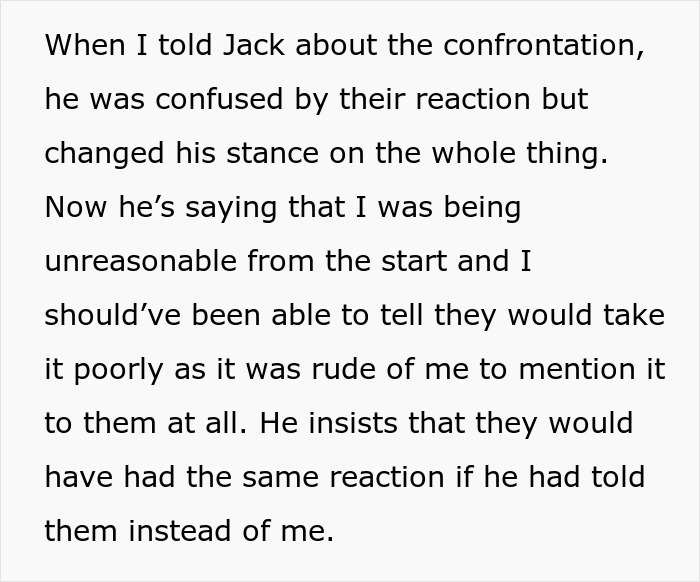
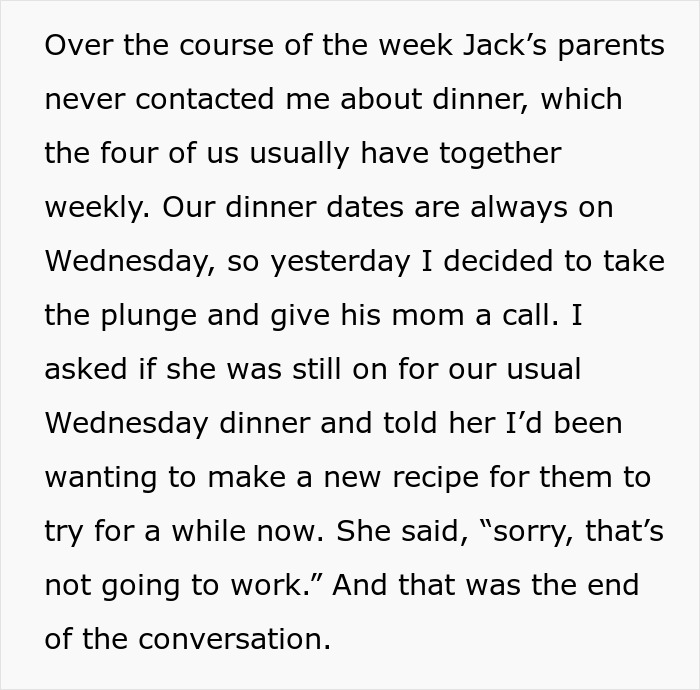
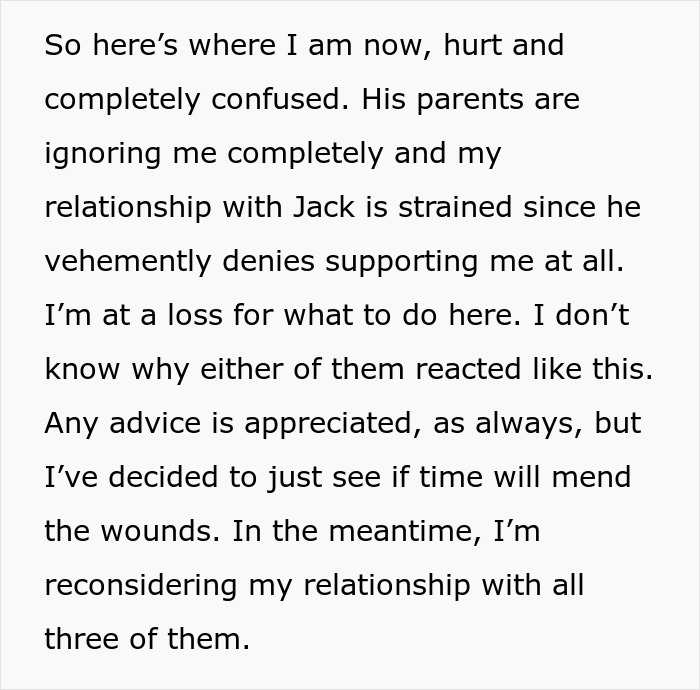
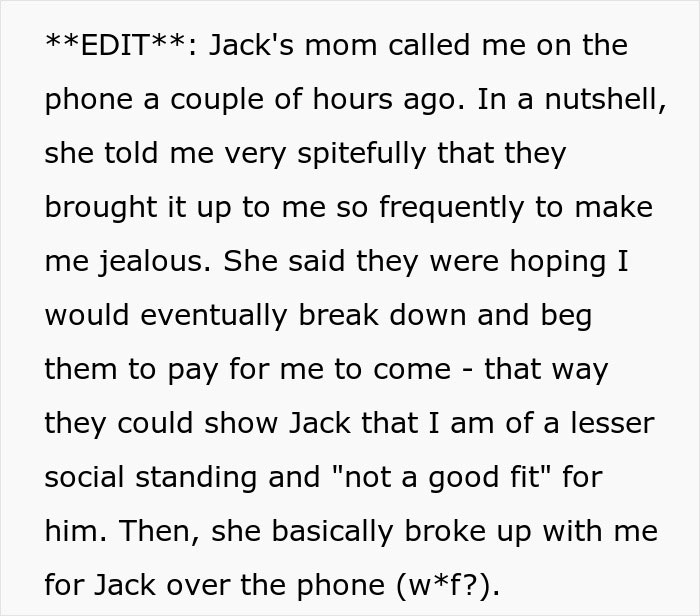
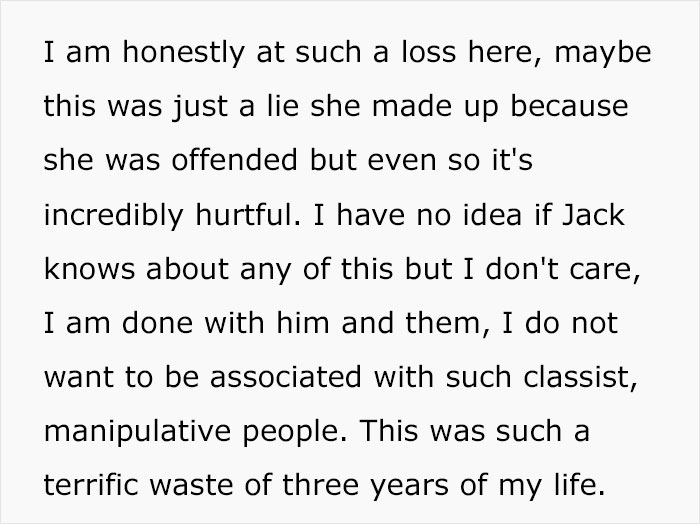
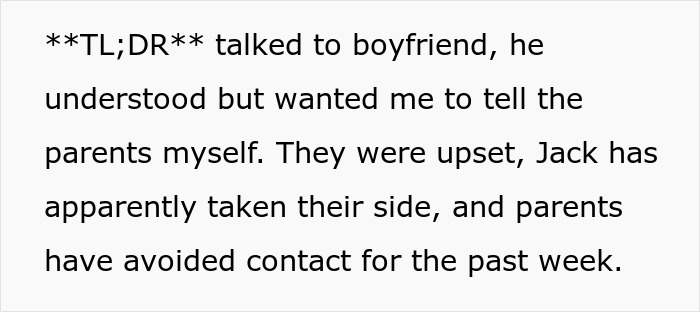
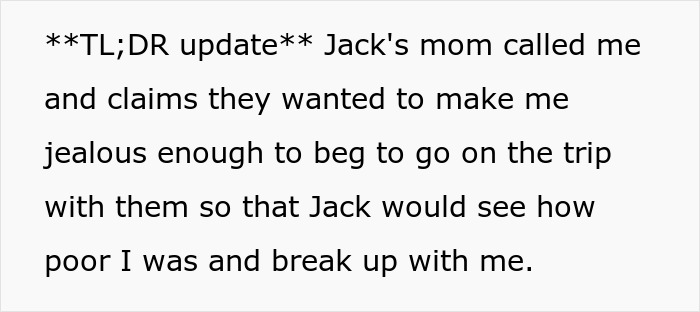
Some commenters shared their thoughts, and the poster responded with more details
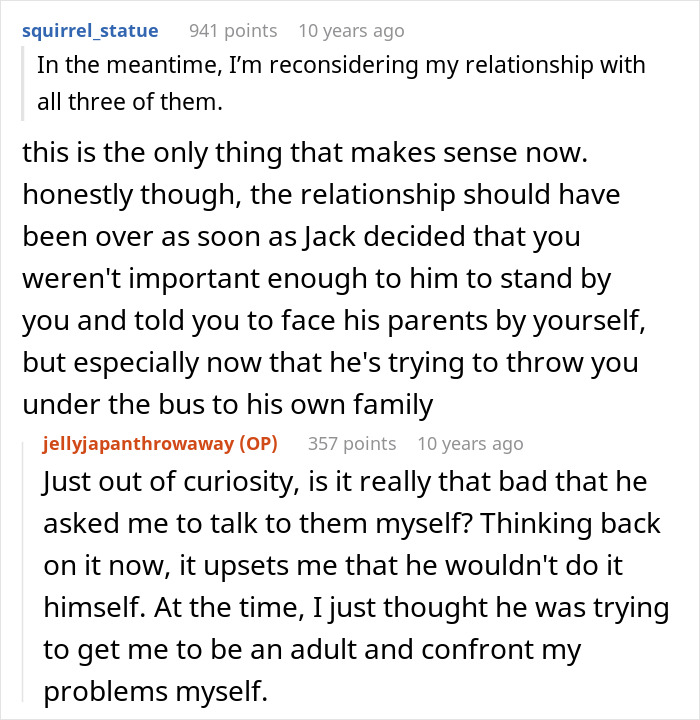


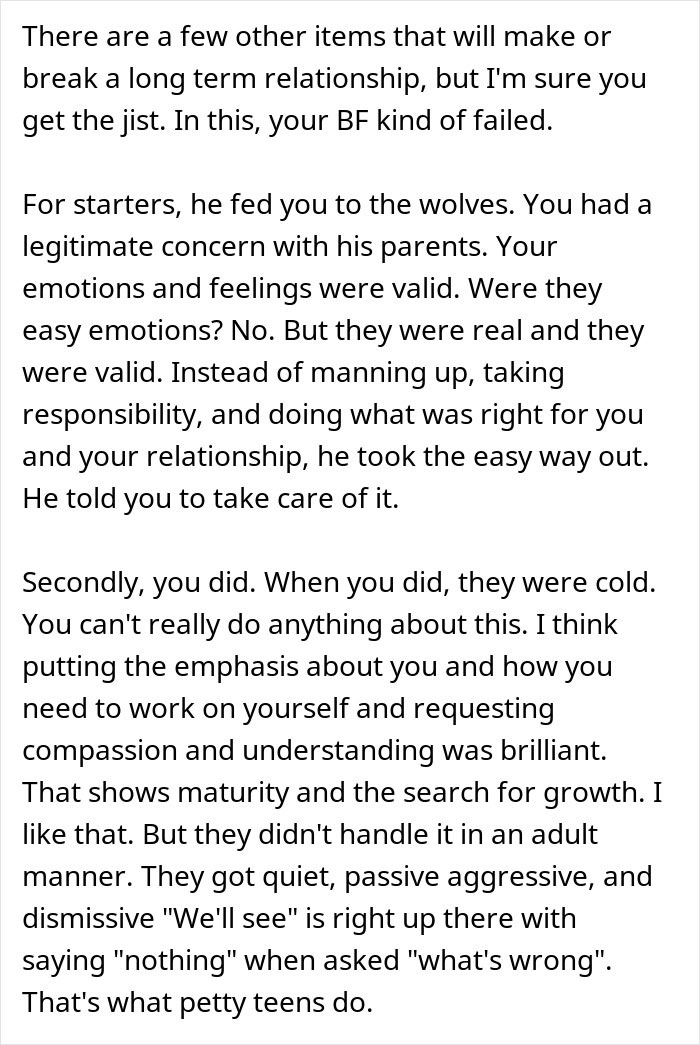
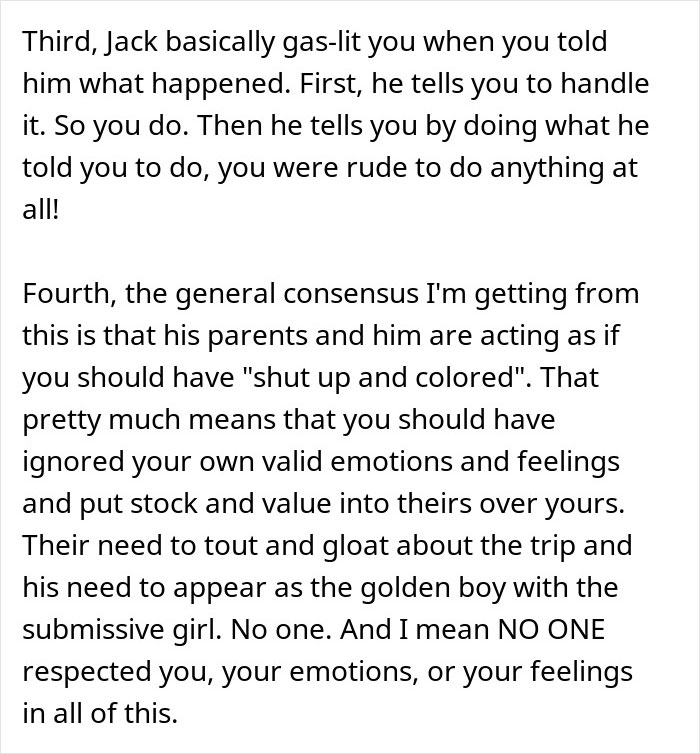
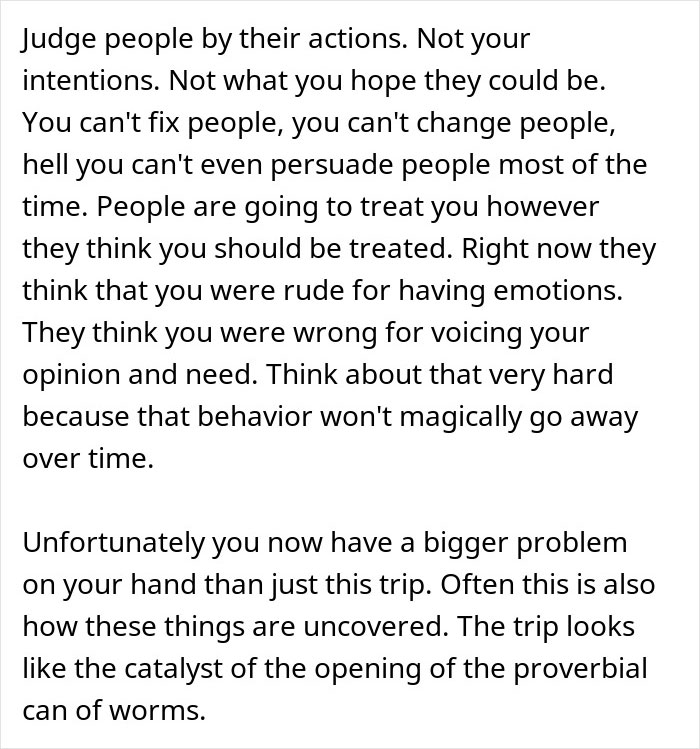
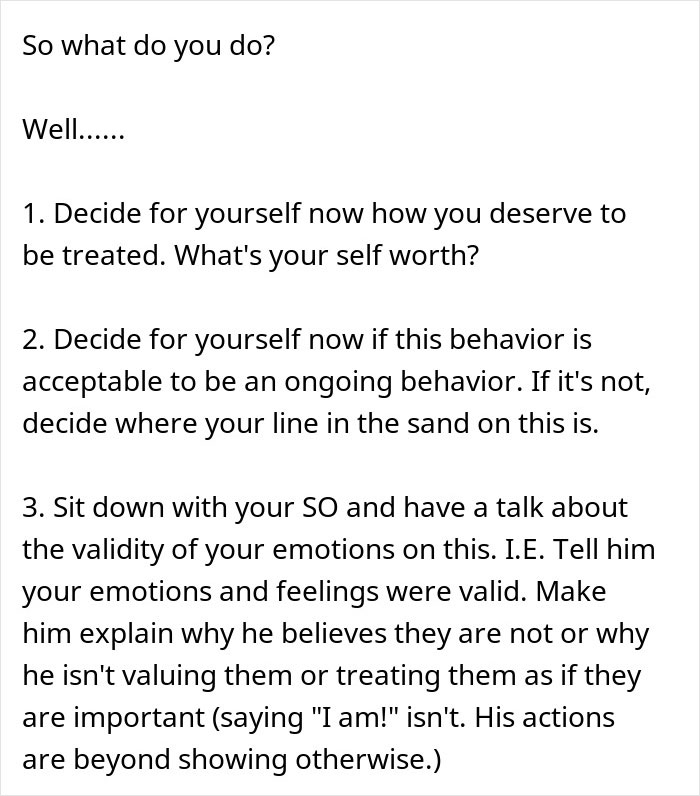
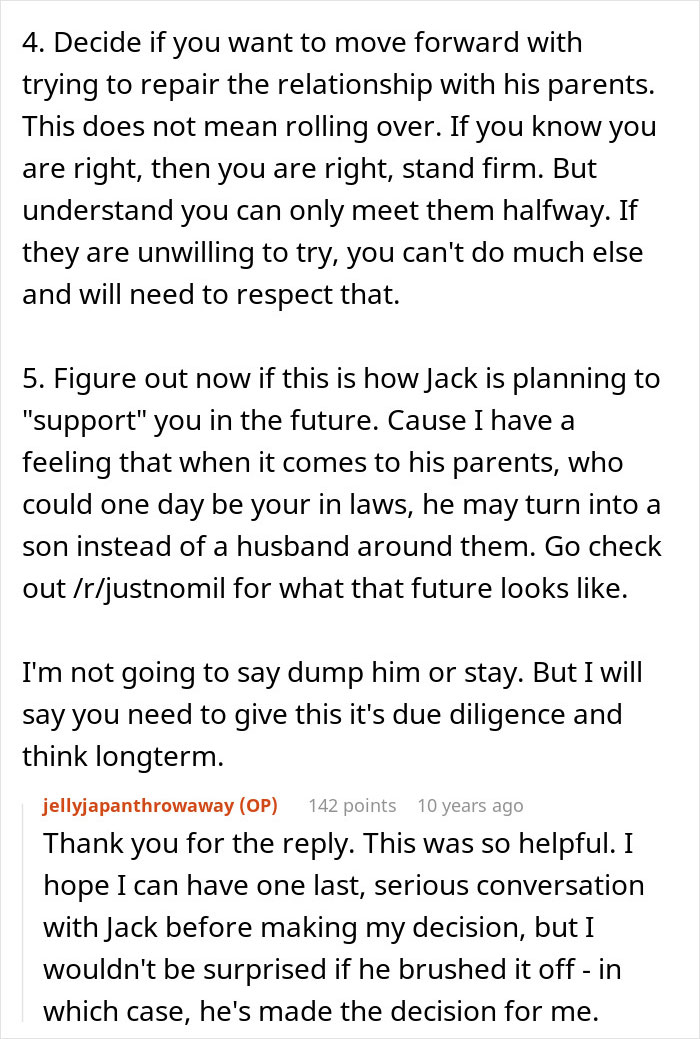
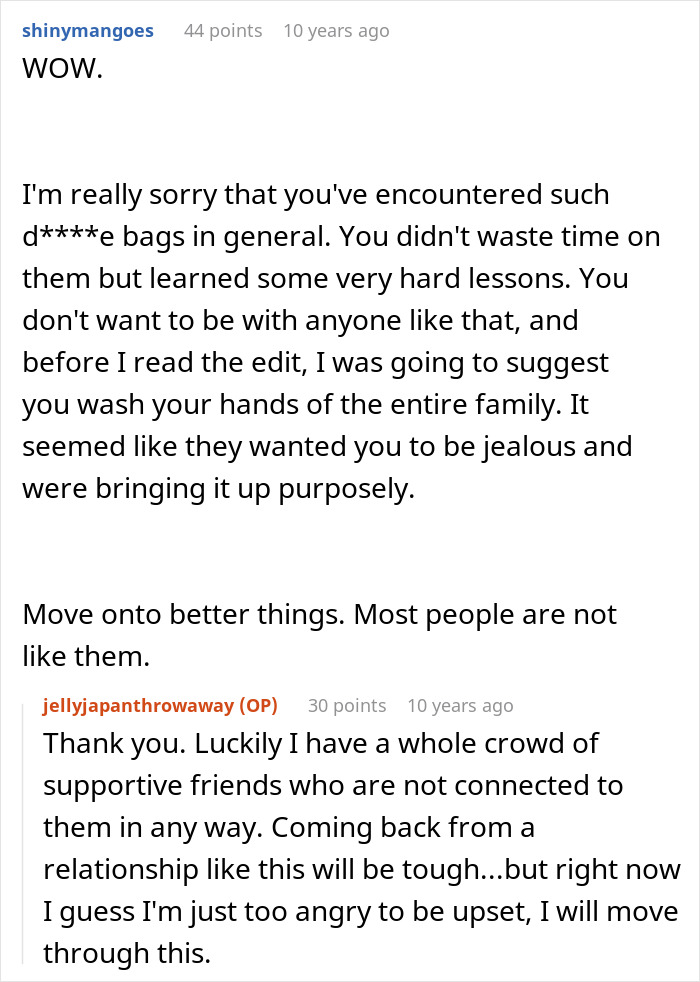
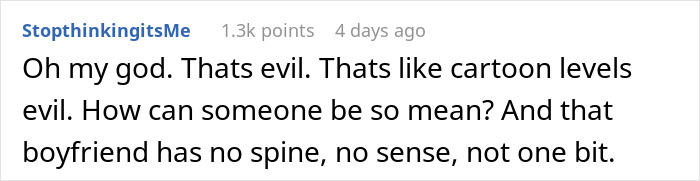
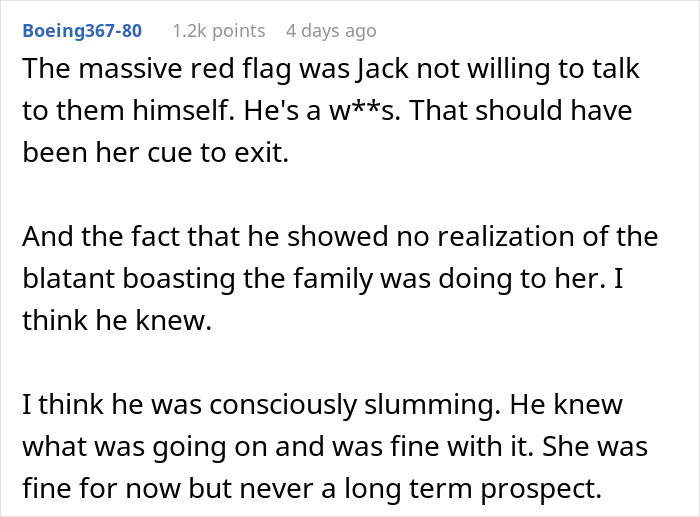
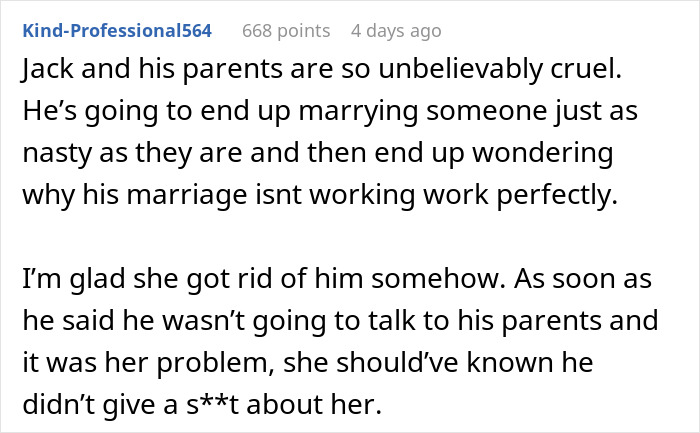
Commenters didn’t hold back about the family’s actions, with one saying the mother needed “a therapist, not a vacation”




 Follow Us