If you ask someone with a sibling what they’d do if their brother or sister was in trouble, most people would probably say the same thing: help them out. After all, that’s what family is for. But sometimes, stepping in to help a sibling can create unexpected complications, especially when personal relationships and professional responsibilities start to overlap.
For instance, one woman shared how she decided to hire her younger sister after she was laid off from her job. She hoped the opportunity would not only help her sister get back on her feet but also strengthen their relationship. However, things quickly took an unexpected turn when she discovered her sister had been sharing deeply personal family stories with coworkers. Even after being warned, the behavior continued—forcing the older sister to make the difficult decision to fire her for being unprofessional. But the story didn’t end there. Keep reading to see how the situation unfolded.
Working with family can often lead to tension, disagreements, and blurred boundaries

Image credits: africaimages (not the actual photo)

A woman shared how she gave her sister a job after she was fired but ended up letting her go for gossiping

Image credits: jet-po (not the actual photo)
Image credits: redditor_influencer

Image credits: pvproductions (not the actual photo)
Many family-owned businesses have grown into hugely successful companies around the world
When people hear the phrase “family business,” many immediately picture a cozy restaurant run by relatives or a small neighborhood shop passed down through generations. But the reality is much bigger than that. Around the world, several massive and well-known companies are still heavily influenced or even controlled by founding families. Think of companies like Walmart in the United States, owned by the Walton family, or major automobile brands such as Volkswagen and BMW, which have deep ties to the Porsche–Piëch and Quandt families. So while family businesses often start small, they can grow into some of the largest companies in the world.
Because of that, it’s easy for outsiders to assume that joining a family business must be a dream scenario. After all, the narrative often sounds appealing—step into a company built by previous generations, enjoy financial stability, and work alongside family. But according to people actually living that reality, things are rarely that simple. To understand the experience better, we spoke with Anshika Sharas, a third-generation member working at her grandfather’s company, OnePoint, a logistics business that connects cities across India through reliable and cost-effective road transport. Her experience paints a much more nuanced picture of what it’s really like.
Anshika says the pressure begins almost immediately. “You have very big shoes to fill,” she explains. “From day one, you can feel the expectations.” Unlike many employees who gradually grow into their roles, she says, people often assume that family members entering the business should already know everything. “There’s this feeling that because you’re part of the family, you should understand the company inside out from the moment you start,” she says. That expectation alone can make the early days in the business surprisingly intimidating.
According to Anshika, another challenge is how colleagues perceive you. Not everyone automatically welcomes a family member into the workplace. “Some employees watch you very closely,” she says. “They analyze your decisions and sometimes judge you more harshly.” She admits that a few people openly question whether she truly earned her position. “I’ve heard people joke that I’m only here because of my dad,” she shares. Because of that, she says family members often feel they have to work twice as hard to prove they deserve their place in the company.
Work-life balance is another area where assumptions don’t always match reality. Many people believe that if you work in your own family’s company, you have the freedom to arrive late or leave early. “That’s definitely not how it works,” Anshika says with a laugh. “If anything, I feel like I have to put in even more effort.” She explains that when your name and family reputation are tied to the business, the sense of responsibility becomes even stronger. “Maintaining a healthy work-life balance can also be tricky because work and family life overlap so much,” she adds. “At our dinner table, conversations often turn into discussions about the day’s work, and my mother is definitely not a fan of that.”

Image credits: standret (not the actual photo)
Children who join family businesses often have to navigate conflicts that blur the lines between family life and the workplace
The topic of work-life balance is something professionals everywhere talk about today. In traditional workplaces, many employees say it’s one of the most important factors in job satisfaction. In fact, surveys often show that a lack of balance between personal life and work responsibilities is one of the top reasons people leave their jobs. Whether someone works in a corporate office or a family-run company, finding that balance can be a constant challenge.
In family businesses, however, that balance can become even more complicated because personal relationships and professional decisions are deeply intertwined. “A disagreement at home doesn’t just stay at home,” Anshika says. “Sometimes it carries into the office.” She explains that personal emotions can affect business discussions, team dynamics, and even decision-making. “When you take an office argument back home, things can get really tense,” she adds. Navigating those overlapping roles can be surprisingly difficult.
Working under a parent brings its own set of challenges as well. “When your boss is also your father, things can get complicated,” Anshika admits. Parents naturally want their children to succeed, but that often means they push them harder than anyone else. “They expect you to do your best all the time,” she says. “And sometimes that means they’re stricter with you than they would be with other employees.”
Despite the challenges, Anshika says she still feels grateful for the opportunity. There are, after all, many advantages to being part of a family-run business. “There are definitely perks,” she says with a smile. The company already has an established customer base, experienced employees, and a structure that allows family members to contribute ideas more freely. Most importantly, she says, the experience allows her to learn directly from previous generations. “I get to grow while building on something my family created,” she explains. “But one thing people should know is that working in a family business isn’t always as easy as it looks from the outside.”
Anshika summed it up quite well—working in a family business can be both rewarding and complicated. While it offers unique opportunities, it also comes with emotional dynamics that can make professional decisions much harder. The story we just looked at reflects many of the challenges she mentioned. When family relationships and workplace responsibilities overlap, things can quickly become tricky. In this particular case, it seems the author’s decision may have been shaped by both professional boundaries and personal emotions. What are your thoughts on how the situation was handled?

Image credits: pressfoto (not the actual photo)
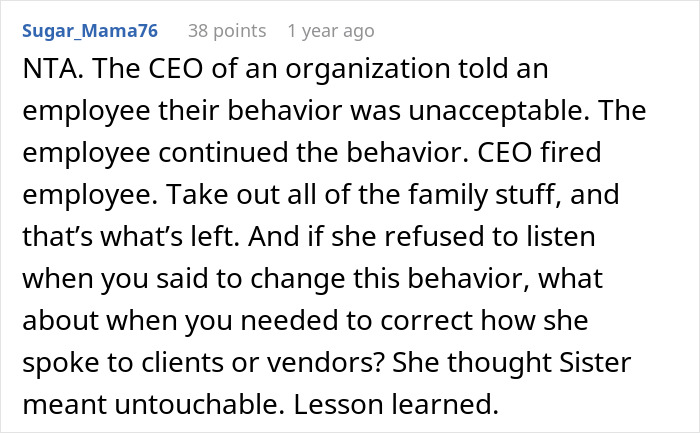
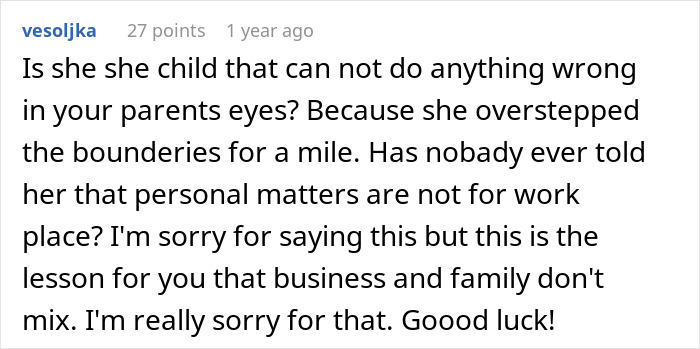
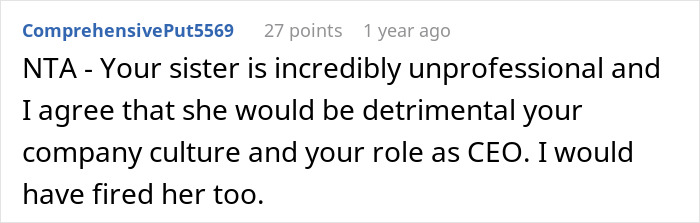
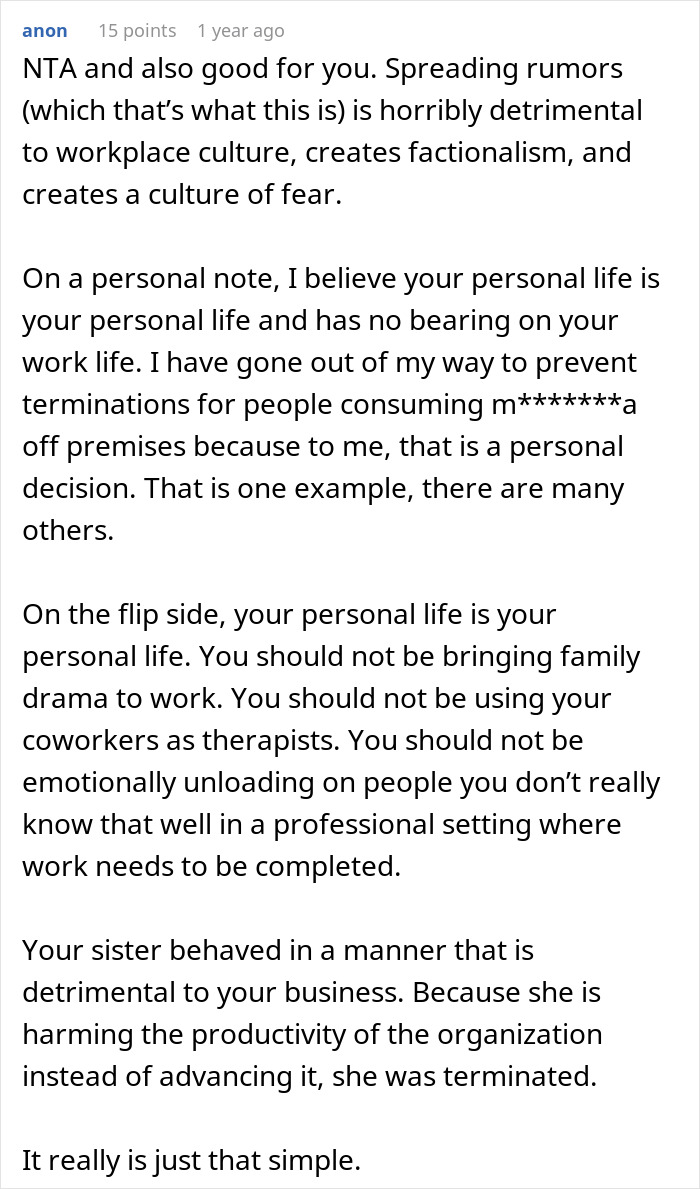
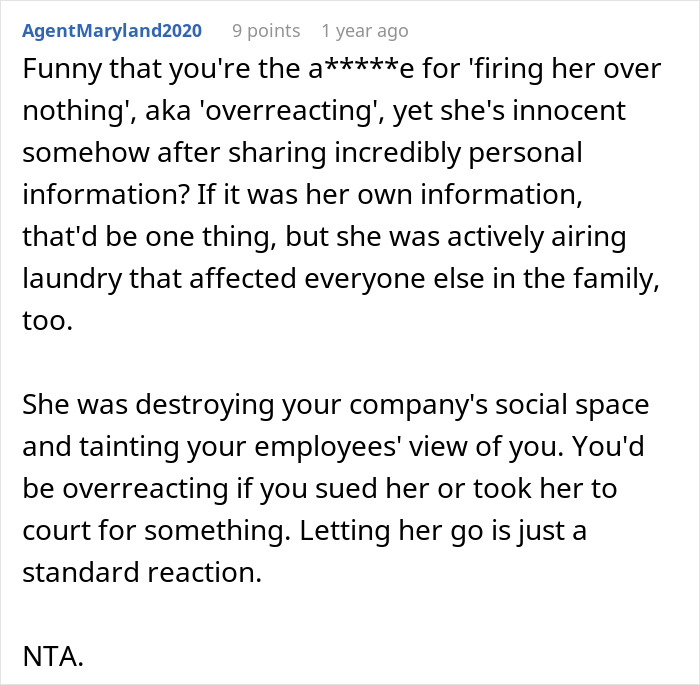
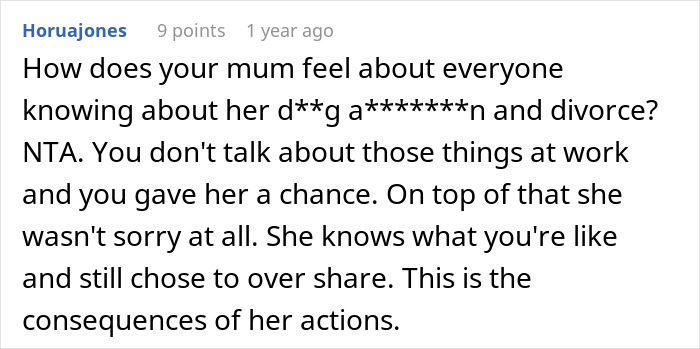
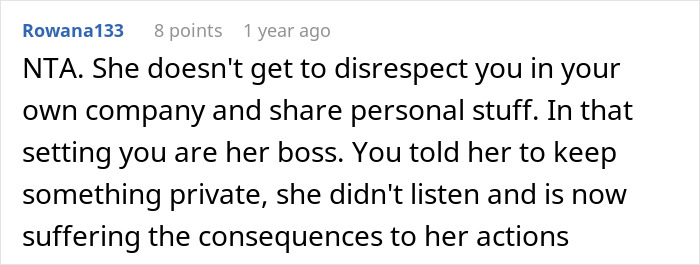
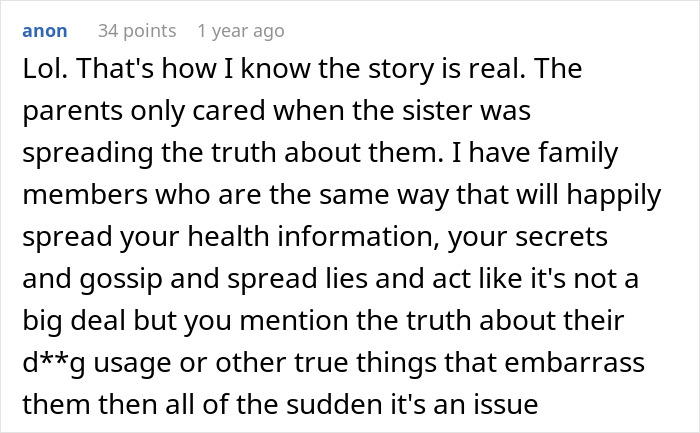
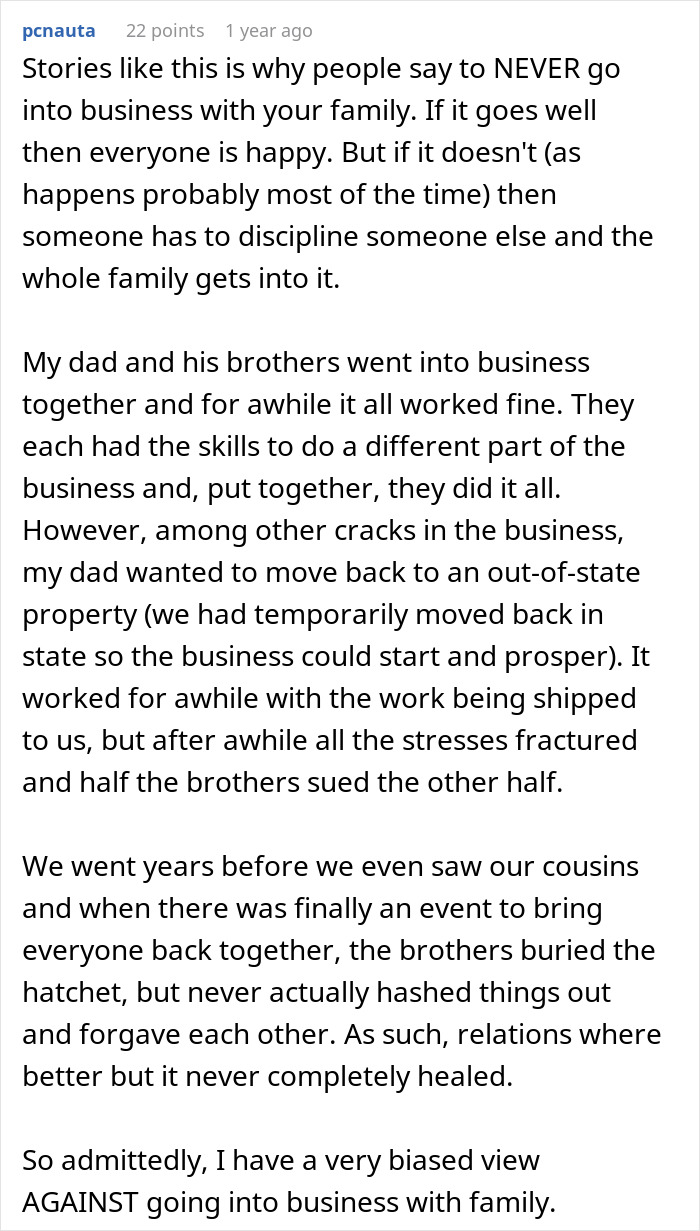
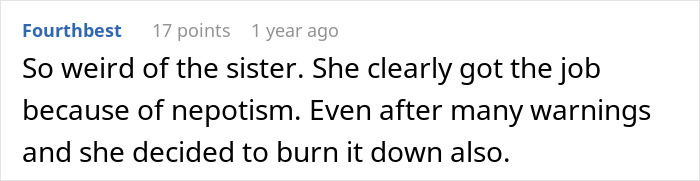
Many commenters supported the author, saying she was justified in firing her sister
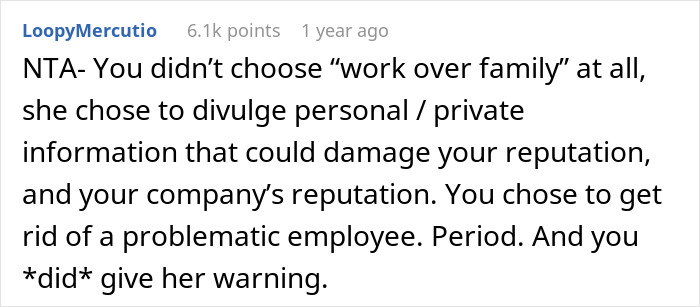
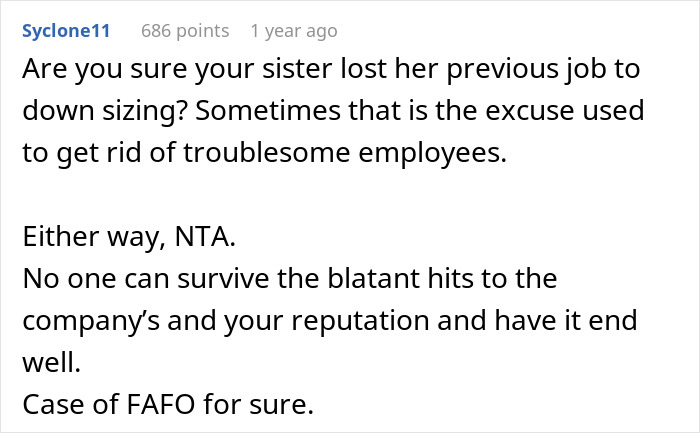

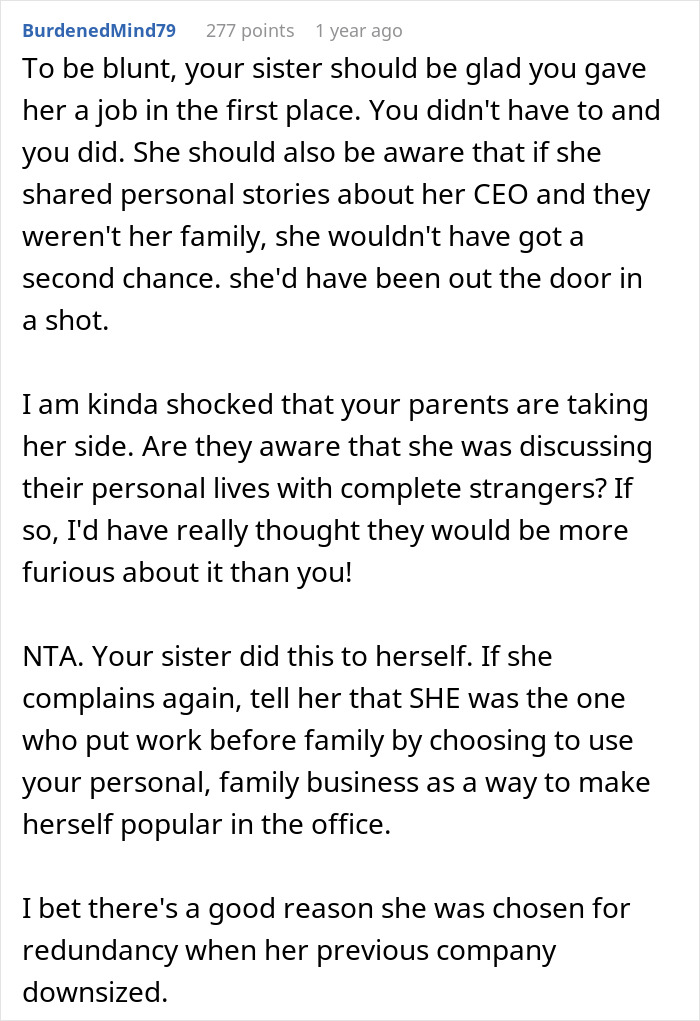

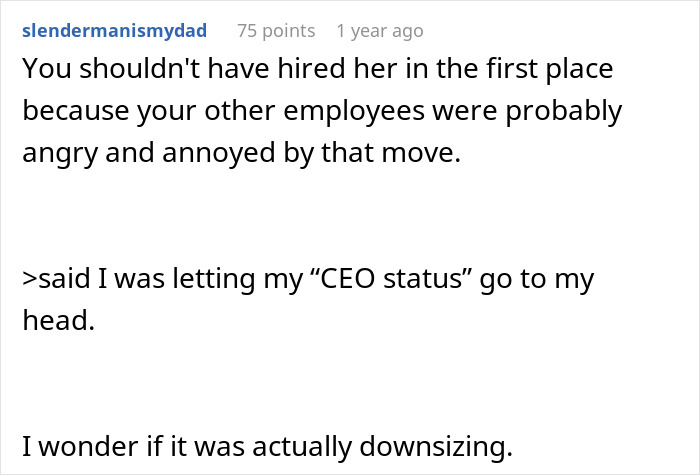



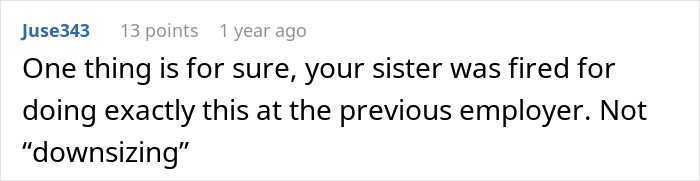
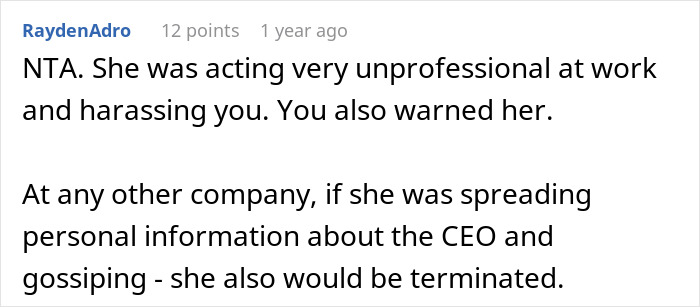
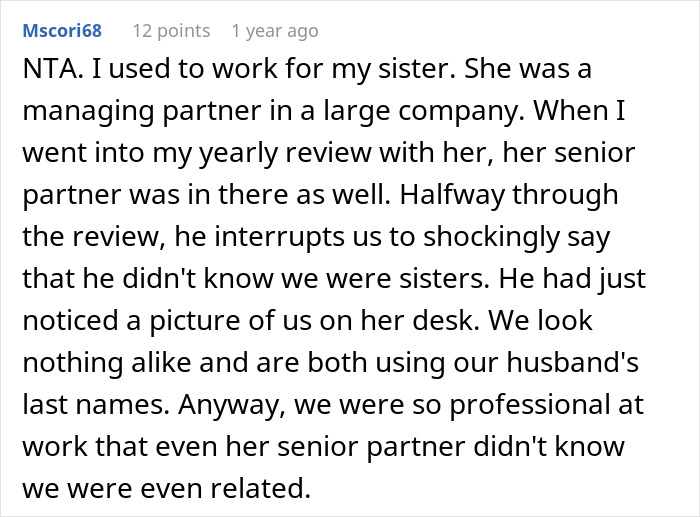


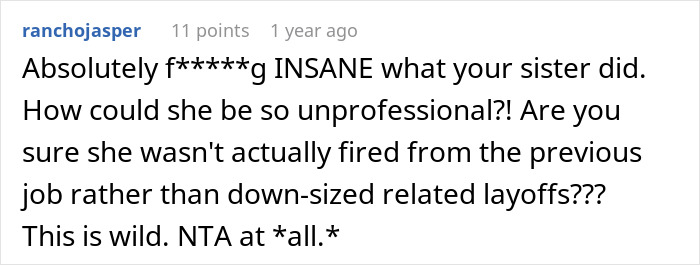


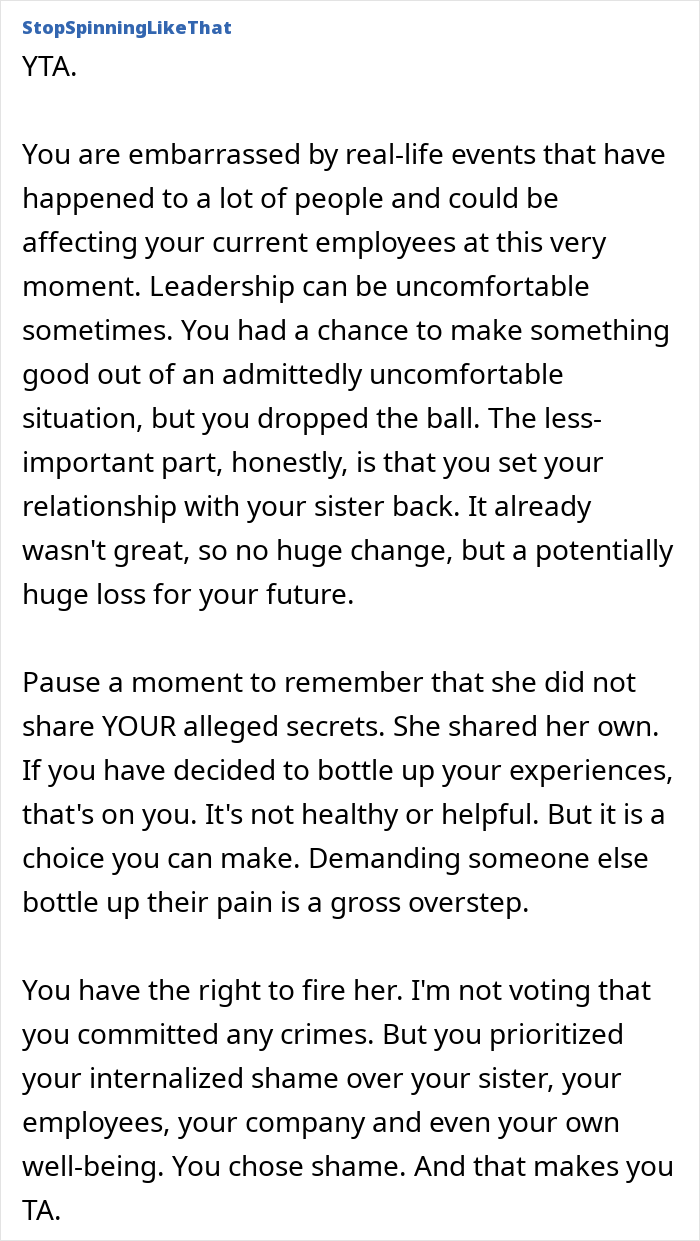
A few, however, felt the sister had the right to talk about her personal life

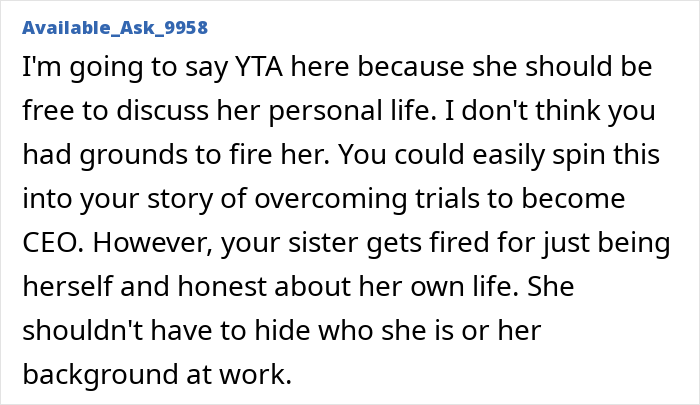
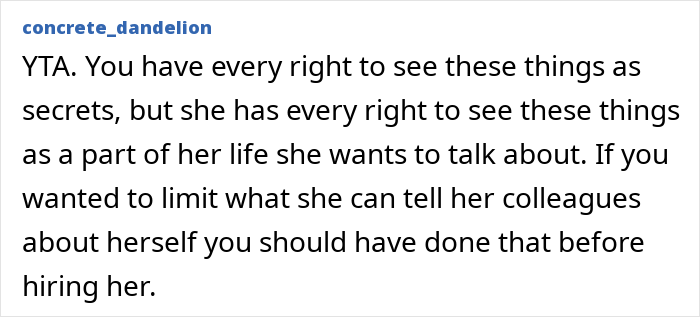
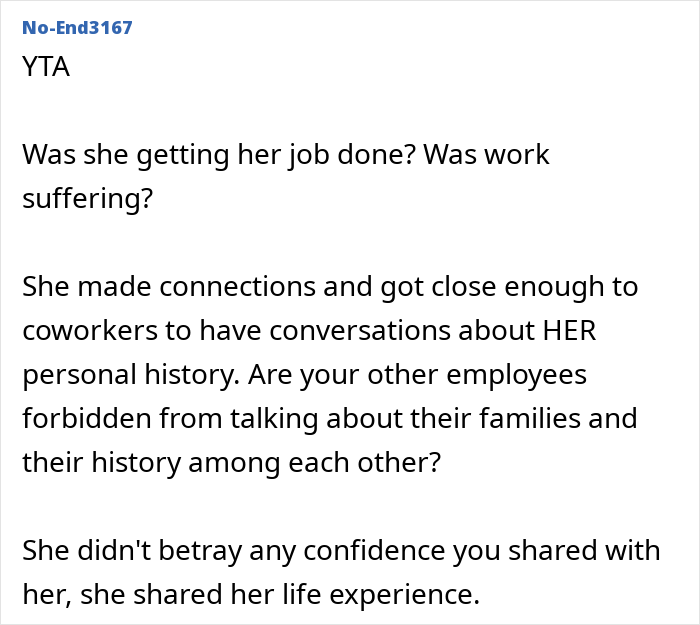
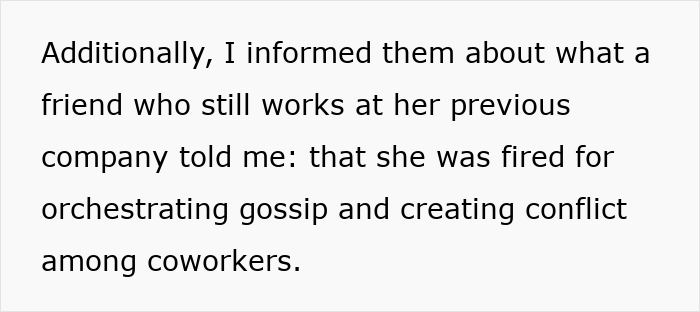
The woman later revealed the real reason her sister had been fired from her previous job
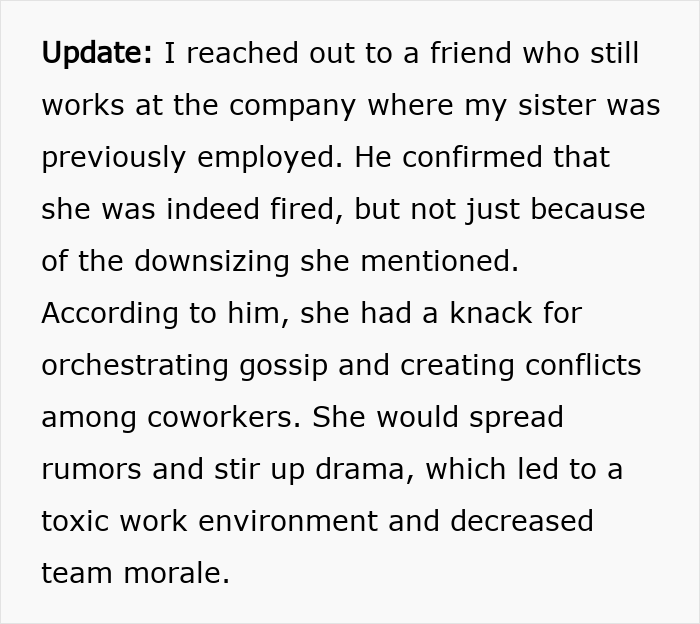
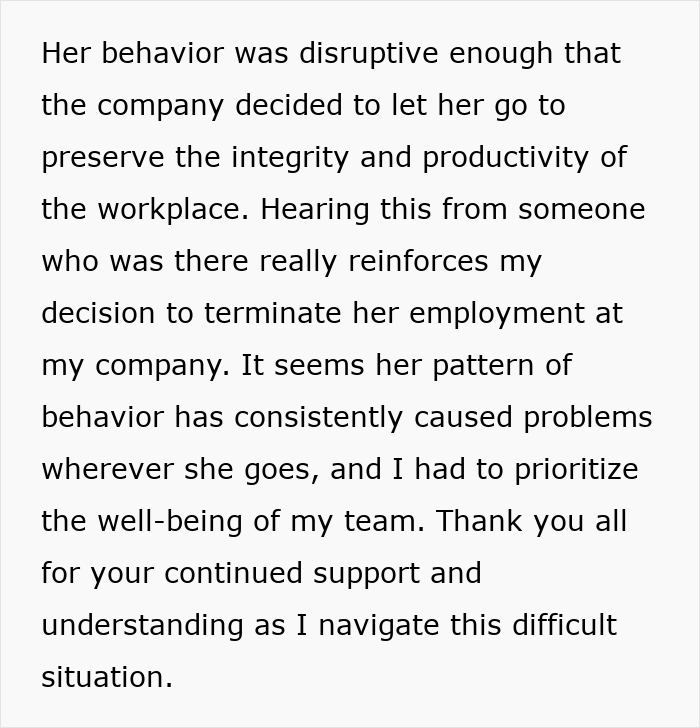
Once the full story came out, the author’s parents ended up siding with her
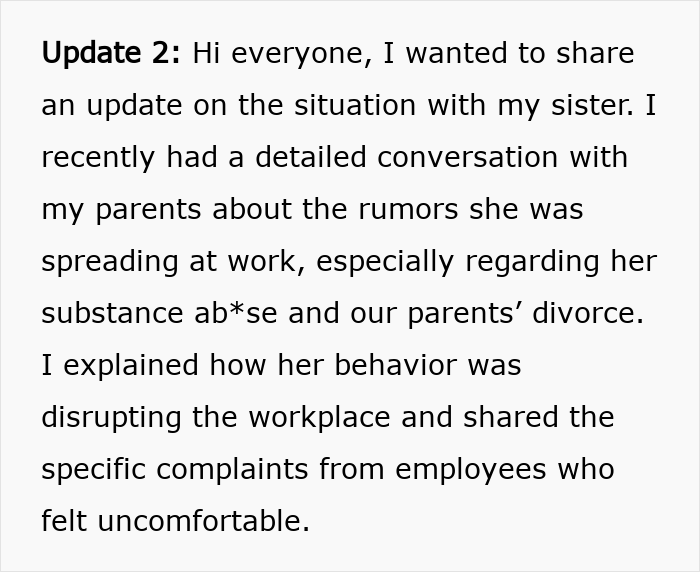
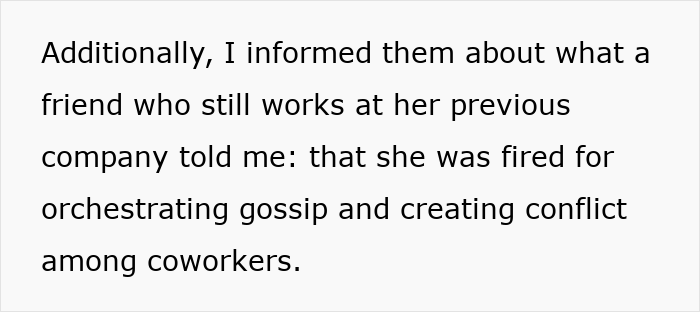
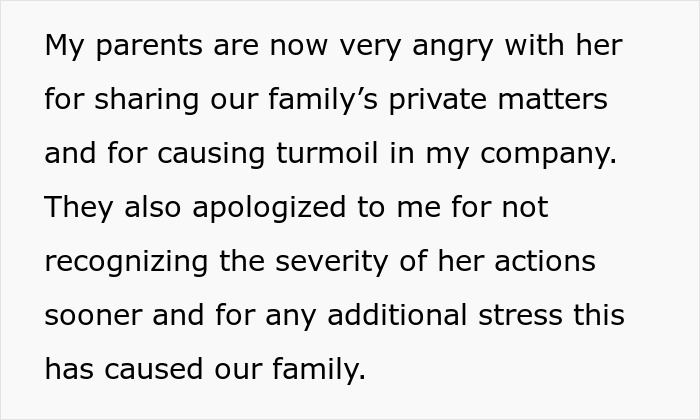
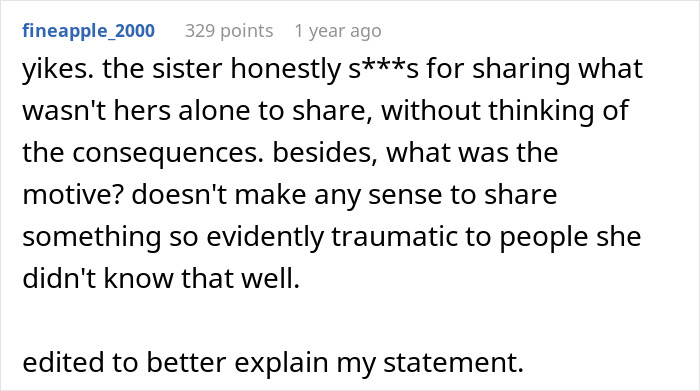
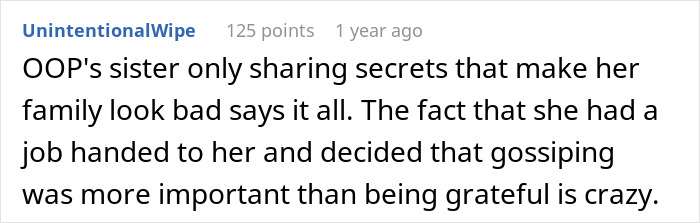
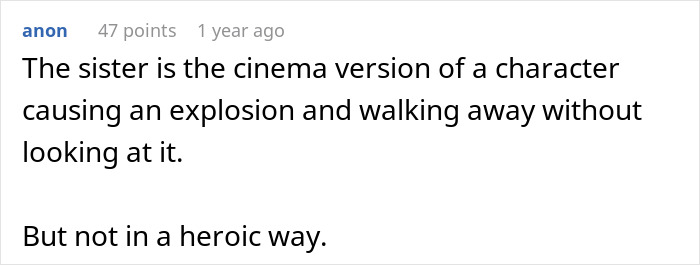
Many people pointed out that the sister’s behavior was unprofessional and inappropriate


 Follow Us