By now, you’ve probably heard of a baby macaque named Punch. The monkey captured the hearts of millions of internet users after he was filmed carrying and hugging a stuffed animal—bigger than himself—around his enclosure at Japan’s Ichikawa City Zoo.
As zookeepers explained, Punch was abandoned by his mother shortly after he was born, so he began using the soft toy as a “surrogate mother.”
Videos of Punch holding the stuffed animal have made the rounds on social media and led to a significant increase in visitors at the zoo, located east of Tokyo. The baby macaque was even featured in a Saturday Night Live skit.
People have been eager to see updates on the seven-month-old, particularly his interactions with the other monkeys—some friendlier than others.
To learn more about Punch’s case and what the future holds for him, Bored Panda consulted a group of experts in primate social behavior.
Why did Punch’s mother abandon him?
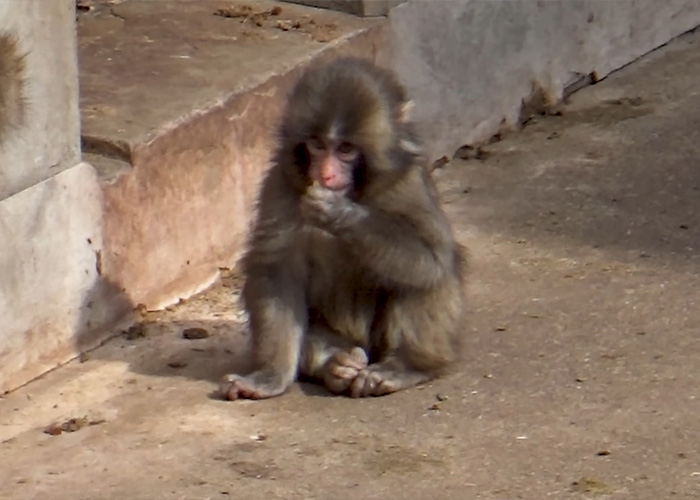
Image credits: Japan Zoo Story
Zookeepers explained that Punch was rejected because his mother was a first-time mother and he was born during a heatwave.
“There is evidence that maternal investment is affected by periods of environmental or nutritional stress, where mothers may not have sufficient resources to provide for their offspring,” explained Professor Zanna Clay, a developmental psychologist with expertise in primatology at Durham University.
“Heatwaves can be one such example.”

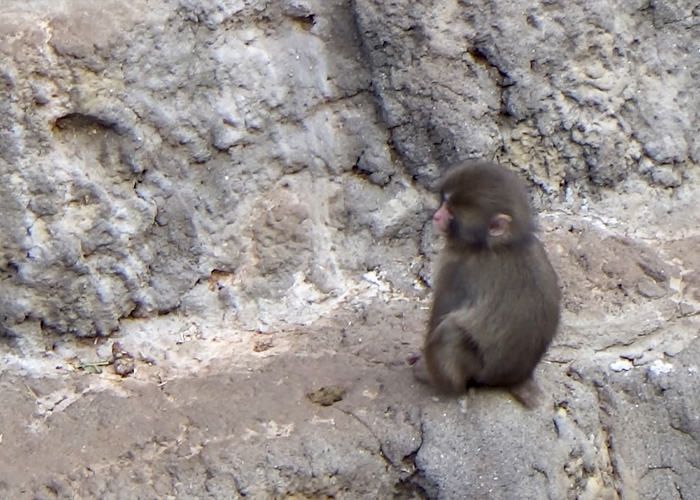
Image credits: Japan Zoo Story
According to Jessica Mayhew, a professor at Central Washington University who has studied primate social behavior, maternal care is learned socially, so Punch’s mother may not have acquired those skills before having him.
“Being a parent is challenging even in the best of circumstances, and it requires intergenerational skills. Maternal care in primates is learned over one’s lifetime and influenced by opportunities to see skilled moms in action and to practice parenting behaviors,” Mayhew explained.
“The upbringing of primate moms plays a critical role in the development of their own offspring’s behavior, rank-related relationships, and current/future reactivity to stressors.”
Mayhew said rejection of offspring is more prevalent in captivity, especially by first-time moms and under stressful circumstances.
The low social rank of Punch’s mother may also have played a role, as Japanese macaques live in matrilineal societies. “Japanese macaque offspring inherit the rank of their moms, and low-ranking individuals tend to lead stressful lives,” she noted.
What makes the stuffed animal special for Punch?
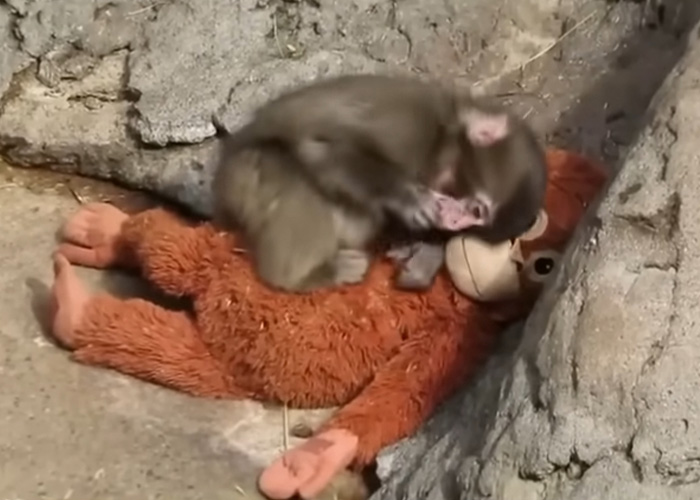
Image credits: ABC News
Zookeepers said they gave Punch towels and other soft toys after he was born, but he chose the orangutan stuffed animal. The baby macaque was seen snuggling with the toy and even running back to it when attacked by older primates.
Professor Alison Behie, a primatology specialist and lecturer in Biological Anthropology at the Australian National University (ANU), explained that there have been other similar cases of orphaned monkeys showing attachment to soft figures in the past.
“Studies done in the 1950s by Harlow found that infant monkeys removed from their mothers were more likely to spend time clinging on a cloth figure rather than a wire figure,” Behie shared.
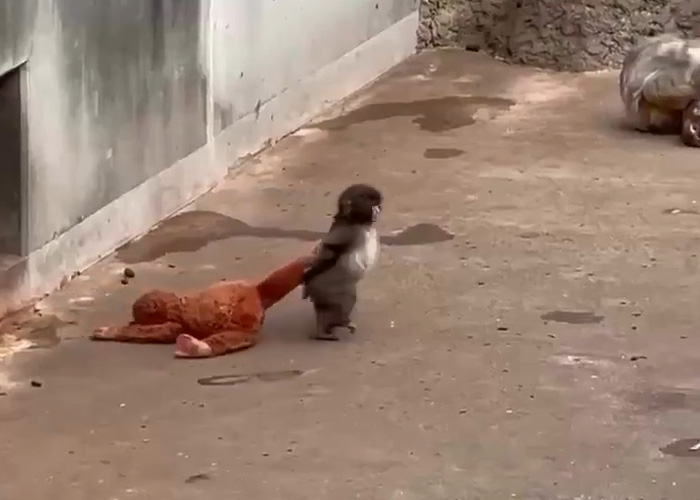
Image credits: AmericaPapaBear
“It could be that this simulates the feeling of being on their mother and while this can no way replace the care and nurturing of a mother, it can provide some comfort.”
Just like Punch, the monkeys in the 1950s study also retreated to the cloth figures when they were scared, Behie noted.
According to Clay, the fact that the plushie resembles a primate may have attracted Punch over other warm, soft alternatives provided by the zoo.
Why is Punch “bullied” and dragged by other monkeys at the zoo?
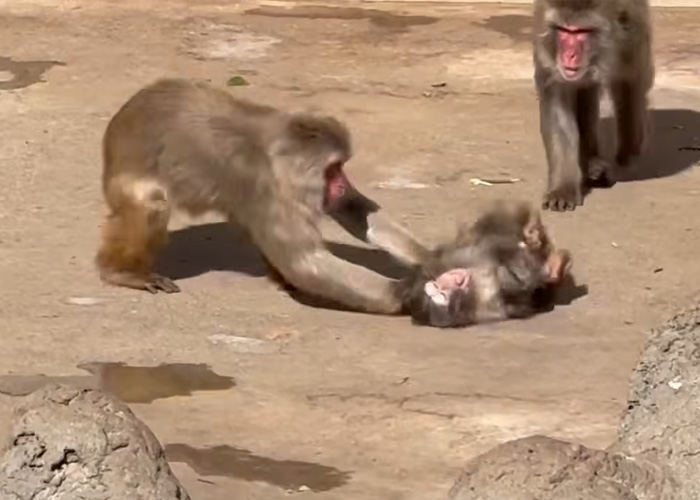
Image credits: New York Post
Videos showing the baby being dragged by adult macaques have sparked concern online, with people claiming Punch was being “bullied” and demanding that zookeepers remove him from his enclosure for his safety.
However, this type of aggression is normal among Japanese macaques and is a way of teaching Punch about the group’s hierarchy.
In macaque societies, “dominant females and their offspring regularly show aggression to less dominant families as a way to maintain the hierarchy and peace in the group,” explained Behie.
“So, the sort of aggression that Punch faced is not unusual in this sort of group and shouldn’t be seen as bullying or severe aggression.”
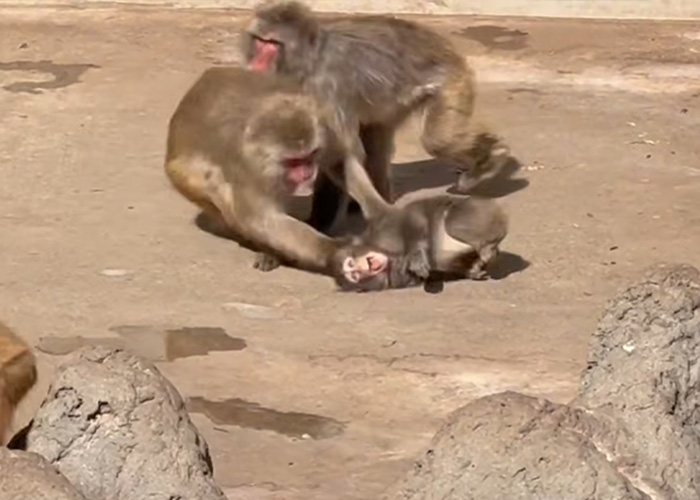
Image credits: New York Post
Similarly, Clay said these interactions, however intense they may be for a little monkey, are life lessons for Punch that show him where he fits into the larger social group.
“Punch is young, vulnerable, and at the bottom of the dominance hierarchy. Without a mother, some individuals will seize on this opportunity to assert their own social status and dominate him through aggression, whereas others will defend him through intervening in conflicts and offering friendly contact after conflicts, showing nurturing care.
“Like us, monkeys are capable of a rich array of behaviours in response to someone who is vulnerable. Just think how people sometimes treat the homeless.”
Why is the baby “grooming” the stuffed animal?
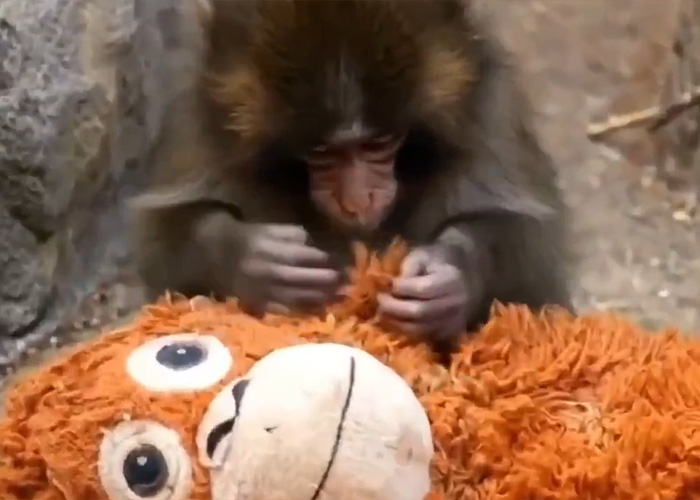
Image credits: J_J_Valdez
Punch was seen approaching other monkeys and turning his back to them, seemingly expecting to get groomed. Additionally, a video captured the young macaque grooming his stuffed orangutan.
As Mayhew explained, this practice serves both hygienic (removing parasites) and social functions.
“These touch-based relationships are important social glue for macaque bonds. Grooming helps an individual to cope with stress and alleviate tension, and it also creates, strengthens, and restores social bonds between individuals.
“Punch is practicing his own grooming skills, but the stuffed animal is obviously unable to reciprocate, so he would be greatly benefitted from a friend or two willing to groom him back.”
Behie also noted that Punch likely groomed the toy because he was mimicking what he saw the other animals do.
Is Punch expected to integrate into the group?
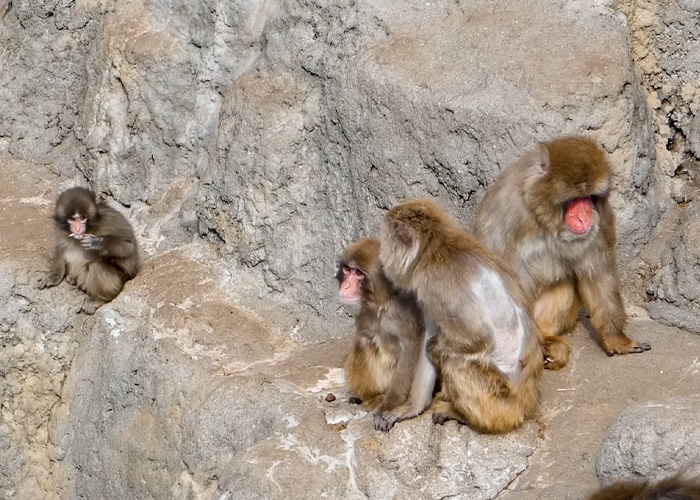
Image credits: Punch the Monkey
Kosuke Shikano, one of Punch’s zookeepers, described the young macaque as “mentally strong,” sharing that he quickly recovers when he is scolded by other monkeys.
The fact that he was rejected by his mother does not mean that Punch will never integrate into the group, but he will likely show long-term deficits in his social functioning, according to Clay.
“It is possible that another group mate may adopt him at some point, which could really help with his development. But these monkeys are very resilient, so it is likely that despite all his challenges, Punch will find a way to survive,” the expert concluded.
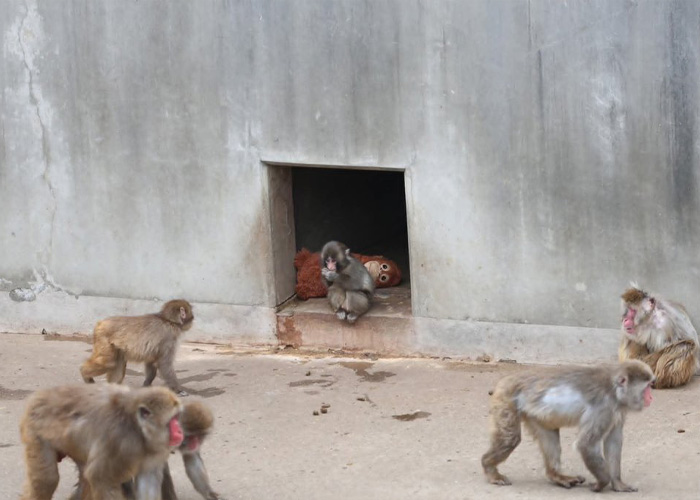
Image credits: manilabulletin
Behie pointed to recent footage of Punch being groomed by another primate as a promising sign that he will grow up without being rejected by the group.
“Studies in Mountain gorillas have shown that when animals are accepted by adults or individuals of the same age that they do better throughout their life and are able to avoid some of the negative behaviors associated with abandonment.
“With this early grooming, it is expected Punch should integrate in the group.”
Punch’s story has captured the attention of social media users around the globe
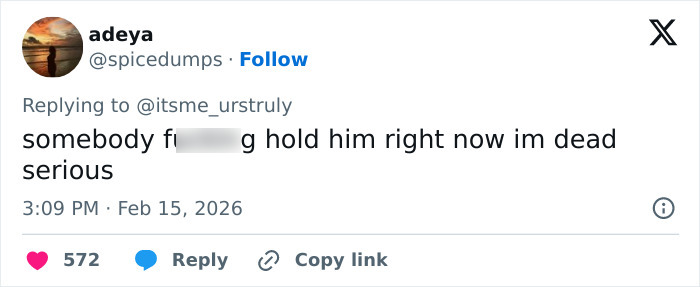
Image credits: spicedumps
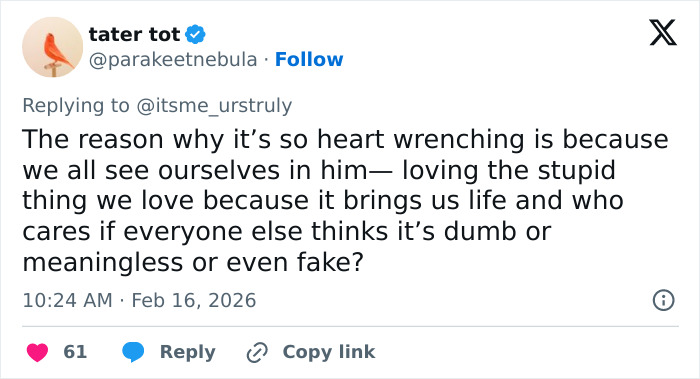
Image credits: parakeetnebula
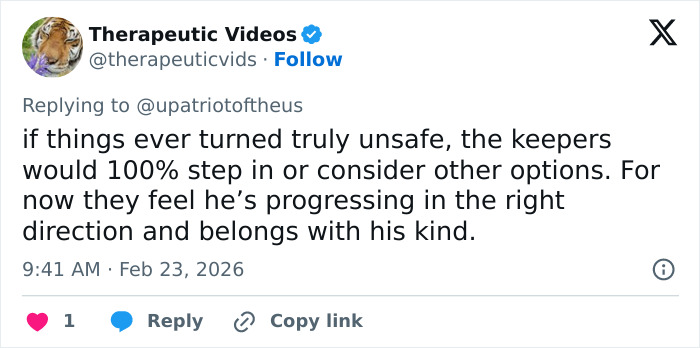
Image credits: therapeuticvids
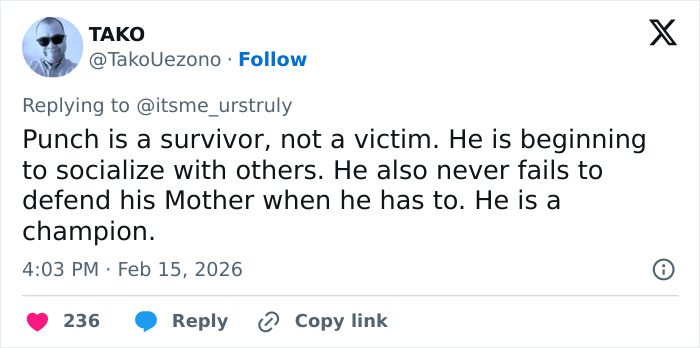
Image credits: TakoUezono
Image credits: FavouredDeji
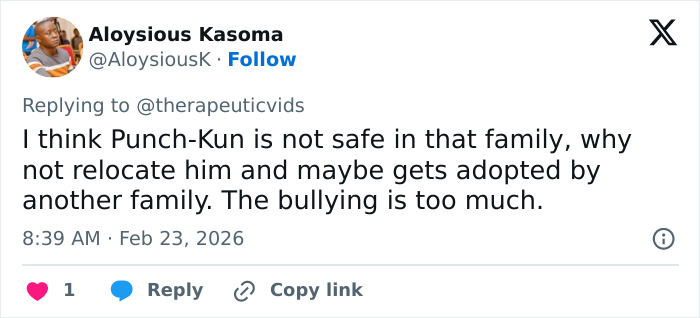
Image credits: AloysiousK
Image credits: SyedAhmarOnline

Image credits: yorumcuakif
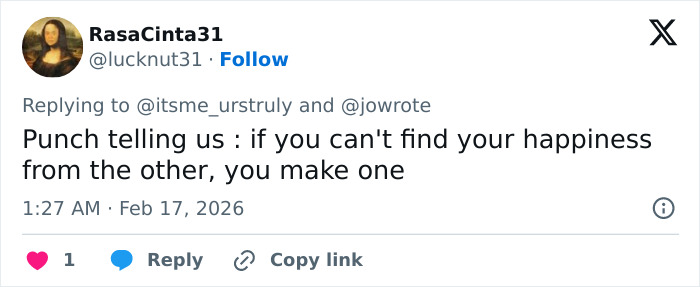
Image credits: lucknut31

Image credits: AamiaaS
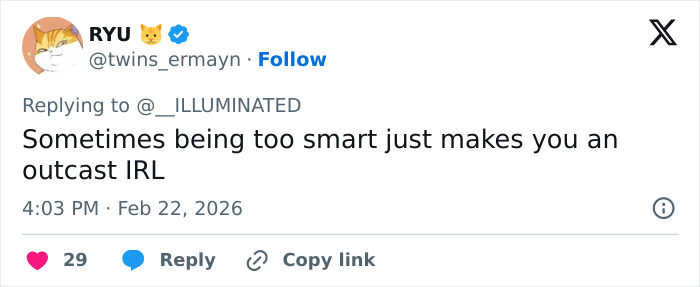
Image credits: twins_ermayn
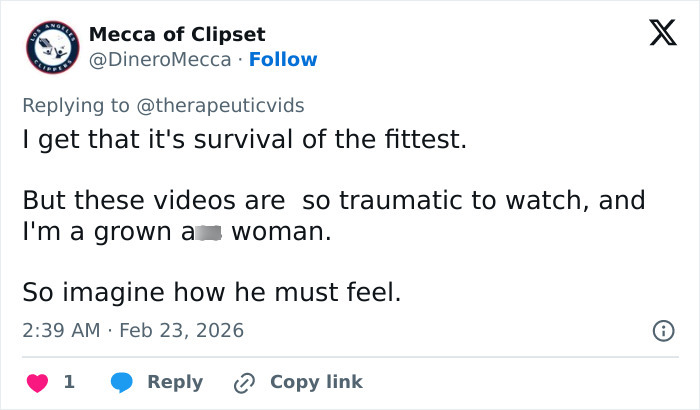
Image credits: DineroMecca
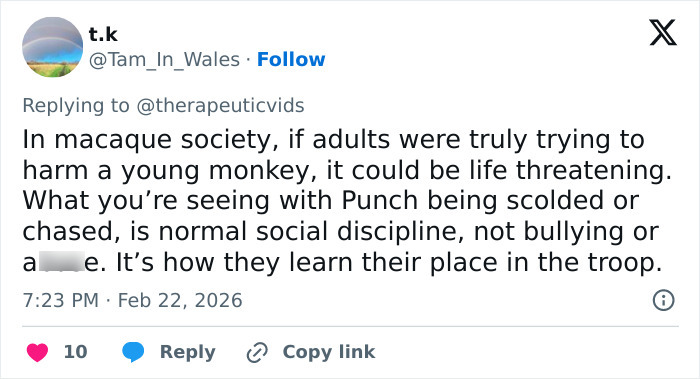
Image credits: Tam_In_Wales
 Follow Us