An ongoing bizarre Winter Olympics 2026 scandal has taken an unexpected medical turn after claims surfaced that ski jumpers may be injecting hyaluronic acid into their private parts to gain a competitive advantage.
According to the German outlet Bild, athletes were attempting to manipulate the official body measurements taken before competition.
While officials stressed there is no evidence proving the practice has occurred, the claims prompted responses from anti-doping authorities.
Medical experts have also addressed the controversy and explained what administering an injection into the genitalia actually does to the body.
Winter Olympics 2026 suit-measurement system unearthed a new scandal where ski jumpers are using hyaluronic acid injections to enlarge their “p*nis”

Image credits: Maja Hitij/Getty Images
The controversy emerged after the International Ski and Snowboard Federation (FIS) introduced strict equipment regulations effective February 6.
The rule specifies that every athlete must undergo detailed 3D body scans to determine how their skin-tight suits are manufactured.
This process helps prevent competitors from gaining extra lift through excess fabric, which can function like a glider in midair.
The strict rules came after the Norwegian team was caught secretly altering seams around the crotch area of their suits at the 2025 World Ski Championships, as reported by Bored Panda.


Image credits: Andrzej Iwanczuk/Getty Images

The fallout resulted in an 18-month ban for coaching staff, while Olympic medalists Marius Lindvik and Johann André Forfang were suspended for three months, even though officials later found the athletes were unaware of the tampering.
Against that history, Bild claimed some athletes had shifted tactics and, instead of modifying the suits, they are now enlarging their genitals using injections.
Though the theory has not been proven yet, larger body dimensions could legally allow for a slightly looser suit during competition.
Medical experts explained what hyaluronic acid injections actually do to the body
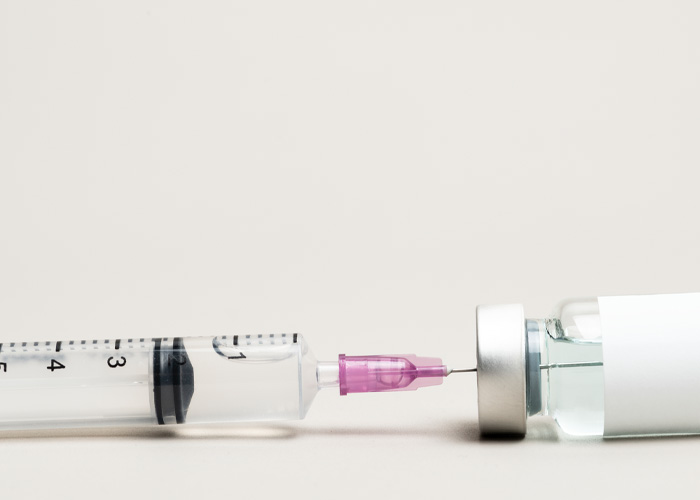
Image credits: rawpixel (Not the actual image)


Hyaluronic acid is a naturally occurring substance commonly used in cosmetic medicine, often as a dermal filler for facial volume.
According to Prof. Eric Chung, a urological surgeon, hyaluronic acid has also been used in controlled clinical settings for temporary penile girth enhancement, as he told The Guardian.
As the scandal erupted online, doctors explained what the procedure can and cannot do.

Image credits: Tom Weller/Getty Images
Chung explained that injecting it does not increase its length; it only adds circumference. And to achieve that, “you would need to inject a lot of hyaluronic acid”.
He further noted that the effect is temporary, typically lasting six to twelve months before the body absorbs the substance.

Image credits: Freepik (Not the actual image)

The medical reality surprised many online observers, as one wrote, “Hyaluronic acid is what I put on my face to give it moisture and plumpness, so it makes sense,” while another responded in disbelief with, “Excuse me? They are doing what in their what?”
Experts also emphasized that the procedure was never designed for performance enhancement and offers no physiological benefit beyond cosmetic appearance.
Doctors warned that the health risks are far more serious than the benefits

Image credits: Alexander Hassenstein/Getty Images
Chung also stressed that injecting hyaluronic acid into the private parts carries real and potentially severe dangers.
“Poorly injected technique or incorrect dose would cause penile pain, poor cosmesis [disfigurement], deformity, infection, inflammation, sensory change, and sexual dysfunction,” Chung added.
“In rare instances, infection can spread to cause gangrene (tissue necrosis) and loss of the p*nis.”

Image credits: Alexander Hassenstein/Getty Images


The risks quickly shifted the tone of the conversation for many readers.
“People are definitely crazy!!” one commenter wrote, while another added, “This is exactly why ambitious people scare me — why do you need to do that?”
Others questioned why elite sports continue to push competitors toward increasingly extreme behavior.
“Better terminate the Olympics so no athletes will cheat,” one frustrated user commented.
The seriousness of the controversy forced anti-doping officials to address the claims despite a lack of proof

Image credits: Christophe Pallot/Getty Images
The allegations became impossible to ignore after Bild raised them directly with the World Anti-Doping Agency.
While WADA confirmed that hyaluronic acid is not currently a banned substance, officials stressed that any method endangering athlete health or violating the spirit of fair competition would warrant scrutiny.
WADA’s director general, Olivier Niggli, said, “I’m not aware of the details of ski jumping and how this can improve performance.”

Image credits: Freepik (Not the actual image)
Furthermore, FIS communications director Bruno Sassi dismissed the rumors altogether.
“There has never been any indication, let alone evidence, that any competitor has ever made use of a hyaluronic acid injection to attempt to gain a competitive advantage,” he told BBC Sports.
For now, there is no evidence that any athlete injected hyaluronic acid to manipulate measurements, and the controversy remains unproven.
“People are definitely crazy,” wrote one netizen












 Follow Us