The FIFA World Cup has given football fans some of the sport’s greatest moments, but not every headline has been about what happened on the pitch.
Over the years, the tournament has been surrounded by shocking controversies, heartbreaking tragedies, corruption allegations, refereeing disputes, and scandals involving some of the biggest names in football.
Many of these incidents sparked worldwide debate and led to major changes in how the game is governed.
Here’s a look at some of the biggest FIFA World Cup scandals that changed football forever.
#1 Andrés Escobar, 1994
The 1994 FIFA World Cup produced one of the most tragic stories football has ever seen.
Colombia arrived at the tournament as one of the favorites after an impressive qualifying campaign that included a famous 5-0 win over Argentina.
Expectations were enormous, and defender Andrés Escobar was one of the team’s most respected figures.
Nicknamed “The Gentleman of Football,” Escobar was admired for his calm personality, clean style of play, and leadership both on and off the pitch.
Everything changed during Colombia’s group-stage match against the United States on June 22, 1994.
While trying to stop a dangerous cross from American midfielder John Harkes, Escobar accidentally deflected the ball into his own net.
Colombia eventually lost 2-1, a result that played a major role in their early elimination from the tournament.
After the World Cup, Escobar returned home to Medellín despite advice to stay abroad. In a newspaper column published shortly before his d*ath, he urged Colombians to remain positive, writing, “See you soon, because life does not end here.”
Just days later, on the night of July 1, Escobar went out with friends in Medellín.
According to investigators, he became involved in an argument with a group linked to known dr*g traffickers.
In the early hours of July 2, while sitting in his car in a nightclub parking lot, Escobar was confronted by armed men. He was sh*t six times. Witnesses later reported that the gunman shouted “Goal!” after each sh*t, a chilling reference to the own goal that had made headlines around the world.
Escobar passed away shortly afterward in hospital at the age of 27.
The m*rder shocked Colombia and the football world.
More than 120,000 people attended his funeral. Humberto Castro Muñoz, a bodyguard connected to powerful dr*g traffickers, later confessed to the ki*ling and was convicted.
However, many questions about who ultimately ordered the m*rder have never been fully answered.
Escobar’s d*ath exposed the dangerous relationship between football, gambling, and organized crime in Colombia during the era of so-called “narco-football,” when dr*g money heavily influenced clubs and the sport itself.
The tragedy forced football authorities to confront a problem that had long been ignored.
More than 30 years later, Andrés Escobar remains a symbol of sportsmanship and one of the most heartbreaking figures in World Cup history.
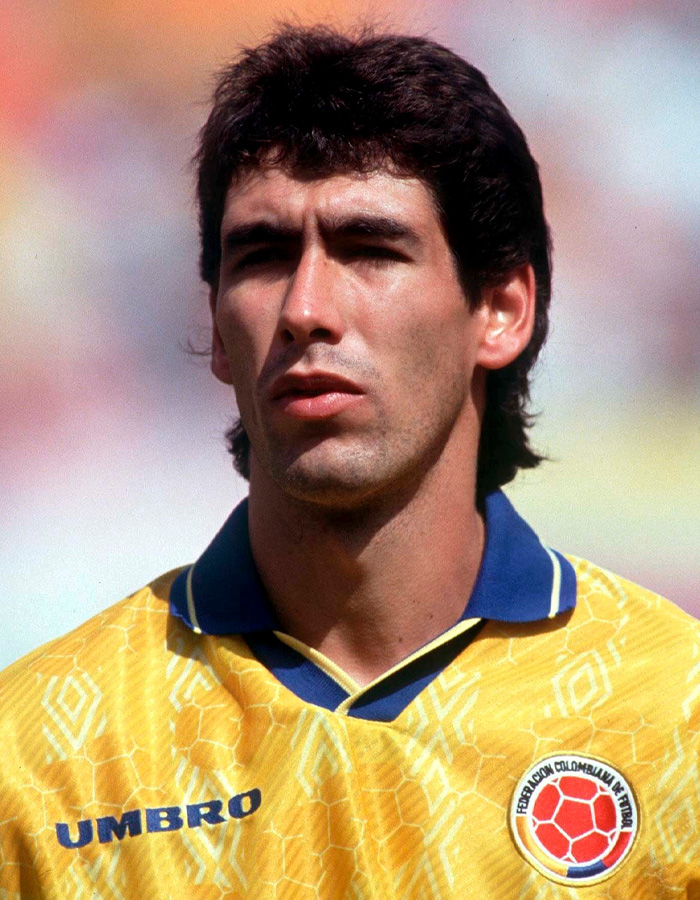
Image source: Beate Mueller/Getty Images

#2 The 2002 World Cup Scandal
The 2002 FIFA World Cup produced one of the most controversial runs in the tournament’s history.
South Korea, co-hosting the competition alongside Japan, reached the semi-finals for the first time ever.
While their achievement remains one of the biggest success stories in Asian football, the matches that helped them get there are still debated more than two decades later.
The controversy began in the Round of 16 against Italy.
South Korea defeated the Italians 2-1 after extra time, but much of the discussion afterward centered on referee Byron Moreno of Ecuador.
Italy believed several major decisions went against them. Francesco Totti was shown a second yellow card for what Moreno ruled was a dive, despite replays appearing to show contact.
Later, Damiano Tommasi had a golden-goal winner ruled out for offside, a decision many observers considered incorrect.
The reaction in Italy was furious.
Legendary commentator Bruno Pizzul called it “complete robbery,” while sports journalist Giorgio Tosatti wrote in Corriere della Sera that Italy had been eliminated from “a dirty World Cup where referees and linesmen are used as hitmen.”
Even years later, many Italian fans remained convinced that the match had been unfairly officiated.
The controversy only grew in the quarter-finals when South Korea faced Spain.
Two Spanish goals were disallowed during the match, with both decisions heavily criticized afterward.
South Korea eventually advanced on penalties, but Spanish newspapers described the game as “the biggest refereeing scandal in history.”
According to reports at the time, FIFA received 400,000 protest emails after the match, overwhelming its systems.
Questions also emerged about potential conflicts of interest.
South Korea’s football chief Chung M*ng-joon was serving as a FIFA vice-president during the tournament, leading to speculation and criticism, although no formal investigation ever proved wrongdoing.
The controversy surrounding Byron Moreno did not end in Korea.
Just months after the World Cup, he was suspended by Ecuador’s football authorities following another highly disputed match.
Years later, in 2010, he was arrested at New York’s JFK Airport after authorities discovered he*oin hidden on his body. He later pleaded guilty and served time in prison.
The fallout from the 2002 tournament had a lasting impact on football.
FIFA faced heavy criticism over referee selection and match officiating.
In the years that followed, referee appointments became more closely scrutinized, background checks were strengthened, and pressure grew for technology to assist officials.
While VAR would not arrive until much later, many of the arguments for video review can be traced back to the controversies of South Korea’s remarkable and deeply disputed run to the semi-finals.
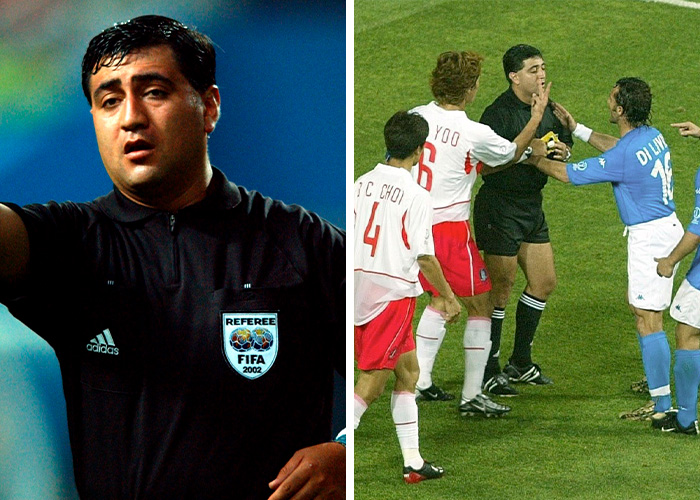
Image source: Tony Marshall/Getty Images, Sandra Behne/Getty Images
#3 Zidane’s Headbutt
The 2006 FIFA World Cup final was supposed to be the perfect ending to one of football’s greatest careers.
Zinedine Zidane had already announced that he would retire after the tournament, and the France captain was once again at the center of the action as his team faced Italy in Berlin.
Just seven minutes into the match, Zidane gave France the lead with a daring Panenka penalty that clipped the underside of the crossbar before crossing the line.
Italy responded through Marco Materazzi, who powered home a header from a corner to make it 1-1. As the match moved into extra time, the two players continued battling throughout the field.
Then came one of the most shocking moments in football history.
In the 110th minute, Zidane and Materazzi exchanged words while jogging away from the penalty area.
Without warning, Zidane stopped, turned around, and drove his head into Materazzi’s chest, sending the Italian defender crashing to the ground.
Referee Horacio Elizondo did not initially see the incident, but after consulting his assistants and fourth official, he showed Zidane a straight red card.
The image of Zidane walking past the World Cup trophy on his way down the tunnel instantly became one of the defining photographs in football history.
It was the final match of his professional career, and France went on to lose the World Cup on penalties without their captain.
For years, people wondered what had been said to trigger such an extraordinary reaction.
Materazzi later claimed that after Zidane offered him his shirt, he replied, “I’d rather have your sister,” per Spanish publication AS.
Zidane later confirmed that insults aimed at his family had provoked him. However, he never apologized directly to Materazzi. In a later interview, he famously said, “I’d rather d*e” than apologize to him.
The incident dominated headlines around the world and became one of the most replayed moments in World Cup history.
While Zidane later admitted, “I’m not proud of what I did,” the debate over the incident never truly disappeared.
Beyond the controversy itself, the headbutt helped fuel discussions about the role of fourth officials, off-the-ball incidents, and the use of video technology to assist referees.
It also sparked wider conversations about verbal ab*se on the pitch and whether provocation should ever be considered when judging violent conduct.
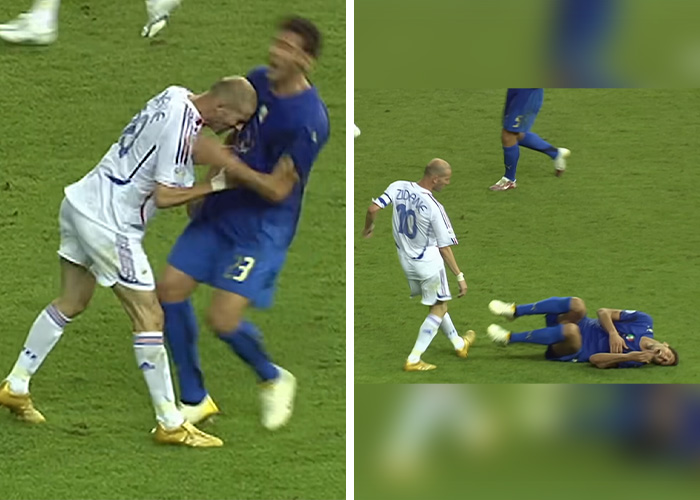
Image source: FIFA/YouTube
#4 The 2015 Corruption Arrests
On the morning of May 27, 2015, football’s governing body woke up to the biggest corruption scandal in its history.
Swiss police arrived at Zurich’s luxury Baur au Lac hotel, where FIFA officials had gathered for the organization’s annual congress, and arrested several senior executives.
Images of officials being escorted from the hotel quickly spread around the world and sent shockwaves through the sport.
The arrests were part of a massive FBI-led investigation that had been running for years.
The United States Department of Justice charged 14 individuals, including top FIFA officials and sports marketing executives, accusing them of taking part in a long-running scheme involving bribery, racketeering, wire fraud, and money laundering.
Prosecutors alleged that more than $150 million in bribes and kickbacks had been paid over a period of nearly 24 years.
US Attorney General Loretta L*nch said the accused officials had “corrupted the business of worldwide soccer to serve their interests and enrich themselves,” per The Guardian.
Investigators claimed football executives accepted bribes in exchange for marketing rights, sponsorship deals, and influence over major football decisions.
At the same time, Swiss authorities launched a separate criminal investigation into the controversial awarding of the 2018 and 2022 World Cups to Russia and Qatar.
Those tournaments had faced allegations of vote-buying and corruption since the hosts were announced in 2010. Several members of FIFA’s executive committee who participated in the voting process were later accused, indicted, or linked to corruption investigations.
The scandal reached the very top of world football.
Although FIFA president Sepp Blatter was not initially charged, the pressure became impossible to ignore. Just four days after the arrests, he announced his resignation after 17 years in charge of FIFA.
Years later, Blatter admitted that awarding the 2022 World Cup to Qatar had been “a mistake.” He was later banned from football by FIFA’s ethics committee.
The fallout transformed the sport. FIFA introduced major reforms, including term limits for senior officials, stronger ethics oversight, greater financial transparency, and changes to the World Cup bidding process.
The scandal also changed how fans viewed football’s governing body, exposing the political deals and financial interests that often operated behind the scenes.
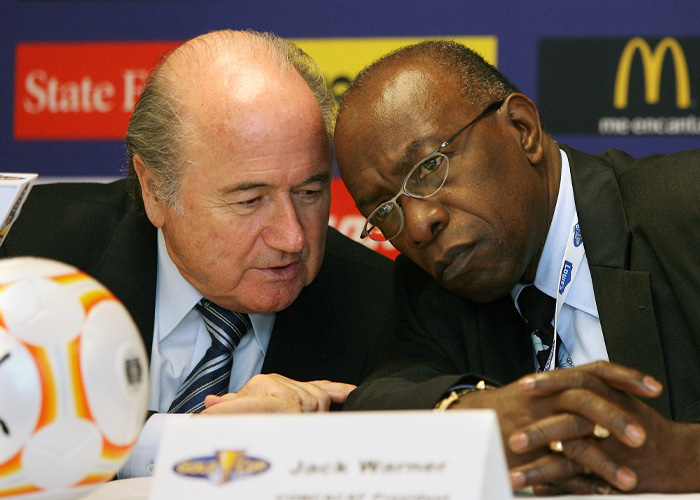
Image source: Pressefoto Ulmer/Getty Images
#5 Qatar 2022
The 2022 FIFA World Cup was packed with historic firsts. It was the first World Cup held in the Middle East, the first played during the Northern Hemisphere winter, and the first tournament staged in air-conditioned stadiums.
On the pitch, it delivered one of football’s greatest finals as Lionel Messi finally lifted the trophy.
Off the pitch, however, the tournament was overshadowed by a human rights controversy that had followed Qatar since it won hosting rights in 2010.
In February 2021, a major investigation by The Guardian reported that at least 6,500 migrant workers from India, Pakistan, Nepal, Bangladesh, and Sri Lanka had died in Qatar between 2010 and 2020.
The figure came from government and embassy records and covered all causes of d*ath among migrant workers from those countries during the period after Qatar secured the World Cup.
Human rights groups argued that many of those workers had been drawn to Qatar by the massive construction boom linked to the tournament.
Qatar built seven new stadiums, a metro system, roads, hotels, and entire districts ahead of the event.
Much of the labor was performed by migrant workers operating under the controversial kafala sponsorship system, which tied workers to their employers and limited their ability to change jobs or leave the country without permission.
Rights organizations documented cases involving unpaid wages, dangerous working conditions, recruitment debts, and exposure to extreme heat.
The exact number of World Cup-related d*aths remains heavily disputed.
Qatari authorities rejected suggestions that all 6,500 d*aths were connected to tournament projects and argued that the figure included workers from all industries and natural causes unrelated to construction.
Qatar stated that only a small number of d*aths occurred directly on World Cup stadium sites.
Critics, however, pointed to the frequent classification of d*aths as “natural causes” or heart failure, arguing that heat stress and working conditions were often not properly investigated.
The controversy did not end when the tournament finished.
In 2024, a FIFA-commissioned independent review concluded that “severe human rights impacts did ultimately occur in Qatar from 2010 through 2022” and stated that FIFA “has a responsibility” toward affected workers and families.
Human rights groups have continued to call for compensation, though no dedicated FIFA compensation fund has been created.
Ultimately, Qatar 2022 permanently shifted the conversation around World Cup hosting.
Human rights, labor protections, and worker welfare are now central issues in discussions about future tournaments, including the 2034 World Cup in Saudi Arabia.
The debate also increased pressure on FIFA to consider not only stadiums and infrastructure when selecting hosts, but the treatment of the people who build them.
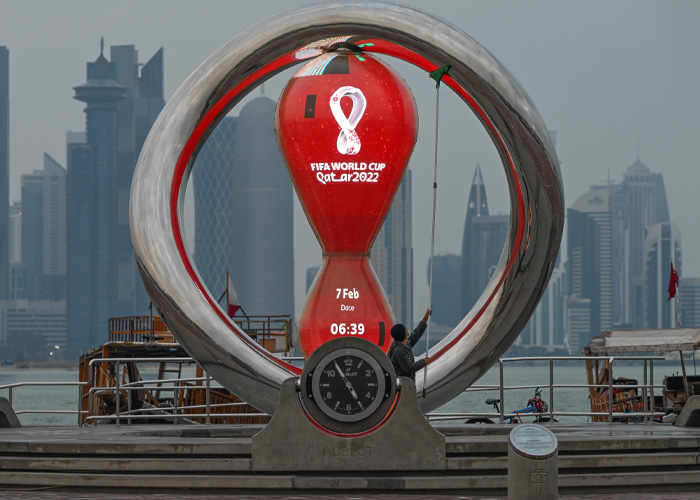
Image source: NurPhoto/Getty Images
#6 Rubiales And Jenni Hermoso, 2023
Spain should have been celebrating one of the greatest moments in its football history.
On August 20, 2023, the Spanish women’s national team defeated England to win its first FIFA Women’s World Cup.
Instead, the trophy presentation became the beginning of a scandal that would shake Spanish football and trigger a global conversation about sexism, power, and accountability in sport.
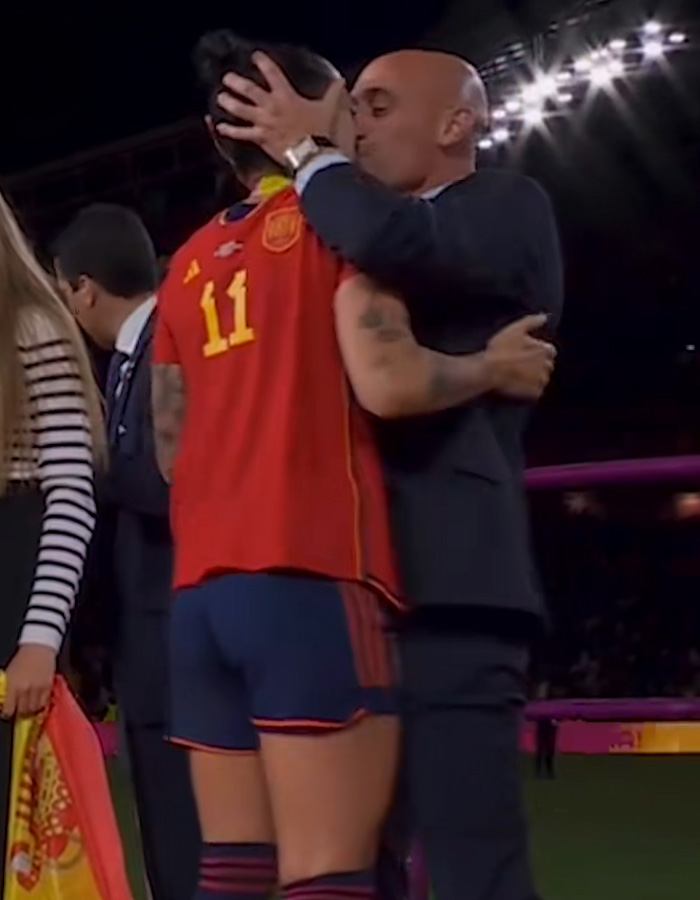
During the medal ceremony in Sydney, Royal Spanish Football Federation (RFEF) president Luis Rubiales grabbed forward Jenni Hermoso by the head and kissed her on the lips in front of millions watching around the world.
The incident was captured live on television and immediately sparked controversy.
Rubiales initially dismissed criticism, describing the kiss as a spontaneous gesture and later claiming it was consensual. Hermoso publicly disagreed.
“I felt vulnerable and a victim of an impulse-driven, sexist, out-of-place act, without any consent on my part,” Hermoso later said.
She also told a Spanish court, “My boss was kissing me, and this shouldn’t happen in any social or work setting.” The striker said the incident “tarnished one of the happiest days of my life,” per The Guardian.
What followed turned an inappropriate moment into a full-scale institutional crisis.
According to Hermoso and multiple reports, federation officials attempted to persuade her to publicly support Rubiales and minimize the incident.
When she refused, criticism intensified.
FIFA opened disciplinary proceedings and suspended Rubiales from football activities for 90 days.
Spain’s World Cup-winning squad announced they would not represent the national team until meaningful changes were made, while much of the coaching and support staff resigned in protest.
Rubiales initially refused to step down, repeatedly declaring, “I’m not going to resign.”
His combative speech only fueled public outrage.
Politicians from across Spain’s political spectrum condemned his actions, clubs demanded accountability, and the social media movement #SeAcabó (“It’s Over”) became a rallying cry against sexism in football.
The fallout extended beyond Rubiales.
Long-standing complaints from Spanish women’s players about the culture surrounding the national team returned to the spotlight.
Coach Jorge Vilda, who had previously been backed by federation leadership during disputes with players, was eventually removed. Montse Tomé became the first woman to manage Spain’s national team.
Rubiales resigned in September 2023. In February 2025, a Spanish court found him guilty of s*xual a*sault, marking a dramatic end to one of football’s most damaging scandals.
The Rubiales case became a defining moment for women’s football. It accelerated demands for stronger safeguarding policies, clearer codes of conduct for officials, and greater accountability within football institutions.
More importantly, it forced football’s governing bodies to confront how power is exercised around female athletes, making the treatment of women in the sport a central issue rather than a side conversation.
#7 The Qatar Vote, 2010
On December 2, 2010, FIFA’s Executive Committee gathered in Zurich to decide the hosts of the 2018 and 2022 World Cups.
The result stunned the football world. Russia secured the 2018 tournament, while Qatar, a nation of fewer than three million people, with little football tradition, extreme summer heat, and no previous experience hosting a major international sporting event, was awarded the 2022 World Cup.
Qatar defeated the United States by 14 votes to 8 in the final round.
The decision immediately sparked disbelief. FIFA’s own technical inspection report had rated Qatar as a high-risk candidate, citing concerns over climate, infrastructure, and operational challenges.
Temperatures regularly exceeded 50°C during the traditional World Cup window, leading many observers to question how the tournament could even be played safely.
Almost as soon as the votes were announced, allegations of corruption emerged.
Former FIFA secretary general Michel Zen-Ruffinen alleged that vote-trading agreements existed between bidding nations and that several executive committee members were vulnerable to financial inducements.
In the years that followed, investigations by journalists, prosecutors, and law enforcement agencies uncovered extensive evidence of corruption throughout FIFA’s leadership structure.
The controversy intensified after the 2015 FIFA corruption scandal.
US federal prosecutors alleged that football officials had received millions of dollars in bribes connected to various FIFA decisions.
Multiple executive committee members who participated in the 2010 vote were later indicted, suspended, banned, or convicted on corruption-related charges.
Reports based on leaked financial documents claimed that hundreds of millions of dollars moved through accounts linked to FIFA voting members during the bidding period, though Qatar consistently denied wrongdoing.
The practical consequences were enormous. Because of the extreme summer heat, FIFA was forced to move the World Cup to November and December 2022, making it the first winter World Cup in history.
Domestic leagues across Europe and beyond were forced to suspend their seasons mid-campaign, disrupting football’s traditional calendar for the first time.
Even Sepp Blatter, FIFA president at the time of the vote, later admitted that awarding the tournament to Qatar had been “a mistake.”
By then, however, the decision was irreversible. Qatar invested more than $200 billion in infrastructure, stadiums, transport systems, and urban development projects connected to the event.
The Qatar vote fundamentally transformed how football views World Cup hosting.
It exposed weaknesses in FIFA’s bidding process, contributed directly to the corruption investigations that exploded in 2015, and led to governance reforms designed to increase transparency.
Every major hosting decision since, from the 2026 World Cup in the United States, Canada, and Mexico to the awarding of the 2034 tournament to Saudi Arabia, has been scrutinized through the lens of the controversial vote that took place in Zurich in 2010.
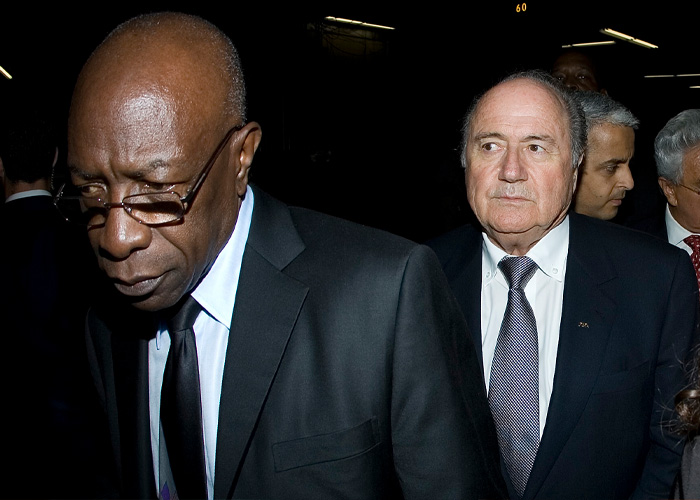
Image source: Mario Castillo/Getty Images
 Follow Us