For most Oscar winners, taking home a shiny gold statuette is everything they ever dreamed of. It’s the pinnacle of success in Hollywood. They have worked tirelessly to get to this point, and they embrace it with open arms.
At the 2026 Oscars, Sean Penn made the decision to not attend the ceremony whatsoever. When he won in the Best Supporting Actor category, Kieran Culkin accepted the award on his behalf. Reports suggest Penn’s decision was politically motivated after he previously expressed how he would boycott the Oscars if the Academy stopped Ukrainian president Volodymyr Zelenskyy from giving a speech during the 2022 ceremony. Although this sent shockwaves through the industry, this isn’t the first time something like this has happened. So, here are five Oscar winners who refused to accept their Academy Award.
5. Dudley Nichols – The Informer (1936)
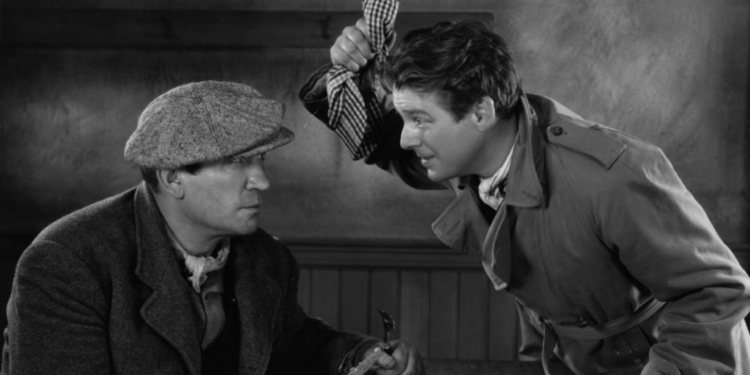
John Ford‘s 1935 crime drama The Informer won big at the 1937 Oscars. It took home Best Actor, Best Director, Best Screenplay, and Best Picture. Despite such buzz, screenwriter Dudley Nichols decided to boycott the ceremony, becoming the first ever person to reject an Academy Award.
At the time, Nichols was a member of the newly formed Screen Writers Guild, and didn’t attend the awards show due to a dispute over its failure to support the Screen Writers Guild during a strike. However, he eventually accepted the award at a later date. According to IMDB, records show he was in possession of an Oscar statuette by 1949.

4. George C. Scott – Patton (1971)
Franklin J. Schaffner‘s epic war drama Patton is another film that landed big at the Academy Awards. Winning seven in total, including Best Picture, this film saw 11 Oscar winners grace the stage. However, the twelfth was missing.
Victorious lead actor George C. Scott refused to attend the ceremony altogether. He called the event a “two-hour meat parade” and a “public display with contrived suspense for economic reasons”. He sent a telegram to the Academy in advance explaining that he would not be attending as he considered the competitive nature of the ceremony to be “offensive, barbarous and innately corrupt”.
3. Marlon Brando – The Godfather (1973)
The Godfather was not only a massive box office hit – becoming the highest grossing film of the year – it also landed 11 Oscar nominations. The now iconic trailblazing mafia classic took home Best Picture, Best Writing, and Best Actor in a Leading role for Marlon Brando. Despite being one of the most celebrated Oscar winners of his era – having already won in 1955 – Brando famously chose to boycott the 1973 ceremony.
In an unprecedented move, he sent Apache activist Sacheen Littlefeather in his place. When his name was announced, Littlefeather took the stage and declined the statuette on his behalf, citing the film industry’s “treatment of American Indians” as the primary reason. Brando’s refusal transformed a night of Hollywood glamour into a global platform for political protest, forever cementing his legacy as one of the most rebellious and principled Oscar winners in cinematic history.
2. Woody Allen – Annie Hall (1978)
When Woody Allen refused to attend the 1978 Academy Awards, it wasn’t a strict boycott like other Oscar winners had embarked on. While he had expressed a distaste for the competitive nature of award ceremonies like the Oscars, he also had prior commitments. Annie Hall rose triumphant in four categories, including Best Picture, and Best Writing and Director for Allen. However, he wasn’t present as he had already agreed to play clarinet with his jazz band at Michael’s Pub in New York City on the same evening. He was also not present for his wins in 1987 for Hannah and Her Sisters, and in 2012 for Midnight in Paris.
1. Hayo Miyazaki – The Boy and the Heron (2024)
Hayao Miyazaki‘s 2024 Oscar win for The Boy and the Heron truly cemented his place among animation’s most celebrated figures. Though the film took home the Academy Award for Best Animated Feature, the 83-year-old director was conspicuously absent from the Hollywood event. Studio Ghibli officials attributed his absence to his age and a strong preference for privacy. However, fans immediately remembered his history of principled refusals. Most notably, Miyazaki boycotted the 2003 Oscars – where he won for Spirited Away – as a quiet protest against the Iraq War. This proved that for some Oscar winners, personal beliefs and inner peace are more important than the allure of the red carpet.
Read Next: 6 Short Oscar Speeches That Were Truly Underwhelming
 Follow Us