A wise woman once said that well-behaved women seldom make history and it turns out that she might have been right. Depending, of course, on who you ask.
For centuries, women have had to fight for their rightful place in society. We don’t hear much about those who simply sat down and obeyed the rules. It’s often the fierce females, who dared to go against the grain, that might finally earn their flowers. But not always. There are many women who did remarkable things, and hardly ever get spoken about.
Thankfully, there’s a community dedicated to honoring them. Women In World History has more than 570,000 followers, and shares photos and stories of women who changed the world in their own special ways. Bored Panda has put together a list of the page’s best posts. From musicians, to models, doctors, whistle-blowers and extraordinary mothers, these just a few of the tales that deserve to be told.
#1
Nobody looking at the calm, soft-spoken woman behind the keyboard would have guessed she was helping hold together one of rock music’s most dysfunctional bands.
Christine McVie wasn’t born into rock and roll. Born Christine Perfect in Lancashire, England, in 1943, she was raised in a household devoted to classical music. Her father was a concert violinist, and by childhood she was training seriously as a pianist. Then one day her older brother introduced her to the music of Fats Domino. The precision of classical performance suddenly gave way to the raw energy of rhythm and blues, and her future changed course almost overnight.
After studying art in Birmingham, she joined the blues band Chicken Shack, where her soulful voice and effortless keyboard playing earned her the title of Melody Maker’s Female Vocalist of the Year in 1969. Around the same time, she married Fleetwood Mac bassist John McVie. When she officially joined the band the following year, she kept his surname—a name that would soon become legendary.
Long before Rumours turned Fleetwood Mac into global superstars, Christine was the band’s anchor. While musicians drifted in and out, she remained the steady creative force, writing songs, performing, and helping the group survive years of instability. Then, in 1974, Lindsey Buckingham and Stevie Nicks joined the band, creating the lineup that would make music history.
Instead of feeling threatened by the talented newcomers, Christine saw them as inspiration. She later admitted hearing the Buckingham Nicks album made her want to write even stronger songs. That quiet competitiveness helped produce hits like “Over My Head” and “Say You Love Me,” both of which became major successes before the band reached its peak.
Then everything around them began to unravel.
By the time Fleetwood Mac entered the studio to record Rumours in 1976, nearly every relationship in the band was collapsing. Christine and John McVie were divorcing. Stevie Nicks and Lindsey Buckingham had split. Mick Fleetwood’s marriage was falling apart. Every recording session brought ex-lovers together in the same room, yet somehow the music only became stronger.
Christine transformed her own heartbreak into some of the album’s most enduring songs. “Don’t Stop,” written during her divorce, became an anthem of optimism and decades later served as Bill Clinton’s 1992 presidential campaign theme. “Songbird,” one of the most emotional ballads in rock history, was recorded almost entirely live in a single take at 3 a.m. inside an empty auditorium, accompanied only by her piano.
She also quietly carried one of the album’s biggest secrets. Her joyful hit “You Make Loving Fun” was inspired by her relationship with the band’s lighting director, Curry Grant, but John McVie reportedly believed it was simply about her love of music. She never publicly corrected that misunderstanding while the wounds of their divorce were still fresh.
Producer Ken Caillat later suggested the Rumours sessions might never have survived without Christine’s calming presence. While everyone else seemed consumed by emotional chaos, she kept writing timeless songs with remarkable ease, once saying she rarely struggled over them—they simply came to her.
After Rumours, she continued writing classics including “Everywhere,” “Little Lies,” and “Hold Me,” proving she was far more than the band’s quiet member. She stepped away from Fleetwood Mac in 1998 after developing a severe fear of flying, choosing instead to spend her days restoring a Tudor manor, gardening, and enjoying a life far removed from stadiums and celebrity.
She returned in 2014 after overcoming that fear, giving fans one final chapter before her death in 2022 at the age of 79.

Image source: Women In World History
Rosa Parks, Amelia Earhart, Marie Curie, Gloria Steinem, and Joan of Arc are just a few of the names that pop up when you Google the “most famous women in world history.” And while each of them deserve their spot on the proverbial Hall of Fame, there are thousands of others who don’t get nearly enough attention.
A woman doesn’t have to fight in a battle, invent something ground-breaking, or be the first female passenger to cross the Atlantic by airplane to change the world. Sometimes, they just need to be…
Compassionate, nurturing, empathetic, strong, hard-working and caring are often used to describe women from all walks of life.

#2
For years, doctors were haunted by a terrifying mystery.
Healthy children were developing leukemia with no obvious explanation. Genetics offered few answers. Environment was barely understood. Most people assumed it was simply tragic bad luck.
Then one woman started asking questions no one else was asking.
British physician Alice Stewart wasn’t interested in comforting assumptions. In the 1950s, she launched one of the largest studies ever conducted on childhood cancer, interviewing the families of thousands of children across Britain. She searched for anything the sick children had in common.
One detail kept appearing.
Many of their mothers had received X-rays while pregnant.
At the time, prenatal X-rays were considered modern, safe, and routine. They were used to estimate a baby’s size, confirm a pregnancy, or simply satisfy medical curiosity. The radiation doses were small, so most experts dismissed the possibility that they could do any harm.
Stewart’s data told a different story.
Her research showed that even a single prenatal X-ray significantly increased a child’s risk of developing leukemia and other cancers. It was one of the first demonstrations that low doses of radiation could have devastating long-term consequences for an unborn child.
The reaction was swift—but not the kind she expected.
Many leading physicians, government officials, and radiation experts challenged her findings. Hospitals had built entire practices around prenatal X-rays, and accepting Stewart’s conclusions would require admitting that a common medical procedure had endangered countless pregnancies. For years, she faced criticism, skepticism, and professional isolation.
She refused to back down.
As more studies were completed around the world, the evidence steadily confirmed what Stewart had discovered. Prenatal X-rays were dramatically reduced, and medical practice changed. Today, doctors avoid exposing pregnant patients to ionizing radiation whenever possible, relying instead on safer technologies such as ultrasound.
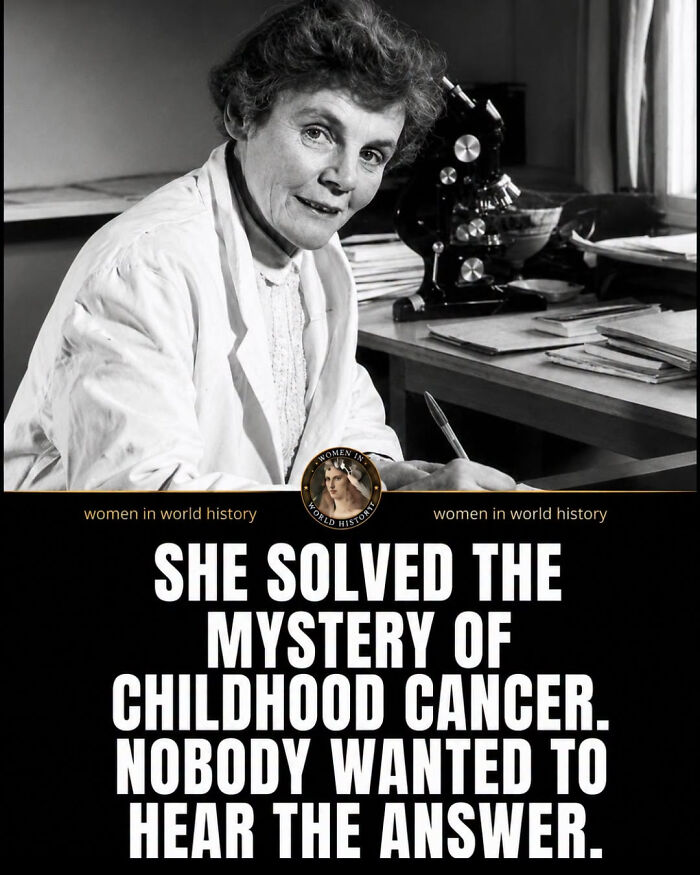
Image source: Women In World History
#3
For decades, a woman could spend years proving she was the best person for the job only to lose everything the moment her pregnancy became impossible to hide.
It wasn’t because she had stopped working. It wasn’t because she had made a mistake. It was because employers insisted that pregnancy itself made a woman unfit for the workplace.
The rules were often unwritten, but everyone understood them. Teachers, nurses, flight attendants, office workers, bank tellers, secretaries, and countless others quietly disappeared from their jobs after announcing they were expecting. Some were dismissed immediately. Others were handed a resignation form and told it was “for the best.” Refusing often meant being fired anyway.
The explanations sounded respectable. Employers claimed pregnant women were too fragile, too emotional, or that seeing an expectant mother made customers uncomfortable. In some professions, managers even argued that pregnancy damaged the polished image of the company. Airlines became especially notorious, forcing flight attendants to resign after marriage or pregnancy because executives believed passengers expected youth, glamour, and the appearance of being unattached.
Many women hid their pregnancies for as long as possible beneath loose clothing, terrified that a growing baby bump meant an immediate loss of income. Families quietly postponed announcements, knowing that joy at home could become financial disaster at work.
Everything began to change only after women challenged these practices in court and through growing public pressure. In the United States, the passage of the Pregnancy Discrimination Act in 1978 made it illegal for employers covered by the law to discriminate because of pregnancy, childbirth, or related medical conditions. Similar legal protections gradually spread in many other countries, though the fight was far from over.
It is easy to forget how recently pregnancy could end a career with a single conversation. Looking back, one of the most ordinary moments in life was once treated as grounds for dismissal—and that uncomfortable truth says as much about the past as it does about how much still depends on protecting hard-won rights.
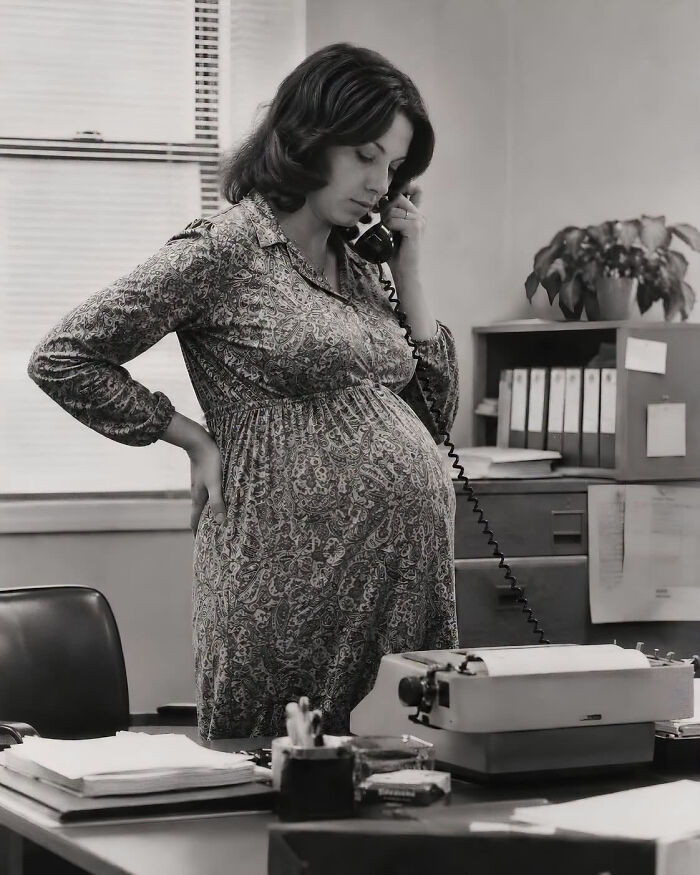
Image source: Women In World History
Women make up around half of the global population but often, they aren’t treated the same as men. It’s hard to understand why not, especially considering that the Forbes World’s 100 Most Powerful Women of 2025 command a collective $37 trillion in economic power and influence more than 1 billion people.
As Forbes reports, “Women are steering the systems that will define the next decade, yet the highest tiers of power remain selectively guarded. Their influence is deep, structural, and global, but the architecture of control still lags behind their impact.”
“Whether the world moves toward genuine shared leadership or continues to rely on women to stabilize institutions they do not fully command will shape the next chapter of power,” adds the publication.
#4
Karen Silkwood never expected to become one of America’s most famous whistleblowers. She was a chemical technician at the Kerr-McGee plutonium plant in Crescent, Oklahoma, where she also served as a union activist. What she uncovered inside the facility would ignite a controversy that still fuels debate half a century later.
Silkwood documented what she believed were alarming safety failures: faulty nuclear fuel rods, lax security, poor handling of radioactive materials, and workers—including herself—who were being contaminated with plutonium under questionable circumstances. As she gathered evidence, she became convinced the public deserved to know what was happening behind the plant’s doors.
On the evening of November 13, 1974, Silkwood left for a meeting with a *New York Times* reporter and a union official. She was reportedly carrying documents that she believed proved corporate negligence. She never arrived.
Her car veered off an Oklahoma highway in what authorities ruled was a single-vehicle accident. But when investigators searched the wreckage, the documents she was said to be carrying had vanished. They were never found.
The missing papers transformed an already tragic accident into one of the most enduring mysteries in American corporate history. While no evidence has ever conclusively proven foul play, the unanswered questions surrounding her death have led many researchers, journalists, and commentators to suspect that her crash may not have been as simple as the official investigation concluded.
Karen Silkwood’s story did not end on that lonely stretch of highway. Her family’s lawsuit against Kerr-McGee ultimately reached the U.S. Supreme Court, resulting in the landmark *Silkwood v. Kerr-McGee* decision, which affirmed that companies can be held financially liable for injuries caused by radiation—even in industries regulated by the federal government.
More than fifty years later, Karen Silkwood remains a powerful symbol of the risks faced by those who choose to expose dangerous truths.
Image source: Women In World History
#5
Tatiana Proskouriakoff wasn’t supposed to solve one of archaeology’s greatest mysteries. She wasn’t even trained as an archaeologist.
Born in Russia in 1909, she immigrated to the United States after the Russian Revolution and studied architecture. Her remarkable talent for drawing led her to the Carnegie Institution’s excavations of the ancient Maya city of Piedras Negras in Guatemala, where she was hired to create meticulous architectural reconstructions of ruined temples and palaces.
While illustrating carved stone monuments known as stelae, Proskouriakoff noticed something almost everyone else had overlooked. Scholars had long believed the Maya inscriptions were almost entirely religious, astronomical, or ceremonial. But she saw repeating patterns of dates that seemed to correspond to the lifespan of real people.
In 1960, she published a groundbreaking study arguing that the inscriptions recorded the births, accessions to the throne, victories, and deaths of Maya rulers. The monuments weren’t simply marking the passage of time—they were telling history.
Many experts were skeptical. The prevailing belief that Maya writing was largely symbolic had dominated the field for decades, and accepting her theory meant overturning one of archaeology’s biggest assumptions.
As more inscriptions were deciphered over the following years, however, her conclusions proved astonishingly accurate. Combined with later breakthroughs by scholars such as Yuri Knorozov and others, her work helped unlock the phonetic nature of Maya writing and transformed our understanding of the ancient Maya from a mysterious, peaceful civilization into one ruled by powerful dynasties, political alliances, warfare, and royal succession.
Today, Tatiana Proskouriakoff is recognized as one of the most influential Maya scholars of the twentieth century. Ironically, the woman who changed the way the world understood an entire civilization wasn’t originally hired to read its history—she was hired simply to draw its ruins. Sometimes, seeing what everyone else misses is enough to rewrite history itself.
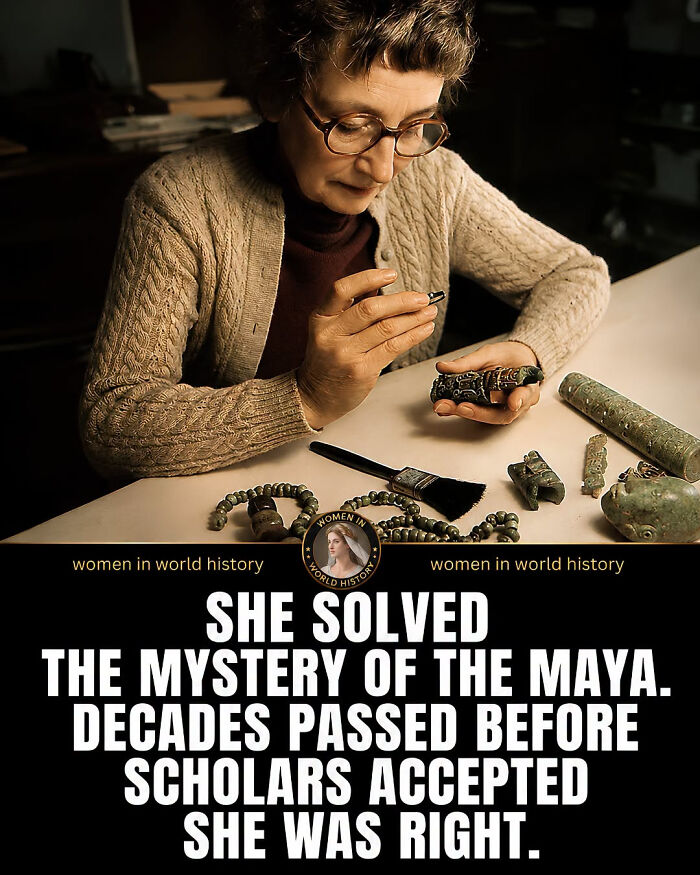
Image source: Women In World History
#6
On July 5, 1946, the woman who changed fashion history was not a supermodel, an actress, or an aristocrat. She was a 19-year-old Parisian nude dancer named Micheline Bernardini.
French engineer-turned-designer Louis Réard had created what he believed was the world’s smallest swimsuit. It consisted of just four tiny triangles of fabric, exposing the wearer’s navel—something almost unheard of in Western fashion at the time. Réard named it the bikini, borrowing the name from Bikini Atoll in the Pacific, where the United States had recently conducted nuclear bomb tests. He hoped his swimsuit would create an equally explosive reaction.
He was right.
There was just one problem.
No professional fashion model would wear it.
The design was considered so revealing that established runway models feared it would ruin their careers. In postwar Europe, even two-piece swimsuits typically covered the navel. Réard’s creation crossed a line many believed respectable women should never approach.
Desperate, Réard turned to Micheline Bernardini, a performer at the Casino de Paris who was already comfortable appearing on stage in revealing costumes. Unlike the fashion models who refused, Bernardini accepted immediately.
Standing beside the Piscine Molitor swimming pool in Paris, she smiled confidently as photographers crowded around her. She even carried a small matchbox, demonstrating Réard’s claim that the entire swimsuit was so tiny it could fit inside it.
The photographs raced around the world.
Some newspapers treated the bikini as a moral scandal. Others called it indecent or outrageous. In several countries—including Italy, Spain, Belgium, and parts of the United States—the bikini was restricted or outright banned from many beaches for years.
Yet Bernardini’s gamble paid off.
Within days, she reportedly received more than 50,000 fan letters, an astonishing number for someone who had been virtually unknown before the event. She instantly became the face of one of the most controversial fashion launches in history.
Unlike many fleeting celebrities, Bernardini embraced the attention. She continued performing for years and later said she had never regretted saying yes when everyone else had said no.
Ironically, history often remembers Louis Réard as the inventor of the bikini—but without Micheline Bernardini’s willingness to wear it, one of the most iconic garments of the twentieth century might never have made its unforgettable debut.
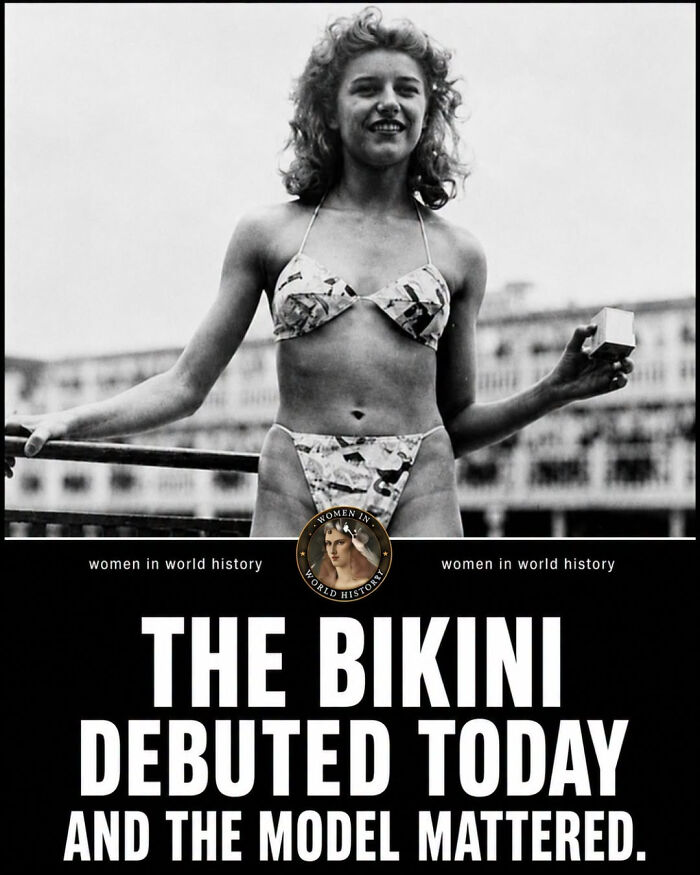
Image source: Women In World History
It’s a well-known fact that women are underrepresented among board members, CEOs, lawmakers, politicians and world leaders. According to the Organisation for Economic Co-operation and Development’s 2025 Gender Equality in a Changing World report, there are several reasons why women aren’t filling up more seats of power.
These include gendered perceptions of skills and abilities, motherhood penalties, gender differences in actual and expected behaviours, and experiences of harassment and discrimination.
“Other key factors play a role in specific areas,” notes the report. “In business, a lack of transparency in selection criteria, gendered differences in work assignments and experiences, and a lack of women role models and mentors matter.”
#7
The government insisted they were dangerous women. Their real offense was standing silently outside the White House holding signs that embarrassed the President of the United States.
By November 1917, the authorities had grown tired of the spectacle. Lucy Burns and dozens of fellow suffragists were arrested on flimsy charges of “obstructing traffic,” even though the crowds gathering to watch them often caused the congestion. Refusing to pay fines, they demanded recognition as political prisoners instead. That decision sent them to Virginia’s Occoquan Workhouse—and into one of the darkest episodes in the fight for women’s rights. (The Library of Congress)
What happened next was so shocking that many Americans initially refused to believe it.
Rumors spread that the women had been beaten. The truth was even worse.
On the night later remembered as the “Night of Terror,” guards stormed the cellblocks under orders from the superintendent. Women were dragged by their arms, thrown into iron beds, choked, kicked, and locked into filthy cells. One prisoner, Dora Lewis, was slammed so violently against a metal bedframe that she lost consciousness. Another, Alice Cosu, believed her friend had been k**led and suffered a heart attack from the shock. (The Library of Congress)
Lucy Burns became the night’s unforgettable image.
The guards shackled her hands high above her head to the bars of her cell, forcing her to remain standing for hours. They believed exhaustion would break her resolve. Instead, she became a symbol of it. Fellow prisoners raised their own arms in silent solidarity from neighboring cells, mirroring her agony across the corridor. (Arlington Public Library)
The ab*se did not end there. Hunger-striking women were pinned down and force-fed through tubes in a practice so brutal that it horrified the public once their accounts were smuggled out. The government’s attempt to crush a protest became one of the suffrage movement’s greatest victories, turning public sympathy sharply toward the women it had tried to silence. Within three years, the Nineteenth Amendment became law.
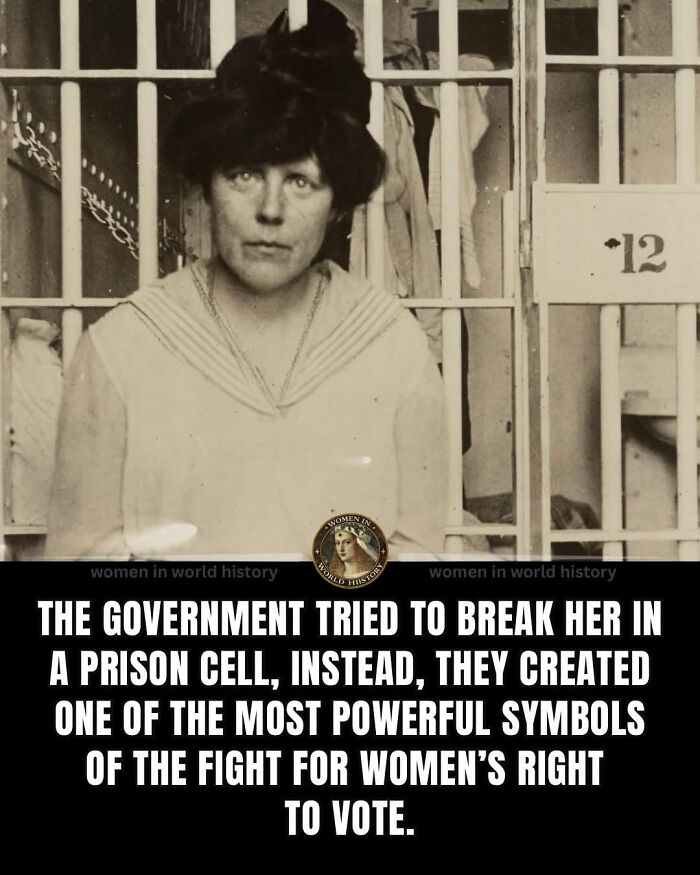
Image source: Women In World History
#8
When Casilda Luna arrived in the United States from the Dominican Republic in 1962, she wasn’t a celebrity, a politician, or someone with wealth and influence. She was simply a woman determined to build a better life. But what happened next is a reminder that some of history’s most important leaders begin by bringing people together around a kitchen table.
After settling in Washington, D.C.’s Adams Morgan neighborhood, Luna started hosting weekly gatherings for friends and neighbors. They weren’t meant to become a movement. They were simply a place where people could talk. Yet those conversations quickly revealed the challenges many immigrant families shared—finding affordable housing, caring for aging relatives, and making sure their voices were heard in a city that often overlooked them.
Rather than accepting those problems, Luna transformed conversation into action. She rallied neighbors, organized the local Latino community, and became a tireless advocate for fair housing, stronger support for senior citizens, and a more connected neighborhood. Her greatest talent wasn’t making speeches—it was convincing ordinary people that, together, they could improve the place they called home.
Over the decades, generations came to know Casilda Luna not just as an activist, but as the heart of her community. The neighborhood she helped strengthen became one of Washington’s most vibrant and culturally rich, thanks in no small part to people like her who believed that lasting change begins with relationships.
In December 2021, at the remarkable age of 97, Luna received the Oscar de la Renta Dominican Emigrant Award, honoring a lifetime of service and leadership. It was a fitting tribute to a woman whose legacy wasn’t measured by titles or headlines, but by the lives she quietly changed.
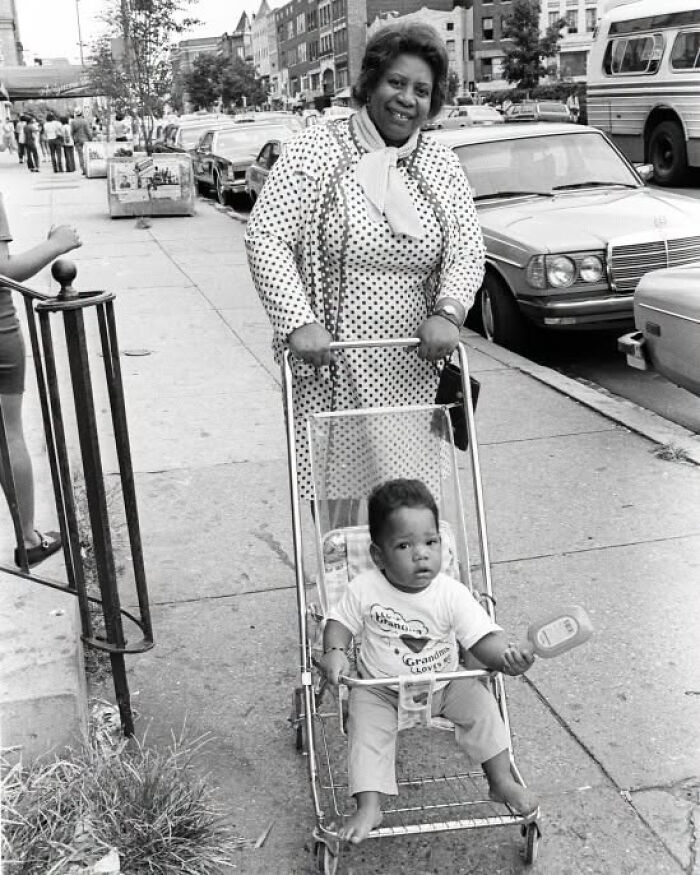
Image source: Women In World History
#9
The tragedy of Evgeniya Garkusha was not simply that she rejected one powerful man. It unfolded during one of the most feared periods of Stalin’s Soviet Union, when crossing the wrong official could become a death sentence.
Evgeniya Garkusha (1914–1948) was one of the Soviet Union’s rising film actresses during the late 1930s and early 1940s. Known for her beauty, intelligence, and lively screen presence, she appeared in several popular Soviet films and quickly became a recognizable public figure. In 1944 she married the distinguished oceanographer and naval officer Pyotr Shirshov, a Hero of the Soviet Union who had earned national fame as one of the explorers aboard the legendary Arctic expedition of the Georgy Sedov. By the end of the Second World War, Shirshov had become People’s Commissar—and later Minister—of the Soviet Navy, placing the couple among the Soviet elite.
Their privileged status, however, offered little protection against one man: Lavrentiy Beria.
As Stalin’s feared secret police chief, Beria oversaw the NKVD and later the MVD. He controlled an enormous apparatus of surveillance, arrests, t*orture, and ex*cutions. Behind closed doors he also developed a notorious reputation for targeting young women. Numerous witnesses later claimed that women were brought to his Moscow mansion, where many were coerced or a**aulted. Although historians continue to debate individual allegations, there is broad agreement that Beria abused his immense power to prey on women.
According to accounts that emerged after Stalin’s death, Garkusha attended a Kremlin reception in 1946 where Beria approached her with unwanted advances. Rather than quietly enduring the encounter—as many believed was safest—she reportedly slapped him across the face in front of other officials and rejected him outright. Whether every detail of the slap occurred exactly as later described cannot be proven beyond doubt, but multiple post-Stalin memoirs and recollections recount the confrontation, and it became one of the enduring stories surrounding Beria’s ab*se of power.
The retaliation came swiftly.
Only months later, Garkusha was arrested on fabricated accusations of “anti-Soviet agitation,” one of the regime’s favorite catch-all charges. There was no public trial in any meaningful sense. She was sentenced to eight years in a forced labor camp, despite having committed no recognizable crime. Her husband desperately appealed to Stalin and other senior officials, risking his own career in an effort to save her, but every appeal was ignored.
She was sent to a labor camp in the far north, separated from her young daughter. The conditions were brutal, and she reportedly became increasingly despondent as hope of release disappeared.
On August 11, 1948, at just 34 years old, Evgeniya Garkusha died after taking her own life in the camp using an overd*se of sleeping medication she had managed to obtain. Some accounts suggest she had learned she would never be reunited with her family. Others believe the relentless conditions and complete loss of hope drove her to the decision.
Her husband never recovered emotionally from her death. Although he remained a respected scientist, he died only five years later in 1953, the same year Stalin died.
After Stalin’s death and Beria’s arrest and ex*cution in 1953, many victims of political repression were reexamined. In 1956, during the period of de-Stalinization under Khrushchev, Evgeniya Garkusha was officially rehabilitated. The Soviet government acknowledged that the charges against her had been fabricated and cleared her name.
Her story has since become one of the starkest examples of how vulnerable even the privileged could be under Stalin’s dictatorship. Whether remembered for the slap itself or for her refusal to submit to one of the most feared men in the Soviet Union, Evgeniya Garkusha’s life stands as a reminder that, in Stalin’s USSR, a single act of defiance could carry the ultimate price.
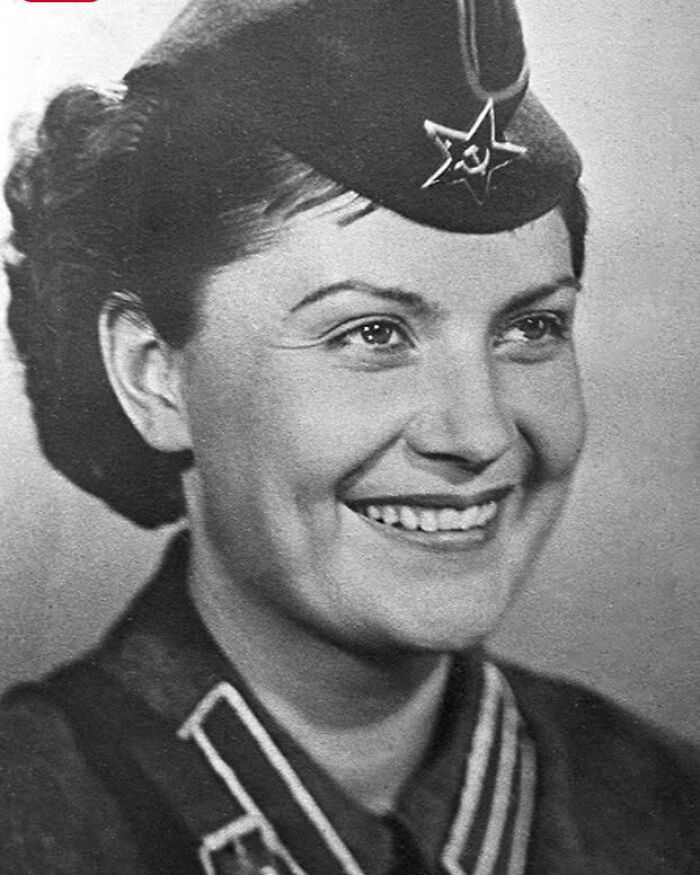
Image source: Women In World History
Leadership roles aside, women are worse off than men, including in lower labor force participation and employment rates, notes the OECD report. It adds that in general, women dedicate fewer hours to paid work and are more likely to work part-time than men. This, in turn, affects their career prospects, as well as their eligibility for social protection like unemployment benefits or family leave.
The report explains that it all begins in childhood. From an early age, girls and boys are exposed to gender norms and stereotypes around paid and unpaid work. We’re taught that women are primarily responsible for much of the unpaid work, like care and household tasks, while men hold primary responsibility for paid work.
These warped internalised gender norms and stereotypes, coupled with social and policy environments, structural barriers, bias and harassment and discrimination, carry into adulthood. Instead of equality, what we get is the reinforcement and widening of gender gaps.
#10
By the age of 25, most people are still figuring out what adulthood looks like. Mary Brocks was putting nine children to bed.
Living in Liverpool in 1963, Mary had already become the mother of an astonishing family that included both twins and triplets—a combination so rare that it drew attention far beyond her neighborhood. Every day was a carefully choreographed balancing act of meals, laundry, school, naps, tears, laughter, and the endless demands of raising a household that rarely knew a quiet moment.
Long before parenting influencers, smart devices, and endless advice columns, mothers like Mary relied on patience, determination, and an extraordinary capacity for love. This single photograph preserves more than a large family. It preserves a universal truth: no matter how crowded the house became, every child still deserved a story before bed.
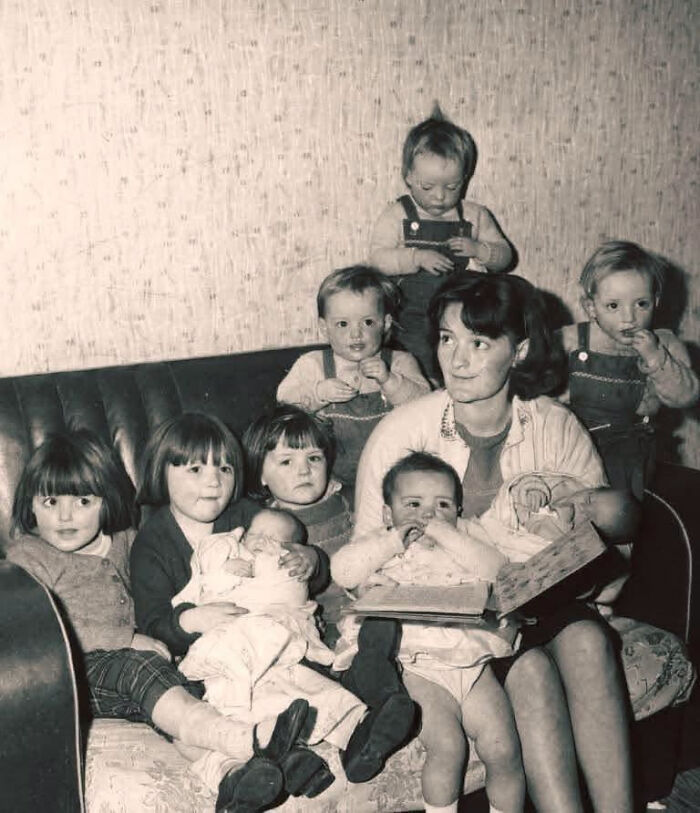
Image source: Women In World History
#11
The Nazis believed they knew exactly who the dangerous people were. They put Mildred Harnack’s name near the top of the list.
An American born in Milwaukee, Mildred could have lived a quiet life. Instead, she moved to Germany, where she watched Adolf Hitler’s regime tighten its grip year after year. While many stayed silent out of fear, she made a decision that carried a death sentence.
Together with her husband, Arvid Harnack, she helped build one of Berlin’s most courageous underground resistance networks. The group secretly gathered military intelligence, distributed anti-Nazi leaflets, and quietly urged Germans to resist a government that demanded absolute obedience. Every meeting, every message, every whispered conversation risked ex*cution.
The Gestapo eventually dismantled the network in 1942. Mildred was arrested, interrogated, and brought before the notorious People’s Court. She was initially sentenced to six years in prison.
For Hitler, that wasn’t enough.
Enraged by what he considered an insult to the Reich, Hitler personally ordered a retrial. This time, the verdict was death.
On February 16, 1943, Mildred Harnack was led to the guillotine at Berlin’s Plötzensee Prison. Her final recorded words were simple and unforgettable:
“And I have loved Germany so much.”
She became the only American civilian ex*cuted on Hitler’s direct orders during World War II.
The Nazis called her dangerous because she proved a single determined person could threaten a dictatorship built on fear. They were right. Long after the Third Reich collapsed into history, Mildred Harnack’s courage continues to outlive the men who tried to silence her.
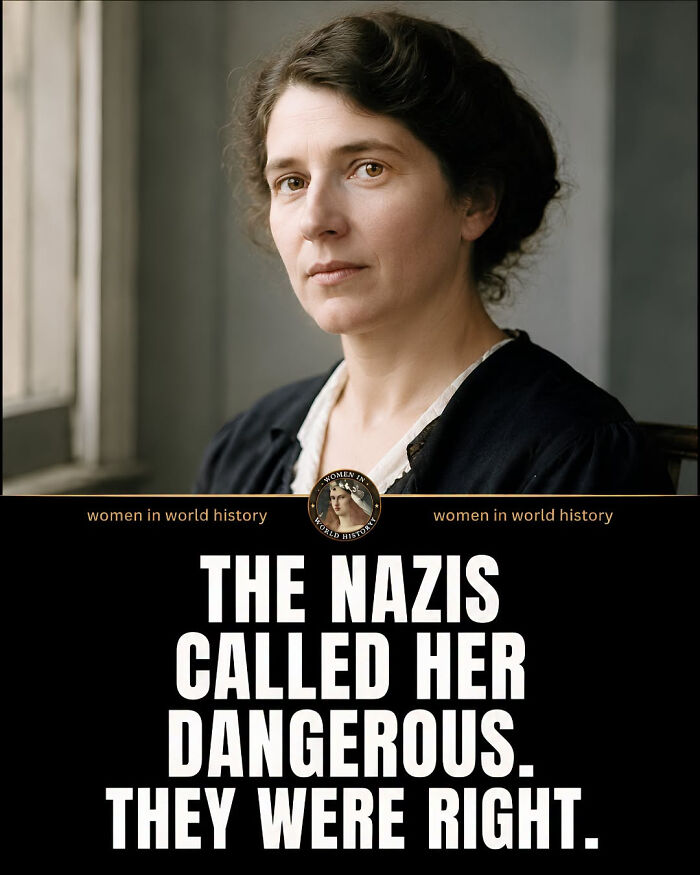
Image source: Women In World History
#12
For decades, one of the greatest scientific breakthroughs in history carried the wrong name.
The world celebrated a man. The woman who made the discovery possible was left standing outside the spotlight.
Lise Meitner had already spent years overcoming barriers that would have ended most scientific careers before they began. She became one of Europe’s leading physicists and worked side by side with chemist Otto Hahn for more than 30 years. Together, they investigated the mysterious behavior of uranium atoms, chasing a puzzle that no one could explain.
Then politics intervened.
As a Jewish scientist living in Nazi-controlled territory, Meitner was forced to flee Germany in 1938, escaping with little more than a suitcase. Hahn remained behind, continuing the experiments they had planned together.
When Hahn mailed her his latest results, something extraordinary happened.
While walking through the snow in Sweden with her nephew, physicist Otto Frisch, Meitner realized what had actually occurred. The uranium nucleus had split into two smaller atoms, releasing an astonishing amount of energy. She was the first to correctly explain the process that would become known as nuclear fission. Frisch even coined the term.
But when the Nobel Prize was awarded in 1944, only Otto Hahn received it.
Many historians now consider that one of the greatest oversights in Nobel history.
Meitner refused to help build the atomic bomb despite understanding the science better than almost anyone alive. She believed scientific discovery carried moral responsibility, earning the nickname “the mother of the atomic bomb”—a title she rejected for the rest of her life.
History eventually began correcting the record. Element 109 was named meitnerium in her honor, and today many historians recognize Lise Meitner as one of the true architects of the discovery that changed the modern world forever.
Sometimes history doesn’t erase a person.
It simply takes generations to learn whose name should have been there all along.
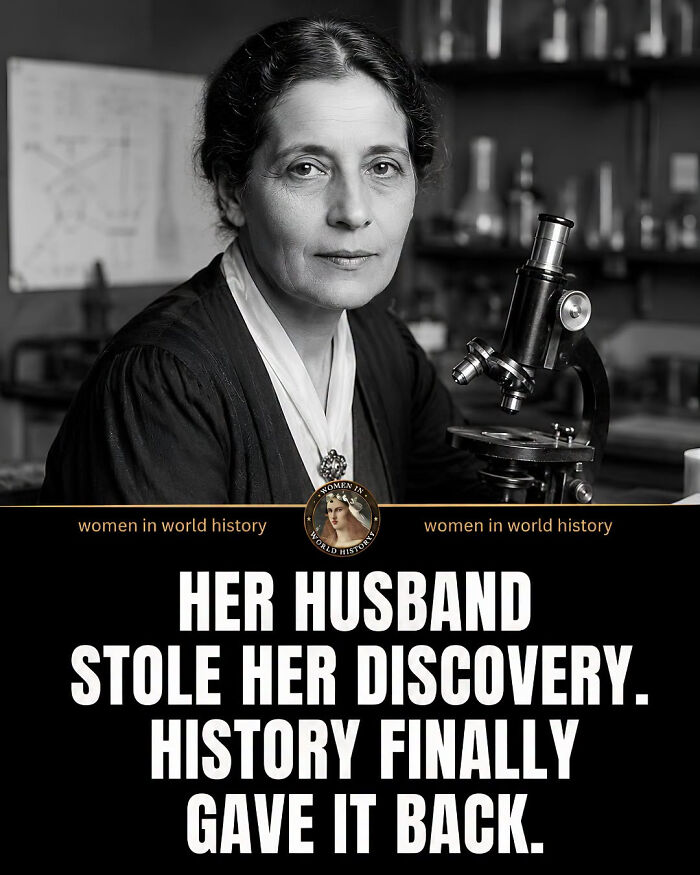
Image source: Women In World History
“Women, too, are less likely to be entrepreneurs than men, and even when they are self-employed, they are less likely to have employees than men,” reads the sobering report. “Women are also more likely to work in low-paid (likely undervalued) occupations than men. And, finally, women earn, on average, lower wages than men.”
Given their enormous contribution to society and those closest to them, we’d argue that the time has long come for this to change.
#13
Napoleon Bonaparte could defeat armies across Europe.
But one of his most relentless opponents never commanded a single soldier.
She carried a pen.
Germaine de Staël was one of the most brilliant writers and political thinkers of her generation. The daughter of Jacques Necker, Louis XVI’s finance minister, she grew up surrounded by Europe’s greatest intellectuals and developed an unfortunate habit—for emperors—of saying exactly what she thought.
Napoleon despised independent minds, especially those with influence.
The feeling was mutual.
De Staël openly criticized his growing dictatorship, accusing him of replacing the ideals of the French Revolution with personal ambition and censorship. Napoleon reportedly complained that she “teaches people to think who never thought before.”
That was precisely the problem.
Unable to silence her through debate, he tried something else.
He banished her from Paris, ordering her to stay at least forty leagues from the city. Police monitored her movements. Her correspondence was intercepted. Friends who visited her risked falling out of favor with the regime.
Many expected exile to end her career.
Instead, it made her famous.
From her estate on Lake Geneva, she transformed exile into an international salon, attracting writers, philosophers, diplomats, and artists from across Europe. If Napoleon controlled Paris, Germaine de Staël created a new intellectual capital beyond his reach.
Then she struck back with a book.
In 1810 she completed *De l’Allemagne* (*On Germany*), celebrating German philosophy, literature, and culture while quietly exposing everything Napoleon’s empire lacked: intellectual freedom, independent thought, and respect for individual conscience.
Napoleon understood the danger immediately.
Before the book could reach readers, he ordered the entire first printing—around 10,000 copies—to be seized and destroyed.
Few authors have received a more dramatic review.
De Staël escaped France with a surviving manuscript, traveling through Austria, Russia, Sweden, and eventually England. In 1813, the book was finally published beyond Napoleon’s reach.
It became one of the most influential works of the nineteenth century, introducing countless readers to German Romanticism and helping reshape European literature.
The emperor who tried to erase her words is remembered for his battles.
The woman he tried to silence is remembered for proving that ideas can outlive empires.
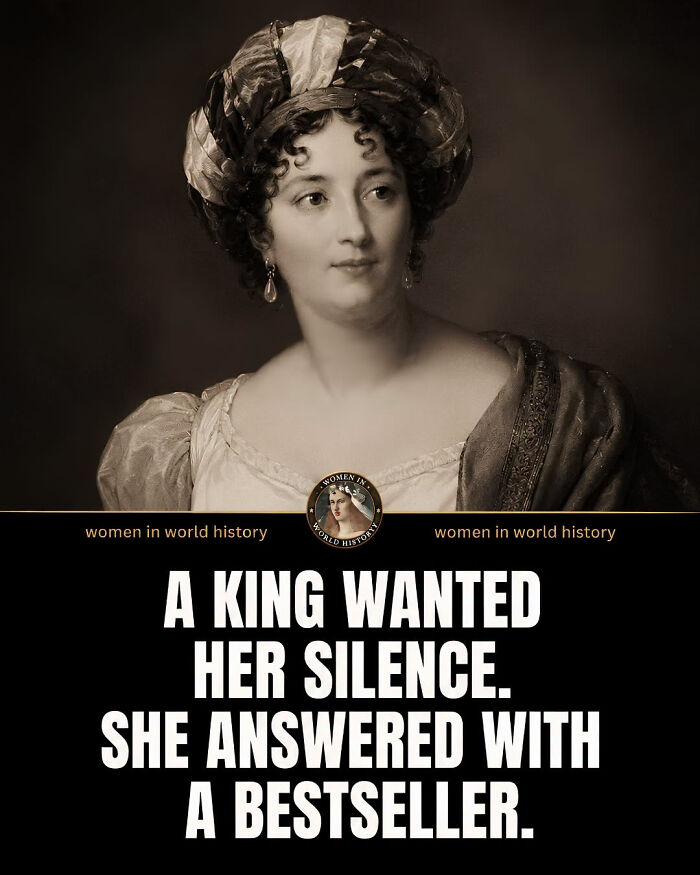
Image source: Women In World History
#14
They thought a smear campaign would silence her.
Instead, they created one of the most fearless journalists in American history.
In 1884, a young schoolteacher named Ida B. Wells refused to give up her seat on a train after being ordered into a segregated car. She fought back in court and won. The victory made headlines. So did the reversal when a higher court overturned it. It was an early lesson in how quickly justice could disappear.
But nothing prepared her for what came next.
In 1892, three of Wells’s close friends—successful Black businessmen in Memphis—were lynched after their grocery store competed with a white-owned business. Local newspapers repeated the familiar lie that the k**lings were about protecting white women.
Wells decided to investigate.
She began collecting court records, eyewitness accounts, and newspaper reports. The evidence told a different story. Many victims had committed no crime at all. Others had been targeted for economic success, political influence, or simply refusing to submit.
Then she published the truth.
The backlash was immediate.
A white Memphis newspaper branded her a liar, attacked her character, and encouraged violent retaliation. While Wells was away on a reporting trip, an angry mob destroyed the offices of her newspaper, *The Free Speech*. Friends warned her that returning to Memphis would almost certainly get her k**led.
She never lived there again.
But she also never stopped writing.
Forced into exile, Wells transformed herself into an international investigative journalist. She traveled across the United States and Britain exposing the reality of lynching with facts, statistics, and relentless reporting. Long before the term “data journalism” existed, she was using documented evidence to dismantle propaganda that many Americans had accepted as truth.
The newspaper that tried to ruin her reputation succeeded only in giving the world an even larger stage to hear her voice.
History remembers the mob.
But it remembers Ida B. Wells for something far more powerful: refusing to let intimidation rewrite the truth.
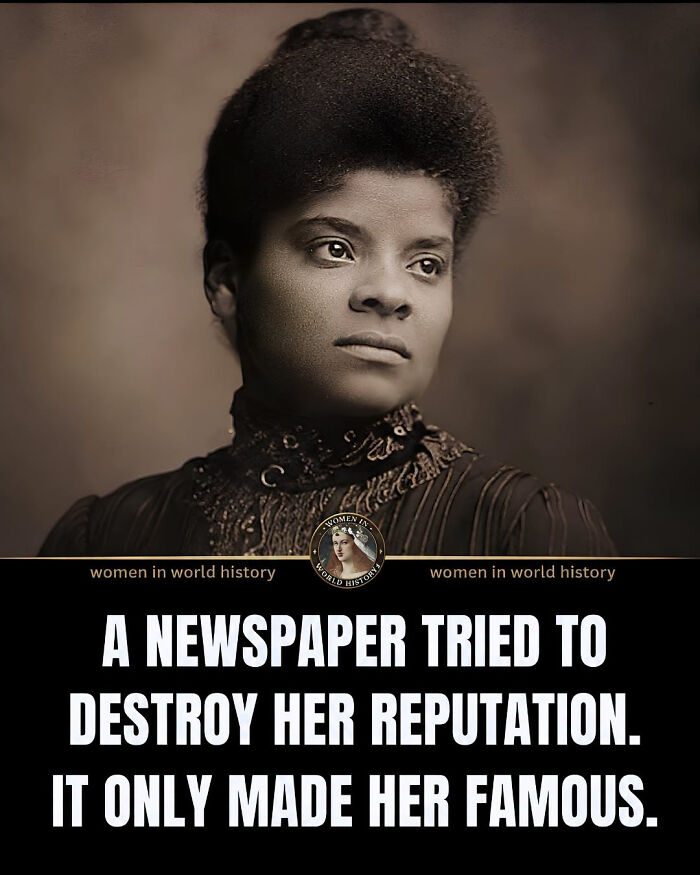
Image source: Women In World History
#15
One of the most influential horror stories in American literature was inspired by a doctor’s prescription.
Not a haunted house. Not a m**derer. A respected physician.
After giving birth, Charlotte Perkins Gilman began suffering from what would now likely be recognized as severe postpartum depression. Instead of encouragement or meaningful treatment, she was sent to one of America’s most celebrated nerve specialists, who prescribed the fashionable “rest cure.” She was told to stop writing, stop thinking too much, avoid intellectual work, and devote herself almost entirely to domestic life.
It nearly destroyed her.
Gilman later wrote that she came so close to a complete mental collapse that she could “see over the edge.” Rather than quietly accepting her diagnosis, she turned the experience into fiction. In 1892, she published *The Yellow Wallpaper*, a story about a woman confined to a room by a well-meaning husband and physician who insist isolation will restore her health.
The room’s grotesque yellow wallpaper slowly becomes an obsession. The woman begins seeing another woman trapped behind its twisting patterns, clawing to escape. Readers have debated for generations whether the figure is a hallucination, a symbol of women’s oppression, or both. That ambiguity is exactly what makes the story so unsettling.
Even more remarkable is what happened afterward. Gilman sent a copy of the story to the very physician whose treatment had inspired it. She later claimed she heard he eventually modified aspects of his famous “rest cure” after reading it, though historians cannot confirm how much influence the story actually had.
Born on this day in 1860, Charlotte Perkins Gilman transformed one woman’s private suffering into a work that still unsettles readers more than a century later. Sometimes the most frightening prisons are built by people who sincerely believe they are helping.
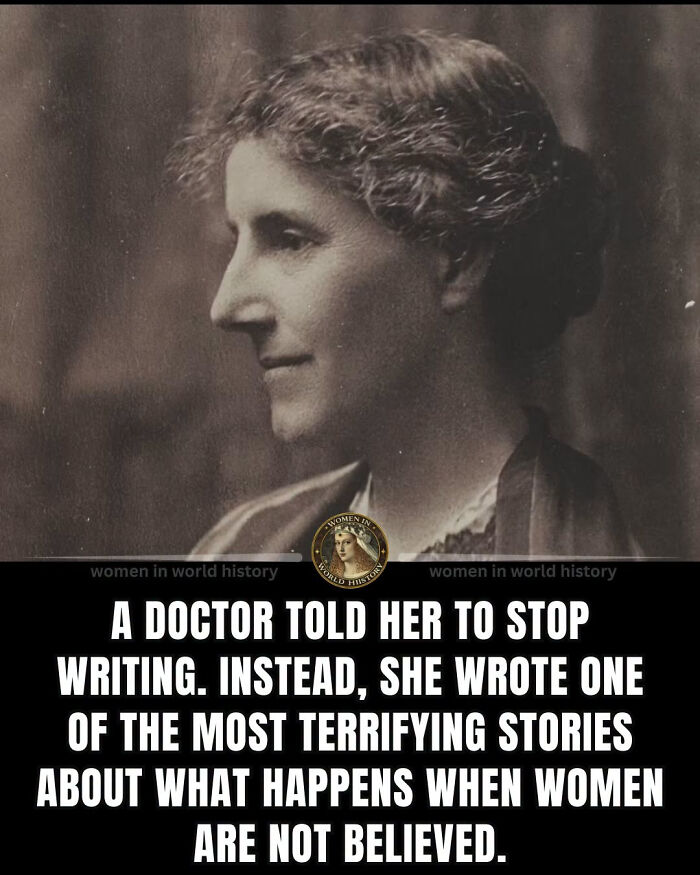
Image source: Women In World History
#16
Born in Sydney, Australia, in 1882, Freda Du Faur grew up in a wealthy family but developed an unusual passion for climbing and exploring the rugged Australian bush. At a time when mountaineering was considered an exclusively male pursuit, she taught herself rock climbing and dreamed of tackling the towering peaks of New Zealand’s Southern Alps after seeing photographs of Aoraki in 1906.
Her greatest obstacle wasn’t the mountain—it was society. Respectable women were expected to avoid dangerous sports altogether. When Du Faur began climbing with renowned guide Peter Graham, critics were scandalized that an unmarried woman would spend nights in the mountains with a male guide. To satisfy Edwardian notions of propriety, she was required to bring an inexperienced male chaperone on expeditions. Even her clothing became controversial. Rather than wearing impractical ankle-length dresses, she climbed in knickerbockers covered by a knee-length skirt, a compromise that still drew criticism from both men and women.
Du Faur refused to let convention stop her. She trained relentlessly, spending months improving her strength and endurance before attempting Aoraki. On December 3, 1910, accompanied by brothers Peter and Alec Graham, she reached the summit of New Zealand’s highest mountain, becoming the first woman ever to do so. Even more astonishing, the team completed the ascent in just six hours, beating the existing speed record by roughly two hours. They spent two hours on the summit before descending safely, an achievement that stunned the mountaineering world.
Remarkably, that climb was only the beginning. Over the next few seasons she completed numerous first ascents, including peaks that now bear names she chose, and in 1913 became part of the first party to traverse all three summits of Aoraki—still regarded as one of the classic climbs of the Southern Alps. Her exploits proved that skill, preparation, and determination mattered far more than gender.
Away from the mountains, Du Faur shared a lifelong, deeply devoted relationship with Muriel Cadogan. While they could never openly acknowledge their partnership in an era hostile to same-sex relationships, historians widely regard the two women as life partners. After Cadogan died unexpectedly in 1929, Du Faur never fully recovered from the loss. She died in 1935, only days before her fifty-third birthday.
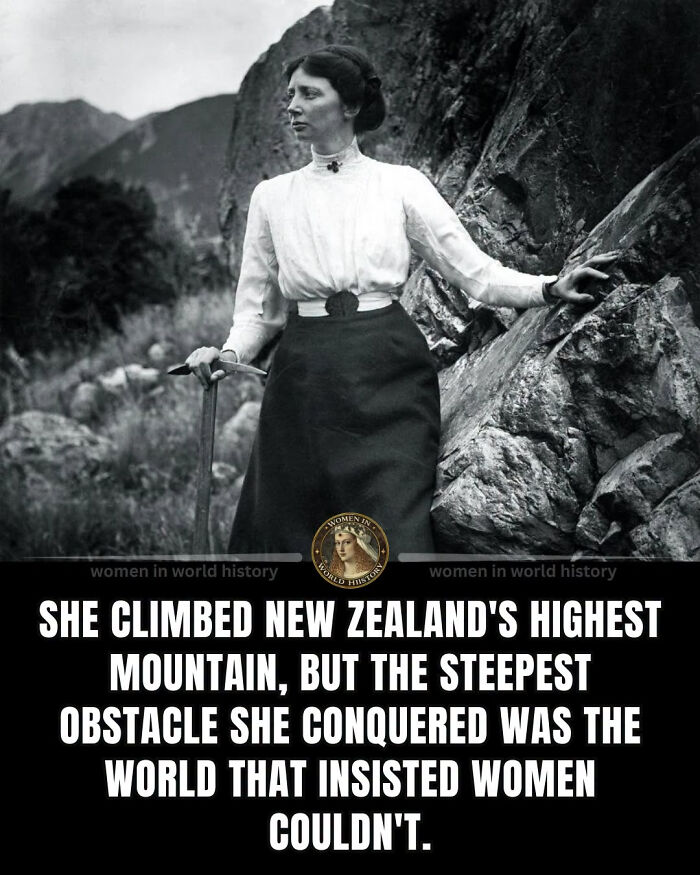
Image source: Women In World History
#17
📷The woman in this photograph has never been publicly identified, but understanding her world makes the image far more powerful than simply seeing it as a portrait of an Inuit mother and child.
She belonged to the Caribou Inuit, a group whose lives revolved almost entirely around the migration of barren-ground caribou across what is now Nunavut. Unlike many coastal Inuit communities that relied heavily on seals and whales, the Caribou Inuit lived deep inland. Caribou were everything: food, clothing, bedding, tents, thread, tools, and survival itself. Every part of the animal had a purpose.
For women, this meant an immense workload that rarely appears in history books.
An Inuit mother was not simply raising children. She processed hides into waterproof boots and warm parkas, scraped skins with stone or metal tools, sewed clothing with needles made from bone or steel, prepared meat, rendered fat, collected berries and edible plants during the brief Arctic summer, maintained camp, and cared for children and elders. A family’s survival depended just as much on her skill as on the hunters’ success.
Then everything changed.
Around the late 1940s and into 1950, the caribou herds that the people of Padlei depended upon either shifted their migration routes or declined dramatically in the area. Historians still debate the precise causes, which likely included natural population cycles, weather, and environmental conditions rather than a single event. Whatever the reason, families who had always known where to find the herds suddenly found empty tundra instead. Food stores vanished.
The famine that followed devastated Padlei. Approximately sixty people died—a staggering loss for such a small community. Entire families faced starvation. Some traveled hundreds of miles searching for game. Others survived on scraps of leather, lichens, trapped animals, fish when available, or anything edible they could find. Malnutrition weakened adults and children alike, making disease even more dangerous.
For mothers, the crisis carried impossible choices. They often ate last so children could have the little food that remained. Many continued nursing infants while they themselves were starving, causing their own strength to deteriorate rapidly. Keeping children warm became another struggle, because worn clothing could not easily be replaced without fresh caribou hides.
Canadian government officials and the Royal Canadian Mounted Police eventually became aware of the disaster and organized relief flights and emergency food deliveries. Missionaries, traders, and government personnel also assisted, but the aid came only after many people had already died. The famine became one of the events that accelerated government involvement in Inuit communities, eventually contributing to policies that encouraged or pressured many Inuit families to settle permanently in fixed communities rather than continue their traditional seasonal movements.
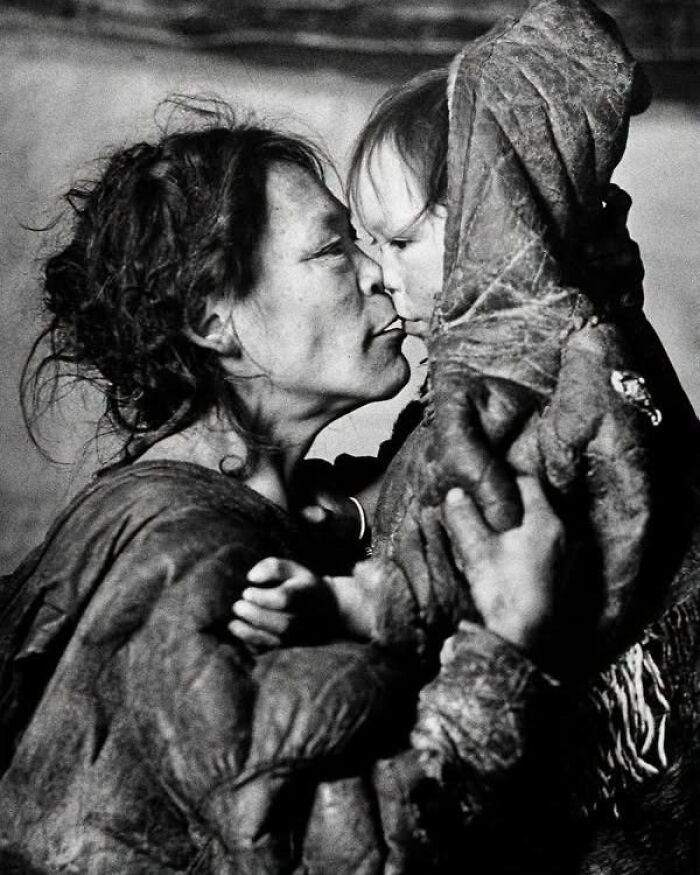
Image source: Women In World History
#18
📷The photograph of Mrs. Irma Lee McElroy painting a U.S. military insignia onto an aircraft at Corpus Christi Naval Air Base in 1942 captures one of the most dramatic shifts in American society during the early years of the Second World War.
Before the war, McElroy worked as an office employee. Like millions of American women, she had been employed in clerical work, retail, teaching, or domestic occupations—jobs generally considered “appropriate” for women at the time. That changed almost overnight after the United States entered the war following the attack on Attack on Pearl Harbor.
As hundreds of thousands of men left for military service, the nation’s factories, shipyards, and military installations faced an enormous labor shortage. The federal government launched an unprecedented recruitment campaign encouraging women to take industrial jobs. Although the iconic figure of Rosie the Riveter would become the symbol of this movement, the campaign represented millions of real women like McElroy whose names rarely entered the history books.
At Corpus Christi Naval Air Base, one of the U.S. Navy’s largest aviation training centers, aircraft had to be assembled, repaired, repainted, and prepared for the thousands of naval aviators being trained for combat. Every aircraft carried the distinctive white star in a blue roundel—the American national insignia—which identified it to friendly forces and distinguished it from enemy aircraft. Applying those markings required careful masking, precise painting, and strict adherence to military specifications.
McElroy’s job may seem simple in a single photograph, but it formed part of a vast production system that kept American naval aviation operating. Aircraft passed through dozens of skilled hands before ever reaching a pilot, and painters were responsible not only for insignia but also camouflage, protective coatings, and finishing work that helped preserve the aircraft in harsh coastal environments.
By 1943, women made up roughly one-third of the civilian workforce, with more than six million entering paid employment during the war. Many discovered they could master jobs previously reserved for men—from welding and riveting to aircraft maintenance and engineering support. While many were expected to surrender these positions when servicemen returned after the war, their wartime contributions permanently altered public attitudes about women’s capabilities in industry.
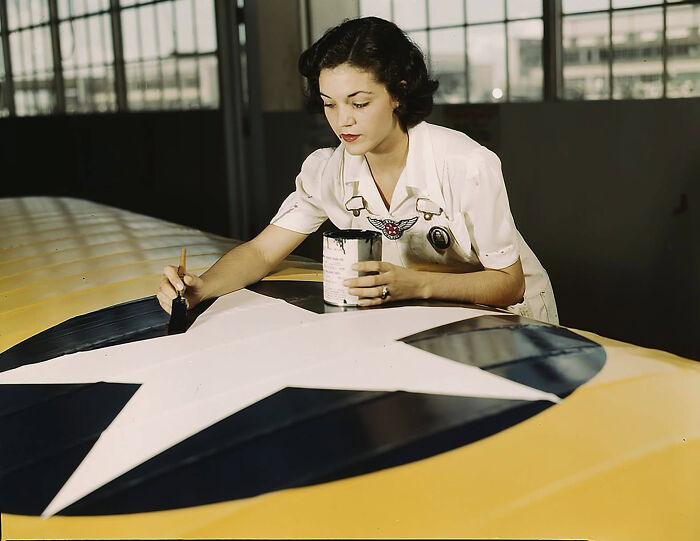
Image source: Women In World History
#19
This photograph is one of the more striking images to emerge from post-Soviet Russia in the 1990s. At first glance, it almost looks staged for a film, but it captures a very real political movement born out of one of Russia’s most turbulent decades.
The woman is a member of the National Bolshevik Party (NBP), a radical political organization founded in 1993 by novelist and political activist Eduard Limonov along with philosopher Aleksandr Dugin. The party combined seemingly contradictory ideas: Soviet nostalgia, revolutionary socialism, Russian nationalism, and an anti-Western worldview. Its members became known for provocative demonstrations, confrontational street politics, and deliberately shocking imagery.
The armband she wears bears the party’s emblem—a hammer and sickle inside a white circle on a red background. The design intentionally echoed the visual language of Nazi Germany while replacing the swastika with the Soviet symbol. The party claimed this was meant to symbolize a fusion of revolutionary traditions and to provoke public attention, though critics saw it as an embrace of extremist aesthetics. The symbolism made the movement controversial from its beginning.
The location is just as significant as the uniform.
Behind her stands the Home Front to Front Memorial in Magnitogorsk, an enormous Soviet war monument unveiled in 1979. The sculpture depicts a factory worker handing a giant sword to a soldier, symbolizing how Soviet industry armed the Red Army during World War II. Magnitogorsk itself was one of the Soviet Union’s greatest steel-producing cities, supplying tanks, armor, and weapons throughout the war. The monument is one of three monumental sculptures aligned across Russia, representing the forging, raising, and lowering of the symbolic “Sword of Victory.”
The year—1995—is equally important. The Soviet Union had collapsed only four years earlier. Russia was struggling through hyperinflation, unemployment, organized crime, political instability, and a profound identity crisis. For many young Russians, the promises of democracy and capitalism had not brought prosperity. Radical political movements on both the far left and far right attracted followers who felt alienated by the new order.
The National Bolshevik Party appealed particularly to disillusioned youth. Its members cultivated a rebellious image, blending military aesthetics, punk culture, Soviet symbolism, and theatrical political protests. They became infamous for occupying government buildings, disrupting official events, and staging media-friendly demonstrations. In 2007, the Russian Supreme Court officially banned the party as an extremist organization.
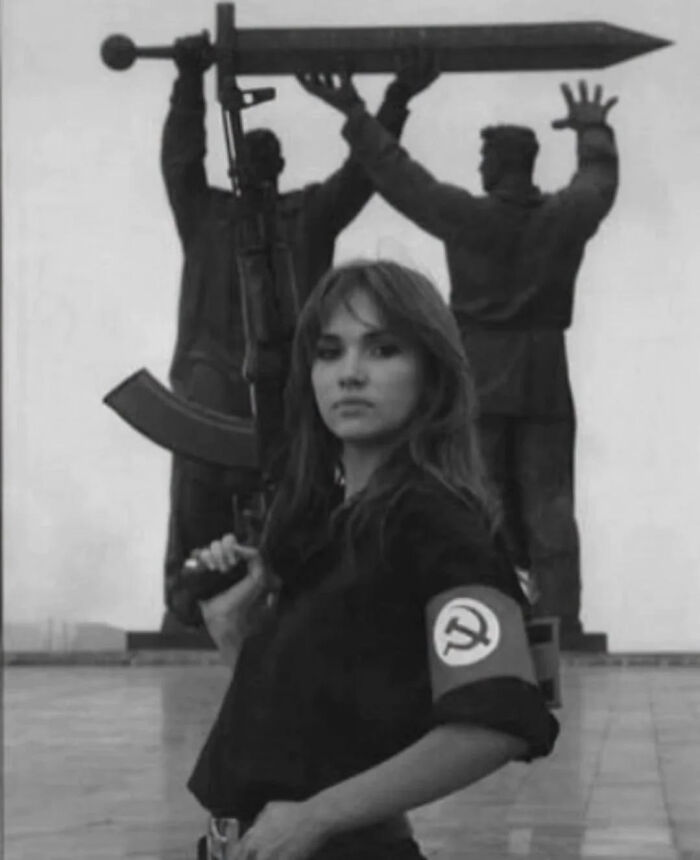
Image source: Women In World History
#20
**restored photo** A ten-cent dance was enough to spark one of California’s ugliest outbreaks of racial violence.
Night after night, young Filipino farmworkers finished exhausting days in the fields and headed to local taxi dance halls. For a dime, they could share a single song with a woman. It was one of the few places where these immigrants—most of them young, unmarried men who had crossed the Pacific as U.S. nationals after the American annexation of the Philippines—could escape backbreaking labor and feel briefly connected to ordinary life.
Then rumors began to spread.
Newspapers, politicians, and self-appointed guardians of “morality” claimed Filipino men were stealing white women. Ministers preached about racial purity. Local leaders warned that California’s social order was under attack. The dance floor became something far larger than a place to hear music. It became a battlefield where fear, racism, and economic resentment collided.
The timing made everything even more volatile. The Great Depression had left thousands desperate for work. Filipino laborers, willing to accept low wages because they had few alternatives, became convenient scapegoats. White workers increasingly viewed them as rivals in the fields—and, even more explosively, as rivals for romance.
In January 1930, the tension finally erupted.
For five nights, mobs of hundreds of armed white men hunted Filipino communities through Watsonville, smashing homes, attacking workers, and dragging terrified men from their beds. Twenty-two-year-old farmworker Fermin Tobera was shot and k**led while hiding inside a bunkhouse. His m*rder became the defining tragedy of riots that soon inspired similar violence across California.
The attacks didn’t end with broken buildings and shattered lives. They helped fuel laws banning marriages between Filipinos and white Americans, turning racial panic into state policy.
Looking back nearly a century later, it’s unsettling to realize how something as ordinary as sharing a dance became the excuse for violence, and how easily fear can transform neighbors into targets.
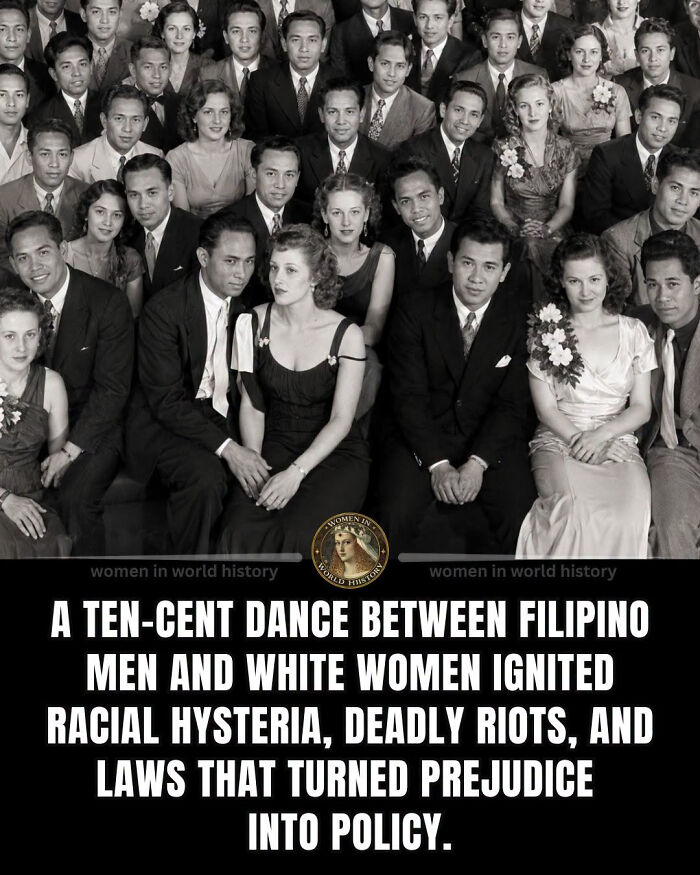
Image source: Women In World History
#21
She was transformed into one of history’s most recognizable women.
The strange part is that almost everything people think they know about her came later.
Her real name was **Matoaka**. “Pocahontas” was a childhood nickname, often understood to mean something like “playful one.” Long before Hollywood turned her into the heroine of a love story, she was the daughter of Powhatan, the powerful leader of a confederacy controlling much of coastal Virginia.
Then the English arrived.
For centuries, the most famous version of her story claimed she threw herself across the body of Captain John Smith to save him from execution. Smith himself didn’t tell that story until years later, after Pocahontas had become famous in England. Historians have argued ever since whether he misunderstood a Powhatan adoption ceremony, embellished the tale, or simply invented one of history’s greatest colonial legends. What is clear is that there is no contemporary evidence for a sweeping romance between them.
The part that often gets overlooked is far darker.
In 1613, while she was likely still in her teens, English captain Samuel Argall lured her aboard his ship and kidnapped her. She became a political hostage, held for ransom while the English demanded corn, weapons, and prisoners from her father. During months of captivity, she was baptized as **Rebecca**, learned English customs, and married tobacco planter John Rolfe. Whether that marriage was an act of genuine affection, survival, diplomacy, coercion—or some complicated combination of all four—remains one of the most debated questions in early American history.
Then came the greatest performance of her life.
The Virginia Company took Rebecca Rolfe to England in 1616, presenting her as proof that Indigenous people could be “civilized” through English culture and Christianity. She was dressed in fashionable clothing, introduced to aristocrats, and displayed to investors whose money kept the struggling Jamestown colony alive. She wasn’t simply a guest. She was living propaganda.
She even met John Smith again.
According to one account, she was furious that he had never informed her he was alive after she believed him dead. She reportedly called him “father,” a Powhatan diplomatic term of respect that also reminded him their relationship had never been the romance later generations imagined.
Just months later, as she prepared to sail home, she became gravely ill and died in England at about twenty-one years old.
The woman remembered as Pocahontas left behind a legend. The woman who lived as Matoaka left behind a far more complicated story—one that says as much about the people who kept rewriting her life as it does about the life she actually lived.
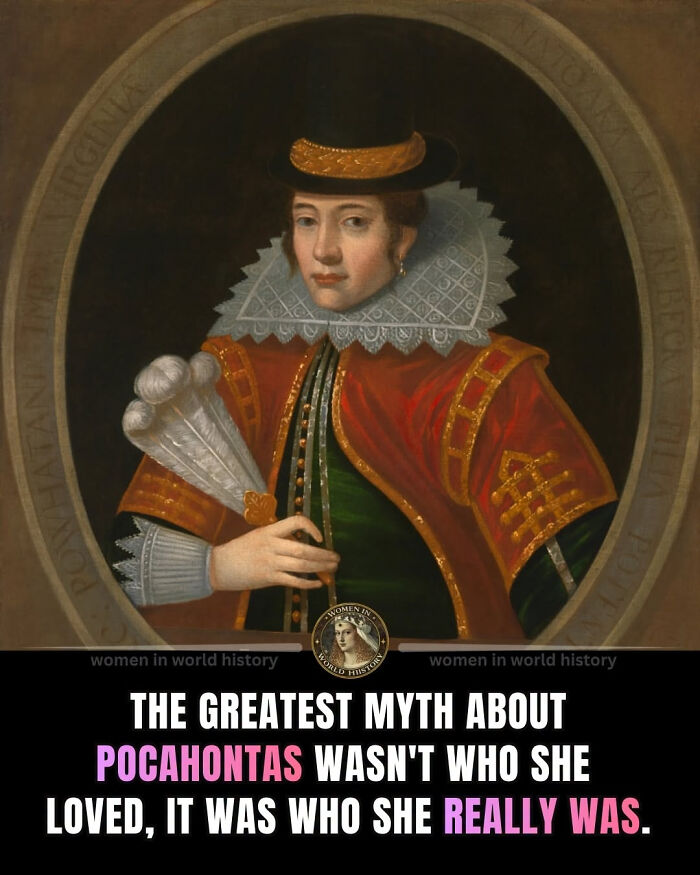
Image source: Women In World History
#22
While crowds celebrated the end of Nazi occupation, thousands of French women found themselves publicly humiliated, their heads shaved before jeering neighbors in ceremonies meant to punish what was called collaboration horizontale—”horizontal collaboration.”
The reality, however, was often far more complicated.
When Germany occupied France in 1940, life became a daily struggle. Food was scarce, jobs disappeared, and simply surviving could require impossible choices. During those four years, relationships developed between French women and German soldiers. Some were genuine romances. Some women married German servicemen or became engaged. Others exchanged companionship for food, protection, or medicine for their families. Some were coerced or s*xually a**aulted. And a much smaller number actively supported the Nazi regime by informing on Resistance members or working for German authorities.
As Allied forces and the French Resistance liberated towns in the summer of 1944, anger that had been building for years exploded. Many collaborators fled or escaped justice, but women accused of fraternizing with Germans were highly visible and easy targets. Across France, an estimated 20,000 women had their heads shaved, often in town squares before enormous crowds.
The punishments were deliberately theatrical. Women were forced into public squares, their hair hacked off with scissors or clippers, and in some places they were branded with swastikas, stripped partially naked, paraded through the streets, or forced to carry their children—children derisively called “German babies.” The goal was not simply punishment but public shame.
This famous photograph, taken in the town of Gémenos on August 31, 1944, shows one such scene. A woman sits silently in a chair while her hair lies scattered across the floor. Around her, hundreds of spectators press in to watch. Some stare solemnly. Others smile. Children weave through the crowd. The image captures not only the punishment but also the unsettling spectacle it became.
Historians today caution against viewing every shaved woman as a traitor. Many had committed no crime under French law. While some had indeed denounced Resistance fighters or knowingly aided the occupiers, many others were punished solely because they had loved—or were believed to have loved—a German soldier. In the emotional aftermath of liberation, these women became convenient symbols onto whom communities projected years of fear, humiliation, and rage.
The head shaving itself was not an official sentence imposed by the French government. It was largely an act of épuration sauvage (“wild purge”), carried out by local Resistance groups, militias, or angry civilians before formal courts were fully restored. In many cases, due process played little or no role.
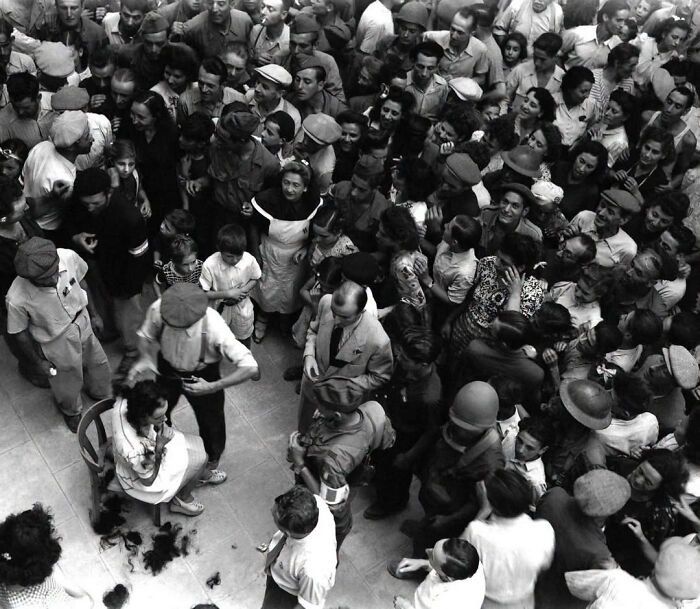
Image source: Women In World History
#23
The dark and complex history of Anne Perry’s life stands as one of crime fiction’s most remarkable origin stories. Before she became a bestselling author known for her Victorian-era detective novels, Perry lived through a shocking true crime that would later cast a shadow over her literary career.
At the age of fifteen, when she was still known as Juliet Hulme, she and her closest friend Pauline Parker committed a brutal m*rder that shocked New Zealand society. The victim was Parker’s mother, Honora Rieper, who the girls bludgeoned to death with a brick wrapped in a stocking during an afternoon walk in Victoria Park near Christchurch. The brutality of the crime was matched only by the girls’ apparent lack of remorse – they emerged from the scene covered in blood but seemingly jubilant.
The m*rder arose from an intense teenage friendship that many described as obsessive. When Perry’s family planned to move abroad, potentially separating the girls, they conceived the m*rder plot to stay together. Their relationship had become all-consuming, complete with elaborate fantasy worlds they had created together. The girls’ families and authorities worried about the unhealthy nature of their attachment, but no one predicted it would end in violence.
The case caused a sensation in 1950s New Zealand and later inspired Peter Jackson’s film “Heavenly Creatures.” After serving five years in prison, Hulme changed her name to Anne Perry and eventually began writing crime fiction. Her novels, particularly the William Monk and Thomas Pitt series, explore themes of justice, moral responsibility, and the psychology of m*rder – subjects she understands from a uniquely personal perspective.
Perry remained anonymous for decades until a 1994 media revelation connected her past identity to her writing career. The disconnect between her violent teenage act and her later success as a mystery novelist creates an unsettling paradox. Her books display deep insight into both the perpetrators and investigators of crimes, perhaps informed by her experience on both sides of the justice system.
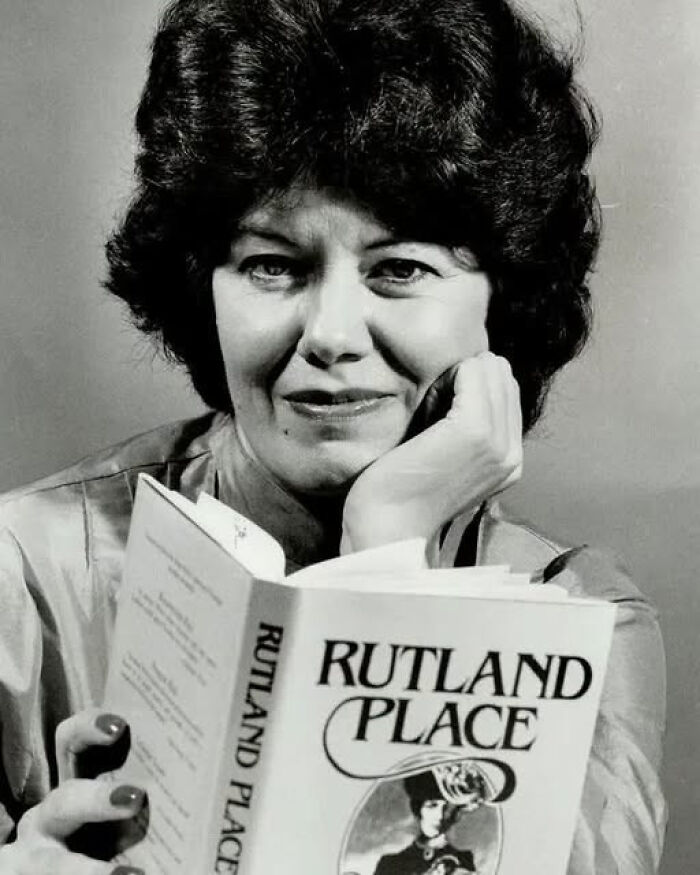
Image source: Women In World History
#24
The 1937 sit-down strike at the Woolworth’s Department Store in Detroit is one of those fascinating labor stories that is often overshadowed by the better-known automobile factory strikes of the same era. Yet it highlights how thousands of low-paid women workers helped reshape the American labor movement.
The strike took place during the wave of labor activism that followed the passage of the National Labor Relations Act, which gave workers greater legal protections to organize unions. Inspired by the successful Flint Sit-Down Strike against General Motors, retail employees began asking why factory workers should have rights that department store clerks did not.
Most Woolworth’s employees were women, many in their late teens and twenties. They worked long hours on their feet for very low wages, often earning around $14 to $17 a week. They had little job security, strict supervisors, few opportunities for advancement, and were expected to maintain an immaculate appearance while dealing with demanding customers all day.
Rather than simply walking off the job, workers at a Woolworth’s store in downtown Detroit occupied the store itself in early 1937. This tactic, known as a sit-down strike, prevented management from bringing in replacement workers because the employees refused to leave the premises. The women slept inside the store, sang songs, played cards, read newspapers, and organized shifts while supporters delivered food and supplies from outside. The occupation became a public spectacle, drawing crowds and newspaper reporters.
The strike was organized with support from the Retail Clerks International Protective Association and was part of a broader campaign to unionize retail workers across the country. Woolworth’s fiercely resisted these efforts, but the publicity surrounding the strike exposed the poor working conditions faced by women in retail.
Although the Detroit occupation lasted only a few days before police removed the workers, it was part of a much larger movement. Similar Woolworth’s strikes soon erupted in cities including New York, Pittsburgh, and Seattle. Collectively, they pressured the company to negotiate with unions in some locations and brought national attention to the fact that women in stores—not just men in factories—were demanding dignity on the job.
One of the lasting images from the Detroit strike shows rows of young women sitting calmly inside the store. Unlike the stereotype of labor activists as rugged industrial workers, these were neatly dressed salesclerks in skirts and blouses, quietly refusing to move. That contrast made the photographs especially powerful. It challenged assumptions about who could protest and what courage looked like during the Great Depression.
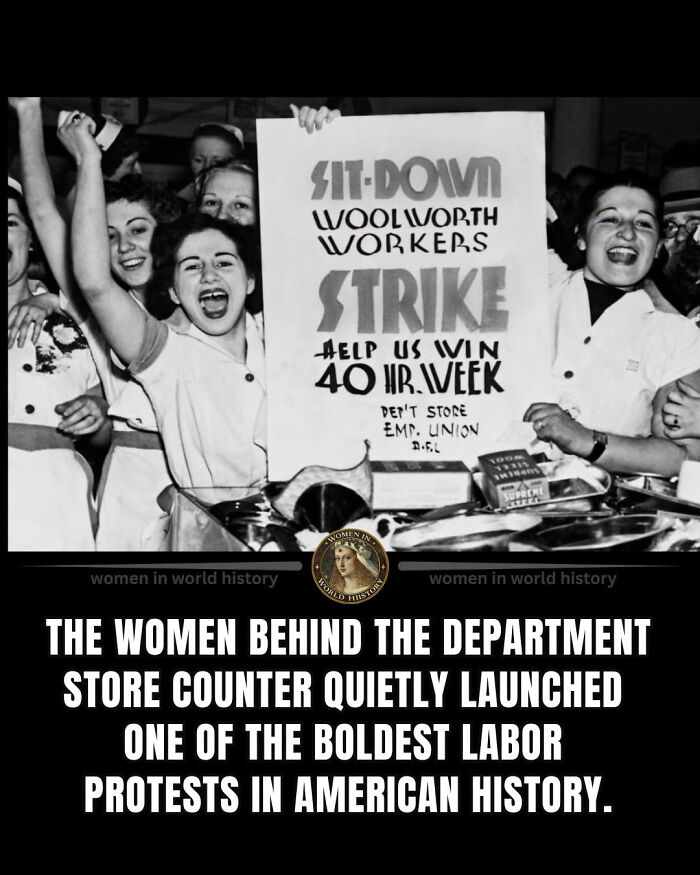
Image source: Women In World History
#25
There are few people in modern history who managed to bring an empire to the edge of constitutional crisis without ever holding political office. Wallis Simpson did it simply by falling in love with the wrong man.
Or so the story goes.
Long before she became one of the most talked-about women on Earth, Wallis was an American socialite with impeccable style, razor-sharp wit, and two failed marriages behind her. To Britain’s royal establishment, that alone made her unacceptable. A twice-divorced woman could never become queen. Yet the future king seemed unmoved by every warning placed in his path.
As Edward VIII’s devotion deepened, whispers became headlines. Friends claimed he was utterly captivated by her. Critics insisted she was manipulative and ambitious. Others argued the opposite—that Wallis was horrified by the growing crisis and repeatedly urged Edward to abandon the relationship before it destroyed his throne. History has never fully settled the question.
The gossip only became more extraordinary. Rumors spread that she possessed an almost hypnotic influence over the king. Intelligence agencies collected files on her. Some even alleged she had inappropriate connections with senior Nazi officials before the Second World War, accusations that remain fiercely debated by historians and are still surrounded by speculation rather than conclusive proof.
Then came the decision that stunned the world.
In December 1936, Edward chose love over the British Crown, becoming the first reigning monarch in modern British history to abdicate voluntarily. His brother became king, changing the course of the monarchy forever. The ripple effects would eventually place his niece, Queen Elizabeth II, on the throne decades later.
Edward and Wallis married in France in 1937 and spent the rest of their lives together, but acceptance never truly came. She was denied the style of “Her Royal Highness,” remained an outsider to much of the royal family, and carried a reputation that shifted with every generation.
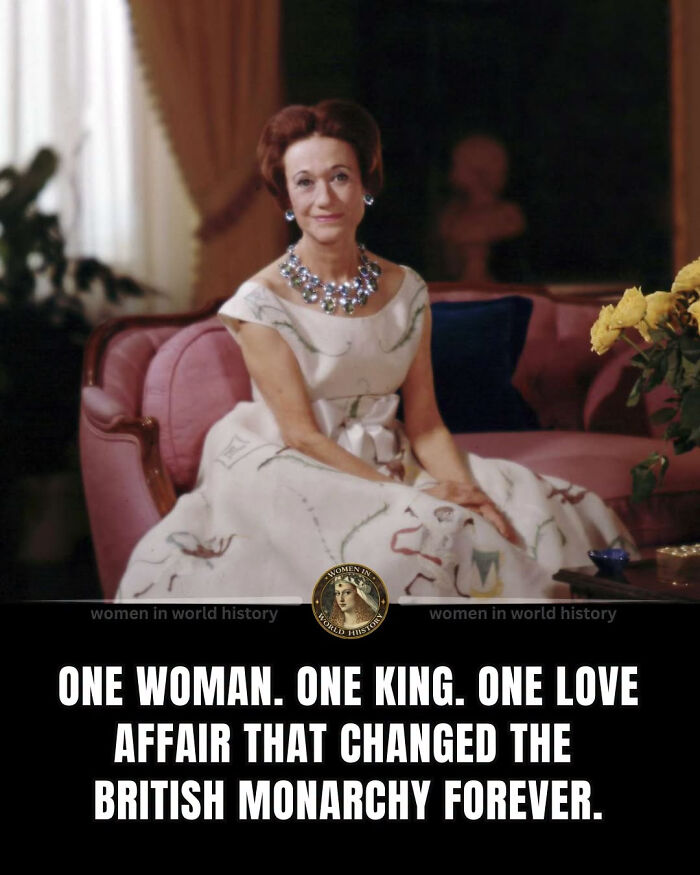
Image source: Women In World History
#26
Most scandals begin with greed. This one began with a woman who understood something even more powerful: people will believe almost anything if it flatters their expectations.
Jeanne de Valois-Saint-Rémy claimed to be descended from the French royal house of Valois. The bloodline was real, but the privilege was long gone. Raised in poverty, she learned early that an impressive pedigree could open doors that money could not. She reinvented herself as the Comtesse de La Motte, moving through aristocratic circles with remarkable confidence.
Then she found the perfect target.
A spectacular diamond necklace—one so extravagant it had been created for a royal mistress—had become nearly impossible to sell after the death of King Louis XV. At the same time, Cardinal Louis de Rohan desperately wanted to regain the favor of Queen Marie Antoinette, who wanted nothing to do with him. Jeanne recognized an opportunity hidden inside two separate problems.
She convinced the cardinal that the queen secretly wished to reconcile and persuaded him that she wanted the necklace purchased in his name. Forged letters, carefully staged meetings, and an elaborate performance involving a woman disguised as the queen completed the illusion. Believing he was carrying out Marie Antoinette’s private wishes, the cardinal handed over the necklace.
The jewels disappeared almost immediately. Many of the diamonds were broken apart and quietly sold in London.
When the deception unraveled, France erupted. Marie Antoinette had never ordered the necklace, never met Jeanne as described, and never benefited from the scheme. Yet public opinion refused to separate fact from rumor. The trial became a spectacle, and the queen’s denials convinced many people only that she had something to hide.
Jeanne escaped prison, published sensational memoirs defending herself, and died in London after falling from a window in 1791 under circumstances that remain debated. By then, the damage had already been done. A fraud built on forged letters and impossible promises helped convince a nation that its monarchy could no longer be trusted—a reminder that public perception can reshape history long before the truth has a chance to catch up.
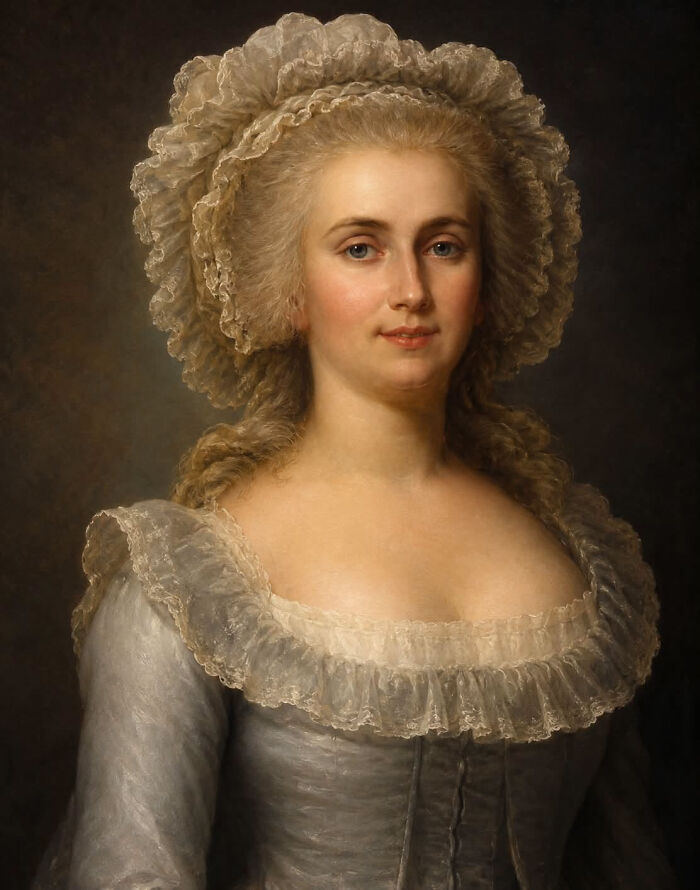
Image source: Women In World History
#27
Before she became the woman at the center of one of the most notorious m*rder trials of the 1920s, Marguerite Alibert had already mastered a remarkable skill: reinventing herself.
She drifted through Paris under different names, moving effortlessly between worlds that rarely touched. To some she was a glamorous courtesan. To others she was an elegant companion with impeccable manners and powerful connections. Few people ever knew the full story, and that was exactly how she preferred it.
One of those connections would later become impossible to ignore.
Among the men captivated by Marguerite was the young Prince of Wales, the future King Edward VIII. Their affair was passionate enough that he wrote her intimate letters, never imagining they might one day become politically explosive. The romance faded, but the correspondence remained carefully preserved.
Then everything changed.
Marguerite married Ali Kamel Fahmy Bey, a wealthy Egyptian aristocrat, and within months their marriage unraveled into accusations of jealousy, possessiveness, and violence. In July 1923, inside London’s Savoy Hotel, gunshots shattered the silence. Fahmy was dead. Marguerite admitted firing the revolver but insisted she had acted to save herself.
What followed became an international spectacle. Society pages, newspapers, and courtroom galleries obsessed over every detail. Yet one mystery hovered over the proceedings: would the former prince’s love letters appear in court?
They never did.
Many historians believe influential figures worked quietly behind the scenes to ensure the correspondence remained hidden, sparing the British monarchy from a scandal that could have eclipsed the trial itself. Whether by legal strategy, political pressure, or simple caution, the letters disappeared from the courtroom drama.
The jury acquitted Marguerite after only a brief deliberation. She walked free while rumors continued to swirl for decades about what had been concealed, who had intervened, and how differently history might remember the case had every document been laid before the public.
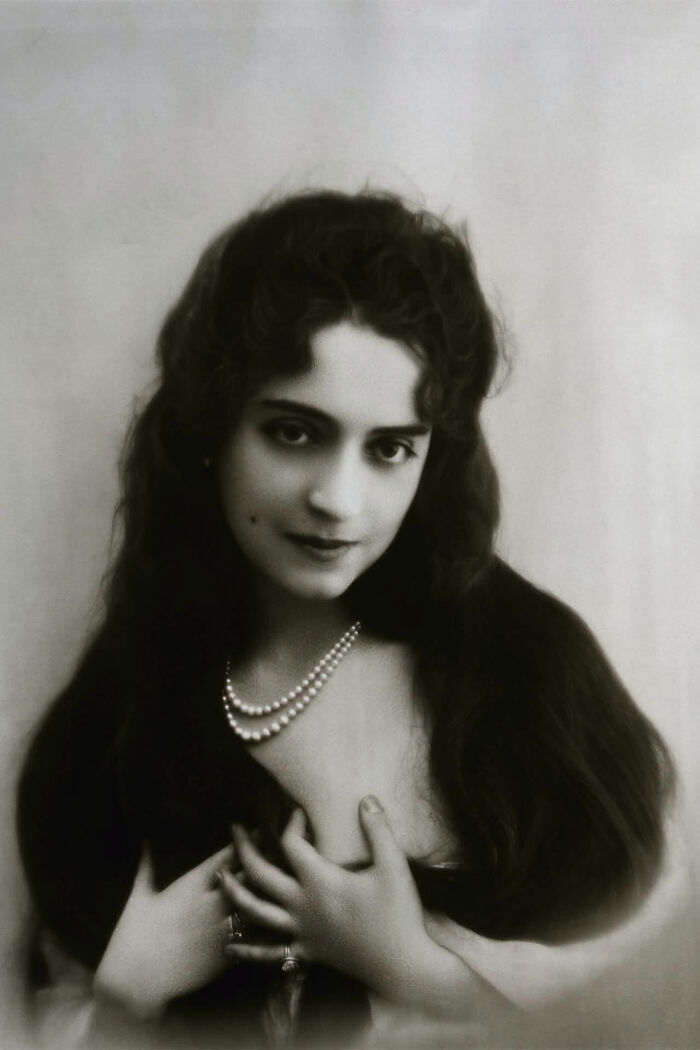
Image source: Women In World History
#28
Some stars become famous because they fit the image Hollywood wanted. Lena Horne became unforgettable because she refused to.
Studios knew audiences were captivated by her beauty, elegance, and extraordinary voice. They put her in lavish gowns, surrounded her with glamorous sets, and promoted her as one of MGM’s brightest stars. Yet behind the scenes, they carefully limited her roles. Many of her musical numbers were filmed so they could be cut from screenings in the segregated South without changing the rest of the movie. Even at the height of her fame, the industry’s biggest opportunities came with invisible boundaries.
She accepted the spotlight—but not the rules that came with it.
During World War II, Horne joined a USO tour entertaining American troops. What she found overseas shocked her. Black soldiers were often forced to sit behind German prisoners of war during performances because the U.S. military itself remained segregated. Rather than quietly accept it, she walked away. After MGM withdrew her from the official tour, she paid her own expenses to travel and perform directly for Black servicemen instead, choosing principle over studio approval.
That decision was only the beginning. As the years passed, Horne became increasingly outspoken in the civil rights movement, worked alongside leaders including Martin Luther King Jr., and found herself caught in the anti-communist blacklist that damaged so many careers. She kept performing anyway, building an extraordinary second act as one of America’s most celebrated nightclub performers and concert artists.
The honors eventually caught up with the woman who had spent decades pushing against closed doors. In 2022, Broadway’s Brooks Atkinson Theatre was renamed the Lena Horne Theatre, making her the first Black woman ever honored with a Broadway theater bearing her name.
Lena Horne didn’t simply leave behind memorable songs or glamorous films. She proved that sometimes the most enduring performance is refusing to stand on any stage that asks you to diminish yourself.
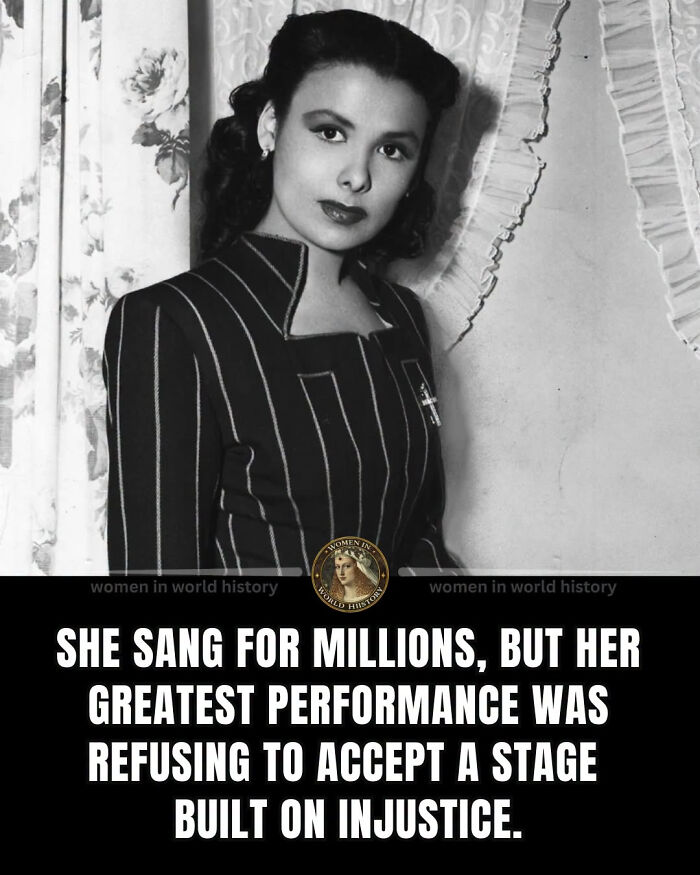
Image source: Women In World History
#29
One sentence was enough to end the appointment.
“I won’t be touched by a woman.”
A patient would discover that the doctor waiting to examine him wasn’t a man, refuse treatment, and walk out. Others demanded a different physician before the consultation had even begun. The objection often had little to do with skill. It was the simple fact that the person wearing the white coat was a woman.
That contradiction became increasingly common during the late 19th century as women fought their way into medical schools and earned the same qualifications as their male colleagues. A diploma, however, did not guarantee acceptance. Many hospitals quietly limited female physicians to treating women and children, not because they lacked training, but because administrators feared male patients would refuse their care.
The irony was impossible to ignore.
The very same men who rejected a female doctor often accepted treatment from female nurses without hesitation. Nursing was praised as an extension of a woman’s nurturing nature. A nurse could comfort the sick, change bandages, and remain at a patient’s bedside for hours. But the moment a woman became the person making the diagnosis, giving the orders, or leading the operation, many believed she had crossed an invisible line.
Medicine wasn’t simply about healing. It was about authority.
Victorian society had long accepted women as caregivers, yet many struggled with the idea of a woman occupying the highest position in the room. Critics claimed surgery demanded decisiveness, emotional detachment, and leadership—qualities they insisted belonged to men alone. Some even argued that studying anatomy or performing operations would make women less feminine.
History had other plans.
As epidemics spread, hospitals filled, and skilled women physicians quietly proved themselves again and again, many skeptical patients changed their minds only after experiencing their care firsthand. Competence accomplished what arguments rarely could.
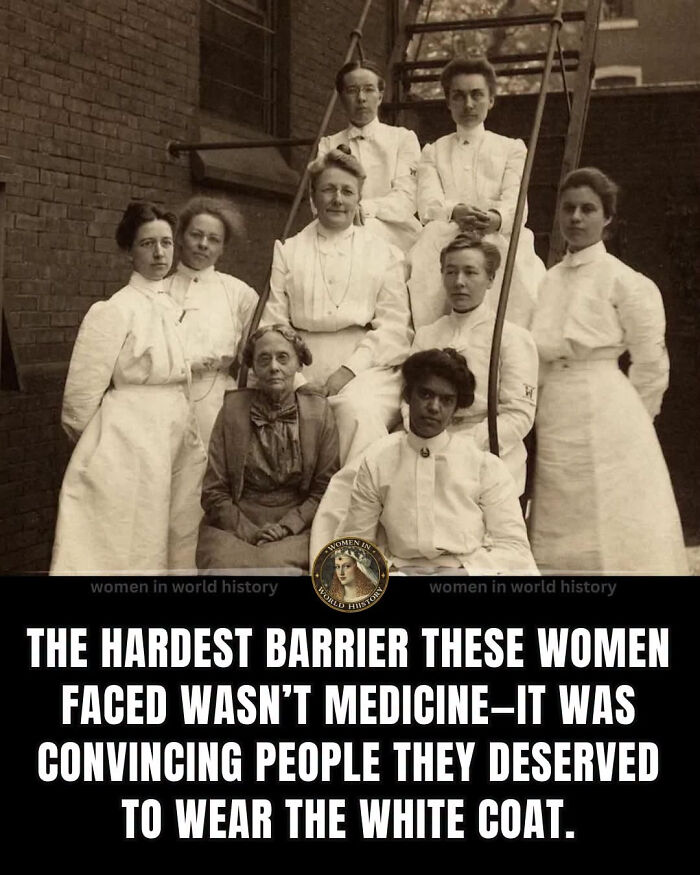
Image source: Women In World History
#30
One of the biggest obstacles women faced in science wasn’t a lack of talent—it was a theory.
During the 19th century, anatomists carefully measured skulls and brains, noting that women generally had smaller brains than men. To many Victorian scientists, the conclusion seemed obvious: a smaller brain must mean a smaller intellect.
What they failed to understand was that brain size closely correlates with overall body size, not intelligence.
The misconception didn’t stay inside laboratories. It became a justification for excluding women from universities, scientific societies, and medical schools. Some physicians even warned that too much education would divert blood away from a woman’s reproductive organs, damaging her fertility or making her incapable of motherhood.
One Harvard physician argued that rigorous study could permanently harm a woman’s health. Others claimed women lacked the emotional stability required for science because menstruation supposedly made them irrational for part of every month.
The irony is impossible to ignore.
While these theories were being presented as settled science, women like Ada Lovelace were laying the foundations of computer programming. Sofia Kovalevskaya was transforming mathematics. Marie Curie would go on to win not one, but two Nobel Prizes. Countless women were making discoveries while simultaneously being told their minds weren’t capable of making discoveries.
Today, these Victorian theories are remembered as cautionary examples of how cultural assumptions can masquerade as scientific fact. The measurements were real. The conclusions were not.
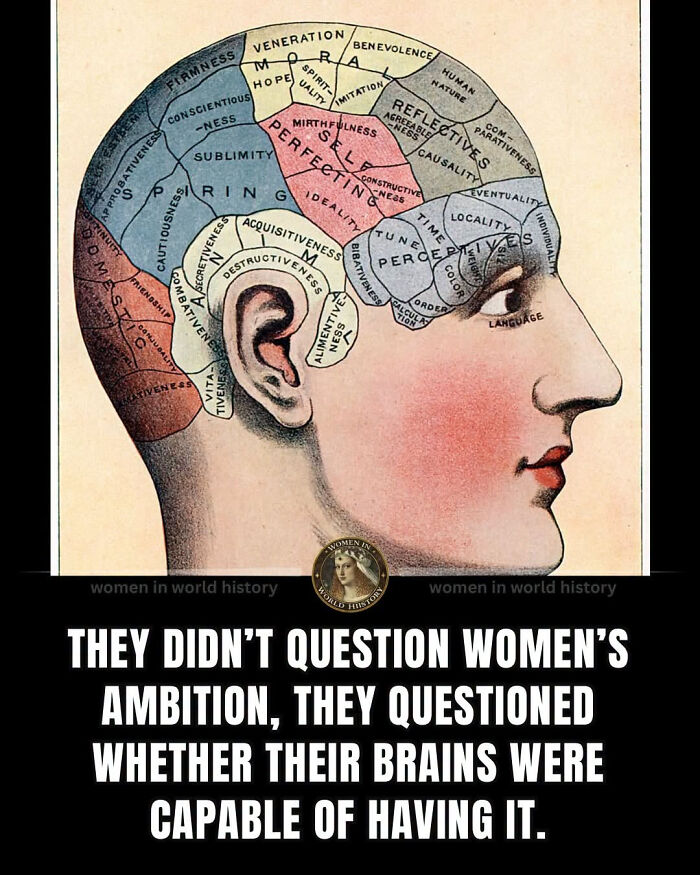
Image source: Women In World History
#31
Long before people argued over Kindles, tablets, or digital books, one schoolteacher was asking a remarkably modern question:
Why should children have to carry so many heavy books?
The question stayed with Ángela Ruiz Robles, a Spanish educator who spent decades watching students struggle under the weight of textbooks while relying on teaching methods that had changed very little. She believed there had to be a better way—not just to make learning easier, but to make children more curious about learning itself.
So she began designing one.
In 1949, she patented what she called the Mechanical Encyclopedia. It wasn’t electronic in the way we think of today, but its underlying idea was astonishingly familiar. Instead of requiring separate books for every subject, the device used interchangeable reels containing different lessons. Buttons and mechanisms allowed students to move through content, enlarge text, illuminate pages for easier reading, and even adapt the material to individual subjects. It was portable, reusable, and designed to replace stacks of textbooks with a single learning device.
Her vision reached far beyond clever engineering. Ruiz Robles imagined a future where education was lighter, more accessible, and tailored to each student rather than limited by printed pages. She hoped her invention would reduce costs for families while making learning more engaging for children.
A prototype was eventually built, attracting attention and admiration. She was even offered opportunities to manufacture it abroad. Yet she refused to move production outside Spain, hoping it could be developed in her own country. The investment never came, and the Mechanical Encyclopedia never entered mass production.
Today, millions of people carry digital libraries in their pockets without realizing that one of the earliest visions of the e-book came from a teacher who simply wanted children to enjoy learning a little more.
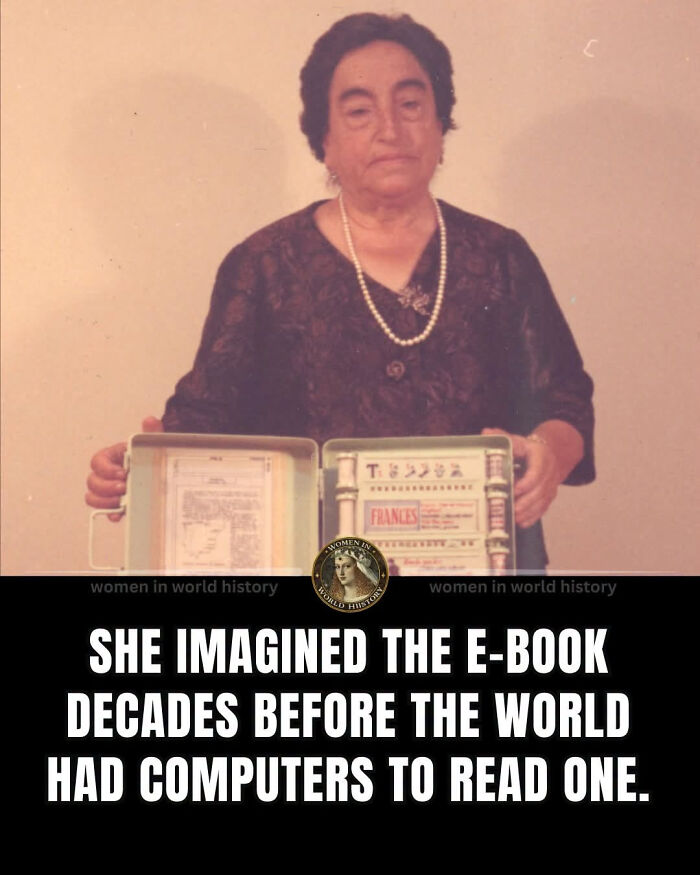
Image source: Women In World History
#32
When poison gas drifted across the battlefields of World War I, soldiers reached for an invention created by a woman many people had spent years insisting didn’t belong in science.
It wasn’t the achievement that made Hertha Ayrton remarkable. It was how many times she refused to disappear before she ever made it.
Long before the war, electricity posed a frustrating mystery. Electric arc lamps illuminated streets, factories, and public spaces, but they flickered unpredictably, hissed loudly, and often failed without warning. Engineers struggled to explain why.
Ayrton became obsessed with the problem. Rather than accepting the conventional wisdom, she conducted painstaking experiments that revealed the instability came from the behavior of the carbon electrodes themselves. Her research transformed understanding of electric arcs, making lighting systems more reliable and influencing electrical engineering for decades.
Recognition, however, arrived slowly.
Despite becoming one of Britain’s leading electrical researchers, Ayrton encountered barriers her male colleagues never faced. She became the first woman to read her own paper before the Institution of Electrical Engineers and, in 1899, the first woman admitted as a full member. Yet when she was proposed for election to the Royal Society, she was ruled ineligible because, under the law at the time, married women could not be elected as Fellows.
Then history took another unexpected turn.
During World War I, poison gas became one of the conflict’s most terrifying weapons. Ayrton designed a simple hand-operated fan that could quickly disperse deadly gas from trenches. Thousands were produced and distributed to British forces, giving soldiers a practical tool against an invisible threat.
Hertha Ayrton never commanded an army or held political office. She solved problems that others overlooked, challenged assumptions that others accepted, and quietly left her fingerprints on both modern engineering and wartime survival. Sometimes the people who change history aren’t the loudest voices in the room—they’re the ones who refuse to stop asking why.
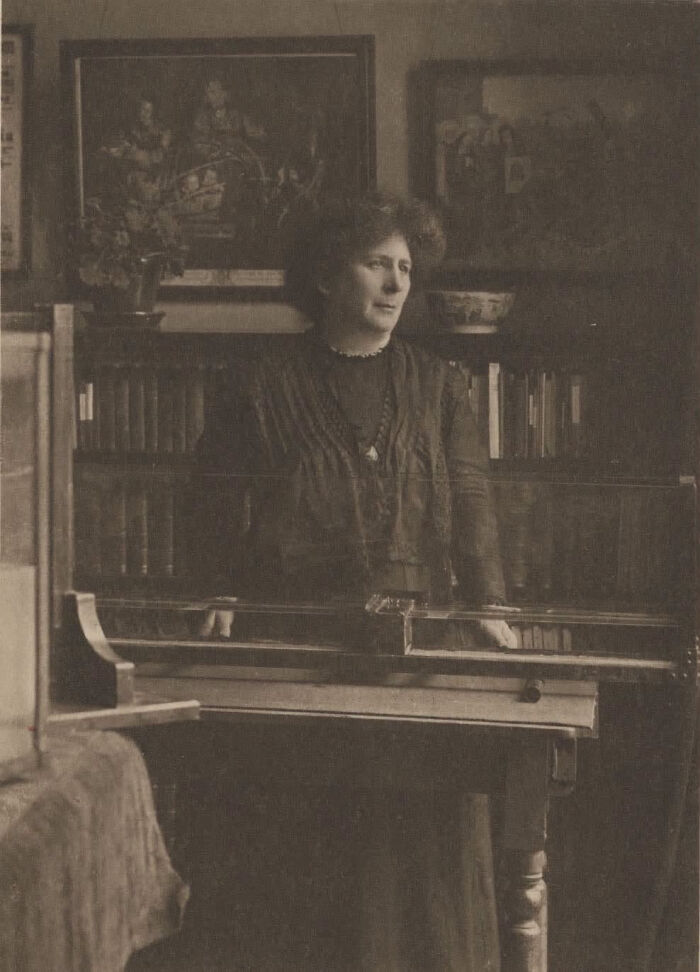
Image source: Women In World History
#33
One appointment in 1912 quietly changed the history of the American government.
When Julia Lathrop was chosen to lead the newly created U.S. Children’s Bureau, she became the first woman ever appointed to head a federal bureau. Today that sounds historic. At the time, it sounded improbable.
The federal government had never entrusted a woman with directing a national agency. Yet Lathrop had already earned a reputation for tackling problems that many people preferred not to see.
Working alongside the reformers at Chicago’s Hull House, she immersed herself in the realities of overcrowded neighborhoods, child labor, neglected children, and a justice system that often treated young offenders as miniature adults. She believed children deserved protection before punishment, and that good public policy should be built on evidence rather than assumptions.
That philosophy shaped everything she did.
Under her leadership, the Children’s Bureau became one of the first federal agencies to systematically collect data on infant mortality, maternal health, and child welfare. At a time when many births and deaths went unrecorded, Lathrop insisted that statistics could save lives. The numbers revealed uncomfortable truths, and they gave reformers the evidence they needed to push for safer childbirth, better sanitation, and stronger protections for children.
Some of her work drew criticism. Others dismissed the idea that Washington should concern itself with babies and mothers at all. Lathrop remained remarkably steady, convinced that a nation’s future could be measured by how it cared for its youngest citizens.
Many Americans have never heard her name, yet countless policies protecting children trace part of their origin to the questions she insisted the country could no longer ignore. Sometimes the most enduring revolutions don’t begin with speeches or headlines—they begin with someone deciding that overlooked lives are finally worth counting.
Image source: Women In World History
#34
When Patricia Bath was a child growing up in Harlem, she noticed something that would shape the rest of her life. Patients in poorer neighborhoods were far more likely to lose their eyesight than those in wealthier communities. Rather than accepting that inequality, she decided to spend her life changing it.
Bath became one of the first Black women to complete a residency in #ophthalmology in the United States and later became the first woman to chair an ophthalmology residency program. Throughout her career, she refused to separate medicine from social justice, arguing that vision care should be a basic human right rather than a privilege.
Her greatest breakthrough came in the 1980s with the invention of the Laserphaco Probe, a device that used laser technology to remove cataracts with greater precision before replacing the damaged lens. The innovation made cataract surgery safer and more effective, restoring sight to patients who had often been considered untreatable. In 1988, Bath became the first Black woman physician in the United States to receive a patent for a medical invention.
But her influence extended far beyond the operating room. She co-founded the American Institute for the Prevention of Blindness, promoted community eye screening programs around the world, and championed what she called “community ophthalmology”—bringing quality eye care to underserved populations instead of waiting for patients to come to hospitals.
Millions of people have benefited from advances in cataract surgery, and countless young physicians have followed a path that Bath helped open. She didn’t just restore vision. She changed who had the opportunity to see, to heal, and to imagine a future that once seemed impossible.
Image source: Women In World History
#35
For more than two decades, one woman quietly helped change the future of medicine.
Her name was Andromachi Papanikolaou. While her husband, Greek physician Georgios Papanikolaou, worked to develop a reliable method for detecting cervical cancer before symptoms appeared, Andromachi volunteered herself as his research subject.
Day after day. Year after year.
For approximately 21 years, she underwent cervical smear testing so he could refine what would eventually become the Pap test. It was repetitive, uncomfortable, and offered her no personal fame. She did it because she believed the work mattered.
That extraordinary act of trust and commitment helped transform women’s healthcare forever.
Before the Pap test, cervical cancer was one of the leading causes of cancer deaths among women. The ability to detect abnormal cells before they became life-threatening changed everything. Over the decades, routine screening has prevented countless cases of invasive cancer and saved millions of lives around the world.
History usually remembers Georgios Papanikolaou for the breakthrough, and rightly so. But behind one of medicine’s greatest advances stood a woman who quietly gave her own body, her patience, and more than two decades of unwavering support to make that breakthrough possible.
Scientific discoveries are rarely the work of one person alone. Sometimes they’re built on the dedication of someone whose name almost disappeared from history.
Andromachi Papanikolaou never accepted a Nobel Prize, never became famous, and never sought recognition.
Yet every woman whose life has been protected by a Pap test is part of her legacy.
Image source: Women In World History
#36
Most adults would have ignored it.
A 9-year-old girl decided to investigate.
After using a public restroom hand dryer, Nora Keegan noticed her ears were ringing. She also saw other children covering their ears whenever the machines turned on. Instead of assuming that was normal, she asked a simple question:
Could these hand dryers actually be too loud for children?
With help from her parents, Nora spent the next several years measuring the sound levels of hand dryers in libraries, restaurants, arenas, and other public places. She tested them from different heights and distances, recognizing that a child’s ears are much closer to the machines than an adult’s.
Her findings were startling.
Many high-speed hand dryers exceeded 100 decibels—far louder than manufacturers claimed and well above levels considered safe for repeated exposure in children. Some were loud enough to leave users with ringing ears after only brief use.
What began as a fifth-grade science project didn’t end at the science fair. Nora kept collecting data, refining her methods, and expanding her research. Nearly four years after asking that first question, her study was accepted for publication in the Canadian medical journal Paediatrics & Child Health—an achievement few adults ever accomplish.
The research attracted international attention, and Dyson even invited Nora to speak with one of its acoustic engineers about designing quieter hand dryers.
It’s a powerful reminder that scientific breakthroughs don’t always begin in a laboratory. Sometimes they begin with a child who notices something everyone else has learned to ignore—and refuses to stop asking why.
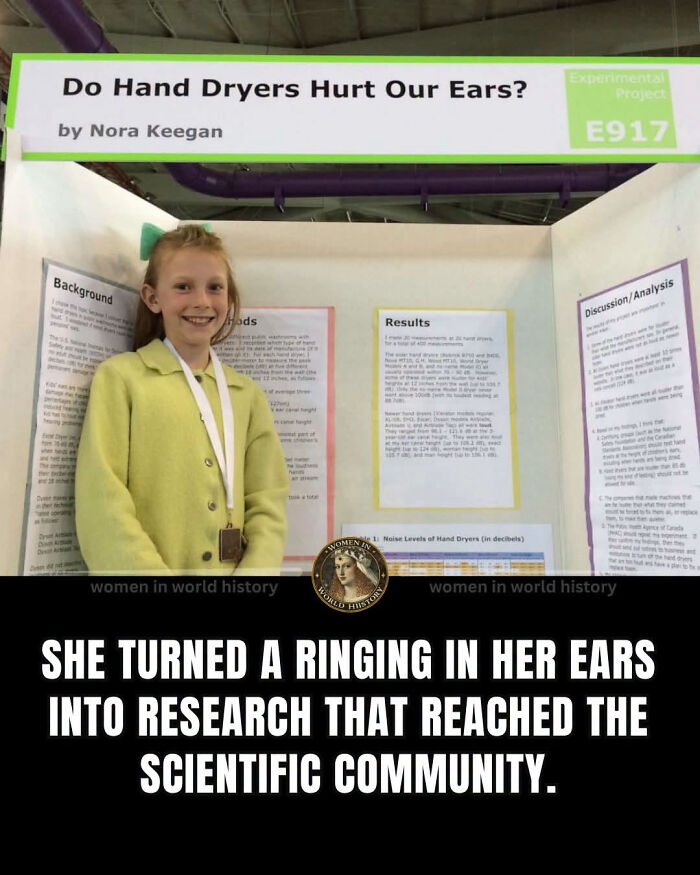
Image source: Women In World History
#37
Long before American women could cast a ballot, one woman was quietly helping build an institution that would shape the lives of hundreds of thousands of women.
Eliza R. Snow became one of the most influential women in early Mormon history, though her name is far less recognized today than many of the men who surrounded her. A gifted writer, educator, and organizer, she was known throughout the faith as “Zion’s Poetess,” using her poetry and hymns to strengthen a growing religious movement. She also became one of the plural wives of Joseph Smith, a role that placed her at the center of one of the most controversial chapters in Latter-day Saint history.
After Smith’s death, Snow emerged as one of the leading female voices in Utah. At a time when women in most of the United States had little formal political influence, she helped revive and expand the Relief Society, the women’s organization of the Church. Under her leadership, it grew into a powerful network that encouraged education, organized charitable work, trained midwives, promoted women’s healthcare, and gave women opportunities to lead long before leadership roles for women were common elsewhere.
Snow also traveled extensively throughout Mormon settlements, encouraging local women to organize, publish, learn, and serve their communities. She supported women’s publications, advocated for greater educational opportunities, and helped establish institutions that gave women practical skills alongside spiritual instruction.
Her legacy remains deeply complex. Admirers view her as one of the architects of one of the largest women’s organizations in the world and a pioneer of female leadership in the American West. Critics point out that her life was inseparable from the practice of plural marriage, an institution that continues to spark intense debate.
Whether celebrated or questioned, Eliza R. Snow’s influence is impossible to ignore. She helped create a space where thousands of women found purpose, education, community, and leadership decades before American women won the right to vote. Few women of the nineteenth century left a footprint quite as large.
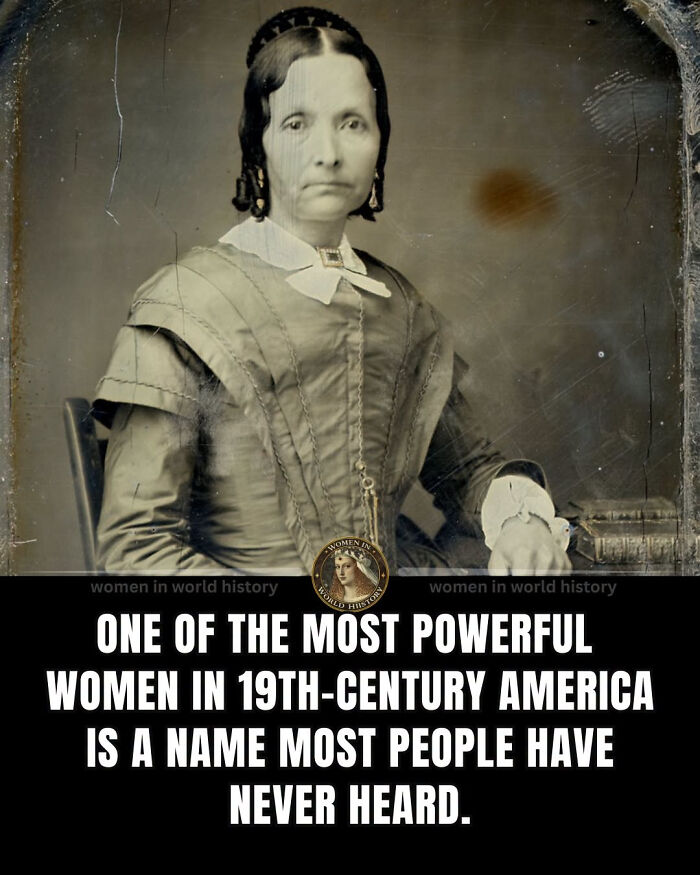
Image source: Women In World History
#38
Helen Keller’s birthday is often marked with the same familiar story: a little girl who overcame extraordinary obstacles with the help of her teacher, Anne Sullivan.
But that’s only the opening chapter.
As an adult, Keller became one of the most politically outspoken women in America. She fought for women’s suffrage, championed disability rights decades before the movement had a name, supported workers during brutal labor disputes, and openly embraced socialism. She argued that poverty, dangerous factory conditions, and inequality created disability just as surely as disease or accident.
Her political views shocked many of the same newspapers that had once celebrated her. Publications that praised her intelligence when she spoke about perseverance suddenly questioned her judgment when she criticized capitalism. Keller noticed the contradiction herself, pointing out that she was considered brilliant when people agreed with her and supposedly incapable of independent thought when they didn’t.
She refused to soften her message. She wrote books, delivered speeches around the world, helped found organizations advocating for civil liberties, and spent decades insisting that disability was not simply a personal challenge but a social issue demanding justice.
History often remembers Helen Keller as an inspiring symbol of triumph over adversity.
She spent much of her life trying to be remembered as something far more dangerous: a woman determined to change the world, not just adapt to it.
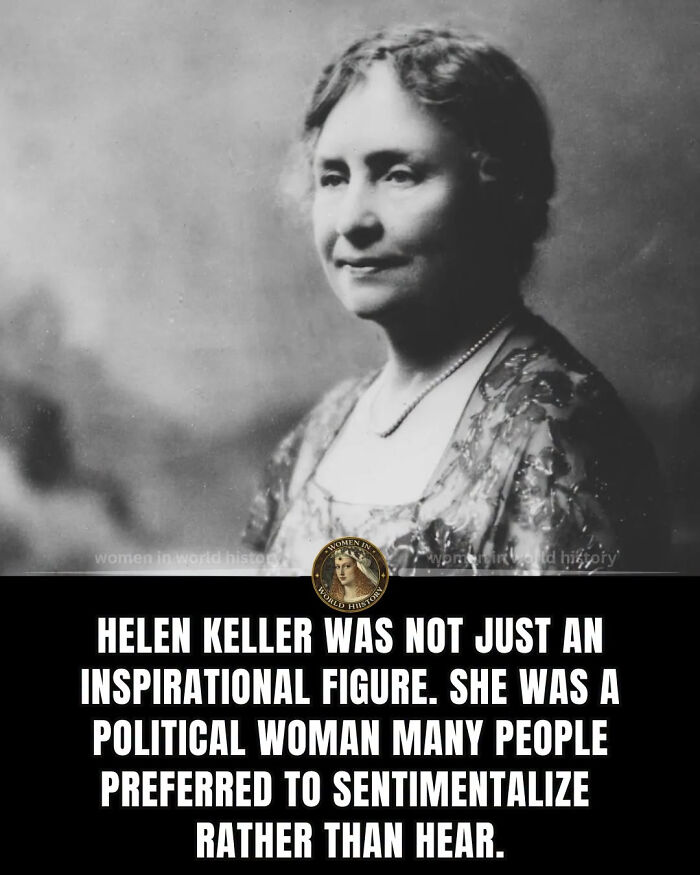
Image source: Women In World History
#39
Pearl S. Buck spent her life crossing worlds. Born on June 26, 1892, in Hillsboro, she was only a few months old when her missionary parents took her to China, where she grew up speaking Chinese before English. While many Western writers viewed China as mysterious or exotic, Buck wrote about it from the perspective of ordinary people whose lives she had witnessed firsthand. Farmers, mothers, laborers, and families became the heart of her stories, giving millions of Western readers a rare glimpse into a society they knew almost nothing about.
That perspective changed her life. In 1931 she published The Good Earth, the sweeping story of a poor Chinese farming family struggling through famine, fortune, and heartbreak. The novel became an international sensation, won the Pulitzer Prize for Fiction, and helped make Buck the first American woman ever awarded the Nobel Prize in Literature. Her work was praised not only for its storytelling, but for encouraging Western audiences to see Chinese people as fully human at a time when stereotypes often dominated popular culture.
Yet Buck’s legacy extends far beyond literature. Deeply moved by the discrimination faced by mixed-race and Asian children after the World War II era, she turned much of her energy toward humanitarian work. She founded adoption agencies that challenged the racial barriers of the time and advocated for children whom many organizations refused to place simply because of their heritage. She also established foundations dedicated to improving the lives of vulnerable children around the world.
Pearl S. Buck’s story is more complex than that of a celebrated novelist. She became a cultural bridge between East and West, though modern scholars continue to debate how accurately her work represented China and how much it reflected Western expectations. That conversation has only added to her significance. Her books, activism, and willingness to confront prejudice remind us that stories have the power not only to entertain, but to shape how entire cultures see one another.
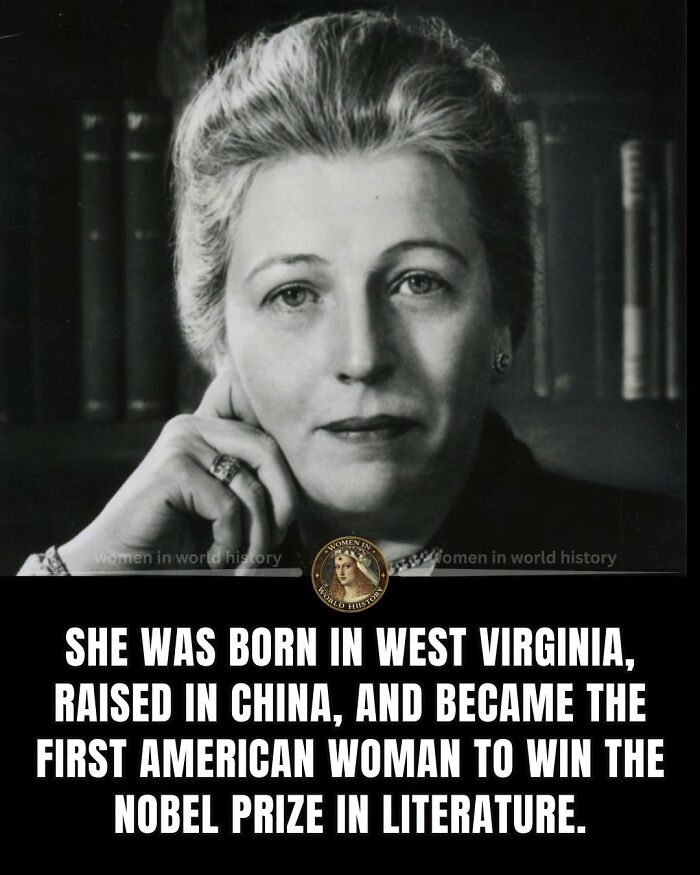
Image source: Women In World History
#40
In 1909, most Americans had never driven a car across town.
Alice Huyler Ramsey drove one across an entire continent.
At just 22 years old, Ramsey set out from New York City with three female passengers in a Maxwell automobile. Their destination was San Francisco, nearly 3,800 miles away. Today the trip would take a few days. In 1909, it was considered almost impossible.
There were no interstate highways. Few reliable road maps existed. Much of the route was dirt, sand, mud, or wagon tracks. Gas stations were scarce. Road signs were often nonexistent.
Many people believed a woman had no business attempting such a journey.
Ramsey proved them wrong one mile at a time.
During the 59-day expedition, she battled mechanical failures, changed 11 tires, repaired breakdowns, and endured roads so poor that the car frequently became trapped in mud. At times the women slept in the vehicle because conditions made travel impossible. To stay on course, Ramsey often navigated by following telephone poles stretching toward the horizon.
She crossed deserts, mountains, rivers, and vast stretches of countryside at a time when automobiles themselves were still a novelty.
What makes the achievement even more remarkable is how calmly she approached it. Ramsey was not trying to become a celebrity or make a political statement. She simply believed she could do it.
And she did.
When the group finally arrived in San Francisco, Alice Huyler Ramsey became the first woman to drive across the United States.
History often celebrates explorers who crossed oceans and climbed mountains. Yet one of the greatest journeys of the early automobile age was accomplished by a young woman steering through mud, dust, breakdowns, and doubt.
The road was barely there.
Neither was society’s belief in what women could accomplish.
Alice Ramsey ignored both and kept driving.
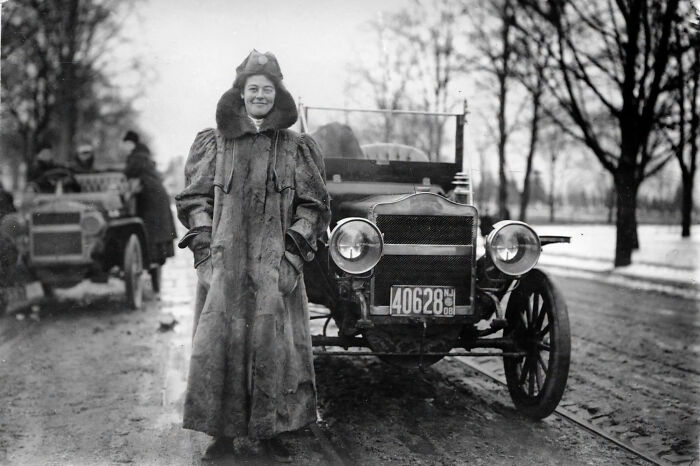
Image source: Women In World History
#41
In the early 1950s, French writer Anne Desclos found herself in an unusual argument.
Her lover, publisher Jean Paulhan, admired the works of the Marquis de Sade and insisted that women were incapable of writing truly erotic literature. According to him, only men could explore desire, obsession, power, and surrender with sufficient intensity.
Desclos decided to prove him wrong.
Secretly, she began writing a novel unlike anything she had ever published. Working under the pseudonym Pauline Réage, she crafted the story of O, a woman who willingly enters a world of submission, devotion, and erotic discipline. The manuscript was originally intended as a private gift for Paulhan.
Instead, it became a literary sensation.
Published in 1954 as *Story of O*, the novel shocked readers across France. Some considered it art. Others considered it dangerous. The book’s explicit sadomasochistic themes sparked outrage, drew enormous public attention, and quickly became one of the most controversial novels of the twentieth century.
The reaction grew so intense that French authorities pursued obscenity charges against the publisher. Debates erupted over censorship, morality, sexuality, and whether the novel degraded women or represented a radical expression of female desire.
Yet the greatest mystery surrounded its author.
For decades, nobody knew who Pauline Réage really was. Literary critics, journalists, and readers speculated endlessly. Some doubted a woman had written the book at all. Others assumed the mysterious author was actually a man hiding behind a female name.
The truth remained hidden for nearly forty years.
Only in the 1990s did Anne Desclos finally reveal that she had been Pauline Réage all along.
The woman who had been told women couldn’t write erotic literature had responded by writing one of the most famous, controversial, and debated erotic novels ever published.
Not bad for a manuscript that began as an argument.
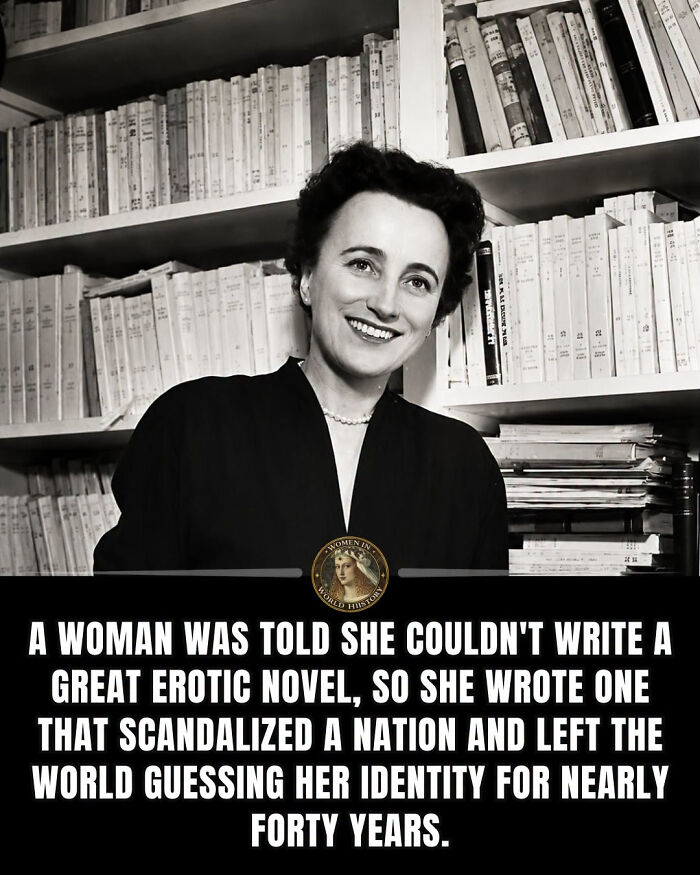
Image source: Women In World History
#42
Most people know Helen as “the face that launched a thousand ships.” What they don’t realize is that ancient writers couldn’t even agree on whether she was guilty of anything.
For centuries, Helen became the ultimate scapegoat.
According to the traditional story, she abandoned her husband, King Menelaus, and ran away with Paris of Troy, triggering a war that lasted ten years and left thousands dead. In later literature, she was blamed for burned cities, ruined kingdoms, and countless deaths. Some ancient authors portrayed her as vain, selfish, and dangerously irresistible.
But not everyone accepted that version.
One of the most fascinating defenses of Helen came from the sophist Gorgias in the 5th century BC. In his Encomium of Helen, he argued that she should not be blamed at all. If the gods compelled her, she was innocent. If she was abducted by force, she was a victim. If she was persuaded by speech, then language itself was powerful enough to overwhelm human judgment. And if she fell in love, who could resist the power of Aphrodite?
In every scenario, Gorgias concluded that Helen deserved sympathy rather than condemnation.
Then the story became even stranger.
Another tradition claimed Helen never went to Troy in the first place.
According to the poet Stesichorus and later the playwright Euripides, the real Helen spent the war safely in Egypt. The woman in Troy was merely a phantom, an image created by the gods. Greek and Trojan warriors spent ten years slaughtering one another over a woman who wasn’t even there.
It’s one of the oldest “fake news” stories in literature.
This version transformed Helen from a villain into a tragic figure whose reputation was destroyed by events beyond her control.
More than 2,500 years later, Helen remains one of the most debated women in Western literature. Was she a willing participant, a victim of divine manipulation, a political pawn, or simply a woman onto whom generations projected their fears about beauty, desire, and power?
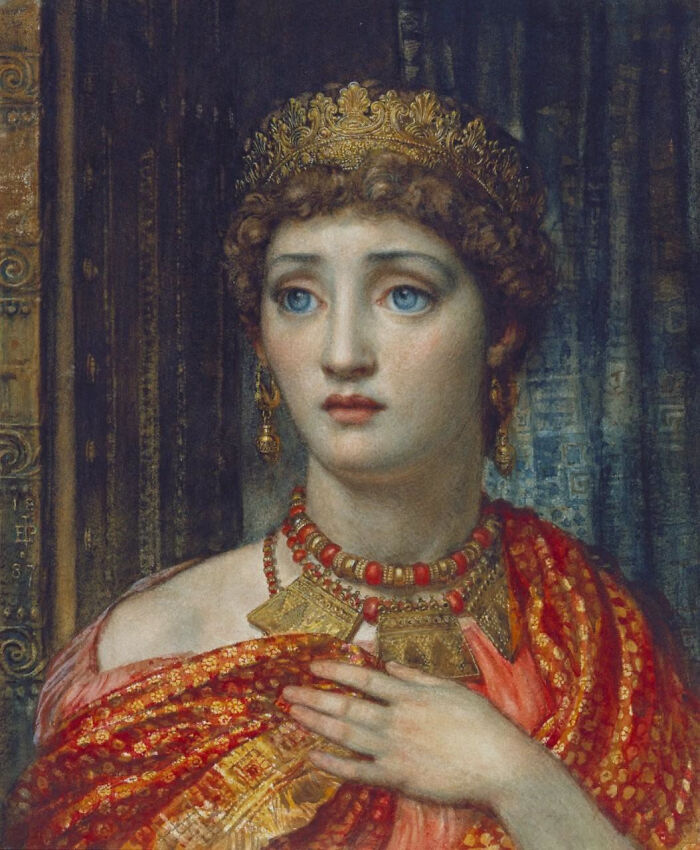
Image source: Women In World History
#43
For centuries, pilgrims traveled across the Mediterranean to honor a woman who was never mentioned in the Bible.
Her name was Thecla.
According to early Christian tradition, Thecla was a young noblewoman living in Iconium during the first century. She was engaged to be married and expected to follow the path laid out for women of her status: marriage, children, and obedience to family expectations.
Then she heard the preaching of Paul the Apostle.
The message changed her life.
Captivated by his teachings, Thecla refused to marry her fiancé and declared that she would devote herself entirely to God. Her family was horrified. Her rejected fiancé was furious. Local authorities saw her behavior as scandalous and dangerous.
She was arrested and sentenced to be burned alive.
But according to the story, a sudden storm erupted before the flames could consume her, extinguishing the fire and allowing her to escape.
That was only the beginning.
Later, after continuing to preach and travel, Thecla was condemned again—this time to face wild beasts in a public arena. Crowds gathered to watch her die. Yet legend says the animals refused to attack her. A lioness reportedly defended her from other beasts, while a series of extraordinary events repeatedly spared her life.
Each failed execution only increased her fame.
As Christianity spread, Thecla became one of the most revered female saints in the ancient world. Churches were dedicated to her. Pilgrims visited shrines bearing her name. Stories portrayed her as a fearless woman who rejected social expectations, chose her own path, and survived every attempt to silence her.
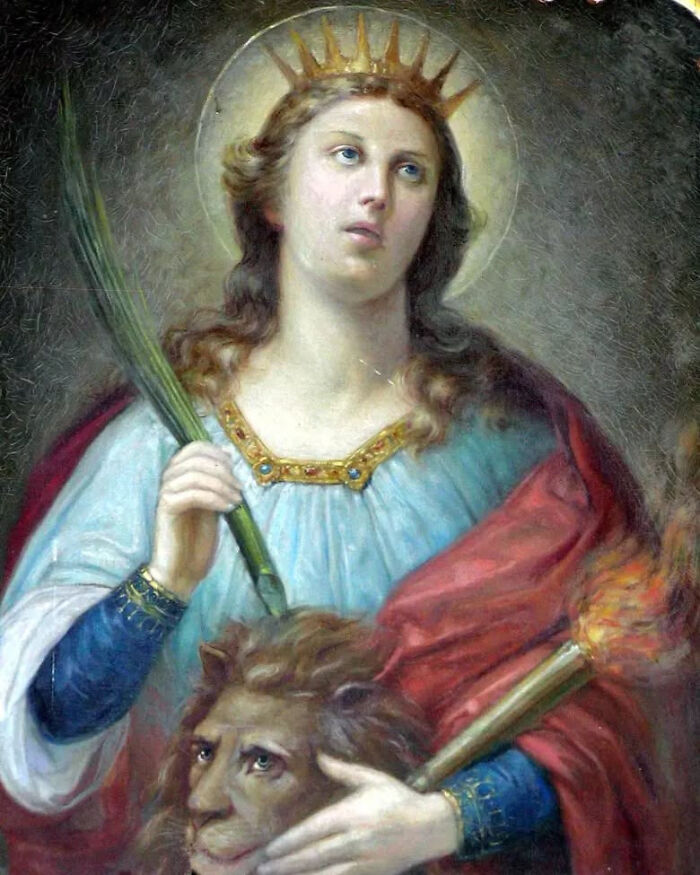
Image source: Women In World History
#44
Few figures from ancient Greece stand at the crossroads of history and legend quite like Telesilla of Argos. Celebrated as one of antiquity’s most respected lyric poets, she became famous not only for her verses but for a story that transformed her into a symbol of courage.
According to ancient accounts, Telesilla lived in the city of Argos around the early 5th century BCE. As the story goes, she had been in poor health when an oracle advised her to devote herself to poetry. She did—and soon gained a reputation for her talent, composing works that earned admiration throughout Greece.
But it was a crisis that secured her place in history. After a devastating military defeat left many of Argos’s fighting men dead, the neighboring Spartans threatened the vulnerable city. Ancient writers claim that Telesilla stepped forward during the emergency, helping organize the city’s defense. Women, elderly men, and even enslaved people were reportedly armed and positioned along the walls. When the Spartans arrived expecting an easy victory, they encountered a city prepared to resist. Whether deterred by the unexpected defenses or unwilling to risk heavy losses, the attackers withdrew.
The details remain debated by historians. Some view the tale as a patriotic legend embellished over time, while others believe it may preserve the memory of a real crisis in which Argive women played an extraordinary role. What is certain is that later generations embraced Telesilla as a civic heroine. Statues were erected in her honor, depicting her holding a helmet while surrounded by scrolls—a powerful image that united intellect and action.
More than 2,500 years later, Telesilla remains a fascinating reminder that history often preserves women in unexpected ways: as poets, thinkers, leaders, and sometimes as defenders standing between a city and disaster.
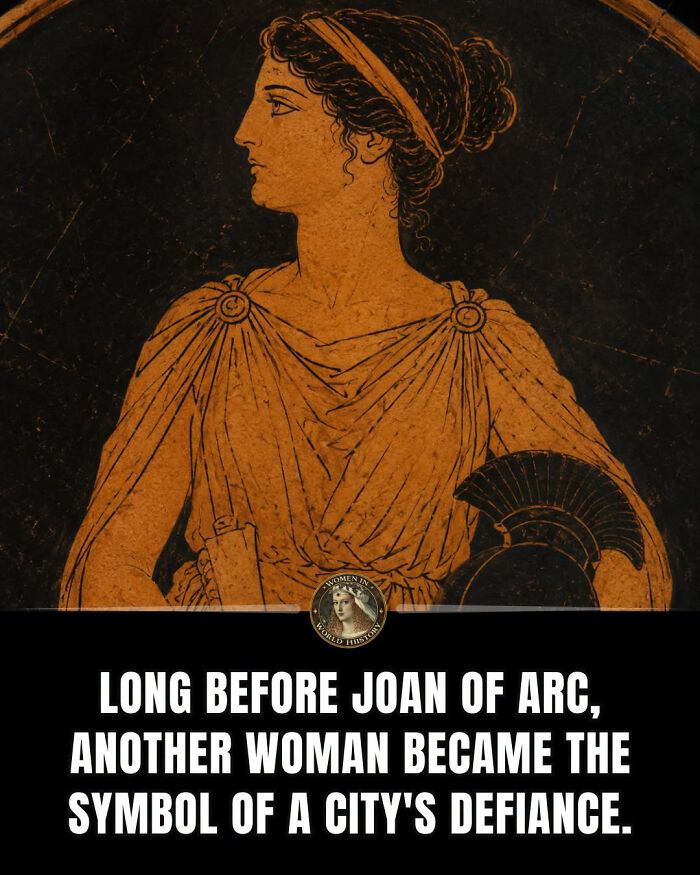
Image source: Women In World History
#45
At the turn of the twentieth century, New York City was losing thousands of infants every year. In the crowded tenements of the Lower East Side and other immigrant neighborhoods, poverty, unsafe milk, poor sanitation, and limited access to medical care made childhood a dangerous struggle for survival. Many people accepted these deaths as inevitable. Dr. Sara Josephine Baker refused to.
Born in 1873, Baker became one of America’s most influential public health physicians at a time when few women entered the profession. Working for New York City’s Department of Health, she focused on a simple but revolutionary idea: preventing illness was often more effective than treating it after the fact.
Rather than waiting in hospitals for sick children to arrive, Baker went directly into the neighborhoods where families needed help most. She organized teams of nurses who visited mothers in their homes, teaching practical lessons about infant care, nutrition, hygiene, and disease prevention. She established baby health stations where mothers could receive guidance and safe milk for their children.
One of her most famous achievements was helping reduce infant mortality through campaigns that promoted pasteurized milk and proper feeding practices. She also created systems to monitor newborns and identify children who needed medical attention before minor problems became deadly.
Baker’s work produced remarkable results. During her career, New York City’s infant death rate dropped dramatically, saving countless young lives. She often battled bureaucracy, political resistance, and public skepticism, but she persisted because the numbers told a clear story: children were surviving.
Her impact extended beyond New York. Baker became the first director of the Bureau of Child Hygiene and later advised governments and organizations on public health policy. By the time she retired, many of the practices she championed had become standard.
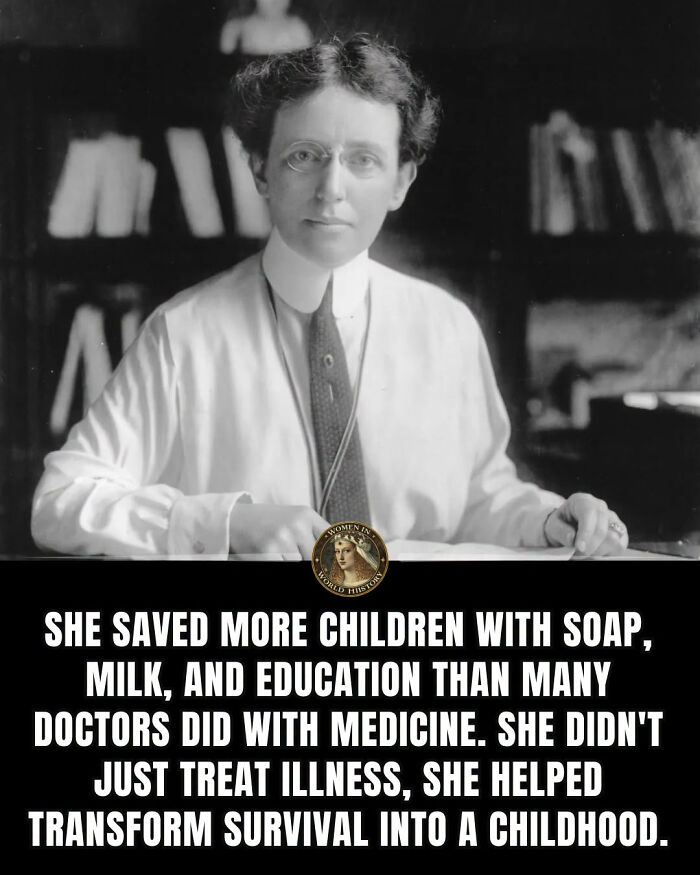
Image source: Women In World History
#46
In 1850, German architect Carl Weber sat for a photograph beside his wife Emily. At first glance, it appears to be a formal Victorian portrait. The reality is far more haunting: Emily had died only hours earlier.
Today, images like this can feel unsettling, but in the nineteenth century post-mortem photography was a deeply meaningful act of remembrance. Photography was still new, expensive, and inaccessible to many families. For countless people, a photograph taken after death might be the only image they would ever possess of a loved one.
Emily was carefully posed upright, likely supported by hidden braces, dressed neatly and presented with dignity. Beside her sits Carl, his expression solemn and restrained. Victorian culture placed great importance on mourning rituals, and grief was often expressed publicly through clothing, jewelry, memorial objects, and photographs. Rather than being viewed as morbid, these images were cherished keepsakes that helped families preserve a final connection to those they had lost.
The photograph was created using the daguerreotype process, the first commercially successful form of photography. The technique produced remarkably detailed images on silver-coated copper plates, allowing moments like this to survive for generations.
More than 170 years later, the portrait remains a powerful reminder of how differently people once confronted death. In an age when mortality was a familiar part of everyday life, photographs were not only records of the living.
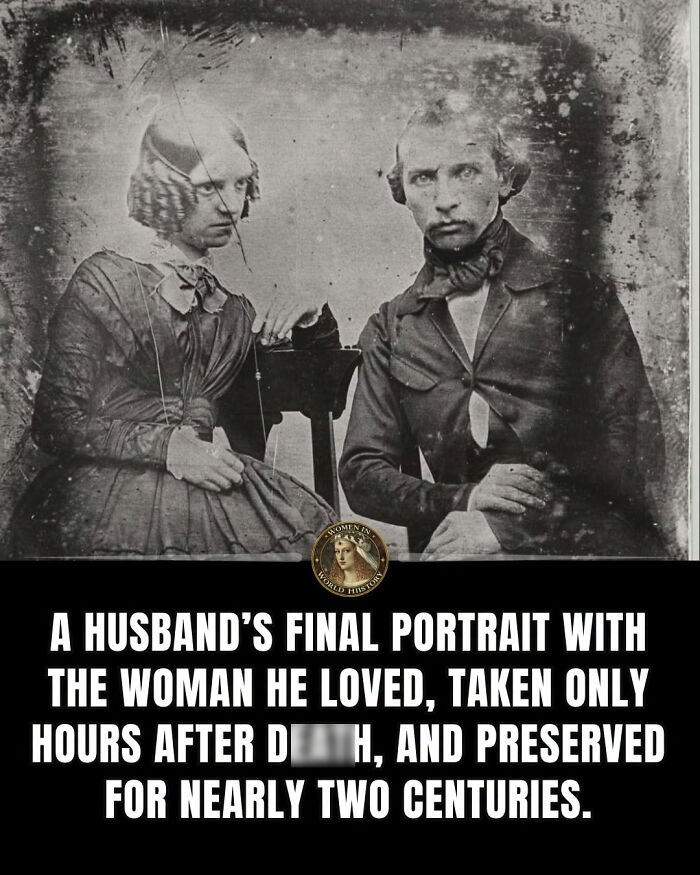
Image source: Women In World History
#47
Long before Silicon Valley became synonymous with technology, a young woman from rural Missouri helped program one of the most important machines ever built.
Jean Bartik was born in 1924 and grew up on a farm where opportunities for women in mathematics were limited. Fascinated by numbers, she studied mathematics at Northwest Missouri State Teachers College and graduated at a time when World War II was transforming both society and technology. In 1945, she joined the University of Pennsylvania as a human “computer,” one of many women hired to perform the tedious calculations needed to produce artillery firing tables for the U.S. Army.
The work demanded extraordinary precision. Before electronic computers existed, these calculations were performed by hand or with mechanical calculators, and a single mistake could affect battlefield accuracy. But Bartik’s career was about to take an unexpected turn.
When the Army funded the construction of the Electronic Numerical Integrator and Computer—better known as ENIAC—six women were selected to program it. Bartik was one of them. The challenge was unlike anything that had existed before. There were no programming languages, manuals, or computer science courses. The women had to study engineering diagrams, understand the machine’s logic, and determine how to make thousands of electronic components work together to solve complex mathematical problems.
Programming ENIAC meant physically configuring the machine. Bartik and her colleagues connected cables, adjusted switches, and rewired panels to create instructions. What they were doing would later become known as software development, but at the time the field did not even have a name.
When ENIAC debuted in 1946, it could perform calculations thousands of times faster than human operators. The achievement marked the beginning of the computer age. Yet while the machine became famous, the women who programmed it were largely overlooked for decades. Photographs often identified them as models or assistants rather than the experts who made the computer function.
Every smartphone, laptop, and digital device in use today traces part of its lineage back to the groundbreaking work she and her colleagues performed in a room filled with wires, switches, and possibility.

Image source: Women In World History
#48
On June 25, 1993, Kim Campbell shattered one of Canada’s highest political barriers when she was sworn in as the country’s first female prime minister.
A lawyer, former university lecturer, and experienced cabinet minister, Campbell had already made history as Canada’s first female minister of justice and attorney general. When she succeeded Brian Mulroney as leader of the Progressive Conservative Party, she became the first—and remains the only—woman to serve as Canada’s head of government.
Her time in office lasted just 132 days. She inherited a deeply unpopular government, a struggling economy, and a party facing widespread public anger. In the federal election that followed, the Progressive Conservatives suffered one of the most devastating defeats in Canadian political history, falling from a governing majority to only two seats.
Campbell’s tenure was brief, but its significance was not. Her rise proved that the office of prime minister was no longer exclusively reserved for men, even as her defeat revealed how unforgiving political leadership can be—especially for anyone expected to represent change while carrying the burden of an unpopular government.
On this day, Kim Campbell stepped through a door no Canadian woman had entered before her. More than three decades later, Canada is still waiting for a second woman to follow.
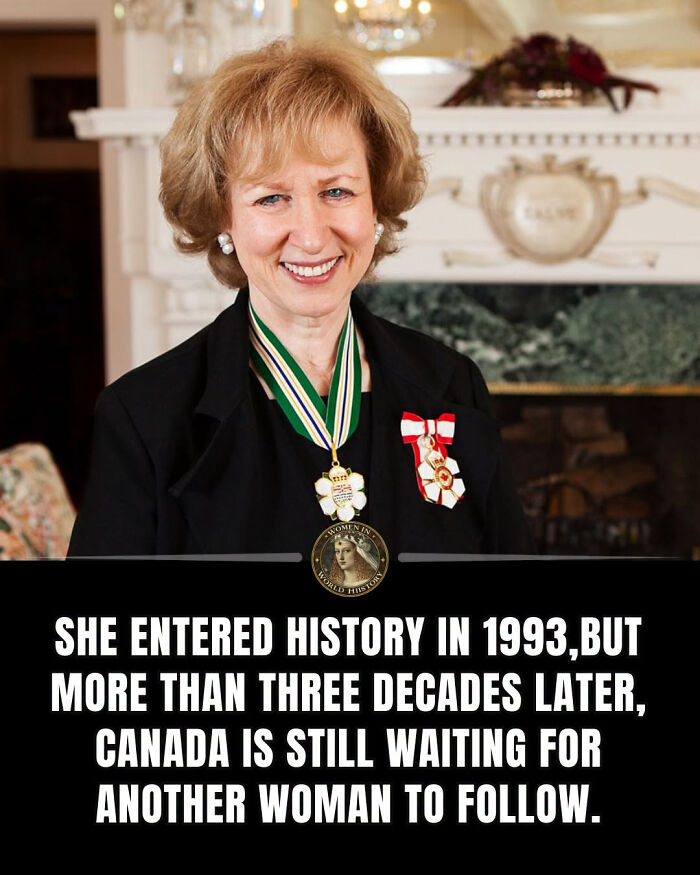
Image source: Women In World History
#49
Before the world knew her as the fastest woman alive, Wilma Rudolph was a little girl whose future seemed painfully uncertain.
Born on June 23, 1940, in rural Tennessee, Rudolph entered a world that offered her no advantages. She was born prematurely, one of 22 children, and spent much of her early childhood battling illness. Pneumonia, scarlet fever, and eventually polio left her with a weakened leg. Doctors doubted she would ever walk normally. For years she wore a brace and endured long trips for treatment, while her family refused to accept that her story had already been written.
Then something remarkable happened.
The girl who had struggled to walk became obsessed with movement. She played basketball, ran whenever she could, and discovered that determination sometimes outruns prediction. By her teens, coaches were noticing a speed that seemed almost impossible given where she had started.
At the 1960 Rome Olympics, Wilma Rudolph stunned the world.
She won gold in the 100 meters. Then gold in the 200 meters. Then a third gold as part of the 4×100-meter relay team. No American woman had ever achieved such a feat at a single Olympic Games. Suddenly, the child once confined by a leg brace had become the most celebrated sprinter on earth.
But her legacy extends beyond medals.
Rudolph returned home to Tennessee and insisted that celebrations in her honor be integrated at a time when segregation still shaped daily life. She understood that victory meant little if it could not open doors for others.
The image most people remember is a woman flying down a track. The more extraordinary image is the one that came before it: a child taking uncertain steps while the world predicted limits she would spend the rest of her life proving wrong.
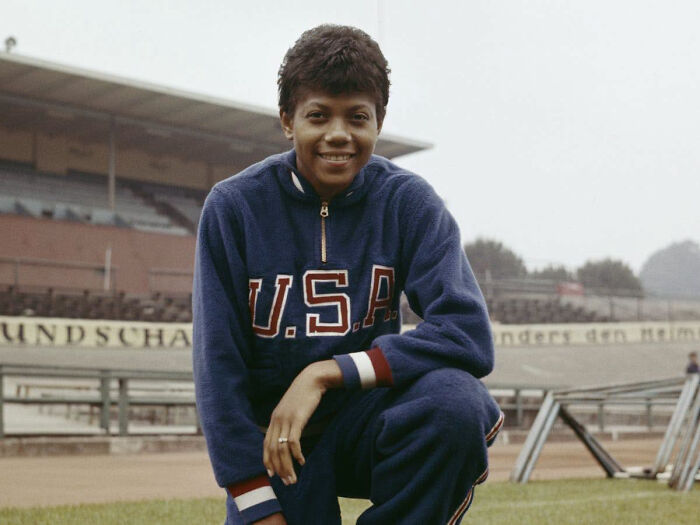
Image source: Women In World History
#50
In 1954, sixty-three-year-old Maine farmer Annie Wilkins embarked on an impossible journey. She had no money and no family, she had just lost her farm, and her doctor had given her only two years to live.
But Annie wanted to see the Pacific Ocean before she died. She ignored her doctor’s advice to move into the county charity home. Instead, she bought a cast-off brown gelding named Tarzan, donned men’s dungarees, and headed south in mid-November, hoping to beat the snow. Annie had little idea what to expect beyond her rural #crossroads; she didn’t even have a map. But she did have her ex-racehorse, her faithful mutt, and her own unfailing belief that #Americans would treat a stranger with kindness.
Annie, Tarzan, and her dog, Depeche Toi, rode straight into a world transformed by the rapid construction of modern highways. Between 1954 and 1956, the three travelers pushed through blizzards, forded rivers, climbed mountains, and clung to the narrow shoulder as cars whipped by them at terrifying speeds. Annie rode more than four thousand miles, through America’s big cities and small towns. Along the way, she met ordinary people and celebrities—from Andrew Wyeth (who sketched Tarzan) to Art Linkletter and Groucho Marx. She received many offers—a permanent home at a riding stable in New Jersey, a job at a gas station in rural #Kentucky, even a marriage proposal from a Wyoming rancher.
In a decade when car ownership nearly tripled, when television’s influence was expanding fast, when homeowners began locking their doors, Annie and her four-footed companions inspired an outpouring of neighborliness in a rapidly changing world.
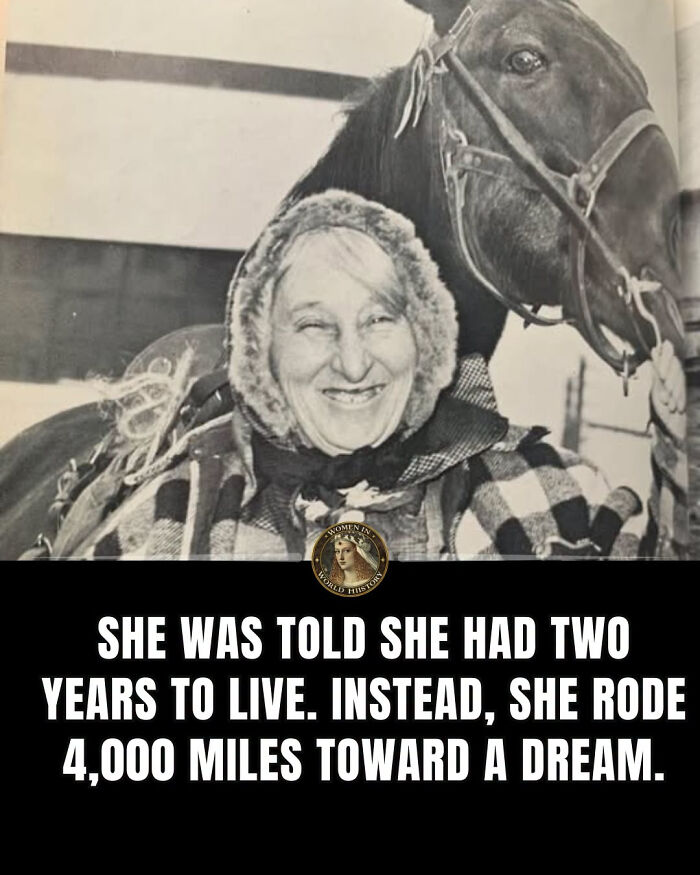
Image source: Women In World History
#51
Colette spent much of her life refusing to stay inside the boundaries other people drew for her—and that is exactly why she remains one of the most fascinating and controversial women of modern French history.
Born Sidonie-Gabrielle Colette in 1873, she first became famous through the wildly successful Claudine novels. The books were initially published under the name of her husband, Willy, who often claimed credit for work she largely wrote herself. When their marriage collapsed, Colette faced a difficult choice: disappear into obscurity or reinvent herself.
She chose reinvention.
She became a music-hall performer, journalist, novelist, actress, and celebrity at a time when respectable women were rarely expected to be any of those things. Paris was captivated by her independence, her wit, and her refusal to hide her personal life. Her relationships with both men and women became public gossip, especially her romance with Mathilde de Morny, an aristocratic socialite known as “Missy.” In 1907, the pair appeared together in the pantomime *Rêve d’Égypte* at the Moulin Rouge. When they kissed onstage, outraged spectators erupted into chaos. The scandal was so intense that authorities shut the production down after only a handful of performances.
Yet Colette kept writing.
Over the decades she produced some of France’s most celebrated novels, including *Gigi*, which would later inspire the famous musical and film. Her work explored desire, aging, jealousy, independence, and the complicated realities of women’s lives with an honesty that felt startlingly modern.
But Colette’s story is not an uncomplicated one. Among the most troubling episodes was her affair with her teenage stepson, Bertrand de Jouvenel. The relationship began when he was around sixteen and she was in her late forties. While it generated enormous scandal at the time, it is now widely viewed as an exploitative relationship that raises serious ethical concerns.
By the time of her death in 1954, Colette had become one of France’s most celebrated literary figures and the first French woman to receive a state funeral. Her legacy endures not because she was flawless, but because she was brilliant, influential, contradictory, and impossible to ignore.
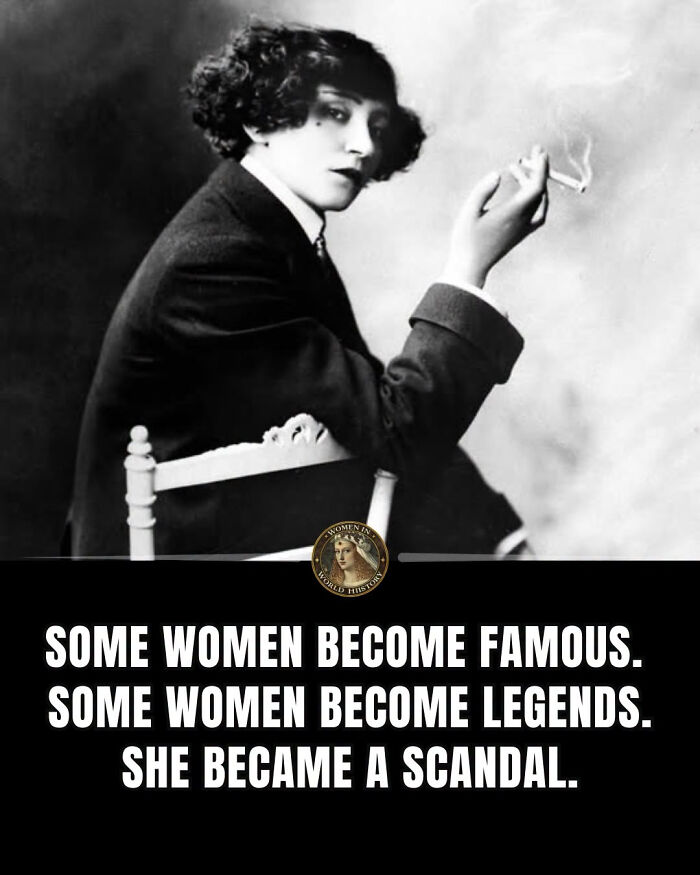
Image source: Women In World History
#52
Most people remember Nancy Astor because of her legendary feud with Winston Churchill.
The insults were unforgettable.
“If I were your wife, I’d poison your tea.”
“If I were your husband, I’d drink it.”
and
“Winston, you’re drunk.”
To which Churchill famously replied:
“My dear, you are ugly, but tomorrow I shall be sober and you will still be ugly.”
The exchange became one of the most famous political comebacks in history.
But reducing Nancy Astor to a witty quote misses the far more remarkable story.
She was born in Virginia in 1879, into a family devastated by the aftermath of the American Civil War. Her first marriage ended in divorce at a time when divorced women often faced social ruin. Seeking a fresh start, she moved to England, married wealthy businessman Waldorf Astor, and entered a world that was almost entirely controlled by men.
Then history unexpectedly opened a door.
In 1919, when her husband inherited a title and moved to the House of Lords, his seat in the House of Commons became vacant. Nancy decided to run for it herself.
The idea seemed absurd to many people.
Women in Britain had only recently gained limited voting rights. Parliament was still overwhelmingly male. Politics was considered no place for a woman, especially one who was outspoken, opinionated, and unwilling to stay quiet.
She won.
Nancy Astor became the first woman to take her seat in the British House of Commons.
Not the first woman elected, but the first woman to actually walk into Parliament, sit among hundreds of men, and demand to be heard.
The experience was rarely pleasant. She endured ridicule, hostility, and constant scrutiny. Critics attacked her voice, her appearance, her accent, and her presence itself. Yet she remained there for more than two decades.
Her record was complicated. Some of her views have drawn significant criticism from historians, and parts of her legacy remain controversial. But her achievement cannot be ignored.
Long before women were common in government, Nancy Astor forced her way into one of the most powerful political institutions in the world.
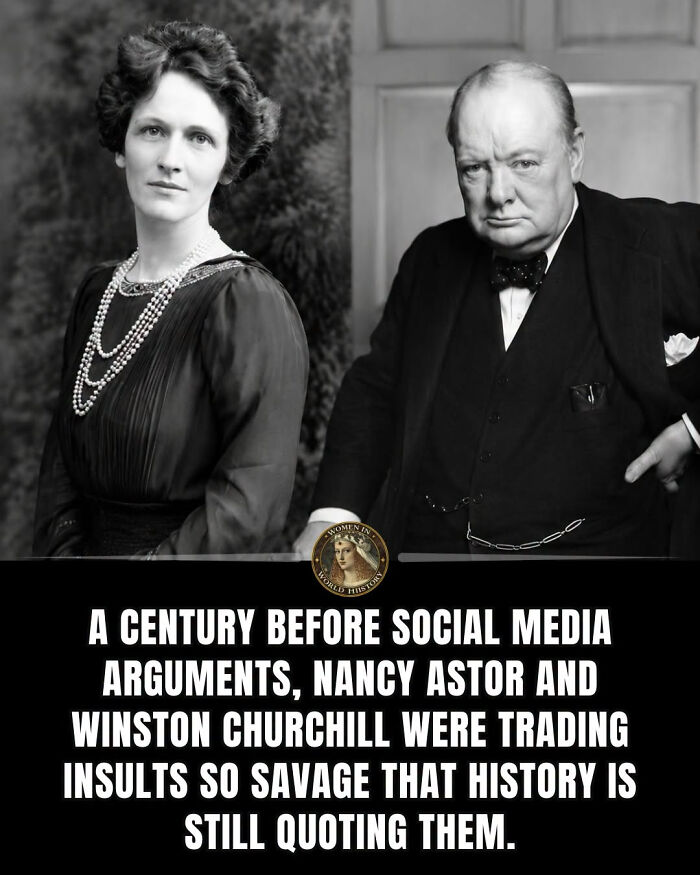
Image source: Women In World History
#53
Raden Ajeng Kartini was born into privilege, but privilege did not mean freedom.
Born in 1879 on the island of Java in what is now Indonesia, Kartini was the daughter of a local aristocrat under Dutch colonial rule. As a child, she attended school and showed an extraordinary hunger for learning. Then, at age 12, her education abruptly ended.
According to Javanese custom, noble girls were expected to enter a period of seclusion before marriage. While her brothers continued their studies, Kartini was largely confined to her home, cut off from the world she longed to explore.
Many people would have accepted their fate.
Kartini did not.
Unable to attend school, she educated herself. She read books, newspapers, and magazines. She corresponded with Dutch friends and intellectuals, filling letter after letter with questions about education, women’s rights, poverty, religion, and the future of her country.
What makes her story remarkable is that she was fighting two powerful systems at once: colonial inequality and restrictions placed on women within her own society.
She never called for the destruction of her culture. Instead, she imagined a future where girls could be educated, think independently, and participate more fully in public life.
In 1903, she married, but continued advocating for women’s education and even opened a school for girls. Tragically, she died the following year at just 25 years old, only days after giving birth to her first child.
Most reformers spend decades building a legacy.
Kartini had barely reached adulthood.
After her death, her letters were published and became a sensation. They inspired generations of Indonesians and helped turn girls’ education into a national cause.
Today, she remains one of Indonesia’s most admired national figures.
Kartini never lived to see the future she imagined.
But millions of women have.
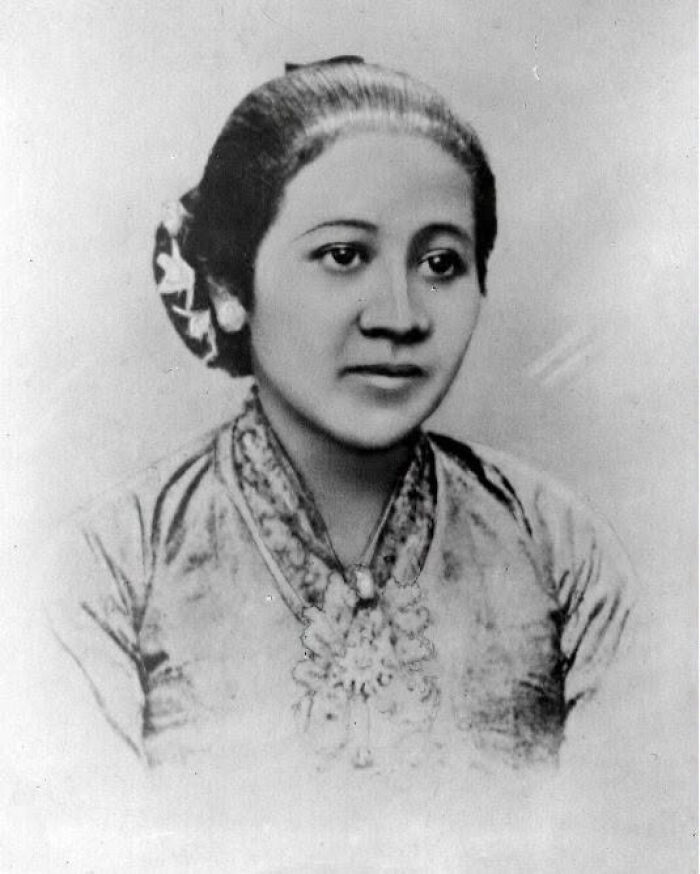
Image source: Women In World History
#54
Ida Pfeiffer was not supposed to become one of the greatest travelers of the 19th century.
She was born in 1797 in Vienna, married young, raised two sons, and spent decades living the life society expected of a respectable woman. Then, at age 45—an age when many women of her era were expected to settle quietly into domestic life—she did something almost unthinkable.
She packed a small bag and left.
Not with a husband.
Not with an expedition team.
Not with government funding.
Alone.
What followed was one of the most extraordinary travel careers in history.
Between 1846 and 1855, Pfeiffer traveled roughly 240,000 kilometers by sea and another 32,000 kilometers by land. She crossed deserts, sailed through storms, trekked across remote regions, and visited places many European men never dared to see. She became one of the first women to circle the globe—and then she did it again.
Her journeys took her through South America, the Middle East, Southeast Asia, China, India, Africa, and the Pacific Islands. She often traveled on the cheapest ships available, stayed in modest lodgings, and survived on a budget that baffled wealthier explorers. Adventure was not a luxury for Pfeiffer. It was a mission.
What makes her story even more remarkable is that she financed much of it herself.
After each journey, she wrote detailed travel books filled with observations about the people, landscapes, customs, and cultures she encountered. Works such as *A Lady’s Voyage Round the World* became international bestsellers and were translated into seven languages. Readers were fascinated by a woman who had gone farther than most men could imagine.
But Pfeiffer was more than a travel writer.
She collected thousands of insect, plant, and geological specimens for European museums and scientific institutions. Many scholars considered her observations valuable contributions to ethnography and natural history.
Yet even her achievements could not overcome every barrier. The prestigious Royal Geographical Society refused her membership simply because she was a woman.
Other institutions saw her value. The geographical societies of Paris and Berlin made her an honorary member instead.
By the time she died in 1858, Ida Pfeiffer had accomplished something far larger than two trips around the world. She proved that curiosity, courage, and determination were not male traits. They were human ones.
Long before solo travel became a dream sold on social media, a woman carrying little more than a notebook and relentless determination had already shown the world how far one person could go.
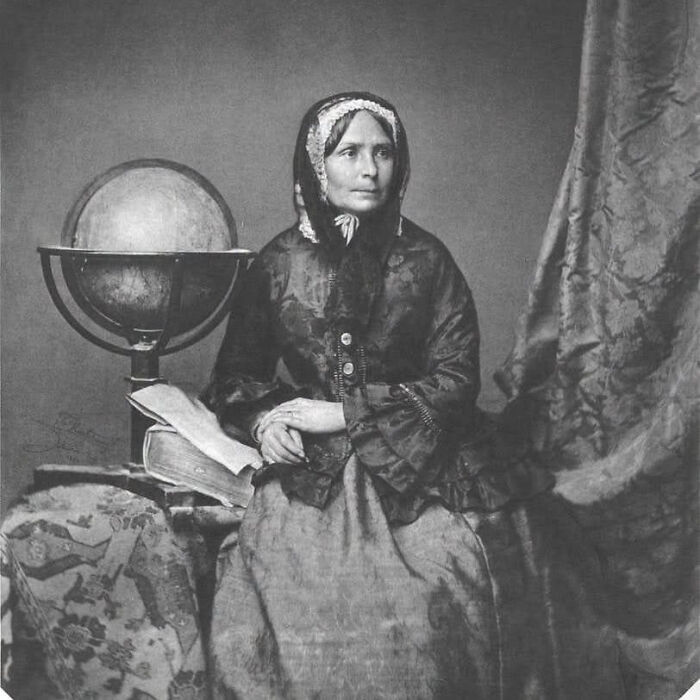
Image source: Women In World History
#55
She never married. She never ran a company. She never earned a spectacular salary. Most of the people who knew Grace Groner would have described her as an ordinary woman living an ordinary life. Yet when she died in 2010, she left behind a fortune worth roughly $7 million.
Groner graduated from Lake Forest College during the depths of the Great Depression and spent most of her career working as a secretary at Abbott Laboratories. She lived in the same modest house for decades, drove used cars, clipped coupons, and was known for living carefully rather than extravagantly. There were no signs that she was secretly wealthy. No lavish lifestyle. No mansion. No luxury collection.
The story began in 1935 when she bought three shares of Abbott stock for about $180. It was not a life-changing investment at the time. She wasn’t trying to become rich. She simply purchased the shares and held onto them.
Then she did something most people find surprisingly difficult: she left them alone.
As the decades passed, the company grew. The stock split repeatedly. Dividends were reinvested. While generations of investors chased the next big opportunity, Groner quietly kept her original investment. Year after year became decade after decade.
By the time she died at age 100, those three shares had grown into millions of dollars.
But the most remarkable part of the story came after her death.
Grace Groner had no children, and instead of leaving her fortune to distant relatives, she donated most of it to her alma mater, Lake Forest College. Her gift created scholarships that have helped countless students pursue an education they might not otherwise have been able to afford.
History is filled with dramatic tales of people becoming rich overnight. Grace Groner’s story is the opposite. She became a millionaire so gradually that almost nobody noticed, including, in many ways, the woman herself.
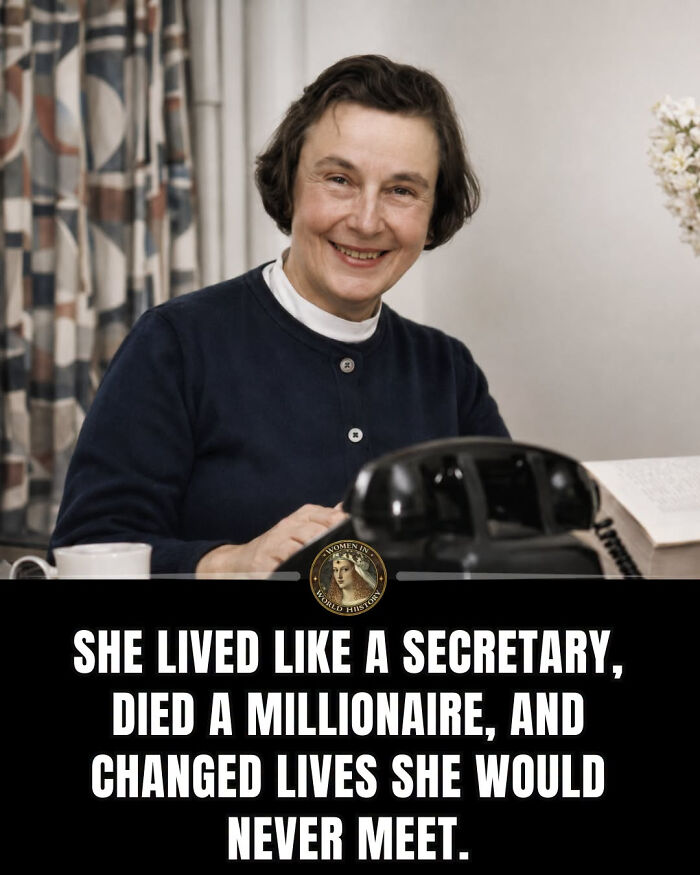
Image source: Women In World History
#56
Most people know the Rose. Almost nobody knows the woman who may have inspired her.
Before she became linked forever to The Little Prince, Consuelo de Saint-Exupéry was already living a life that sounded like fiction. Born in El Salvador in 1901, she grew up in a family touched by politics, privilege, and upheaval. She studied art, developed a fierce independent streak, and moved through creative circles in Latin America and Europe at a time when few women traveled so freely between worlds.
Then she met the man who would make her immortal and drive her nearly mad.
When Consuelo married aviator and writer Antoine de Saint-Exupéry in 1931, they became one of literature’s most turbulent couples. He was charming, brilliant, adventurous, and chronically unfaithful. She was artistic, passionate, unpredictable, and unwilling to quietly disappear into the role of a famous man’s wife. Their marriage was filled with separations, reconciliations, dramatic arguments, love letters, and long absences as Antoine disappeared into the skies on dangerous flying missions.
Yet they never completely escaped each other’s orbit.
When The Little Prince was published in 1943, readers met the Rose: beautiful, vain, fragile, demanding, beloved, and impossible to forget. Many biographers have pointed to Consuelo as the inspiration. Like the Rose, she could be difficult, theatrical, affectionate, and deeply vulnerable. Like the Little Prince, Antoine often seemed torn between devotion and escape.
The symbolism became even more striking because Consuelo loved roses and frequently appeared surrounded by flowers in photographs and paintings. Whether she was truly the Rose is still debated, but the connection became inseparable from her legacy.
Then came the story’s heartbreaking final chapter.
In 1944, Antoine vanished during a reconnaissance flight over the Mediterranean. For decades, his fate remained one of aviation’s great mysteries. Consuelo spent the rest of her life carrying the weight of a love story that had never really ended. Long after his disappearance, she continued creating art and writing, determined not to be remembered merely as someone’s muse.
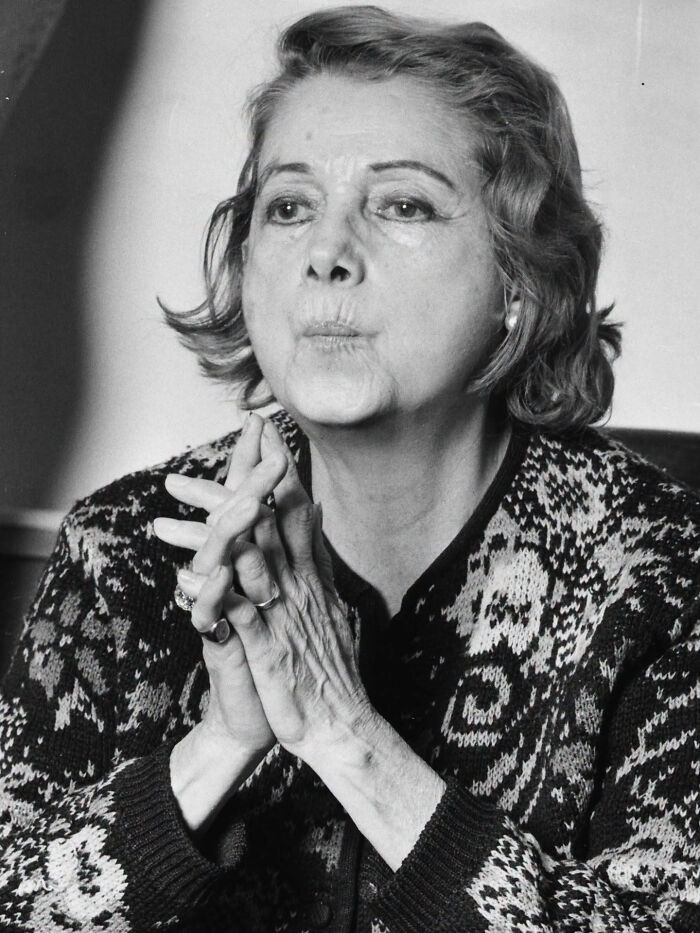
Image source: Women In World History
#57
Few women in nineteenth-century New York understood the power of scandal better than Emma Augusta Cunningham. By the time her name filled newspaper headlines, respectable society had already decided she was guilty—not because a jury had spoken, but because she was a beautiful widow who seemed to prosper whenever wealthy men entered her life.
It began with Dr. Harvey Burdell, a successful Manhattan dentist with a fortune and a fashionable address. After Emma rented rooms in his house, rumors spread that the two were secretly engaged. Then, in January 1857, Burdell was found stabbed to death inside his own home. The crime scene was shocking. The gossip that followed was even worse.
Emma immediately claimed she was Burdell’s lawful widow and demanded a share of his estate. There was just one problem: no one could prove they had ever married. Witnesses appeared with conflicting stories. Mysterious letters surfaced that supposedly proved the romance. Critics insisted the documents were forged. Supporters argued powerful interests wanted to erase the relationship entirely. New York became obsessed with one question: was Emma an ambitious fraud or a woman being robbed of her rights?
Before the m*rder investigation had even settled, Emma found herself at the center of another sensation. She quickly married Burdell’s lawyer, Ebenezer N. Townsend—a decision that convinced many newspaper editors they had uncovered a conspiracy. The press painted the pair as calculating opportunists who had plotted everything from the beginning, even though hard evidence never lived up to the accusations.
The courtroom became packed with spectators eager for entertainment as much as justice. Every witness seemed to deepen the mystery rather than solve it. Allegations of forged documents, secret engagements, hidden motives, and whispered affairs swirled through the testimony. Yet when the trial ended, Emma Cunningham was acquitted. Burdell’s m*rder officially remained unsolved.
History remembers countless infamous m*rder cases, but Emma’s story reveals something just as fascinating: how quickly public opinion can become its own prosecutor, turning rumor into certainty long before the evidence ever catches up.
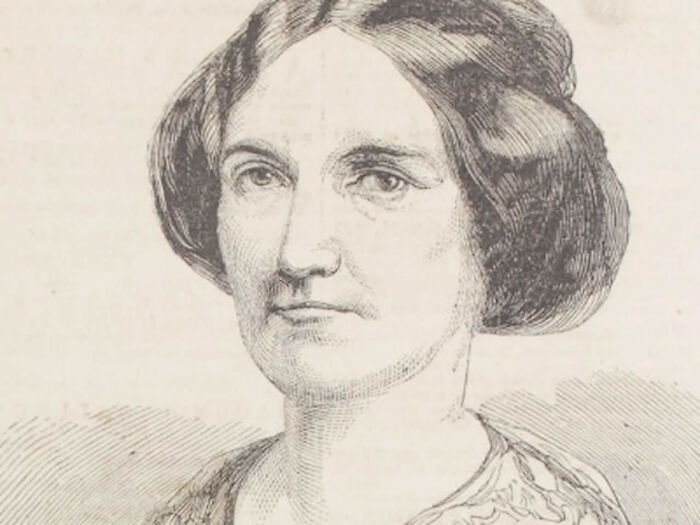
Image source: Women In World History
#58
Many Victorians loved to imagine their age as the pinnacle of discipline, restraint, and moral virtue. Behind polished drawing-room doors, however, another story was unfolding. Respectable wives, devoted mothers, and society hostesses were quietly consuming c*caine, op*um, and morphine—not as rebels chasing scandal, but as patients following medical advice.
It rarely began with addiction. A sleepless night. Exhaustion after childbirth. “Female nerves.” Melancholy. Menstrual pain. Anxiety. Almost any complaint could earn a prescription. Physicians praised these powerful drugs as modern miracles, pharmacies sold op*um-based remedies over the counter, and patent medicines often contained narcotics without clearly saying so on the label. Many women had no idea how dependent they were becoming.
Morphine became especially fashionable after the invention of the hypodermic syringe in the 1850s. Doctors believed injections were safer than swallowing op*um, convinced the drug would remain local to the pain. They were disastrously wrong. Dependence spread quickly, particularly among middle- and upper-class women who had the means to receive regular medical care. Some historians even referred to morphine addiction as a “respectable lady’s disease.”
Then came c*caine. By the 1880s it was celebrated as a scientific breakthrough. It appeared in tonics, wines, throat lozenges, and medical treatments, praised for lifting spirits and restoring energy. Newspapers ran glowing advertisements. Few questioned whether daily use might carry consequences.
The cruel irony is that many of these women were never viewed as addicts. They were considered obedient patients doing exactly what trusted physicians instructed. Their suffering was often hidden behind elegant clothing, carefully managed households, and impeccable social reputations. The very culture that celebrated feminine self-control also helped create a quiet epidemic that was rarely spoken about in public.
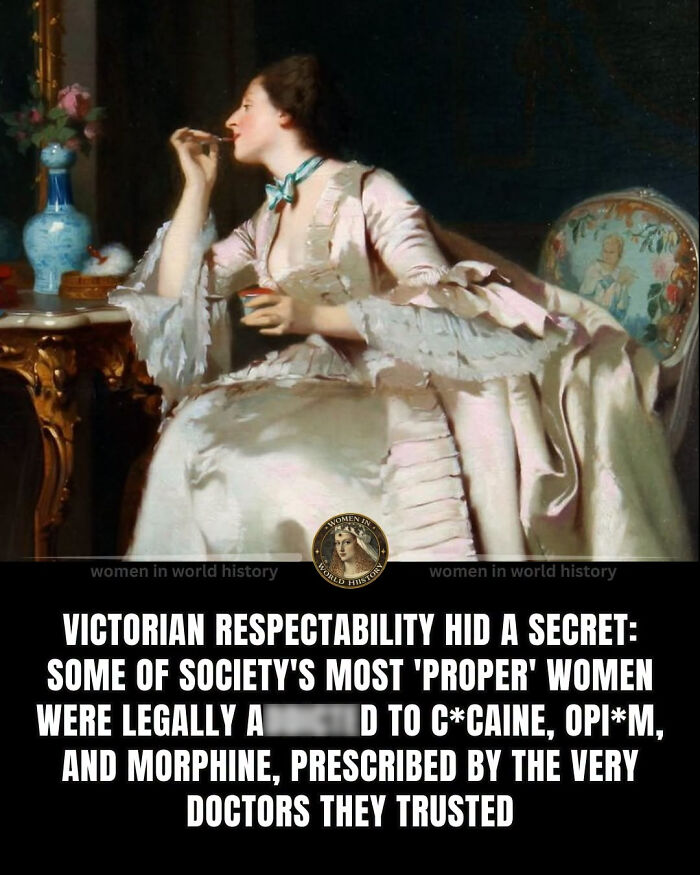
Image source: Women In World History
#59
One of the most haunting photographs of the Prohibition era shows bootlegging king George Remus hosting a lavish dinner party at his Cincinnati mansion in the 1920s. Standing beside him is his wife, Imogene. Within a few years, he would m*rder her.
Imogene Remus was far more than a gangster’s wife. Before marrying George, she worked as his legal secretary in Chicago. Their relationship began while he was still a prominent attorney, and after both divorced their spouses, they married in 1920.
When Prohibition took effect, George built one of the largest bootlegging empires in America, amassing an estimated $40 million fortune. The couple lived in the extravagant “Marble Palace,” where their legendary parties featured orchestras, crystal chandeliers, and lavish gifts for guests.
To protect his wealth from government seizure, George placed much of his fortune in Imogene’s name—a decision that would later prove disastrous.
In 1925, George was imprisoned for violating Prohibition laws. While incarcerated, he unknowingly revealed details of his finances to fellow inmate Franklin Dodge, an undercover Prohibition agent. After leaving government service, Dodge began a romantic relationship with Imogene. Together, they sold off much of Remus’s empire and moved assets beyond his reach. Historians still debate Imogene’s motives. Some believe she was escaping an increasingly controlling husband, while others argue she willingly helped dismantle his fortune. The truth was likely more complicated.
On October 6, 1927, as Imogene traveled to finalize their divorce, George chased down her taxi through Cincinnati’s Eden Park. She fled on foot, but he caught up to her and shot her in broad daylight. She died later that day.
Despite numerous eyewitnesses, George Remus was found not guilty by reason of insanity after a trial that captivated the nation. He spent only a few months in a psychiatric hospital before being released.
The famous dinner-party photograph now serves as a chilling reminder that behind the glamour of the Jazz Age lay betrayal, obsession, and one of Prohibition’s most infamous m*rders.
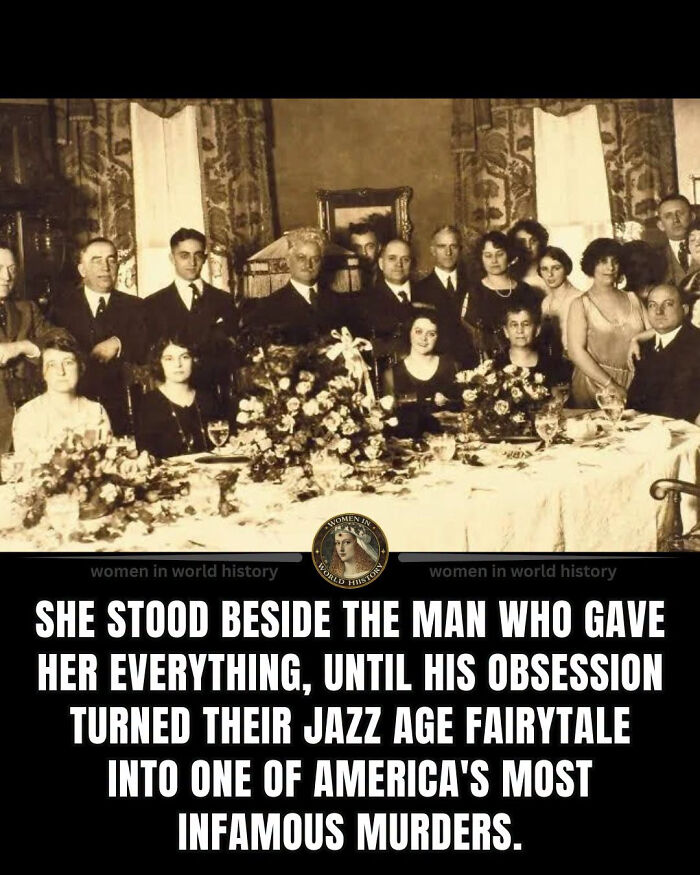
Image source: Women In World History
#60
She had already achieved the dream.
The summit of Mount Everest was behind her. Home was below. Then, just a few hundred feet from safety, she slipped.
In May 1998, British climber Alison Hargreaves’ friend and fellow mountaineer Francys Arsentiev became the first American woman to reach Everest’s summit without supplemental oxygen. But the climb had taken too much from her. Exhausted, disoriented, and suffering from the effects of extreme altitude, she collapsed high on the mountain in what climbers call the “Death Zone,” where the human body slowly begins to shut down.
Her husband, Sergei Arsentiev, refused to leave her.
He climbed back into the thin air, hoping to bring her down. He never returned.
The next morning, two climbers, Ian Woodall and Cathy O’Dowd, found Francys alive. She could still speak. They gave her oxygen, held her hand, and stayed with her as long as they could. But above 26,000 feet, even the strongest climbers struggle to save themselves. Carrying another adult down Everest’s steep slopes without a large rescue team was virtually impossible. Forced to choose between one impossible tragedy and several, they eventually continued their descent.
For years, Woodall could not stop thinking about the woman he had left behind.
Eight years later, he returned to Everest with one purpose. He found Francys exactly where he had last seen her. Together with a small team, he moved her body away from the main climbing route, wrapped her in an American flag, and built a simple stone cairn so she could finally rest with dignity instead of becoming another landmark on the mountain.
The following year, Sergei’s body was discovered lower down the mountain, where evidence suggested he had fallen while trying to reach his wife.
Everest is often described as a place that reveals human strength. Stories like Francys Arsentiev’s remind us that it also reveals the impossible choices people make when love and survival collide.
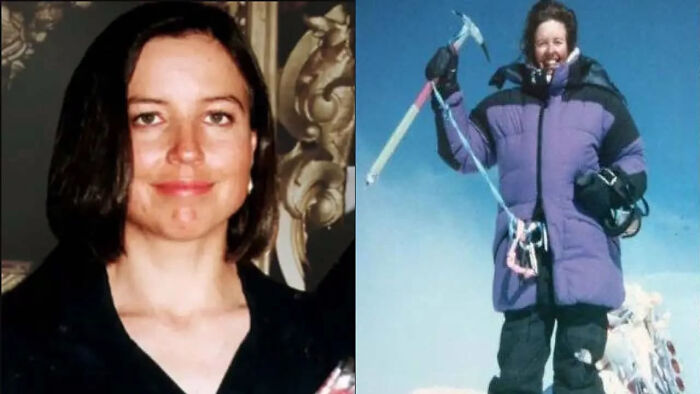
Image source: Women In World History
#61
Mary Edwards Walker refused to accept the limits society placed on women. Long before the Civil War, she earned a medical degree at a time when female physicians were almost unheard of. She wore practical clothing instead of restrictive dresses, challenged Victorian expectations, and insisted that her skills as a surgeon mattered more than her gender.
When the Civil War erupted, the U.S. Army repeatedly refused to commission her as a surgeon simply because she was a woman. Rather than walking away, Walker volunteered anyway, treating wounded soldiers and civilians near some of the war’s bloodiest battlefields. She often crossed dangerous front lines to care for the injured, a decision that eventually led to her capture by Confederate forces in 1864. Accused of being a spy, she spent months as a prisoner of war before being exchanged.
In 1865, President Andrew Johnson awarded Mary Edwards Walker the Medal of Honor for her extraordinary service, making her the first—and for more than a century, the only—woman ever to receive the nation’s highest military decoration.
But her greatest battle was still ahead.
In 1917, the government reviewed hundreds of Medal of Honor recipients and concluded that Walker’s award no longer met newly tightened eligibility standards because she had served as a civilian contract surgeon rather than as a commissioned officer. She was ordered to return the medal.
She refused.
Walker continued wearing it every day for the rest of her life, insisting she had earned it through courage, sacrifice, and service under fire. She died in 1919 without ever surrendering the decoration.
Nearly sixty years later, in 1977, the U.S. government reversed its decision. Her Medal of Honor was officially restored, recognizing what Walker had believed all along: that heroism is measured by actions, not by titles or gender.
Mary Edwards Walker didn’t just become the first woman to receive the Medal of Honor. She spent the rest of her life proving she deserved it.
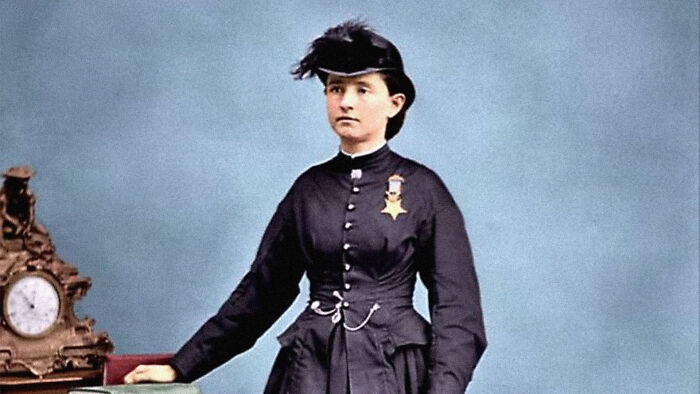
Image source: Women In World History
#62
Fatima Al-Fihri was born into a wealthy and devout Muslim family in Kairouan, modern-day Tunisia, before moving to Fez, Morocco. Her family was well-respected, and her father was a successful merchant. After the deaths of her father and husband, Fatima inherited significant wealth. Rather than using her fortune for personal comfort, she devoted it to serving her community.
In 859 CE, Fatima established the Al-Qarawiyyin Mosque and its associated educational institution in Fez. The project began as a madrasa and gradually expanded into a major center of learning. Fatima oversaw the construction, reportedly fasting during the project as an act of spiritual devotion. Her initiative was not only to provide a place of worship but also to create a hub where people could pursue knowledge and intellectual growth.
The institution became known for its wide-ranging curriculum, which included theology, jurisprudence, mathematics, #astronomy, medicine, and philosophy. It attracted scholars and students from across the Muslim world and Europe. Over the centuries, it played a crucial role in preserving and advancing knowledge during times when learning centers in Europe faced decline.
The library at Al-Qarawiyyin is one of the oldest in the world. It contains a wealth of manuscripts, including rare works on Islamic law, science, and history. The institution became a model for later universities in the #Islamic world and Europe, influencing the development of academic traditions.
Image source: Women In World History
#63
Norma Jean Serena was an Indigenous mother who took the institutions that violated her family to court.
In 1970, shortly after Serena gave birth at a Pennsylvania hospital, doctors surgically removed her fallopian tubes. She maintained that she had never requested sterilization, had never knowingly consented to it, and was not even told clearly that the procedure had been performed.
At nearly the same moment, welfare officials removed her newborn and had already placed two of her other children in foster homes. A caseworker later admitted recommending sterilization because she considered Serena’s children a “burden on society”—a statement saturated with racism, ableism and contempt for a poor Indigenous mother’s right to build her own family.
Serena refused to disappear quietly.
She fought for years to regain custody of her children, following every instruction given to her even as officials worked behind her back to keep the family separated. She eventually recovered her children and filed a federal civil-rights lawsuit against the hospital, doctors and welfare employees responsible.
The jury awarded the Serena family damages for the deception and obstruction surrounding the removal of her children. But it accepted the hospital’s claim that she had consented to sterilization—a painful legal defeat that exposed how easily institutions could dismiss a woman’s account of what had been done to her own body.
Norma Jean Serena’s case became one of the earliest major legal challenges to frame sterilization abuse as a violation of civil rights. Her fight helped drag a hidden national scandal into public view: thousands of Native American women were sterilized during the 1960s and 1970s, often under coercive conditions or without meaningful consent.
They tried to take her children, her fertility and her credibility.
They did not take her voice.
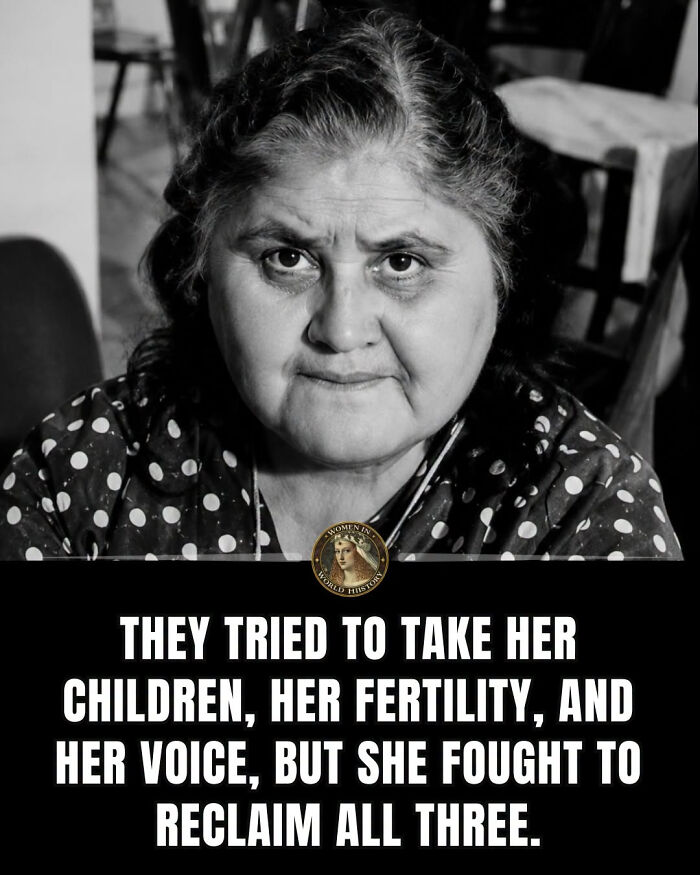
Image source: Women In World History
#64
Edith Bouvier Beale, also known as “Little Edie,” was an American socialite, fashion model, and relative of Jacqueline Kennedy Onassis. She is best known for her appearance in the 1975 documentary film “Grey Gardens,” which showcased the eccentric and reclusive lives she and her mother, Edith Ewing Bouvier Beale, lived in their decaying mansion in East Hampton, New York.
Edith Bouvier Beale was born on November 7, 1917, in New York City. She was the daughter of Phelan Beale, a lawyer, and socialite Edith Ewing Bouvier Beale, who was the aunt of Jacqueline Kennedy Onassis. Edith grew up in a privileged and well-connected family, and she and her mother were known for their stylish and fashionable lifestyles.
However, as the years went by, the Beale family fortune declined, and Edith and her mother became increasingly isolated. They lived in Grey Gardens, their dilapidated mansion, which was infested with cats and in a state of disrepair. The documentary “Grey Gardens,” directed by Albert and David Maysles, brought their unconventional and reclusive lifestyle to public attention.
The film depicted the daily lives of Edith Bouvier Beale and her mother, showcasing their idiosyncratic behavior, unique fashion sense, and their complex relationship. Despite their circumstances, Edith and her mother displayed a strong sense of individuality and resilience, which resonated with audiences.
After the release of the documentary, Edith Bouvier Beale gained a cult following and became an icon of eccentricity and unconventional style. Her fashion choices, such as headscarves, turbans, and layering of clothing, inspired many designers and fashion enthusiasts. Her distinctive style has been referenced in numerous fashion editorials, exhibitions, and even a Broadway musical adaptation of “Grey Gardens.”
Edith Bouvier Beale remained in the public eye until her death on January 9, 2002, at the age of 84. Her legacy continues to captivate people who are intrigued by her unconventional lifestyle and unique sense of self-expression. The story of Edith Bouvier Beale and her mother serves as a reminder of the complexities of family dynamics and the enduring power of individuality.
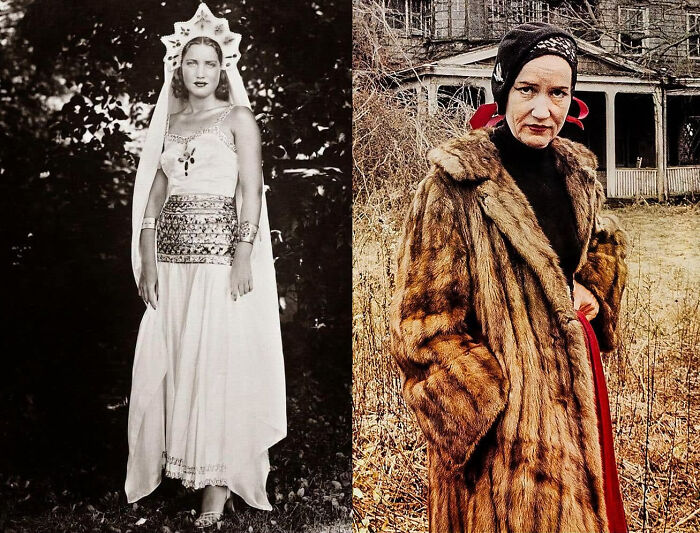
Image source: Women In World History
#65
The war did not stop at the trenches. It reached deep into the factories of Britain, where thousands of women stepped into jobs they had long been told they could not do.
This photograph captures women working at the vast Woolwich Arsenal during World War I, one of the largest munitions factories in the world. As millions of men left for the front, Britain faced a severe labor shortage. Women answered the call, operating heavy machinery, assembling shells, loading explosives, driving vehicles, and performing skilled industrial work that had previously been reserved almost exclusively for men.
By 1918, nearly one million women were employed in munitions production across Britain. The work was dangerous. Exposure to toxic chemicals such as TNT often turned workers’ skin and hair yellow, earning many the nickname “Canary Girls.” Long shifts, industrial accidents, and the constant risk of explosions were part of daily life. Yet production continued on a staggering scale, supplying the ammunition that sustained the Allied war effort.
For many women, the experience was transformative. They earned wages, developed technical skills, and proved beyond doubt that they could perform complex industrial labor. The sight of women successfully running factories challenged long-held assumptions about gender and work.
When the war ended, many were expected to surrender their jobs and return to traditional roles. Yet something had changed. The war had demonstrated what women were capable of when given the opportunity. The effects rippled far beyond the factory floor, strengthening arguments for greater political rights and contributing to the momentum that led to expanded voting rights for women in Britain.
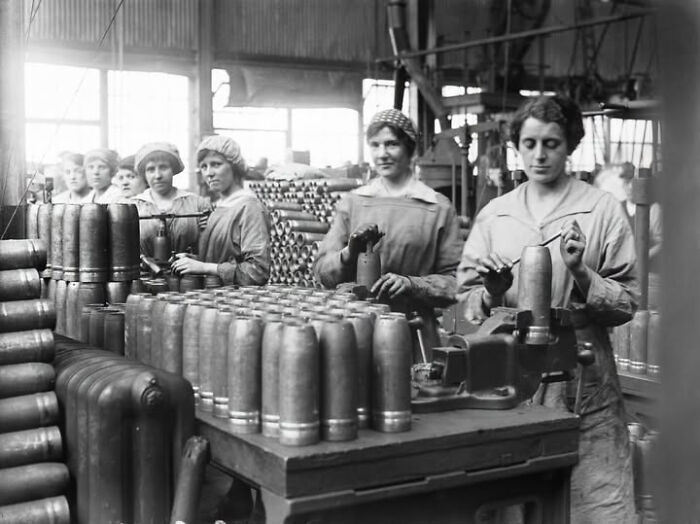
Image source: Women In World History
#66
Amelia Edwards did not set out to become one of the founders of modern Egyptology.
She was already a successful novelist and journalist when a trip to Egypt in 1873 changed the course of her life.
Traveling up the Nile by hired houseboat, Edwards expected scenery and adventure. What she found instead was a civilization disappearing in plain sight.
Ancient temples were being dismantled for building materials. Tombs were being looted. Artifacts vanished into private collections. Across Egypt, priceless pieces of history were being damaged faster than scholars could document them.
Edwards was horrified.
Unlike many Victorian travelers who treated Egypt as an exotic backdrop, she paid attention. She sketched monuments, recorded inscriptions, took notes on archaeological sites, and observed the destruction taking place around her.
The result was *A Thousand Miles up the Nile*, published in 1877. Part travel narrative, part warning, the book became an international success and introduced countless readers to the importance of preserving Egypt’s ancient heritage.
But Edwards did not stop at writing.
She spent the rest of her life lecturing, fundraising, and campaigning for serious archaeological research. At a time when few women were welcomed into academic institutions, she became one of the most influential voices promoting the study of ancient Egypt in Britain.
In 1882, she helped establish what became the Egypt Exploration Fund, an organization that supported excavations and helped preserve sites that might otherwise have been lost forever.
When Amelia Edwards died in 1892, she left much of her collection and resources to advance the study of Egypt. Her legacy extended far beyond her novels.
Many people explored Egypt during the nineteenth century.
Few helped convince the world that its past was worth protecting.
Because of Amelia Edwards, countless pieces of ancient history survived long enough for future generations to study, admire, and understand.
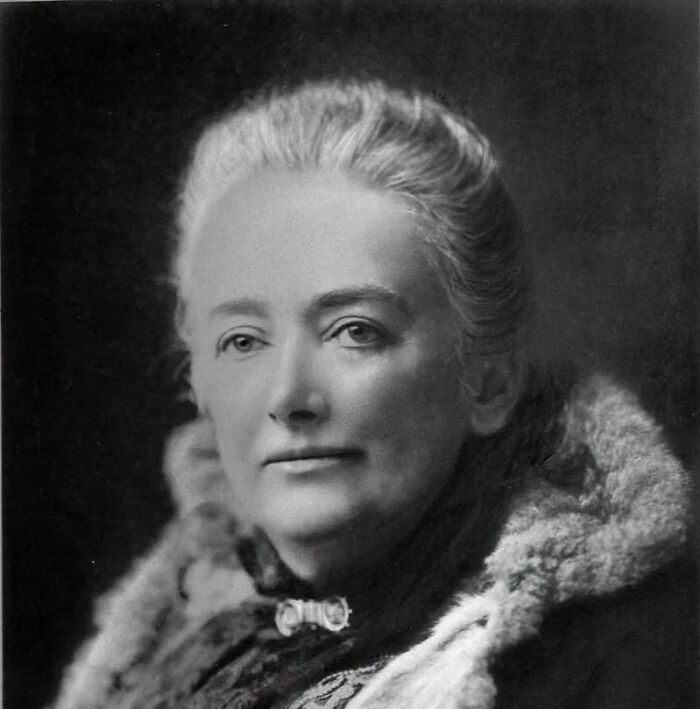
Image source: Women In World History
#67
Just after noon on September 5, 1936, two fishermen in Cape Breton, Nova Scotia, saw a woman struggling through the bog.
She was bleeding. Her once-white flying suit was stained black with peat up to the waist. Somewhere behind her, half-buried in the moss, was her single-engine Percival Vega Gull, its nose driven into the marsh, its tail lifted helplessly into the air.
When the fishermen reached her, she gave them a sentence almost too strange to believe.
“I’m Mrs. Markham,” she said. “I’ve just flown from England.”
The woman was Beryl Markham, thirty-three years old, and she had just completed one of the most daring flights of the golden age of aviation.
She had become the first person to fly solo, nonstop, from Europe to North America, and the first woman to fly solo, nonstop, east to west across the Atlantic.
That direction mattered.
Flying west meant fighting the prevailing winds instead of riding them. It meant pushing into bad weather, mechanical strain, exhaustion, and uncertainty over thousands of miles of open ocean. Her intended destination was New York, but fuel trouble forced her down in Nova Scotia, where the bog caught her aircraft before the city ever could.
At first, Markham believed she had failed.
The world disagreed.
Taken to a farmhouse, bruised and shaken, she asked for tea and a telephone. Directed to a small emergency phone built near the rocks in case of shipwrecks, she calmly asked the operator to notify the airport — and send a taxi.
Soon, congratulations poured in from around the world. Amelia Earhart praised the flight as a great achievement. New York welcomed Markham with a motorcade, headlines, and a suite at the Ritz-Carlton.
Beryl Markham had aimed for New York and landed in a bog.
But history knew exactly where she belonged.
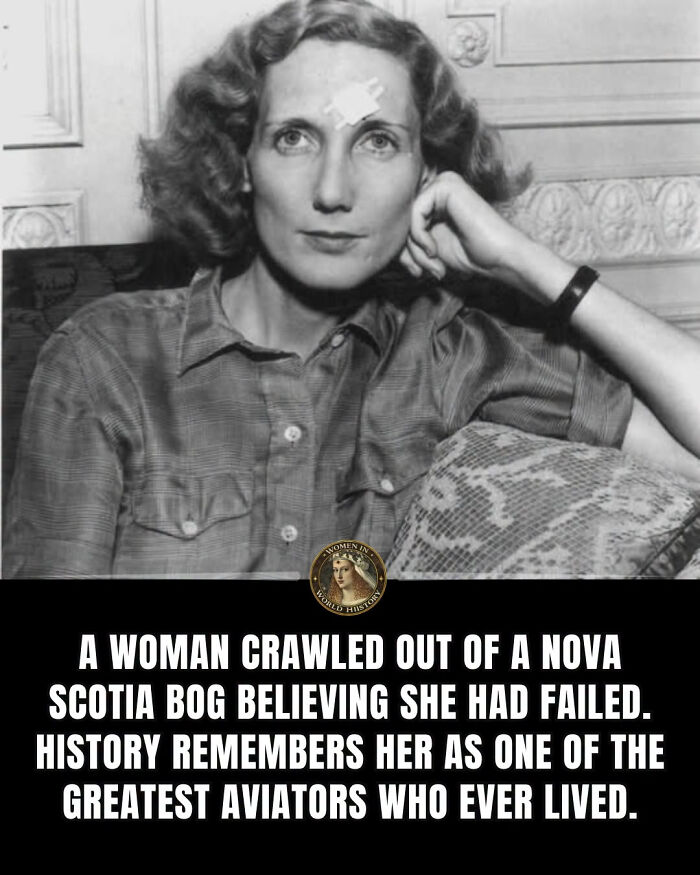
Image source: Women In World History
#68
Her signature appeared on millions of pieces of American currency.
Most people never noticed.
In 1949, Georgia Neese Clark Gray became the first woman ever confirmed as Treasurer of the United States, breaking into one of the most visible yet least understood positions in the federal government. The office carried enormous symbolic weight. Every paper bill printed during her tenure bore her signature, meaning Americans handled evidence of her achievement every day without giving it a second thought.
Born in 1898 in rural Kansas, Georgia Neese Clark Gray did not begin her career in banking or government finance. She was a trained singer and musician who studied voice and performed professionally before moving into public life. Elegant, charismatic, and politically active, she became deeply involved in the Democratic Party at a time when women were still fighting for influence within national politics.
Her rise was unusual. Washington in the mid-20th century remained overwhelmingly male, particularly in positions connected to money, finance, and federal administration. Yet President Harry S. Truman selected Gray for one of the most recognizable financial offices in the country. The Senate confirmed her appointment in 1949, making history.
Many people assume the Treasurer controlled the nation’s finances. In reality, the role was largely administrative and ceremonial by that period, but it remained highly prestigious. The Treasurer oversaw important functions involving the U.S. Mint, government accounts, and currency operations. Most importantly, the Treasurer’s signature appeared directly on American paper money alongside that of the Secretary of the Treasury.
That meant Georgia Neese Clark Gray’s name circulated through every corner of the United States. Farmers, factory workers, movie stars, soldiers, and shopkeepers all carried bills bearing the signature of a woman occupying a position no woman had held before.
Her achievement is often overlooked because it lacks the drama of an election victory or a courtroom battle. Yet it represented something quietly revolutionary: a woman stepping into one of the nation’s most visible financial offices and leaving her name literally stamped onto the American economy.
Long before women regularly occupied top positions in government finance, Georgia Neese Clark Gray had already put her signature on history—and on the money in Americans’ pockets.
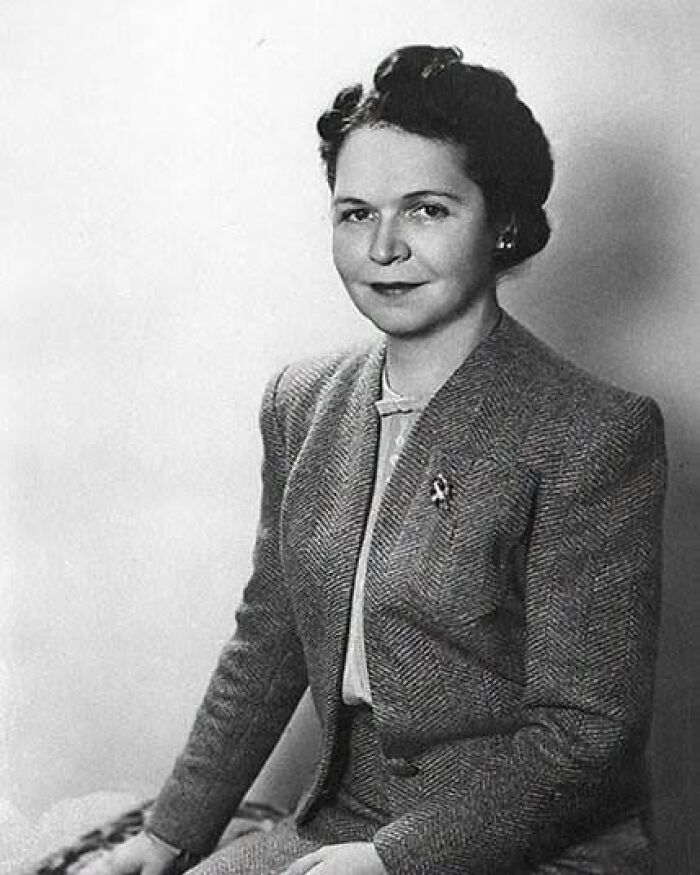
Image source: Women In World History
#69
Paulette Nardal did not need a throne, a battlefield, or a famous last name to change history.
She had a living room.
Born in Martinique in 1896, Nardal became one of the first Black women from the French Caribbean to study at the Sorbonne in Paris. She arrived in a city that loved to call itself enlightened, while still benefiting from empire, colonialism, and the quiet humiliation of people it considered “subjects” rather than equals.
But Paulette saw something many others had not yet fully named.
Black people from Africa, the Caribbean, Europe, and America were being separated by language, geography, class, and colonial rule. Yet beneath those differences, there was a shared wound — and possibly a shared power.
So she helped create a space where that truth could breathe.
In the Paris suburb of Clamart, the Nardal sisters hosted a salon that became a meeting place for Black writers, students, musicians, and thinkers. There, conversations moved between Harlem, Martinique, Senegal, Haiti, and France. Ideas traveled across oceans. People who had been taught to see themselves as isolated began to see themselves as connected.
Paulette translated, wrote, edited, introduced, encouraged, and gathered. She helped bring the energy of the Harlem Renaissance into the French-speaking world. Before Négritude became famous through men like Aimé Césaire, Léopold Senghor, and Léon-Gontran Damas, many of its ideas had already been nurtured in rooms where Paulette Nardal was present.
And then history did what it so often does.
It remembered the men more loudly.
Nardal became a footnote in a movement she helped make possible.
That is what makes her story so powerful. She did not simply witness a Black intellectual awakening. She helped build the table where it began.
Sometimes history is not changed by the person holding the microphone.
Sometimes it is changed by the woman who opened the door.
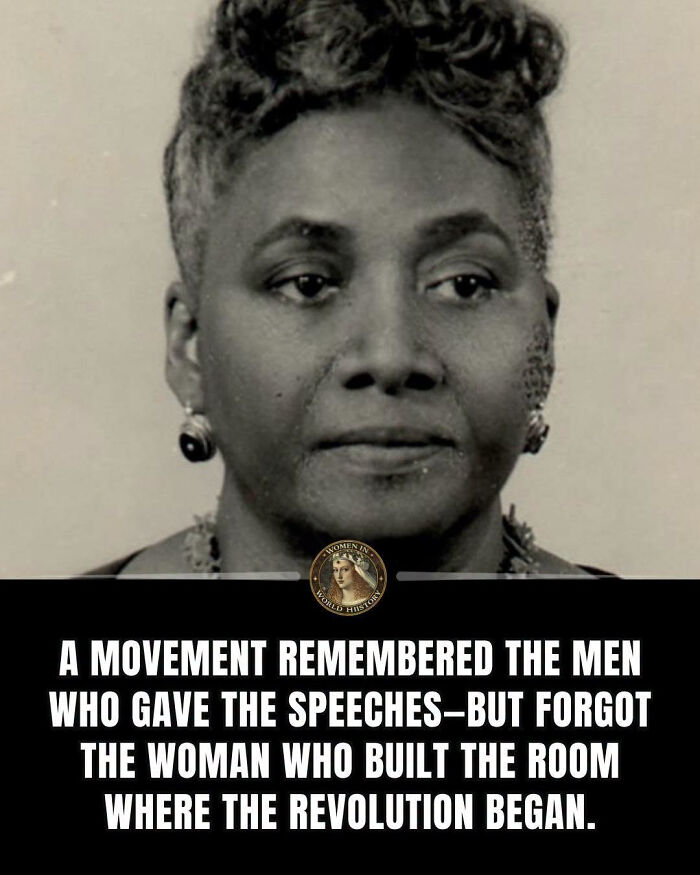
Image source: Women In World History
#70
How many people walked past it before she did?
That question may be the most remarkable part of this story.
In 2003, New York City social worker Elizabeth Gibson was walking through Manhattan’s Upper West Side when she noticed a large, colorful painting leaning against a pile of garbage bags on the curb. Most people would have assumed it was unwanted junk. After all, someone had literally thrown it away.
But Gibson stopped.
She later said there was something about the painting that drew her in. It seemed to have a presence. A kind of power. She knew almost nothing about modern art, yet she couldn’t shake the feeling that it mattered. So she did something unusual: she hauled the enormous canvas home.
At the time, she had no idea she was carrying a missing masterpiece.
The painting was Tres Personajes (“Three Characters”), created in 1970 by renowned Mexican artist Rufino Tamayo, one of the most celebrated artists in Latin American history. Even more astonishing, the work had been missing for sixteen years. In 1987, it disappeared while a Houston couple was moving homes. The painting vanished from storage and became one of the art world’s unsolved mysteries. No one knew where it had gone. No one knew who had taken it. Eventually, it seemed destined to remain lost forever.
Yet somehow, after years of disappearing from view, the painting ended up abandoned on a Manhattan sidewalk beside bags of trash.
The story could have ended there. Someone else could have taken it. It could have been destroyed by weather. Sanitation workers could have hauled it away. Instead, it ended up in the apartment of a woman who refused to ignore her curiosity.
For four years, Gibson researched the painting. She contacted galleries, searched records, and followed every lead she could find. Then she stumbled across information about missing artworks and suddenly realized what she had been living with all along.
The painting hanging in her home was worth a fortune.
Once authenticated, *Tres Personajes* was returned and later sold through Sotheby’s for $1,049,000. Gibson received a reward and a share of the proceeds for helping recover the missing masterpiece.
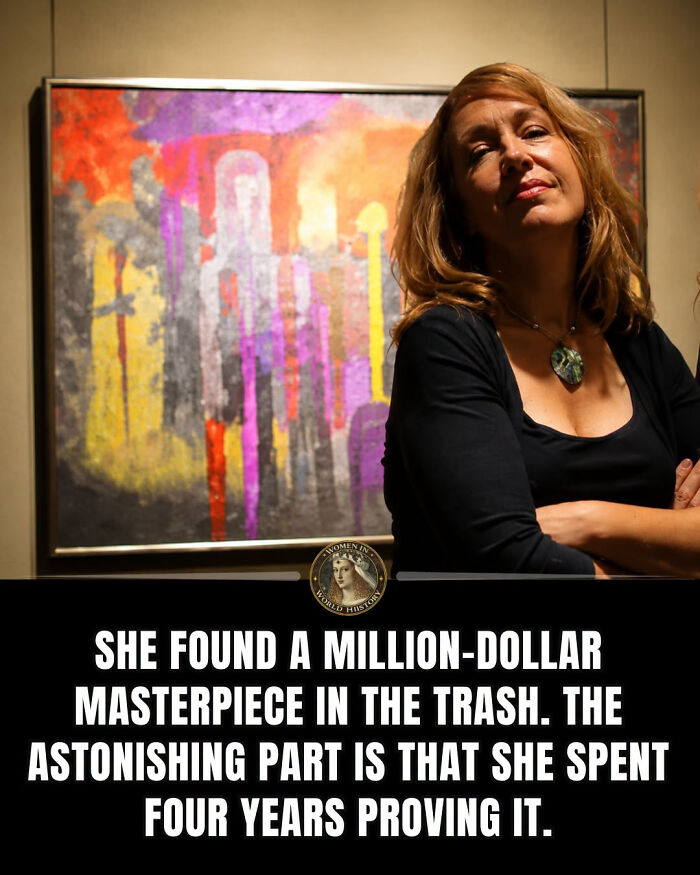
Image source: Women In World History
#71
Lillian Hellman, born in 1905, refused to be a footnote in someone else’s story. Playwright, memoirist, and political firebrand, she remains one of the most divisive—and compelling—figures in American literary history.
Hellman’s Broadway breakthrough came at 29 with The Children’s Hour (1934), a searing drama about a lie that destroys two women’s lives. The subject? A false accusation of lesbianism. It was banned in Chicago, Boston, and London, but Hellman didn’t blink. She wrote blunt, morally charged plays like The Little Foxes and Watch on the Rhine, exposing greed, fascism, and Southern rot.
But her real drama unfolded offstage. Her long, stormy affair with detective novelist Dashiell Hammett was legendary—equal parts devotion and dysfunction. And then came the 1950s.
Summoned before the House Un-American Activities Committee, Hellman refused to name names. But unlike others who went silent, she delivered a now-famous open letter: “I cannot and will not cut my conscience to fit this year’s fashions.” She invoked the Fifth Amendment, avoiding prison but preserving her career. Critics would later question how many communist ties she truly hid, accusing her of selectively remembering her own past.
That ambiguity defines her. Her “memoirs”—An Unfinished Woman, Pentimento—were bestsellers but also flexible with facts. She famously wrote, “Old paint on a canvas… underneath it all, the original drawing still exists.” For Hellman, truth was never just fact; it was dramatic shape.
She died in 1984, still arguing. Was she a principled dissident or a master self-mythologizer? Perhaps both. Hellman understood that history belongs to those who tell it best. Love her or hate her, she refused to be small—and demanded we look just as unflinchingly at ourselves.
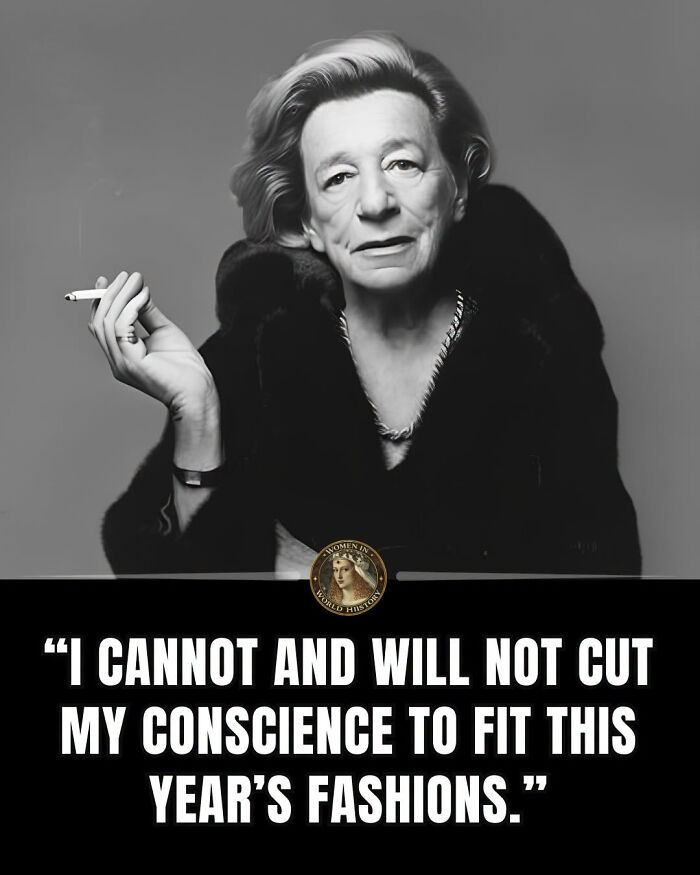
Image source: Women In World History
 Follow Us