Even horrible people have kids. It might sound harsh, but not everyone who has children is going to be a good person. Having kids doesn’t turn you kinder or more respectful overnight. Nor does parenthood instantly get rid of your entitled and toxic behavior patterns. The saddest part? These parents tend to pass on those same behaviors to their munchkins.
Stable worker u/Ornery-Form-7090 spilled the tea about the very worst customers she has ever dealt with. She shared how she had to stop a disruptive child from hurting himself and others. However, things soon took an incredibly dangerous turn for both the staff and the horses when the kid’s psychopathic mother stepped in. You’ll find the dramatic story, including the mind-boggling and genuinely scary update, below.
Being around horses means that you have to follow some basic rules. Both for your safety and that of everyone else

Image credits: Gustavo Fring / Pexels (not the actual photo)

This stable worker shocked the internet with her story about an extremely toxic family that took things way too far
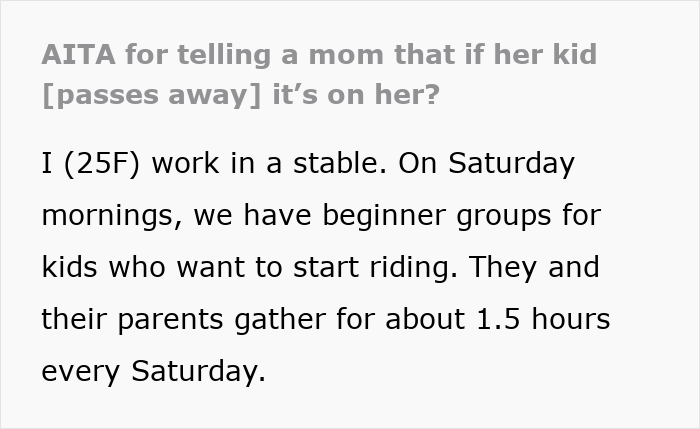
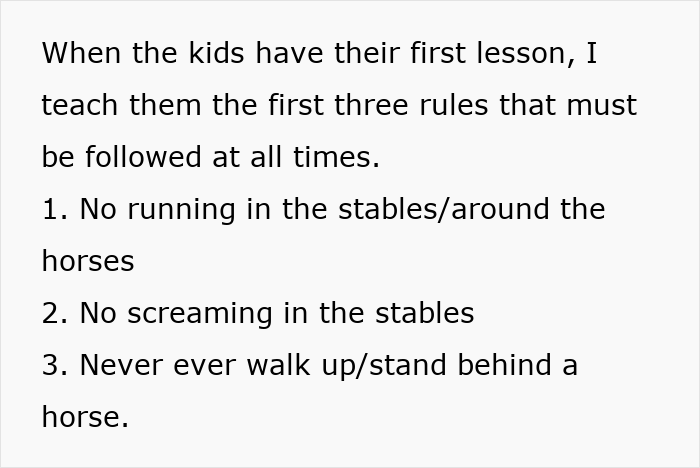
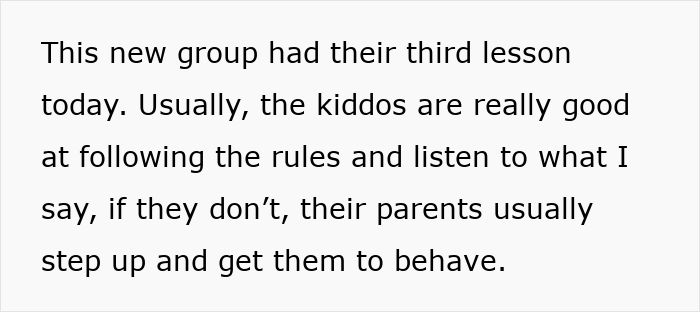

Image credits: Luna Lovegood / Pexels (not the actual photo)
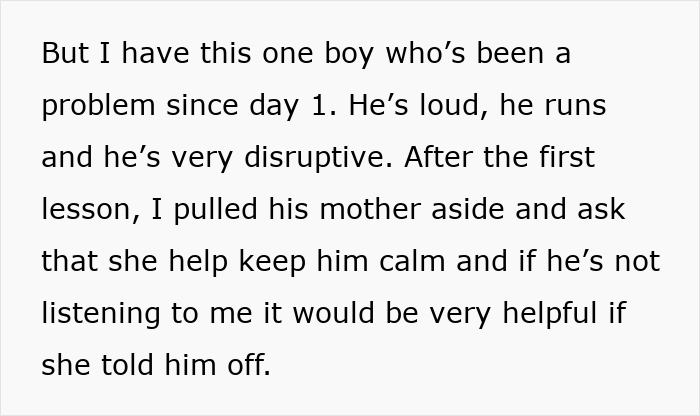
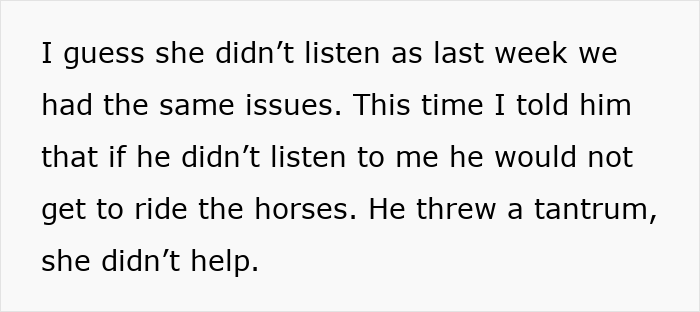
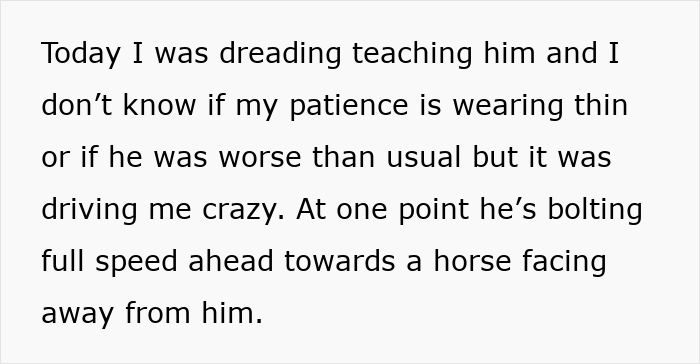

Image credits: Engin Akyurt / Pexels (not the actual photo)
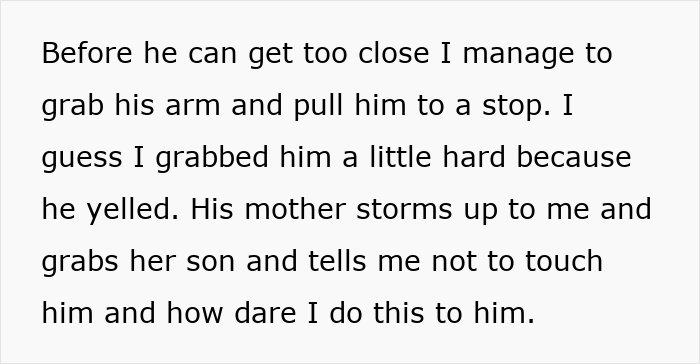
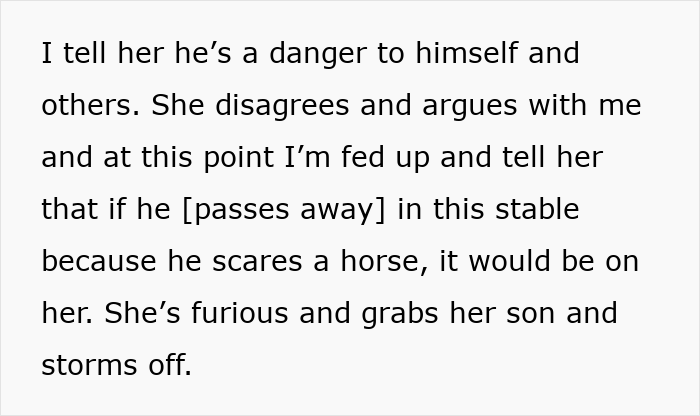
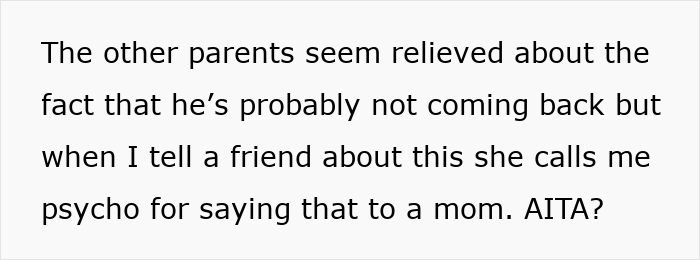
Image credits: Ornery-Form-7090

Image credits: SHVETS production / Pexels (not the actual photo)
Genuine psychopaths tend to be manipulative, antisocial, callous, pathological liars, have an over-the-top sense of self-worth, and are impulsive
There are so many things wrong with the family that the author of the viral post had to deal with that you can’t help but lose a bit of faith in humanity. Not only was the mother entitled, rude, disrespectful, and unwilling to teach her child basic boundaries, but she also encouraged her husband to actively hurt the horses in the stable.
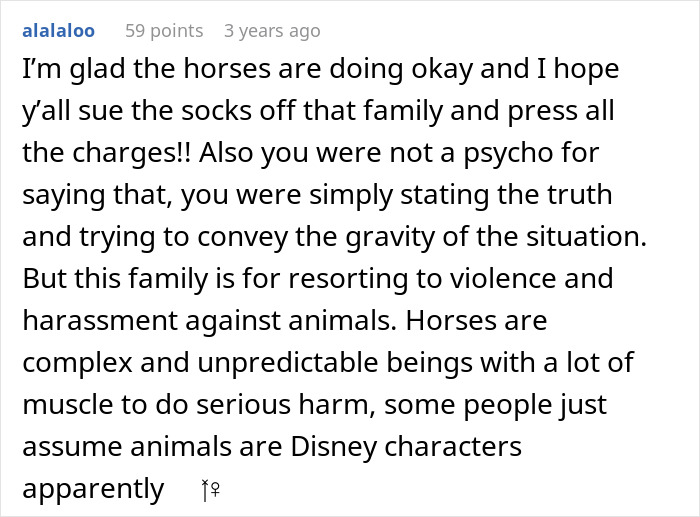
This is illegal, unethical, and psychopathic behavior. The only upsides are that, according to the author, the horses are perfectly fine and healthy now, and the toxic woman’s husband has been arrested by the authorities. However, setting that aside for a moment, everything could have ended up far, far worse. And you start to wonder whether the family can still turn things around, and how their kid, who is already displaying problematic behavior, is going to grow up. There is room for self-reflection, atonement, and positive change, but it’s not a given.
There is a lot of variation in psychopathic behavior between individuals. And someone who has psychopathic traits does not necessarily become a psychopath or exhibit harmful or criminal behavior. True psychopaths are people who have these traits and also show antisocial behavior.
There is also some overlap between psychopaths and narcissists, namely, their low levels of agreeableness and humility. However, unlike narcissists, psychopaths also exhibit low conscientiousness.
According to Verywell Mind, the most common psychopathic traits include narcissism, impulsivity, antisocial behavior, superficial charm, and callousness. Other red flags are the lack of guilt, empathy, and fear. Around 29% of the general population have one or more of these traits, but just 0.6% of people fit the definition of a psychopath.
Furthermore, psychopaths also tend to have a compulsive need for stimulation and excitement in their lives. They also tend to be pathological liars, have an inflated view of themselves and their self-worth, and are extremely manipulative.

Image credits: khezez | / Pexels (not the actual photo)
Change for the better is impossible if the person themselves doesn’t see the need for it and instead blames everyone around them
They also lack remorse, don’t show many genuine emotions, and try to take advantage of other people’s kindness. In other words, they lead a parasitic lifestyle, where they pretend to be victims to garner other people’s empathy. Moreover, psychopaths are very irresponsible and are extremely bad at controlling their behavior and following rules and the law.
Although it is unclear to what extent psychopathy can be treated, cognitive behavioral therapy can be effective in some cases. Other potential treatment strategies include impulsive lifestyle counseling and the use of medications.
However, as Verywell Mind warns, most psychopaths don’t want to change because they “don’t see any need.”
“They remain convinced that other people are wrong instead of them. As a result, it’s usually those around them who are searching for coping strategies. After all, being around a callous, unemotional person is tough. Whether you think your friend, boss, or relative might be a psychopath, their behavior can take a serious toll on your psychological well-being if you’re not careful.”
If you are in constant distress, it is vital that you get professional help so that you can learn how to establish healthy boundaries and recognize manipulative behavior.
Have you ever had to deal with people as toxic, psychopathic, and entitled as the family that the stable worker ran into, whether at work or in your personal life? How would you have handled the situation and enforced some boundaries? Would you have done anything differently? Let us know.
A few people want more details about the incident, and the author was happy to share them
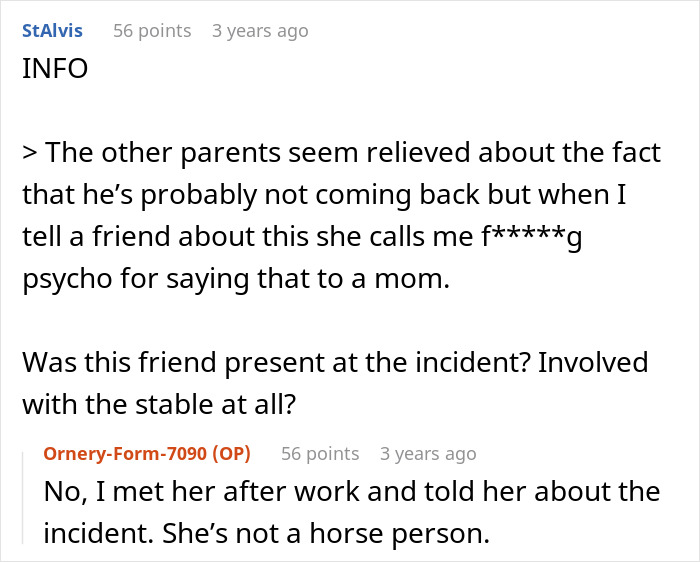
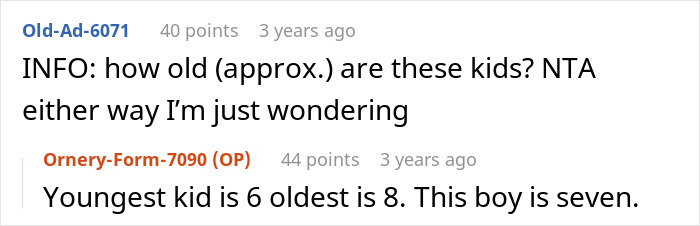
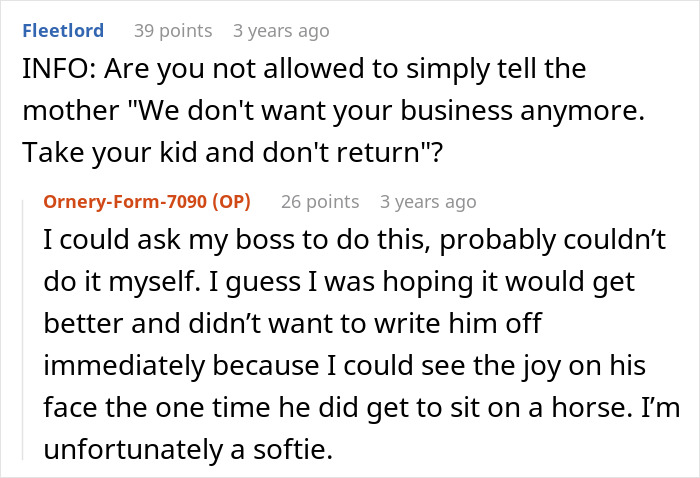
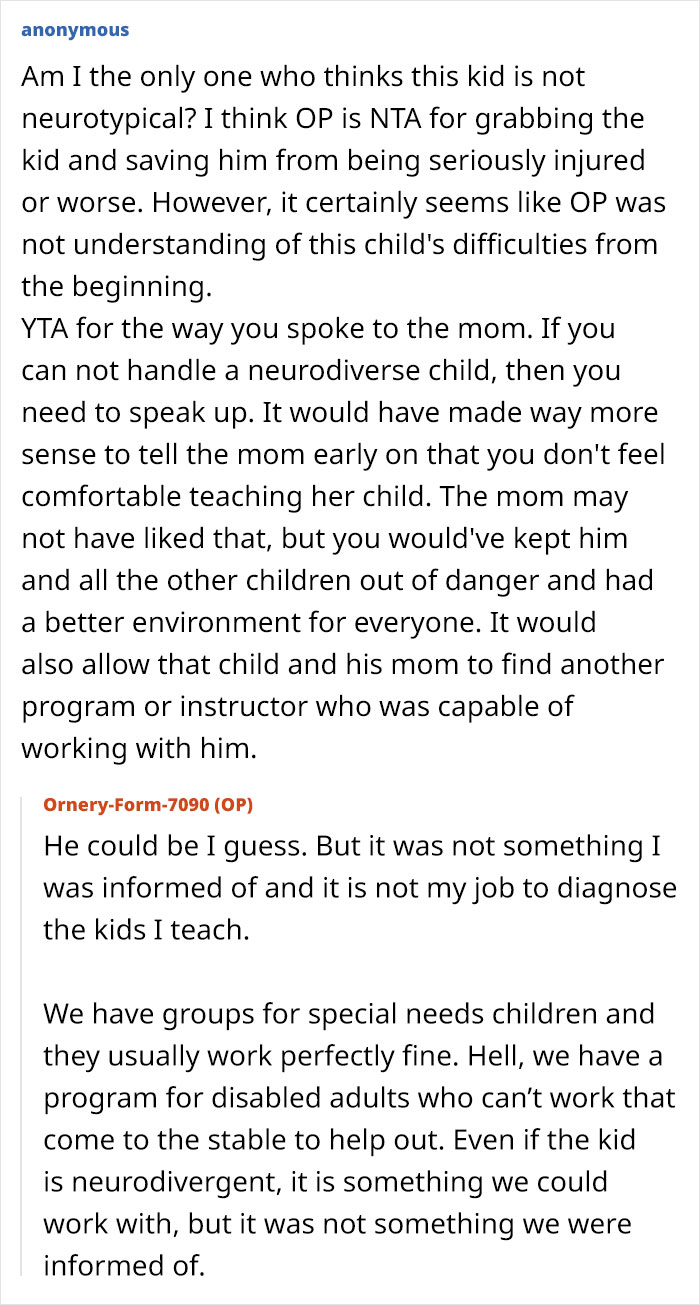
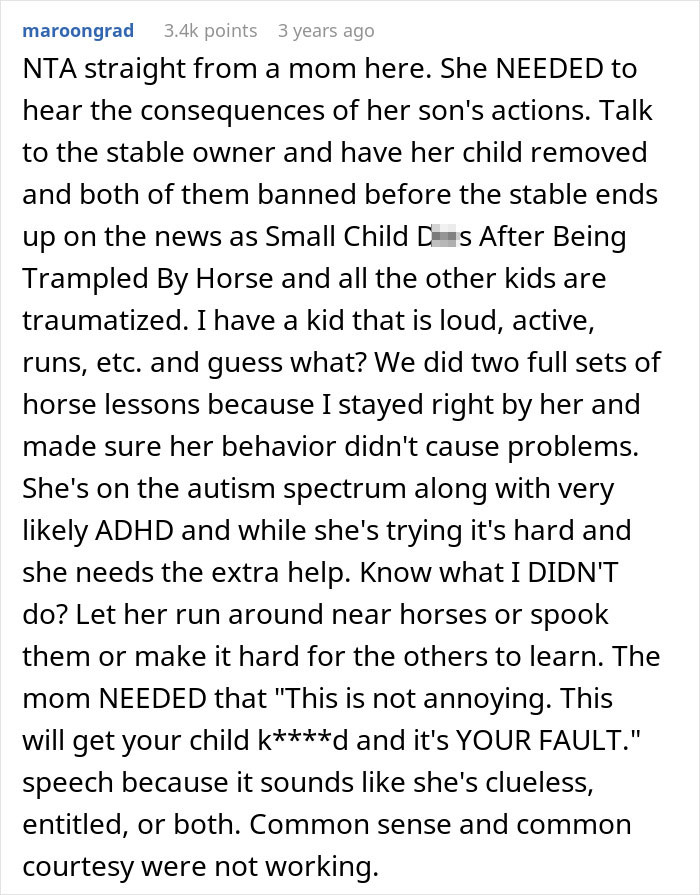
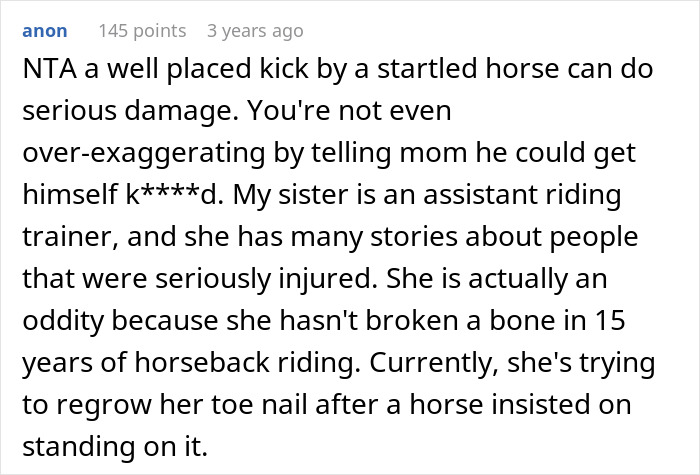
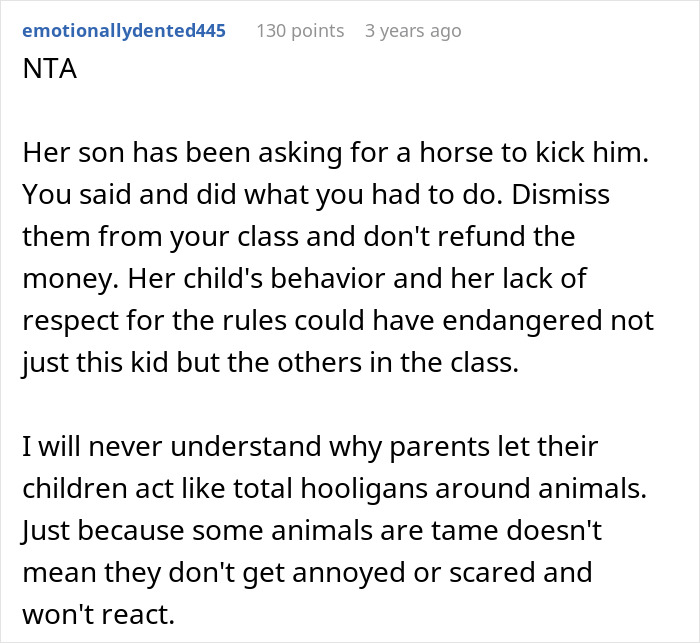
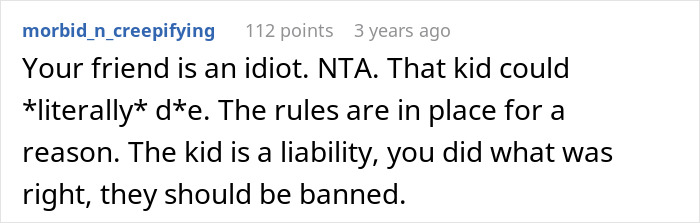
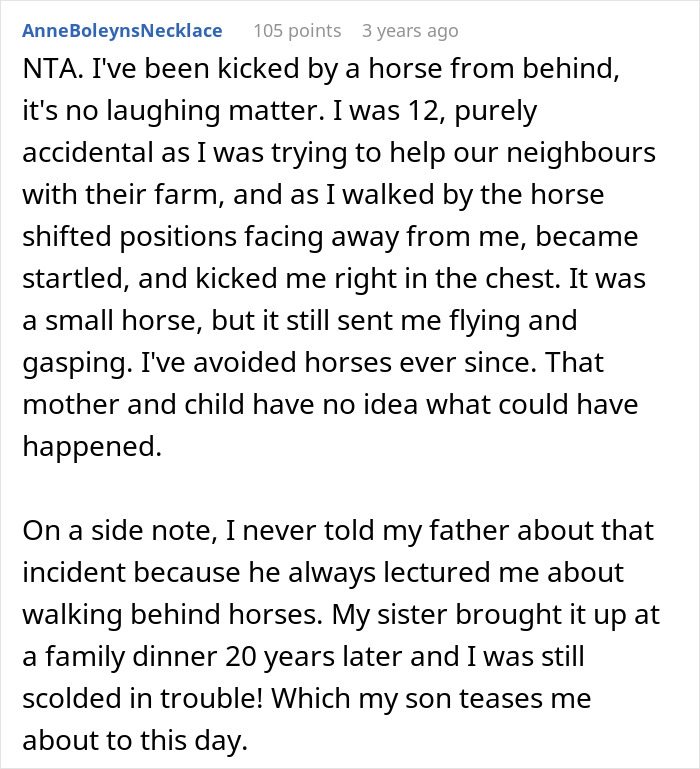
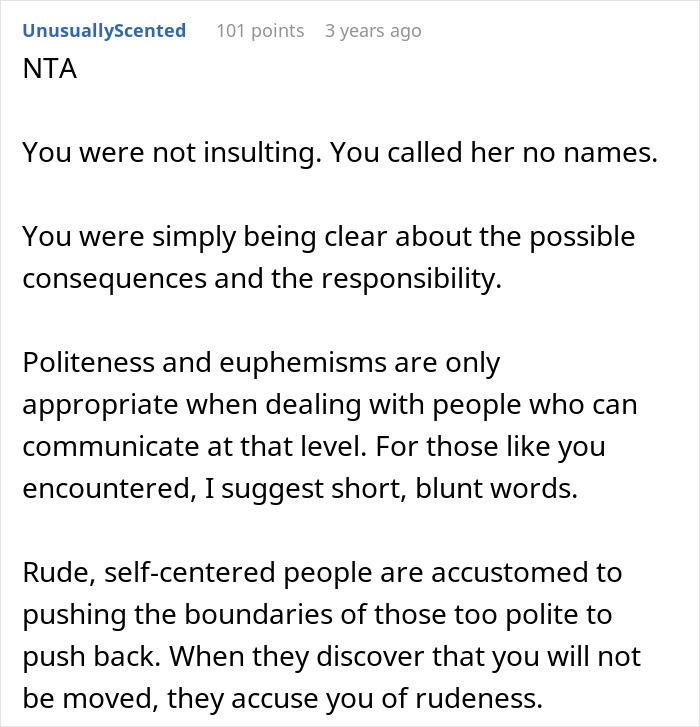
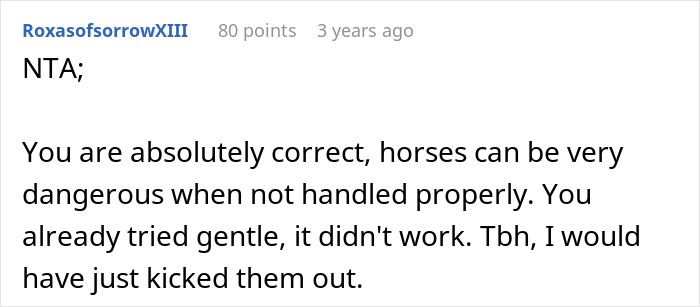
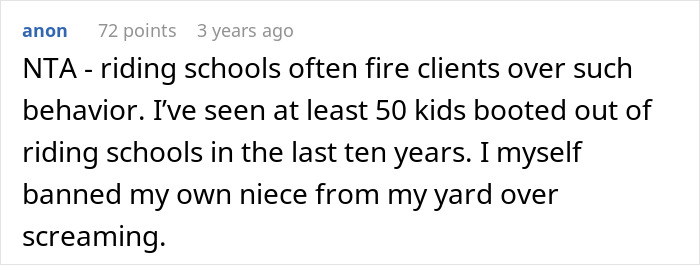
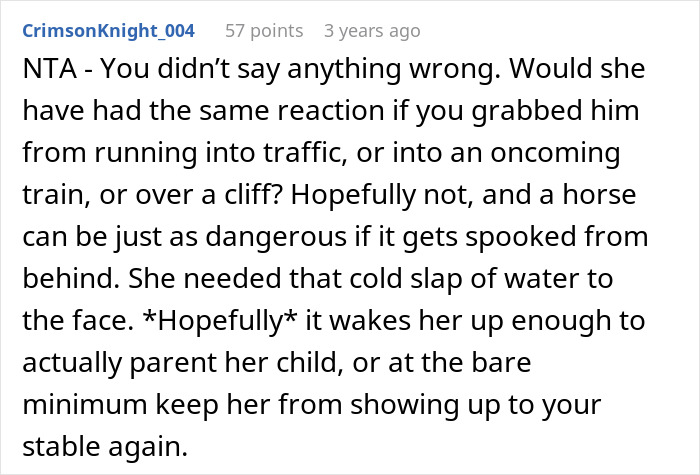
The majority of internet users thought that the worker was right to stand her ground and enforce boundaries
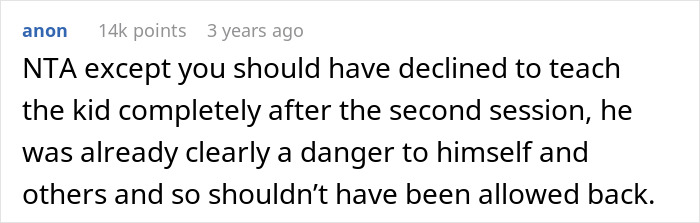
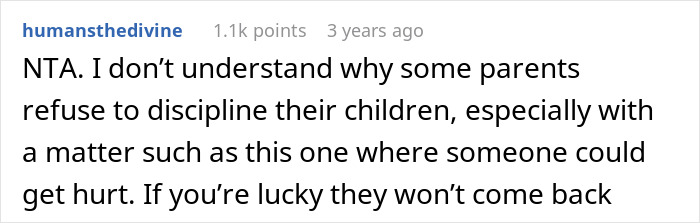
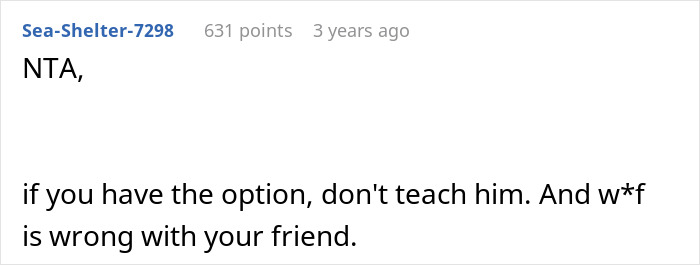

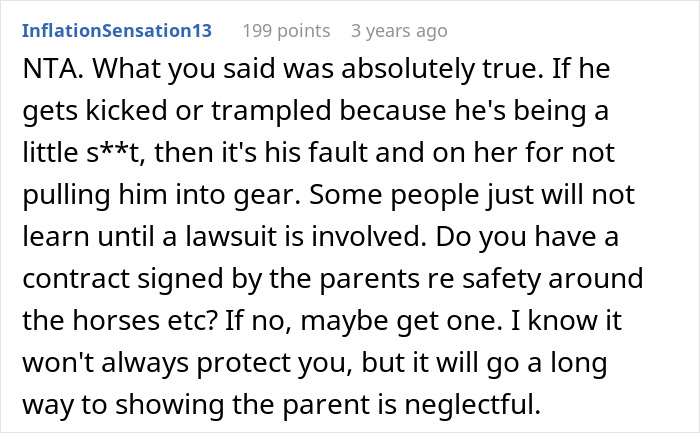
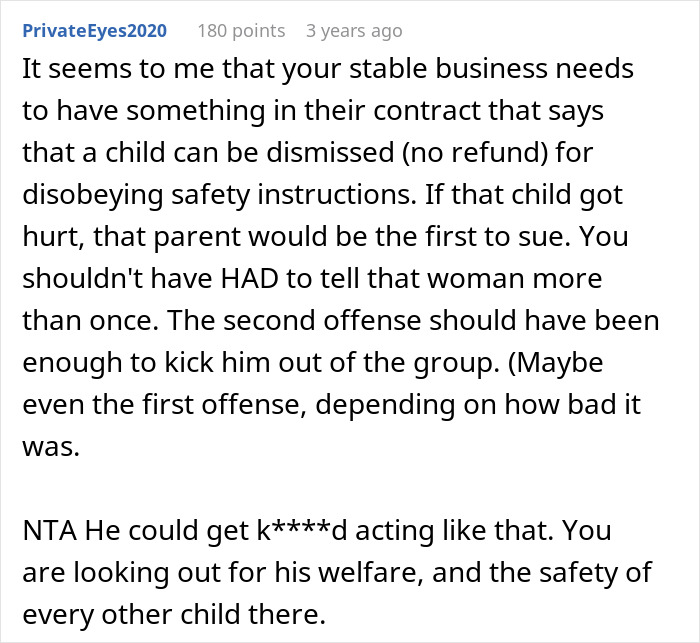


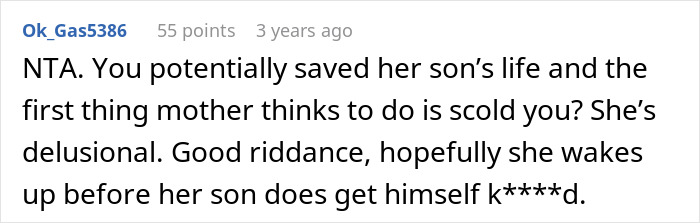
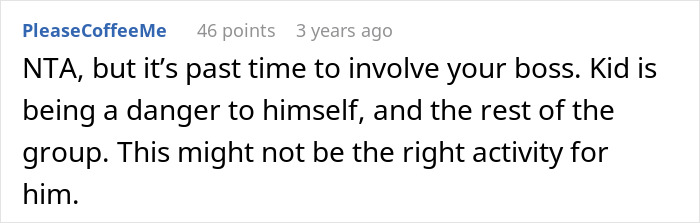
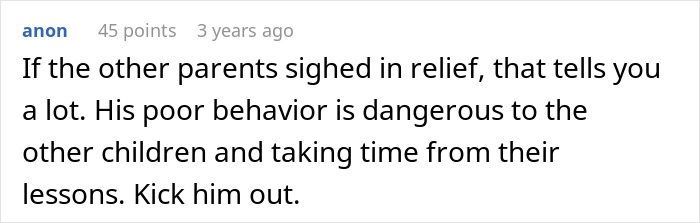
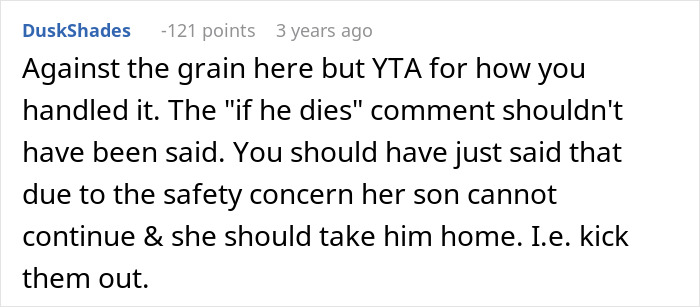
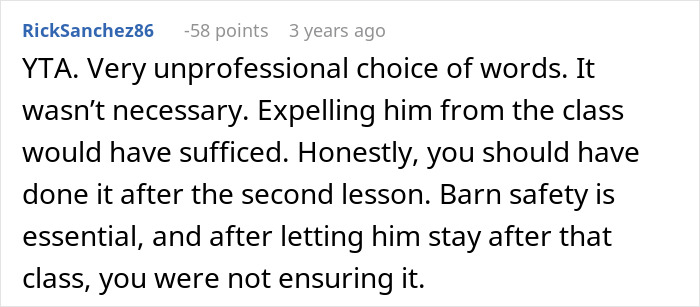
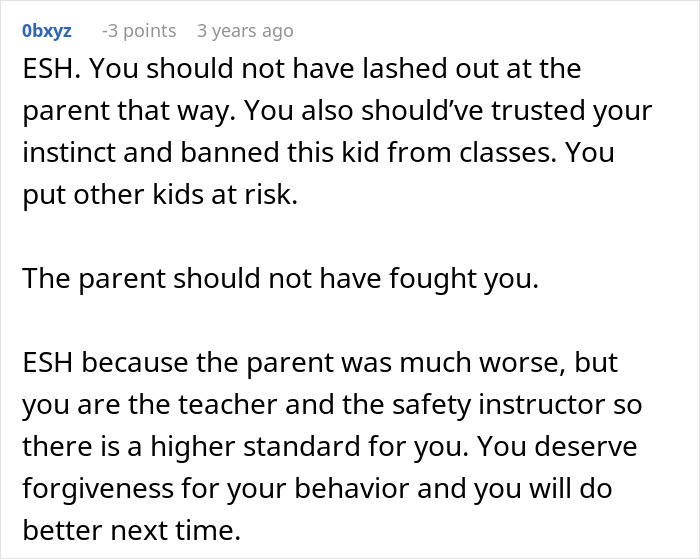
Not everyone was on the same page, however. Some readers chose to criticize the author instead

The stable worker later shared a horrific update. Things escalated beyond anything anyone expected
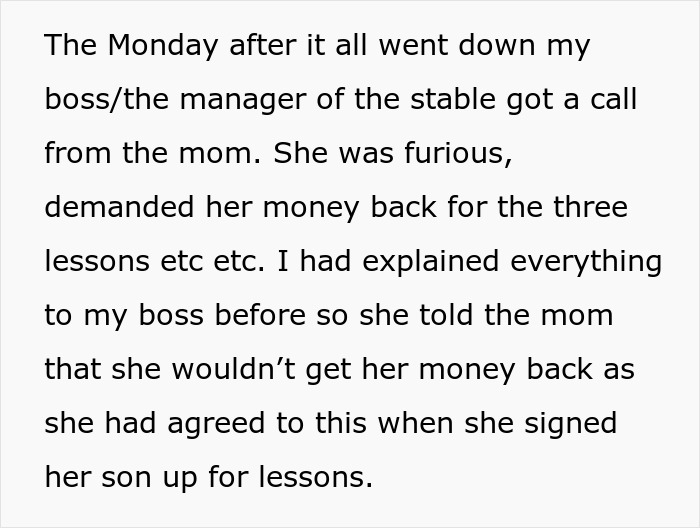
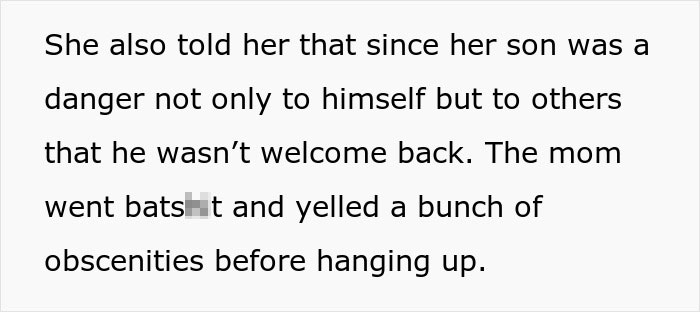

Image credits: Olga Lioncat / Pexels (not the actual photo)


Image credits: Jani Kantokoski / Pexels (not the actual photo)
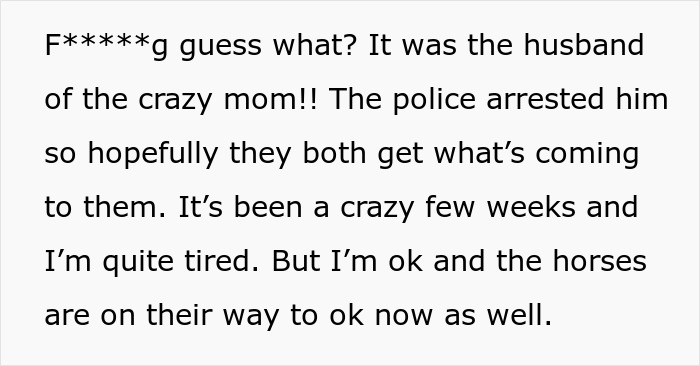
Image credits: Ornery-Form-7090
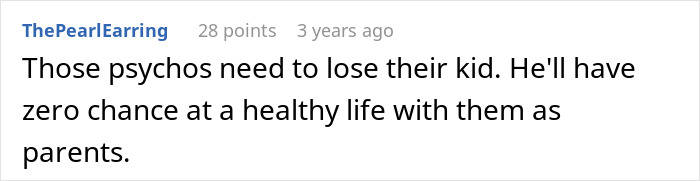
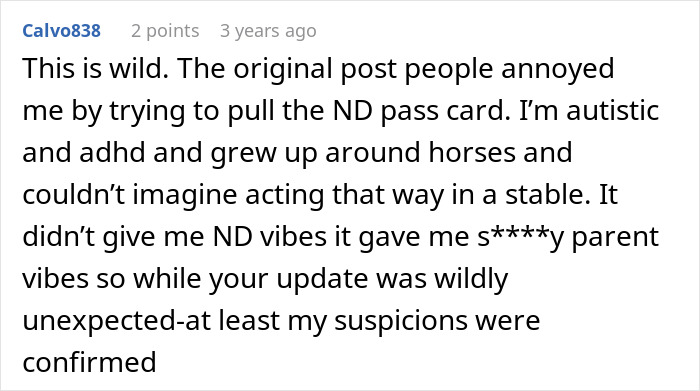
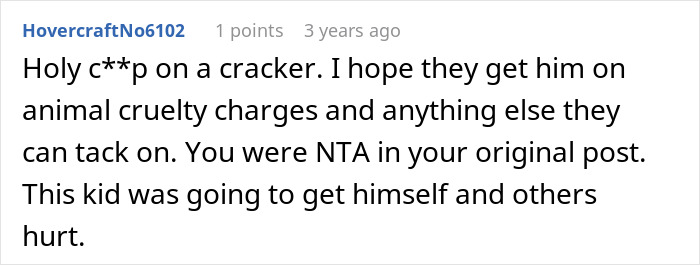
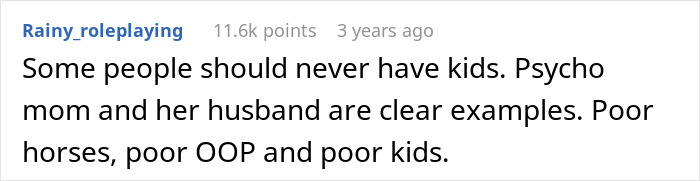
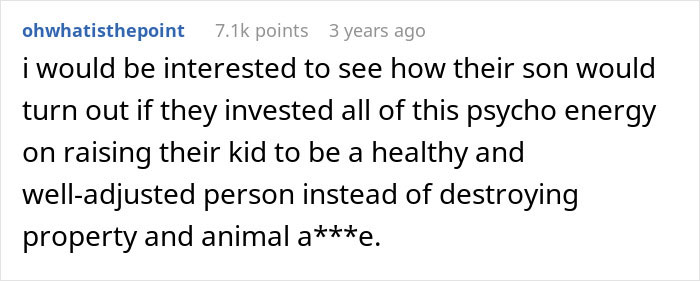
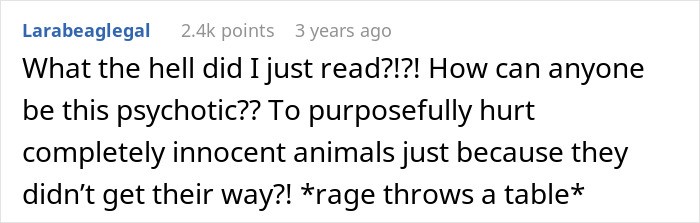
People were utterly shocked by what they read



 Follow Us