A 21-year-old woman has sparked a wave of concern online after revealing that every time she showers at home, she develops unusual symptoms that disappear completely whenever she showers anywhere else.
The woman, who shared her experience on Reddit, said she has spent years trying to figure out why a simple shower in her father’s home leaves her feeling unwell for hours afterward.
Her account quickly turned into an internet mystery, with thousands of users offering theories ranging from carbon monoxide exposure to hidden mold and even stray electrical current.
As the speculation spread, environmental health experts say that while several of those theories deserve consideration, the fact that her symptoms occur only in one specific shower may provide the biggest clue to what’s actually happening.
A woman claims she feels unusually ill after showering at home, but never experiences the same symptoms anywhere else

Kaboompics/Pexels (not the actual photo)
According to her Reddit post, the problem has persisted for several years.
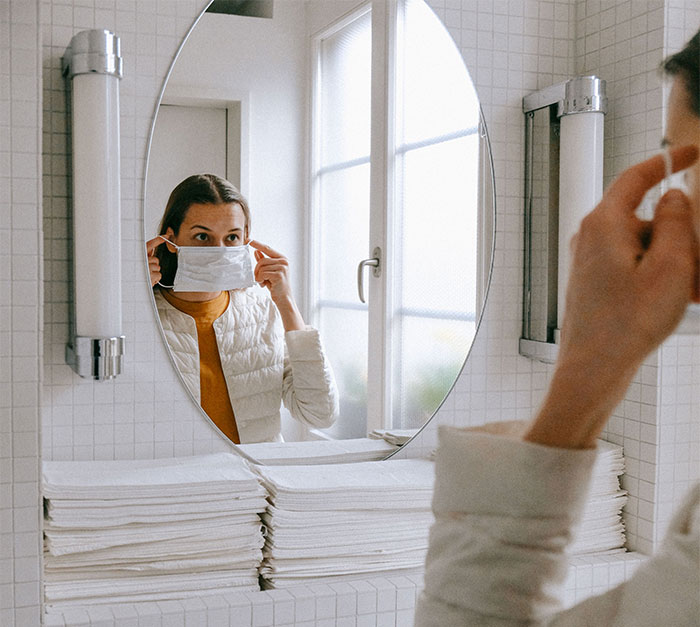
Every time she showers at home, particularly when washing her hair, she experiences what she describes as a strange “pulling” sensation across her scalp, followed by headaches, a burning feeling, and a sensation of being unable to breathe properly.
“The sensation doesn’t just go away after the shower either,” she wrote. “It seems to get worse throughout the day, and if I shower at night, I often can’t sleep because I feel so uncomfortable.”
At first, she assumed stress or lingering effects from COVID-19 might be responsible.


Kaboompics/Pexels (not the actual photo)
But after repeatedly noticing the same pattern, she became convinced something inside her home was triggering the symptoms.
“When I shower at a hotel, friend’s house, or just anywhere else, I feel completely fine,” she explained. “Even using a pool shower doesn’t cause it, and washing my hair in my own sink is much better.”
Over the years, she has tried nearly everything she could think of to solve the mystery.
She deep-cleaned the shower, let the water run before getting in, soaked the showerhead in apple cider vinegar, replaced the showerhead entirely, switched shampoos and hair products, and even looked into the home’s aging boiler.
Gustavo Fring/Pexels (not the actual photo)
Despite all her efforts, nothing changed. Making matters worse, she said her father doesn’t believe anything is wrong.
According to the woman, he rarely uses the shower himself, preferring to wash in the sink upstairs, and dismisses her concerns because she is the only person experiencing the symptoms.
“I’ve tried asking him to check things out, but unfortunately he’s very stubborn and refuses to believe there’s anything wrong,” she wrote. “He genuinely thinks I’m imagining it.”
With few options left, she admitted she had begun wondering whether moving out might be the only way to escape whatever was making her sick.
The anonymous woman described symptoms such as a pulling sensation in her head, a burning feeling, and trouble breathing

Mart Production/Pexels (not the actual photo)

The unusual story quickly gained traction, with thousands of Reddit users trying to identify what could be making the woman sick.
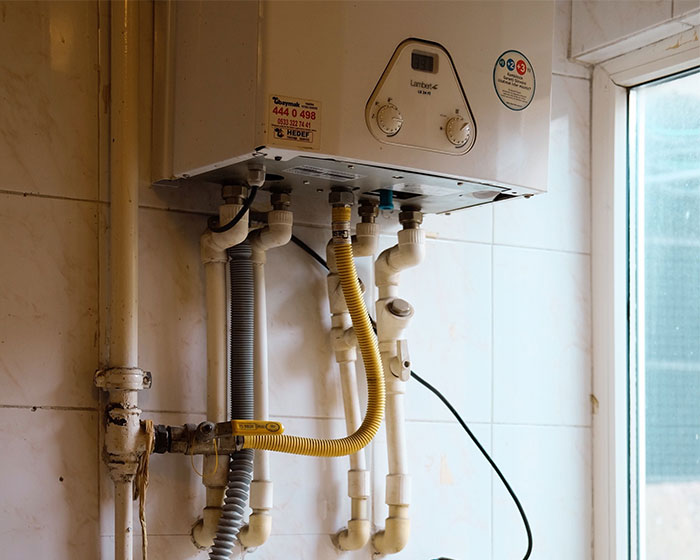
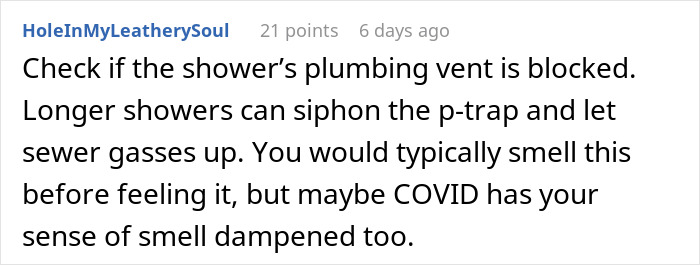
One of the most common concerns centered on carbon monoxide exposure from an older gas-powered boiler or water heater.
“This happened to someone I know,” one commenter wrote. “Their on-demand tankless water heater wasn’t properly vented. It was releasing carbon monoxide into the bathroom. They got really sick one night while taking a bath.”
Others urged her to install a carbon monoxide detector immediately.
Another user suggested, “Mold in the shower stall! It happened to me and my family. We kept getting sick until we opened a wall and found mold growing behind it.”
Liliana Drew/Pexels (not the actual photo)
Some commenters wondered whether an electrical fault or stray voltage in the plumbing could be responsible.
“Put a voltage tester on the shower head,” one person advised.
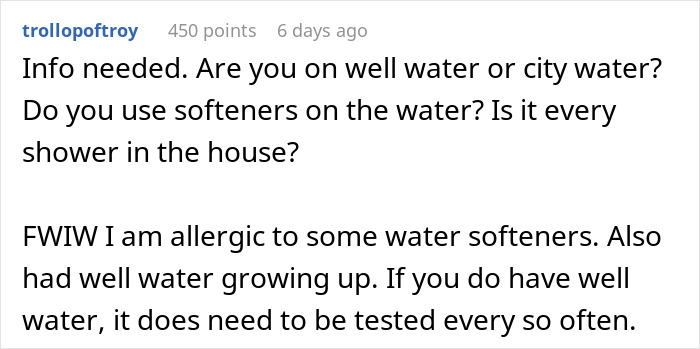
Others questioned whether hard well water, chemicals in the water supply, poor bathroom ventilation, or even the position of her head while washing her hair could be triggering the episodes.
As the theories multiplied, experts said the answer lies less in guessing every possible hazard and more in ruling them out one by one.
Netizens proposed everything from carbon monoxide to mold, but experts say some theories deserve far more attention than others
Yosuke Ota/Unsplash (not the actual photo)
Dr. Ian Mudway, Associate Professor of Environmental Toxicology at Imperial College London, said unusual cases like this often attract dozens of dramatic explanations online, but solving them requires a far more methodical approach.
“Speculation inflates possibility, but elimination reveals truth,” he told Bored Panda.
Rather than assuming every theory is equally likely, he said investigators should systematically rule out hazards that fail the basic tests of physics, chemistry, and human physiology.
The fact that the woman’s symptoms appear only in one bathroom and disappear when she showers elsewhere is, in his view, one of the most important clues.

Darya Grey_Owl/Pexels (not the actual photo)
“A scenario where symptoms occur strictly within one room and resolve rapidly upon leaving indicates a point-source environmental hazard activated by specific local conditions,” he explained.
According to Dr. Mudway, a hot shower changes the environment dramatically by increasing heat, humidity, steam, and aerosolized particles, potentially turning an otherwise unnoticed problem into an exposure that affects the person breathing inside the room.
That, he said, points investigators toward the bathroom environment itself rather than the act of showering.
Among the many theories shared online, carbon monoxide was one that experts agreed should be investigated immediately because of the potential danger it poses.
One environmental toxicologist emphasized, “Speculation inflates possibility, but elimination reveals truth”

Nathan J Hilton/Pexels (not the actual photo)

Dr. Mudway said verifying the absence of hazardous gases is “the non-negotiable first step.”
Carbon monoxide, which can be released by a malfunctioning gas water heater or boiler, is odorless and colorless, making it impossible to detect without a monitor.
“It binds to hemoglobin and starves the body of oxygen,” he explained, noting that headaches, dizziness, confusion, and shortness of breath are all classic warning signs.
Medical advisor with a toxicology background Dr. Muhammad Suffyan, agreed that the woman’s older boiler makes the theory plausible enough to investigate.
“The heating units are working hard when hot water is used constantly, and the symptoms of carbon monoxide p**soning are present,” he said.
Fatih Kılıç/Pexels (not the actual photo)
He added that the lingering drowsiness she described after showering stood out because carbon monoxide can continue affecting the body even after exposure ends.
“The simplest method of determining this is to set a detector in the heater room and wait one day for the answer.”
However, Dr. Mudway cautioned that carbon monoxide alone does not fully account for every symptom she described.
Because the gas itself is not chemically irritating, it would not normally explain the burning sensation unless another irritant was present alongside it.
Hidden mold was another theory repeatedly raised by Reddit users, and experts say it cannot be dismissed, although it may not tell the whole story either.
Carbon monoxide is among the first theories experts recommend investigating, calling it “the non-negotiable first step”

Jan van der Wolf/Pexels (not the actual photo)
“Mold present in a damp bathroom remains a genuine environmental hazard capable of causing lingering sinus issues, chronic inflammation, or allergic reactions over time,” Dr. Mudway said.
However, he noted that mold exposure alone doesn’t fully explain why the woman’s symptoms appear almost immediately while showering and improve once she leaves the bathroom.
Instead, he believes the shower itself may be activating something in the room.
“A hot shower introduces elevated ambient temperature, high relative humidity, steam aerosolization, and confined airflow,” he explained. “These factors act as an activation mechanism.”
Dr. Suffyan agreed that steam can make hidden problems much worse.

Jeremy Wong/Pexels (not the actual photo)
“Black molds are activated by steam, and spores and mycotoxins are released into your lungs by high heat and humidity,” he said.
“If someone is sensitive to black mold, they might feel burning sensations in their nose and throat as well as tightness in their chest in a matter of minutes.”
He added that musty odors becoming stronger when the shower is running or discoloration around tiles and grout, could point toward hidden mold growth.
Still, both experts stressed that mold is only one possibility.
According to Dr. Mudway, steam can also concentrate airborne chemicals or gases inside a small, poorly ventilated bathroom, meaning the trigger could be something other than mold itself.
Doctors say the shower may simply be exposing her to something already present in the bathroom
Anna Shvets/Pexels (not the actual photo)
While some Reddit users suggested stray electrical current, contaminated water, or even the woman’s shower posture could be responsible, experts said those explanations are either less likely or depend heavily on the home’s specific conditions.
Dr. Mudway was particularly skeptical of the electrical theory.
“Attributing systemic respiratory distress or vascular headaches to stray voltage in plumbing is medically and physically unsound,” he said.
He explained that faulty grounding would be expected to cause localized electric shocks or tingling rather than headaches, breathing problems, and a burning sensation.
Water quality, however, is more complicated.
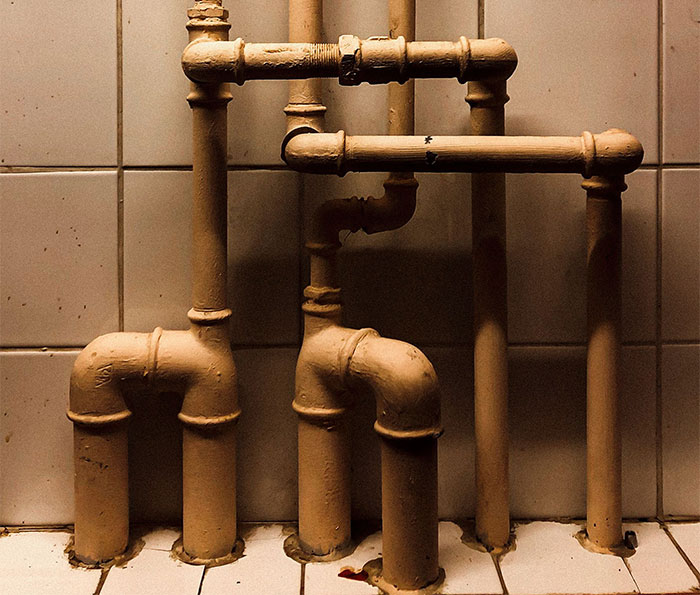
According to Dr. Suffyan, older plumbing systems or homes supplied by private wells could potentially expose occupants to contaminants that become airborne when heated.
“The water may actually contain volatile substances, especially if the home utilizes well water or has old pipes, since chlorine byproducts and metals become volatile once the water is heated,” he said.
Bayram Er/Pexels (not the actual photo)
Dr. Mudway added that the levels of chlorine and other disinfectants normally found in municipal tap water are generally too low to trigger sudden respiratory symptoms during a routine shower.
Instead, he believes household chemicals, cleaning products, or other airborne irritants present inside the bathroom are more plausible explanations.
The woman’s observation that the symptoms mainly appear while washing her hair also caught the experts’ attention.
Rather than pointing to a shampoo allergy, which she ruled out by using the same products elsewhere, Dr. Mudway said it may simply reflect longer exposure.
“Washing hair extends contact duration and alters physical posture,” he explained.
Leaning beneath the showerhead places a person’s face directly inside the rising plume of warm steam, increasing the amount of whatever is suspended in the air.
The woman’s history of Premenstrual Dysphoric Disorder (PMDD) raised another possible explanation, but one crucial detail didn’t fit

cottonbro studio/Pexels (not the actual photo)
A review of the woman’s previous Reddit activity revealed that she had previously claimed she likely has Premenstrual Dysphoric Disorder (PMDD).
It’s a hormone-related condition known to trigger severe headaches, migraines, anxiety, and heightened sensory sensitivity before menstruation.
At first glance, that seemed like a possible explanation for at least some of the symptoms she described.
However, if PMDD were solely responsible, why would the headaches, burning sensation, and breathing difficulties happen only in one specific shower?
OB-GYN Dr. Sophia Yen, co-founder and CEO of Pandia Health, told Bored Panda that the location-specific pattern makes an environmental trigger far more likely than PMDD alone.
“The fact that it only happens in a specific shower suggests that it is something with that shower — such as mold, a chemical used to clean it, or something in the plumbing,” she explained.

Armin Rimoldi/Pexels (not the actual photo)
That doesn’t mean PMDD is irrelevant, however.
According to Dr. Yen, hormonal changes before menstruation can make some people more sensitive to environmental irritants.
“The premenstrual phase is associated with allergies,” she said. “If you have asthma or other allergic problems, they will often be worse before your period.”
In other words, PMDD may make someone more vulnerable to reacting to an existing environmental trigger, but it would not explain why the symptoms appear in only one bathroom while disappearing everywhere else.
As of this writing, the original poster has shared an update, revealing that after receiving advice from commenters, she “ordered a CO detector and a mold test kit. I’ll let you guys know if anything shows up.”
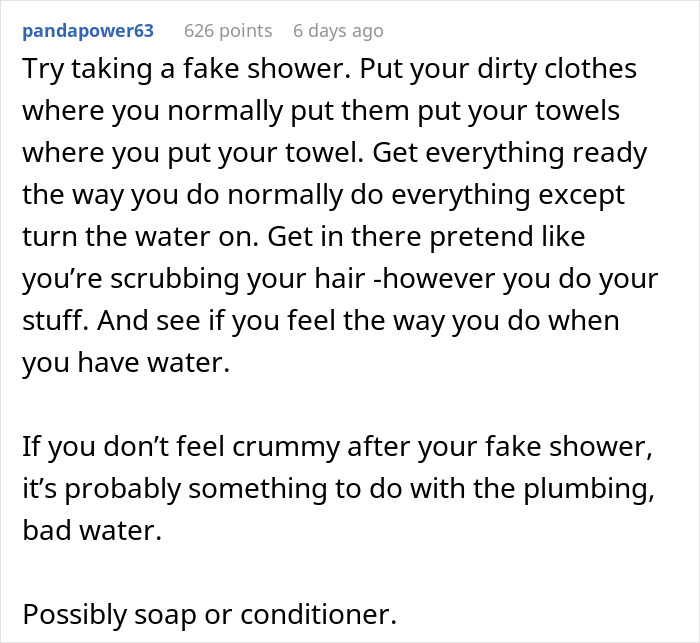
“Try taking a fake shower. If you don’t feel crummy after, it’s probably something to do with the plumbing,” one user suggested


 Follow Us