A dramatic bridal transformation that recently went viral with over 3 million views reignited a centuries-old discourse about colorism in South Asia.
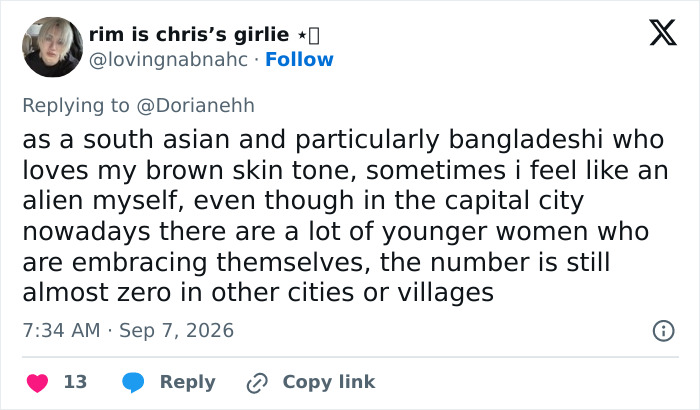
Colorism in South Asia, more specifically the Indian Subcontinent, is deeply rooted in the preference for lighter skin and the belief that fairness is associated with beauty, desirability, and even marriageability.
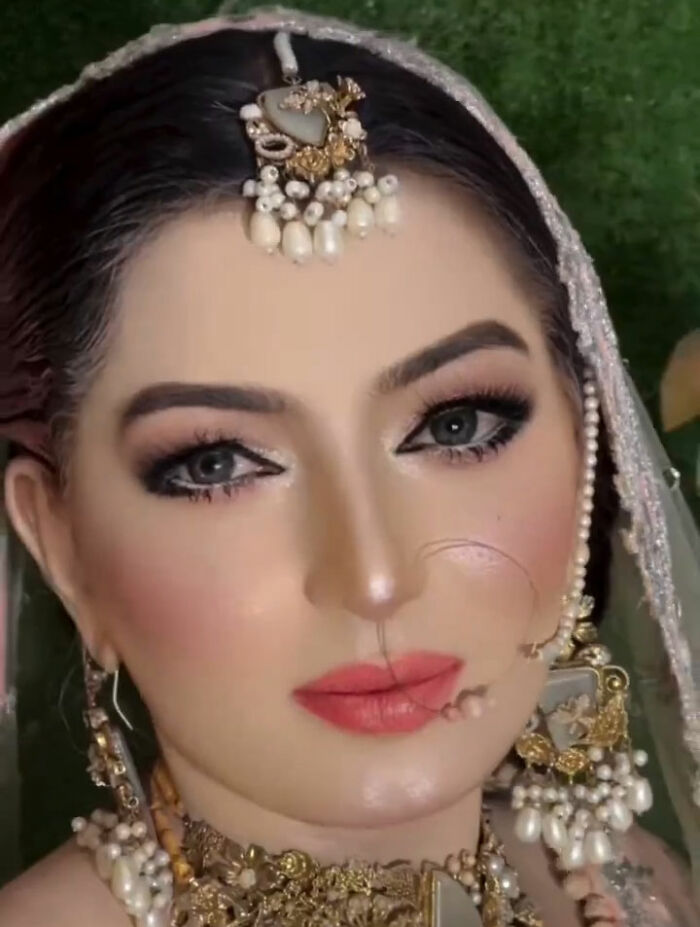
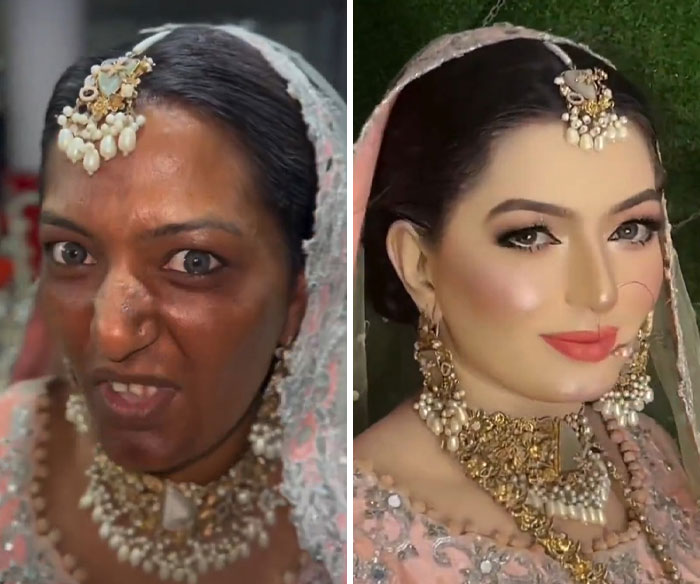
In the viral video, the bride’s final look turned out to be almost unrecognizable from her pre-makeup appearance, with a much paler skin tone, prompting confusion and scrutiny from netizens.
“Why is the makeup a different color from her skin?” one person said.
A woman went viral after her bridal makeup drew allegations of “colorism”
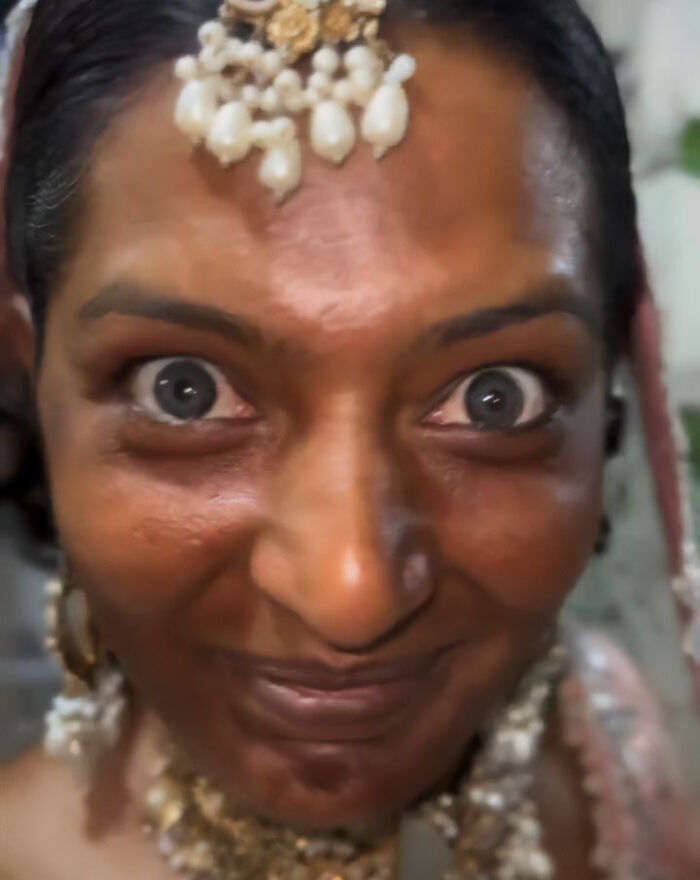
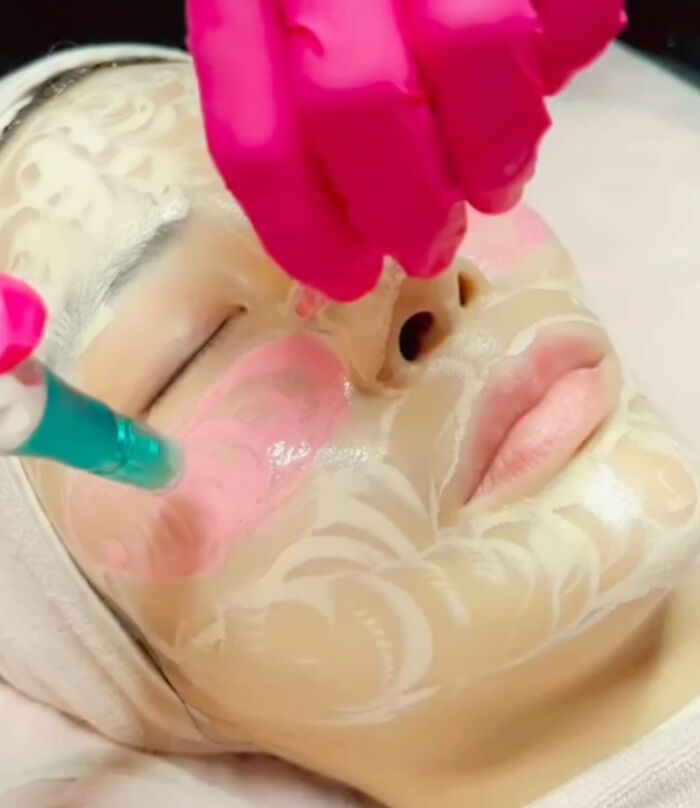
The video begins with a woman in what seems to be her bridal dress and jewelry, but no makeup on her face.
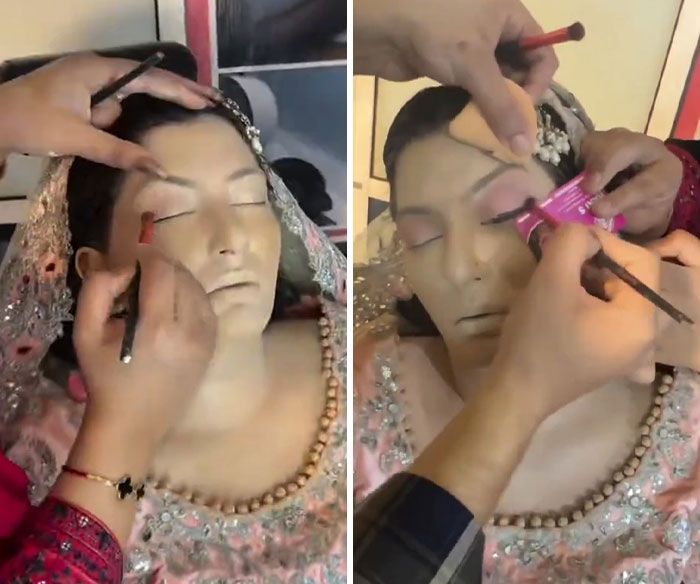
Over the course of the clip, multiple makeup artists work on her face, starting with a foundation shade much lighter than her original skin color.
At the end, the bride shows off the final look, accentuated by lash extensions, glittering eyeshadow, and a soft pink lip color.

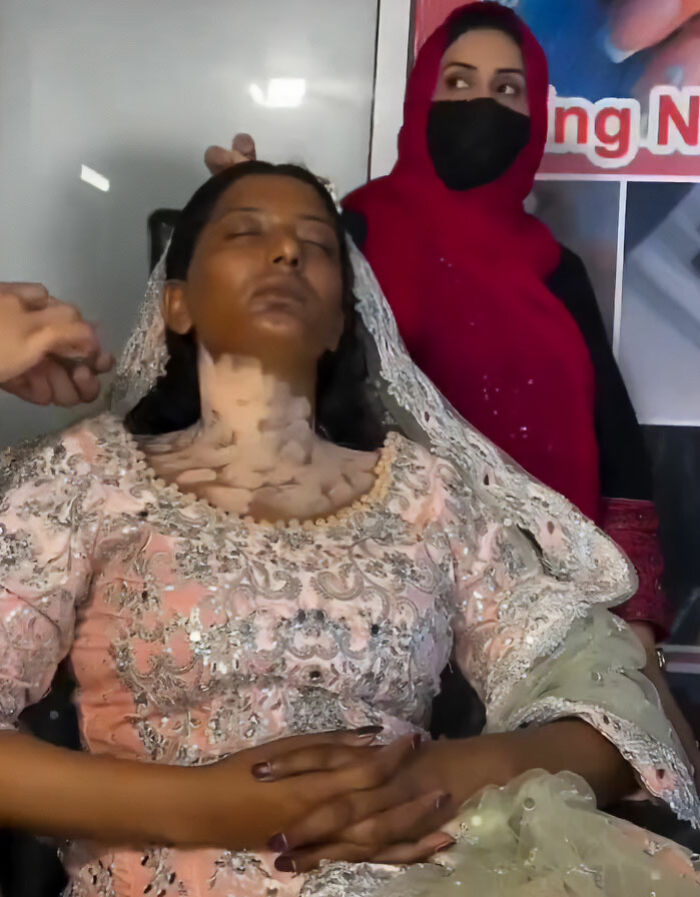
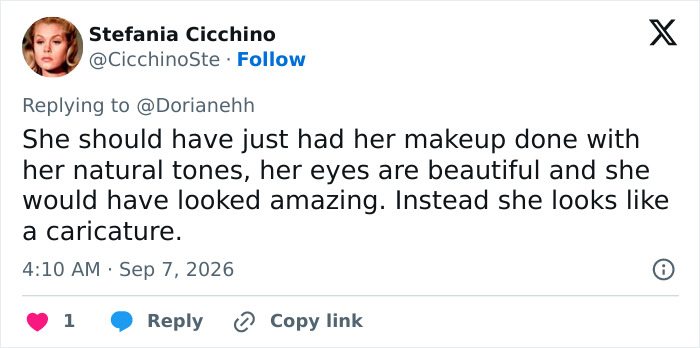
Some viewers called it “cheating” and sympathized with the supposed groom. Others thought that the makeup itself was a “travesty” and that it should have highlighted her natural features instead.
“Her boyfriend must’ve d**d of a heart attack when he woke up,” one said. Another wrote, “Dude is gonna go for milk the next day and never come back.”
“All that makeup to look like a mid white lady in an identity crisis is a level of self-hate and delusion I am grateful never to have experienced!!! She was beautiful before she played dress-up,” wrote a third.
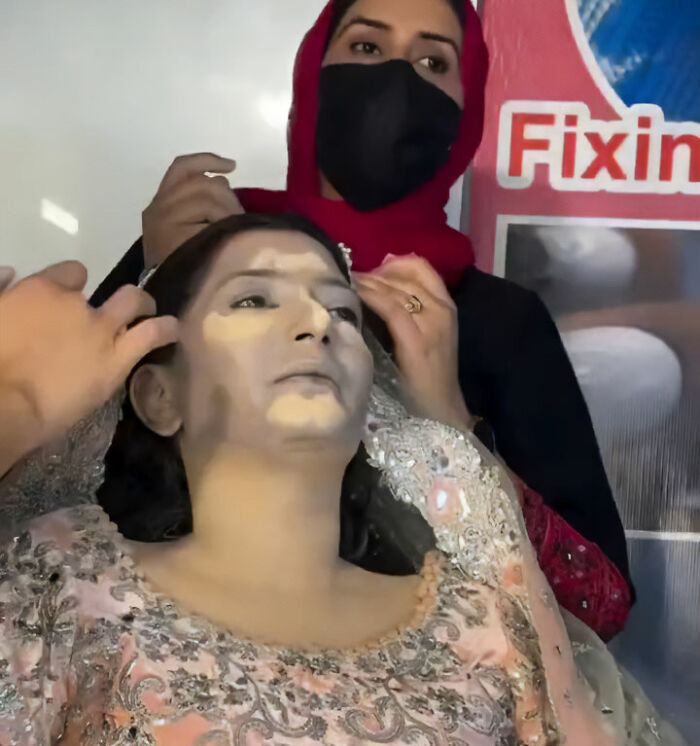
“This is horrifying! She looks like a mannequin,” a fourth said.
A fifth commented, “She already looked okay. Foundation in her tone and makeup would have still made her beautiful.”
“We see how racism is also in the very people who are its victims; the woman wanted to look white to look better, supposedly,” said a sixth.
Experts blame casteism and colonialism, among other factors, for the prevalence of colorism in South Asian communities
According to social study experts, the origins of an all-pervasive colorism in the Indian subcontinent are complex and layered. They cannot accurately be traced back to any one point in history.
But they often agree on three major factors that might have shaped it: the caste system, European colonialism, and the popularity of Western media.
During 200 years of British rule, lighter skin became increasingly associated with power and social privilege, while European beauty standards reinforced the idea that lighter skin was superior.
However, light-skin preference was prevalent even during the Vedic era, which predates European colonization by more than two millennia.
“There is this idea of the occupational hierarchy of caste getting overlaid onto skin color—that you have these different castes who performed different kinds of labor ranging from managing people, governing states, reading and interpreting religious texts, using intellectual skills to hard manual labor and that these castes can be graded according to skin color,” said Radhika Parameswaran, a published professor of cultural studies at at Indiana University, Bloomington.

“The castes that are not connected to manual labor outdoors tend to have higher status and prestige according to social norms. Lighter skin color is viewed as a status symbol for the middle and upper castes, who did not have to do manual labor.”
Thousands of years later, the culture has continued to influence how an individual’s desirability is measured, especially as a potential marriage partner.
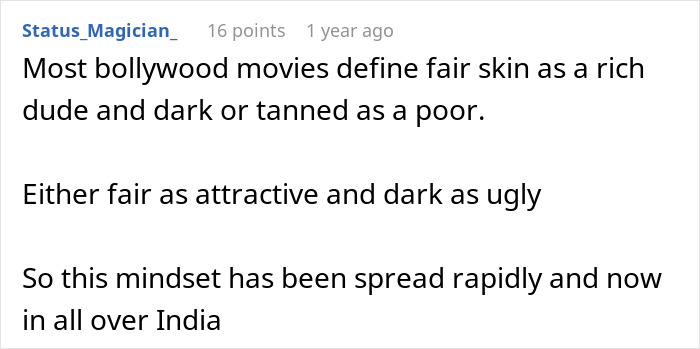
In a 2018 study, researchers showed over a hundred mothers otherwise identical profiles featuring either lighter or darker-skinned photographs of potential brides and grooms for their children. The lighter-skinned candidates received higher ratings.
The local film industry, especially Bollywood, and the production and promotion of “fairness” or “skin-lightening” products have further perpetuated this culture.
The culture has been upheld by global companies and their “skin-lightening” products

Anglo-Dutch multinational company Unilever had long been criticized by Indian activists for their infamous Fair & Lovely face cream, whose advertisements often featured blatant themes of colorism, endorsed by top Bollywood actresses.
Most of their campaigns in the 1990s, 2000s, and 2010s featured a dark-skinned young woman who was previously getting rejected by recruiters and potential grooms because of her skin color, but was flush with career opportunities and marriage proposals once she started using Fair & Lovely and her skin tone became multiple shades lighter.
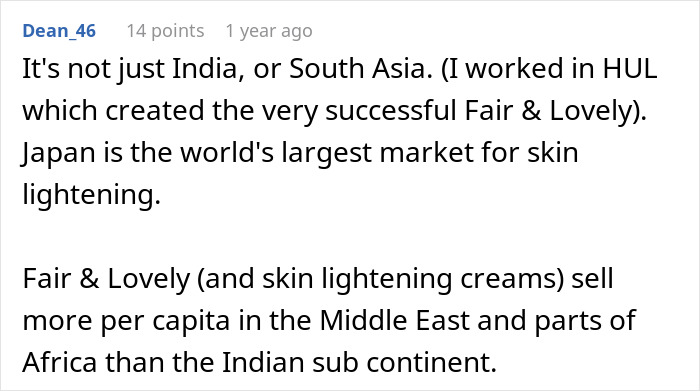
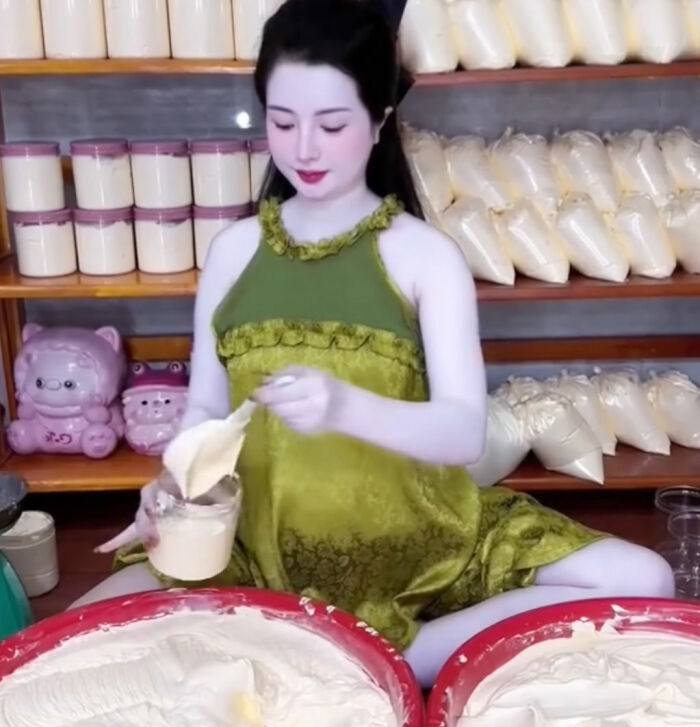
In the wake of George Floyd’s demise and the Black Lives Matter movement in 2020, Unilever decided to change the name to Glow & Lovely.
Priyanka Chopra, who debuted in Bollywood in 2003 and started working in the US in 2015 with her debut show Quantico, once appeared in a skin-lightening product ad and later expressed deep regret.
“Skin-lightening was so normalized in South Asia; it’s such a large industry that everyone was doing it. In fact, doing it is still a check mark when you are a female actor, but it’s awful,” she told Marie Claire magazine in 2021.
“It was awful for me, for a little girl who used to put talcum-powder cream on my face because I believed that dark skin was not pretty.”
Actress-YouTuber Asia Jackson, who is half-Black and half-Filipino, experienced being “othered” for being “too dark” in Japan and the Philippines.
“Colorism is so deeply woven in Filipino culture, for different reasons,” she told NBC News in 2017.
“In Asia, it’s socially acceptable to try and ‘lighten’ your skin, and to treat people who are darker differently. People just accept it,” Jackson said. “You see it happening everywhere—on billboards, light-skinned and mestiza Asian celebrities, skincare products—that tell you to whiten your skin.”
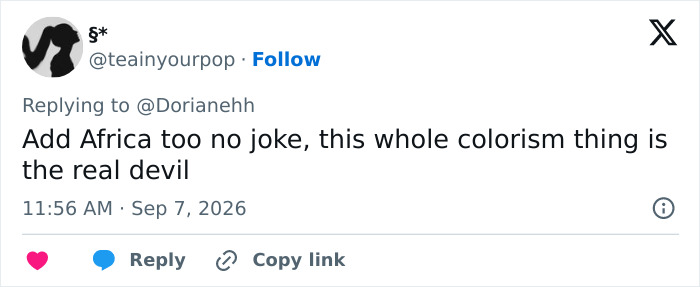
“Colorism is the real devil,” one user commented about the bridal look




 Follow Us