Lockdown did strange things to people. Stripped of routine, community, and the ordinary distractions of daily life, some people picked up new hobbies, some people baked sourdough, and some people found themselves in a full-scale spiritual crisis with nowhere to go and nothing but the internet to guide them through it. The isolation of 2020 pushed a lot of people to edges they had never been close to before.
One husband watched his wife go from zero to divorce ultimatum in a matter of days during quarantine and knew almost immediately that what was happening in his home had very little to do with religion. What he did next, and how he handled it, is a lesson to all of us.
More info: Reddit
Lockdown stripped away routine, community, and the ordinary distractions of daily life, and for some people what rushed in to fill the gap was something nobody saw coming

Image credits: ANTONI SHKRABA production / Pexels (not the actual photo)

One wife converted to Islam during quarantine and, within days, had given her husband an ultimatum to follow her or lose the marriage, with a 24-hour timeframe
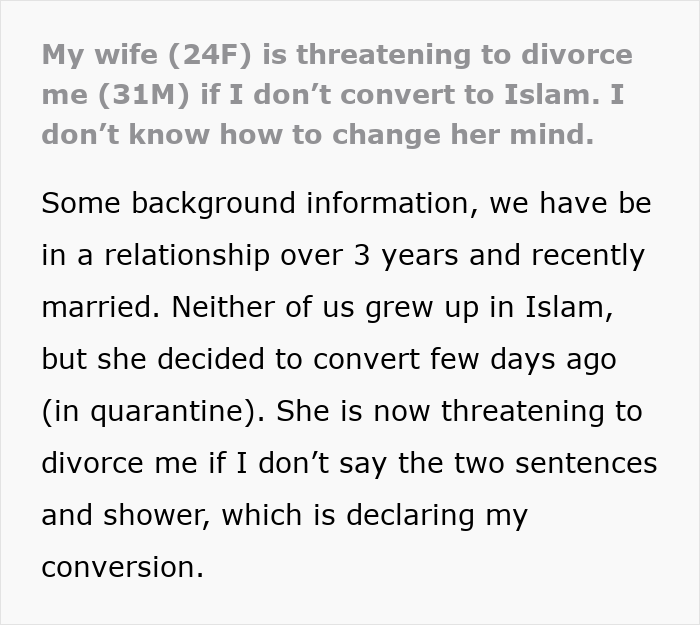
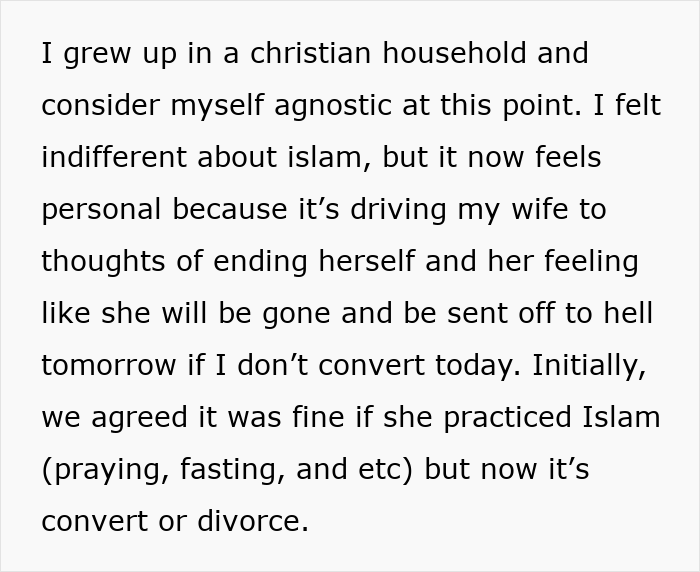
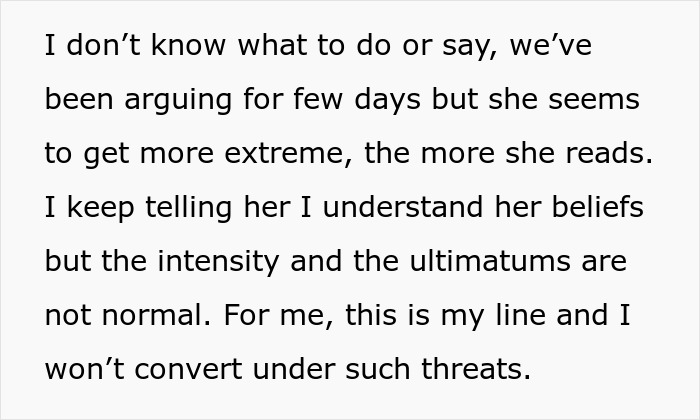

Image credits: jet-po / Magnific (not the actual photo)
He refused to convert under threat, but the more he tried to reason with her, the more extreme her position became, even going so far as to threaten harming herself
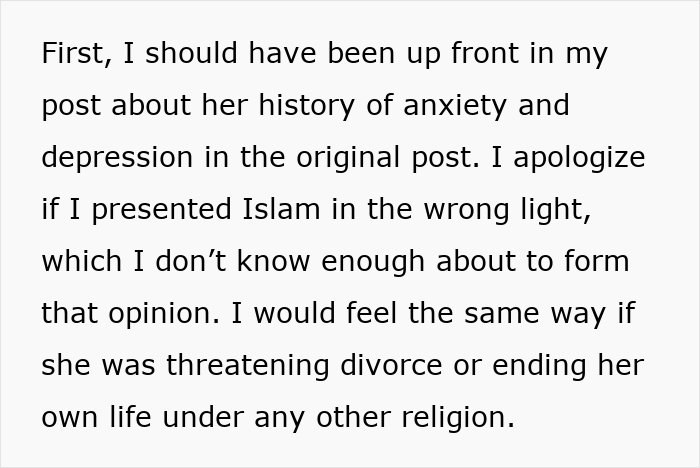
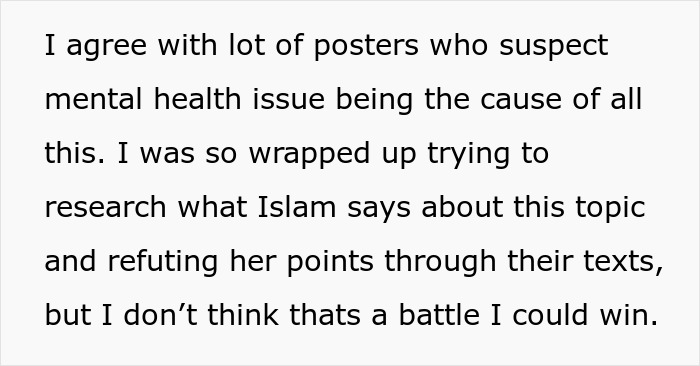
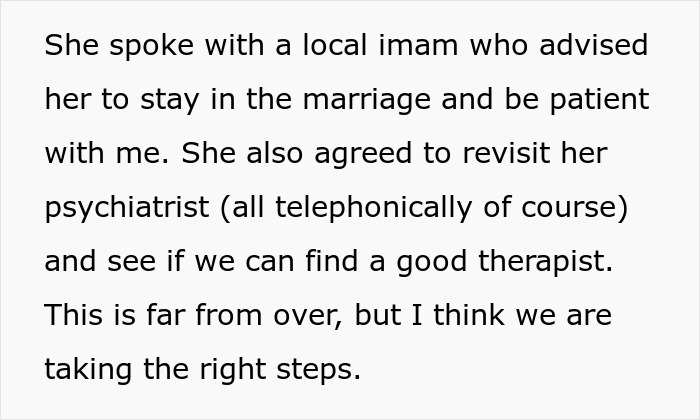
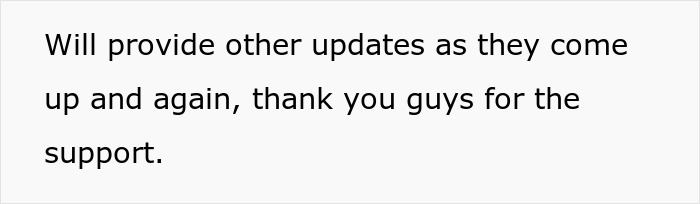

Image credits: muhammad fadly ramadhan / Pexels (not the actual photo)
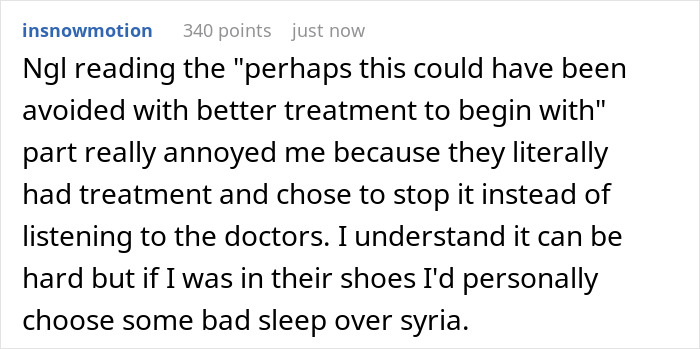
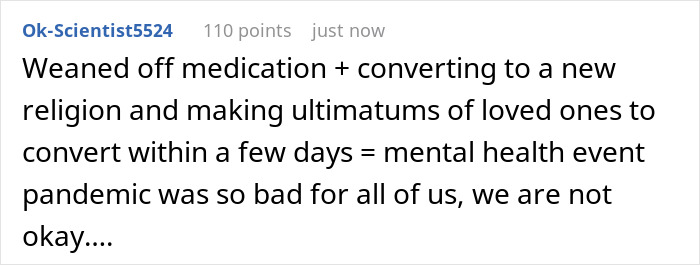
He quickly realized this was a mental health crisis, revealing she had a history of anxiety and depression and had recently stopped taking her medication
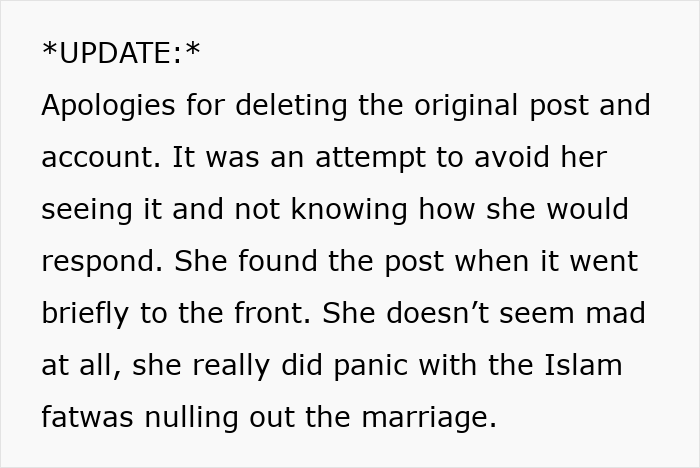
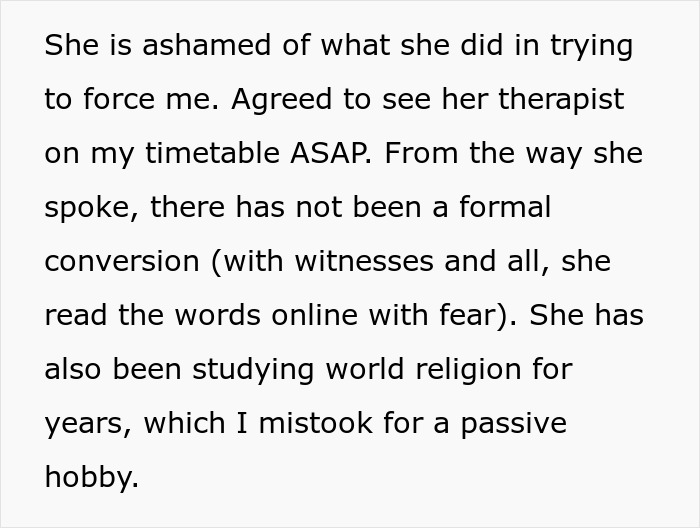
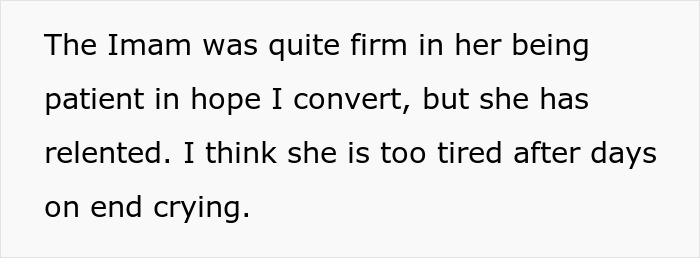

Image credits: insnowmotion
Instead of arguing about Islamic texts, he got her back to her psychiatrist, found a therapist, and set his own boundaries without punishing her for losing hers
A 31-year-old man and his 24-year-old wife had been happily together for three years. Then quarantine hit, she started reading extensively online, and within days, she had converted and was telling him he needed to do the same or the marriage was over. He had until the next day. She was convinced she would go to h**l if he did not say the words and shower to complete the conversion process.
He was agnostic, but agreed that her practicing Islam was completely fine. What he would not do was convert under threat. The more he tried to reason with her, the more extreme her position became. She was reading constantly, escalating with every article, and the ultimatums were coming with a level of urgency and desperation that did not feel like a theological debate. She was even expressing thoughts of s*******m.
The comments on his post were fairly unanimous. This was not about religion. It was a mental health crisis. He had not mentioned in his original post that she had a history of anxiety and depression and had recently weaned off her medication. She had been doing well, genuinely improving, but quarantine had removed every outlet and support structure that had been keeping her stable.
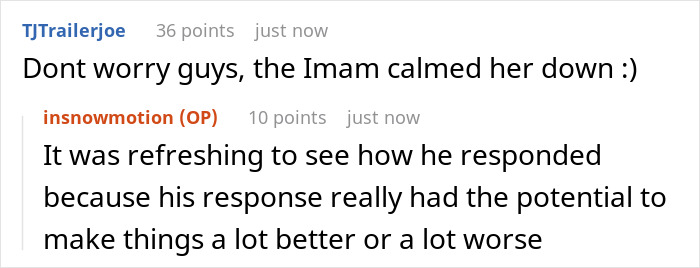
Instead of arguing with her about Islamic texts, he got her back in contact with her psychiatrist and found a therapist. A local imam she spoke with told her to stay in the marriage and be patient. She calmed down, expressed shame about the ultimatums, and agreed to treatment. He deleted his original post even though she found it briefly anyway. He was cautiously optimistic, and the internet was relieved.

Image credits: freepik / Magnific (not the actual photo)
What happened to this woman during quarantine was not as unusual as it might seem. A study found that 55% reported their religious faith had grown stronger since the pandemic began, and 57% said their spirituality had deepened. The isolation, the fear, and the loss of control that came with lockdown pushed enormous numbers of people toward faith as an anchor. She was not an outlier.
Mental health advocate Gabriel Knox explains that religion offers structure, community, hope, and reassurance, all of the things that depression systematically strips away. Belief systems provide a framework for handling extreme emotional pain and hopelessness, and depression itself can trigger what is sometimes called a dark night of the soul, a desperate search for deeper meaning and self-discovery.
Experts at Mental Health First Aid are clear about what the people closest to someone in crisis should do. Listen without judgment, be patient, avoid pushing, and recognize that mental health professionals have tools and training that love alone cannot replace. That is almost exactly what her husband did, and it is why the internet responded to his story with compassion.
He could have argued theology. He could have issued his own ultimatum. Instead, he got her back to her psychiatrist, found a therapist, and held the line on his own boundaries without punishing her for losing hers. That is not a small thing, and the outcome, fragile and unresolved as it still is, is considerably better than it could have been.
Do you think this husband handled the situation well, or would you have done something differently? Share your thoughts in the comments.
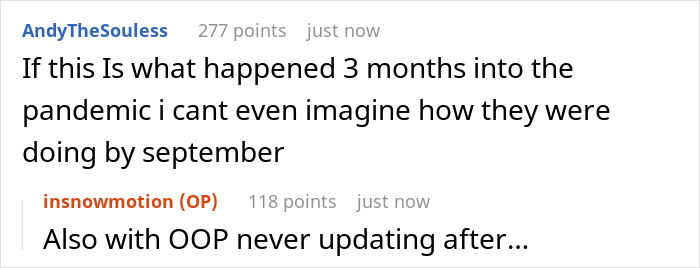
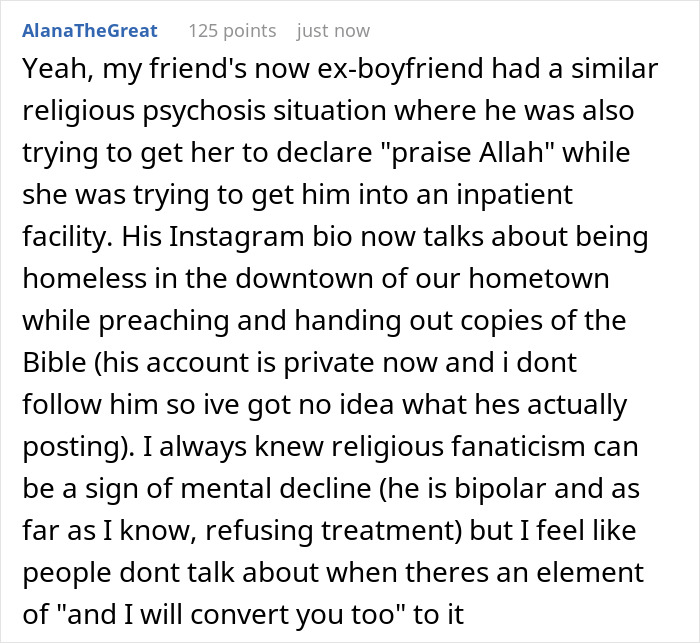
The internet flooded the comment section with concerns for her mental health, but also applauded the husband for his rational approach to the situation




 Follow Us