In a small hamlet in the Normandy countryside, a set of antique machines still whir to life to make something most of France gave up on decades ago. They belong to La Balaiterie, the workshop of Marie-Laure and Arnaud Gabriel, who make traditional sorghum-straw brooms the old way. Their process starts not at the workbench but in the field where the straw is grown.
Neither of them trained as an artisan. They spent years running an equipment hire company in Dieppe, sold it in their fifties, and launched La Balaiterie in the spring of 2020, during France’s first lockdown. Six years on, their workshop is recognized as a rare craft by the Institut pour les Savoir-Faire Français, and the couple believe they are the last in the country to master every stage of the process. Bored Panda reached out to Marie-Laure and Arnaud to hear how a humble household object became their second act, and why so many customers want brooms that look ready for takeoff.
More info: labalaiterie.fr | Instagram | Facebook
Straw brooms nearly vanished from French homes after the 1970s, but one Normandy couple fell for the craft left behind
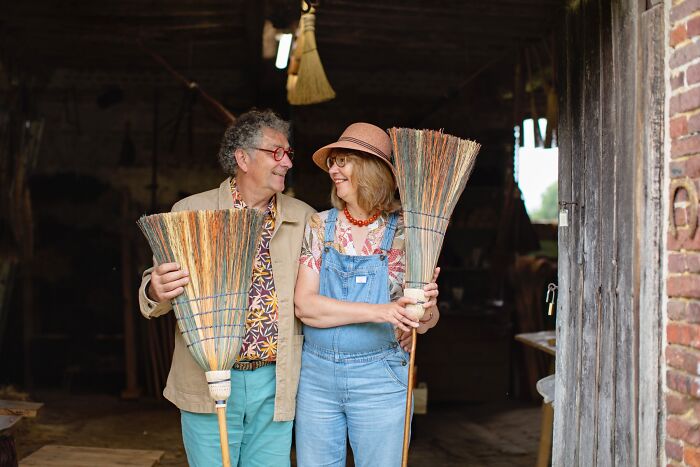

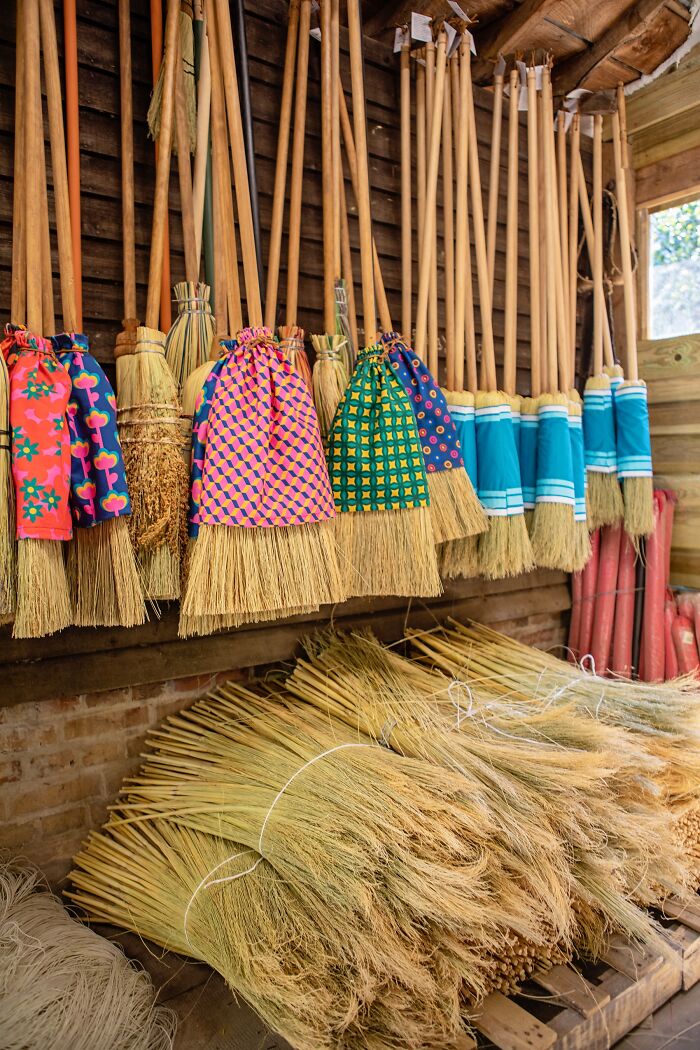
For generations, the straw broom was a fixture of French homes. From the 1970s onward, vacuum cleaners and cheap imports pushed it aside, and the workshops that made it quietly closed. “We were fascinated by the beauty of these everyday objects, the natural materials, the traditional techniques and the extraordinary knowledge that had gradually disappeared with industrialisation,” the couple told us. “What started as a passion became a real adventure.”
A vintage machine spotted in American photos led them to a retired broom maker near Nîmes, who sold them his equipment and taught them the trade
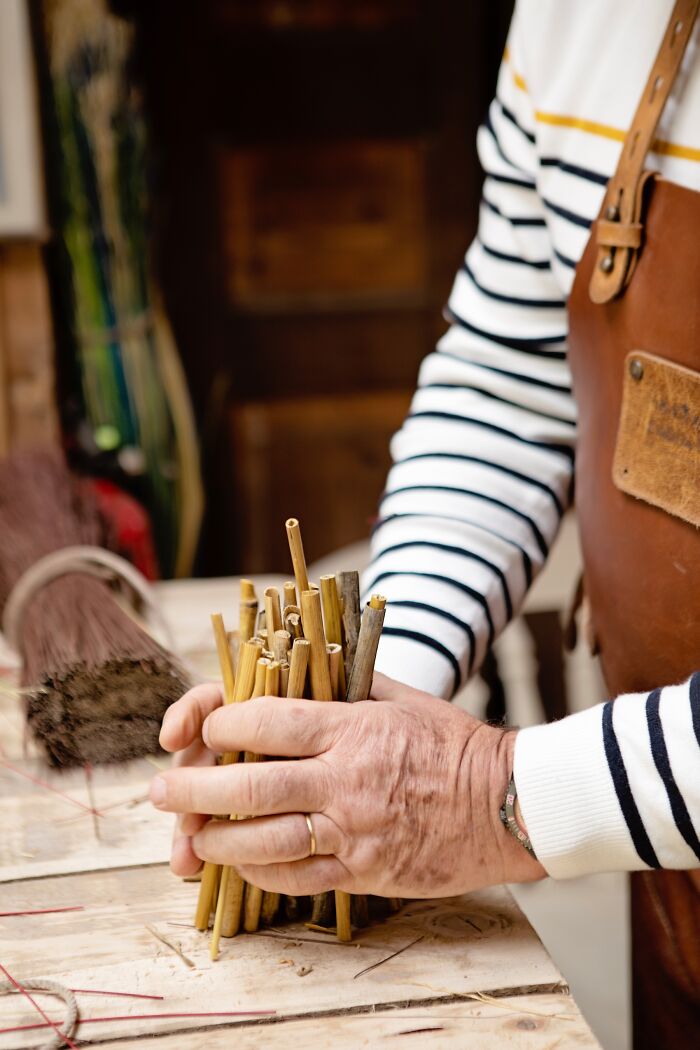
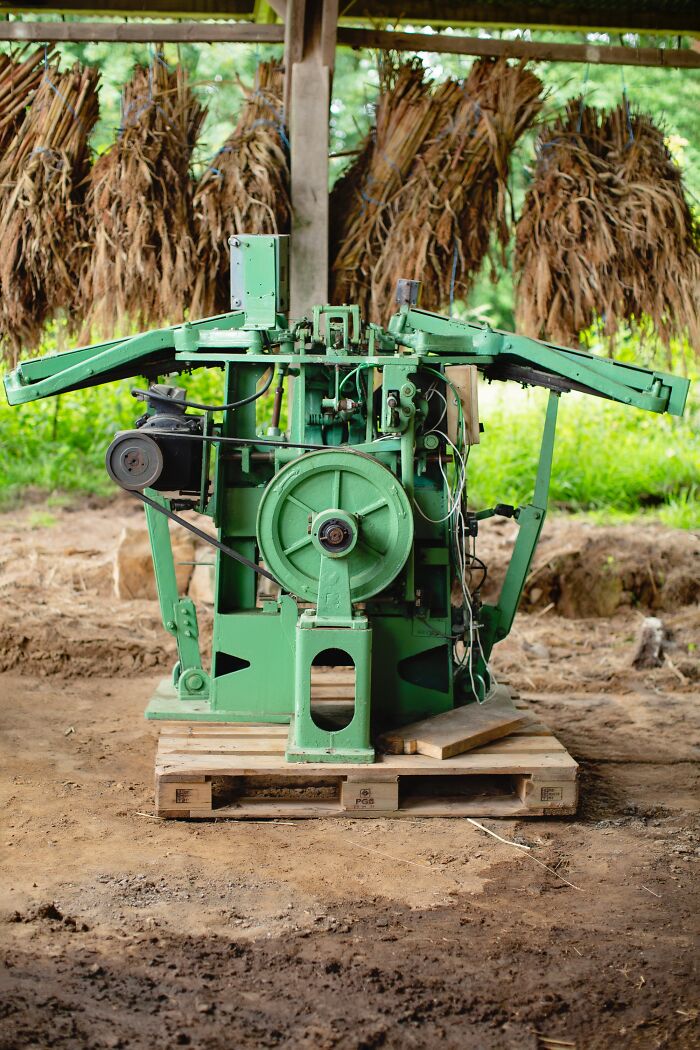
Their way in wasn’t the broom itself but the machinery behind it. Both had long been drawn to old machines and the stories they carry. After coming across pictures of a vintage broom-making machine in America, they tracked down a similar one in the Gard, near Nîmes. It belonged to a retired broom maker who had spent eight years trying to sell his business. He agreed to part with the machine and to pass on everything he knew.
There’s a nice symmetry in that American detour. According to a popular story, broomcorn first took root in the United States when Benjamin Franklin planted a seed he found on a whisk broom a friend had brought him from France. More than two centuries later, it took an American photograph to help bring the craft home.
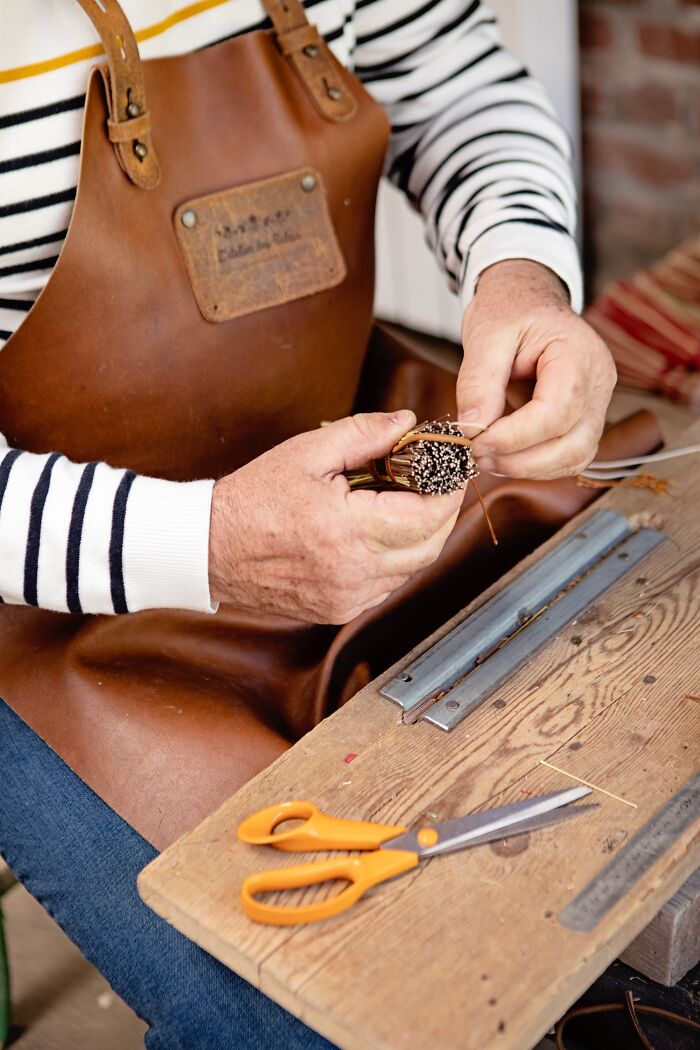
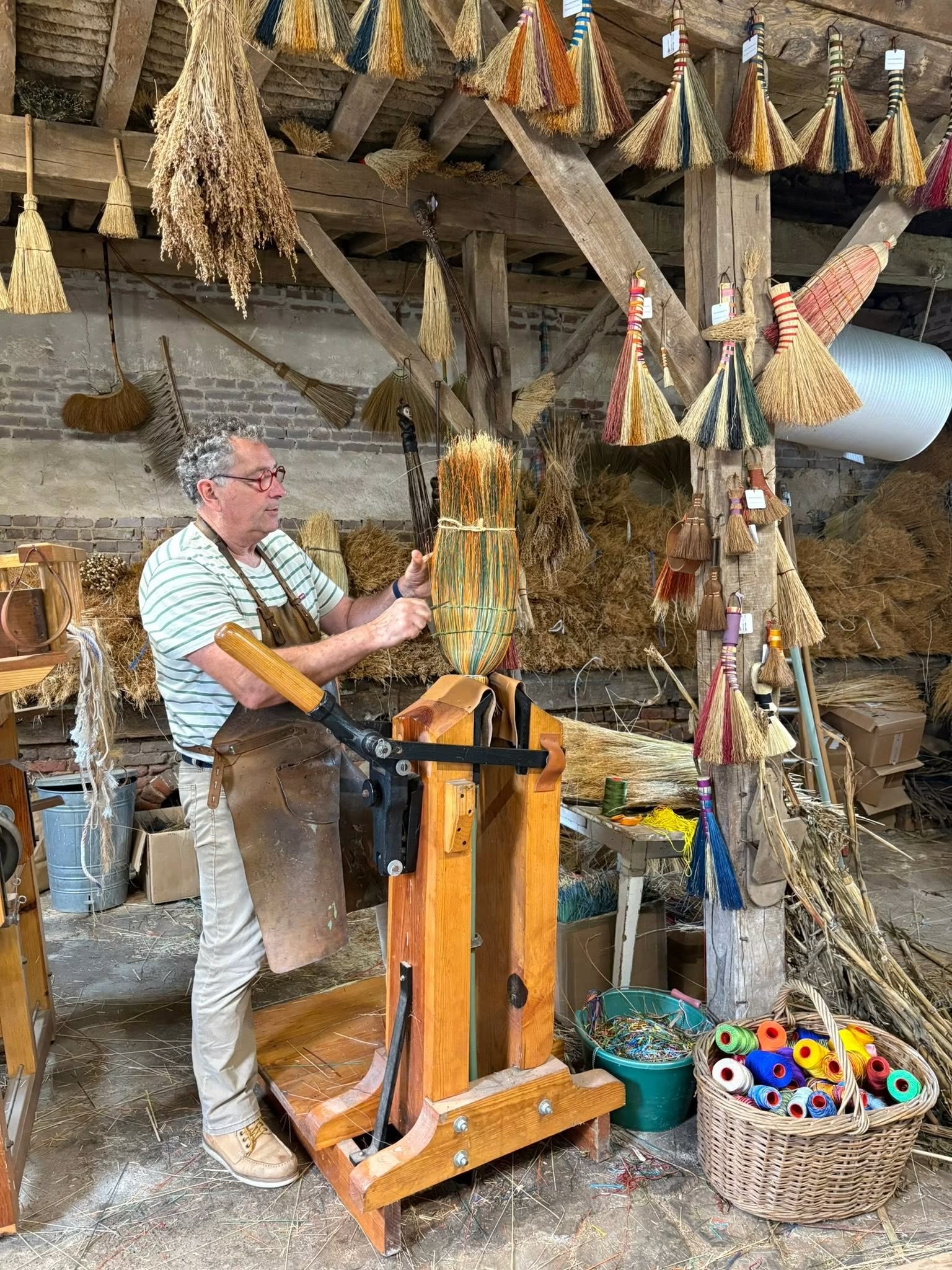
Every broom starts in a sorghum field and takes months of preparation before antique machines turn it into a sweeper built to last 20 years
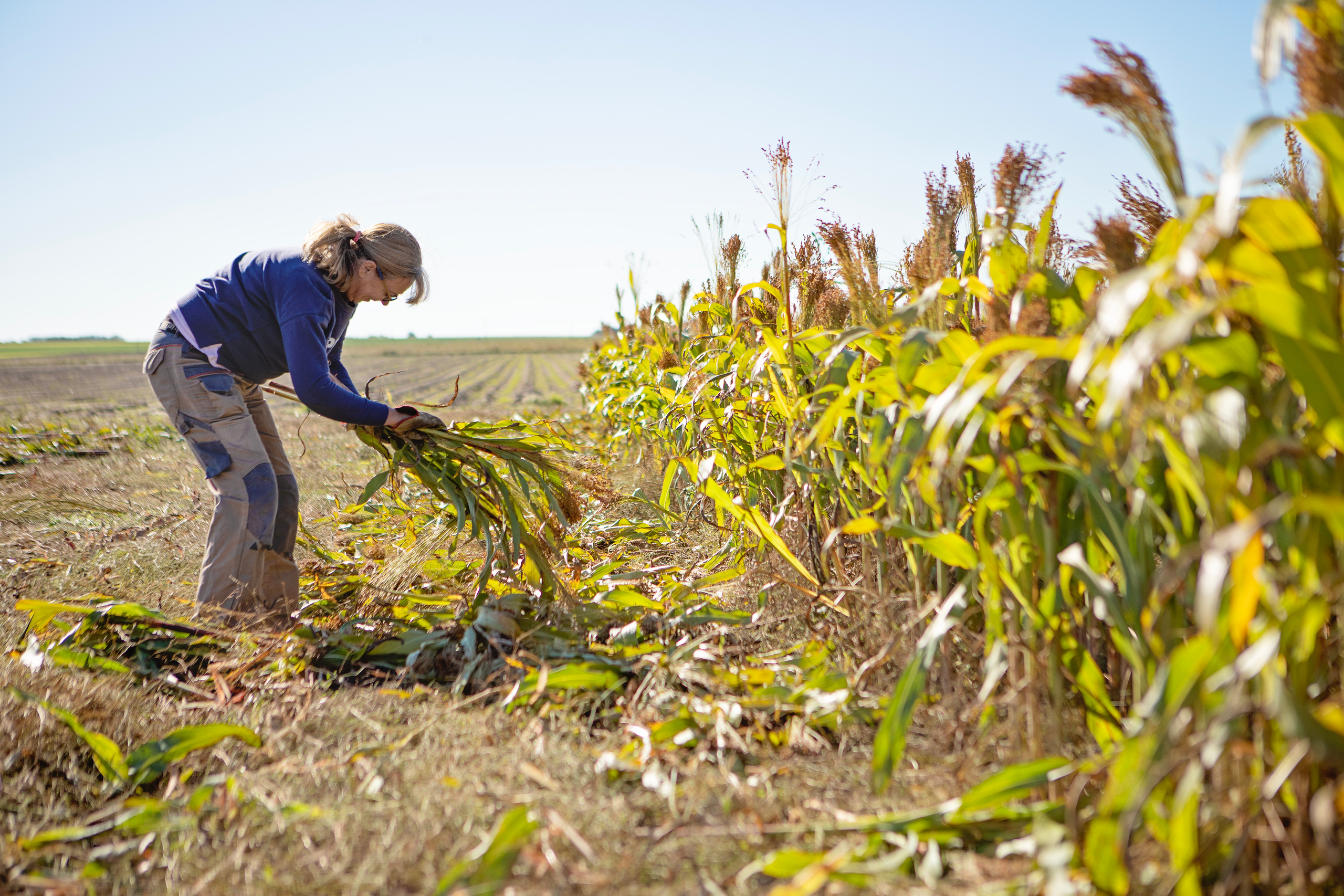
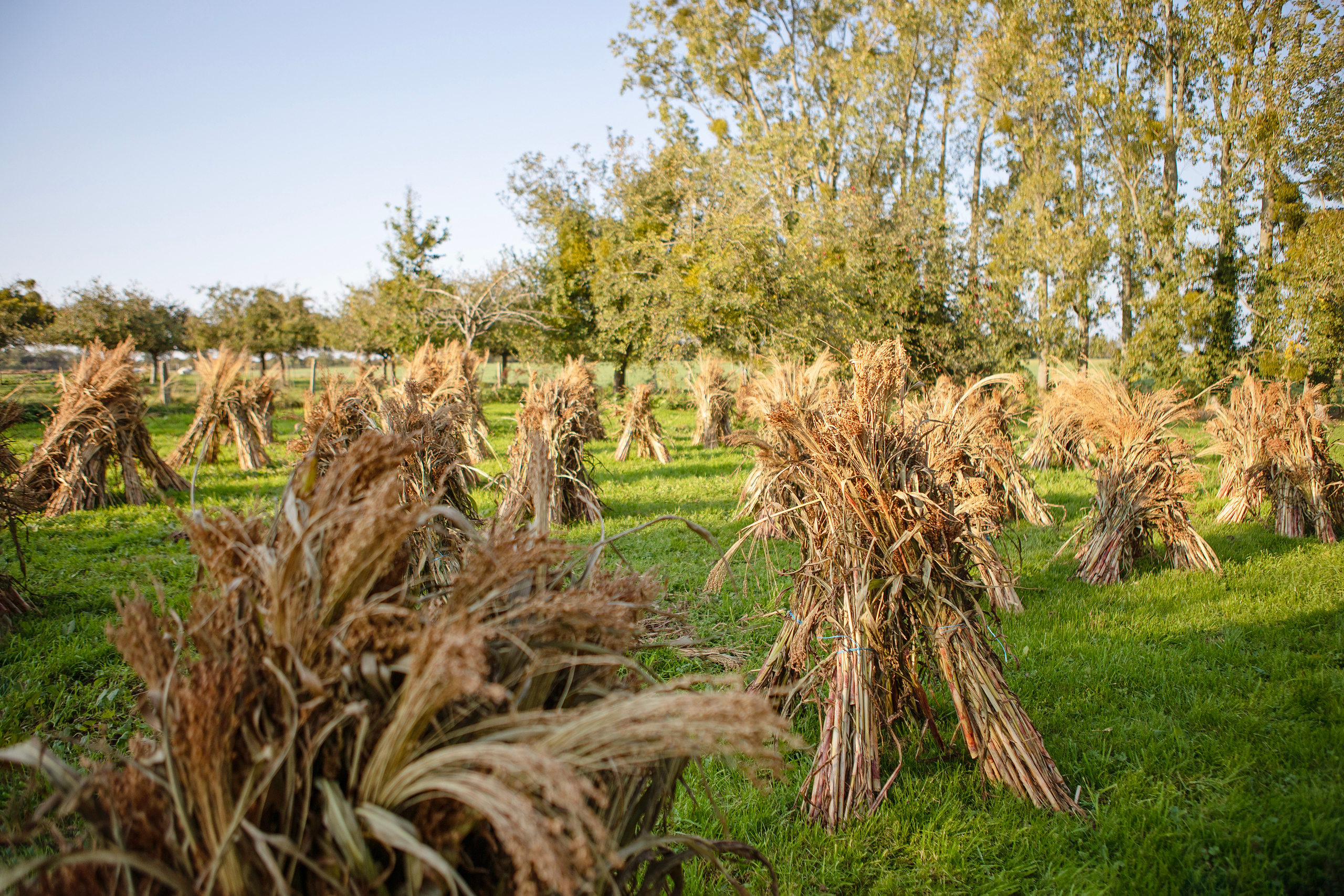
At La Balaiterie, each broom begins months before anyone picks up a tool. Broomcorn, a variety of sorghum grown for its long, stiff fibers rather than its grain, is sown in spring and harvested in autumn. It then dries for several months before the seeds are stripped and the fibers sorted by hand. Some are tinted with natural pigments, which gives the brooms their bands of color. “It takes approximately two hours to make a single broom, and that does not include growing the sorghum, drying it, removing the seeds or dyeing the fibres,” Marie-Laure and Arnaud explained.
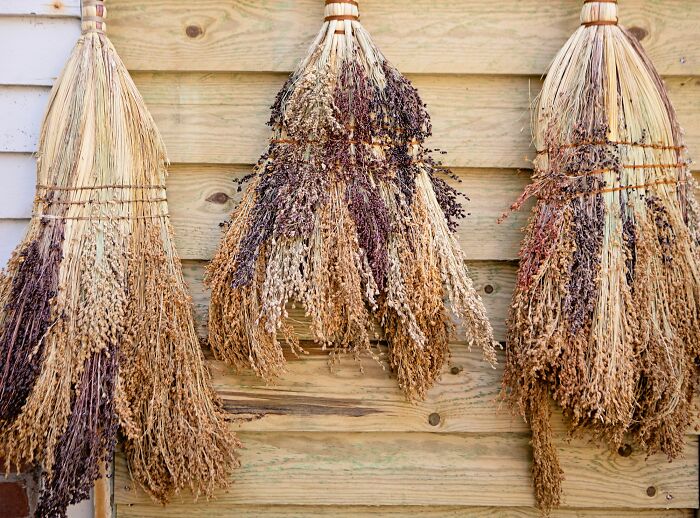
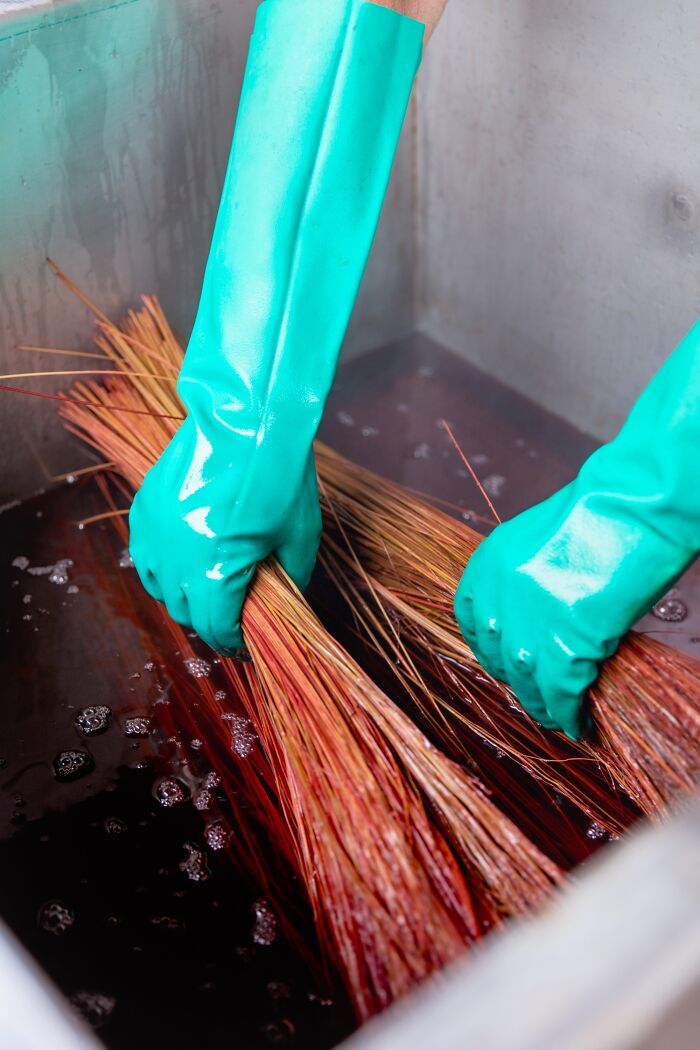
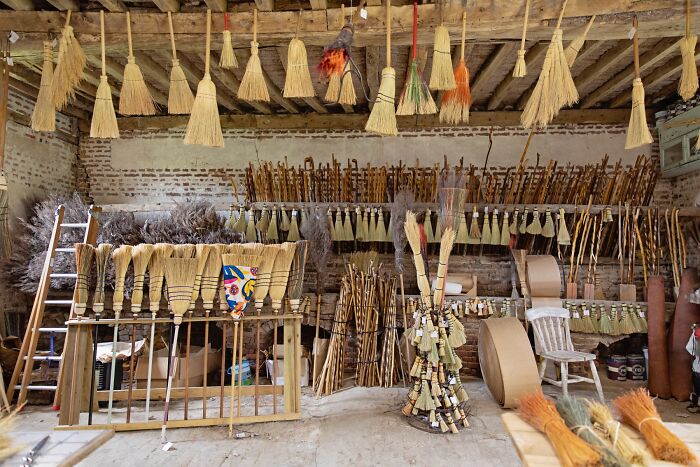
The assembly happens on machines that have outlived the factories they were built for. There’s the monteuse, the machine that first inspired the pair, and the couvreuse, which wraps layers of natural and colored straw around a firm inner core the makers call the “soul” of the broom. Their collection also includes a broom-sewing machine dating back to 1949. Where no original tool survived, the Gabriels rebuilt it themselves. “These old machines are wonderful survivors of another era, and watching them in action is one of the highlights of a visit to our workshop,” they said.
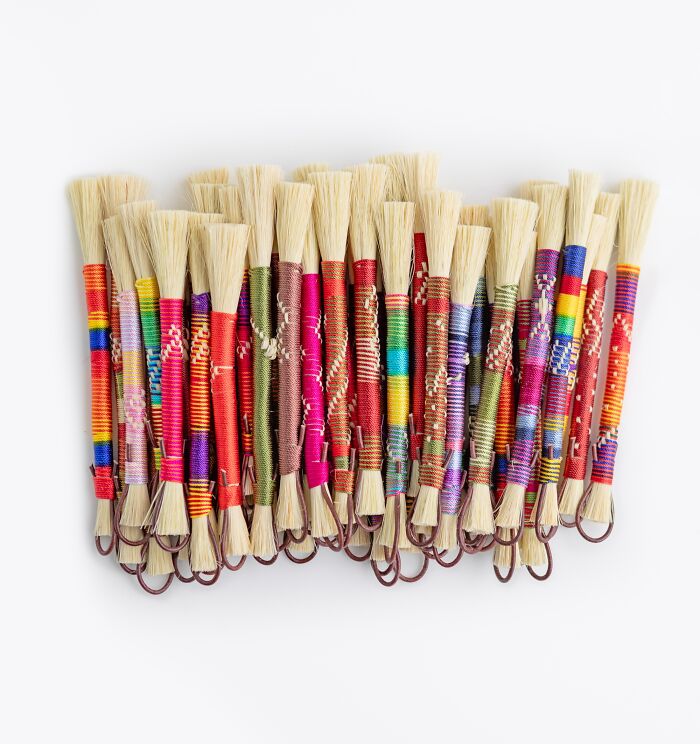
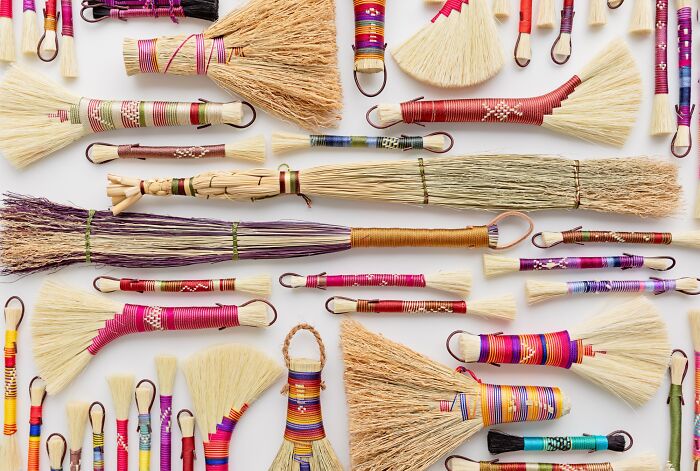

The result is built to last. Each broom holds at least 1.4 kilograms (about 3 pounds) of straw, stands upright on its own, and with a little care should keep sweeping for around twenty years. The couple are convinced the old design simply works better, because straw holds on to dust instead of scattering it. “Every broom passes through our hands,” they said, “and no two are quite identical.”
Orders for witches’ and wizards’ brooms arrive all year, and some are finished with one-of-a-kind handles signed by English craftsman John Carr
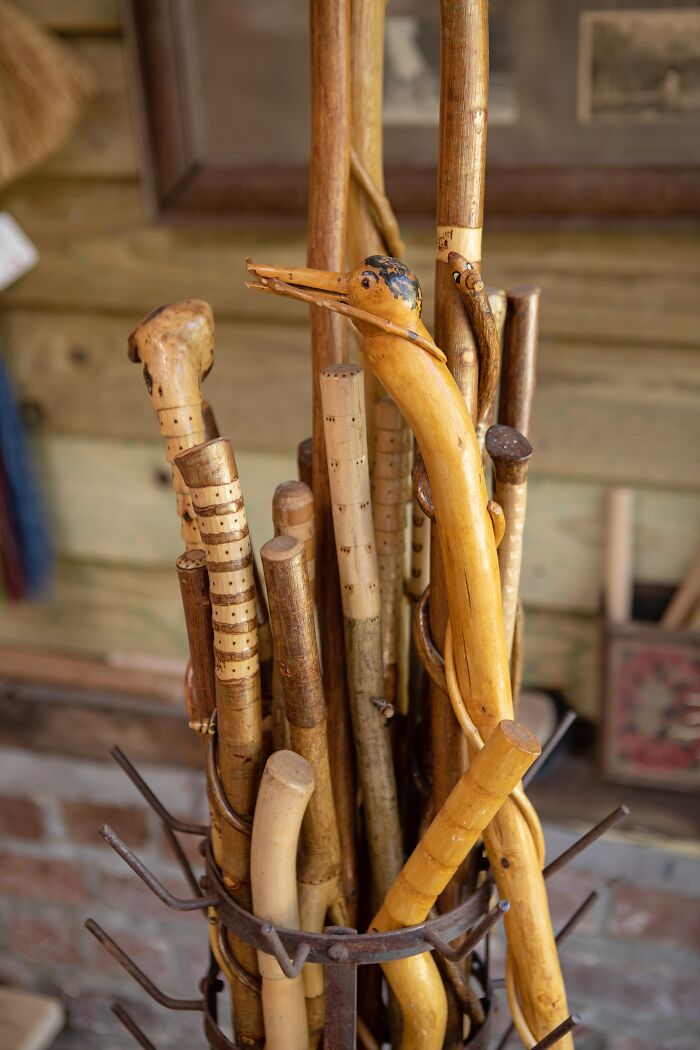
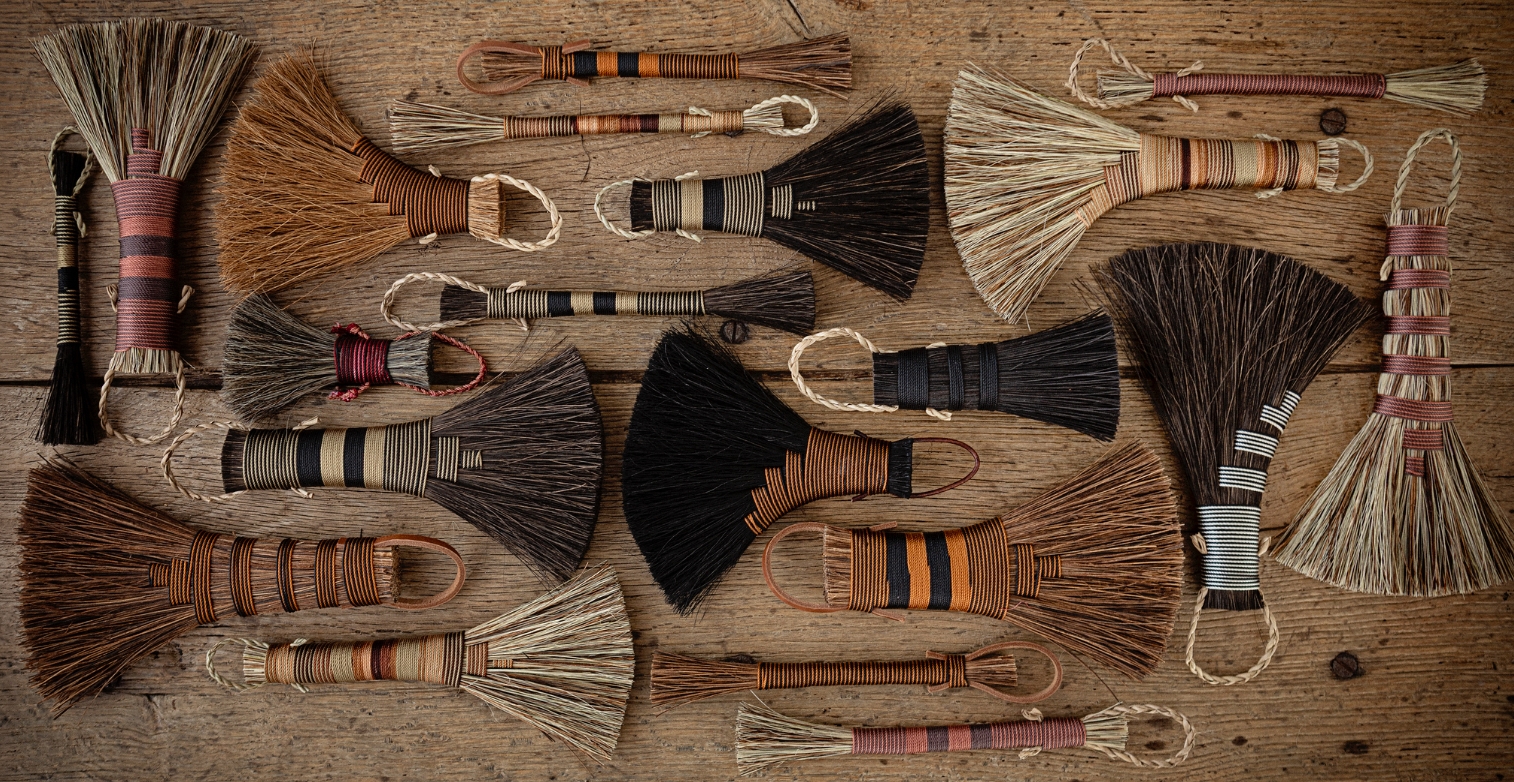
Then there’s the other kind of customer. Requests for witches’ and wizards’ brooms arrive all year, not only around Halloween, and one early order came from a client in New York hoping for something straight out of Harry Potter. “There is clearly a real fascination with these magical-looking objects, and our traditional broom-making techniques are particularly well suited to creating them,” the couple said. The link between brooms and witchcraft goes back a long way: Europe’s first recorded mention of a witch flying on a broomstick dates to 1453.
For these commissions, the workshop keeps a few treasures in reserve. There are beautifully turned wooden handles shaped for a sorcerer’s grip. There are also one-of-a-kind handles signed and dated by English craftsman John Carr, whose collection of some 600 walking sticks the Gabriels acquired. The finished pieces sit somewhere between household tool, decorative art and folklore.
From stocking an old-fashioned shop on a French TV set to teaching visitors to make their own, the couple are turning a nearly lost craft into living heritage
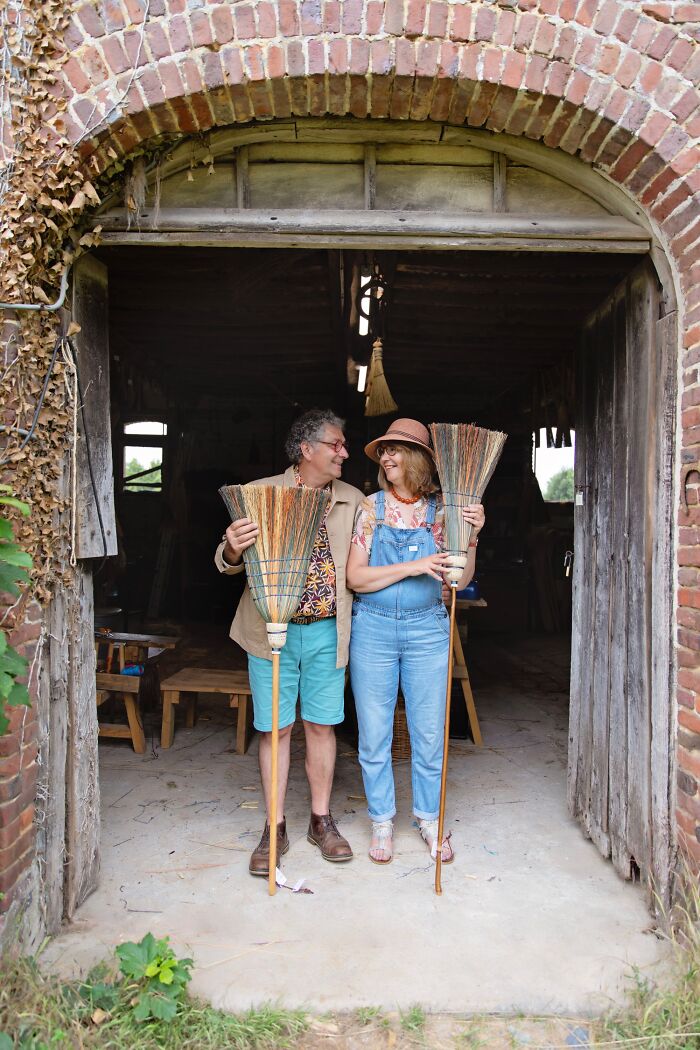
Their most unusual order, though, came from French television. A series set in a droguerie, the traditional French household goods shop, needed its shelves filled, and La Balaiterie supplied a large number of brooms and hand brushes to bring the set to life. “It was a wonderful experience to see so many of our handmade creations brought together on a television set, helping to bring a traditional French shop back to life,” they recalled.
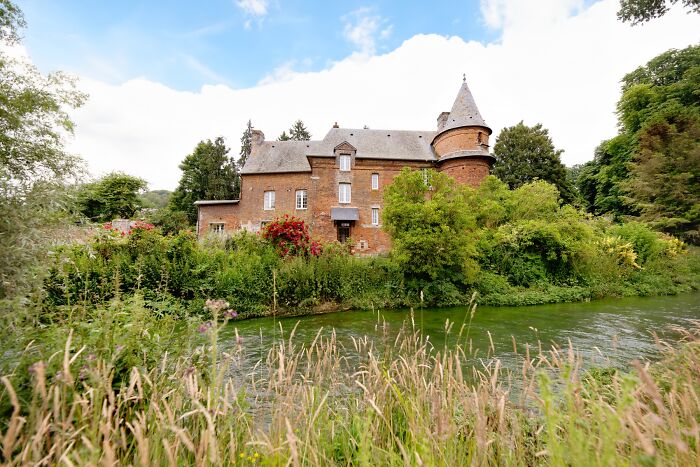
Visitors are welcome at the workshop, set in a historic manor house. They can watch the machines at work and browse a collection of everyday objects and vehicles, including motorbikes and cars, carved entirely from wood. Those who want to try the craft themselves can join a hands-on session to make their own broom, hearth brush or straw fly swatter.
“For us, a broom is much more than a cleaning tool. It is a piece of living heritage,” Marie-Laure and Arnaud said. And unlike the plastic props that fill shops every October, theirs are the real thing. “Perhaps the real magic is that these brooms are not just fantasy objects: they are the result of an authentic French craft that has almost disappeared.”
 Follow Us