In life, we usually tend to follow instructions to the letter, especially when it comes to things like gadgets, furniture, or anything with a manual attached. You read every step twice, double-check every button, and panic just a little if something doesn’t go exactly as planned. And sure, that works perfectly when you’re setting up a phone or figuring out a new appliance. But when it comes to real-life situations, where things can shift unexpectedly? That same rigid “follow the rules no matter what” mindset can get a little… questionable. In moments like these, a little common sense wouldn’t hurt—right, pandas?
Well, one person had to take the “rules are rules” approach a bit too seriously after their stepdad gave them one very clear instruction: don’t touch the thermostat. No exceptions, no adjustments, no thinking twice. And let’s just say… the result was less “cozy home” and more “welcome to the Arctic.” Keep reading to see how this hilariously chilly situation unfolded.
When temperatures drop and the weather turns chilly, maintaining a comfortable indoor temperature becomes important

Image credits: cottonbro studio/Pexels (not the actual photo)

One person shared how they bundled up under layers of blankets after their stepfather strictly forbade anyone from touching the thermostat


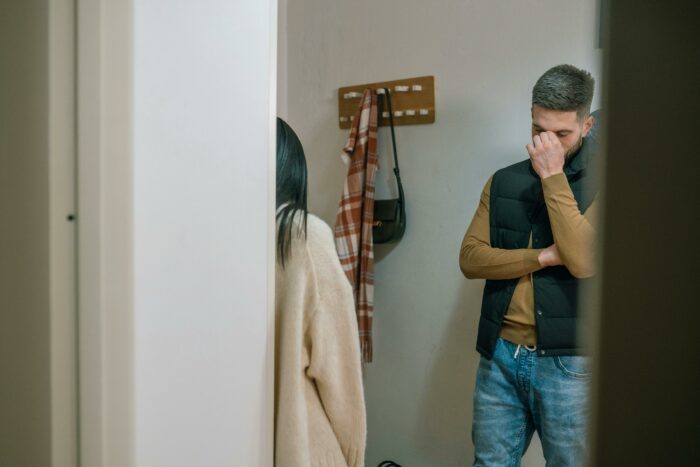
Image credits: Alena Darmel/Pexels (not the actual photo)
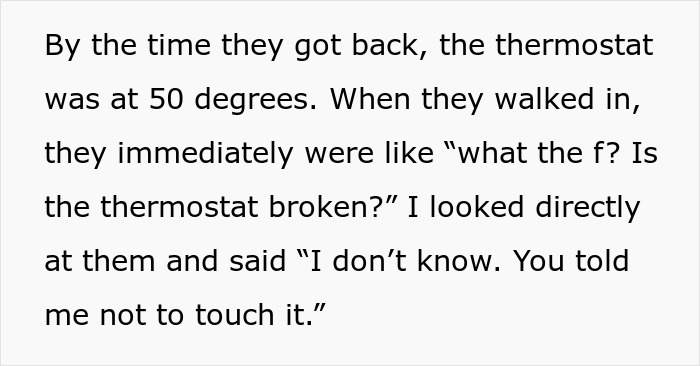
Image credits: anonymous
Strict parents often expect children to follow rules exactly as given, with limited room for questioning or discussion
When it comes to following rules, many children grow up in households where discipline is the default setting and “because I said so” is considered a complete explanation. Strict parenting is often seen as the gold standard for raising disciplined, well-behaved kids who don’t step out of line. On the surface, it can look effective: orderly behavior, clear obedience, fewer visible conflicts. But research paints a more complicated picture. Studies consistently show that highly strict or authoritarian parenting is linked to lower self-esteem in children and more behavioral challenges over time. Ironically, instead of fixing behavior, it can sometimes reinforce a cycle where kids act out, get punished, and struggle even more with confidence and self-control.
Authoritarian parenting, often described as strict parenting, is a style where parents place a strong emphasis on obedience, rules, and discipline with very little room for flexibility or discussion. In this approach, children are expected to follow instructions without question, and rules are typically enforced in a firm, sometimes rigid way. Communication is usually one-sided, meaning parents set expectations while children are not encouraged to negotiate or express disagreement. Mistakes are often met with punishment rather than explanation, and emotional warmth or open dialogue may be limited.
The issue with this kind of structure is that it can unintentionally limit a child’s ability to develop internal discipline. On the outside, the child may appear well-behaved, but internally, they may not be learning why certain behaviors matter. Instead of building self-regulation, they may simply learn to avoid punishment. So the motivation becomes external—“I won’t do this because I’ll get in trouble”—rather than an internal understanding. Later in life, when rules aren’t as clearly enforced, this can create confusion, resistance, or difficulty taking ownership of decisions without someone constantly guiding them.

Image credits: Monstera Production/Pexels (not the actual photo)
Research also shows that children raised in overly strict environments often experience higher levels of stress during everyday interactions at home. It’s not just about big arguments; sometimes it’s the constant pressure of getting things “right,” the fear of making small mistakes, or the anxiety of not knowing when they might be corrected. Over time, that emotional tension can build up quietly in the background. And while it starts in childhood, it doesn’t always stay there; it can carry forward into adulthood, shaping how individuals handle stress, conflict, and emotional pressure in other relationships.
Oshri, an associate professor at UGA’s College of Family and Consumer Sciences and director of the Youth Development Institute, highlights that there is no universal “perfect” parenting formula. However, he emphasizes that awareness makes a big difference. Understanding how a child reacts under stress can help parents adjust their communication style, making it less reactive and more supportive. Sometimes it’s not about changing everything at once, but about recognizing patterns and responding in a way that helps the child feel heard instead of controlled.
Children raised in strict households may show higher levels of anger or rebellious behavior during their teenage years and early adulthood.
Children raised under strict discipline often grow up associating authority with unquestionable power. They may learn to follow rules, but not necessarily to question or think critically about them. As they get older, this can create challenges when they encounter situations where questioning authority is not only appropriate but necessary. Instead of evaluating situations independently, some may default to compliance or avoid responsibility by saying they were simply “doing what they were told,” rather than making conscious choices based on judgment.
Studies also suggest that children from highly strict households may become more emotionally reactive during their teenage years and early adulthood. For example, a teenager who has spent years being told exactly what to do without explanation might eventually push back hard—skipping rules, rebelling openly, or rejecting authority altogether. What looks like “bad behavior” on the surface is often a buildup of frustration and a desire for independence finally breaking through, sometimes in messy or extreme ways.

Image credits: Polina Zimmerman/Pexels (not the actual photo)
Beyond behavior, strict parenting can also leave a deeper emotional imprint. Psychologist and trauma expert Seema Hingorrany told VICE, “As a trauma-informed therapist, I have come across many cases where people who grow up with strict parents tend to have distorted beliefs, anxiety, or are very self-critical.” She explains that upbringing plays a powerful role in shaping how individuals view themselves and the world around them.
Ultimately, there is no single blueprint for parenting that works for every child or every household. Structure, boundaries, and discipline absolutely matter, but when they become too rigid, they can come at a cost. The goal isn’t just to raise obedient children, but confident, emotionally secure adults who understand themselves, not just the rules they were told to follow.
Coming back to this case, while the stepdad’s “follow the rules” moment may not be a textbook example of strict parenting, it definitely shows how instructions without flexibility can sometimes lead to unexpected outcomes. What started as a simple rule turned into a very literal interpretation, and in the end, the stepdad’s own words led to a rather petty result. It’s one of those situations where intent and execution don’t quite meet in the middle, and everyone ends up learning something (even if it’s just to be more specific next time). What are your thoughts on this situation?
Many readers applauded the author’s delightfully petty revenge


















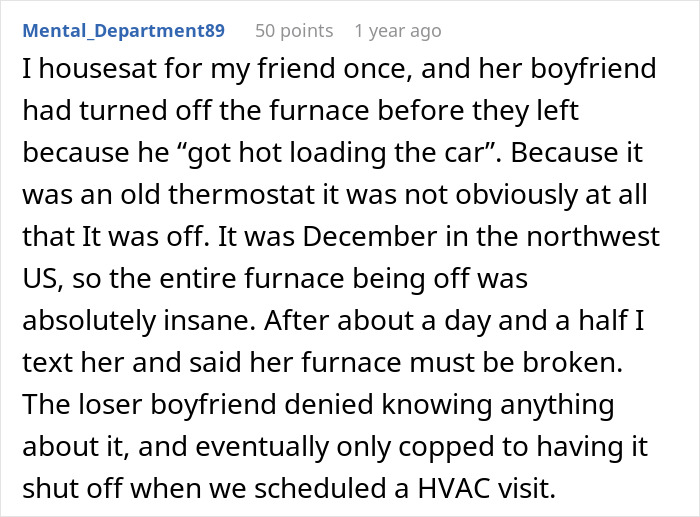
A few others chimed in with similar stories as well



 Follow Us