In May 2002, teacher Leslie Buck survived a violent kidnapping, escaped her attacker, and returned to her elementary-school classroom the very next morning.
Less than 48 hours later, she lost her life inside her Connecticut home.
What followed became one of the most haunting unresolved cases in the state’s modern criminal history.
The man who kidnapped her, Russell Kirby, was arrested and eventually convicted. Leslie’s husband, Charles Buck, soon came under suspicion for something far worse.
Investigators uncovered allegations of an affair, financial conflict, and statements that suggested he knew more about his wife’s injuries than he should have.
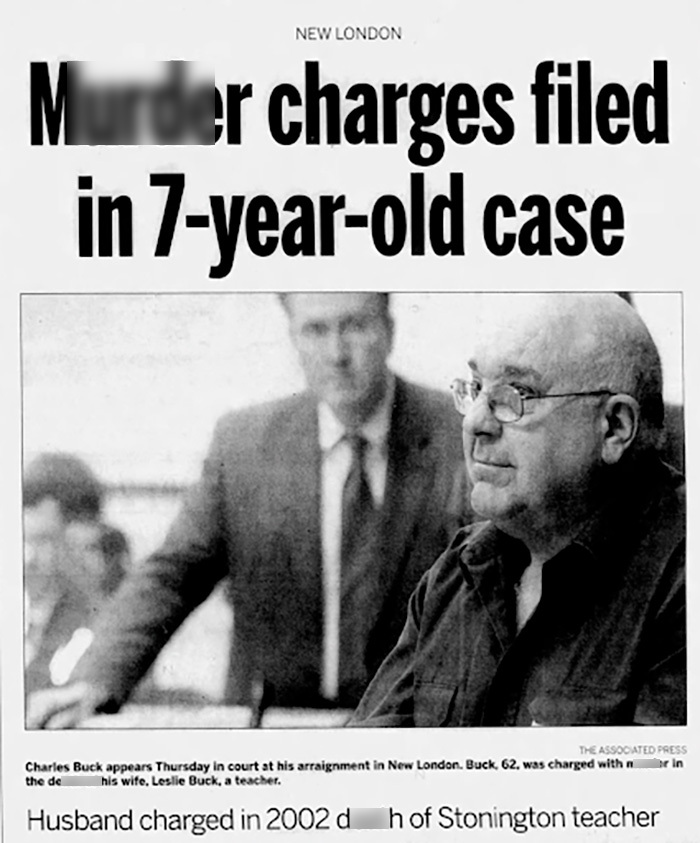
Seven years after Leslie’s passing, police arrested him. He would, however, be released only a year later.
To this day, no one has answered for the crime.
A devoted school teacher survived a violent kidnapping, only to lose her life inside her own home
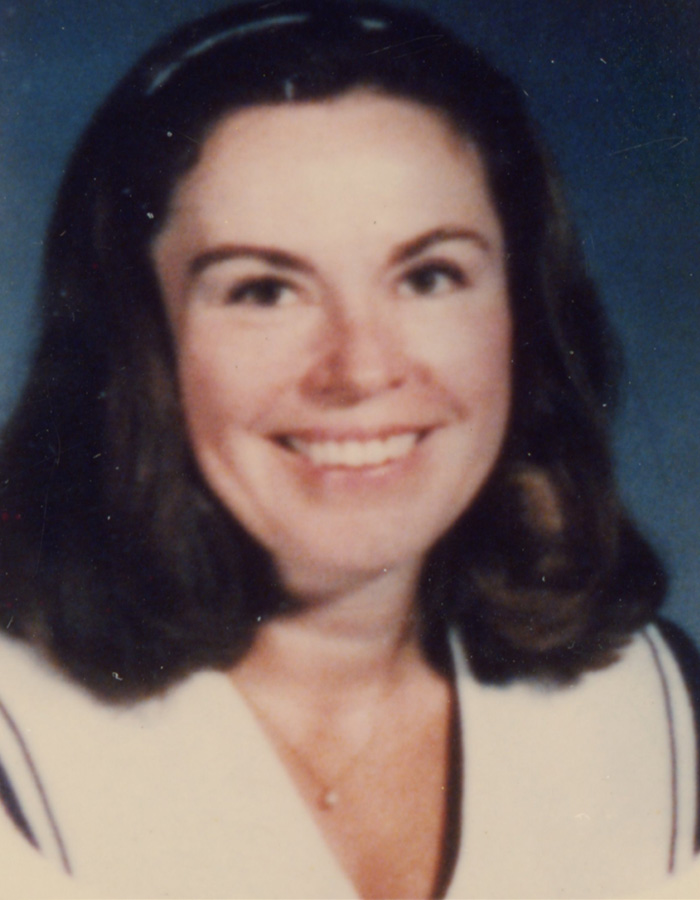
Leslie was born in Maine around 1944 or 1945 and grew up with her brother, Dick Edmonston. Her father worked for the state, while her mother was a secretary at the Farmers’ Almanac.
Relatives remembered Leslie as an introverted, bookish child who preferred reading to sports and remained deeply attached to her family. She was also described as compassionate and particularly protective of children, traits that later defined her career.
Leslie initially attended Boston College before transferring to Saint Joseph’s College in Maine, partly because it allowed her to remain closer to home.


In the late 1960s, encouraged by friends who were teachers, she moved to Connecticut and eventually settled in the Mystic-Stonington area. She began teaching at Deans Mill School in Stonington, where she would spend years working with young children, generally in first or second grade.
Former pupils and colleagues later remembered her as nurturing, attentive, and unusually good at remembering individual students long after they had left her classroom.
It was through the school that Leslie’s personal life also changed.
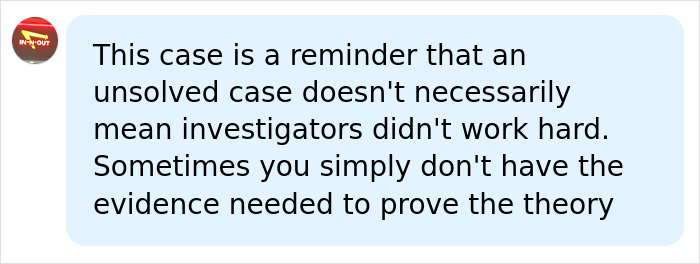
In 1975, she attended the wedding of one of Charlie Buck’s cousins, who worked with her at Deans Mill. There she met Charlie, a Stonington native from a financially comfortable family with connections to the electrical business.
Charlie had previously been married and had a daughter and a son, although accounts later said he disputed the boy’s paternity. Leslie initially turned him down, but he continued pursuing her with flowers and candy.
They married in 1979 at St. Mary’s Church, Leslie’s church. She was 33, while Charlie was around 32.
The couple never had children together.
The marriage began to fall apart when Charlie started living a double life with another woman

By the winter of 2001 and 2002, Charlie had become extremely close to Carol Perez, a bartender at the Draw Bridge Inne in Mystic. His electrical company had initially performed work at the bar, but employees recalled that he continued returning after the job was finished.
“He would eat her with his eyes,” former employee Jennifer Wolcin later recalled of Charlie watching Perez. “But she was eating it up at the same time.”

cottonbro studio/Pexels (Not the actual image), ai-assisted image
The relationship soon became financial as well. Records and testimony indicated that Charlie gave Perez roughly $235,000 toward a house, helped with a car, paid bills, and bought her clothing, shoes, electronics, and other items. Prosecutors later placed his total spending on her above $300,000.
Leslie found out.
According to fellow teacher Barbara Hatch, Leslie spoke openly about the situation shortly before the tragedy.


“Charlie’s got himself a girlfriend,” Leslie told her.
She then made an ominous remark about what would happen to her savings if she passed away: “If I should d*e in the next couple of days, I want to be buried with all my money. That b*tch is not getting anything of mine.”
Friends also told investigators that Leslie had recently asked about divorce and obtaining a restraining order.
Those claims later became important to prosecutors, but at the time, an entirely different man was about to enter the final days of her life.
Russell Kirby attacked Leslie as she returned home from a teachers’ meeting
On the evening of May 2, Leslie attended an Alpha Delta Kappa meeting at the Mystic Hilton. The group celebrated a member’s 90th birthday, and Leslie took some dessert to bring to her elderly mother.
She left shortly after 8 pm and returned to the Bucks’ home at 77 Masons Island Road.
When she entered the garage at around 8:30 pm, Russell Kirby, a 64-year-old handyman and longtime friend of Charlie’s, was waiting there.
cottonbro studio/Pexels (Not the actual image), ai-assisted image
According to Leslie’s account, Kirby attacked her, shocked her on the neck with a stun weapon, punched her, forced her to the ground, bound her hands and feet, and put her inside her own Buick.
Kirby then drove her around the area for roughly two hours while demanding money.
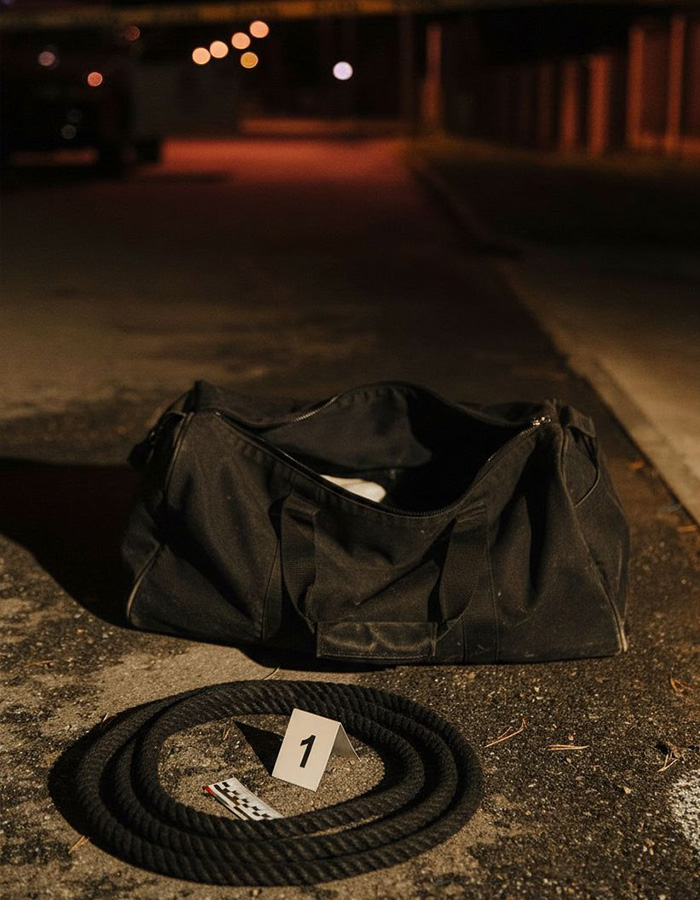
Police later recovered a duffel bag from the Buick containing a Colt .45 firearm with ammunition, ropes, gloves, bandannas, a hickory log, and bottles containing a martini.
Prosecutors considered the collection evidence that the kidnapping was planned. Kirby would later insist the objects had innocent explanations, including claiming that some were intended to protect him from aggressive dogs while working.
Leslie eventually got her opportunity when Kirby stopped after hearing a problem with the Buick. As he got out to inspect the vehicle, Leslie used a spare key and drove away.
She made it back home shortly after 11 pm.
Leslie identified her kidnapper while Charlie called 911

Sami Abdullah/Pexels (Not the actual image)
Charlie had already reported Leslie missing after she failed to return home. At 11:07 pm, he called the police again to announce that she had come back.
Leslie could be heard in the background, upset and furious.
“He’s so sick!” she shouted as Charlie told the dispatcher that she had been kidnapped by his friend.
“I told you I never liked him. He punched me in the stomach. He has our house keys.”
RDNE Stock project/Pexels (Not the actual image)
Leslie was particularly worried because her mother’s key was on the same ring Kirby had taken.
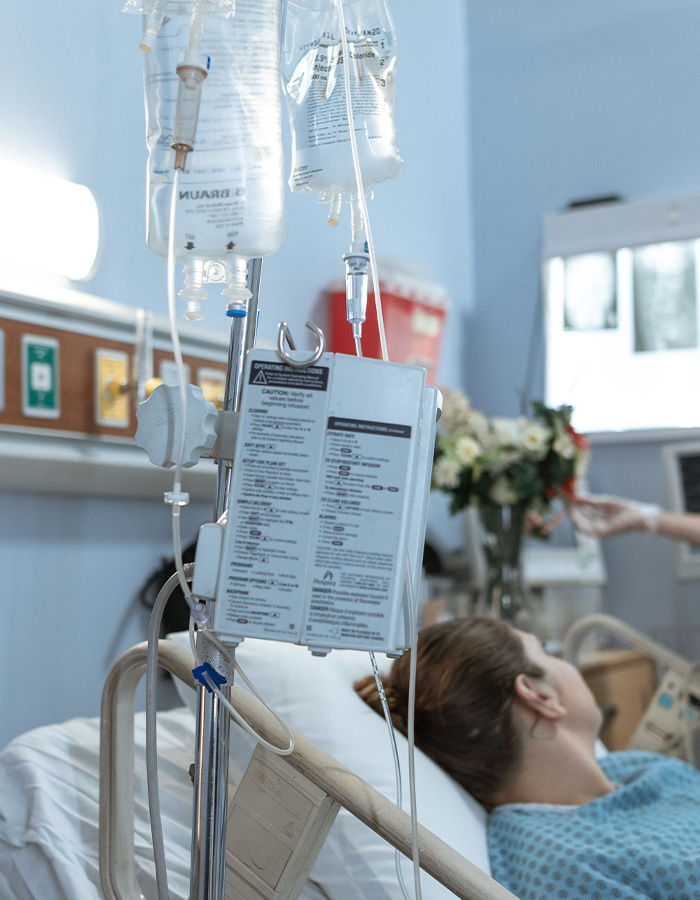
Police and emergency personnel arrived and transported her to Lawrence and Memorial Hospital in New London. Medical staff documented bruising, abrasions, injuries to her hands and legs, and marks around her neck.
Staff members later gave investigators conflicting impressions of Charlie’s behavior. Some thought he seemed surprisingly unemotional. Yet when Leslie was taken away for X-rays, Charlie told employees, “Take care of her. She’s my whole world.”
Away from Charlie, Leslie reportedly became more animated while recounting what Kirby had done. While handling a gold bracelet, she asked an X-ray technician, “Why would someone give something like this if they’re going to do this?”
Leslie and Charlie returned home at around 4 am.
Police reached Kirby’s house about half an hour later. When officers asked whether he had tied Leslie up and driven her around, Kirby acknowledged doing so. Asked why, he said he “needed the money.”
He apologized, said he had not meant to hurt Leslie, and told officers he “believed that he had a problem.”
He was arrested.
Even sore and exhausted, Leslie went back to her students hours after escaping

RDNE Stock project/Pexels (Not the actual image)
Despite spending much of the night in the hospital, Leslie went to Deans Mill School on May 3.
“She wanted people to know that she was kidnapped, and she was showing me the bruises,” Hatch later recalled.
Leslie was sore and exhausted, but being with her students mattered enough that she completed the school day.
The following afternoon, her life came to an abrupt end.
TREEDEO.ST/Pexels (Not the actual image)
At approximately 5:38 pm on May 4, Charlie called 911. He said he had found Leslie cold at the bottom of the staircase inside their home and described injuries including a bruise around her neck and a cut on her forehead.
Paramedics announced Leslie had passed away shortly after 6 pm.
There were no obvious signs of forced entry, and an accidental fall initially appeared plausible. But her injuries quickly complicated that explanation.
Leslie had a laceration on her forehead, a fracture at the back of her skull, and a subdural hematoma.
Investigators also noticed injuries around her neck, while some wounds seemed different from those documented after the kidnapping.
The medical examiner could not determine whether the tragedy was accidental or homicidal, leaving the manner officially undetermined.
Investigators began wondering whether Leslie’s passing had been staged

RDNE Stock project/Pexels (Not the actual image)
Suspicion increasingly moved toward Charlie.
One issue involved a heavy piece of electrical cable he reportedly kept in the house for protection and referred to as an “Equalizer.”
A former employee told investigators Charlie would hold up similar wire and say, “If you wanted to hurt someone, you hit them in the head with this.”

SHOX ART/Pexels (Not the actual image)
The cable Charlie supposedly kept at home was never found after Leslie’s passing. Medical experts later concluded that the forehead injury could have been caused by something resembling that type of cable.
Detective Cody Floyd was also troubled by Charlie’s 911 description of the cut.
“You can’t tell that there’s a cut to her forehead, initially,” Floyd later explained. “Between her hair and the blood, there’s no way. So there’s no way he would have known that, right? Unless he put the cut there.”
Police also identified inconsistencies in Charlie’s account of where he had spent the day. Witnesses placed him at the Draw Bridge Inne, where Perez worked, at times that conflicted with portions of his story.


According to court documents, Perez told investigators Charlie had asked her to run away with him less than five hours before Leslie was found lifeless.
She also said he later told her he would need to “mourn for about a year for appearances’ sake” before they could leave together and that they needed to keep their accounts consistent. These remained allegations and were contested by Charlie.
At Leslie’s funeral reception, Charlie allegedly handed a friend his attorney’s card and said it was “in case you need to bail me out,” before adding, “M*rder cases are expensive.”
Investigators could never prove that Charlie and Kirby were working together
Kirby’s involvement made the case even stranger.
Detectives found a note in his truck containing times and dates they believed corresponded with Leslie and Charlie’s movements before the kidnapping.
However, investigators had not obtained a warrant allowing them to search the truck for that evidence, so the note could not become a central part of the prosecution’s case against Charlie.
Kirby’s brother was also reported to have overheard a phone call between Kirby and someone who sounded like Charlie discussing dates and times, though years later he could no longer remember the conversation clearly.
No legally usable evidence ever proved that Charlie hired Kirby.
Kirby himself repeatedly refused to give investigators information connecting Charlie to Leslie’s homicide.
His first kidnapping conviction came in 2004, but the Connecticut Supreme Court overturned it in 2006 because Leslie’s statements to police after she had reached safety were considered testimonial, and Kirby had no opportunity to cross-examine her.
Prosecutors retried him, and in February 2010, he was again convicted of kidnapping and assault.
New forensic opinions eventually led police to arrest Charlie
Meanwhile, investigators sought new medical opinions.
In 2004, forensic pathologist Dr. Michael Baden reviewed the autopsy and scene evidence and concluded that Leslie was the victim of a homicide, focusing on asphyxiation and neck compression.
Dr. Barbara Wolf later reached a similar conclusion during civil litigation, writing that Leslie passed away from “blunt head trauma and asphyxia due to neck compression.”
Leslie’s estate filed a wrongful-d*ath action alleging that Charlie had arranged for Kirby to attack her. Police searched Charlie’s home and business, and Connecticut’s Cold Case Unit became involved.
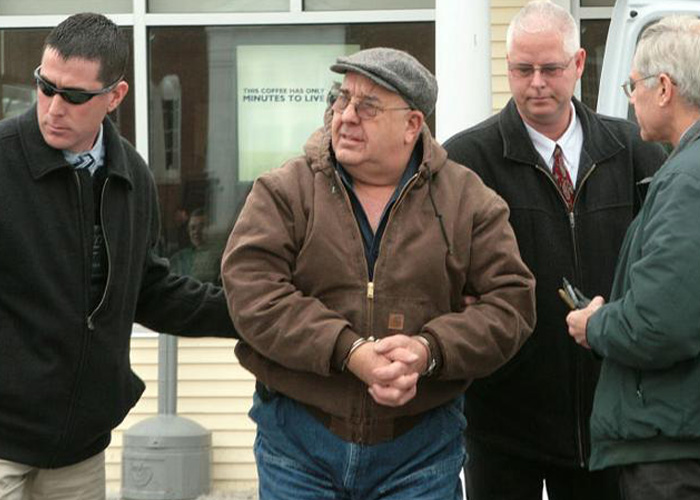
On January 22, 2009, officers arrested Charlie outside a Tim Hortons in Mystic during his regular morning coffee stop.
As he sat in the police car, he reportedly told officers, “You know, this case is just based on innuendo.”
His bond was set at $2.5 million.
The homicide case ultimately came down to two incompatible explanations
Charlie spent approximately 20 months in custody before securing release on a reduced $1.5 million bond in September 2010.
His trial began later that year before three judges rather than a jury.
Prosecutors argued that Charlie had struck Leslie with a heavy cable and strangled her, pointing to the missing “Equalizer,” his financial relationship with Perez, disputed statements and alibi problems, and expert testimony that Leslie’s injuries did not match an accidental fall.

The defense countered that Leslie suffered from myocarditis, an undiagnosed heart condition that could have caused her to lose consciousness at the top of the stairs and fall. Several defense experts supported the theory she had passed away of “natural causes.”
Even prosecutor Lawrence Tytla later acknowledged how stark the disagreement was.
“That shocked me that two people at the very top of their profession could have such diametrically opposed conclusions,” he said of the competing medical experts.
The state also had no homicide weapon, no eyewitness and no confession.
Prosecutor Paul Narducci later said one of the things that bothered him most was “the fact that we were never able to find what we considered to be the weapon that inflicted the injury.”
On December 15, 2010, the panel acquitted Charlie.
“I got my life back. I haven’t done anything,” he said afterward. “They kept saying I did, I did, I did. Well today I was vindicated.”
The verdict meant prosecutors had failed to prove homicide beyond a reasonable doubt. It did not determine conclusively how Leslie lost her life.
Charlie publicly revisited Leslie’s case on Dr. Phil mere months before he lost his life
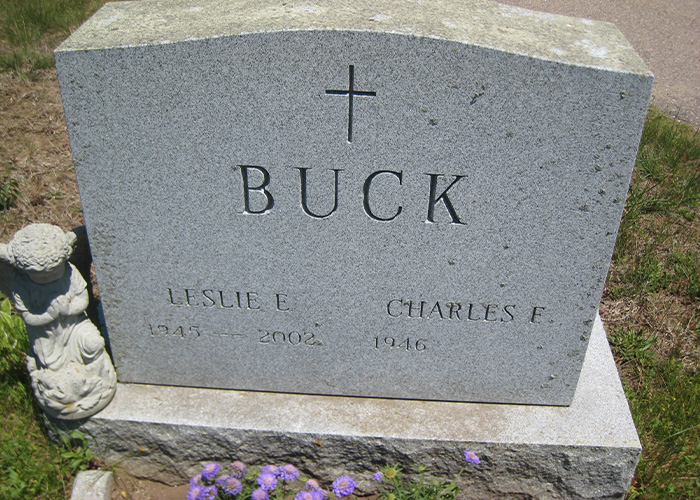
The remaining civil litigation was eventually resolved, and in 2011 Charlie and Leslie’s family reached a settlement concerning her estate. The Masons Island home where Leslie lost her life was demolished in 2015, seemingly closing another physical chapter of the case.
Charlie, however, was not finished discussing what had happened.
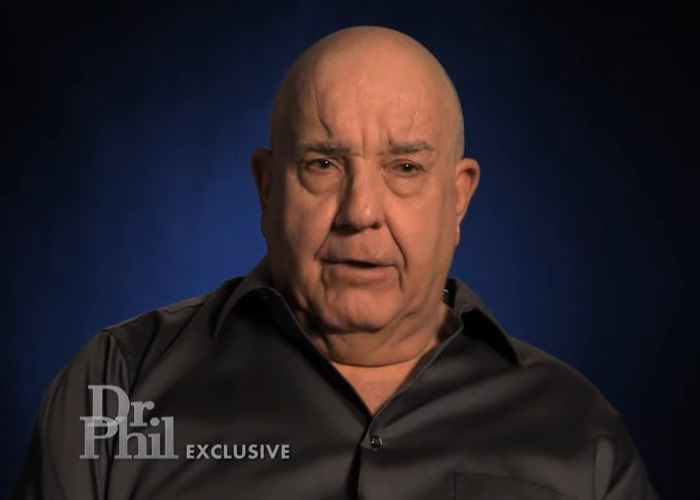
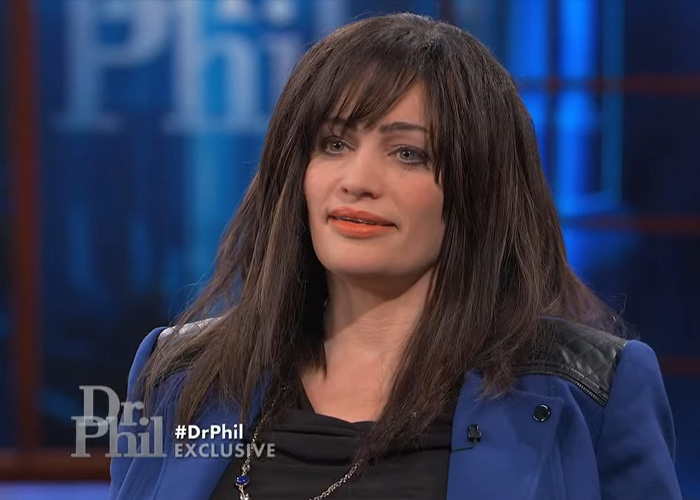
On March 2, 2016, more than five years after his acquittal, he appeared on Dr. Phil alongside Carol Perez as the show revisited Leslie’s tragedy, Charlie’s homicide trial, and the relationship prosecutors had portrayed as a possible motive.


The episode centered largely on Perez, who said being publicly branded Charlie’s mistress had followed her for years.
“Carol was never my mistress,” Charlie said during the program.
Only months later, in October 2016, Charlie fell from the roof of his childhood home. In a cruel coincidence, he was transported to the same hospital where Leslie had been treated after escaping her kidnapping and died shortly afterward.
Russell Kirby remained imprisoned until 2020, when he was released after serving approximately 18 years.
As of August 2026, no new evidence has resolved what happened inside 77 Masons Island Road on May 4, 2002.ç
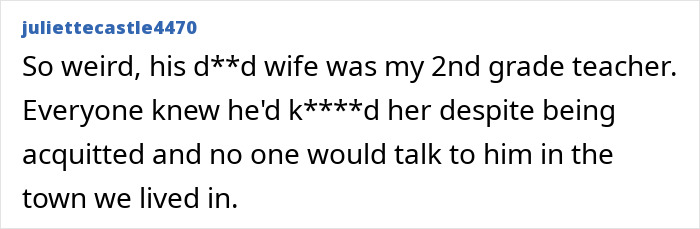
“Unusually unemotional.” Charlie’s innocence remains a topic of debate to this day




 Follow Us