Infertility affects roughly 1 in 6 adults worldwide, making the path to parenthood difficult for millions. Fortunately, modern science now allows couples to build a family using the DNA of a loved one — a process known as intra-family egg donation. For many, it sounds like the ultimate dream solution: keeping the baby in the genetic family pool while bypassing long donor waitlists.
That was exactly the case for two sisters who made a life-changing agreement.
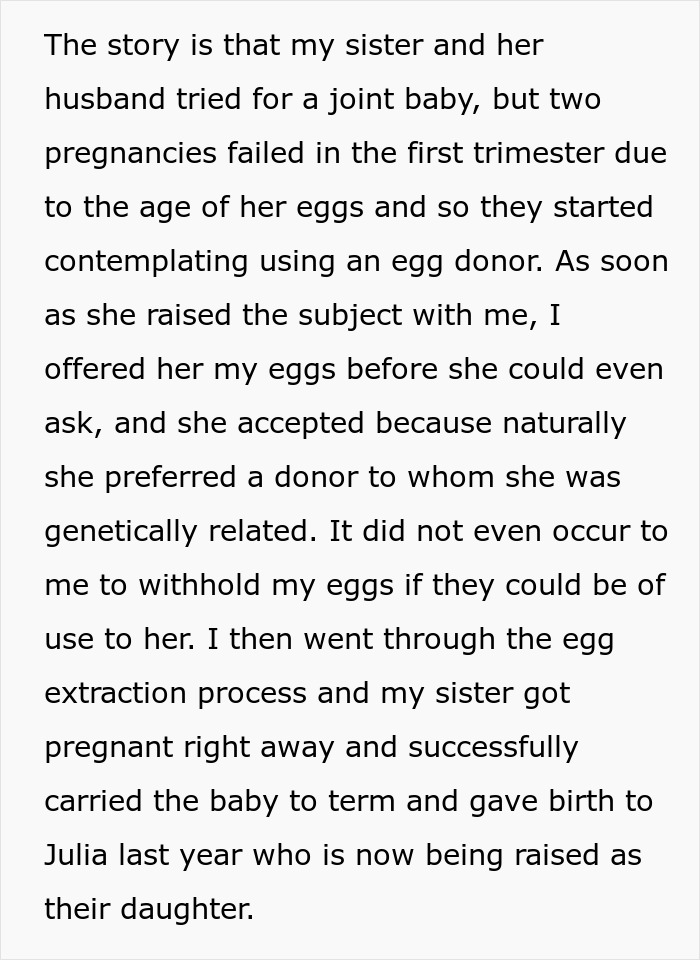
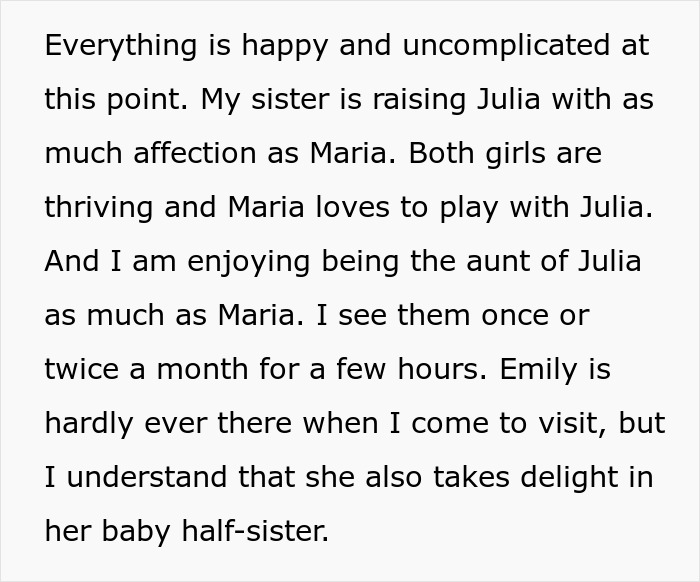
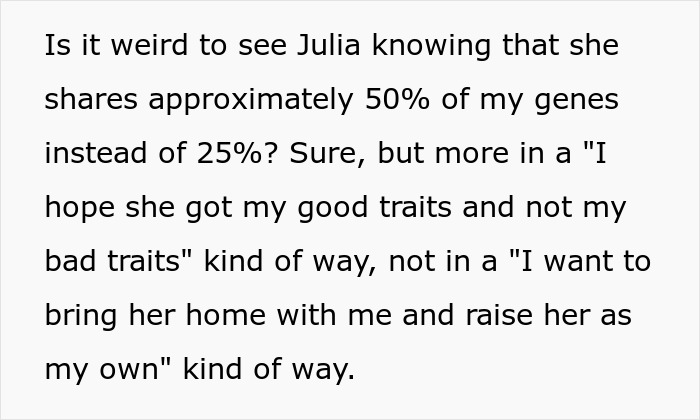
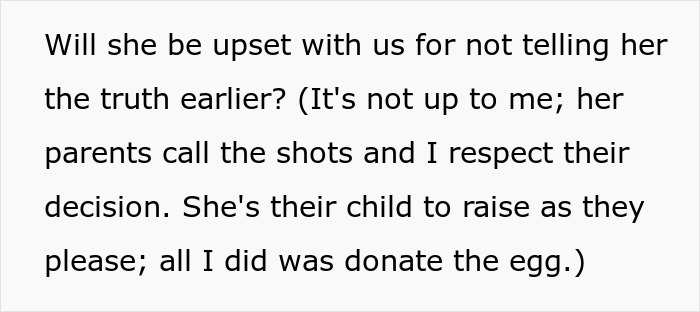
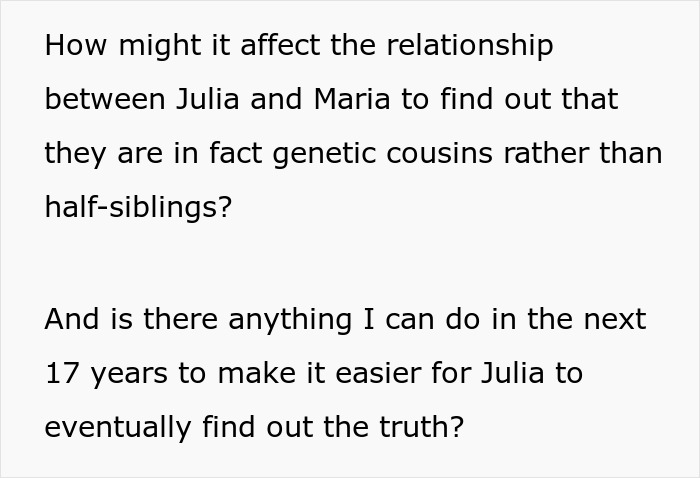
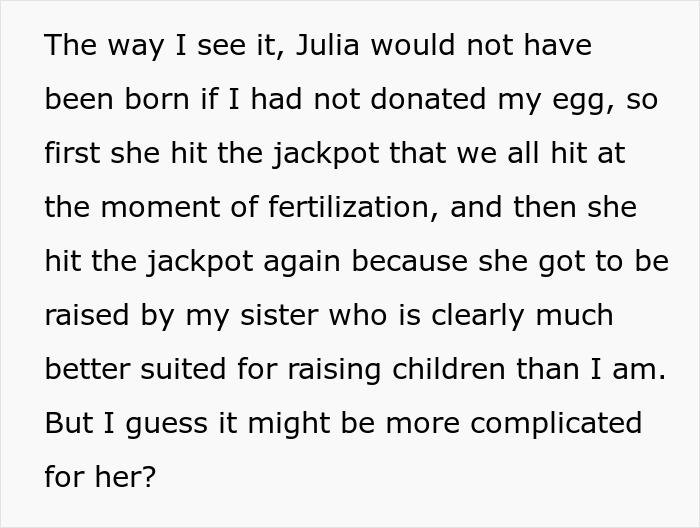
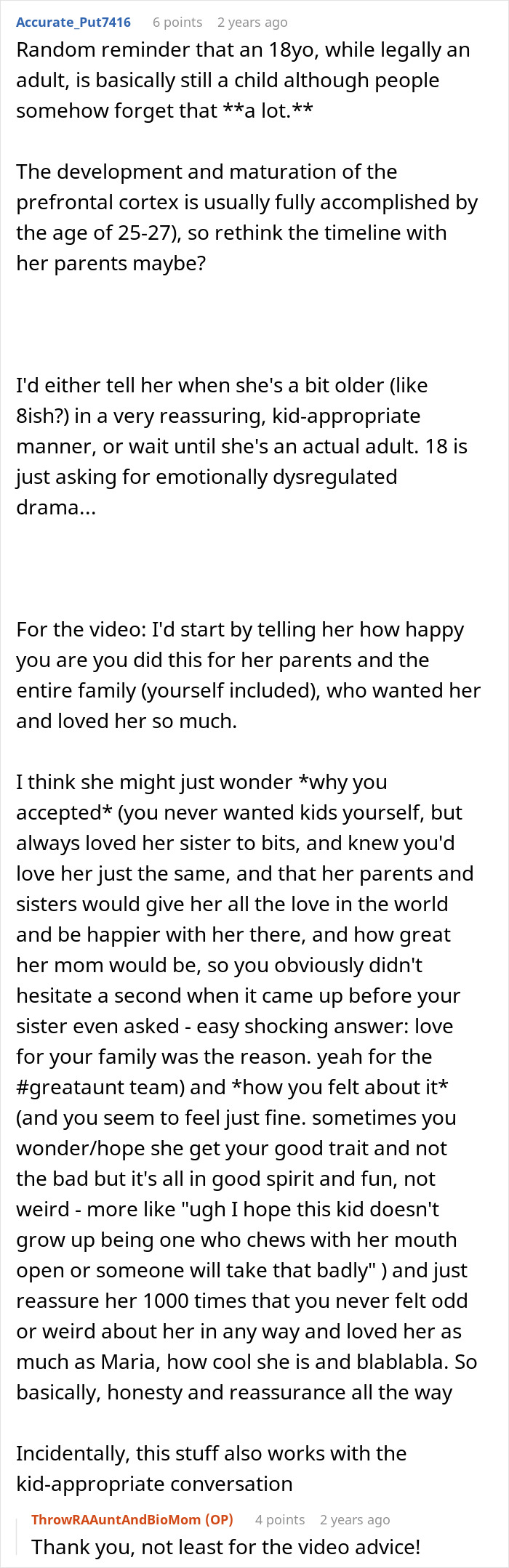
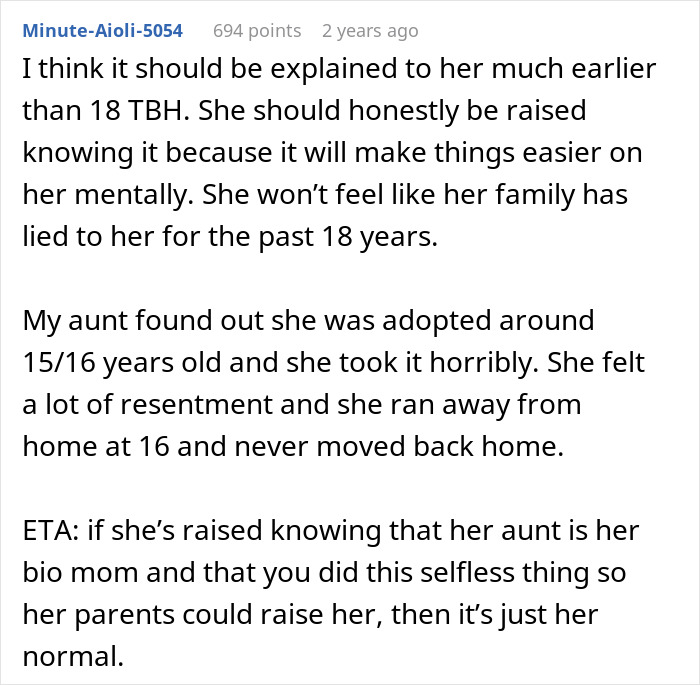
After watching her older sister suffer through two devastating pregnancy losses, one woman stepped up without hesitation and donated her eggs. A baby girl was born, and while she is happy and healthy, nobody plans on telling her the truth until she turns 18.
Worried this secret might cause problems down the road, the egg donor turned to the internet for much-needed advice.
A woman donated her eggs to help her sister conceive a baby
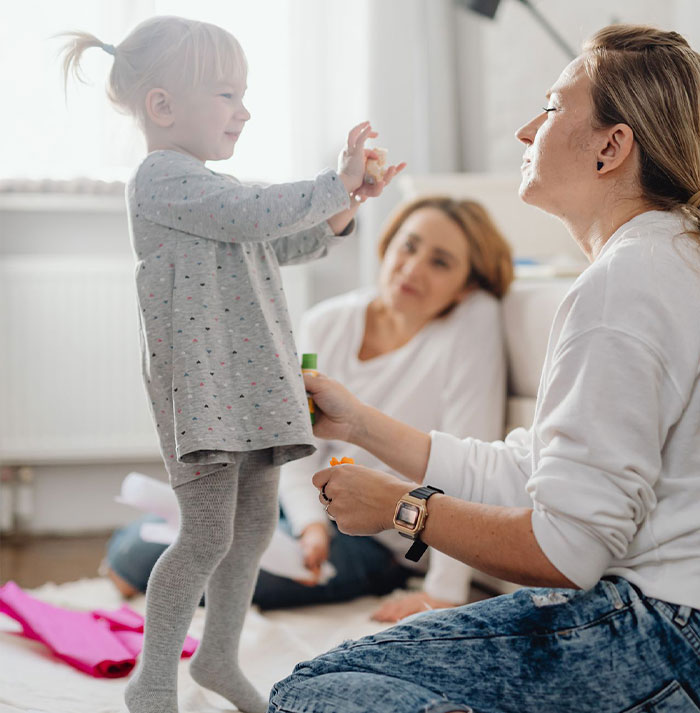
kaboompics / Pexels (not the actual photo)

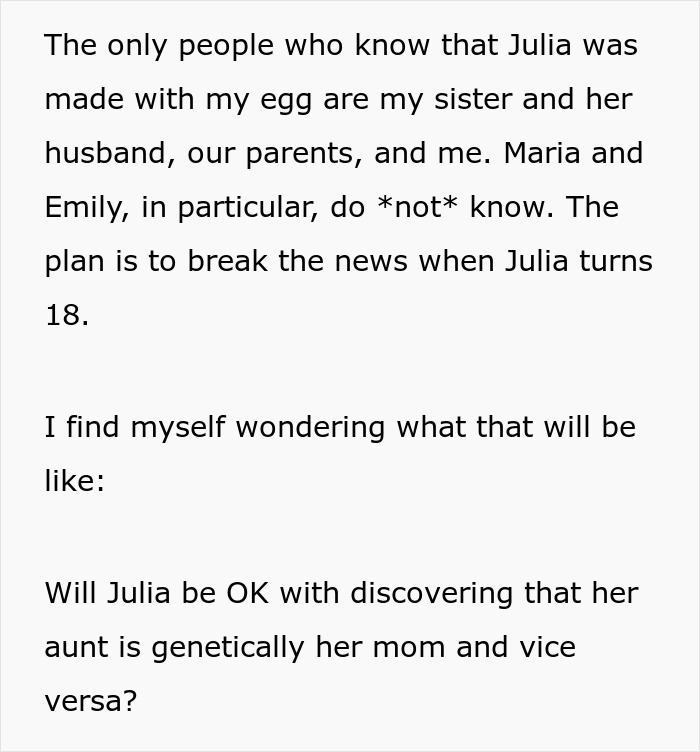
The parents plan on revealing this to the child when she turns 18

Gustavo Fring / Pexels (not the actual photo)

kaboompics / Pexels (not the actual photo)

Juan Pablo Serrano / Pexels (not the actual photo)

George Milton / Pexels (not the actual photo)

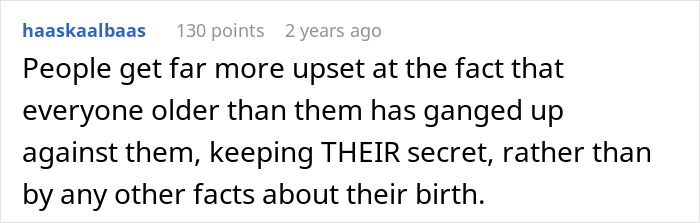
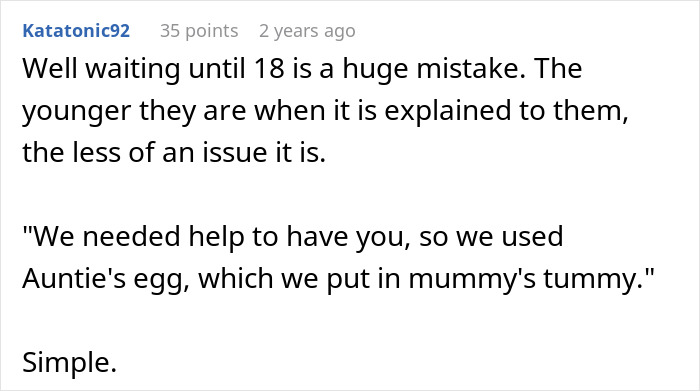
When exactly is the right time to tell the child the truth?
Across the globe, plenty of people struggling with infertility turn to intra-family gamete donation, a process where someone uses eggs or sperm gifted by a relative. In the UK, while the official governing body — the Human Fertilisation and Embryology Authority (HFEA) — leaves these decisions to individual clinics, the demand is undeniably steady. Over 40% of fertility clinics in the UK receive requests for intra-family donations at least once a month, with sister-to-sister egg donation being by far the most popular choice.
For many couples facing infertility, using a sister’s egg is a dream setup. It keeps the baby in the family’s genetic pool, saves money, and cuts out the long wait for anonymous donors.
Other variations exist, though they are far less common. Inter-generational arrangements, such as a father donating sperm for his son, show up in about 29% of clinic requests. Even rarer are arrangements where a daughter donates eggs to her mother (11%) or a niece to her aunt (11%). Naturally, these inter-generational cases raise unique concerns for medical ethics committees, particularly regarding whether the donor is truly making a voluntary choice free of family pressure or financial dependence.
Most of the time, research shows, the decision comes purely from love. Donors usually step up right away after watching their sisters struggle through failed pregnancies. They just want to help, and they feel proud to do it. But behind the joy, experts often wonder: does sharing DNA make things weird down the line? Does an aunt start feeling like a mom?
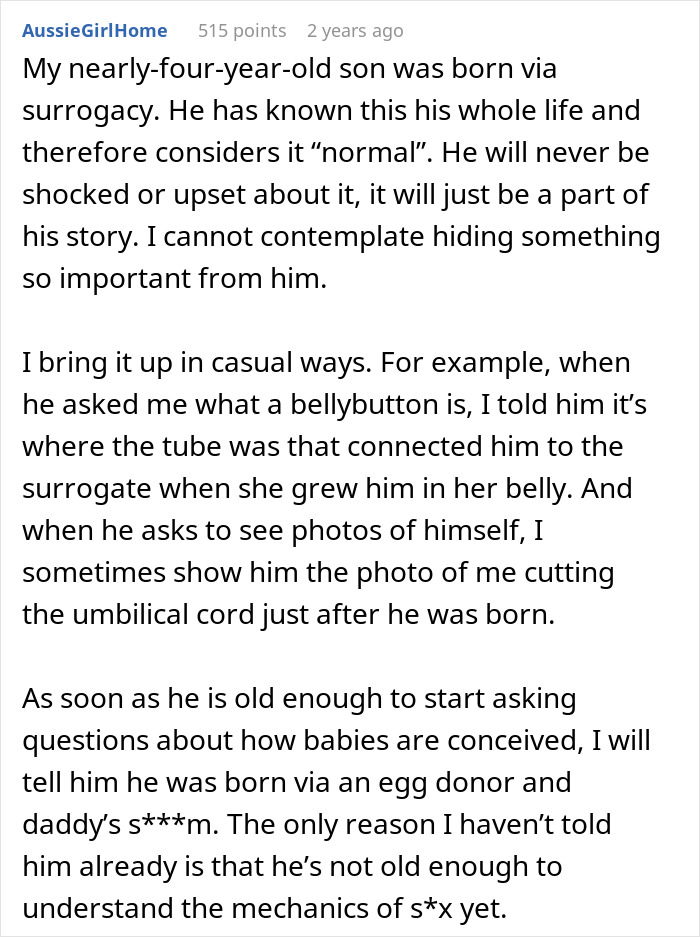
According to long-term research, the short answer is no — at least during the first 10 years. Studies show that these families usually thrive. The sister who gives birth is 100% the mother, the egg donor happily stays in her role as the fun aunt, and the child grows up in a loving environment. Everyone keeps their clear social roles, and the family bond actually gets stronger.
The trickiest part isn’t raising the kid — it’s deciding when and how to tell them the truth. Unlike using an anonymous donor, an in-family secret involves multiple relatives, making it almost impossible to keep hidden forever.
Research shows that over 80% of parents who use a sister’s egg plan to tell their child eventually. In studies tracking these kids up to age 10, around 15% of parents had already started talking to their children about how they were conceived.
While every family handles the timing differently, the data offers a lot of comfort.
“These days we are more open to alternative ways of forming a family. If parents are reluctant to tell their children, it may be because they are worried that their relationship with them will deteriorate. But there is no indication of this in our research,” says Claudia Lampic, psychologist and researcher at the Department of Neurobiology, Care Sciences and Society at Karolinska Institutet.
She explained that the seven-year-olds who found out that they were conceived through a donor reacted neutrally or were curious about it. “International research shows that if the child as an adult later chooses to contact the donor, it is not with the aim of seeking out a new parent; it is more that they want to understand themselves better.”
This means there is no strict blueprint for how parents ought to handle the reveal.
However, keeping it a secret carries its own hazards. If a child stumbles upon the truth on their own later in life and realizes that those closest to them hid such a crucial part of their identity, the emotional fallout can be deeply painful.
Experts believe that the longer parents wait to tell the truth, the more difficult it may be to bring the issue up.
“However, I must emphasize that research shows that all is not lost even if the child is older,” Lampic says. “Given the right support and preparation, you can tell a child even in their teenage years or when they are an adult. But you need to be prepared for strong reactions.”
How intra-family donors navigate love, genes, and boundaries
For the most part, egg and sperm donors welcome the opportunity to connect with donor-conceived individuals down the line.
In a study, most donors (over 85%) said they donated eggs to help people who couldn’t have children, showing their altruistic motivation.
Nearly half said they would feel positive if the child reached out to them, and none opposed it.
“It’s vital that donors understand that they are dipping a cup into a pool of genes which has trillions of combinations, and not giving away a piece of themselves,” says Georgia Witkin, Ph.D., Director of Patient Services Management and Development at US Fertility.
She says recipients should also understand that they are getting some family genes for a baby from a familial donor, but they are not getting a baby. “The baby will be built by the pregnant mother’s body and from the mother’s body, and it is her gestational child.”
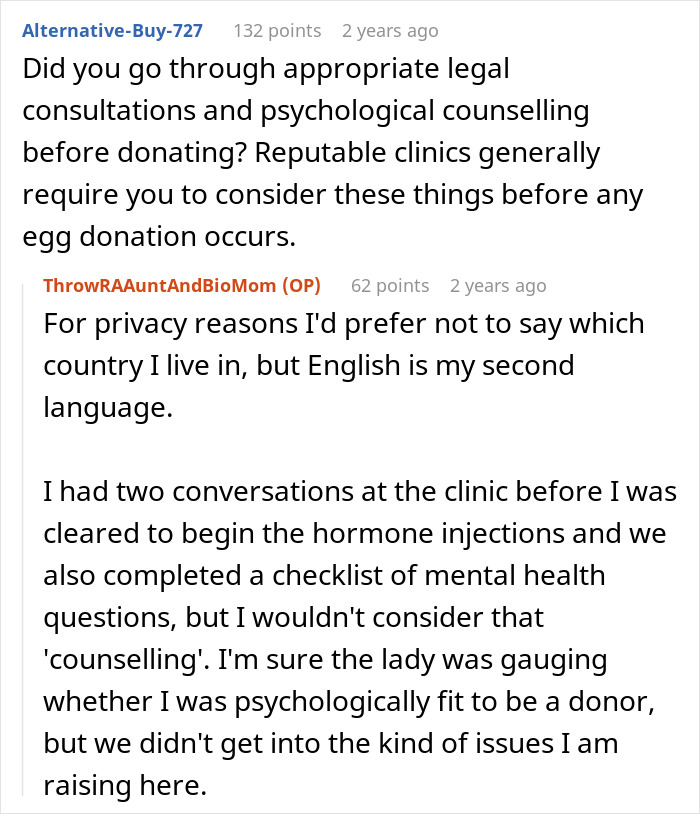
Experts strongly recommend that both the donor and the recipient parents go through professional counselling, and possibly even legal consultations, before starting the medical process.
“When families explore using a sister or friend as their egg donor, the journey is often guided by trust and shared values. But medical, legal, and emotional safeguards are absolutely essential to ensure the process is both ethical and sustainable, says Dr. Minoos Hosseinzadeh, Founder and Medical Director at Fertility Institute of San Diego.
He adds: “We encourage psychological counseling for every known donor arrangement. It ensures that future conversations — particularly with the child — are built on honesty and emotional readiness.”
As science makes new family structures possible, it forces us to rethink what honesty and parentage mean across generations.
The woman gave some more information in response to the comments
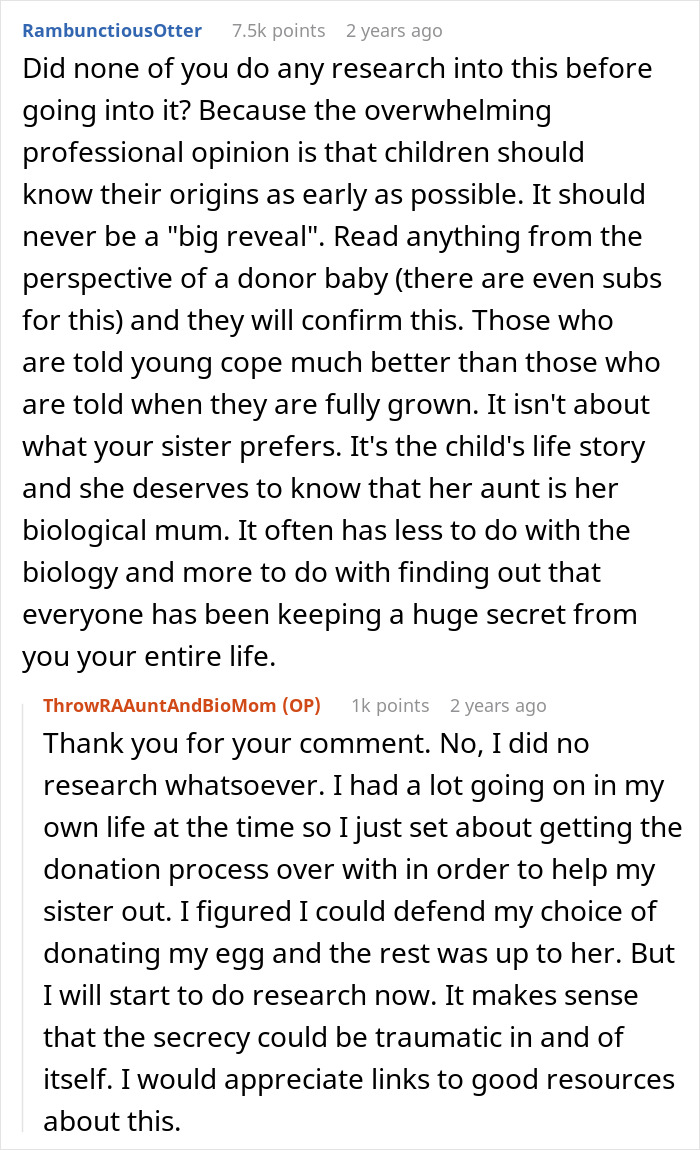
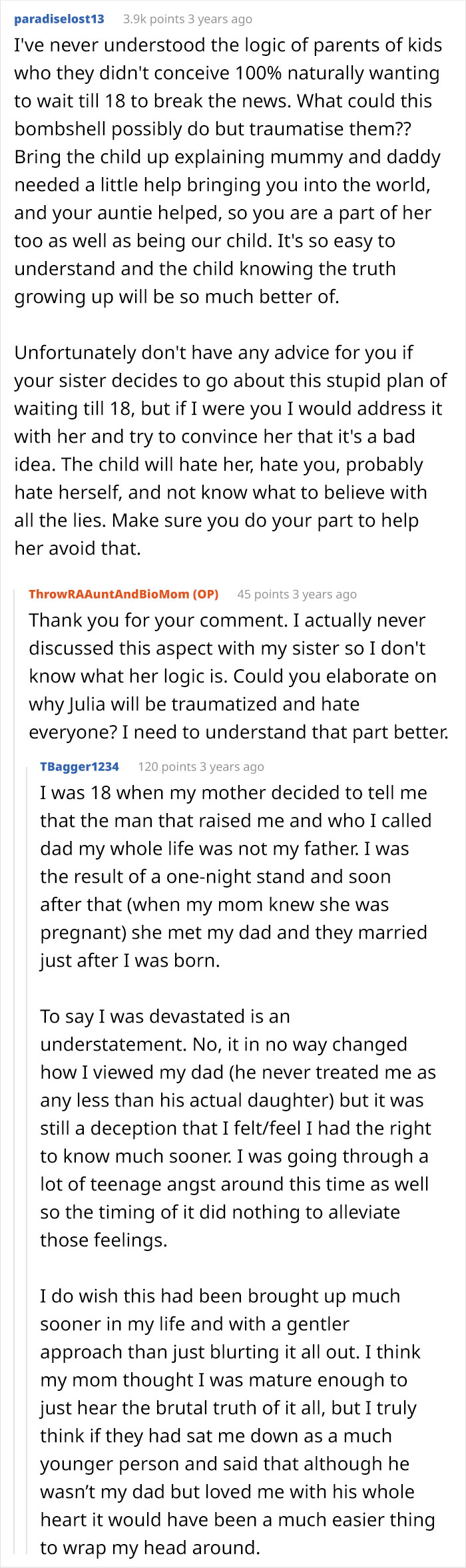
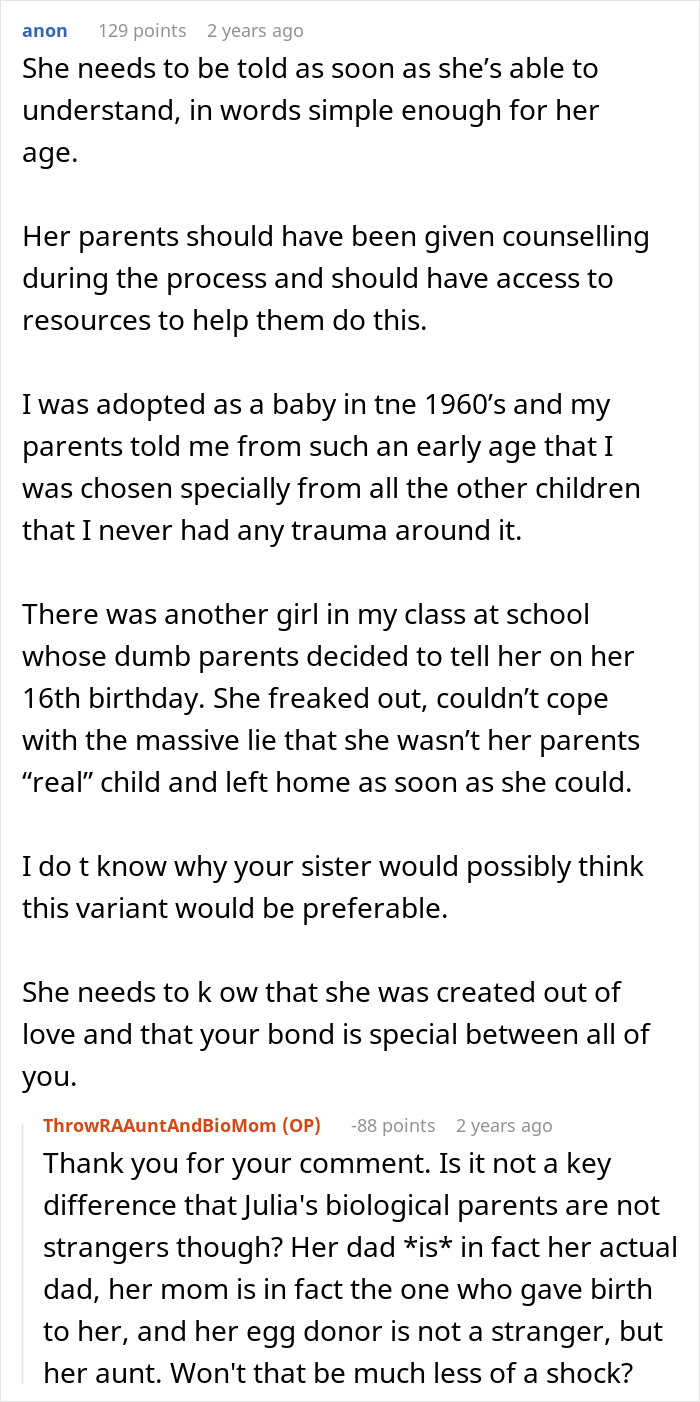
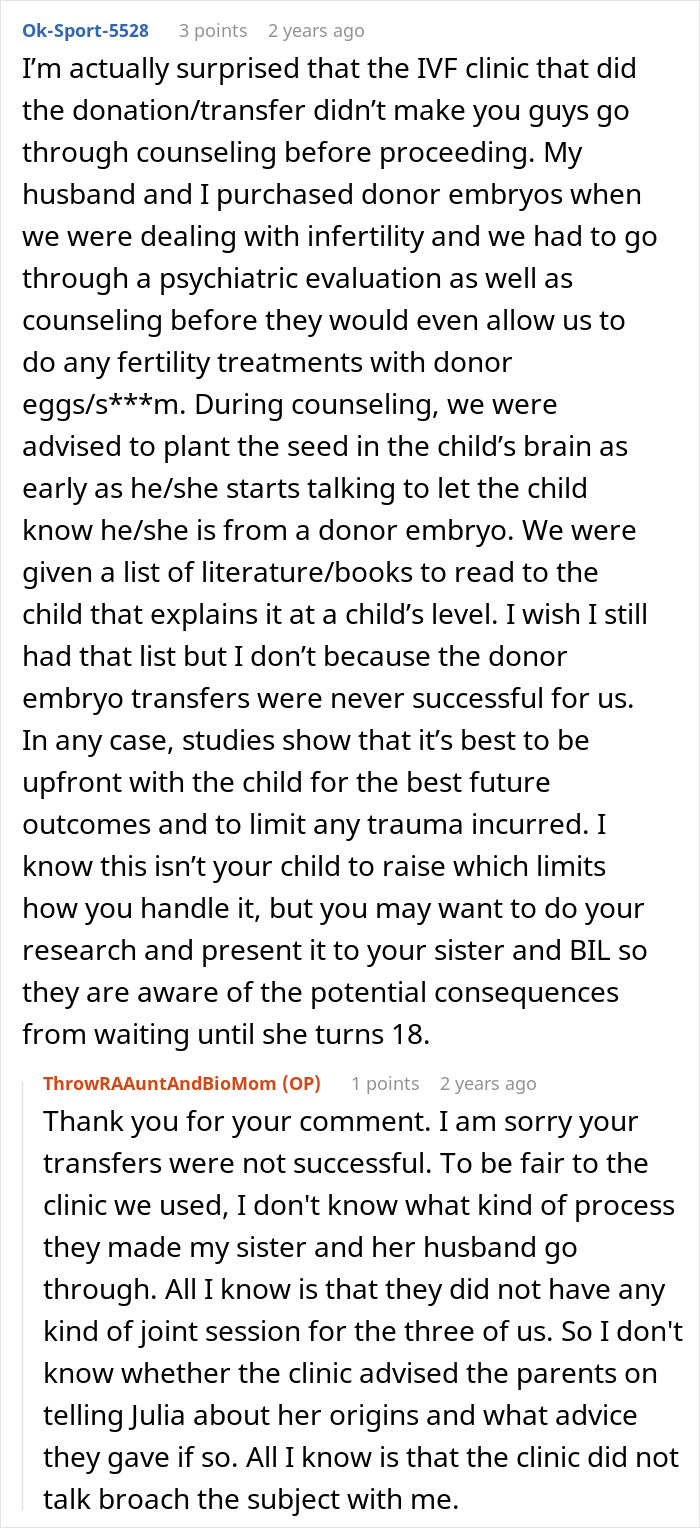
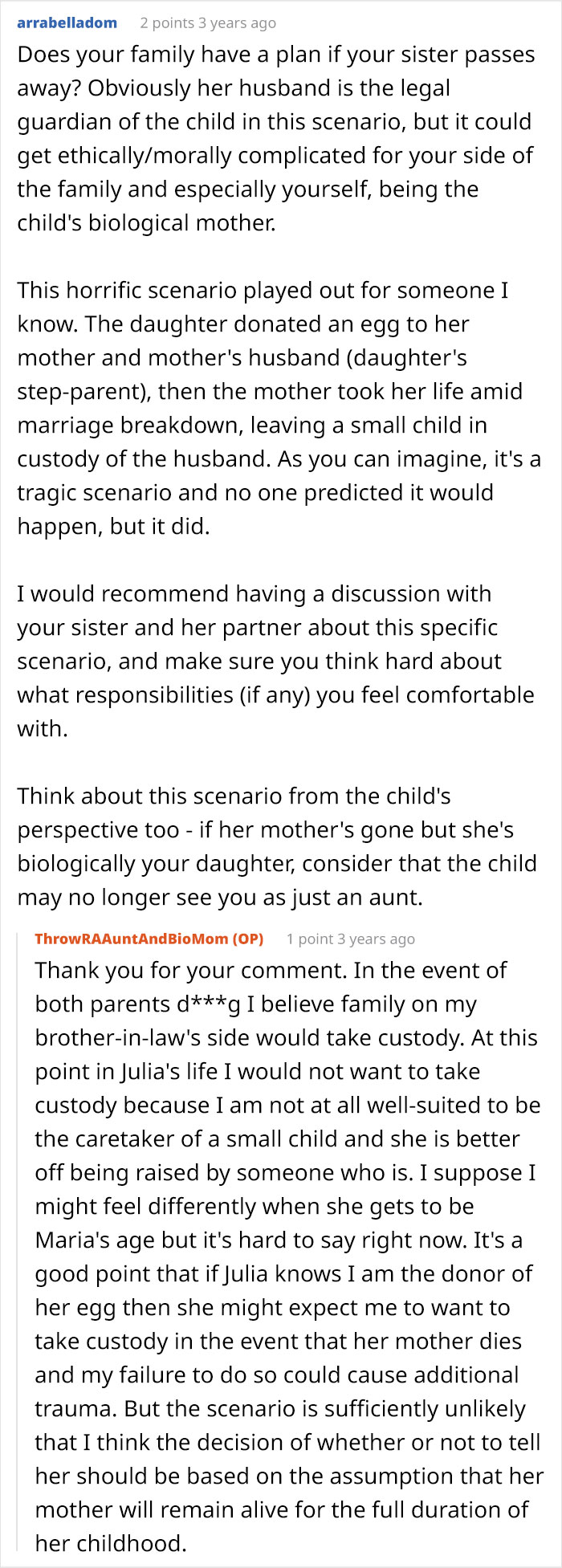
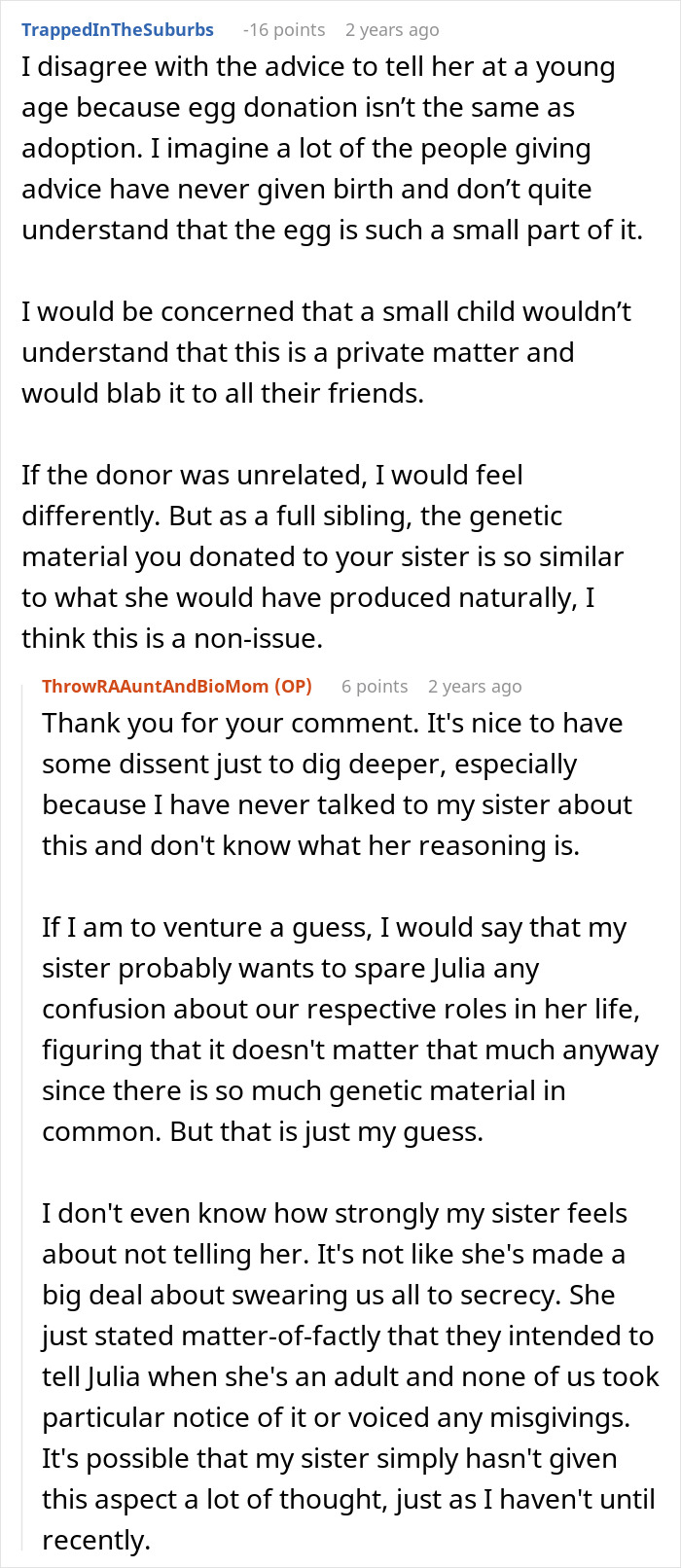
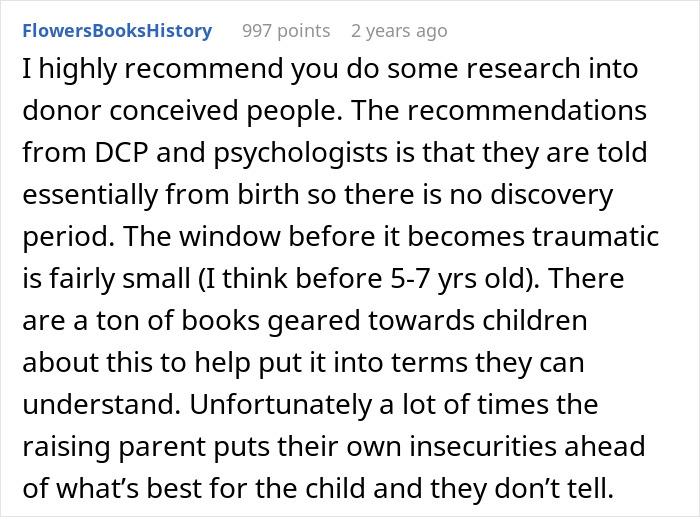
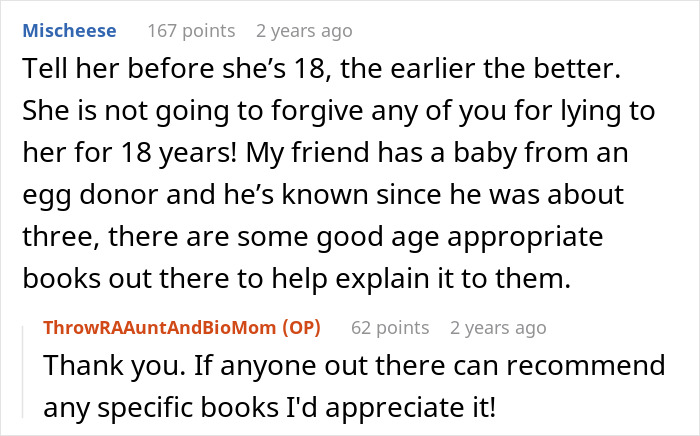
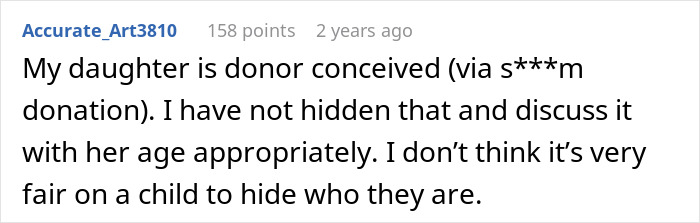
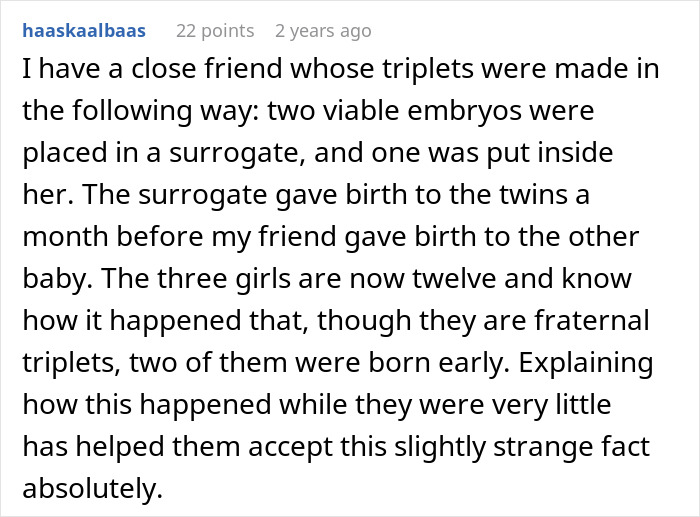
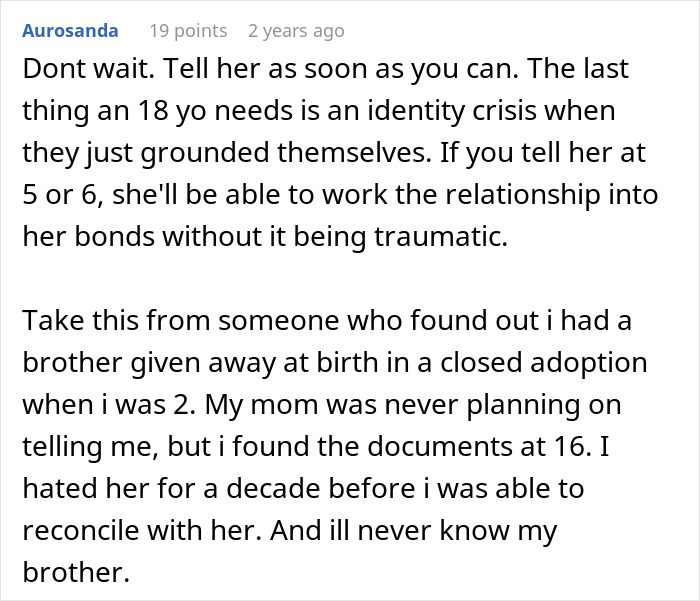
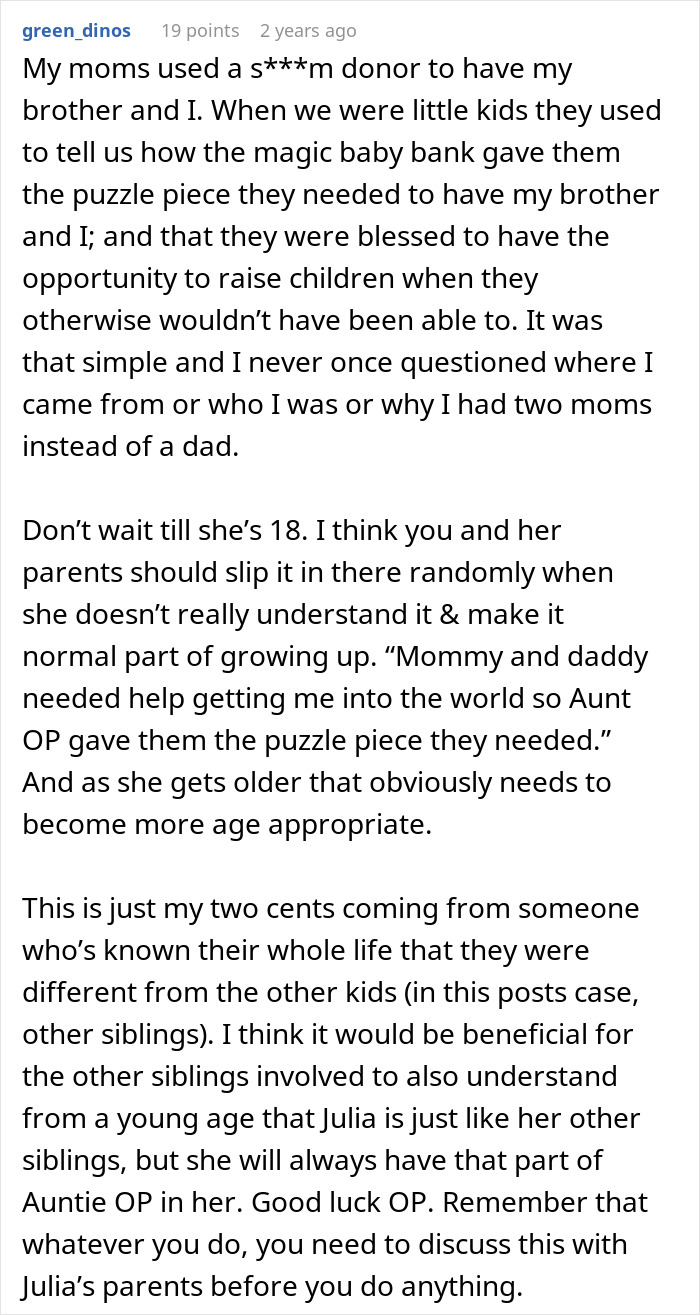
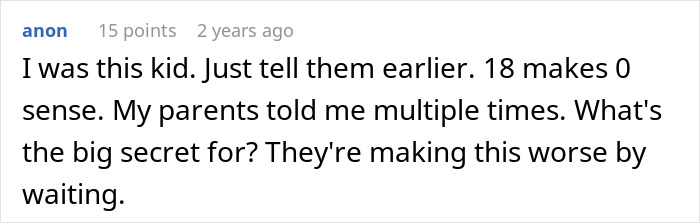
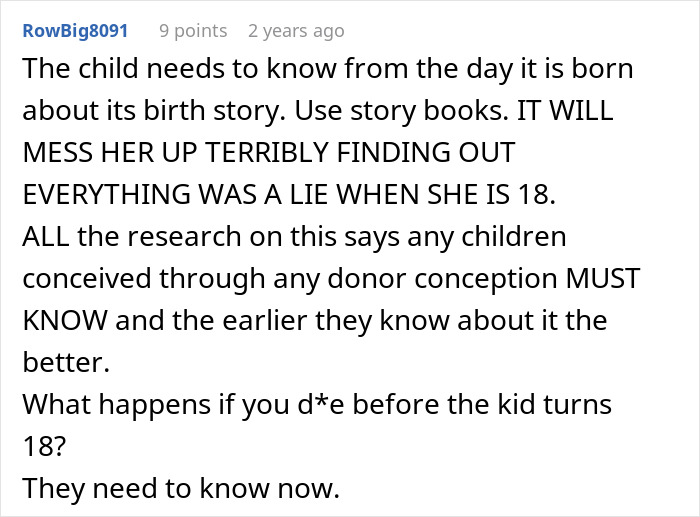
Many people in the comments shared their advice, as well as personal experiences




 Follow Us