There are household chores, and then there are household events, like the kind that somehow make a simple Saturday cleaning session super stressful. Most people deal with dust, dishes, and laundry. This family, however, seemed to be dealing with something a little more complicated than just a messy living room.
Today’s Original Poster (OP) shared that whenever they clean the house with their siblings, their mother would always find something to complain about. After realizing it didn’t have anything to do with cleaning, they decided to test out their theory.
More info: Reddit
Cleaning is usually one of those tasks that feels straightforward on paper, but in some homes, it becomes something more complicated than just keeping things in order
Image credits: Drazen Zigic / Magnific (not the actual photo)

The author and their siblings grew up experiencing their mother turning weekend cleaning into stressful days filled with constant criticism and dissatisfaction
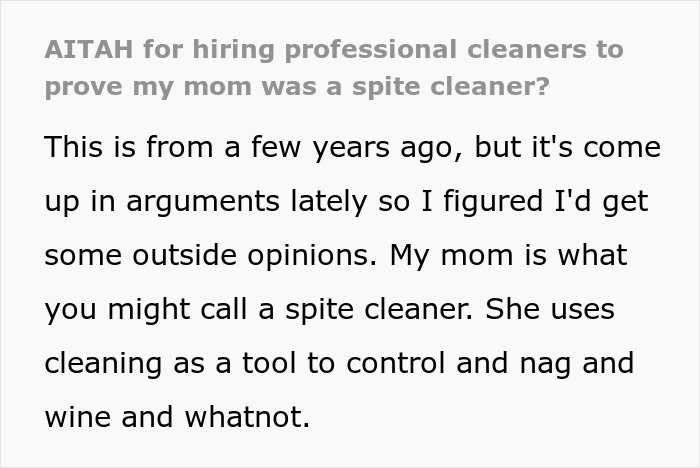
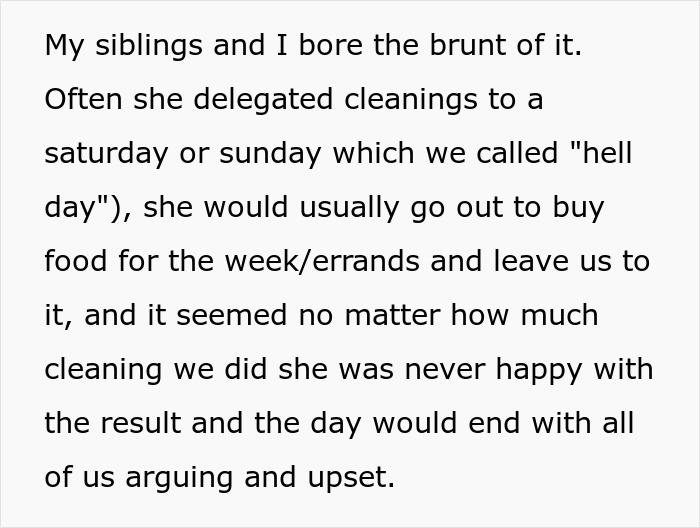
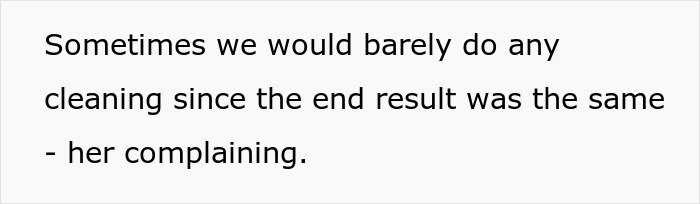

Image credits: pixel-shot.com / Magnific (not the actual photo)
No matter how much they cleaned, she repeatedly complained that it is never done properly, leading to ongoing frustration and arguments
Image credits: Freepik / Magnific (not the actual photo)
To prove their point, the siblings secretly raised money and hired professional cleaners while their mother was out of the house

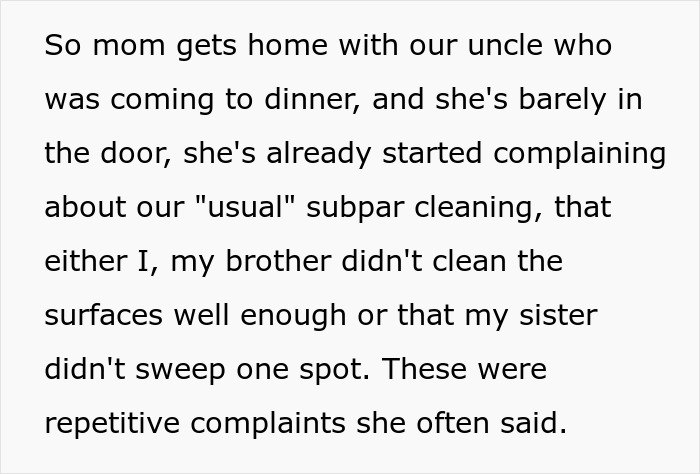
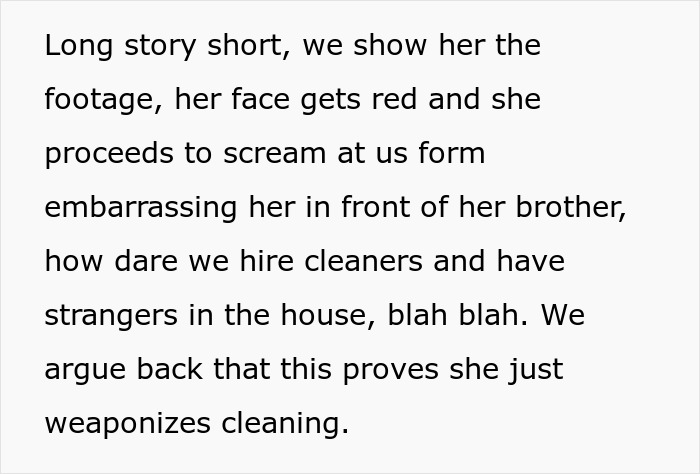
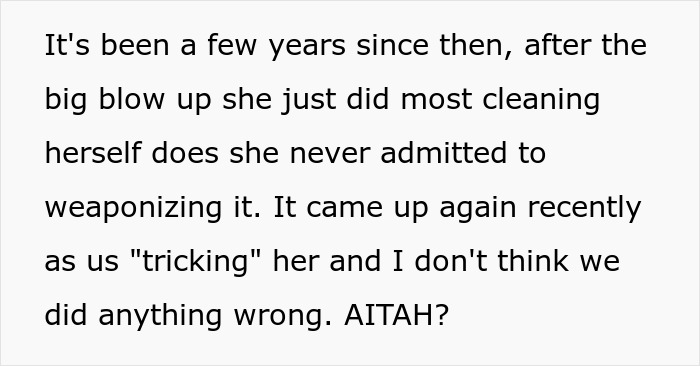
Image credits: Technicolor_Reindeer
When she returned and started criticizing as usual, they revealed the footage of the professionals which left her furious that they had brought strangers into the house
The OP explained that their mother had a long history of turning household cleaning into a stressful thing. Nearly every weekend, she would assign them and their siblings massive cleaning tasks and then run errands or grocery shopped. However, no matter how much effort they put in, their mother would criticize and complain about everything they had done.
Over time, they noticed their mother would repeat the exact same complaints after every cleaning session, whether the house was spotless or not. Eventually, they began wondering whether the cleaning itself even mattered. Determined to prove their point, the OP and their siblings created a small crowdfunding campaign asking friends and relatives to help them pay for professional cleaners as a “surprise” for their mom.
Family members familiar with the situation contributed enough money to hire a local cleaning service and leave a generous tip afterward. So, while their mother was out shopping and dealing with car errands, two experienced cleaners arrived at the house. The cleaners spent hours making the place spotless, and the OP recorded clips of the cleaning process with the workers’ permission.
Now, their mother returned home with her brother, and before she had fully settled in, she launched into the same familiar criticisms about dusty surfaces and missed spots. It was then the OP and their siblings showed that the cleaning had been done by actual professionals. Their mother was furious and accused them of humiliating her in front of her brother, but more so for allowing strangers into the house behind her back.

Image credits: namii9 / Magnific (not the actual photo)
Interestingly, household chores are among the most frequent triggers of conflict within families and relationships. Psychology Today explains that disagreements often don’t come from the tasks themselves, but from differing expectations about what “clean” or “done properly” actually means.
Building on this, research summarized in Hint suggests that constant criticism can reduce a person’s motivation to help with household tasks rather than improve it. When efforts are repeatedly judged as “not good enough,” people may begin to feel unappreciated and become more defensive over time. This can also chip away at their confidence and make them less likely to participate or feel engaged.
Psych Mechanics recommends focusing on specific behaviors rather than criticizing the person, which helps reduce defensiveness and personal conflict. It also stresses the importance of balancing correction with appreciation for what is already being done well, so contributions don’t feel invisible or taken for granted.
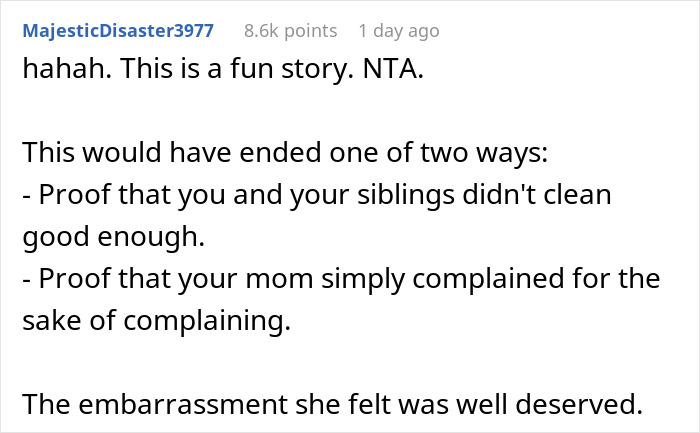
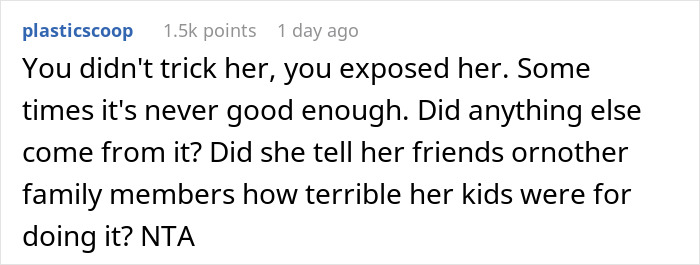
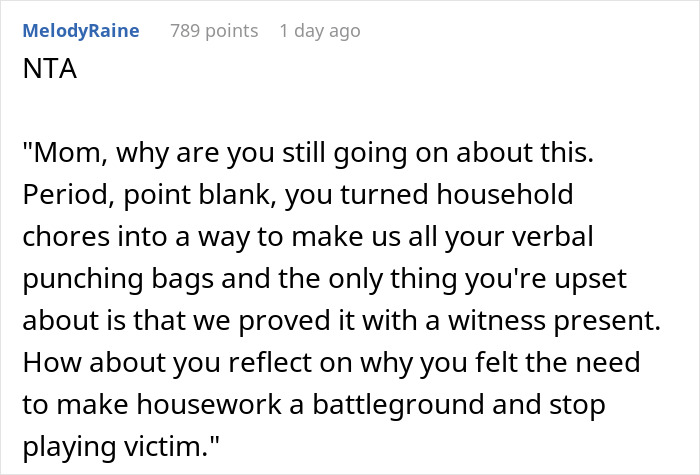
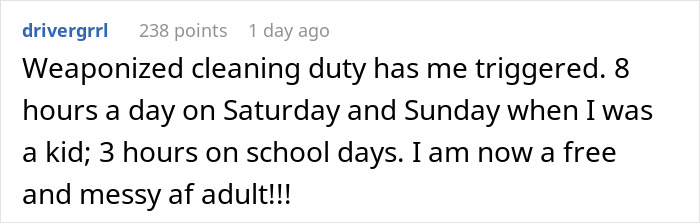
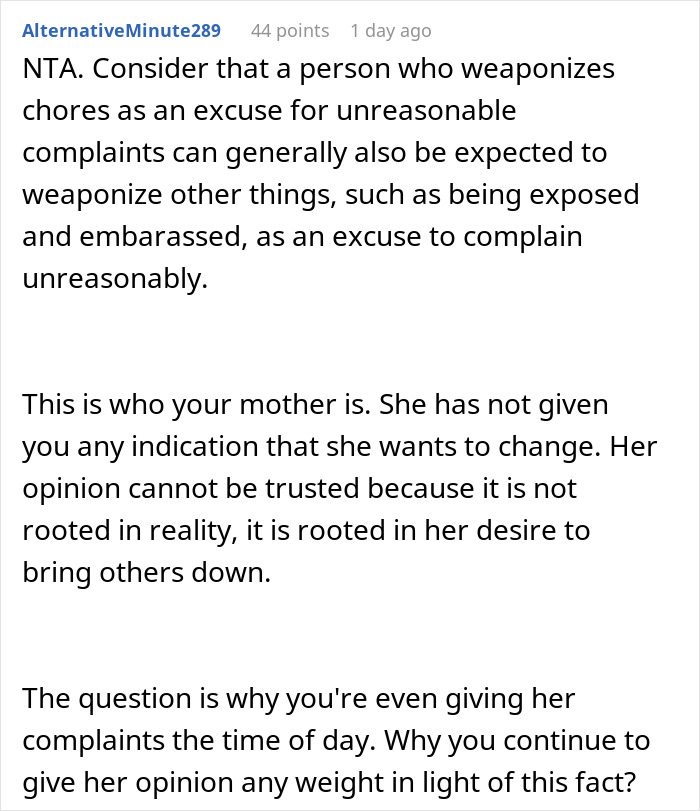
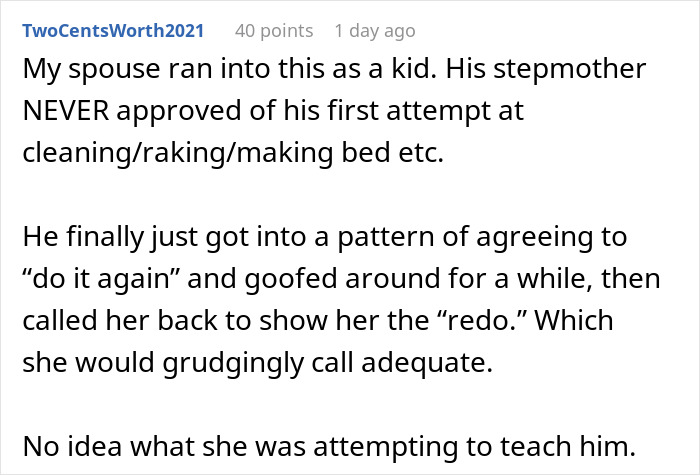
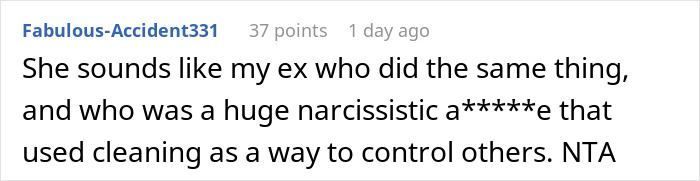
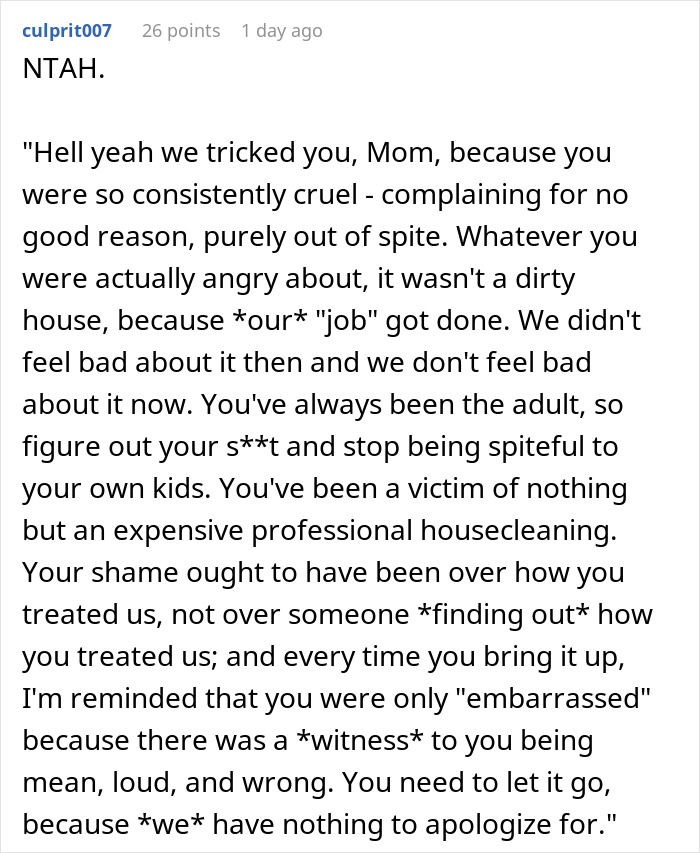
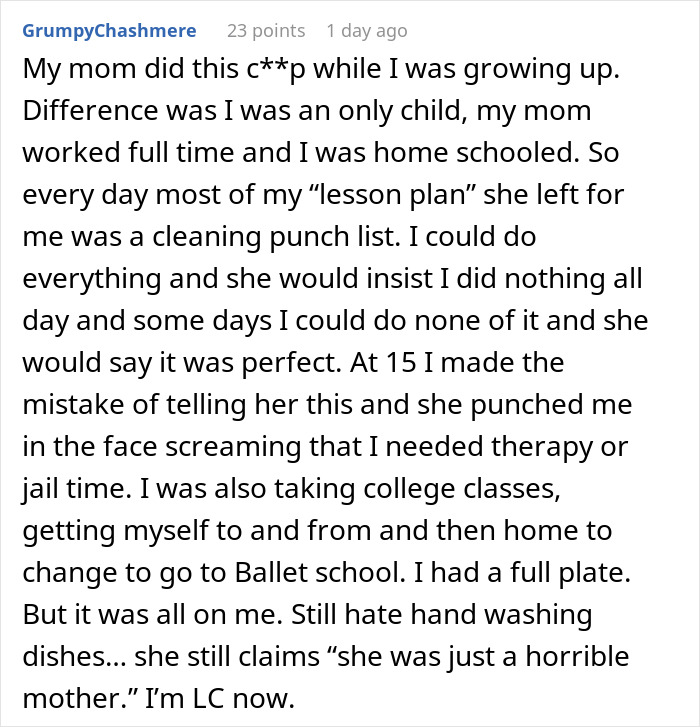
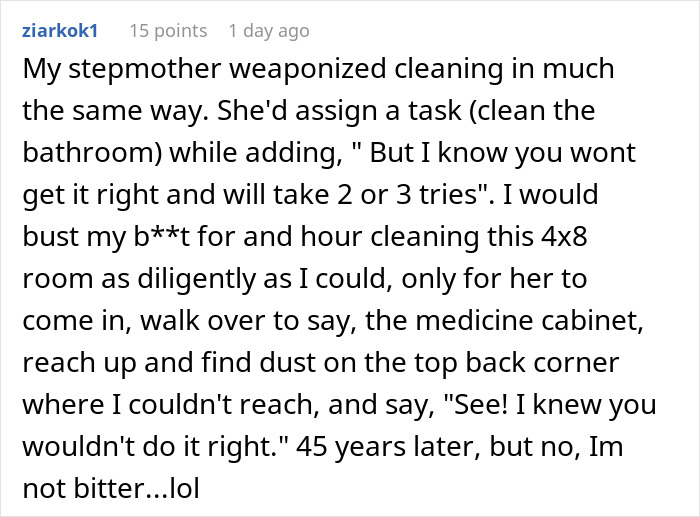
Netizens believed the OP’s mother was using cleaning as a form of control rather than a genuine standard of housekeeping. They also felt the siblings’ experiment simply exposed an existing pattern rather than creating the problem.
What do you think? Was the mother genuinely strict about cleanliness, or was this more about control than cleaning? We would love to know your thoughts!
Netizens focused on the emotional dynamic, arguing that the real issue was the long-term impact of constant criticism and power struggles within the household














 Follow Us