It’s easy to see why sea otters have such a devoted fan base. Their round faces, thick fur, tiny ears, and surprisingly expressive little paws give them an almost cartoonish appearance. They look cozy even in the middle of the ocean, which only makes their everyday behavior more charming to watch.
So if you have ever seen a sea otter peacefully floating on its back with its little paws resting on its chest, you might have assumed it was simply committed to looking as comfortable as physically possible. And, to be fair, it does look like someone who has just tucked themselves into bed. But there’s a very practical reason behind the adorable pose.
More info: seattleaquarium.org | researchgate.net
Sea otters may look permanently relaxed, but their cozy habits serve very practical purposes
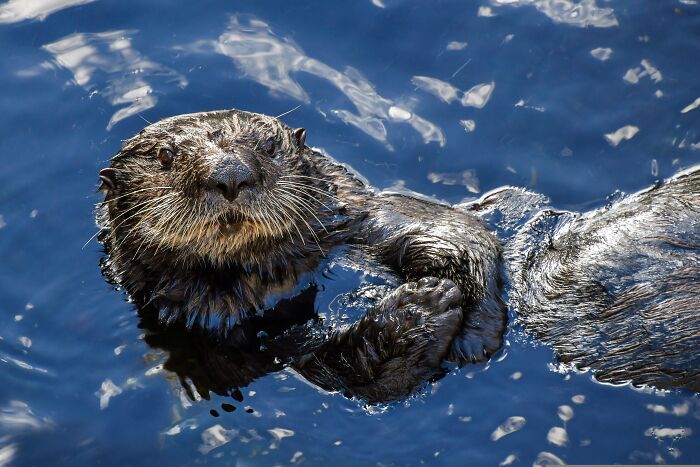
Sea otters often keep their front paws out of the water and tucked close to their chest or belly while resting because it helps them conserve body heat. Their paws, along with their large hind feet, have sparser fur than most of their bodies, making these areas particularly good at losing heat. That matters quite a bit when your home is the chilly North Pacific, because unlike seals, whales, and many other marine mammals, sea otters don’t rely on a thick layer of blubber for insulation. Instead, they have an exceptionally dense coat containing hundreds of thousands of hairs per square inch. Their fur traps a layer of air close to the skin, creating an insulating barrier between the otter and the cold water.

Their famous belly-up resting pose is partly about conserving precious body heat
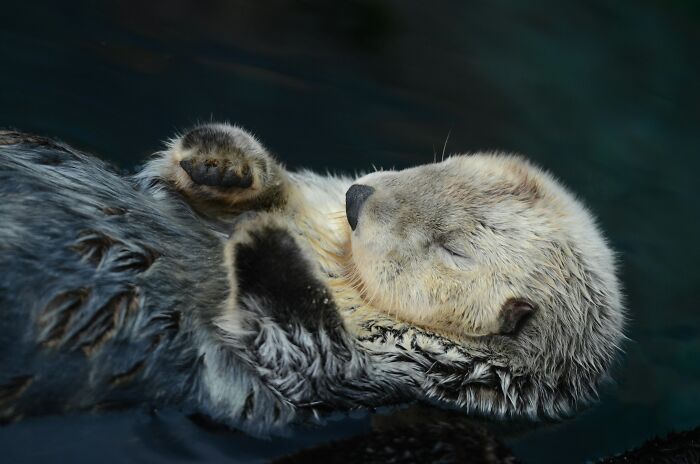
Without a thick layer of blubber, sea otters depend heavily on their remarkable fur
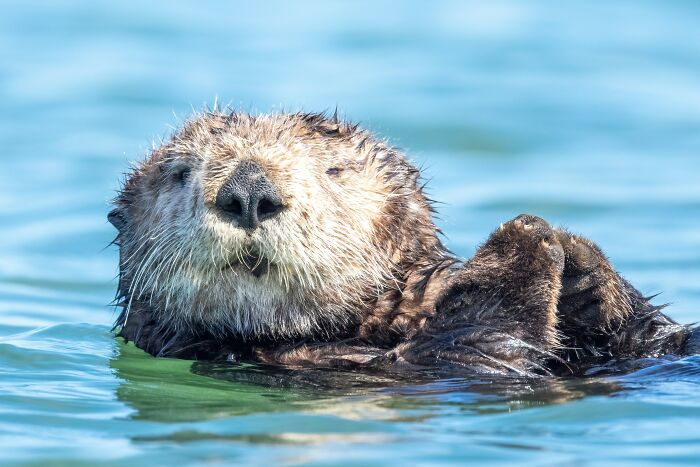
So when an otter floats belly-up with its paws politely folded across itself, it isn’t necessarily practicing good nap etiquette. Keeping those less-protected extremities out of the water reduces the amount of heat they lose while resting. They may also lift or fold their hind feet onto their bodies for the same reason. In other words, one of the sea otter’s most photogenic poses is essentially the animal equivalent of realizing your hands are cold and immediately shoving them into your pockets.
Sea otters sometimes hold paws while resting, though it happens less often than you might think
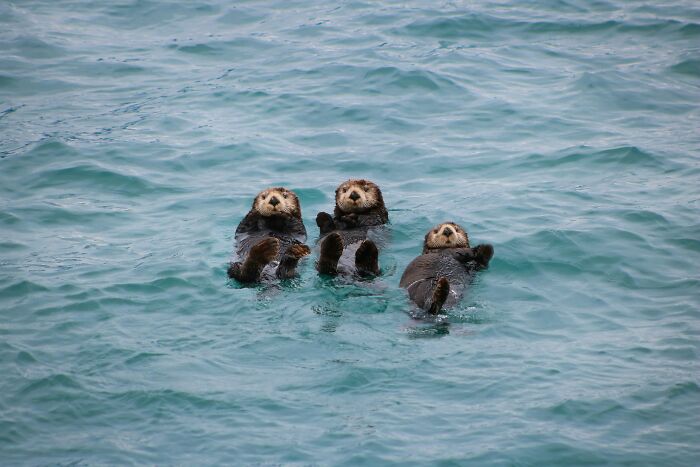
They often rest together in groups known as rafts, so even while they doze off they keep track of others in the group
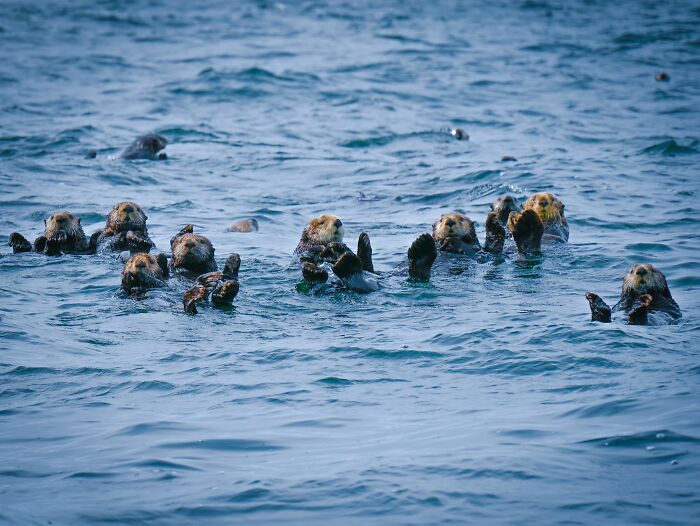
Keeping all that fur working properly is serious business, too. Sea otters spend a considerable amount of time grooming, rubbing, rolling, and working air into their coats. If the fur becomes dirty or matted and can no longer trap enough air, its ability to insulate them drops dramatically. All of this warmth also comes with a surprisingly large grocery bill. Sea otters have very high metabolisms and can consume roughly a fifth to a quarter of their body weight in food each day, dining on animals such as sea urchins, crabs, clams, mussels, and other marine invertebrates.
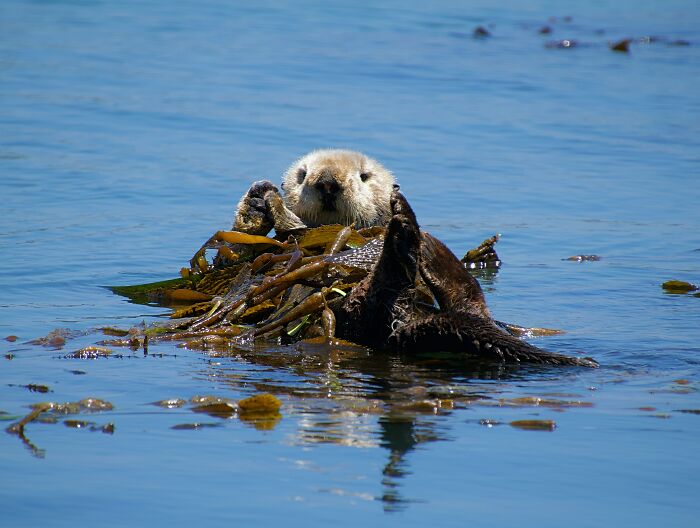
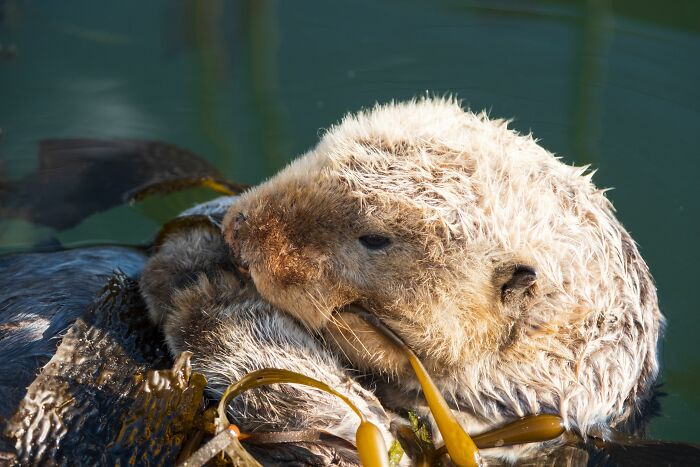
Wrapping themselves in kelp acts as an additional anchor when resting
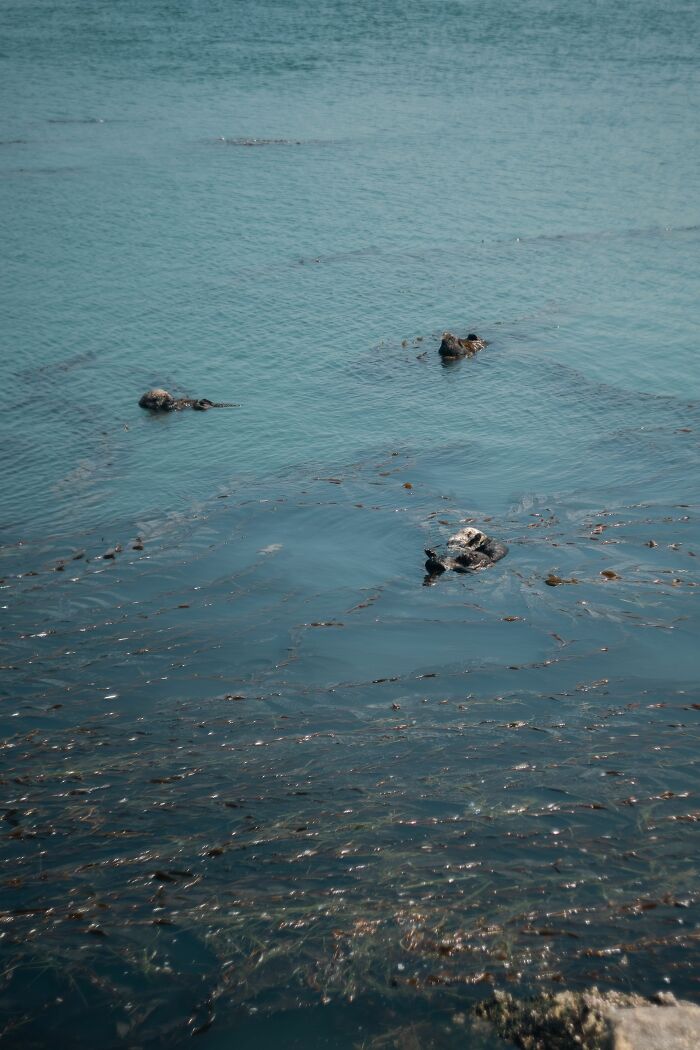
From cracking shells with rocks to storing food, sea otters are surprisingly resourceful eaters
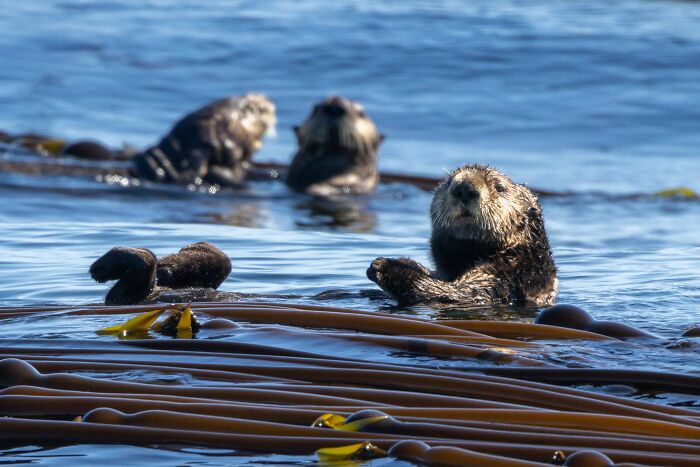
Their resting habits have produced a few other behaviors that humans understandably find difficult to resist. You have probably heard that sea otters hold hands while sleeping so they don’t drift apart. That can happen, although the internet has made it sound much more common than it is. Sea otters sometimes rest together in groups known as rafts, and some individuals have been observed holding paws. However, large groups generally stay together through a combination of nearby body contact, awareness of the other otters, and small movements rather than forming one enormous floating hand-holding chain. And knowing that otters only occasionally reach for a companion while taking a nap doesn’t make the behavior less cute.
They also have another solution to the problem of waking up several hundred feet from where they went to sleep: kelp. Sea otters resting in kelp forests sometimes wrap themselves in the floating fronds, effectively anchoring themselves in place so waves and currents are less likely to carry them away. Despite how much it resembles an otter pulling up a leafy blanket, the kelp isn’t primarily there to keep them warm. Think of it as less of a comforter and more of a very environmentally friendly parking brake.
While it might look like a kelp blanket, it does little to keep them warm
Young ones stick even closer to their mothers, and often get free rides on her stomach
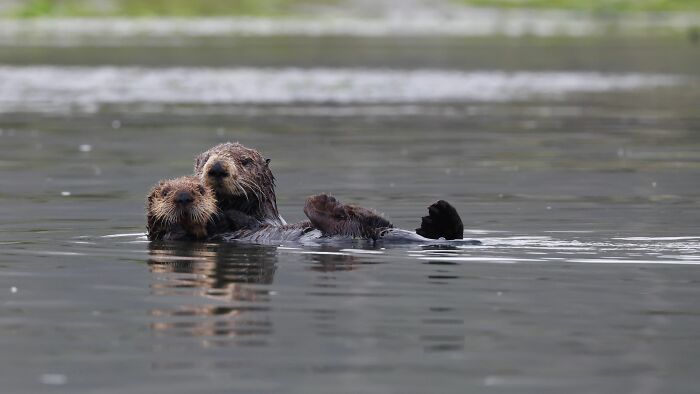
Even their eating habits add to the effect. Sea otters commonly float on their backs while eating, using their remarkably dexterous front paws to handle prey. Some individuals use rocks to crack open hard-shelled food, and they even have loose folds of skin beneath their forearms that can temporarily hold food or a useful rock for later.
Many of the behaviors we find adorable are really clever adaptations to life at sea
Between warming their paws on their bellies, carefully maintaining what may be nature’s most demanding fur coat, tying themselves to kelp before a nap, occasionally grabbing a neighbor, and eating dinner off their stomachs, sea otters have managed to turn a collection of very practical survival behaviors into what looks like quite a chill lifestyle. For the otter, though, all that cuteness is simply part of the job of staying warm, fed, and exactly where it fell asleep.
 Follow Us