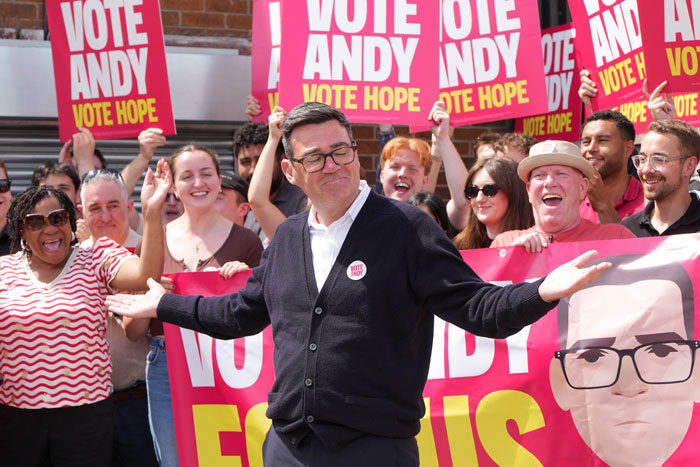
Andy Burnham took office this year with Downing Street proudly proclaiming: “A hot new bombshell has entered the villa.” The proverbial villa was the highest seat in the United Kingdom, and this hottie inherited a pretty messy government. By some miracle, his approval ratings did not suffer even slightly. Political gravitas was seemingly a thing of the past.
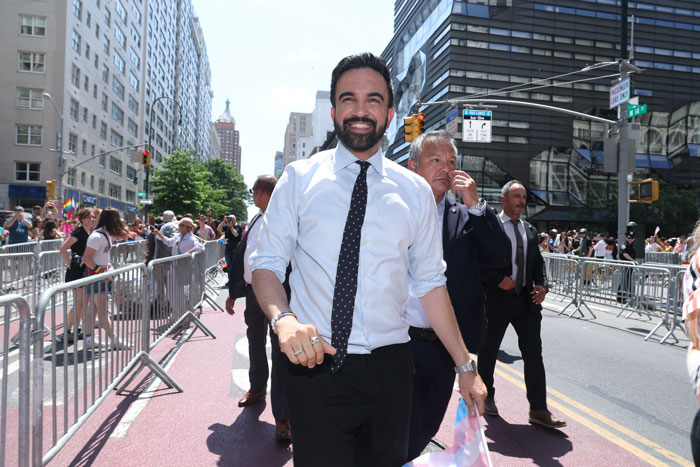
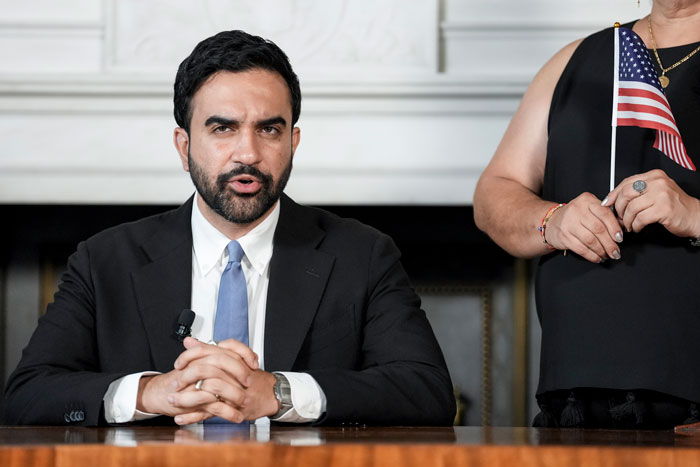
This was not an accident, and it was not unique. Across the Atlantic, Zohran Mamdani turned a New York City Council campaign into a TikTok operation, responding directly to constituent video complaints, showing up at problems with a camera, and building a following that political analysts kept struggling to explain using their existing frameworks.
In South Africa, Helen Zille jumped into a pothole wearing a snorkel, ziplined over a sinkhole, and has taken up DJ’ing on the side. All in the name of relatability. Then there are the OG’s like Alexandria Ocasio-Cortez unedited videos from the Capitol floor and Kamala Harris’s Brat summer era.
The question that nobody in political science departments seems to be having loudly enough is this: are these politicians rewriting democratic accountability for a generation that grew up being advertised to since before they could read, or have we collectively handed the keys to governance to an algorithm that rewards puddle-jumping and cannot process a municipal budget deficit?
Christopher Furlong/Getty Images
The pothole and the platform
Mamdani’s TikTok strategy is the most discussed example of what commentators are calling direct democratic responsiveness, but it might be lacking some objective scrutiny. The model works like this: a constituent films a problem, posts it, tags the politician, and the politician shows up on camera to fix it. Fast, visual, satisfying. The comment section fills with people saying things like “this is what leadership looks like” and “other politicians take note.” The clip gets shared. The algorithm rewards it.
Emma Alves, a lawyer with a background in political science, has spent years studying how public policy actually gets made rather than how it gets announced. She identifies the structural problem underneath the appealing surface: “Short videos may be useful to solve some of the issues, but they are completely ineffective when it comes to explaining a multi-billion-dollar loss. There are still boring meetings, budget meetings, and lengthy memos to make a successful city. Politicians to watch are those who talk about the issues that aren’t appropriate for video looping, because that tells us one thing about their management skills.”
The pothole gets fixed because it photographs well. The $9 billion structural deficit does not get a TikTok because there is no visual language for systemic urban decay that fits a fifteen-second loop, and the algorithm will not reward you for trying.

Political governance is developing a specific pathology where the visibility of an action is becoming more important than its actual impact, and the actions that cannot be made visible are being deprioritised by everyone involved, including the voters. The content that survives is the content that resolves cleanly on camera. Everything that does not resolve cleanly on camera is, from the algorithm’s perspective, not a priority, which is a catastrophic framework for running a city but an excellent framework for running a content channel.
Andrew Selepak, who coordinates a social media Master’s programme, says that politicians can easily use social media to make promises, and the short nature of the content means they won’t explain how those promises will or can even be fulfilled. “Instead, it is just bumper sticker slogans and announcements that mean nothing because nothing will really get done. But the short clips and platitudes will pacify the voters.”
So what do we call it when the politicians control the cameras? O, ye…
When a politician controls the camera, the edit, and the distribution channel, the question of whether this constitutes transparency or a sophisticated new form of state-managed messaging does not have a comfortable answer. Alves draws a legal distinction that cuts through a lot of the optimistic framing around direct-to-constituent communication: “A good definition of access is whether an outsider can obtain the raw footage. Otherwise it’s not transparency, it’s communications.”
This is the part that the “politicians are finally listening” discourse tends to skip. The press conference, for all its theatre and its managed questions and its prepared statements, has one function that the TikTok video fundamentally cannot replicate: an independent actor in the room who can ask the follow-up question.

Christopher Furlong/Getty Images
“Even when politicians face friendly media interviews and are given the questions ahead of time, there are no second takes, and the possibility of unforeseen follow-ups can occur. Many politicians, especially those who make grand promises, do not want that level of scrutiny,” says Selepak.
The TikTok video has infinite second takes. It has editing software. It has a distribution channel the politician controls entirely, reaching an audience that the traditional press no longer reliably reaches. Dawn Hersey, who holds a PhD in political science and has spent years working on governance and corruption internationally, notes that what looks new is actually a very old arrangement in a new format.
“This happens around the world to an even greater level — look at China or Russian TV and news. It’s completely controlled by the government. And it has been happening for a while when politicians and news media have arrangements, too.” The difference is that authoritarian state media is recognised as such. A warm, slightly out-of-breath video of your mayor fixing a streetlight reads as authenticity, which is propaganda’s most effective costume.
Does looking ridiculous actually work?
The Andy Burnham Love Island clip works because it makes him look like someone who does not take himself seriously, which reads as someone who can be trusted. This is a logical chain that does not entirely hold up under examination but feels true in the moment of watching it.
Gen Z, famously resistant to corporate polish and algorithmically trained to identify production value as a signal of inauthenticity, responds to the rough edge, the self-deprecating caption, the slightly shaky camera. The calculation from political communications teams is that unpolished equals honest, and they are not wrong that this is how it reads. They are also producing these unpolished moments in highly calculated production meetings, which is a detail the algorithm does not surface.
Al Drago/Bloomberg via Getty Images
Political commentator Manny Otiko identifies the generational mechanism at work: “Generation Z has been advertised to since before they were born. They can spot slick commercial advertising, so a raw video looks authentic, and that appeals to people.” The irony is complete. The generation most trained to identify inauthenticity is being reached most effectively by authenticity that is manufactured, because the manufacturing has simply moved upstream of the moment of recording rather than being visible in the final product.
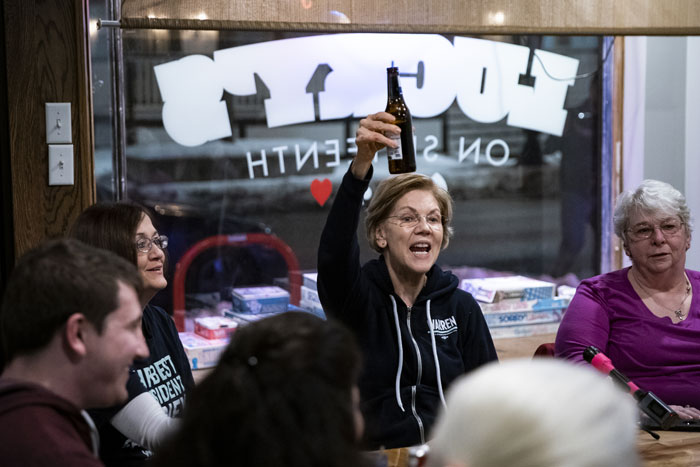
Elizabeth Warren drinking a beer in her kitchen in 2019 was correctly identified as pandering almost immediately. A politician jumping into a pothole with a snorkel is the same calculation executed better, and the difference between the two is not sincerity. It is production intelligence.
Selepak has tried to assess underlying voter psychology because the long game here is to carry the cringe to the voting booth. “Lacking a basic understanding of such basic concepts, they are not persuaded by logic and instead too often base decisions off emotions or what makes them feel better. Voters are not looking for statesmen and instead are voting for prom king.” This is a bleak read and does not bode well for where we are heading.
What gets lost in TikTok translation
The case for TikTok politics is not nothing. Hersey points out that traditional government resource allocation has its own catastrophic track record, citing the Boston Big Dig as a monument to what happens when public money moves through opaque, cronyism-adjacent processes without public visibility.
Mamdani fixing a pothole because someone filmed it is at minimum a pothole that got fixed, which is more than it would have been if it sat in a municipal complaint queue for eight months. The democratisation of responsiveness, even if it is selective and visually curated, is not purely theatre.
But Alves identifies the specific thing that disappears when governance moves to a fifteen-second format: “Politicians to watch are those who talk about issues that aren’t appropriate for video looping.”
Nobody is filming themselves explaining why the city’s pension liability has grown by 40% in a decade. Nobody is posting a TikTok about the seventeen-step regulatory process that is blocking affordable housing development. Nobody is going viral for a nuanced breakdown of why the transit system’s structural problems cannot be solved with the budget currently available. These are the conversations that determine whether a city functions in twenty years, and they are constitutionally incompatible with the format that now determines political visibility.
The ship is sinking. But don’t worry, somebody is probably filming it.
Anna Connors – Pool/Getty Images
The new shape of the P-word
What we are watching is not simply politicians learning to use new tools. It is the tools reshaping what politicians are for, which is a different and considerably more significant development. If the primary measure of political effectiveness becomes visibility, and visibility is determined by an algorithm that rewards resolution over complexity and personality over policy, then the politicians who thrive in this environment will be the ones who are best at being seen rather than the ones who are best at governing. These are not always the same people, and historically they have not been.
“The question we should be considering is how our democratic institutions are evolving, and do we like the direction?” says Hersey. Not whether TikTok is good or bad, not whether Mamdani is sincere or calculated, not whether the snorkel was a real act of civic communication or a well-produced piece of political content. Whether the direction of travel, the slow migration of democratic accountability toward a format that cannot carry its weight, is one we have chosen or one that has simply happened to us while we were watching the clips.
The Love Island soundbite was funny, and Andy Burnham played it perfectly. The crowd loved it and so did the internet and so, if we are being honest, did most people reading about it, including the person writing this article. This is how it works. The thing that is entertaining and the thing that is worth paying attention to are increasingly different things, and the algorithm is in no rush to close that gap.
A hot new bombshell has entered the villa. The municipal budget remains on fire. Both of these things are true simultaneously, and only one of them is trending.
Do you think virality will translate into votes? Or at the very least, be a means to a greater good? Share your thoughts in the comments!
 Follow Us