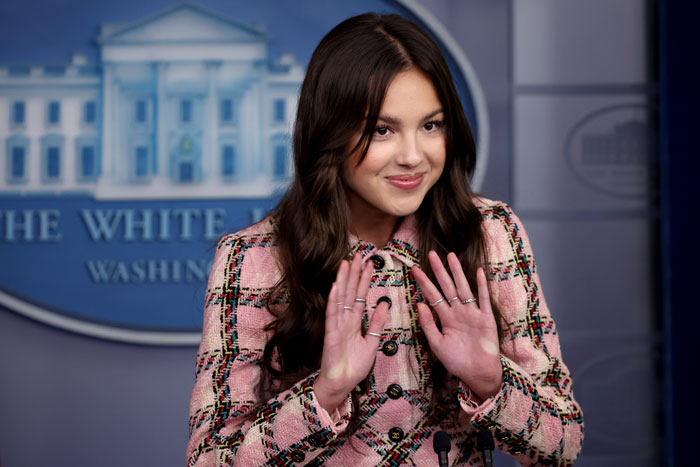
Olivia Rodrigo did not grow up dreaming of this. She dreamed of stages and screaming crowds and the kind of transcendent connection between artist and audience that makes live music one of the last sacred experiences in modern life. What she got, in addition to all of that, was “people [who] wear diapers so that they can be front row. That’s been an experience as a performer that I have smelled.”
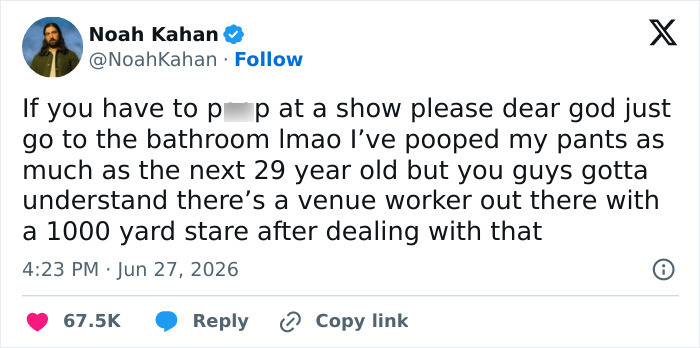
Noah Kahan, Vermont’s most beloved export, a man who writes tender songs about home and longing and the complexity of the human heart, now writes desperate pleas on X about number two. “You guys gotta understand there’s a venue worker out there with a thousand-yard stare after dealing with that.” He has since incorporated a crowd pledge into his live show, in which audiences solemnly swear not to defecate in the pit. He had a fake Congress legislate diapers. Noah Kahan is doing congressional diaper content now. This is where we are.
Meanwhile, at a Devilskin show in New Zealand, a concertgoer in the mosh pit reportedly “shook a log down his leg” and then attempted to kick it away, which triggered a chain reaction of chundering across the pit. One witness described a woman emerging from the chaos with vomit in her hair, excrement on her legs, and tears streaming down her face.
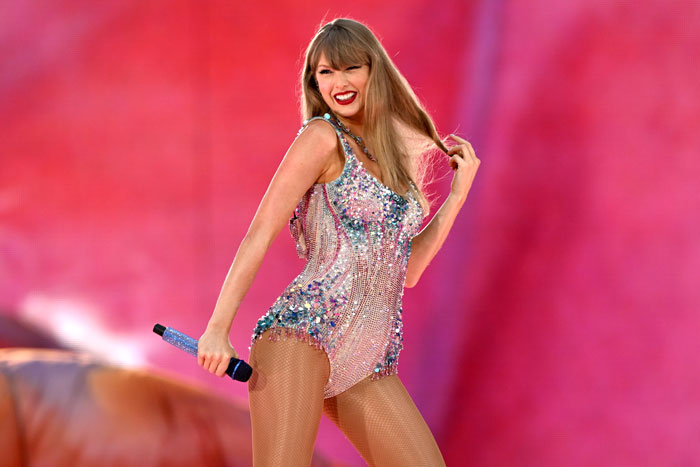
Morgan Wallen fans have been urinated on. Sabrina Carpenter’s pit spawned an actual commercial product called the “pit diaper,” whose existence represents a genuine failure of civilisation. Five Seconds of Summer. Taylor Swift. It keeps happening. The concerts keep happening and so does the other thing.
Chip Somodevilla / Getty Images
This is not about incontinence
The vast majority of this is not accidental. The diapers are planned. The hydration strategies are documented, shared, and replicated across fan communities with military-like strategies. Wake at 4 am, drink heavily, hard liquid cutoff by midday, glucose tablets through the show, nothing that might require a bathroom visit between now and the encore. This is a subculture with its own best practices, and the practice is: do not leave your spot under any circumstances, including the ones your body is strongly requesting.
The spot is the whole point. And the whole point of the spot is the content.
Dave Toby, Managing Director of Pathfinder Marketing, has watched this dynamic from the industry side and tells us what is behind the barrier warrior culture. “Fans push to the front row because they just want a good video, not because they want to see the artist better. When you are close to the stage, you can capture better shots of the performing artist.
So when fans are fighting for a particular spot, they are not necessarily trying to improve their viewing experience — they are trying to improve the quality of their video to increase the chances of it going viral.” The barrier is a content studio, and the artist is the backdrop. The diaper is now a professional tool as much as a 50mm lens.
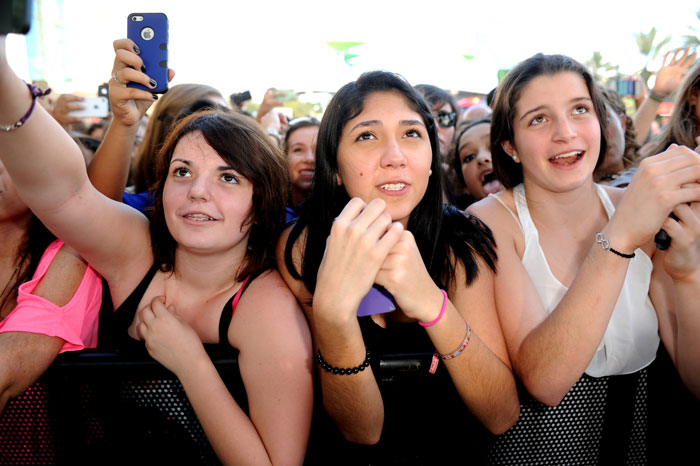
The concert was once one of the last places where thousands of strangers agreed to share space and surrender to something bigger than themselves, but has now become a competition. And in a competition, everyone else is an obstacle. The person standing next to you is not a fellow fan; they are standing between you and your TikTok.

The arms race nobody asked for
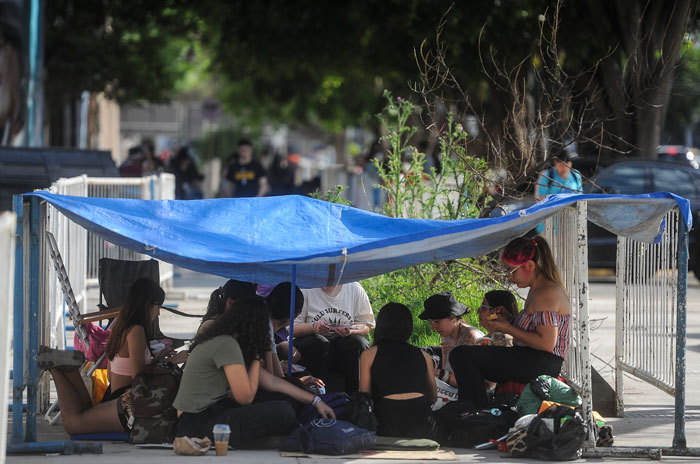
The self-policing queue systems are one of the most unhinged developments in modern public life. Fans arrive days before a show, write numbers on their hands in Sharpie, appoint unofficial marshals, conduct roll calls, and operate an honor-code system that has absolutely no legal authority whatsoever.
You can simply walk past them. Anyone can. The marshals cannot stop you. They have no power. They are extremely serious about their no-power queue management, and you can completely ignore them, which is both the funniest and most distressing thing about the entire arrangement. Who invited Karen to the concert?
Jay Siegan is a man with thirty years of live music production behind him, and he has watched this unfold to the point of exhaustion. “The line starts seemingly days before the doors do now. Fans build their own numbered lists, take roll call and police each other. When you leave a crowd to govern itself, it doesn’t work.” It does not work, and yet the crowds keep governing themselves, with increasing bureaucratic complexity and zero legal standing.
Ticket prices, everyone in the industry agrees, are doing considerable damage here. Siegan notes they are up roughly 50% since 2019. Alex Warner, CEO of ticketing platform Winventory, says that “when someone spends hundreds or thousands of dollars on a concert, the experience can start to feel less like a night out and more like a major investment that has to deliver a perfect return.”
Bob Bradley, music publicist and former touring musician, traces it directly to dynamic pricing: “A fan goes to buy a ticket, the ticket started at $75, then magically became $175, and now that experience has become a luxury item.” A luxury item you are absolutely not abandoning, even for the three minutes it would take to resolve a biological emergency like a functioning adult.
In Arizona, promoter Stephen Chilton sees this tragedy unfold regularly at shows. “The kid that waited in line the longest is the one who misses the show because they are being treated by EMTs.” They camped all day in 115-degree heat, refused water lest they need the bathroom and lose their spot, and ended up horizontal in a medical tent while the show they sacrificed their gastrointestinal integrity for goes on without them. This is dedication and also a cautionary tale and somehow both of those things at once.
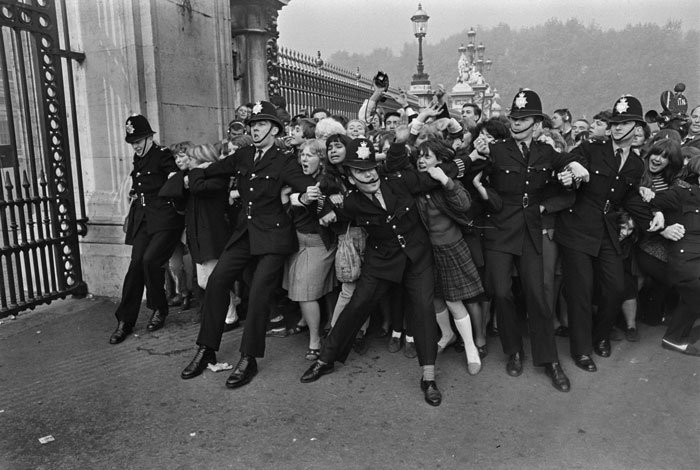
We have always been unhinged. We just used to be louder about it.
Before we declare modern fandom a new low point in human civilization, just remember that music fans have never, at any point in recorded history, been entirely normal. The Beatles stopped touring in 1966 because the screaming had become so loud and so sustained that the band literally could not hear their own instruments on stage. Frank Sinatra had teenagers fainting in the aisles in the 1940s. Elvis had to be escorted out of venues like a war criminal being extracted from a hot zone.
So no, we did not invent extreme fandom. What we did was point a phone at it, monetize it, and add incontinence.
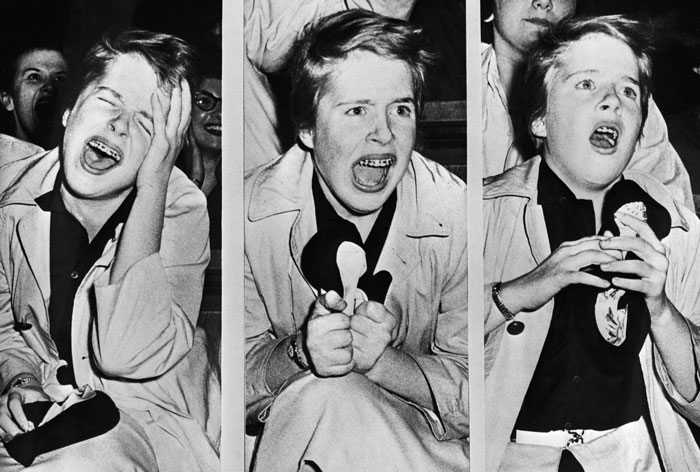
The meaningful difference between Beatlemania and a 2026 Olivia Rodrigo barrier queue is not the intensity. It is the direction. Beatles fans were losing themselves in something collective. The screaming was communal, overwhelming, and pointed outward at the stage. It was not content. It was not competition. Nobody was screaming because they wanted a better angle for their Instagram story.
They were screaming because something had short-circuited in their chest and the only available response was noise. That is, if anything, a more honest and more human reaction to great music than carefully positioning yourself for a clean wide shot while managing a diaper situation.
What has actually changed is that fandom became a performance aimed at other fans rather than an experience aimed at the artist. The front row used to mean you loved the music the most. Now it means you want proof that you loved the music the most, which is a completely different thing, and the gap between those two motivations is roughly the size of a pit diaper.
The particularly bleak irony is that in chasing the perfect documentation of a concert experience, a significant number of people are ensuring they do not have one. You cannot be in a moment and simultaneously be producing a historical record of it. These are competing activities.
The person recording the entire set on their phone is not at the concert in any meaningful sense. They are at a filming location that happens to have live music. They will watch the footage once, find the audio terrible, and never look at it again, which is an outcome that did not require four hours of dehydrated barrier-holding and a logistical arrangement with their own body.
And yet. There is something almost poignant about how much people want to prove they were there. Not to anyone specific, not to achieve anything concrete, but to have evidence that they participated in something that mattered. That impulse is not cynical. It is just pointed in completely the wrong direction.
The question of whether we can return to being normal music fans probably has the same answer as most questions about reversing cultural momentum, which is: not entirely, and not soon. But Phoebe Bridgers sold out arenas for a dollar a ticket with no phones allowed and the crowds were, by all accounts, present and well-trousered.
Louis Tomlinson randomized his barrier entry and removed the incentive to camp for three days in the elements. Some artists are quietly dismantling the machinery of extreme fandom, not by lecturing their audiences but by simply removing the conditions that produce the worst behavior.
That is probably the most realistic path forward. Not a mass conversion to mindful concert attendance, but a gradual redesign of the incentive structure so that the most coveted experience is not the one that requires the most suffering to obtain.
Because right now the message fans are receiving, from ticket prices to barrier culture to the TikTok algorithm rewarding front-row footage, is that the concert is a thing to be won. And people who believe they are competing will compete by any means available, up to and including means that Olivia Rodrigo can detect from forty feet away.
But is this maybe what artists wanted all along?
To some degree, artists cultivated this particular brand of devotional extremism, and the industry is eating it up, mostly in private. The parasocial relationship between artist and superfan has been strategically deepened for years, through intimate content, through “my fans are my family” language, through the careful construction of closeness at scale.
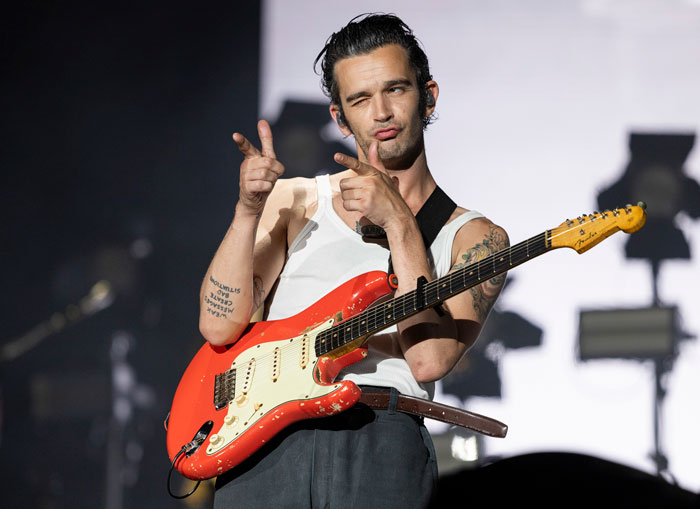
Matty Healy, in a clip that resurfaces approximately weekly, called paid meet-and-greets “effing gross and disgraceful,” pointing out the fundamental transaction at the heart of an artist charging fans hundreds of dollars for two minutes of access. He was not wrong, and the industry knows it. Yet, he was not invited to more industry events after saying it.
The good news is that artists appear to have recalibrated. The era of “I love my fans like family” seems to be drawing to a close, replaced by the language of professional gratitude and appropriate distance. Thank you for coming. Please use the bathroom facilities provided. This is healthier for everyone, especially Olivia Rodrigo’s sense of smell.
At Phoebe’s tour, the crowds were calmer, more present, and significantly less likely to be managing a logistical crisis in their clothing. Whether the phone ban caused the serenity or merely correlated with it is philosophically unclear, but the data point is worth considering. People who are not performing their experience tend to just have it.
Barry Brecheisen / Getty Images
The Part We All Already Know
The slightly drunk stranger next to you singing every word, the collective exhale when the first note of the song you came for finally rings out, the way ten thousand people can somehow breathe in unison, that is the thing that cannot be streamed or captured or posted. It is also the thing the front row does not give you that the middle of the crowd does, if you are paying attention.
Jason Nodine is a live music venue owner and reminds us that “that connection between the artist and the people at the front creates energy that contributes to a stronger performance. A fully seated room cannot always reproduce that feeling.” Warner puts it more broadly: “Live events are great equalizers. Once you’re inside, everyone is there for the same reason, to experience something bigger than themselves. A ticket purchases access to that shared experience, not ownership of the space or control over everyone else’s experience.”
The pit diaper does not protect your concert experience. It protects your content strategy. And the venue worker with the thousand-yard stare is the clearest possible evidence that something has gone wrong with how we have decided to have fun.
But somewhere in the back, relaxed and unbothered, a person who paid a normal amount of money for a normal ticket is just listening to the music, like an absolute radical.
 Follow Us