Some animals are built for speed. Giant pandas are built for bamboo, long naps, and looking adorable while doing absolutely nothing. So when a panda cub decides to pick up the pace, the result is less cheetah and more runaway snowball.
That’s exactly what makes this short video so irresistible. Shared with the simple question “Ever seen a baby panda run before?”, it captures a moment most people have never witnessed, and once you have, it’s hard not to hit replay.
Behind that little burst of energy is a surprisingly long journey. Panda cubs start life as some of the most helpless babies in the animal kingdom, and getting to the point where they can scamper around on their own takes months of growing, practicing, and falling over.
More info: Instagram
Learning to walk takes panda cubs months, and their first attempts at running are more bounce than speed
A cub can usually stand and take its first few steps at around 75 to 80 days old. Those early attempts are short and shaky, and they often end with the little panda toppling over or giving up and crawling instead. For weeks afterward, cubs switch back and forth between crawling and walking while they figure out how to balance a round body on four short legs. Once they finally get the hang of it, their first runs look less like a sprint and more like an enthusiastic, wobbly scurry, with plenty of tumbles along the way.
In the video, the cub shows exactly what that stage looks like. It clambers off a little wooden platform of logs and takes off across the grass, heading away from the camera at full, determined speed. Seen mostly from behind, the run is pure cartoon: a round, fluffy rump bouncing with every stride, short black legs paddling furiously underneath, and a body that seems to roll forward as much as it runs. The little panda doesn’t get very far very fast, but it clearly has somewhere important to be, and it’s giving the trip everything it’s got.

A panda cub starts life pink, blind, and about the size of a stick of butter
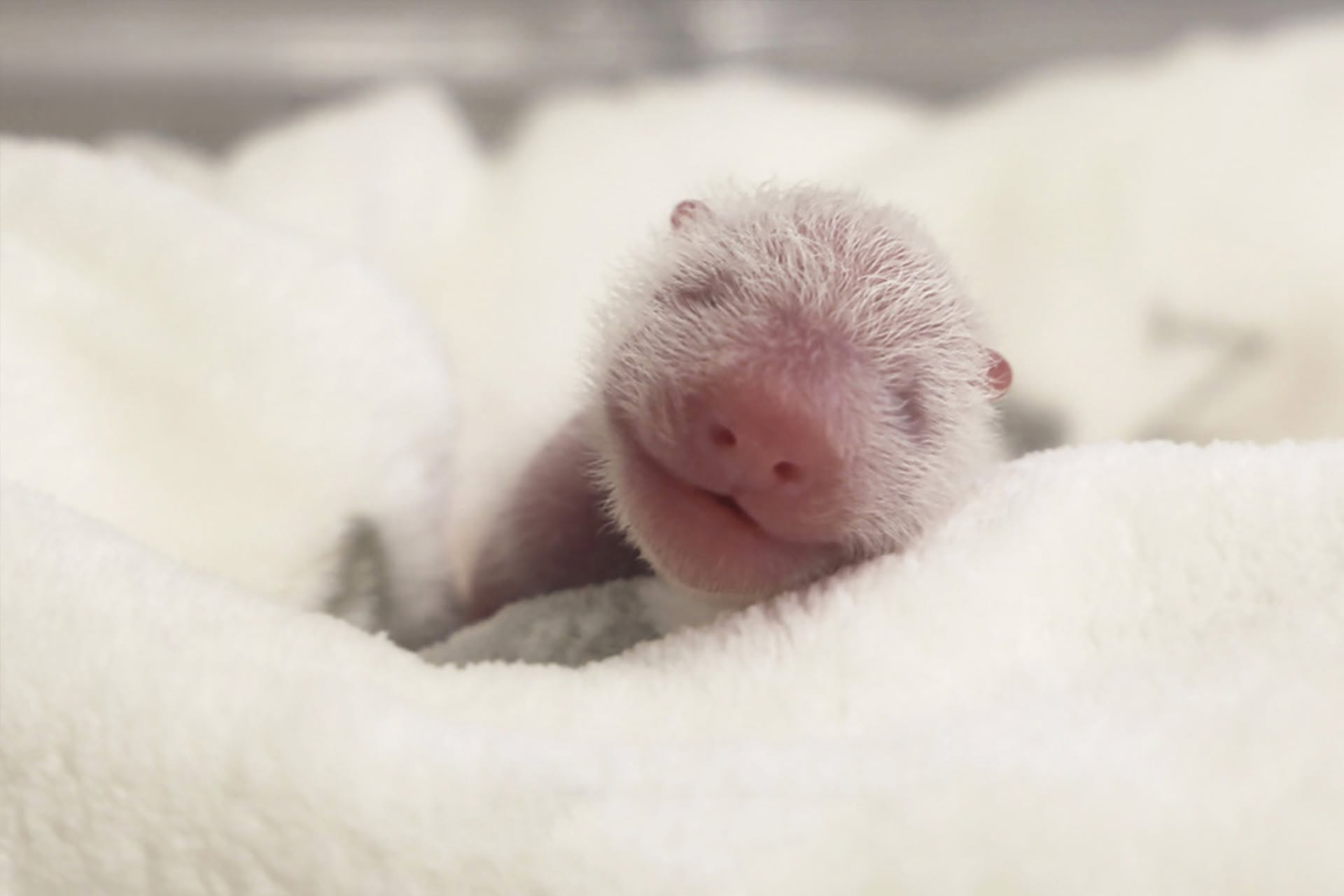
Relative to its mother’s size, the giant panda has the smallest newborn of any placental mammal. A cub arrives pink, covered in sparse, short white hairs, with its eyes shut tight, weighing just 1/900th of what its mother does. At first, it can’t see, hear, or crawl, and in those early weeks the mother won’t leave her baby even to eat or drink. In the wild, she raises it in a tree hollow or rock cave, where the two stay for several months.
The famous black-and-white look appears within weeks, long before the cub can walk
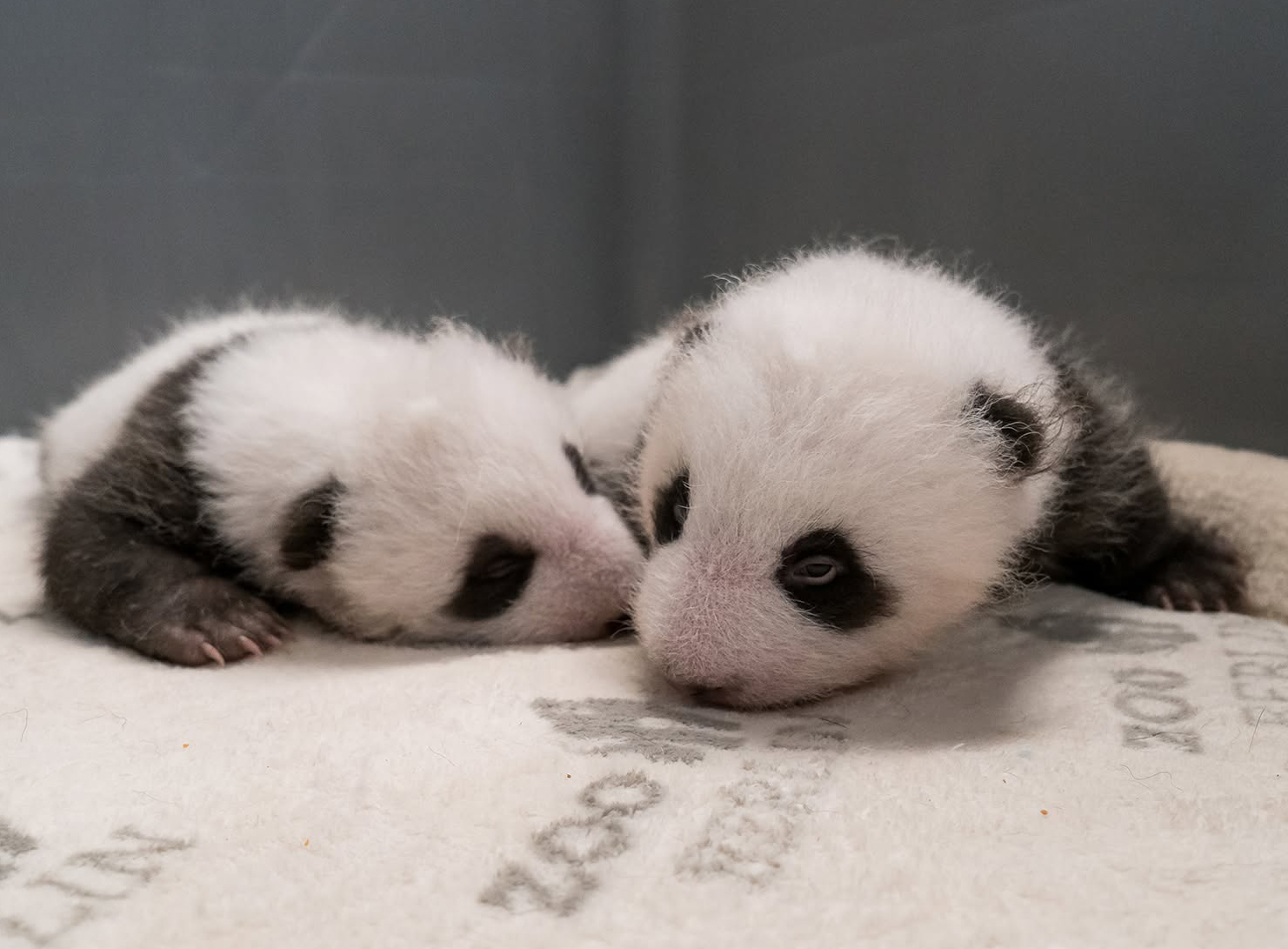
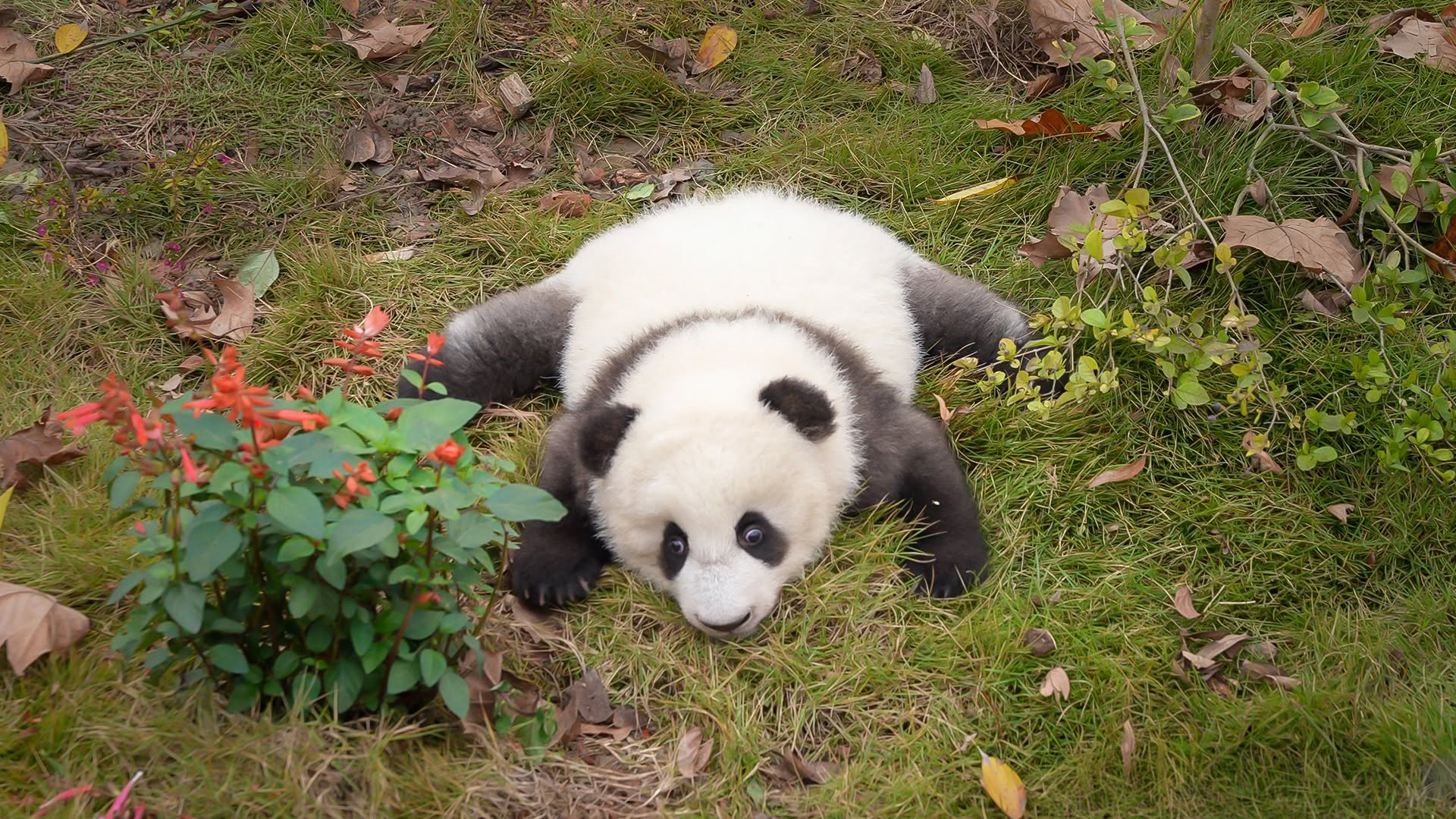
At about a week old, black patches start showing up on the skin around the eyes, ears, shoulders, and legs, and black fur grows in a couple of weeks later. After about a month, the cub already looks like a miniature adult, only with a noticeably longer tail. At birth, that tail is roughly a quarter of the cub’s body length, and cubs gradually grow into it. Growth is fast, too: thanks to the mother’s high-fat milk, a cub can reach ten times its birth weight in just five to six weeks, and its eyes open between six and eight weeks of age.
Even adult pandas waddle, so that clumsy little run never completely goes away
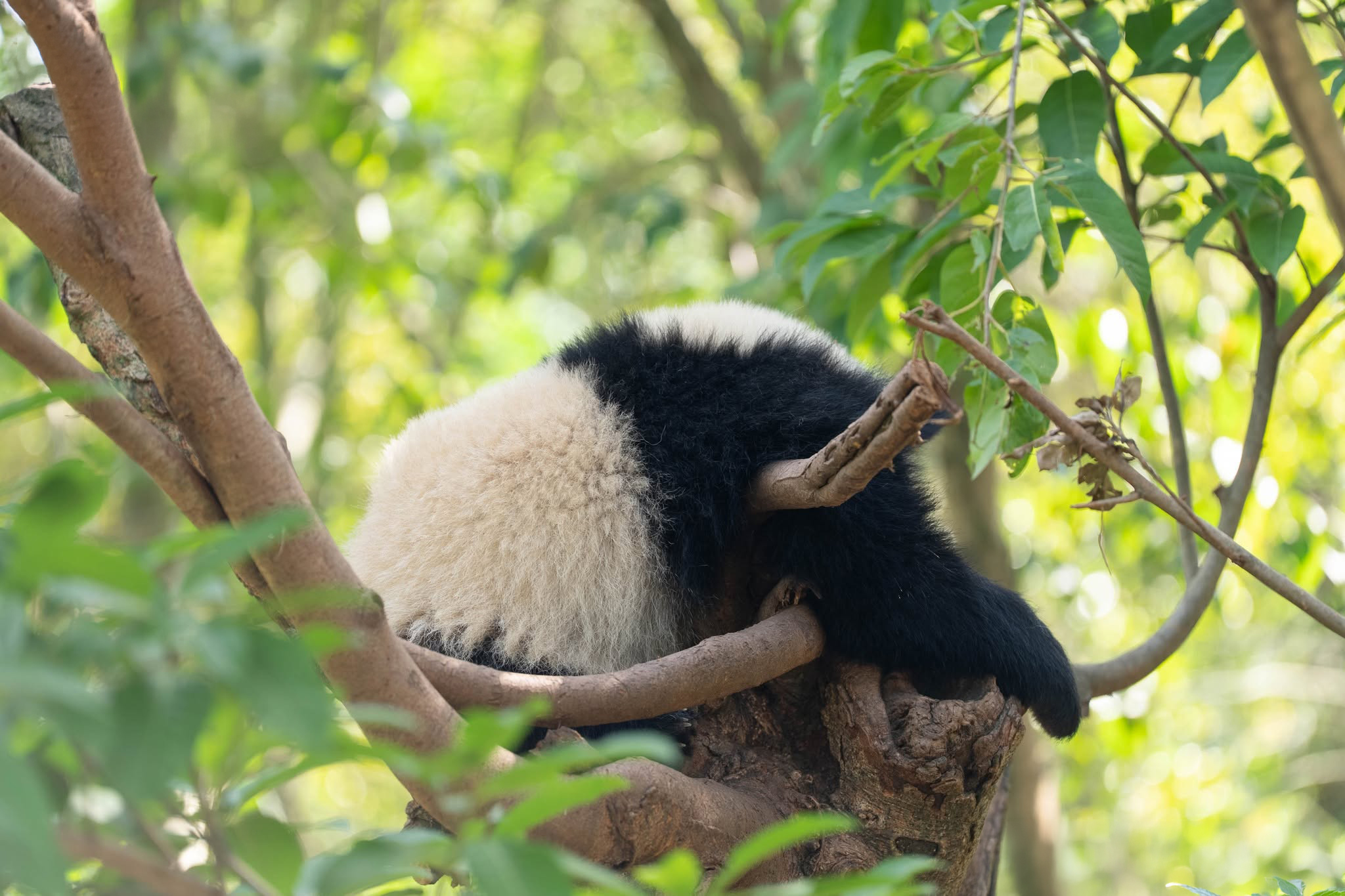
Pandas are pigeon-toed, walking with their front paws turned inward. Experts describe their gait as rolling, ambling, or waddling, and adults rarely run at all, though they’ll dash off when startled. What they lack in speed, they make up for in other skills: pandas are good swimmers and tree climbers.
Climbing comes next, and it’s how a young panda stays safe while its mother looks for food
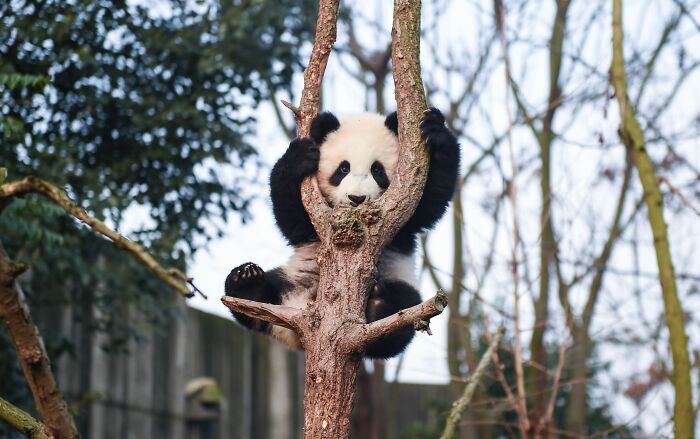
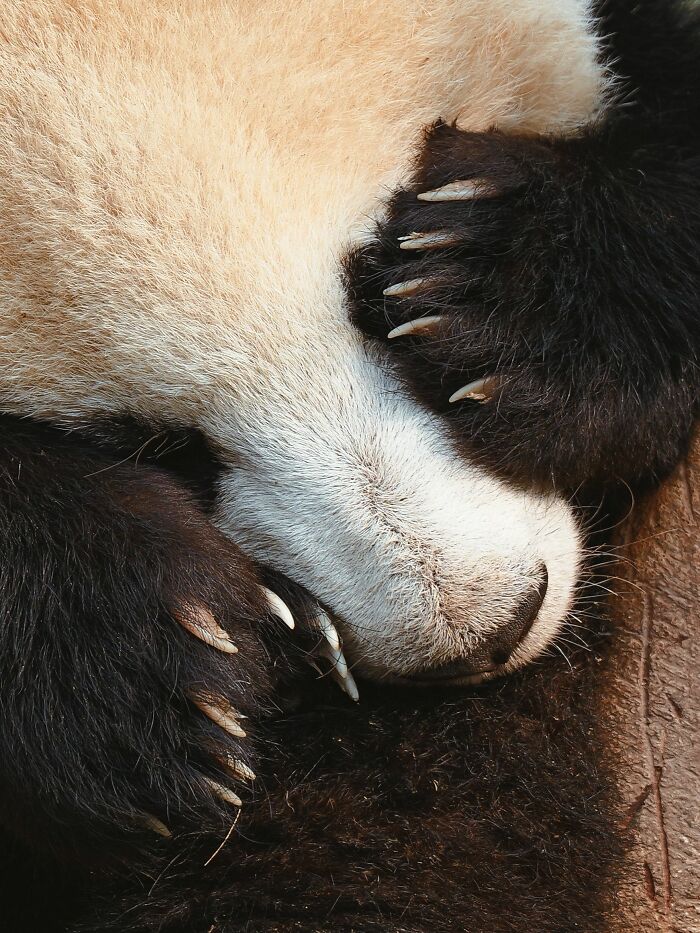
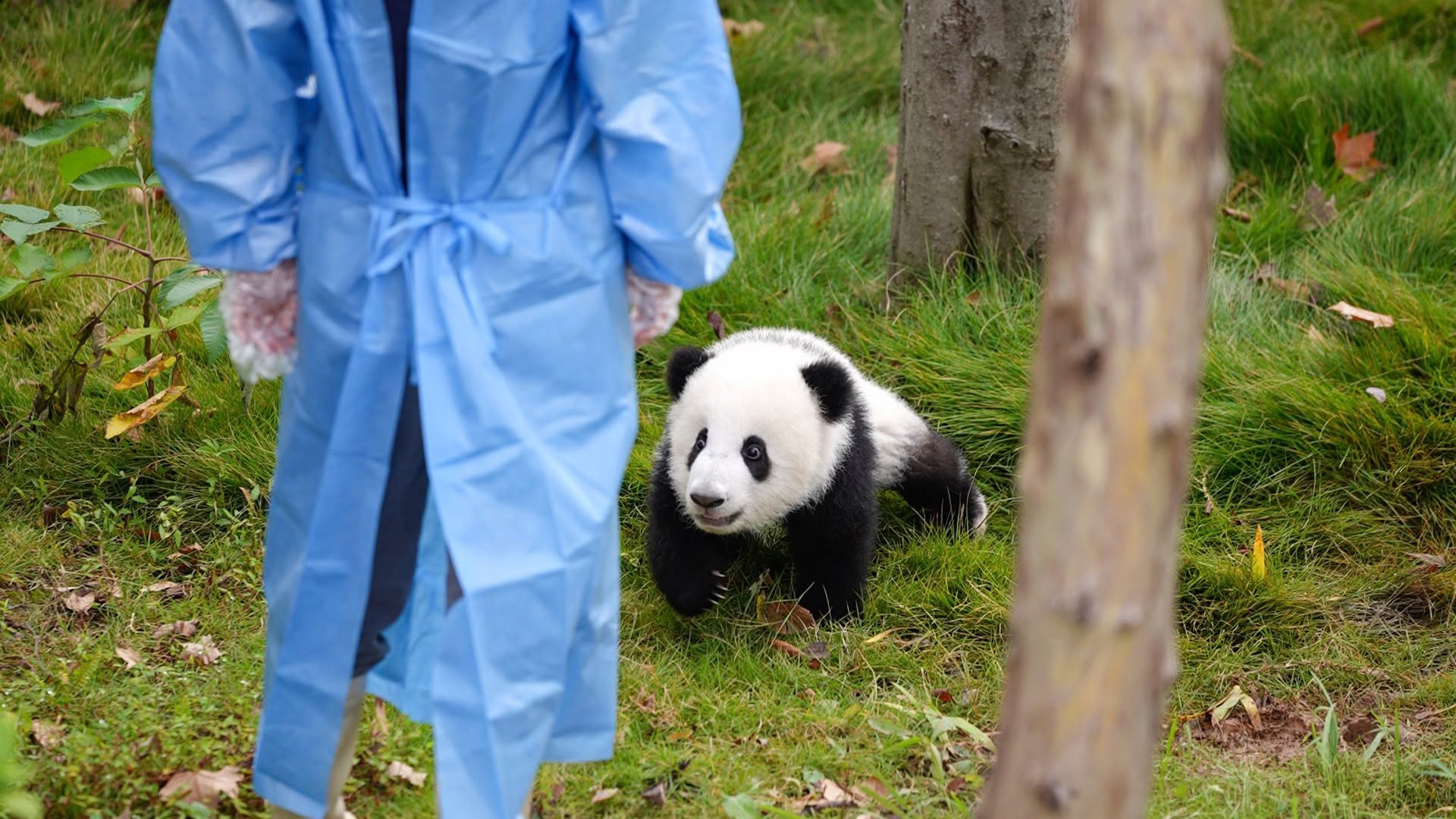
Around five months old, cubs start leaving their dens, learning to walk properly, climb, and eat solid food. Climbing matters most: in the wild, a cub that can get up a tree stays safer while its mother goes off to find food. By its first birthday, a young panda can weigh as much as 75 pounds, and at around a year and a half to two years old, it’s ready to leave its mother and strike out on its own.
That fluffy look is less cuddly than it seems, and every patch of black and white has a purpose
Part of what makes a panda cub so irresistible is its fur, which goes from soft and wispy to woolly and thick within the first few weeks of life. Grown-up pandas look just as plush, but anyone hoping for a cuddle might be surprised: adult fur is coarse and slightly oily. It’s built for function rather than comfort, with coarse guard hairs that repel water and a thick, woolly undercoat that provides warmth in the cold, damp mountain forests pandas call home.
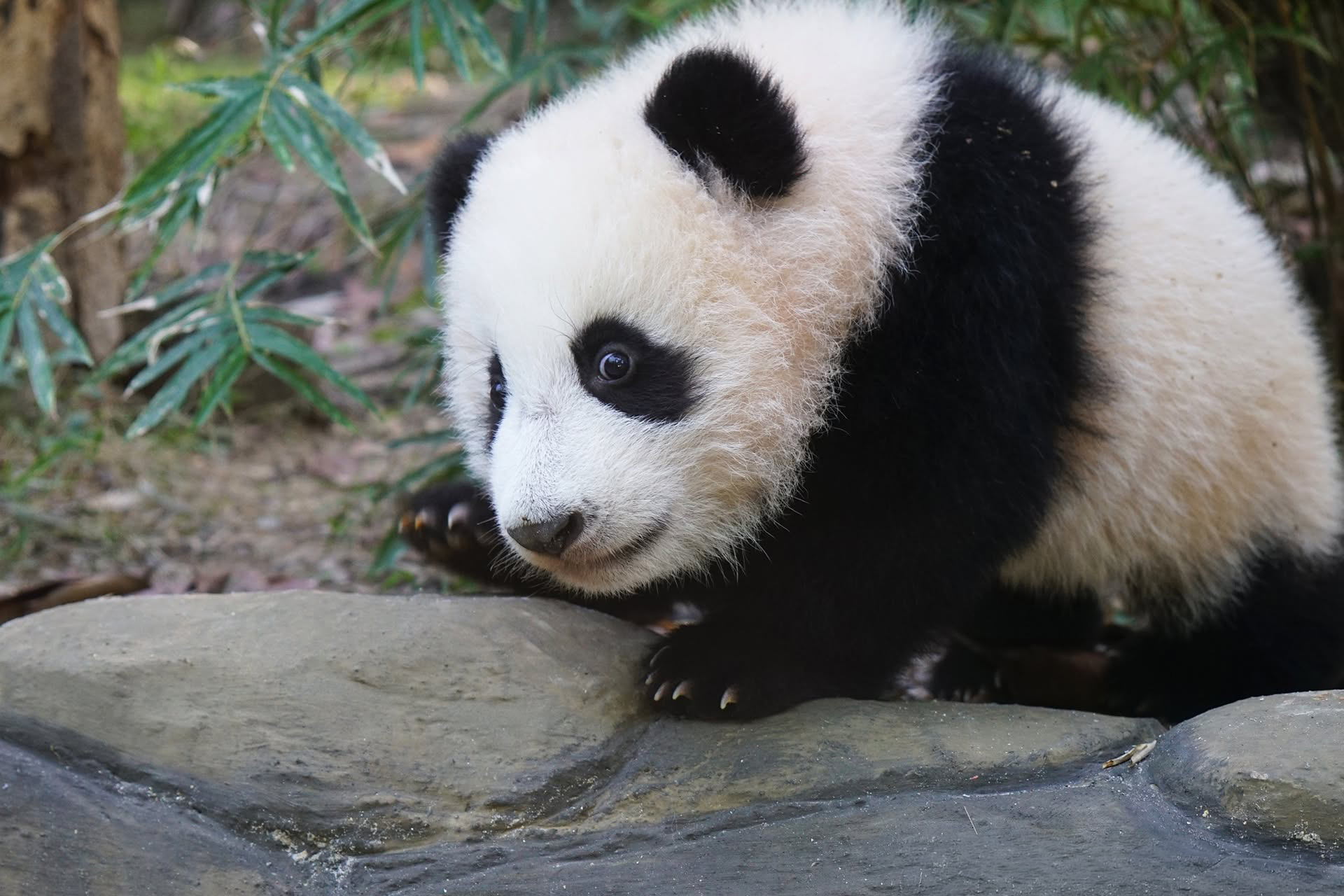
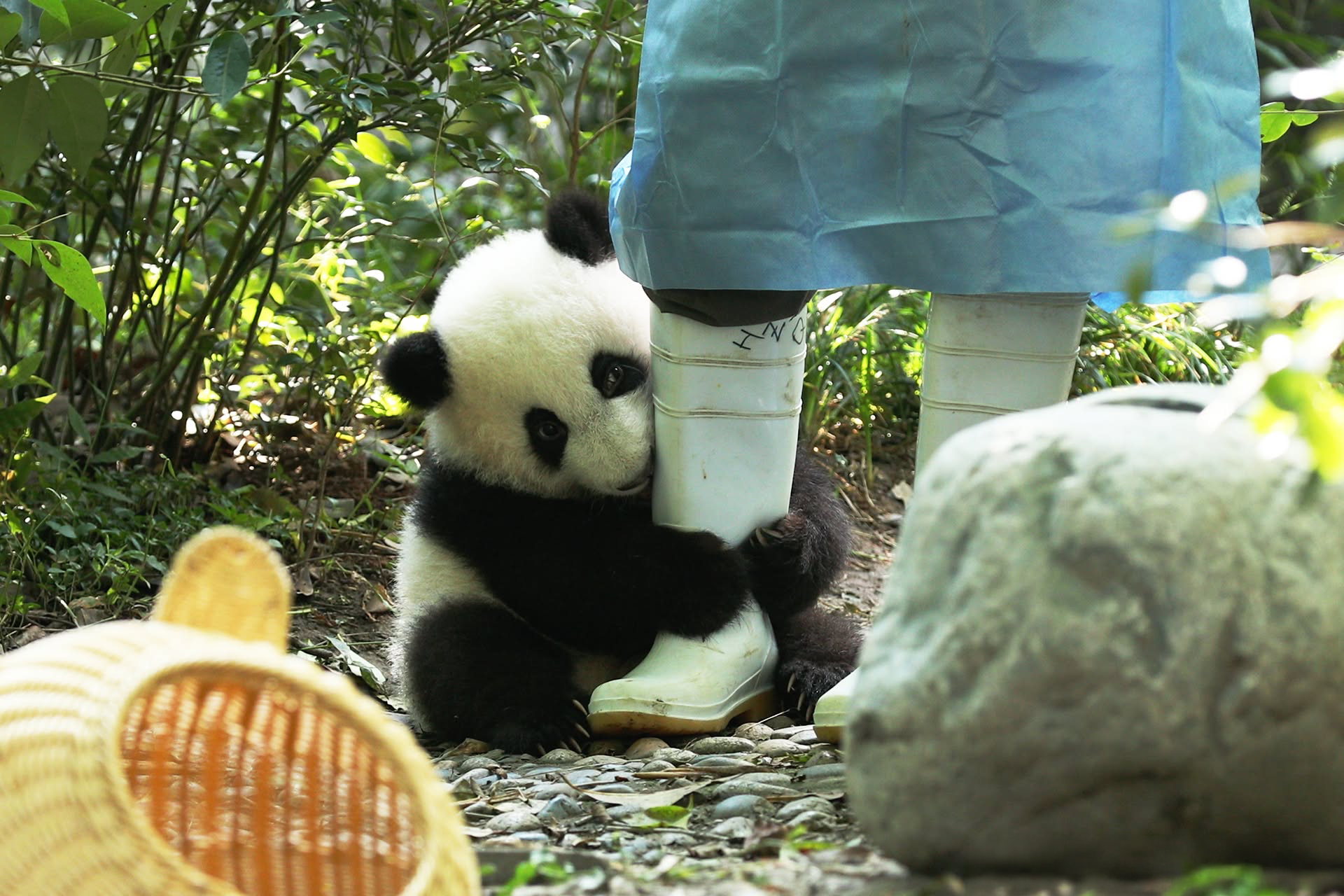
Even the famous color scheme isn’t just for show. A 2017 study led by Tim Caro of UC Davis compared different areas of the panda’s fur with the coloring of 195 other carnivore species and 39 bear subspecies. The researchers concluded that the white face, neck, belly, and rump help pandas hide in snowy habitats, while the black arms and legs help them blend into shade. The markings on the head seem to be about communication instead: dark ears may signal ferocity to predators, and the eye patches may help pandas recognize each other. In other words, the features we find adorable weren’t designed for us at all, which hasn’t made the cub in this video one bit less charming.
 Follow Us