Every ten days, Gary Anderton takes an unmarked vial of powder that he says was sent to his UK home from China, mixes it with sterile water, and injects some into the fat on his stomach. Each vial provides three doses, and he administers one every Monday and Thursday. He says the mixture can be kept in the refrigerator for up to a month.
For the 45-year-old married father of two in Sheffield, the decision to go online and order an as-yet unapproved weight loss medication was partly motivated by the lack of results he had seen with a drug currently on the market.
“I tried semaglutide previously, which is a single agonist. Was [useless],” Anderton said in a message exchange with Bored Panda. He described its effects as “nothing at all, even on the highest recommended dose.”
From One Hormone to Three
Single agonist weight loss medications, commonly known by brand names including Wegovy and Ozempic, work by mimicking the GLP-1 hormone produced by the body after eating—effectively tricking the patient into feeling full. GLP-1 drugs also help manage insulin and slow digestion, making them powerful treatments for both diabetes and weight loss. The main reported side effects involve gastrointestinal distress, including nausea, diarrhea, vomiting, and constipation.
Since the FDA approved semaglutide for weight management in 2021, the dual agonist tirzepatide has also hit the market, offering greater results to some patients and similar side effects at lower rates. Sold under brands such as Mounjaro and Zepbound, these drugs additionally mimic the GIP hormone involved in insulin release and fat tissue regulation.

An unmarked vial of retatrutide. Image credit: Supplied
In a head-to-head trial published in 2025, tirzepatide produced average weight loss of around 20% after 72 weeks, compared with about 14% for semaglutide. Yet, for a subset of eligible patients, both remain ineffective.
Anderton says he decided not to try a double agonist, despite the fact his sister saw good results from Mounjaro after acquiring it through her doctor. Instead, he jumped straight to the experimental triple agonist retatrutide—a drug being developed by Eli Lilly that is currently going through late-stage trials.
Known among online communities as “reta,” the drug additionally mimics glucagon, a hormone that increases energy expenditure. Phase 2 trials published in 2023 reported 24.2% average weight loss after 48 weeks—a massive increase on current drugs— with highest-dose groups continuing to lose weight after the trial ended.
“I wanted to try reta after reading up on it but knew it wasn’t available commercially,” Anderton wrote.

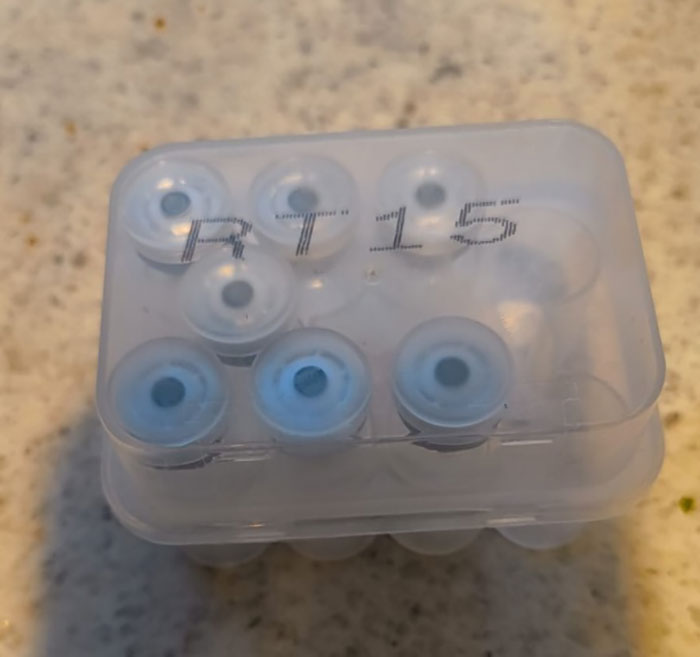
Markings on the vial cases received by Anderton. Image credit: Supplied
Yet, more dramatic results have also brought closer scrutiny of side effects. In those same trials, patients given 8mg and 12mg doses of the drug reported an average rise in resting heart rate of between 7 and 10 beats per minute—at least double the rise seen from single and dual agonists.
A ten-beat-per-minute rise adds approximately 5.2 million beats per year to the heart’s workload and, according to a meta-analysis published by the Canadian Medical Association Journal in 2016, is associated with an estimated 8% increase in cardiovascular mortality.
Meanwhile, a December 2025 press release from Eli Lilly on phase three results reported that almost 21% of patients on higher doses of 12mg experienced dysesthesia — unpleasant bodily sensations, such as skin tingling — a rate that dropped to less than 9% on doses of 9mg and 0.7% among the placebo group. According to the release, dysesthesia events “were generally mild and rarely led to treatment discontinuation.” Rates of discontinuation “due to adverse events” were reported to be 18.2% at 12mg and 12.2% at 9mg, compared to 4% among the placebo group.
“I have had the skin tingling, but it doesn’t bother me. Weirdly, I quite like it,” wrote Anderton, who admitted that he had only discovered it was a potential side effect of retatrutide after experiencing it himself and investigating it online. He said he is taking 8mg per week split into two 4mg doses.
He has also noticed a massive reduction in his appetite, “to the point where if I even think about some of the food I used to like, it makes me feel a bit rough, or I have no desire to eat it,” and an end to the “food noise” that people talk about online. He says he lost 15lb (6.8kg) in the first three weeks of using the drug.
According to Anderton, he has taken other injectables previously, and is currently on testosterone replacement therapy—which he sources on the gray market from “reputable sites with a lot of feedback that I looked into,” having initially been prescribed it by a doctor.
The gray market often involves sellers using loopholes such as labeling goods “not for human consumption” or “for research purposes only” in order to sell them without the oversight and certifications needed to sell medicines. He says he also recently acquired the peptide BPC-157 from one of those sources to help recovery from a long-term sports injury, but admits he took a risk when he bought the retatrutide from a less trustworthy site.

The BPC-157 vial received by Anderton. Image credit: Supplied
“I took a massive chance with that, ordering it from [name redacted], which seems a far less reputable source,” he wrote. “The peptide stores usually have testing certs on websites for them, but this one didn’t as it was direct from China.”
According to Anderton, he was willing to take that risk in part because he already had experience with injectables and the savings offered by the gray market. He says his official testosterone supplier required him to purchase all accessories from them, meaning total costs were around three times that of his gray market supply. He also figured the cost of retatrutide would be “extortionate” after approval, so he would likely source it from the gray market anyway.
“The price, like with Wegovy or Mounjaro, would have been prohibitive. I know there is a loophole where research chemicals can be sold, so I knew I’d be able to get away with it,” he wrote.
Anderton also says that online communities and AI help him to interpret blood test results, meaning he feels comfortable monitoring himself without ongoing doctor supervision.
A New Option for Unresponsive Patients
While many doctors would disagree with Anderton’s self-experimentation with unapproved medicine, his frustration with semaglutide points to one of the strongest arguments for retatrutide: some patients do not respond to weight loss drugs already on the market.
According to Dr Fatima Cody Stanford, a leading obesity medicine expert based at Massachusetts General Hospital and Harvard Medical School, triple agonists “represent a potentially significant advance for patients who have had an incomplete response to GLP-1–based therapies.”

Dr Fatima Cody Stanford. Image credit: Mass General
For Stanford, the scale of the results is what makes the drug stand out. Retatrutide has not yet been tested head-to-head against approved drugs in a large published trial, but early results suggest it may push pharmacological treatment into territory previously associated with more invasive procedures.
“That magnitude of weight reduction begins to narrow the gap between pharmacotherapy and bariatric surgery,” she told Bored Panda.
But Stanford is also keen to highlight that triple agonism introduces “additional physiologic complexity due to glucagon receptor engagement,” meaning that “greater weight loss must be balanced against emerging signals such as dose-dependent heart rate increases and potential neurologic symptoms.”
Her caution is echoed by Dr Peminda K Cabandugama, a spokesperson for The Obesity Society, who told Bored Panda that retatrutide could be a “huge development,” given that an estimated 15% of patients are not responsive to semaglutide or tirzepatide. But, he said, the drug still requires more study of “the obvious benefits and the risks.”
The Question Is Not Just Weight Loss
While trial data points to retatrutide being a game changer for some patients, hard questions remain on the drug’s effects over time, across wider groups of patients, and the extent to which the benefits outweigh the risks for different types of users.
Dr Naveed Sattar, professor of cardiometabolic medicine at the University of Glasgow, said retatrutide could be “very useful to those living with much higher BMIs.” But he said the full picture depends on larger trials that measure health outcomes, not only weight loss.
“What we need to determine net benefit versus net harm is a randomized trial that looks at outcomes,” he told Bored Panda.

Dr Naveed Sattar. Image credit: Uni Glasgow
Those outcomes matter because weight loss drugs are not usually one-off treatments. Many patients who benefit from them may need to keep taking them long term. That means the side effects—effects on the heart, tolerability, nutritional issues and what happens after stopping treatment—all become important. Sattar said early trial data can only go so far.
“Numbers of adverse events are small, and so we need more trials to get to see the full picture of net benefits versus side effects and whether some are temporary,” he said.
Cabandugama raised a related concern: the public often talks about weight loss as if it means one thing. But in the body, it does not.
“The most important thing that we have concern with all weight management modalities is that they all make a person lose ‘weight,’ which is composed of fat, muscle, bone and water,” he said.
The aim, he said, should not just be to make patients smaller, but to make sure they avoid unnecessarily losing muscle, bone or physical function. “What we aim for is to have patients lose fat and not the other components,” he said.

Dr Peminda K Cabandugama. Image credit: The Obesity Society
That is why specialists stress nutrition, resistance training, medical monitoring and follow-up care. A drug that produces major weight loss may be a breakthrough for the right patient, but it does not remove the need for support around diet, exercise and long-term health.
Stanford said that point can get lost when the public conversation focuses on dramatic before-and-after transformations rather than metabolic health, including stability in markers like blood pressure, glucose and cholesterol. “Weight loss is a tool — not the ultimate goal,” she wrote.
When Treatment Becomes Transformation
For Dr Cynthia Bulik, founding director of the University of North Carolina Center of Excellence for Eating Disorders, the concern is not only what drugs like retatrutide do in the body, but how they land in a culture already obsessed with body size.
She said more powerful obesity drugs could intensify pressure on people in larger bodies, especially when the public starts to treat medication as a simple solution. “The new bias that has emerged is people saying, why are you choosing to stay large when we have a perfect solution available to us?” she told Bored Panda.

Dr Cynthia Bulik. Image credit: cynthiabulik.com
That risk is not abstract. Weight loss drugs are now discussed across celebrity culture, gyms, social media and online forums. Users compare doses, sources, side effects, appetite suppression and results, with visible body transformations celebrated as proof the drugs are working. For Bulik, this has helped blur the line between evidence-based treatment and a wider social desire for dramatic weight loss.
“I believe that the blurring is complete,” she said.
Her sharpest concern is around people with current or past eating disorders. Clinical trials for these drugs generally excluded people with eating disorders, but Bulik said clinicians are already seeing patients accessing the drugs.
“More and more frequently we are seeing patients with current or former eating disorders—even anorexia nervosa—coming into the clinic having gotten prescriptions or compound pharmacy copies as yet another tool in their toolbox to lose weight,” she said.
Bulik said eating disorder screening should be mandatory before prescribing triple agonists. Patients should also be monitored during treatment for signs that appetite suppression, weight loss or fear of eating is becoming dangerous. “One of the biggest dangers is losing too much weight,” she said.

Losing too much weight can be dangerous. Image credit: Getty Images
Some patients with binge-eating disorder may benefit from reduced urges to binge, Bulik said, but she warned that appetite suppression can go too far. “We have seen patients with binge-eating disorder who say they have not only lost their urge to binge, but have lost their desire to eat altogether, having to set alarms on their phone to remind them to eat,” she said.
That concern sits uncomfortably beside Anderton’s own experience. For him, the drug has helped suppress appetite as he seeks greater losses, having hit a plateau after he reduced his body fat from 38% to 22%. “I was desperate to try and push myself to below 15%,” he said. But he also admitted that his progress has brought limited satisfaction.
“The more weight I lose and move past goals, the more I look at myself in a mirror, and I’m not happy with how I look and want to push to look better than before,” he said. “It feels like some form of body dysmorphia, I guess.”
*Anderton’s name has been changed to allow him to speak candidly about activities that knowingly skirt the law
 Follow Us