We all have questions about the universe, and one of the biggest is whether life exists beyond Earth. This possibility has fascinated scientists and curious minds for generations, inspiring countless studies, theories, and books. Despite the many discoveries and ideas explored over the years, we still have so much to learn about what lies beyond our planet.
And sometimes, the search for answers begins with something scientists can’t quite explain. That’s what makes the work of a retired NASA developer particularly intriguing: he has identified mysterious flashes in decades-old astronomical photographs that could offer new clues about unusual events in the sky. While his findings don’t prove the existence of extraterrestrial life, they raise questions about what these historical images might reveal—and whether modern technology can help uncover details earlier astronomers missed. For now, the mystery remains unresolved.
A retired NASA developer is using modern technology to investigate unexplained flashes captured in old astronomical photographs

NASA Hubble Space Telescope / unspalsh

Mysterious flashes in the sky before the space age
Long before satellites began circling Earth, astronomers were already photographing the night sky in remarkable detail. Now, decades-old images are attracting renewed attention after retired NASA developer Ivo Busko reported finding unusual flashes of light resembling mysterious transients previously identified by another research team.
Busko, who previously worked at the Space Telescope Science Institute, conducted an independent analysis of archival astronomical photographs to investigate these brief points of light, which appear in one exposure but disappear from another. His work follows earlier research by Dr. Beatriz Villarroel and the VASCO Project, whose team reported a possible statistical association between certain flashes and nuclear weapons tests conducted during the mid-20th century.
Villarroel’s team’s findings were published in the peer-reviewed journal Scientific Reports in October 2025, while Busko’s separate analysis was published as a preprint on arXiv. Many of the photographs under investigation predate Sputnik 1, the first artificial satellite, launched in October 1957. This timing has added to public interest in the research, as the flashes appear in images captured before the beginning of the satellite era. However, researchers have yet to establish what caused these unusual observations or confirm any connection to non-human intelligence. Further analysis is needed to determine whether the flashes represent genuine optical events, photographic artifacts, natural phenomena, or something else entirely.
A new search finds dozens of unusual light flashes
To investigate the phenomenon independently, Busko turned to the APPLAUSE database, a digital archive of historical astronomical images containing billions of recorded sources. He examined photographic plates taken at Hamburg Observatory in the mid-1950s using a 1.2-meter telescope, looking for flashes similar to those previously reported by Villarroel’s team.
His method involved comparing pairs of photographs showing the same region of the sky, taken just minutes apart. Stars and other persistent objects should appear in both images, so any light that appeared in one but vanished in the next was flagged for further investigation. Researchers also had to rule out possible artifacts caused by dust, scratches, and imperfections in the old photographic plates.
From an initial batch of 41 plates, Busko identified 70 candidate flashes. After closer visual inspection, he narrowed these down to 35 stronger candidates. Some appeared unusually compact and circular compared with ordinary stars. Busko suggested this could be consistent with flashes lasting less than a second, which would leave sharper marks on long-exposure photographs than stars blurred by atmospheric conditions or tracking errors. His analysis appeared to independently confirm the presence of transients resembling those found by the VASCO Project.
Possible links between the flashes and nuclear weapons tests
Villarroel’s earlier research adds another layer to Busko’s findings. Her team analyzed digitized photographs from the Palomar Observatory Sky Survey in California, searching for star-like flashes that appeared in one exposure but vanished from others. The researchers compared their observations with records of 124 above-ground nuclear tests conducted by the United States, the United Kingdom, and the Soviet Union between 1949 and 1957. Their study reported an approximately 8.5% increase in observed transients on days associated with nuclear testing, with flashes appearing particularly often the following day.
However, this statistical association does not prove that nuclear tests caused the flashes. Researchers considered possible astronomical sources and photographic artifacts, while some unusually reflective transients led to speculation about sunlight glinting off flat surfaces on rotating objects.
Although satellites can produce similar flashes today, explaining observations recorded before Sputnik’s launch remains challenging. Villarroel has said her team could not find a consistent conventional explanation and suggested the characteristics might indicate an artificial origin. That remains a hypothesis, not a confirmed conclusion.
What these discoveries could mean for the search for life beyond Earth
Villarroel’s published study and Busko’s independent analysis have renewed interest in historical astronomical photographs as a way to investigate unexplained events. Using modern tools, researchers can revisit these images to identify brief phenomena earlier astronomers may have missed. Busko hopes to examine more photographic plates from observatories across Europe. A larger dataset could help determine whether the flashes are genuine events or photographic artifacts. It could also clarify whether the reported connection with nuclear tests persists across additional observations.
Even if the flashes are confirmed as genuine, their origins remain unknown. They could be natural phenomena, observational effects, or reflections from unidentified objects. Their existence alone does not prove a connection to extraterrestrial intelligence. For now, Busko’s findings remain preliminary, and the proposed link to nuclear testing is unconfirmed. Further analysis of these historical photographs could help researchers uncover overlooked details and determine what caused the flashes.
Watch astronomer Beatriz Villarroel explain the VASCO Project and its mysterious sky flashes
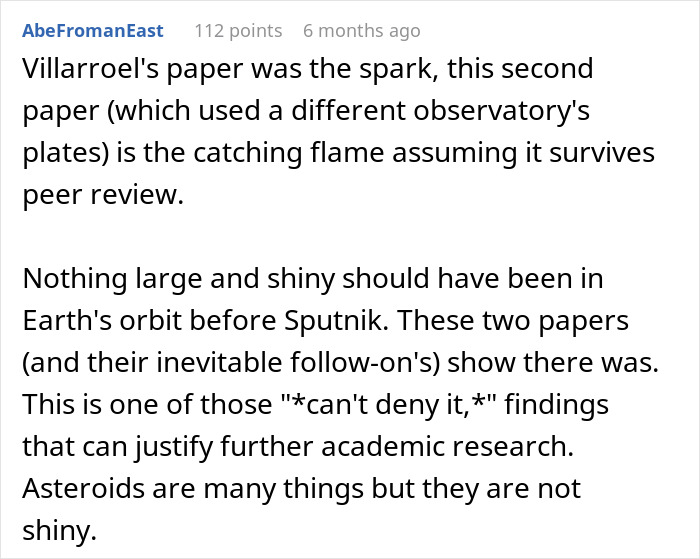
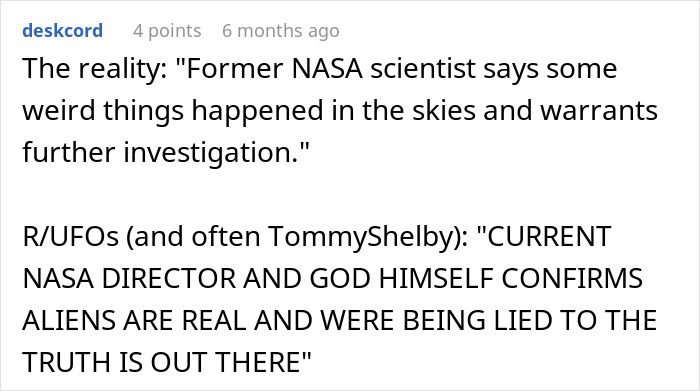
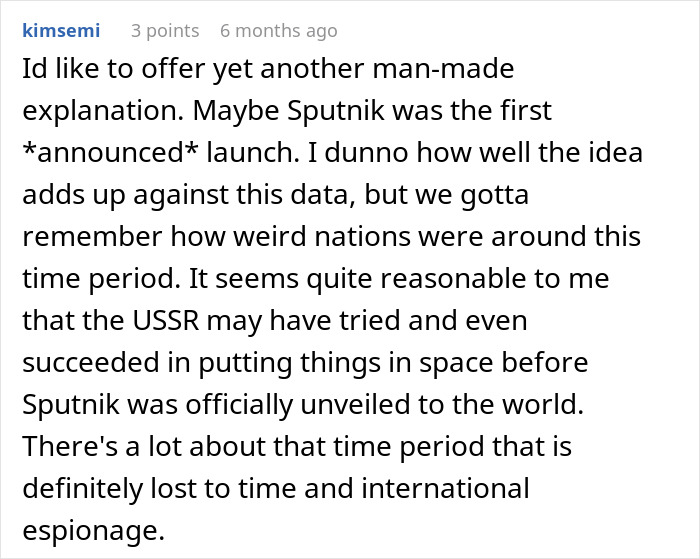
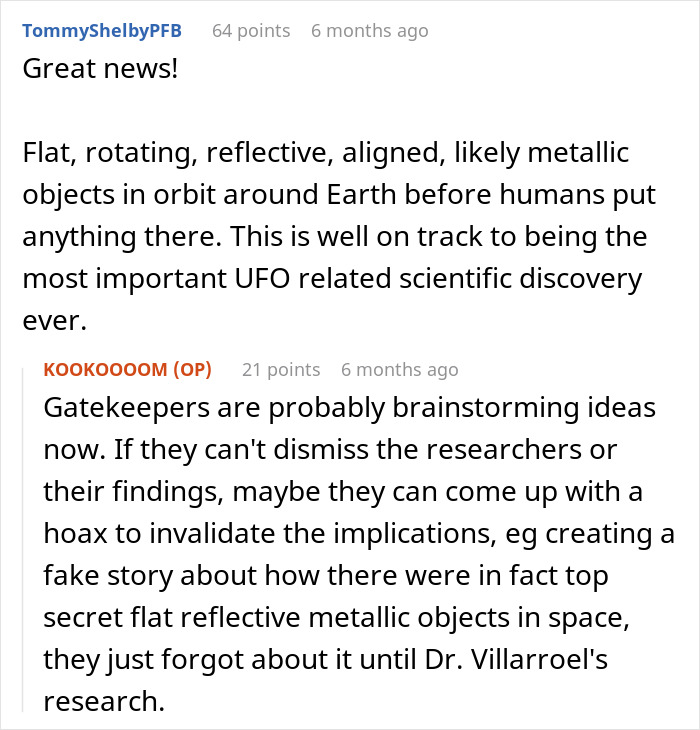
People online shared their thoughts on the evidence of ‘non-human intelligence’ in our skies













 Follow Us