When you’re paying for your own wedding, finding out that someone has invited extra guests without asking is a pretty expensive surprise. It’s even more frustrating when that person is a close family member who knows you’re already over budget but still expects you to accommodate her guests.
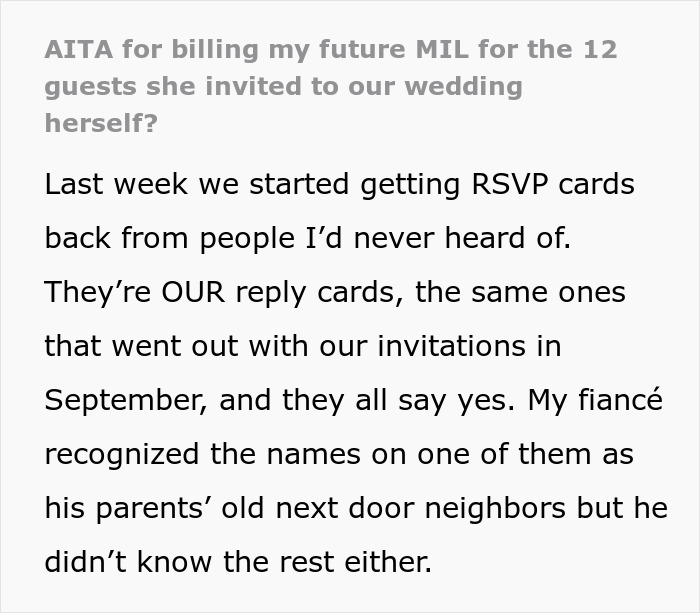
That’s what happened to this bride-to-be after she discovered her fiancé’s mother had secretly ordered 12 extra wedding invitations and sent them to people the couple hadn’t invited. With the final headcount deadline approaching, the bride found a way to make her future mother-in-law take responsibility for her decision. She later turned to the internet to ask if she’d gone too far.
Wedding guest lists can cause family drama when relatives expect to invite their own guests without considering the couple

Nataliya Vaitkevich (not the actual photo)

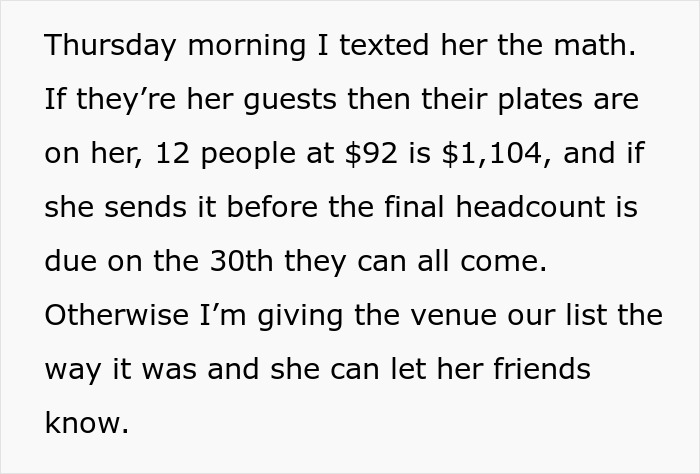
This bride discovered her future mother-in-law had secretly invited 12 extra guests to their wedding, so she asked her to cover the $1,104 bill





Kampus Production (not the actual photo)
Couples have the final say over who attends their wedding, especially when they’re paying for it themselves and need to stick to a budget
Wedding planning often involves compromise, especially when family members have their own ideas about how the big day should go. Parents may want to invite longtime friends who watched their children grow up, but the couple should have the final say over who gets to celebrate with them.
According to wedding planners, couples can explain to the family why they need to keep their guest list small, whether because of their budget or venue capacity. If parents want to include more people, they can offer to cover the extra costs. But even then, the couple doesn’t have to expand the list if it doesn’t fit their plans.
Of course, parents who contribute financially may expect some input into the guest list. Still, contributing money doesn’t give anyone free rein to invite people without the couple’s knowledge. In this case, the bride and groom were paying for their own wedding, so they had to make the final decisions about their guest list and what they could afford.
And these decisions can have a real impact on the budget. At $92 per person, the mother-in-law’s 12 extra invitations would add $1,104 to the couple’s bill. That’s money they might have planned to put toward their honeymoon, savings, or the expenses that come with starting married life.
The issue, then, isn’t whether the mother-in-law’s friends deserved an invitation. It’s that she made a decision that affected the couple’s finances without giving them a say. Asking to include someone would have left room for a conversation. Secretly sending out invitations put the couple in a difficult position, especially with the final headcount deadline approaching.


Setting clear boundaries with family can help couples avoid wedding planning conflicts and unexpected expenses
The bride’s request that her future mother-in-law pay for the additional guests was a way of asking her to take responsibility for the invitations she had sent. The couple had already set their budget, and the extra guests weren’t part of their plan. Honestly, I think it’s understandable why the bride wanted a solution that wouldn’t leave them covering an unexpected bill.
Clear boundaries can help prevent this kind of conflict before it starts. Wedding planners recommend agreeing on a final guest count and making sure family members understand when the list is closed. Couples can also decide in advance whether parents can invite anyone themselves or whether all additions need approval first.
Family members can help, too, by asking before making commitments on the couple’s behalf. If a parent wants to invite an old friend or a relative the couple hasn’t included, they can explain why that person matters to them and ask whether there’s room in the budget. The couple can then consider the request without managing the awkwardness of telling someone their invitation was never approved.
But what happens when someone has already sent the invitations? The couple may want to avoid embarrassing the guests, who might not know they were invited without permission. Depending on the circumstances, they could agree to accommodate some of them, ask the person who sent the invitations to cover the added cost, or explain that the wedding is already at capacity.
What do you think the bride should do in this situation? Was she right to ask her future mother-in-law to pay for the guests she invited, or should she have handled it differently? Let us know in the comments!
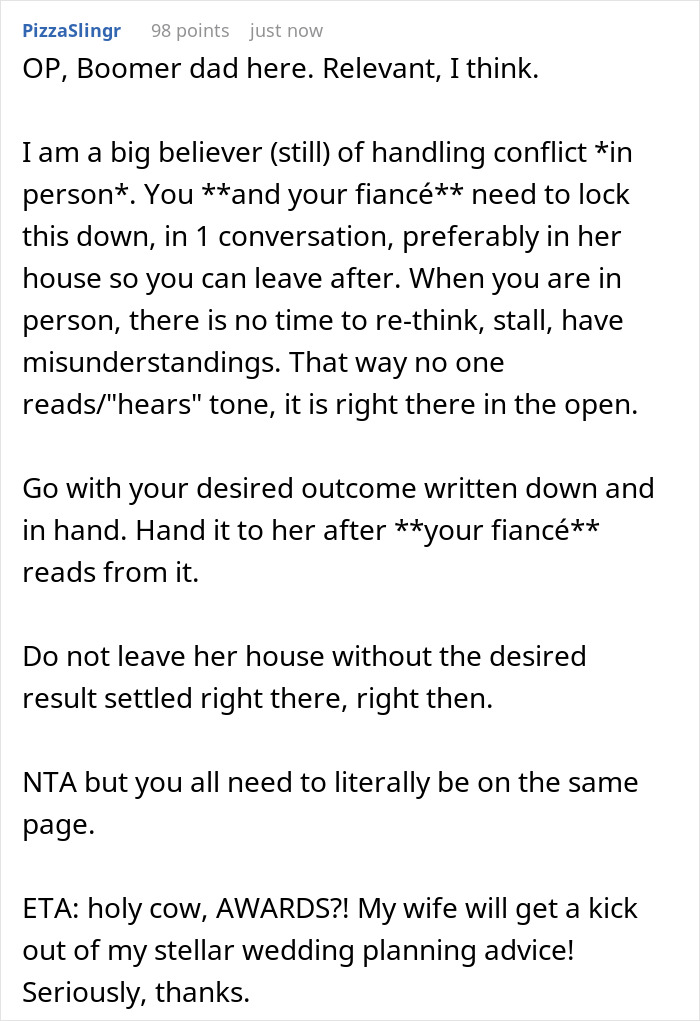
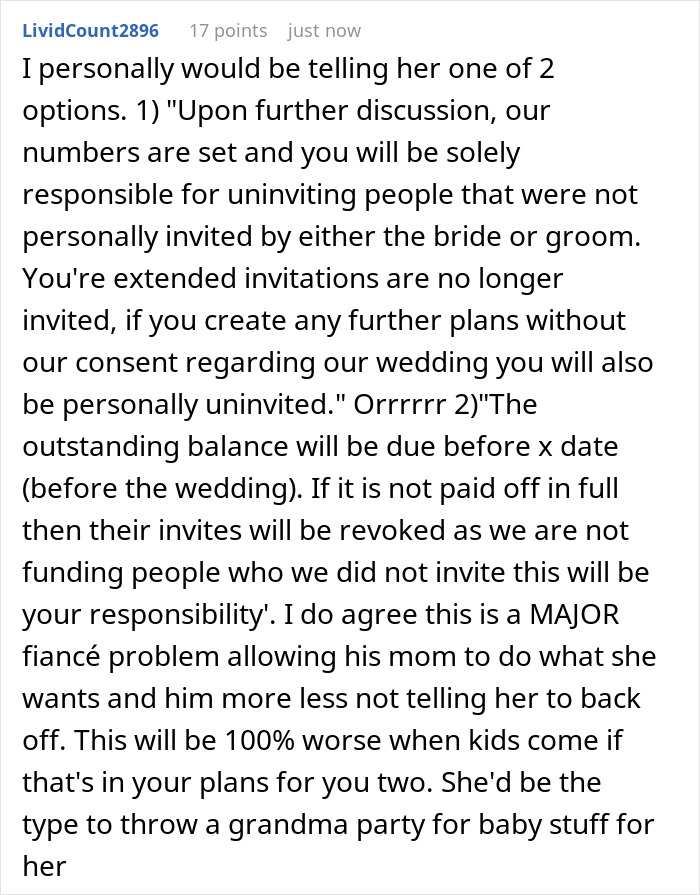
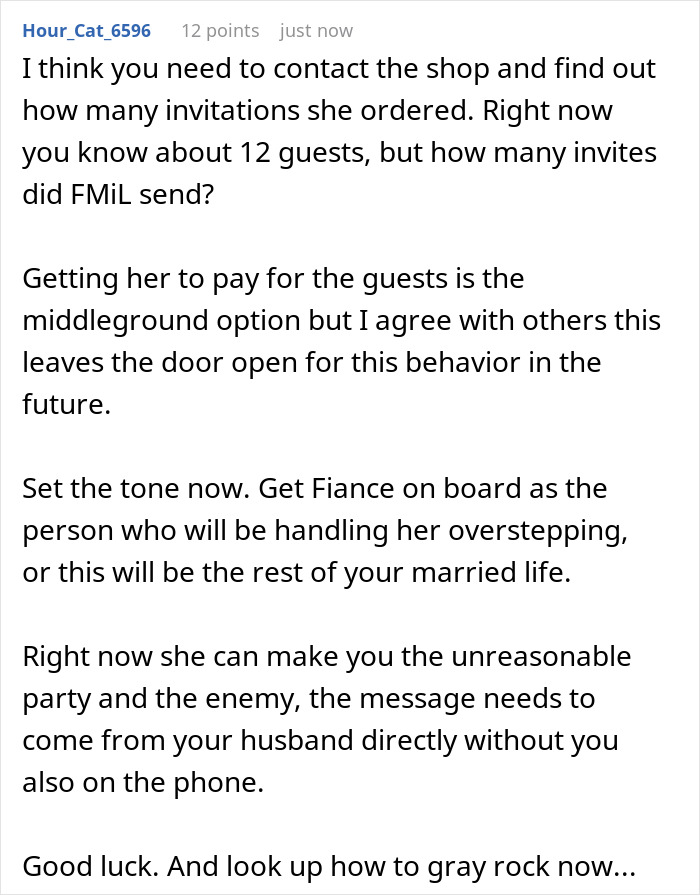
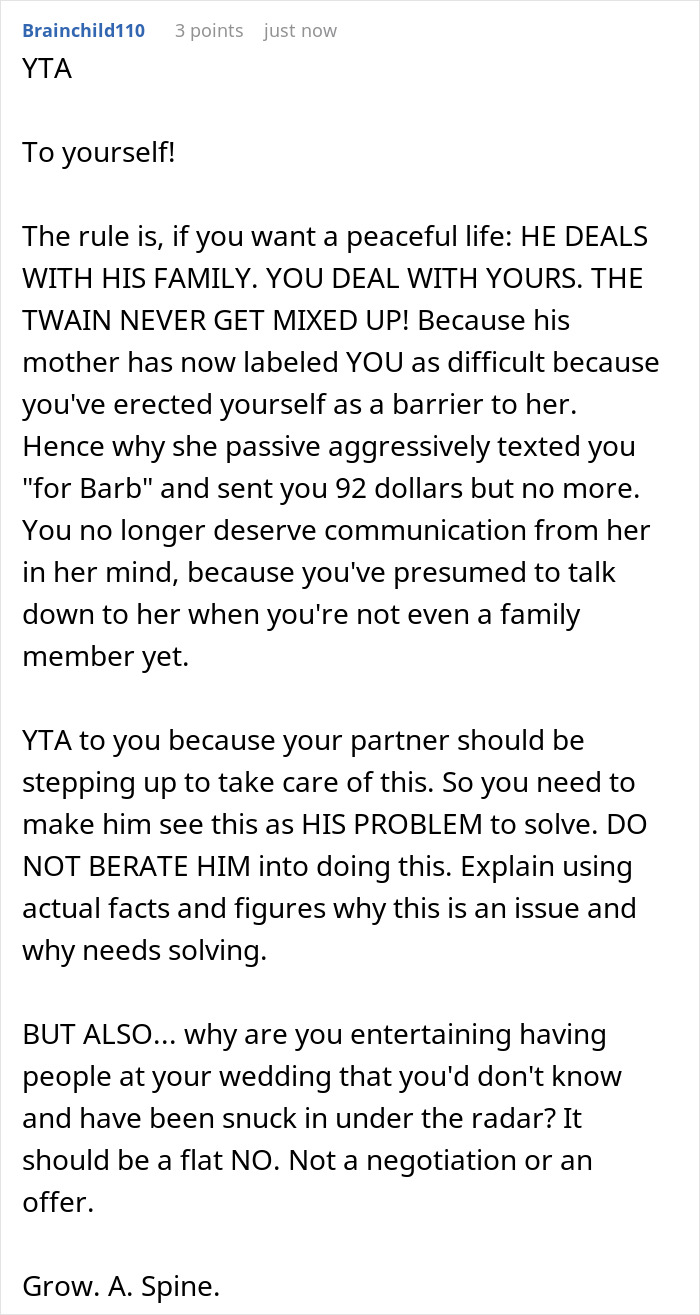
Commenters called out the groom for failing to stand up to his mom and set boundaries to protect his bride



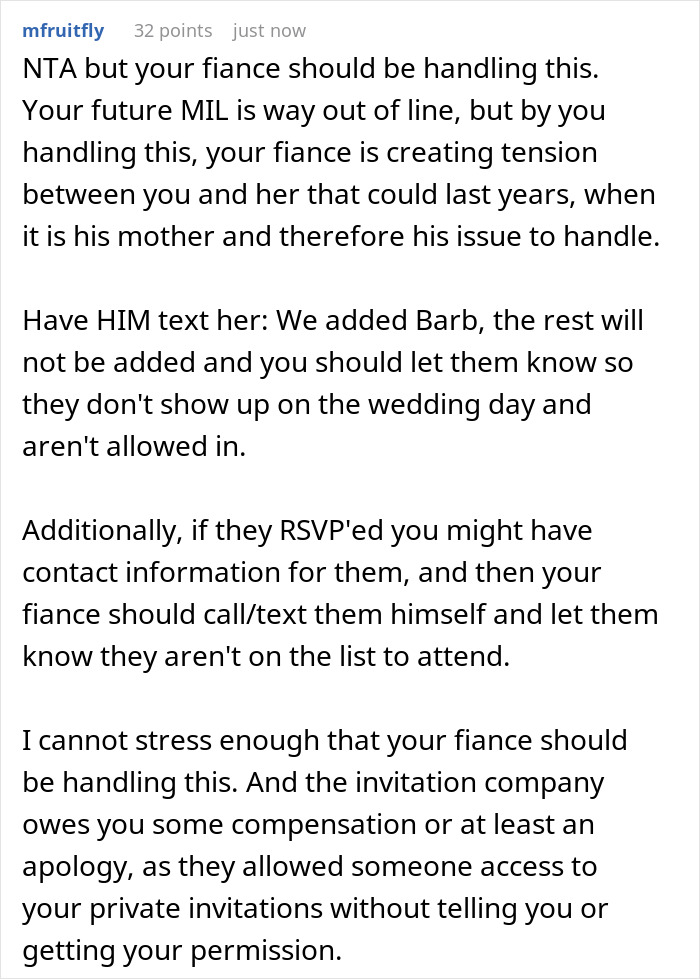

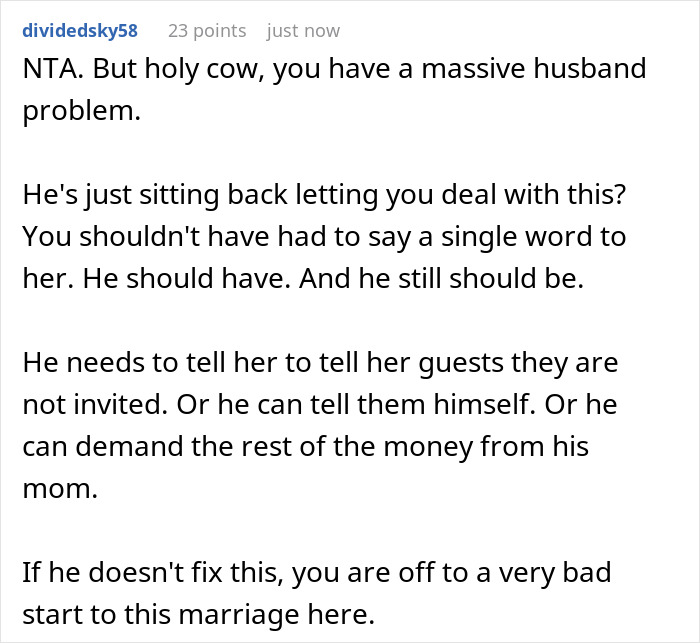
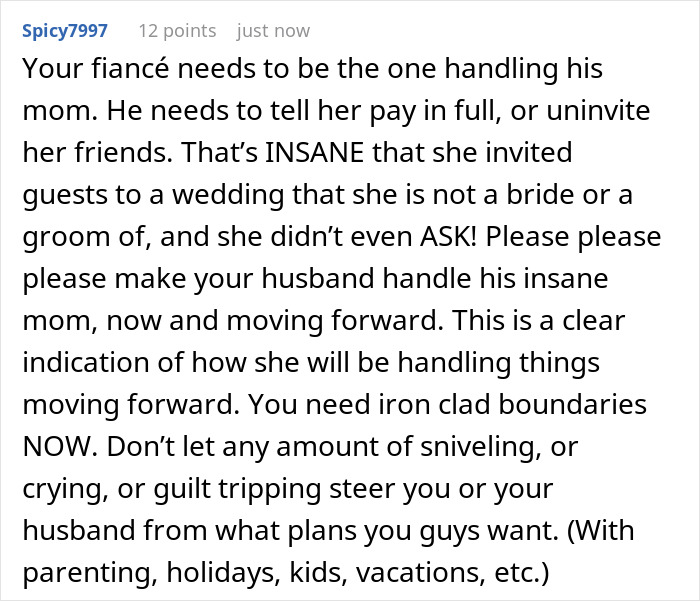
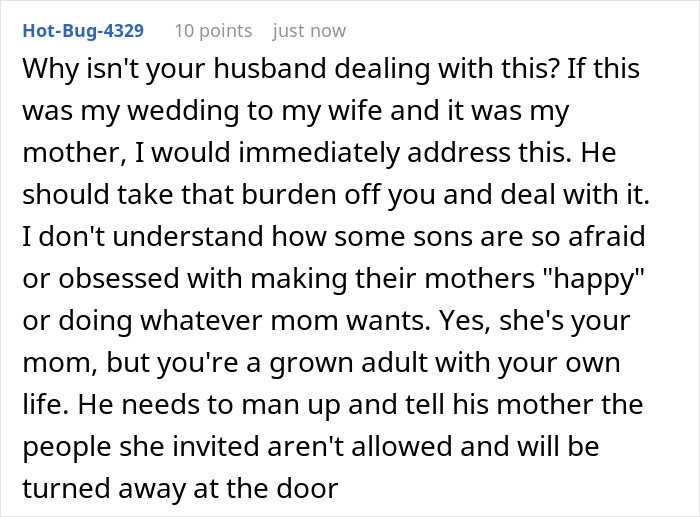
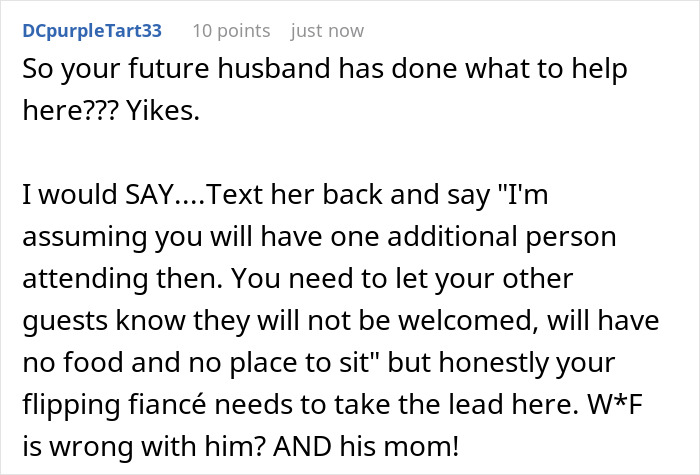
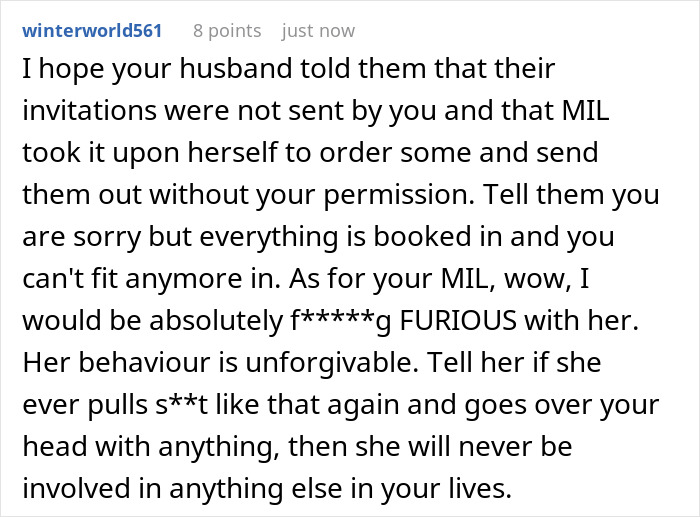
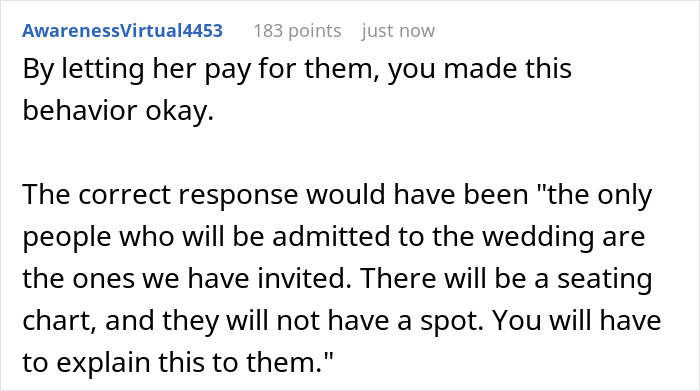
Commenters backed the bride for standing her ground and suggested other ways she could have handled the situation better









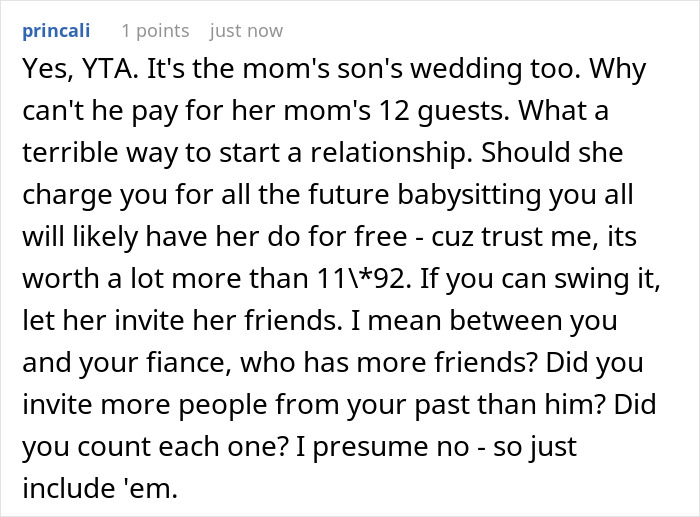
Some commenters thought the bride was wrong to ask her future mother-in-law to pay, arguing that the groom should have covered the extra guests instead

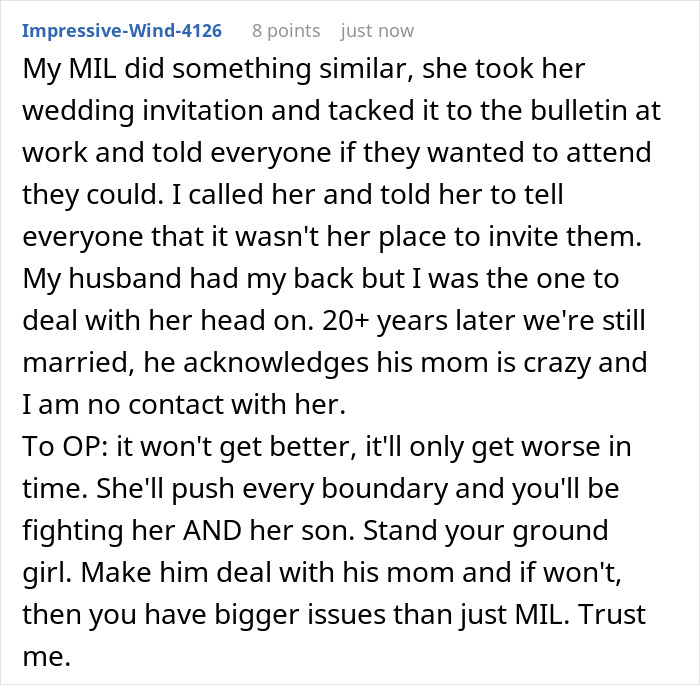
One commenter shared a similar experience with their mother-in-law, who invited guests without asking and how they handled it
 Follow Us