What makes a manager effective? How do you even measure that? Back in the day, experts thought a manager’s job was to squeeze every bit of work out of employees – no matter the cost. Burnout? What burnout?
But times have changed, and now being effective often clashes with keeping your personal boundaries intact. So, when the higher-ups start demanding insane terms for the team’s top performer, sometimes the only efficient way to cope is actually malicious compliance. So here’s another office story for you.
More info: Reddit
Back in the day, an “effective” manager was the one reaching goals, no matter how exhausted the staff was, but now times have actually changed

Image credits: stockking / Freepik (not the actual photo)
The author of the post is a top performer in a team, and the new line manager he got three years ago was always known for her pragmatic approach
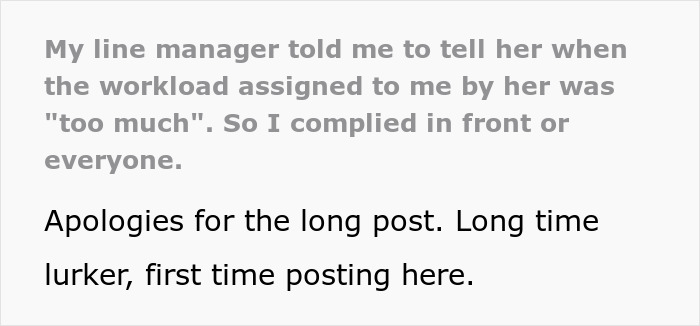
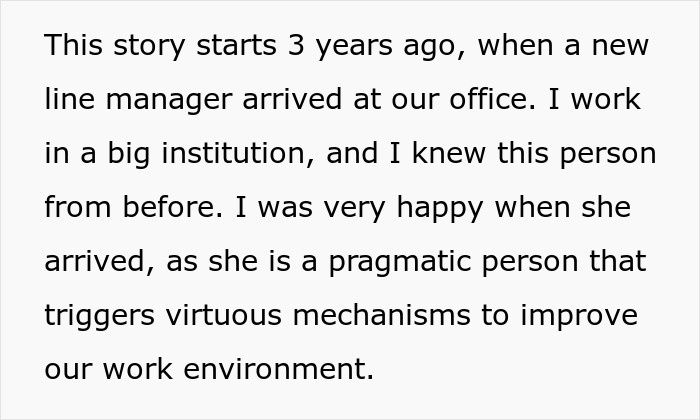
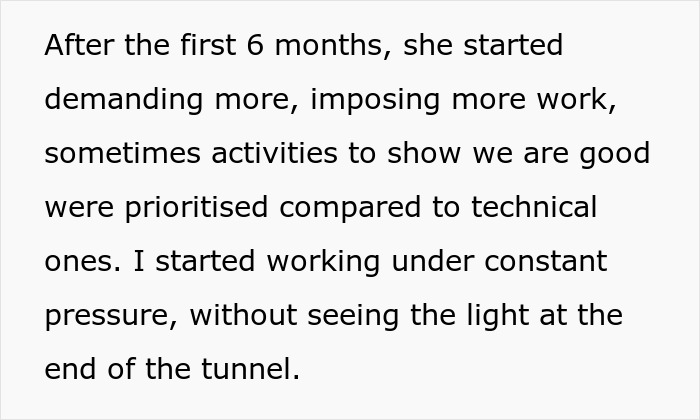
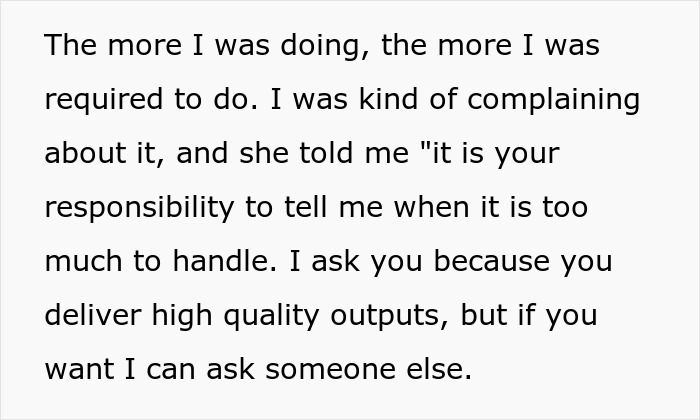

Image credits: gpointstudio / Freepik (not the actual photo)
After just a few months, the manager started loading the author with extra tasks and setting him insane terms, literally pushing him to pull overtime
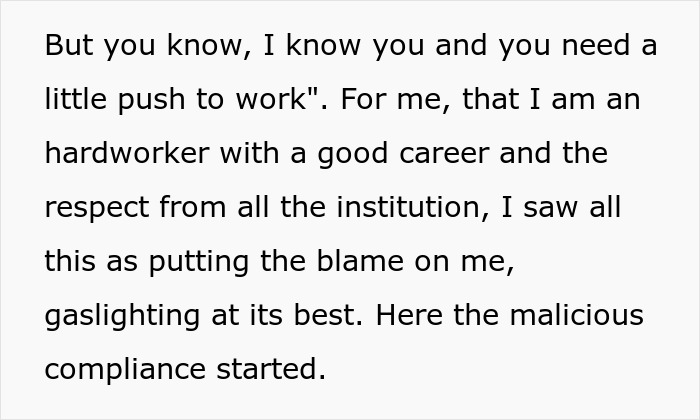
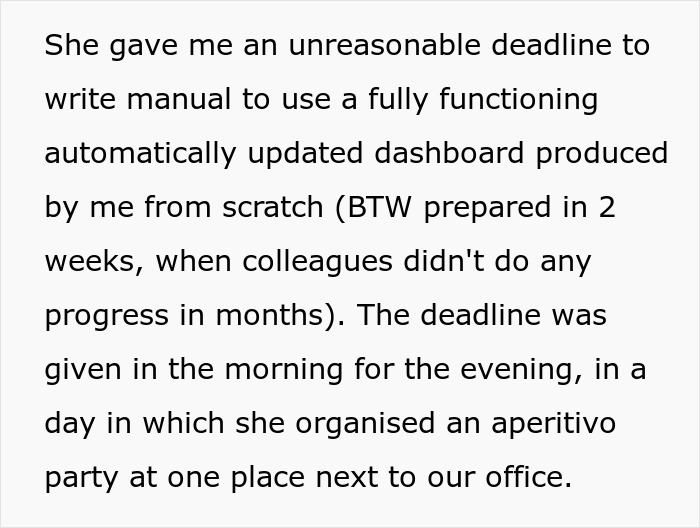

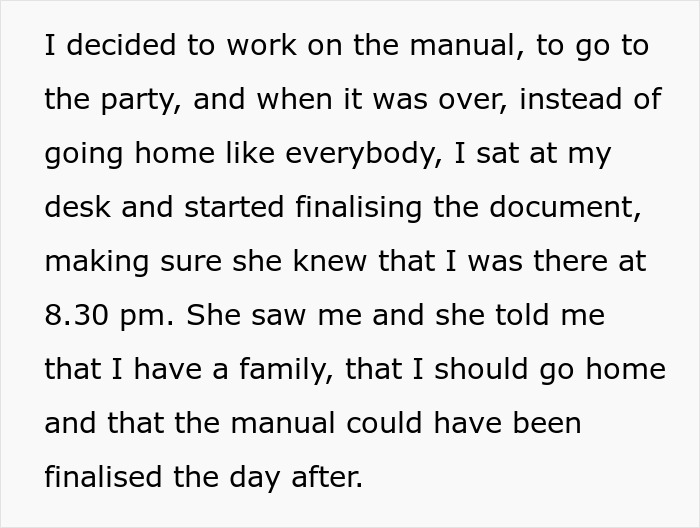
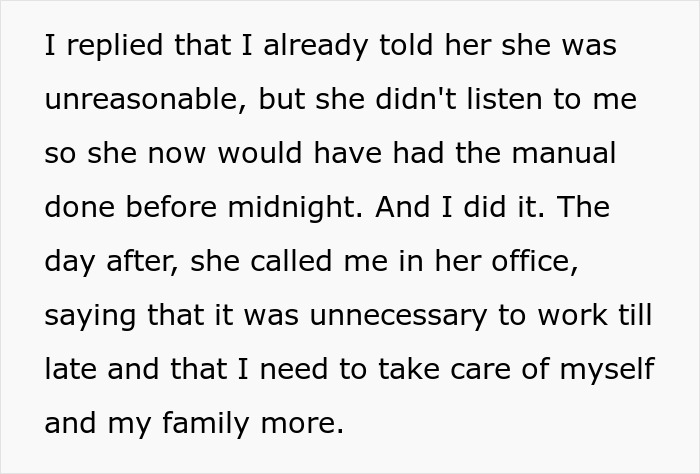
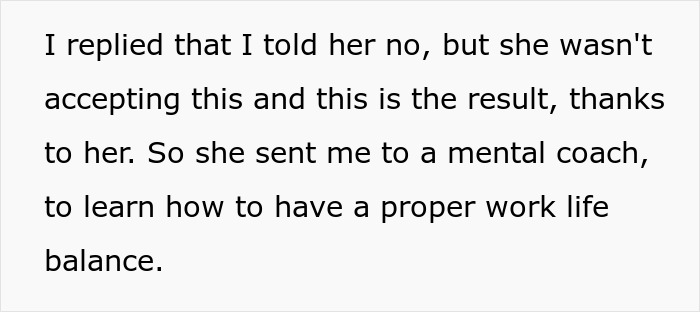
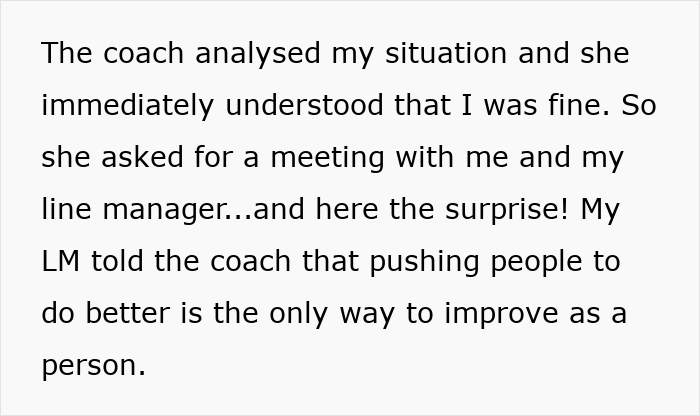
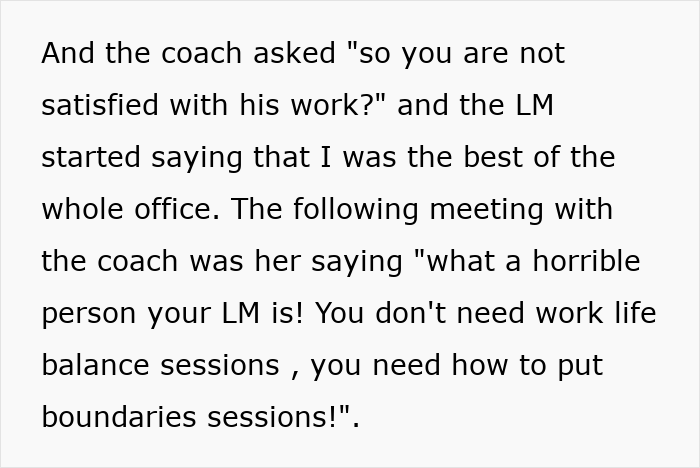
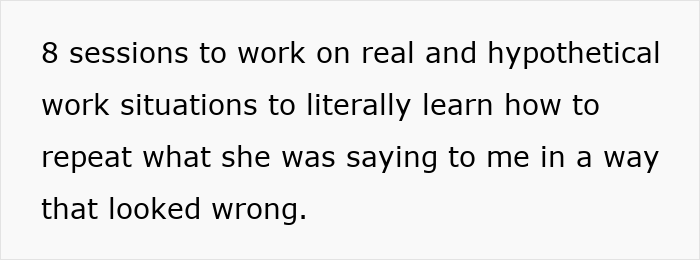

Image credits: The Yuri Arcurs Collection / Freepik (not the actual photo)
But when she once saw him working till late, she demanded he go to a mental coach to work on his work-life balance
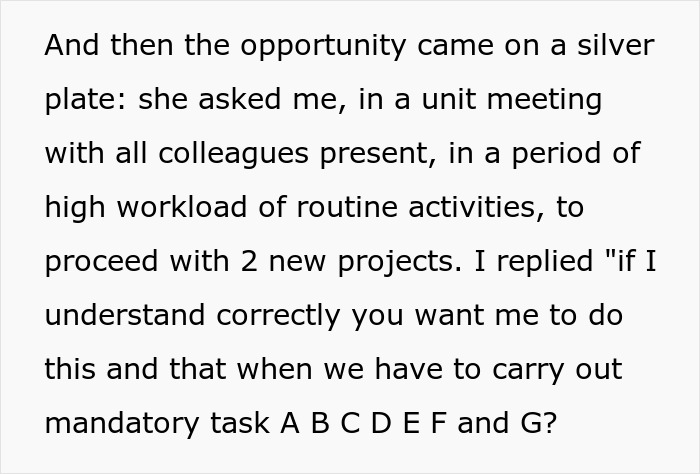
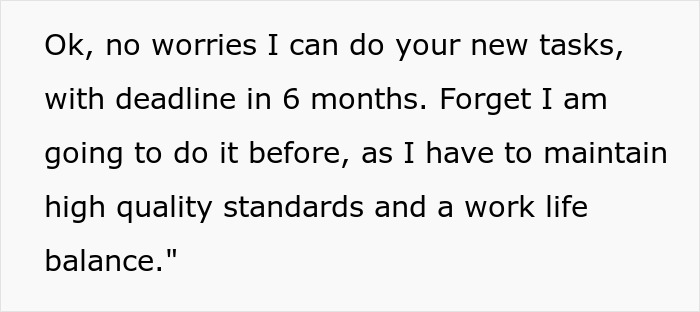
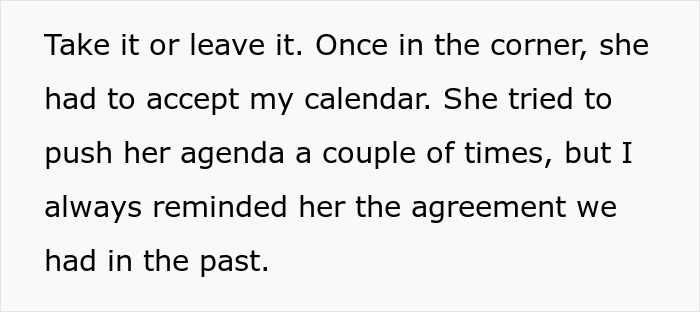
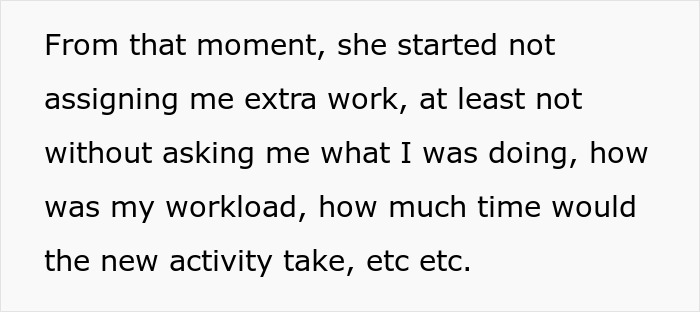
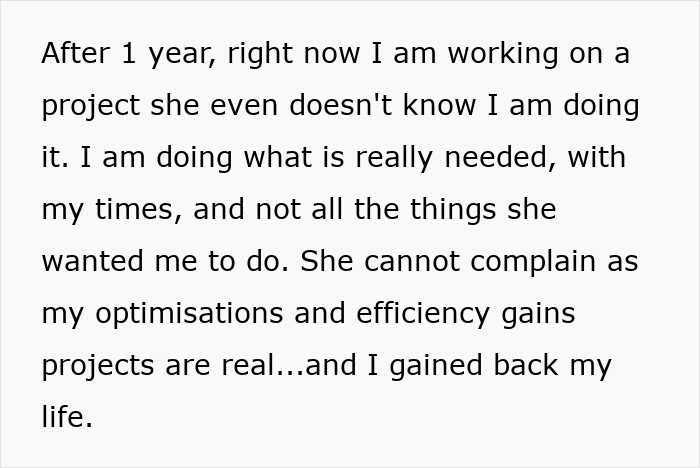
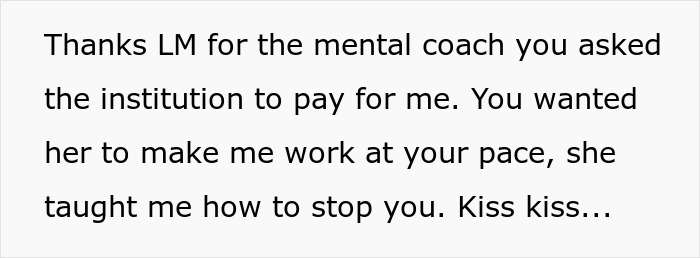
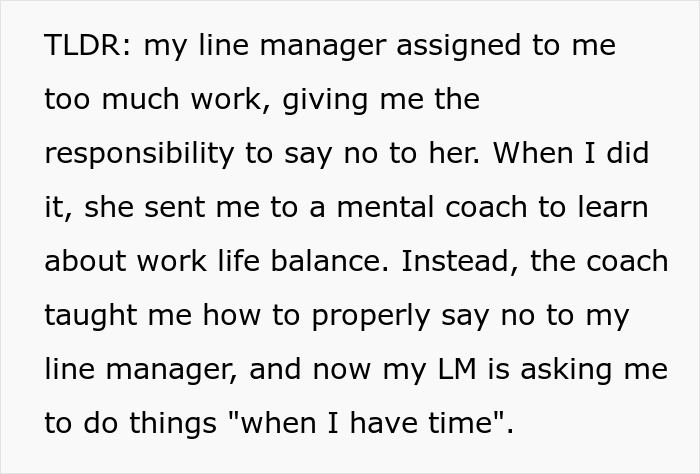
Image credits: sliding_doors_
The coach, however, worked on his personal boundaries more, and at the next meeting, the author successfully resorted to malicious compliance
So, about three years ago, the original poster (OP), who works in a huge institution, got a new line manager. The author knew this lady before and was well acquainted with her pragmatic management style. So, he was only happy to be working under her. However, even good intentions usually pave the road to hell…
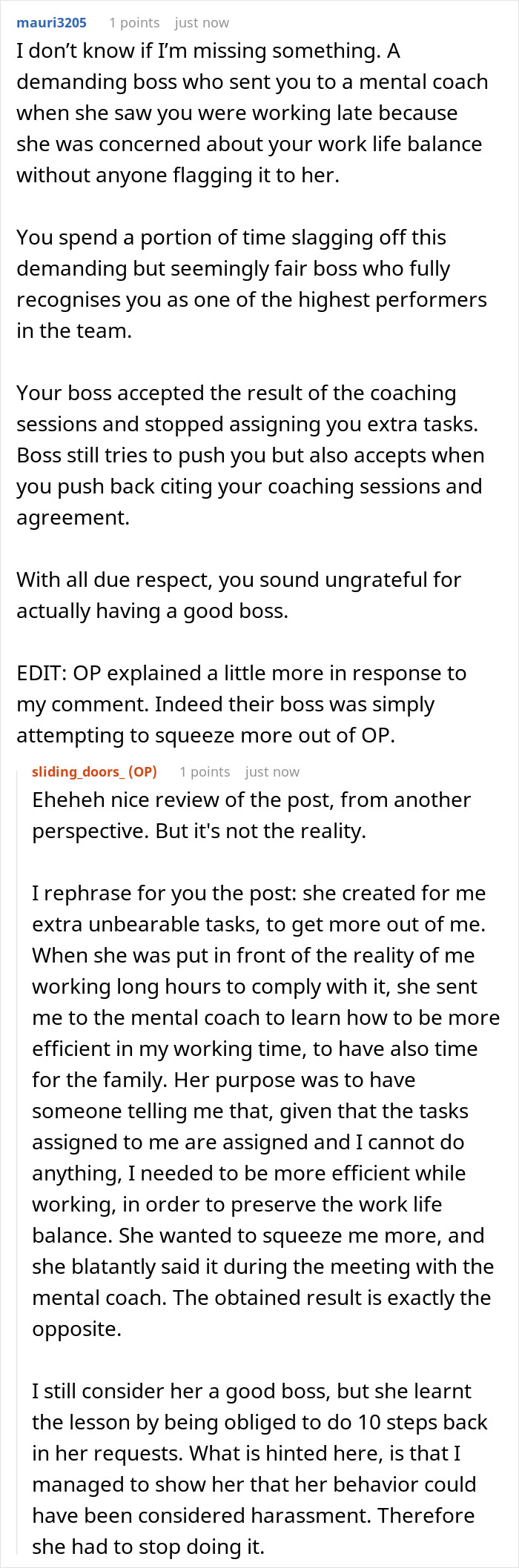
Our guy had always been a top performer, but after a few months, he started noticing his boss piling on way too much work. The OP was faced with truly insane task terms and had to work overtime to meet them. In response, the manager reminded him about work-life balance and even sent him to a mental coach.
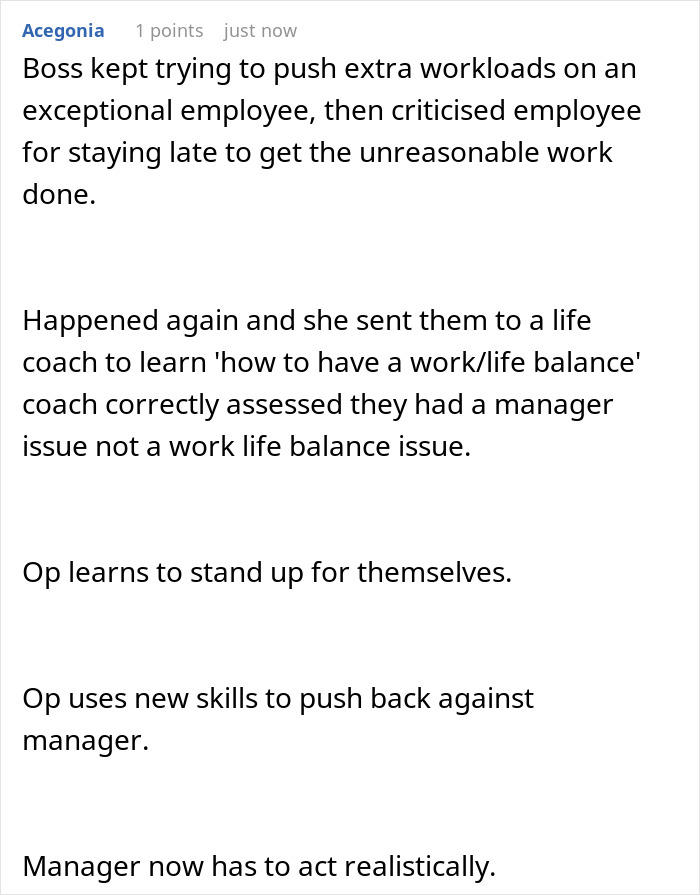
But here’s where she totally misread the situation. The coach was a real pro and, after getting the full picture, told him he didn’t need to fix his work-life balance but start setting personal boundaries instead. So that’s exactly what they spent the next eight sessions on – breaking down situations and coming up with practical tips.
So, when, during another group meeting, the manager again tried to set unrealistic terms for the author, he was prepared. The OP calmly said he could get the big project done in six months – no sooner – because otherwise, his work-life balance would take a hit, especially since the manager had already shown she cared about his well-being. Since then, he says, no more problems with that boss.

Image credits: gpointstudio / Freepik (not the actual photo)
Well, in fact, the problem of management’s unrealistic expectations of employees regarding workload and task terms has always been very pressing. But it’s only recently that people have started seeing these situations as boundary violations – not just signs of a ‘good’ manager.
For example, this dedicated article at O7 Therapy notes that employees are better off trying to directly and honestly point out to managers the violation of personal boundaries and offer alternative options or work terms. Basically, that’s exactly what the OP did here. And importantly, he did it in front of the whole team.
Why is this important? Because some experts – for example, the authors of this Inc. Magazine article – strongly recommend that employees record agreements (ideally in writing) to avoid situations where higher-ups forget (or “forget”) previously agreed-upon limits and task terms. In this story, the manager had zero chance to forget anything.
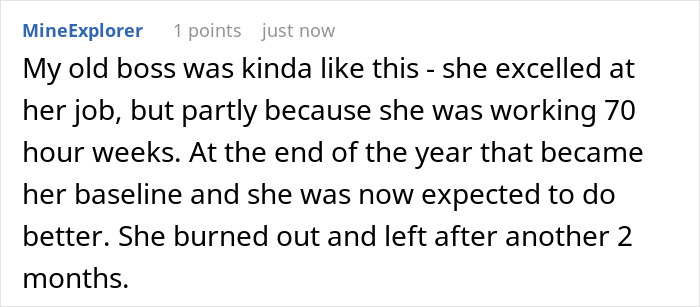
Lots of folks in the comments said their bosses acted the same way. For many, that kind of heavy workload led to burnout in just a few years. Incidentally, some responders also gave credit to the OP’s boss – after learning this lesson the hard way, she didn’t seek revenge in any way. So what do you, our readers, think about this case?
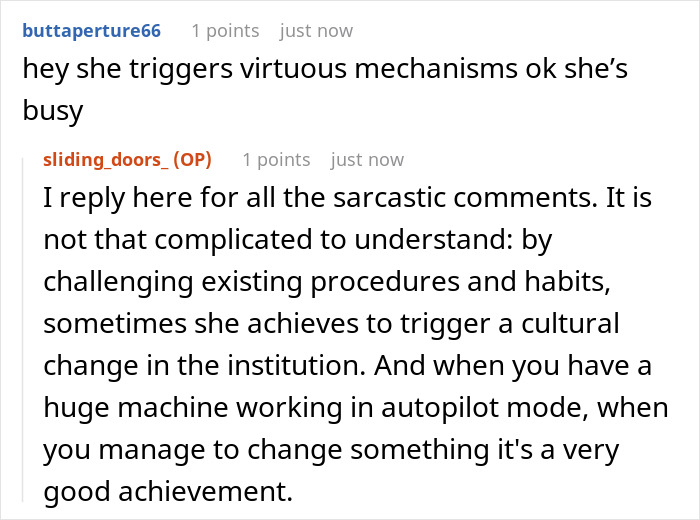
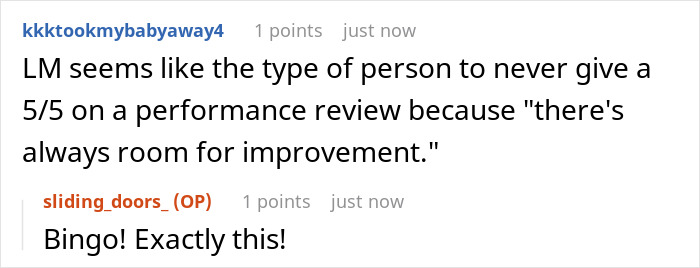
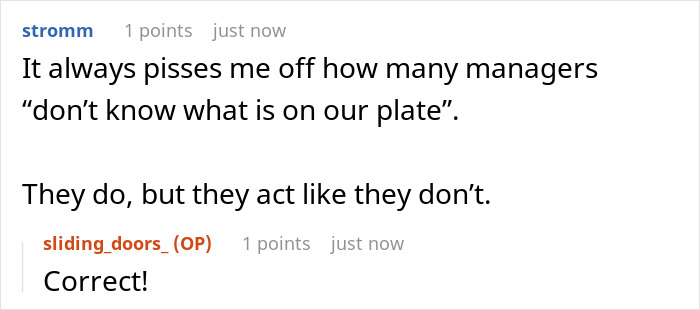
Many commenters recalled their own stories about such managers and praised the author for handling this so smartly and wittily





 Follow Us