If you are reading this article at your desk, daydreaming about never returning to work, you probably have more in common with one audacious man from Spain than you’d think. Joaquín García is the anti-hero we all strive to be, but his downfall came in the most unexpected way.
For 6-years, his no-work-all-pay scheme was going on without a hitch. Government jobs are, after all, cushy, and he tested those limits even further. But you can only have so much luck on your side, and he would soon have to fess up.
Nobody dreams of working, but everybody has at some point dreamt about quiting

Image credits: gpointstudio / Magnific (not the actual photo)

One man got the best of both worlds while he kept cashing in his paychecks, despite not going to work for 6 years
Joaquín had been a building supervisor for a water treatment plant in Cádiz, employed by the local government for over 20 years. At some point, the job became too stressful, and he has since cited workplace bullying as the reason he stopped showing up. So, he made a decision that most people only dream about. He simply did not go in anymore. No dramatic resignation and no awkward meeting with HR.
He just quietly stopped appearing and, crucially, nobody said anything. His annual salary of $41,500 kept landing in his account like clockwork. The reason nobody noticed is a classic government faux pas, two separate departments each assumed the other was responsible for monitoring his work, creating a bureaucratic blind spot that worked perfectly in his favor.

Image credits: fabrikasimf / Magnific (not the actual photo)
He went undetected as two departments at his government job kept pointing the finger at each other, neither thinking he was their responsibility
Joaquín slipped through the cracks entirely, undetected, for six straight years. While the water treatment plant presumably treated water and the local government presumably governed, Joaquín was at home studying philosophy. As you do. Sadly, his luck would soon run out.
He was nominated for a long service award. A celebration of his two decades of dedication to the company. When his supervisors called him in for the ceremony, the questions started. Deputy mayor Jorge Blas told Spanish newspaper El Mundo: “I wondered whether he was still working there, had he retired, had he [passed]? But the payroll showed he was still receiving a salary.”

Image credits: magnific / Magnific (not the actual photo)
His plan came to a screeching halt when he was supposed to receive a ‘long service’ award for 20 years of work
He called Joaquín directly. “I called him up and asked him, ‘What did you do yesterday? The month before, the month before that?'” Blas said. “He didn’t know what to say.” Six years of philosophical study and the man had no answer prepared for the most obvious question in the world.
The award that was supposed to celebrate his loyalty became the thing that ended his entire operation. A long service award. For a man who had not been present for a quarter of his tenure. The irony is so thick you could build a whole new water treatment plant out of it.

Image credits: The Yuri Arcurs Collection / Magnific (not the actual photo)
After being found out, he was ordered to pay back the equivalent of one year’s salary
When the dust settled, a court found in the water company’s favour and ordered Joaquín to pay a fine of €37,000 (approximately $40,000), equivalent to roughly one year’s salary after tax and the maximum amount the company could legally reclaim. Which means that despite six years of collecting a salary for doing absolutely nothing, the worst-case financial scenario for Joaquín was losing one year’s worth of it.
The maths, even in defeat, are not entirely unfavourable. True to form, Joaquín did not go quietly. He wrote directly to the mayor asking to be let off the fine and announced his intention to appeal. The man who spent six years avoiding accountability was, it turned out, not particularly keen on it when it finally arrived either. When asked about his absence, he maintained that workplace bullying had driven him away.

Image credits: magnific / Magnific (not the actual photo)
Garcia wasn’t taking it laying down, and wrote to the mayor to get the ruling overturned
He did, however us his time wisely and sort of productively as he took up studying philosophy and making the most of what he described as an ‘unplanned sabbatical ‘. Whether Stoicism, Nietzsche or Kant prepared him for the courtroom is, unfortunately, not on record.
As audacious as Joaquín’s six-year vanishing act was, he is not even close to holding the record. In Italy, a hospital employee named Salvatore Scumace at Pugliese Ciaccio Hospital in Catanzaro managed to avoid work for 15 years from 2005 onward, pocketing an estimated €538,000 ($647,000) in wages during that time.

Image credits: lazy_bear / Magnific (not the actual photo)
His method was considerably less passive than Joaquín’s. According to police, Scumace threatened his initial manager to prevent her from filing a disciplinary report. When that manager retired, subsequent managers and HR simply lost track of him entirely. He was eventually investigated and fired during a broader Italian police crackdown on public sector absenteeism and fraud.
But even Scumace cannot touch A.K. Verma, an executive engineer in India’s Central Public Works Department who holds what might reasonably be described as the most jaw-dropping ghost worker record in human history. In December 1990, Verma went on a standard, authorised period of short-term leave. When it expired, he simply refused to go back. The CPWD ordered him to return. He ignored them.
They launched a formal inquiry in 1992. And then, due to the staggering complexity of India’s civil service labour protections and the glacial pace at which the bureaucratic system processed anything, the investigation dragged on. And on. And on. For 24 consecutive years, Verma remained on the official government payroll without doing a single day of work, just because the system’s own rules made it essentially impossible to fire him.
He exploited every delay, every appeal and every available loophole until the whole thing became a monument to administrative paralysis. Joaquín García studied philosophy for six years and got caught by a trophy. A.K. Verma simply refused to go back to work in 1990 and let the paperwork do the rest. Different approaches. Both, in their own specific way, absolutely unhinged.
Do you think these guys should be applauded or should justice prevail? Let’s get philosophical in the comments section!
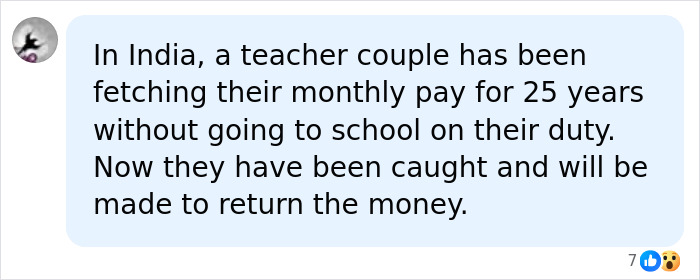
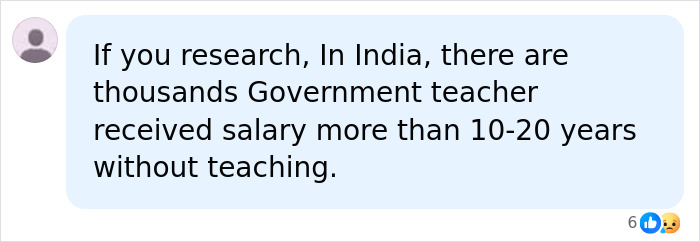
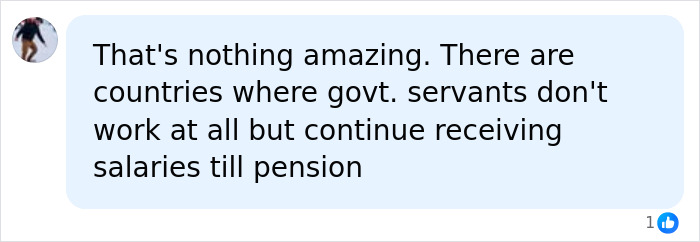
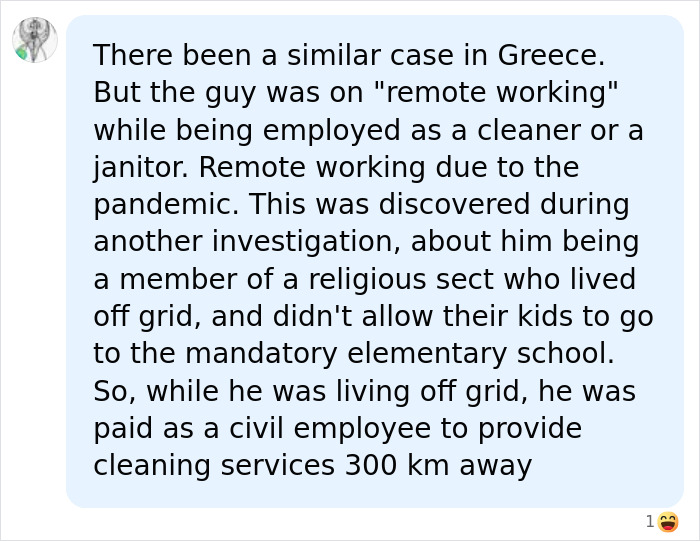
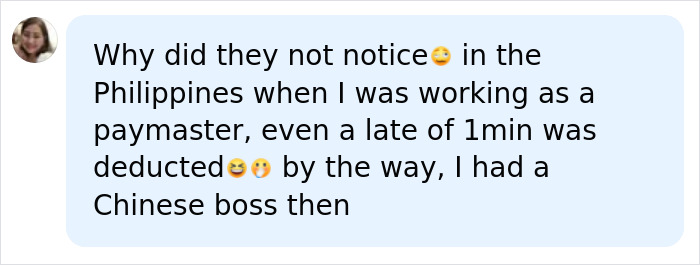
People in the comments were quick to share stories of their own ghost-working heroes from around the world, making these guys look like amateurs









 Follow Us