As a woman, there are few things as existentially horrifying as being told you snore. Excuse me? Me? I am a delicate and odorless creature who sleeps like a Renaissance painting, hands folded, mouth closed, emitting nothing. I do not snore. I do not have a body that does things without my permission. Whatever sound you heard was the wind, or the neighbor, or your own imagination, and I will be taking no further questions on the matter.
This particular brand of denial is not just vanity. It is, it turns out, a medically significant problem. Because while women are busy insisting they could not possibly snore, sleep apnea is dismantling their cardiovascular health, their metabolism, their mood, and their cognitive function. The doctors they visit are largely missing it, partly because the symptoms do not look like the textbook version and partly because the textbook was written almost entirely with men in mind.
Up to 90% of women with obstructive sleep apnea remain undiagnosed, a statistic so extraordinary that performance scientist Dr. Andy Galpin raised it on the Diary of a CEO podcast recently and stopped the conversation cold. The textbook sleep apnea patient is an overweight middle-aged man with a thick neck whose long-suffering partner reports that he stops breathing in the night like a faulty engine.
He is so well established in clinical imagination that he has essentially become the only patient sleep medicine knows how to find. Women, who present differently, complain differently, and whose sleep studies read differently, keep falling through the gap between what the doctor is looking for and what is actually happening. Sleep apnea is more common than breast cancer, so why is it such a taboo?
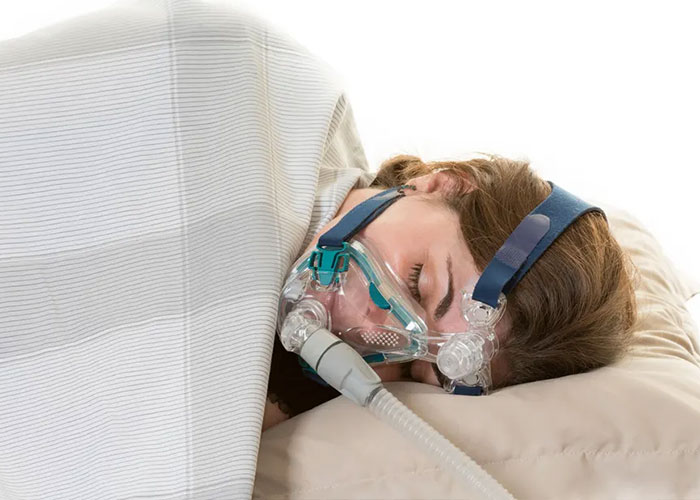
Getty Images (not the actual photo)
The wrong patient
In the 90s, the Wisconsin Sleep Cohort study concluded that 93% of women with sleep apnea go undiagnosed. If we count milder cases, it is as high as 98%. Dr. Max Kerr, a dentist board-certified in dental sleep medicine who runs Sleep Better Austin and Frontier Sleep and Wellness in Texas, says that nearly half of his patients are women, so we know that the snoring Cinderellas are out there.
Dr. Audrey Wells, a triple-board-certified sleep medicine physician and women’s sleep health advocate, traces the problem directly to where sleep medicine built its foundations. Early epidemiology was drawn largely from male patients, the assumption being that sleep apnea was uncommon in women and that hormonal fluctuations would complicate the data.
The result is that diagnosis and treatment approaches were built around a male avatar, and that avatar has been running the show ever since. In sleep medicine clinics, the male-to-female patient ratio is as high as 8:1. Not because women have sleep apnea less often, but because the system is not finding them.
The screening questionnaires most clinics rely on make this worse. Dr. Kerr points out that several of the standard tools are literally scored higher for being male and having a thick neck, meaning a woman with genuine sleep apnea can complete the questionnaire and score below the threshold that would trigger a referral. She leaves the appointment with reassurance she does not deserve, and the problem continues accumulating in the background.
Dr. Jason Schroder, a board-certified anesthesiologist who encountered numerous undiagnosed sleep apnea patients during pre-surgical evaluations, also explains that the guidelines derived mainly from male data in the Wisconsin study are not as effective for women. We have known all of this for more than 30 years, yet the medical literature remains unchanged.

Acton Crawford/Unsplash (not the actual photo)
So, what does sleep apnea in women look like then?
The textbook sleep apnea presentation is a man who stops breathing, gasps, and wakes his partner. Women arrive at the doctor’s office looking completely different, which is why they keep leaving without a diagnosis.
Dr. Kerr says that “men usually come in very sleepy. They doze off in meetings, fall asleep at red lights. Women come in very tired. It sounds similar, but it really is not. They are worn out and wired at the same time. Think of a live wire.” Exhausted but unable to switch off. Too tired to function, too activated to rest. This pattern gets filed under insomnia or anxiety, a prescription is written, and the actual problem goes unaddressed for years.
The symptom list for women reads nothing like breathing difficulties. Morning headaches. Sleep that does not feel restorative no matter how many hours are logged. Mood changes. Brain fog. Difficulty concentrating. Waking at 3 am and lying there for an hour unable to return to sleep.
Dr. Wells describes a patient archetype that will be uncomfortably familiar to many women, probably including many of those reading this right now. A 42-year-old who tells her doctor she is “tired of being tired,” denies snoring, reports tossing and turning and never reaching deep sleep, and leaves the appointment with advice about sleep hygiene and stress reduction. The breathing problem is never considered because it was never mentioned and did not feel like a breathing problem. It felt like life.
Dr. Kerr adds that dentists are sometimes the first to catch it. “In my chair I see a lot of worn-out teeth and sore jaws, because the jaw clenches overnight to try to haul the airway back open. That is frequently the first physical sign anyone catches, which is why dentists are into this.” If your dentist has mentioned jaw clenching or tooth wear and your doctor has mentioned anxiety and fatigue, there is a conversation those two appointments have not yet had that probably should happen.
Dr. Jessica Yu, a board-certified physician, sees this pattern in her practice all too often. “I had patients treated for anxiety and depression for many years until they were properly diagnosed. Once the diagnosis of anxiety or depression is placed in the chart, doctors stop looking for the physical cause.”
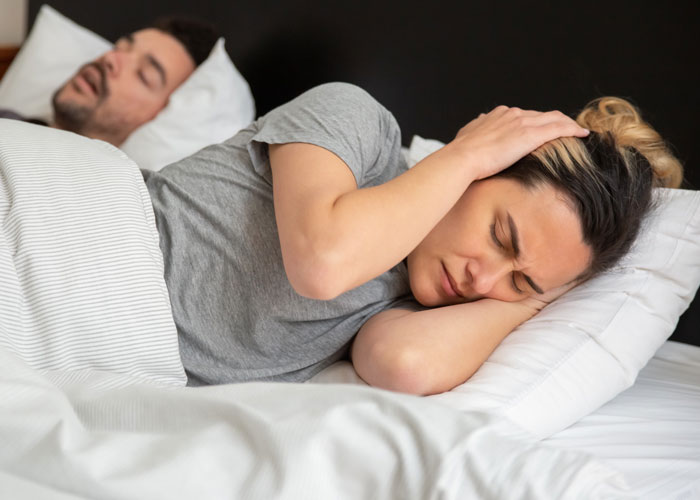
Kampus Production/Pexels (not the actual photo)
Menopause is the sleeper agent
If there is a moment when the diagnostic gap becomes an active health crisis, it is the perimenopause-to-menopause transition, and it is the moment when the medical system is least equipped to handle it.
Progesterone, which drops first during perimenopause, does two things relevant to sleep apnea: it helps maintain upper airway muscle tone and acts as a respiratory stimulant. When it falls, that protection goes with it. Estrogen, which follows on an erratic downward trajectory, plays a role in temperature regulation and sleep stability. The combined effect is a woman whose airway is becoming more vulnerable to collapse at night, at exactly the moment she is also experiencing hot flashes, fragmented sleep, mood changes, and fatigue, all of which are the expected symptoms of menopause and therefore the explanation everyone reaches for first. Sounds like fun, doesn’t it?
“When we attribute everything to hormones, we stop confirming the airway, and a woman spends years being distracted with symptom management instead of addressing the root cause,” says Dr. Wells. A hot-flash narrative with prolonged nighttime awakenings can mask symptoms of disrupted breathing even as both occur simultaneously. The breathing problem hides inside the menopause story, the menopause story gets treated, and the breathing problem continues.
Dr. Kerr flags the pregnancy risk too, which sits at the opposite end of the hormonal timeline but carries its own urgency. Sleep apnea during pregnancy raises the odds of preeclampsia and gestational diabetes; the tissues swell and impact the airway, and the condition is almost never screened for in that context either.
The thread connecting perimenopause to pregnancy is the same one connecting all of this: a medical system that built its understanding of sleep apnea around one type of patient and has not yet fully committed to updating it.
Nikita Kleyman/Pexels (not the actual photo)
The damage that it does to be undiagnosed
Sleep apnea is easy to write off as bad sleep, which is what makes the long-term consequences so surprising when they eventually surface. Every time breathing stalls, oxygen drops and the nervous system shifts into fight-or-flight mode. Over years, that pattern tracks with high blood pressure, stroke, heart failure, and arrhythmias. It contributes to insulin resistance because repeated drops in oxygen levels activate stress hormones that disrupt blood sugar metabolism. It impairs memory and focus over time and gets attributed to everything except its actual cause.
“I have seen patients with heart problems who had no idea they had been suffering from apnea for many years,” says Dr. Schroder. At a comparable severity, the cardiovascular and metabolic burden in women is at least as high as in men, Dr. Wells adds. By some measures it is even worse, particularly the cardiac strain associated with REM-predominant disease, which is more common in women and more likely to be undercounted by standard sleep studies.
The mental health overlap is where the most damage accumulates invisibly. “I have seen women medicated for years for a mood pattern when the real driver was that they cannot breathe at night,” Dr. Kerr says. Untreated sleep apnea can present as depression, as anxiety, as emotional dysregulation, and as cognitive decline.
Each of those presentations generates its own treatment pathway, none of which address the airway, and the woman moves through the medical system collecting diagnoses that do not quite fit while the underlying problem continues. The answer, for once, is not in the psychologist’s chair.
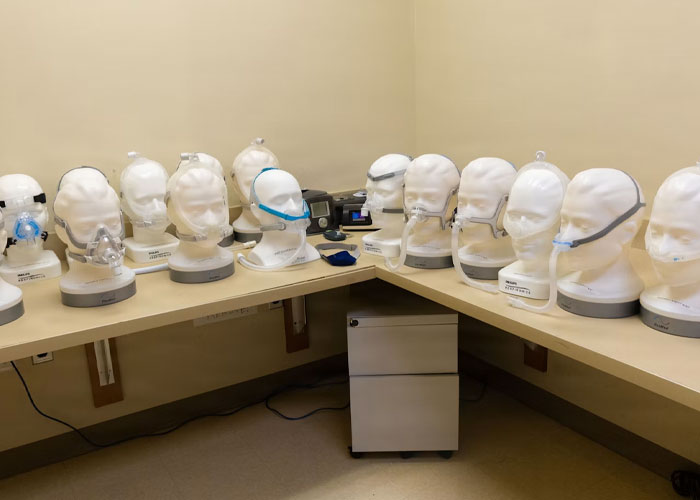
Navy Medicine/Unsplash (not the actual photo)
Sleep studies are the problem
For women who do make it to a sleep evaluation, the obstacles do not end at the referral. Standard home sleep apnea tests, which measure breathing events throughout the night and produce a score called the apnea-hypopnea index, can yield results that appear normal or mild in women with genuine, symptomatic disease.
Women commonly have respiratory events that disrupt sleep without causing the oxygen drops the test is calibrated to catch. Sleep apnea in women also tends to occur during REM sleep, which means the overall score is diluted by normal breathing during other sleep stages. A woman with a real airway problem and a score of eight gets told she has mild sleep apnea, hears “mild” as “insignificant,” and leaves without treatment. The damage continues. “Women are adept at absorbing responsibility for symptoms disproportionate to metrics,” says Dr. Wells.
A single night of home testing also misses night-to-night variability, which matters more for women whose disease is REM-predominant and whose sleep quality fluctuates. The test that is easiest to access and fastest to get is also the test most likely to undercount a woman’s disease, and the more complex in-lab testing that would catch what the home test missed is harder to get approved and paid for. Dr. Wells calls it out and says, “there is a version of the pink tax here.”

Lucas Guimarães Bueno/Pexels (not the actual photo)
What you should do if this is you
The practical reality is that getting a diagnosis as a woman currently requires more advocacy than it should, and knowing that in advance is more useful than being surprised by it in an exam room.
Start keeping a record before the appointment. Schroder recommends logging specific dates, patterns, and daily symptoms: “It will be harder to dismiss.” Yu agrees: “Come prepared with a notebook where you make notes about your symptoms, and that way the doctor will not have a chance to ignore what is going on with you.”
When you are in the room, name the test you want. “Say it plainly. Could this be sleep apnea, and can I get a home sleep test or a referral? Naming the test tends to move things faster than describing how you feel,” Dr. Kerr advises. Do not let a screening questionnaire be the final word. Those tools are known to undercount women, and a low score is not a clear result.
If the home sleep test comes back negative or mild and the symptoms persist, Dr. Wells recommends reframing the result as inconclusive and pushing for either a retest or an in-lab sleep study. This is not excessive. It is the appropriate clinical next step for a symptomatic woman whose first test may simply not have been sensitive enough to find what is there.
And if the doctor you are seeing is not listening, Dr. Kerr offers an unexpected alternative entry point: “A dentist who practices dental sleep medicine can steer you towards testing.” Jaw clenching, tooth wear, and dry mouth are all flags that a dentist trained in this area will recognize, and they can refer for sleep studies just as a physician can.
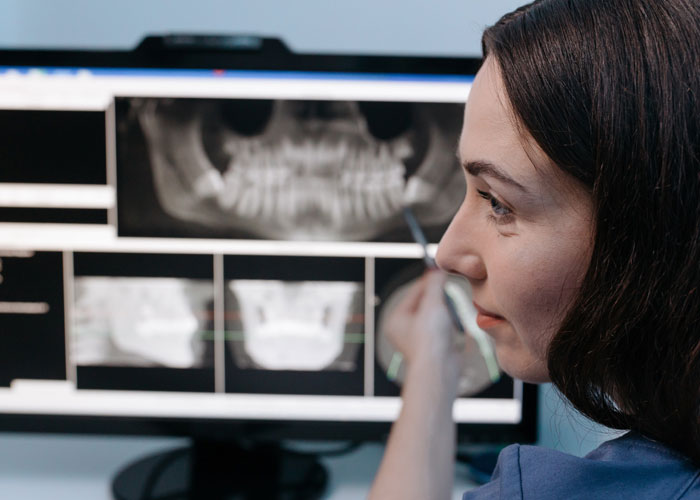
cottonbro studio/Pexels (not the actual photo)
Let’s just get screened
Dr. Wells makes the comparison that reframes the entire conversation. We screen for breast cancer routinely, with mammograms on a regular schedule, because we decided that catching it early was worth the infrastructure. Sleep apnea is more common than breast cancer. It drives cardiovascular disease, metabolic dysfunction, and cognitive decline. It is treatable. And we have left it to operate entirely without a screening program, relying instead on patients to self-identify using a symptom profile designed around someone else.
She says that symptomatic and at-risk women should be screened for sleep apnea on a schedule parallel to the mammogram model, with home testing every one to two years because the technology exists and the tests are straightforward. The cost of missing the diagnosis, measured in years of accumulated cardiovascular risk, eroded quality of life, and failed treatments for downstream symptoms, is substantially higher than the cost of making the diagnosis.
The women being missed are sitting in exam rooms right now being told their labs are normal and their sleep study was unremarkable, while their fatigue, blood pressure, and metabolic health continue in a direction nobody is connecting to their airway. They have been told it is stress, or hormones, or anxiety, or simply the exhausting business of being a woman in the world, which is real enough as an explanation that it keeps working long past the point where it should have stopped.
 Follow Us