Writing out “trust is important in relationships” is so common sense that it almost seems pointless. So if one’s partner, who has never acted out before, starts behaving strangely and not answering questions, it’s easy to have concerns.
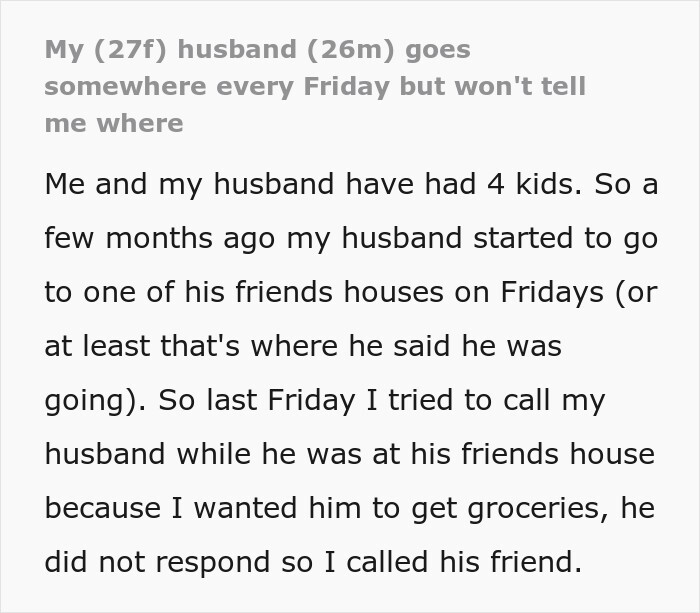
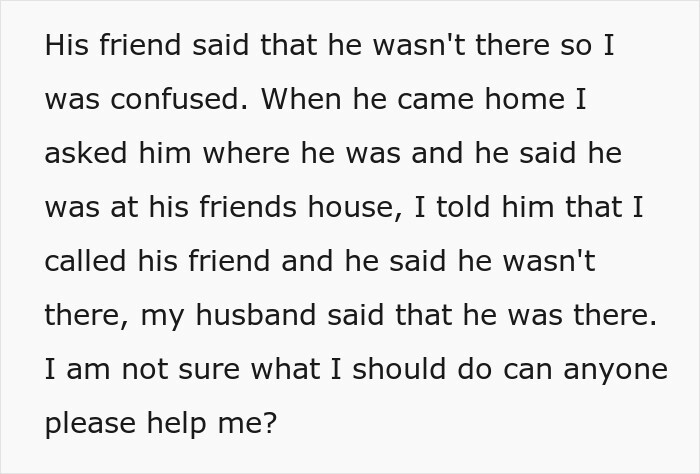
A woman turned to the internet for advice after noticing that her husband had started acting erratic on Fridays. He claimed to be with a friend, but the friend had no idea where he was. So she asked the internet for advice and went through with their suggestions. Later she returned with an update on where he actually had been going all this time.
A partner disappearing and not answering questions is concerning at best

Stockbusters / Magnific (not the actual photo)

So one woman decided to ask folks online for advice


myoceanstudio / Magnific (not the actual photo)
Going out without warning or explanation is the sort of behavior that raises alarms
A missing explanation is not the same thing as a bad one, and that gap is where many relationships either steady themselves or start to wobble. When a husband says he spent Friday at a friend’s house and the friend says he was not there, two statements sit side by side that cannot both be accurate. Feeling unsettled by that is completely reasonable. What it does not do, by itself, is tell anyone what actually happened.
It helps to hold a few possibilities at once before choosing one. Maybe a surprise is in the works. Maybe he has picked up a hobby he feels shy about. Maybe he is at a different friend’s place, or the friend has the wrong evening in mind, or the two men have a simple mix up about who said what. There are also less comfortable explanations, and they deserve to stay on the list too. The trouble with having only one story is that the mind starts collecting evidence for it. The note that he is terrible at lying is a tempting tiebreaker, but it is a shaky one. Plenty of people look flustered when they are put on the spot about something harmless, and plenty of smooth talkers look perfectly calm. It is a small clue, not a verdict.
It also helps to remember how trust tends to work in the first place. The Gottman Institute, which has spent decades studying couples, describes trust as something that is built slowly over the course of a shared life through attention to each other’s feelings and ongoing conversation. With four kids and a household to run, two people can quietly become logistics partners who stop updating each other on everything outside the grocery list. A new weekly routine that was never fully explained can then grow into a much bigger question mark than it deserves to be. Seen that way, the missing explanation may be less a crime scene and more a sign that the everyday check ins have gone thin.
How the topic gets raised matters a great deal. The Gottmans coined the term softened startup for bringing up a concern by describing your own feelings and a specific situation rather than blaming or judging your partner’s character. According to NPR , the way you open an issue shapes how the conversation goes about 96 percent of the time. In practice, that might sound like telling him you felt worried when his friend said he was not there, and that you would really like to understand what was going on. Compare that with opening by announcing that he lied. The first invites an answer. The second invites a defense. Timing counts too. Midway through bedtime with the kids is rarely the moment for a careful talk, and neither is the minute he walks through the door with the groceries.

It’s easy to be defensive when confronting him
Then comes the harder part, which is listening without slipping into courtroom mode. Open questions work better than a cross examination, and so does letting the answer finish before reacting to it. It is worth noticing what kind of answer arrives. A specific, checkable explanation, even an embarrassing one, points in a very different direction than a pile of vague replies and quick changes of subject. It is also fine to hear the friend’s side as part of the picture, though quietly assembling a case behind someone’s back tends to feed suspicion more than it resolves it.
Whatever the answer turns out to be, rebuilding confidence is mostly about patterns over time rather than one dramatic conversation. Small, boring acts of transparency do a lot of the work, like sharing where each person will be, following through on what was said, and answering the next awkward question without irritation. Trust is rebuilt through repeated behavior rather than a single promise.
If the conversation keeps stalling, or if every attempt to talk ends in a fight, a couples counselor can act as a calm third voice. That is not an admission that something is broken. For a couple juggling four children and full schedules, it can simply be a protected hour in which nobody is also making dinner.

karlyukav / Magnific (not the actual photo)
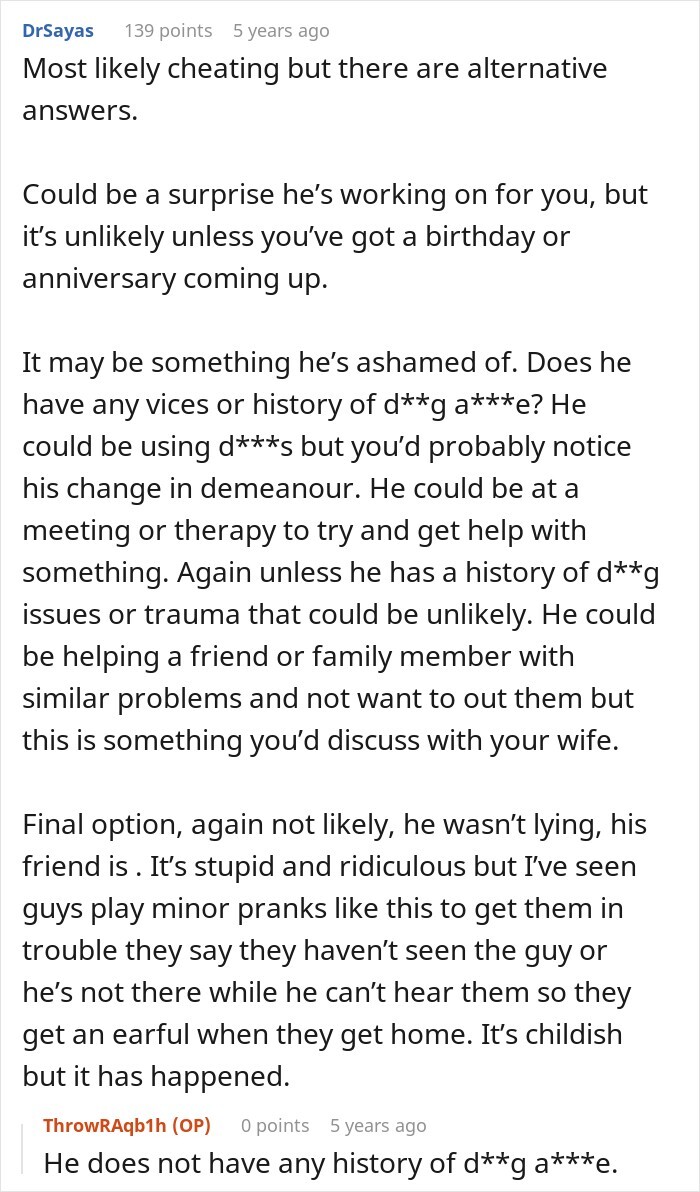
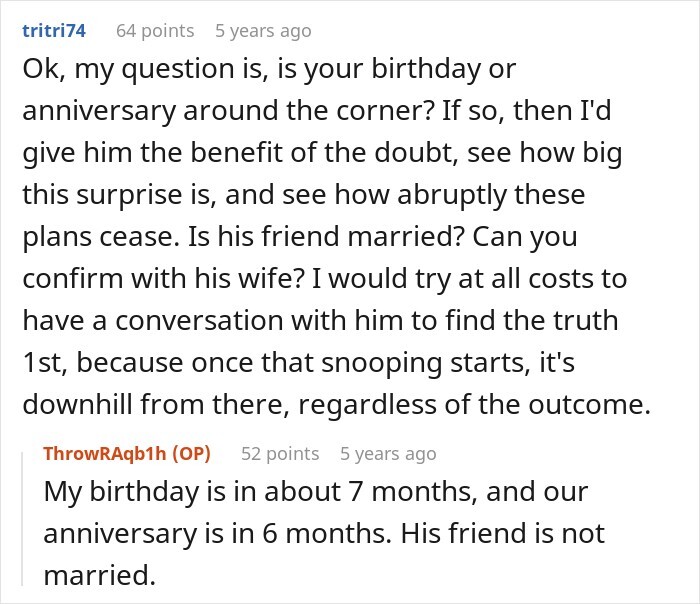
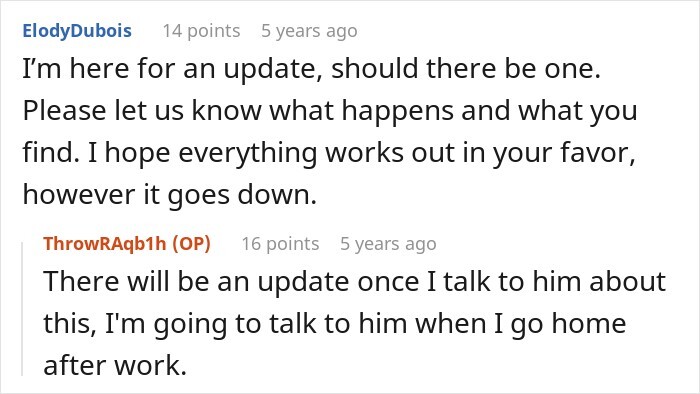
She responded to a few comments













lookstudio / Magnific (not the actual photo)
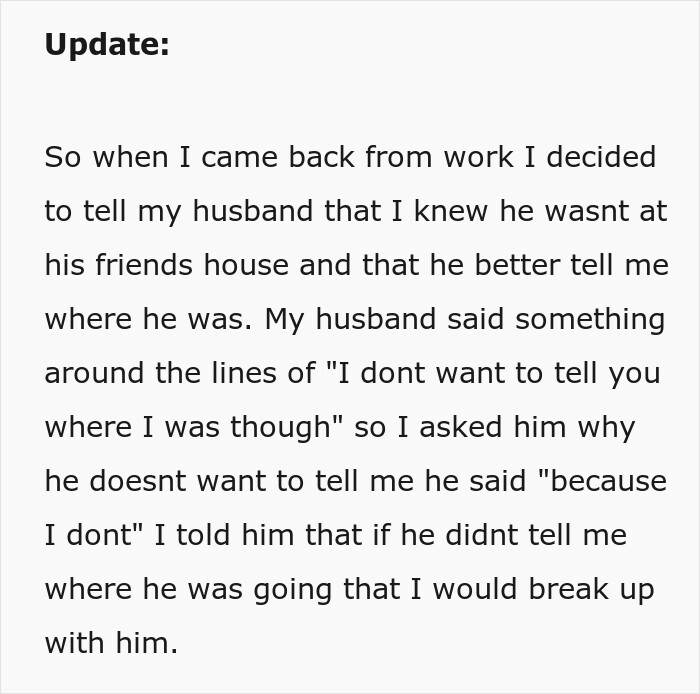
Later, she shared what happened



magnific / Magnific (not the actual photo)
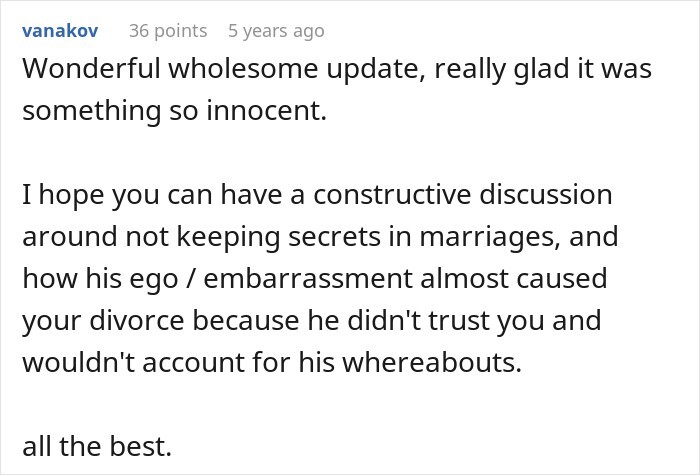
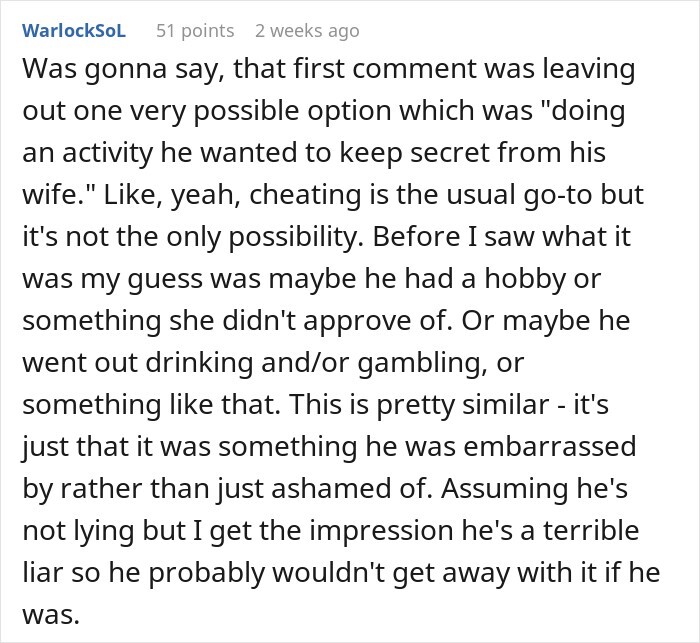
Some folks thought it was wholesome










rawpixel.com / Magnific (not the actual photo)
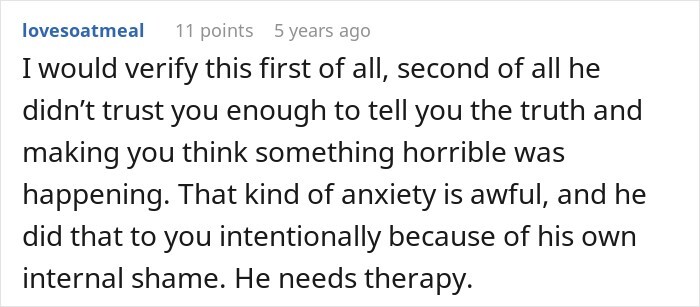
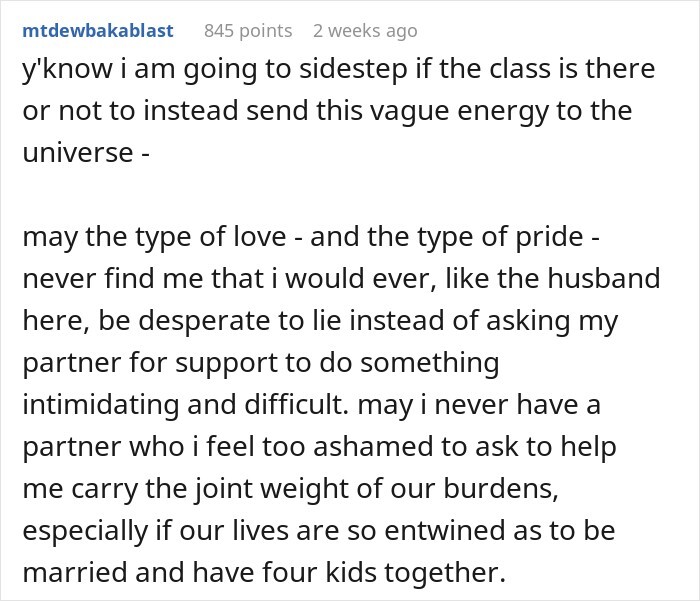
Others thought the husband should have been more honest









drobotdean / Magnific (not the actual photo)
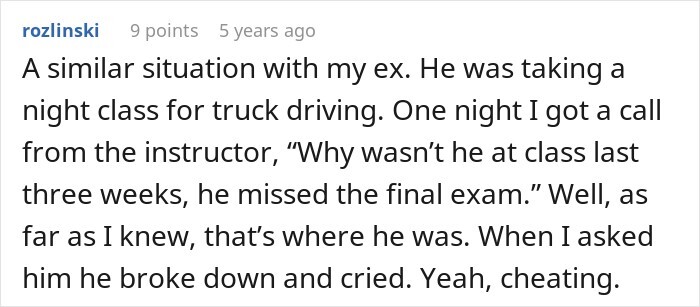
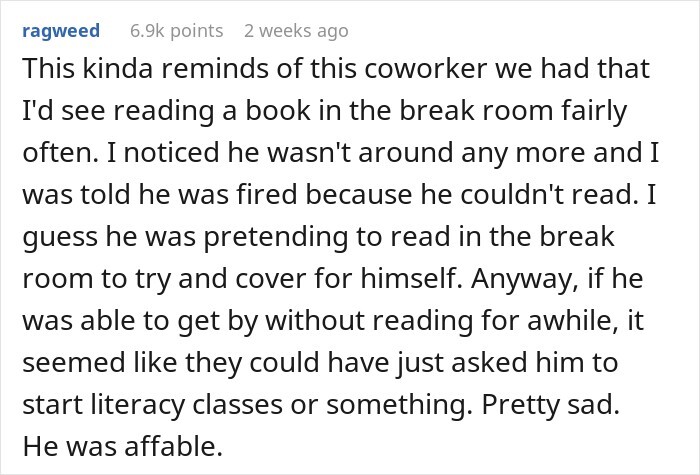
A few shared similar stories



 Follow Us